
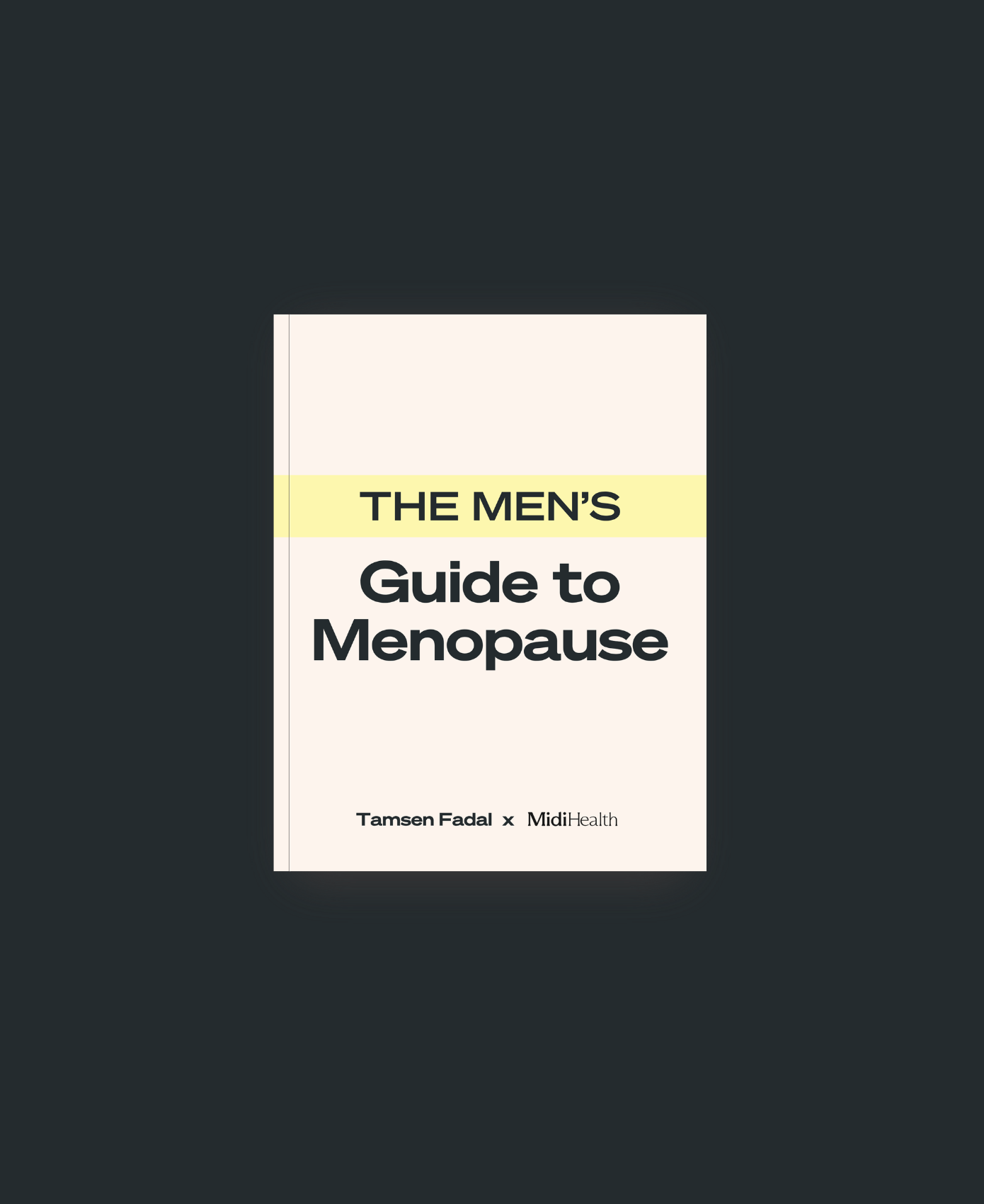
The Men’s Guide to Understanding Menopause

Support Her Journey with Knowledge, Empathy, and Confidence

Ready to support the woman in your life during her menopause transition? This comprehensive guide gives you:

  • A clear understanding of what she's experiencing physically and emotionally
  • Practical ways to provide meaningful support during this major life change
  • Expert insights on handling relationship changes and maintaining intimacy
  • Real communication strategies to strengthen your connection
  • The "Five Ms" framework for navigating menopause together

Written with both partners in mind, this guide helps you move from confusion to confidence as a supportive partner during menopause.
Never Miss a Beat

Subscribe to never miss another episode:

Medical Disclaimer

What follows in this guide are techniques and strategies that have helped me thrive in menopause. From diet, exercise, medical advocacy, and more—I learned a lot in my journey with menopause that I know can make yours a lot easier.

But before you read ANY further, know that this document is NOT medical advice. Talk to your doctor before making any changes to your lifestyle.

Welcome

If you love a woman who is over 40 and you want to understand what she’s going through so that you can better support her, you’re in the right place.

As I’ve been traveling the country hosting screenings of the documentary I produced, The M Factor: Shredding the Silence on Menopause, I’ve been talking to hundreds of women a month—and there’s always one who stands up and says, “What do I tell my husband?” There are also typically a few brave men who stand up and say, “Ladies, I had no idea!”

The truth is, menopause isn’t just a woman’s issue—it affects men’s lives too, whether you live with a woman who is going through her hormonal transition, or work with her, or have her in your family.

I’m going to give you the scoop of what’s happening for her physically, mentally, and emotionally so you can be there for her—and not take what she’s experiencing personally! We’ll cover the five Ms that men need to know about menopause: Mojo, Mood, Mindset, Marriage & Partnership, and Making Conversation. By the end of this guide, you’ll know just what to do and say.

It’s clear you love the woman (women) in your life. Thank you for being one of the good guys!

My Story

I got the “In menopause—any questions?” message from my doctor via my patient portal as my now-husband, then-boyfriend Ira and I were boarding a flight.

It sent me on an emotional roller coaster, where I was simultaneously thinking, “I’m old,” “I’m going to age out of my job any day and what will I do then?” And, “I guess I really am never going to have children.”

Meanwhile, in the seat next to me, Ira was clueless, happily scrolling through the movie options to decide what he’d watch on the way home. I turned to him, teary, and he had no idea what to do.

Once I learned more about everything menopause entails, the diagnosis made a ton of sense. It explained why, over the course of our first year of dating, sex didn’t feel the same and my libido completely disappeared. And why I kept leaving my purse hanging on the back of the chair in the restaurant (brain fog is a real thing). And why I was so irritable (those sleepless nights weren’t helping my mood). And why it felt like my body was betraying me (I was gaining weight and breaking into a sweat at the most inconvenient times).

But at first, I didn’t know what was happening to me. And if I was clueless, Ira was totally in the dark. He didn’t know what to say. He listened, though, and was interested to hear everything I reported back to him. And that brought us closer than ever, and made me love him even more.

Today, he is the first one to note what is going on with me. Men are even talking to him about it! I love that the conversation about menopause is being normalized so that we can stop with the shame (for women) and confusion (for men).

I’ve heard from so many of you who’ve had similar experiences, and I know how isolating that can feel for you and the people who love you. That’s why I’ve partnered with Midi Health. Because understanding menopause shouldn’t fall only on women, men want to be part of the conversation too.

The Facts

Menopause in a Nutshell

It’s hard to help someone through something that you don’t fully understand. Let me give you a quick tour through the basic facts.

First of all… What is menopause and perimenopause?

  • A woman is technically in menopause when she’s gone one full year without a period.
  • The years leading up to menopause, when women start to experience symptoms, is called perimenopause.
  • Perimenopause can last 10+ years and typically begins in your 40s, but can start even earlier.
  • The average age of menopause in the U.S. is 51.

What are the symptoms of menopause?

Menopause is more than just hot flashes. There are actually 34+ symptoms of menopause and perimenopause that are rarely talked about.

Why do menopause symptoms occur?

It’s second puberty time!

Women’s bodies are affected by menopause thanks to the hormonal changes in estrogen, progesterone, and testosterone. Certain medications or surgeries can also kick-start the process.

Every woman experiences menopause differently. Some women may not experience any noticeable symptoms, while others may feel like they are experiencing EVERY symptom in the world.

How long do symptoms last?

Symptoms can last for a few months or several years, even decades. It truly depends on each woman’s body. Recent studies show that 15 percent of women have hot flashes into their 80s.

Don’t worry. There are plenty of treatment options and DIY strategies to help her control her symptoms.

Should I encourage her to talk to her doctor about her symptoms?

Absolutely! Menopause is a phase of life, not a disease, but there’s still no reason to suffer.

However, many doctors are not deeply educated on menopause. That’s why I recommend Midi Health, a telehealth company that specializes in women’s midlife health and offers virtual visits with clinicians trained in perimenopause and menopause care. They provide a comprehensive range of treatments and accept various insurance plans, making expert guidance accessible from the comfort of your home.

Fast Facts

  1. Perimenopause kicks off for many women in their 40s (or even late 30s)
  2. The symptoms can take a big toll on sleep, sex, cognition, mood, and more
  3. There’s no real test for it
  4. It can last for a decade or longer
  5. Doctors might not know what’s going on
  6. There are many things she can do—some things she’ll need a prescription for (such as hormone therapy) and some things she can do on her own (like exercise and building good sleep habits)
  7. It can be a wildly confusing time—for her, and for you
  8. She is so lucky to have a man in her life who wants to help

The Symptoms To Look Out For

  1. Acne: They call it second puberty for a reason.
  2. Allergies: Increased sensitivity to allergens.
  3. Anxiety: Increased nervousness or worry.
  4. Bloating: Abdominal swelling or discomfort.
  5. Changes in Body Odor: Alteration in the natural body scent.
  6. Breast Soreness: Tenderness or discomfort in the breasts.
  7. Brittle Nails: Weak or easily broken nails.
  8. Cholesterol Changes: Make sure to get it checked!
  9. Depression: Prolonged feelings of sadness or hopelessness.
  10. Dizziness: Feeling lightheaded or unsteady.
  11. Difficulty Concentrating: Trouble focusing or memory lapses.
  12. Fatigue: Persistent tiredness or lack of energy.
  13. Gum Problems: Bleeding or soreness of the gums.
  14. Hair Loss: Thinning hair or increased shedding.
  15. Headaches: Increased frequency or intensity of headaches.
  16. Heart Palpitations: Irregular heartbeat or arrhythmias.
  17. Hot Flashes: Sudden feelings of heat that spread over the body.
  18. Irregular Periods: Changes in menstrual cycle length, flow, and frequency.
  19. Irritability: Heightened sense of agitation or rage.
  20. Itchy Skin: Increased itchiness or dry skin.
  21. Joint Pain: Stiffness or pain in joints.
  22. Libido Changes: Reduced sexual desire.
  23. Loss of Breast Fullness: Changes in your bra size.
  24. Memory Lapses: Forgetfulness or mild cognitive impairment.
  25. Mood Swings: Sudden changes in mood, such as irritability or sadness.
  26. Nausea: Issues such as indigestion or bloating.
  27. Night Sweats: Severe hot flashes occurring at night, causing sweating.
  28. Osteoporosis: Decrease in bone density, leading to fragility.
  29. Pain During Sex: Decrease in vaginal lubrication, leading to discomfort.
  30. Panic Disorders: Episodes of intense fear or panic.
  31. Sleep Issues: Difficulty falling or staying asleep.
  32. Urinary Incontinence: Loss of bladder control.
  33. Vaginal Dryness: Hormones affect how our body reacts.
  34. Weight Gain: Increased body weight, particularly around the abdomen.

Phew!

I know this seems like a lot.

Don’t worry. Most women don’t experience EVERY symptom.

The Five M’s

Menopause Is Huge

  • There are currently 1 billion women in menopause in the world
  • It can have a widespread impact on a woman’s health
  • It can also impact multiple areas of her life

In an effort to make menopause more manageable–and more targeted to the men who
love a woman who’s being impacted by menopause–I’ve boiled it down into five Ms:

Mojo

A woman’s sex drive, sexual pleasure, feeling sexy, and overall confidence

Mood

Everything from irritability and weepiness to anxiety and depression

Mindset

How she’s feeling about entering this new phase of life, when society oftenmakes women feel invisible, or irrelevant–and how to help her lean into thefreedom this transition can usher in

Marriage & Partnership

There’s a reason why I titled a section of my book, “Is it my husband, or is it myhormones?” When she’s feeling all over the place it’s bound to show up in herrelationships

Making Conversation

This is how things really start to get better–when you and she can talk aboutwhat you’re each experiencing and be there for each other in a deeper way

Are you ready to take a bite out of menopause? Let’s go.

Mojo

Fact: A woman’s sex drive, enjoyment of sex, and self-confidence can all take a nosedive during perimenopause.

Another fact: It’s not about you.

My Story

Getting married a second time at age fifty was a dream—I loved Ira dearly and felt fully respected and treasured by him. The wedding was so beautiful that I wouldn’t have been surprised if cartoon bluebirds had appeared and circled around our heads. The only piece that was missing was my libido.

To say that I am not alone in not feeling like having sex is a vast understatement.

What She’s Experiencing

Thanks to the gradual disappearance of estrogen, by the time women are six years past menopause, up to 84 percent of them experience genitourinary syndrome of menopause, which includes a lack of natural lubrication, a thinning of the vaginal wall, and sex that can be painful. Extremely painful. And extremely common.

“[It’s like] I’ve got razor blades in my vagina.”

— Halle Berry, on menopausal sex

Not fun. And not your fault.

To top it off, many women also experience changing libido (sex drive) thanks to lowering levels of testosterone.

How She Might Be Feeling

Afraid to hurt your feelings because she may not be feeling the same way about sex as she used to.

Embarrassed that her body is changing.

So tired that on any given night she’d rather sleep than get it on.

She also might be feeling not that great about her body since it can feel like it’s changing so much she doesn’t recognize herself, and that can take a toll on her self-confidence.

What You Can Do

As for the desire piece of the puzzle:

There are two types of sexual desire: “spontaneous” (AKA horniness) and “responsive” (getting aroused in response to stimulation). According to Emily Nagoski, PhD, sex therapist and author of the book Come as You Are, 30 percent of women and 5 percent of men experience responsive, as opposed to spontaneous, desire.

If you and/or your partner is one of them, there’s nothing wrong with you—you just need to adapt to your new normal and stop waiting for her to jump your bones.

Testosterone is recommended for treating low libido in women. Maddeningly, there is no FDA-approved testosterone supplement for women, but clinicians at Midi Health can prescribe an individually formulated cream from a compounding pharmacy that’s dosed specifically for women.

As for the painful part:

Vaginal estrogen is a very safe topical estrogen product that a woman applies to the vulva and the vagina. It can come in creams, rings, or tabs. And it is very effective at remedying the lack of lubrication and strengthening the vaginal tissues so that sex doesn’t hurt. It can also increase bloodflow, which increases sensitivity. Although it is very safe with virtually no long-term risk and few, if any, negative side effects, vaginal estrogen does require a prescription.

Lube is your new best friend. Women are far more likely to orgasm in the presence of lube than without. It also makes sex more comfortable for women.

Intercourse isn’t the end-all, be-all. In fact, most women don’t reach orgasm with intercourse. Experiment with oral sex, mutual masturbation, and sex toys.

Slow down, enjoy the process. Arousal and orgasm can each take a while.

“I feel closer to my husband than I ever have. Your bodies both age. You have to be more intimate. You have to have these discussions. Things are changing. You can deny all this and just decide not to be physical anymore. But if you go into it, the level of intimacy is kind of mind-blowing.”

— Darcey Steinke, author of the menopause memoir Flash Count Diary

5 Pro Tips for Having Great Sex

  1. If you don’t ask for what you want, the answer is always no.
  2. Pay attention to your “erotic clock.” Find the time of day when you feel sexiest and orgasms are easiest to achieve—for you and your partner.
  3. Exercise before sex. Exercise accelerates blood flow, which is good for sex.
  4. Don’t eat right before sex. Eating diverts the blood flow to the digestive system, which is bad for sex.
  5. Try putting your lube or waterproof sex toys in the fridge, to change it up!

Mood

Mood changes—whether it’s anxiety, depression, irritability, or difficulty experiencing pleasure—are one of the most common symptoms of perimenopause and menopause, which can happen as a direct result of the fluctuation in hormones and declining levels of estrogen and progesterone.

The most common treatment women receive when they see a doctor about the symptoms of menopause is a prescription for antidepressants. Yet many of us are not technically depressed—we are suffering from physiological symptoms resulting from the decrease of estrogen. That said, while an antidepressant may not treat the true root of depression at midlife, it can be a useful tool to help her stabilize while she finds the health-care provider who can guide her on her best options.

In addition, up to two-thirds of women go through cognitive changes during menopause. Sometimes, these changes are so severe, they can mimic ADHD symptoms or even dementia. It’s known as brain fog, and it can really be an upsetting experience.

There is a positive side to this otherwise potentially moody time: A woman’s brain is being rewired during this transition to be less reactive and more serene, so some bugginess is to be expected.

What She’s Experiencing

The brain has many estrogen receptors; as there is less estrogen on hand, cognitive function can take a dip as the brain learns how to work without it, which may show up as difficulty remembering names, finding words, remembering why she walked into a room, or misplacing items.

When estrogen declines, it tends to take serotonin down with it, inviting depressive symptoms. In fact, women’s rate of depression doubles in midlife.

Because progesterone is a calming hormone, when it starts trending downward, it can result in an uptick in anxiety.

Declines in both estrogen and progesterone can have a negative effect on sleep—and being perpetually tired is a recipe for irritability and rapidly shifting moods.

How She Might Be Feeling

  • Irritable, or even ragey.
  • Prone to weepiness.
  • More anxious than she’s ever felt, with racing thoughts that are difficult to settle.
  • Depressed—lethargic, blue, tired.
  • Scared that she’s experiencing cognitive decline.
  • Extremely fatigued.
  • All of the above throughout the course of a week, or even a day.

What You Can Do

  • Be patient.
  • Don’t take things personally.
  • Find little things you can do to make her feel supported.
  • Go exercise together, as exercise is great for mood, sleep, and cognitive function.
  • Know that, on average, cognitive performance tends to rebound after menopause four to six years after the final menstrual period, sometimes two years, sometimes immediately.

Supplements that may help:

  • 5-HTP (sleep and mood): This is a precursor to serotonin, so taking it can help to increase serotonin levels. Low serotonin is often linked to anxiety, sleep disorders, and depression.
  • Maca root (hot flashes, mood, energy): I use maca powder in my smoothie, as it has been said to help alleviate menopausal symptoms by reducing hot flashes, improving mood, and enhancing energy levels.

Mindset

Fact: We live in an ageist society where women have had their options limited and their bodies considered shameful for millennia.

Another fact: Perimenopause and menopause are undeniable indicators that a woman is getting older.

These two truths may be making her feel like she’s irrelevant, invisible, and/or washed up—or that she soon will be.

The truth is, menopause is an opportunity for an awakening and a new phase of life—but it may take her a while to reach that conclusion.

What She’s Experiencing

  • Being overlooked out in the world—perhaps no longer turning heads when she walks into a room, not being tended to in the same way by service professionals such as baristas, store clerks, or bartenders, having difficulty getting a call back when looking for a job.
  • Overwhelm, as all these symptoms happen at what tends to be the busiest time in a woman’s life, with career and family (whether taking care of kids, parents, or both) in full swing.

How She Might Be Feeling

  • Scared—of aging out of society, or becoming invisible, or change, or her own mortality, or all of these things.
  • Unconfident—like she’s been this badass for so long and now she can hardly remember to take her purse with her when she leaves the house.
  • Unsure of her own self-worth—doubting her success, second-guessing her abilities, and suffering from imposter syndrome, wondering when “they” are going to find out she is just a fraud.
  • Worried that her best years are behind her.
  • Perhaps feeling frozen between where she’s been and where she’s headed.
  • Fearful and indecisive, holding off on making any decisions for fear of taking the wrong step, to wait (and wait) for the timing to feel “right”.

What You Can Do

  • Be understanding of just how big of a shift she’s going through.
  • Talk to your friends and get support for yourself, as she can’t be your therapist now.
  • Listen and be patient, and resist the urge to tell her what she should do—I can’t stress enough how important this is, even though it may feel like you’re not truly helping by simply listening, you absolutely are.
  • Know that according to research, women’s happiness and life contentment tends to only increase after bottoming out right around menopause.
“For many women, on average, there’s a dip in contentment right around menopause. But on average, life contentment and happiness tend to go back up an average of four to six years after the final menstrual period. And then it continues to increase.”

— Lisa Mosconi, PhD, author of the New York Times bestselling The Menopause Brain

Marriage & Partnership

There is no question that menopause can test a relationship.

As you likely are only too keenly aware, (peri)menopause is tumultuous for a woman’s mind, body, and spirit even in the very best of circumstances or relationships.

In fact, a survey conducted in 2022 by the Family Menopause Project in the UK gathered some eye-opening insights when it asked one thousand women about the effect of menopause on their relationship. Eight in ten women who reported symptoms said they put a strain on their family life, and seven in ten (73 percent) felt those menopause symptoms had a direct effect on their marriage’s breakdown.

Studies are not as up-to-date in the United States, but AARP did a huge study twenty years ago, which found that two-thirds of divorces are initiated by women in their forties, fifties, and sixties.

I know there’s a stereotype of women as irrational, hormonal creatures, which is harmful. At the same time, perimenopause and menopause have a real effect on your mood, your mental clarity, your emotions, and your overall well-being. It is a rocky transition that you eventually come out of, but when you’re in it, you can forget that you have this huge factor that’s influencing how you feel.

I’ve heard enough dramatic stories from women to know that sometimes the tumult of this major life and health transition may be making your primary relationship seem like it’s in worse shape than it actually is.

What She’s Experiencing

  • Not only are estrogen and progesterone decreasing at this time, but so is oxytocin, a.k.a. the love hormone, which promotes connection.
  • She may be feeling overwhelmed, irritable, disinterested in sex, and perhaps looking at you as the source of her upset instead of connecting the dots to perimenopause or menopause.

What You Can Do

  • Do activities together to bring you closer and give you new things to talk about.
  • Think and talk about what you each want to do with your second adulthood.

Keep Date Night Fresh

If you are doing a date night even every few weeks, take heart: that means you want to make something work. Here’s how to keep date night fun and exciting:

  • Choose a theme topic. Don’t leave it to chance or you’ll end up talking about work or the kids or your parents or your to-do list. Instead, find out where your partner wants to travel to next—and fantasize the plan even if it’s not happening for some time, or ever. You find out so much when you ask.
  • Think outside the dinner box. Try a pottery, a glassblowing, or a paint and sip class. Comedy shows ease the mood. A cooking class is an activity where you get to eat, too! You can also go bowling, play pool, hit the driving range (TopGolf is a fun night out), or karaoke. When it’s warm out, check out free events, such as concerts and plays, or go on a bike ride or a hike. Just don’t fall into a rut.
  • Play tourist in your hometown. Nothing makes you see your surroundings (and your partner) with fresh eyes like pretending you’re a visitor. Do people travel to see a landmark near you? Maybe they’re onto something!
  • Get a couple’s massage. Visit a local spa that offers massages for two and you might have the steamiest date night ever.

Making Conversation

It’s great that you are interested in learning more about menopause. What’s also key is to think about how you’ll open up the conversation with the woman/women in your life–and how you’ll keep the dialogue going.

What She's Experiencing

  • She may not want to talk about what she’s going through because she’s embarrassed—for centuries women’s health has been a taboo topic and she may be feeling like it’s just not polite or proper to share, or she may be worried that sharing her experience may hurt your feelings (especially if she’s not feeling like or enjoying having sex).

How She Might Be Feeling

  • Lonely or isolated in the relationship.
  • Worried that if she starts talking she’ll get on a roll and say things she’ll regret—menopause has a way of chipping away at your filter so you become more irritable and also more blunt.
  • Overwhelmed, not knowing where to start or how to bring up the conversation.
  • It’s great that you are interested in learning more about menopause. What’s also key is to think about how you’ll open up the conversation with the woman or women in your life—and how you’ll keep the dialogue going.

What You Can Do

  • Practice active listening—putting down your phone or other distractions, focusing on her words, tempering your emotional responses to what she’s saying, and asking questions that show you’re listening and encourage her to open up more, such as “What’s worrying you?” and “How can I help?”
  • Validate how she’s feeling, by saying things like “That sounds really hard,” “You’re really dealing with a lot,” and “It makes sense how you’re feeling given everything that’s happening with you right now.”
  • Consider couples therapy, not because your relationship is in trouble, but to learn new ways of communicating and to have a safe space to open up to each other.
  • Schedule an activity where you can talk—a coffee date, a long drive, a hike.

Seven Unhelpful Things to Say to a Woman in Menopause

  1. “It’s just a phase, you’ll get over it.”
  2. “Oh that’s just the menopause talking.”
  3. “Isn’t that for old women?”
  4. “You’re too emotional.”
  5. “Haven’t you been going through this a long time already?”
  6. “Does this mean you’re not going to want to have sex anymore?”
  7. “Maybe you’re just depressed or too stressed.”

The Bonus M – “Manopause”

“Manopause” is real too.

Men have their own version of menopause—it’s technically called andropause and it refers to the decline in testosterone that can negatively impact your bone mass, sexuality, and mood.

Unlike menopause, which is a volatile and dramatic lowering of multiple reproductive hormones, andropause is a gradual decline. In general, men’s testosterone levels decline a little less than 2 percent per year starting in the mid-thirties. Also unlike menopause, where every woman will eventually have a dramatically reduced estrogen level, only about a quarter of men have testosterone levels that are officially “too low.”

What He’s Experiencing

  • Lowered energy and motivation.
  • Reduced sexual desire and activity.
  • Erectile dysfunction.
  • Breast discomfort or swelling.
  • Decreased bone density (as evidenced by a non-trauma fracture or height loss).
  • Hot flashes or sweats.
  • Depressed mood.
  • Impaired concentration.
  • Poor sleep.
  • Reduced muscle mass and strength.
  • Increased body fat percentage.

How He Might Be Feeling

  • Tired.
  • Not confident.
  • Spacy.

What You Can Do

  • If you’re experiencing symptoms, you can have your testosterone levels tested.
  • If your levels are low, you can talk with your doctor about taking testosterone. As with women’s hormone therapy, there are some risks to testosterone supplementation—be sure to discuss these with your doctor. As for benefits, it has been shown to help with libido, memory, muscle mass, and bone strength in men.
  • Viagra can help with erectile dysfunction—but I’m guessing you already know that!

Resources

Now that you’re armed with the basics, are you ready for answers to all your burning menopause questions?

How To Menopause

I’ve poured my heart and soul into this book, bringing together the best experts on menopause to give women (and men!) everything you need to not just survive, but thrive during this phase of life.

Expert-Driven, Girlfriend Approved

My mission is to change the narrative around midlife and menopause into something empowering.

More than just hormones and hot flashes, How To Menopause dives into the often overlooked aspects of menopause: relationships, sex, confidence, workplace challenges, personal identity, and so much more.

If you order your copy today, you’ll get exclusive access to the complete replay of The World's Hottest Menopause Party—the revolutionary virtual event that brought together celebrities, medical experts, and thousands of women to break the silence around menopause.

Order your copy now.

The M Factor: Shredding the Silence on Menopause

Not Just a Film But a Movement

The first documentary film on the health crisis faced by millions of women going through menopause. We created The (M) Factor to shine a light on the unspoken challenges women face during menopause, revealing the gaps in medical education, the disparities in treatment, and the true impact on our physical and mental health. This film is about empowering every woman to take control of her health and advocate or change.

The M Factor: Shredding the Silence on Menopause is available to stream on pbs.org and the free PBS App, available on iPhone, Apple TV, Android TV, Android smartphones, Amazon Fire TV, Amazon Fire Tablet, Roku, Samsung Smart TV, and Vizio.

Watch or host a screening.

Finding a Therapist

I can’t say enough good things about working with a therapist. I used to think doing so meant I was weak, now I think of it like going to the gym—it helps me be my best.

And going to couples therapy does not mean your relationship is in trouble; it just means you want to be able to understand and relate to each other. The skills you learn and insights you gain about your partner, yourself, and your relationship can be invaluable.

Psychology Today

If you’re looking for a local therapist, the listings at Psychology Today are a great place to start. Providers share a photo of themselves and a message; listings also include the provider’s specialties, credentials, accepted insurance, and whether they are accepting new patients.

Find out more: psychologytoday.com/us and click on “Find a Therapist”

Zencare

This service for finding a local provider includes more information than the Psychology Today listings, including a video message from the provider, what their peers have to say about their work, and their hours of availability. Also includes insurance plans they accept, the modalities they use, and their education and credentials. Currently only available in California, Florida, Massachusetts, New York, Rhode Island, and Texas.

Find out more: zencare.co

BetterHelp

This online therapy platform makes it very easy to find a therapist whose background, qualifications, and availability are a match for you, and offers both individual and couples therapy. In addition to the U.S., it’s available in over 200 countries.

Find out more: betterhelp.com

Talkspace

Another leading online therapy platform accepts some insurance. The sign-up process is easy and quick and you can message your therapist at any time. Currently only available in the U.S.

Find out more: talkspace.com

Products to Help You Have a Hotter Sex Life

  • Addyi (prescription medicine for women’s libido): addyi.com
  • Julva DHEA Moisturizing Cream (helps to restore vaginal moisture): drannacabeca.com
  • Ohnut (a device that provides a unique solution to painful penetration): thepelvicpeople.com
  • Ospemifene (Osphena, a non-hormonal medication to relieve vaginal dryness and tightness): osphena.com
  • Pulse Lube Warmer (motion-controlled dispenser that warms your lube): lovemypulse.com
  • RepaGyn (hyaluronic acid suppositories to restore moisture and relieve tightness): repagyn.ca
  • Tabu (organic lube with hyaluronic acid for extra moisture): heytabu.com
  • Vyleesi (injectable medication for women’s libido): vyleesi.com
  • DHEA/Estradiol Cream (a prescription medication considered safe for all women that treats menopause-related vaginal changes): joinmidi.com/store/dhea-cream

Water-Based Lubricants

  • Astroglide Liquid
  • K-Y Jelly
  • Astroglide Gel Liquid
  • Astroglide
  • Good Clean Love
  • Just Like Me
  • Pre-Seed
  • Slippery Stuff
  • Liquid Silk
  • YES WB
  • Sliquid

Silicone-Based Lubricants

  • Astroglide X
  • ID Millennium
  • YES WB
  • SYLK
  • Sliquid

(don’t use these with condoms as they could cause breakage)

Vaginal Moisturizers

  • Feminease
  • Hyalo-gyn
  • K-Y SILK-E
  • Luvena
  • Replens
  • Revaree
  • Silken Secret

(safe to use with condoms)

Final Note

For more information and support, visit

https://www.joinmidi.com/tamsen

feeling off?

Take the quiz to find out if it’s perimenopause

Take the Quiz

Share with a Friend

The Men’s Guide to Understanding Menopause

Support Her Journey with Knowledge, Empathy, and Confidence

Ready to support the woman in your life during her menopause transition? This comprehensive guide gives you:

  • A clear understanding of what she's experiencing physically and emotionally
  • Practical ways to provide meaningful support during this major life change
  • Expert insights on handling relationship changes and maintaining intimacy
  • Real communication strategies to strengthen your connection
  • The "Five Ms" framework for navigating menopause together

Written with both partners in mind, this guide helps you move from confusion to confidence as a supportive partner during menopause.

Download the Guide Now

Drop your email below and I’ll send it right to you.