Perimenopause





Share with a Friend
Most women I talk to describe the same experience…
Something started shifting in their late 30s or early 40s. The weight changed. The sleep changed. The mood changed. Their relationships changed. And nobody connected any of it to the same thing.
They went to doctors who checked their blood work and said everything looked fine. They Googled individual symptoms. They blamed stress, or their diet, or just getting older. They adapted. They pushed through. And they never once heard the word perimenopause from someone who was supposed to be looking out for them.
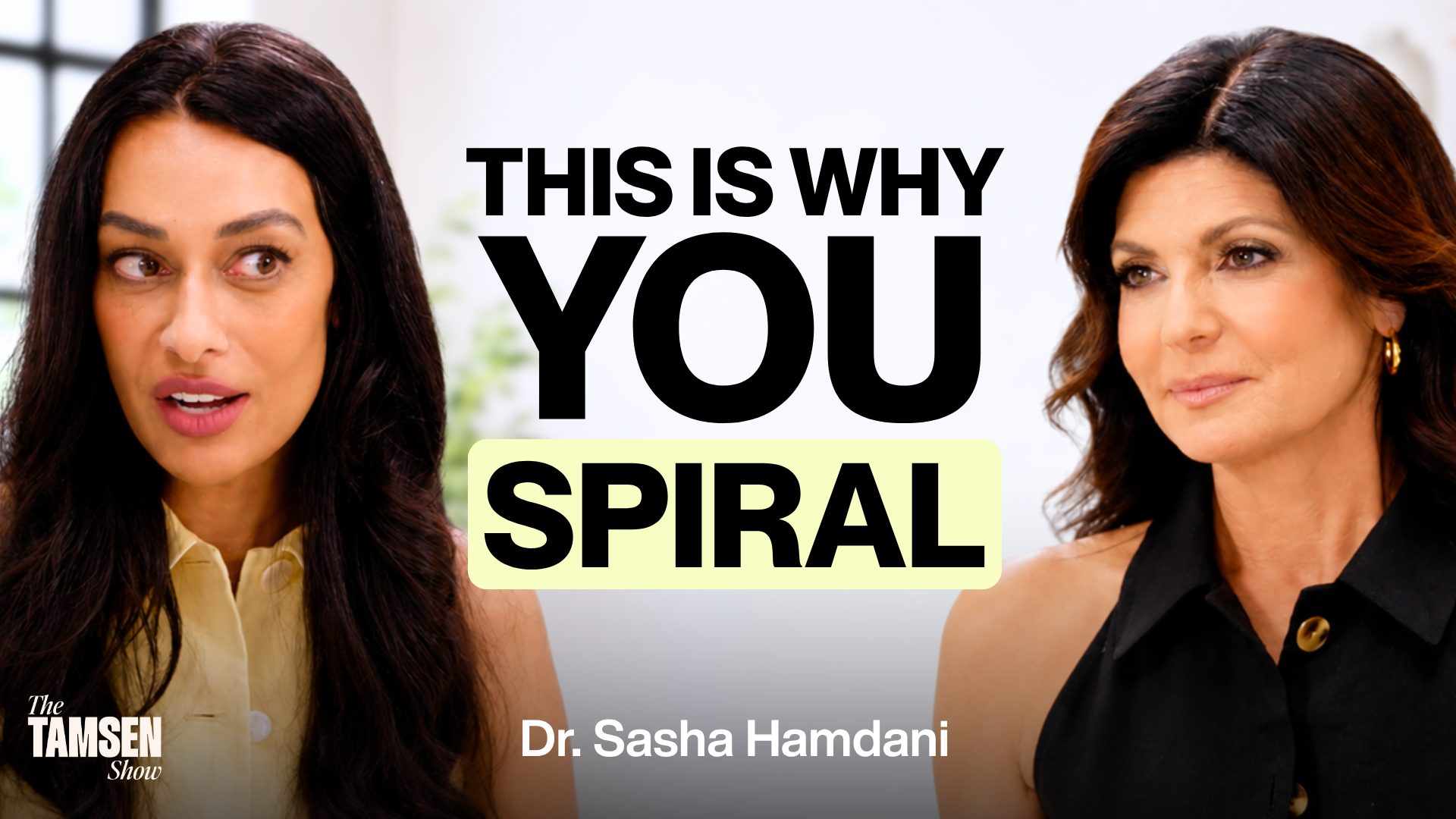
That was my story too and I made this week’s episode of The Tamsen Show because I don't want it to be yours.
Here are five things I wish someone had told me…
1. The belly fat and the bloating were never your fault.
This was the first thing I noticed and the first thing I blamed myself for. I was working out and eating carefully, but I kept gaining weight around my middle and feeling bloated constantly. I did what most of us do. I eliminated gluten and dairy, and I went through phases I would rather not revisit. Nothing worked.
Here is what was actually happening: Estrogen directly affects your gut microbiome, the trillions of bacteria managing your digestion, your mood, your immune system, all of it. When estrogen shifts, the whole system is disrupted. The bloating is not random and the belly fat is not a discipline problem. It is a biological response to a hormonal change that nobody explained to you.
What actually helps is not restriction. Restricting food was one of the worst things I did because going back to what worked in your 20s does not work in your 40s. What helps is the right food: Thirty grams of protein in your first meal, thirty grams of fiber throughout the day, and three probiotic foods every day. This is not a diet, it’s a different way of eating that works with what your body actually needs right now.
2. Your relationships are going to change.
Perimenopause changes what you are willing to tolerate. Things you managed for years suddenly feel impossible. Your patience for certain dynamics disappears. Friendships shift. Partnerships strain. And because you don't have context for why your baseline has fundamentally changed, you assume the problem is you or the relationship.
Sometimes it is the relationship, but a lot of the time it is that your nervous system is operating differently and you are finally responding to things that were never actually okay. Perimenopause has a way of burning off what wasn't working and making the real things louder. I went through my divorce in my 40s in the middle of all of this without knowing what was happening to me. Looking back I can see it clearly now. The things I stopped tolerating were important signals, I just didn't have a name for any of it at the time.
You are not being difficult, your entire baseline has shifted. Give yourself and the people around you that context.
3. The psychological symptoms hit before the physical ones.
Hot flashes are what everyone associates with menopause. But anxiety, irritability, mood swings, rage, and brain fog peak in women in their early 40s, years before the hot flashes arrive. Which means if you are in your late 30s or early 40s and you feel like you cannot regulate your emotions the way you used to, if your anxiety appeared out of nowhere and nobody has connected it to your hormones, if you are snapping at people you love and wondering what is wrong with you, your brain may simply be responding to a hormonal shift that nobody warned you about.
I was on live television every day losing words mid-sentence. I would smile and keep going but inside I was terrified. I went into the bathroom between segments and Googled dementia symptoms because that was the only explanation I could come up with. I was not losing my mind. My brain was going through something real that had a name and a reason. I just never got to hear that.
There is also research involving more than six million women suggesting that starting estrogen within ten years of menopause could reduce the risk of Alzheimer's disease by up to 32%. That is not a small number, and yet most women going through this transition have never heard it and most of the doctors they see have never said it.
4. Your symptoms are not separate problems.
The hair loss, anxiety, bloating, joint pain, sleep disruption, weight gain, brain fog, rage. Most women are treating each of these like an individual problem, seeing different doctors for different complaints, Googling each symptom separately, wondering if they are just falling apart.
They are almost all connected to the same hormonal shift and once you understand that, the whole picture changes. You stop feeling like something is fundamentally wrong with you and you start asking the right question, which is what is happening with my hormones and what can I do about it.
This is also why I want you to count your symptoms the next time you read through a comprehensive perimenopause list (I have a free symptom tracker you can download here). Not because a high number should scare you, but because seeing them all in the same place, understanding they are part of the same conversation, is the first step to finally getting real answers.
5. You had more options than you know.
In 2002, a study called the Women's Health Initiative ran across every major news outlet with one headline: hormone therapy causes increased risk of breast cancer. Women stopped taking it overnight and doctors at the time watched usage drop from 40% to 4% in what felt like days.
What never made the headlines: the women in that study had an average age of 63. They were not perimenopausal women in their 40s and 50s and women in that same study who took estrogen only actually had a 23% decrease in breast cancer incidence. That data existed, it just was not the story anyone ran.
For twenty years, generation after generation of women went through this transition without treatment that could have helped them. Without even a conversation about what was available. I was one of them. Especially after losing my mom to breast cancer, I was genuinely scared. And I waited, but I wish I hadn't because the things I was suffering through were treatable. The bone density I was losing was preventable. The brain fog and the sleep and the mood were all connected to a hormonal shift that had real tools available to address it.
I want to be clear that hormone therapy is not right for everyone and not a one size fits all answer. If you have a history of certain hormone sensitive cancers, heart disease, or liver disease you need a real conversation with your doctor. I am not a doctor, but I am someone who wishes she had better information sooner and wants to make sure you have it now.
What I also want you to know about is testosterone, because it almost never comes up in the first conversation and I think it should. Women have testosterone. It affects your brain, your energy, your mood, your muscle, your drive, not just your libido which is why it always gets dismissed. It has made a significant difference for me and for many of the women I have talked to. Ask your doctor about it specifically, ask for the right test, and if your doctor dismisses the conversation, find a different doctor.
You are allowed to fire your doctor. You are not being difficult, you are refusing to accept care that is not serving you.
If you have been walking around with a list of symptoms and treating each one like a separate problem, I want you to know that you are not broken, you are not alone, and you are not going crazy. You were just never given the information that you were always entitled to have.
It is not too late to have a different conversation.
Listen to Perimenopause 101: The Symptoms, Tests & Fixes No One Tells You About here or you can watch it here.
Never Miss a Beat
Related Posts



.png)
.png)

.jpg)

Menopause