What if that glass of wine you love is wrecking your brain, your sleep, and your hormones? This is a a substance that is considered a class one carcinogen. It's on the same list as things like asbestous and tobacco and radiation. We're seeing a massive increase right now in infertility over the last several years. And so, if you're drinking and trying to get pregnant and you're struggling with getting pregnant, that that is something that we should absolutely look at.
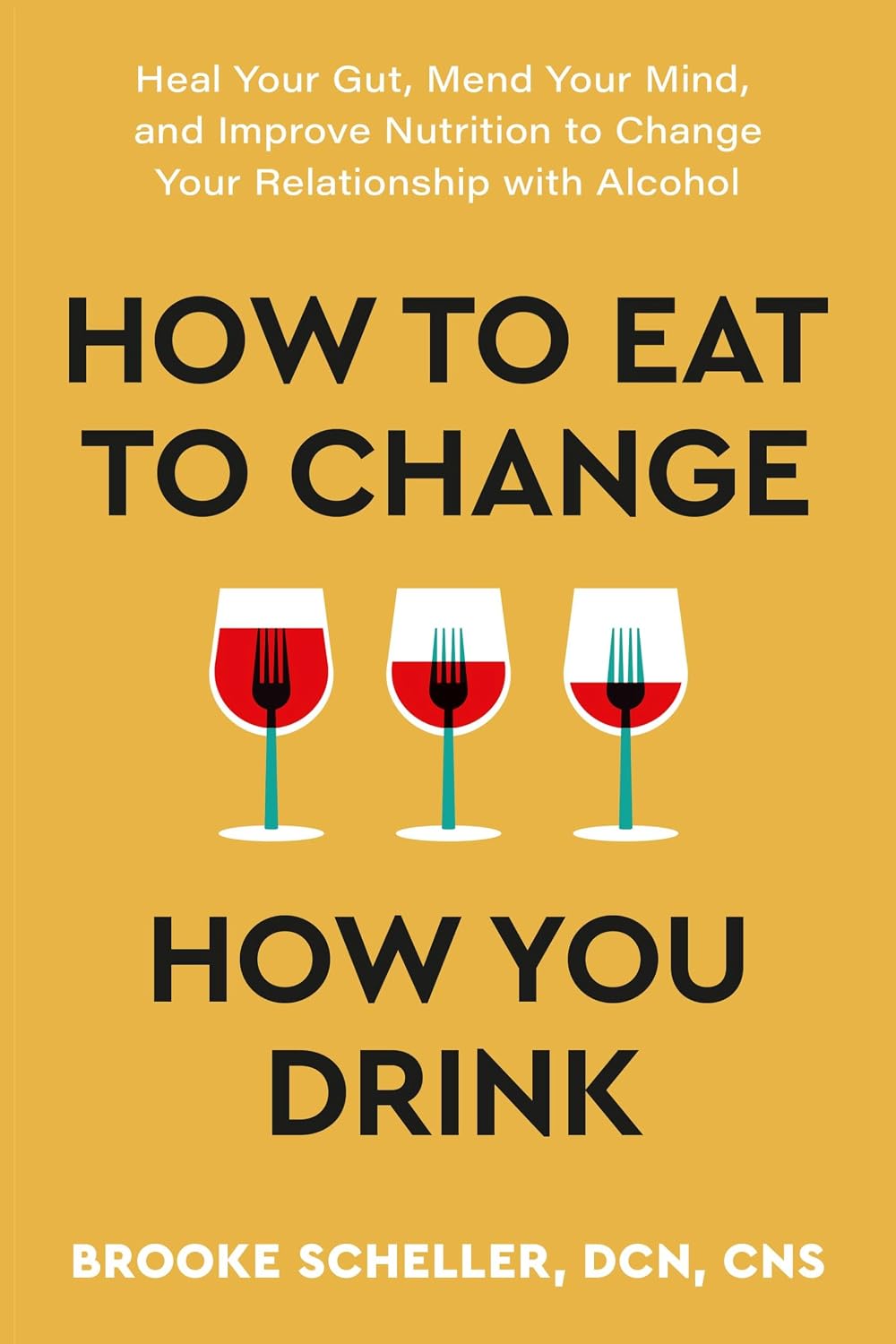
Dr. Scheller is a doctor of clinical nutrition, the author of the book How to Eat to Change How You Drink, and she's on a mission to help women all over the world rewrite their relationship with alcohol. 49% of Americans are looking to drink less. There was research in 2022 that showed a decrease in gray matter and white matter volume in the brain from even just that one drink per day. So, it's increasing the rate of aging in our brain. We're talking why alcohol hits so different in your 40s, what it does to your body in pmenopause, and the simple simple shifts that can help you take back control.
I have seen in some women that the symptoms that they're experiencing that they're identifying as per menopause symptoms are actually the result of what's happening from alcohol. Dr. Brooke, do you think that women in pmenopause should consider giving up alcohol? I do. I do because if you follow me on social, you know I've turned into the queen of mocktails because alcohol is not just hitting the same anymore.
Even one glass of wine and I wake up with a raging hangover and I so know many of you can relate. Before we get into this conversation with Dr. Brooke, can I ask a quick favor? Please leave a review from wherever you're listening right now. It helps the podcast grow and make sure that we get these conversations to the people who need them.
Okay, let's go ahead and get into it. Dr. Brooke, welcome to the show. Thank you so much for having me, Tamsen. I'm thrilled to be here and really happy that you're covering this topic.
Oh, I am too. You know, I came off a long weekend and you were top of mind as I was reading the book and I I think as I look through a lot of the questions and the emails we get, alcohol is a big question these days. Yeah, it's a huge topic and the research that came out earlier this year showed that in 2025 49% of Americans are looking to quit or cut back change their alcohol use habits which is a number that has gone up over the last few years and we saw such an increase in intake during COVID that I think this is kind of the natural trajectory now that we're moving in moving beyond those times. Yeah, I want to start with your journey because I think your journey is very interesting and it also is so much a focus of your work as well. So can you go back and talk about how you came into this space?
I have been in the field of nutrition for 13 14 years and alcohol has always been a part of it. It's always been a part of socializing and even in the health and wellness space alcohol has been integrated into that as well. And so I'm someone who has always been very social, really outgoing, and started drinking at a really young age. I share more of my story in the book as as you've read. But it really started to escalate more and more throughout my 20s and into my 30s.
I moved to New York City and I was, you know, dabbling in that lifestyle as well where it's the work hard, play hard and happy hour and alcohol was always around. And I also share in the book my story that there's addiction in my family. And I've always kind of thought that I'm going to overcome that, that I'm not going to be like my family members. And the reality is that I was really struggling with alcohol. And it wasn't until COVID when I started to really question what was going on, how this was influencing my life.
And in June of 2021 pulled the trigger to get sober. And it was one of the scariest, most terrifying things I had ever done, but at the same time something that shifted the course of my life really significantly. And I share that story because for those of you who are listening and curious about cutting back or maybe quitting at some point, it sometimes feels like it's going to be the end of the world. And it actually might be something that is opening you up to a brand new part of your journey. And so I was a doctor of nutrition before I got sober.
And when I embarked on this journey and started following people in the sober space and seeing all of the discussion around how to support a an alcohol-free lifestyle, I started to realize that no one was talking about the physiology. No one was talking about the way that alcohol influences the gut and our hormones and our brain. And I really felt it my calling to take my experience and combine that with my experience in quitting alcohol and really doing something that could help others to explore this journey too. I mean I think your book is fascinating. It's how to eat to change how you drink.
And I I had to read it a few times and go, "Oh, I compl I get it." Like, and that that it's it's so important in talking about how the two of those things go hand in hand. Was there a turning point for you in the pandemic that made you say, "Hey, this is just enough or was it difficult to get to that decision to say you wanted to be alcohol-f free?" Well, it was definitely difficult to get to that decision. I think most people find that it kind of takes them getting to maybe some kind of rock bottom moment before making that change. But something that I found in starting to work with others is that more and more people are interested in making a change before they get to the place where they have to go to a 12step meeting, for example, or lose a job, you know, have this big monumental thing happen to them. And for me, you know, none of those big things happened, but I'm someone who struggled with anxiety and depression, and other health concerns.
And it really during co I think what was the turning point for me was that that time allowed me to escalate my drinking beyond where it had been. Maybe it was five or six days a week. But during COVID, we're experiencing this isolation. We are working from home. So that really allowed my habits to to take off a bit more.
You know, I started saying, "I'm gonna have a glass of wine at noon because, you know, I'm I'm home and I don't have any meetings." And it really became this thing where I I felt like I'd kind of had control for some time and at that point I really felt like I'd lost control and it was starting to kind of take over. It was really hard for me to say no and to to put it down. And it really just became something that I I got to the point where I was like, I can't do this anymore. I'm tired. I'm exhausted.
And it's hard to keep up that lifestyle. But you really don't have to be drinking every single day in order for it to be having a negative impact on you and your health. Well, I think that's important to note because I I think for anybody listening right now or watching this, it's not it's not about whether or not you're going to a meeting or whether it's gone so far. I think it's really more about just looking at it and seeing how alcohol is impacting parts of your life, impacting parts of your health. And I guess the big question for me is is is there the difference between we have a habit or there's an issue with alcohol.
And I I guess I don't know the right way to phrase that because I I think during the pandemic, you know, I was maybe one or two not two times a week because I used to work the evening news and then you pandemic happened and then I was doing the news from home. So then it was like six times a week like six different days a week and I realized one day I was like what am I why am I doing this? It just it really became a habit because it was something I would look forward to because there was not very much else to look forward to and I have to imagine there were a lot of other people with that same feeling. Yeah, that that time in particular is is really interesting because it's it's different than most of what we experience as it relates to drinking, right? So, if you're someone who like yeah after work you know to kind of end the stressful day or or bookend the day we have that drink, it kind of signals to us that it's time to kind of shift from one place to the next.
And I think what's really interesting as it relates to, you know, problem drinking versus habitual drinking and and a lot of these lines aren't necessarily hard lines. It's not like you know, if you have a specific amount of drinking or you're you're reaching this threshold that then that qualifies you as you know, having an alcohol use disorder. But what I like to discuss with people is that it's really about looking at how it's influencing your life, how it's influencing your personal life. So, is it causing friction between you and a partner? Is it influencing you know, your ability to show up for your family?
Is it influencing how you physically feel? So, is it, you know, creating fatigue? Is it creating some of these other issues that I like to talk about that most people don't realize are connected like hormone imbalances or gut issues? And so it's really a a personal decision and it's something that I always suggest to people. If you feel like it may be holding you back in some way, that's enough for you to say that you can quit or cut back.
And it doesn't have to be again never drinking, but just really looking at how it's playing a role in your life. So what is happening to the body when we drink? So this is a great question and a a long answer because it's doing so many things that I think society we haven't spoken about and we haven't talked about the the depth with which it's impacting our body because so much of the experience has been well a little bit of wine or alcohol is good for us right potentially has these health benefits. What we see in the last five years or so is a big shift in the scientific research that shows now that those kind of previously believed health benefits are maybe not what we thought that they would be. That when we look at larger studies and we look at more complexity to how those original studies were run that even small amounts of alcohol is harmful to the body is harmful to cardiovascular risk.
But so much of us think, you know, our liver is what takes the beating. We think our liver, you know, it's okay. You know, we make jokes about our liver having to deal with the alcohol that we take in, but it goes far beyond the liver. This is a a substance that is considered a class one carcinogen. It's on the same list as things like asbestous and tobacco and radiation.
And yet earlier this year, the surgeon general released a new advisory statement saying that only 45% of people are aware of the link between alcohol and cancer. And that's, you know, so we look at kind of a wide wide range of how it's influencing our health in the long term, but on a day-to-day basis, it's also influencing us, too. It's influencing our mood, our energy levels, our blood sugar, our hunger, satiety. And so it has these really, really wide ranging effects that again many of us aren't aware of because we've been told in the past that it has some benefits. What is the link between alcohol and cancer?
So, alcohol increases the risk of seven different types of cancer and those are things like esophageal, colon cancer, but also breast cancer risk. There's a very very direct link between breast cancer specifically because of the way that alcohol influences hormones and that is because our body as it breaks down alcohol and processes it out of the system it creates this toxic byproduct called acetal aldahhide and that is very damaging to the body and to the system. It creates a lot of free radical damage. It damages DNA. It damages our cells and how our cells produce energy.
And so we see that there is this really close link between these different types of cancer. And again, I think it's really important if you are thinking about your cancer risk or if you're someone with familial risk of breast cancer, for example, that alcohol is maybe doing more harm than good in that situation. I can't tell you how many times I've heard myself say lately, I just can't drink anymore. Mhm. Is alcohol impact us differently as we age because what I did at 20 and what I can do at 54 is very different even if we're talking about a glass of wine.
Yeah. And this is a question I get a lot because most people realize and there's even jokes and memes online about you know us after we're 20 years old and have a bottle of wine and we're running a marathon versus you know we we're older and now we're processing it less efficiently. And that's essentially what it comes down to is over time our body produces less of this enzyme that helps us to break down alcohol. And in addition to kind of the more global process of what's going on in the body as we age, we have more factors playing a role. We have more inflammation.
We have more challenges to our immune system. We may be depleted in certain nutrients that also are needed for us to process it out of the body. And so because we have more difficulty with breaking it down, it actually stays in our bloodstream longer and it can the effects of it can linger longer than just that kind of one day hangover. We feel like it starts to carry, you know, two days over or more. Is that is that why you'd feel a a hangover or something more intense in midlife than you would feel maybe in your earlier years?
It is because again it's taking longer for our body to process it out just based on the amount of things that our body is dealing with. And if we have other conditions or if we're going through hormonal changes like those in perry or menopause then we are going to see more difficulty with processing it especially because hormones are also metabolized in the liver. So when we are constantly putting this substance in and requiring that our body has to eliminate it, it's kind of putting a pause on some of these other important processes like hormone management. Yeah. So let's talk about hormones.
How does alcohol impact I I mean I know we were going to talk about cortisol and blood sugar, but how does alcohol impact your hormones? Yeah. This is a topic that a lot of people don't realize are connected because they don't really seem very closely linked. But what I think is is really interesting is that this topic has been something that people really really benefit in learning from and learning about the way that alcohol is playing a role because again alcohol influences the liver but all of these other systems as well. And so we see that it can cause, you know, in a a younger woman, it can cause anything from worsening PMS symptoms to infertility.
I just put an article up yesterday about the link between alcohol consumption during ovulation and the ludial phase and how that can decrease the chances of conception. And that is something that we're seeing a massive increase right now in infertility over the last several years. And so if you're drinking and trying to get pregnant and you're struggling with getting pregnant, that that is something that we should absolutely look at. But also as we are aging and naturally hormones are changing and fluctuating. We have this additional stressor that's being put in the body.
So we have this potential buildup of excess estrogen not necessarily in a good way but the byproducts of estrogen. So that is what can kind of start to increase risk of cancer. And really what I was going to say is it it is just across the board detrimental for hormones in women, but we also see this in men too. It decreases testosterone production and it actually increases how we convert testosterone into estrogen. So we see men starting to develop excess estrogen symptoms as well.
Wow. Is is there more research that's been done recently on alcohol on how it affects the body? Are we seeing more of that research? Is there more that needs to be done with with the data that backs that up? There is definitely a need for more and more research on this.
And I think because of the amount of people who are drinking and how little we've focused on this in the past, there's certainly a need for more of it. What I found to be really interesting is post pandemic we've seen more research coming out showing the negative effects of alcohol and even during the pandemic research that showed the increase in drinking and how that influenced alcohol-related deaths and an increase in alcohol-related deaths. But we've also seen more studies again around cardiovascular health and how it does increase cardiovascular disease risk, increases blood pressure. Blood pressure is one real interesting one that I have a ton of women that I work with that they quit drinking or they cut back significantly, blood pressure goes down, medication is no longer needed. But then also even things like the brain, there was research in 2022 that showed a decrease in gray matter and white matter volume in the brain from even just that one drink per day.
So, it's increasing the rate of aging in our brain. Let's talk about cortisol and blood sugar because I think those are the things that I I was more aware of when it came to alcohol and your liver. So, what does alcohol do to your cortisol levels? I love this topic because I think it's so important. We all talk about how alcohol helps our stress and I know this because I would do the same thing, right?
Stressful day happens. You come home like the end of the day, h I need a drink. It's like what we're like what society tells us we do when we have a stressful day. But in the research, we actually see that alcohol increases cortisol. So it's actually making our stress worse.
And after drinking, depending on how much we drink, it can c it can take up to 7 days for cortisol levels to return back to baseline. From how many drinks from from like a couple of drinks? So we call this dose dependent relationship, right? So the more you drink, the more it's going to increase those cortisol levels and that's where we have maybe more of a carryover effect. So binge drinking for example is going to increase that cortisol and it's going to take longer for that level to come down versus a single drink.
So, I think this is a really interesting topic because most of us think that it is something that is helping us because stress is bad for us. And in working with people, I'm always helping them and trying to provide examples and tools that they can use to cope with stress in a healthier way that's actually going to support those cortisol levels moving forward. It's also something that when you're looking to quit or cut back, you can really benefit from supporting cortisol levels using things like herbs like ashwagandha and rodeiola to help to balance those cortisol levels because they can also that stress can also drive our desires to drink too. You know, we talk about the liver and the gut and the body. Do those things heal?
If you have decided, hey, I'm going to cut back on my alcohol or I do want to go alcohol-free. Can your body heal after years of of perhaps drinking or, you know, or severely drinking or not even or or socially drinking? Yeah. So, the good news is yes, in in a lot of cases, we can bring things back into balance. It's not that we increase cortisol levels, they never come back to normal.
But the more that we have drank in the past, the more influence that we're going to have on some of these systems. And it might take harder for us to repair or replenish them. But that's where I really believe and and when I created my approach, which is called functional sobriety, it was really about not only helping people to quit or cut back in drinking, but also to heal the damage that's been done in the body. Because often times we struggle when we're quitting with things like sugar cravings. We struggle with mood imbalances or anxiety.
And to me there's so much behind it that's physiological. If we are depressed or anxious, my first thought is, well, what's going on in the gut? What is happening with our cortisol? What is happening with our nutrient levels? And then using things like food and supplementation to really support and repair those systems so that we don't have long-term effects from it.
So, if one of our listeners says, "Listen, I'm I'm ready to do this. I don't know if I'm ready to give it up completely. Like maybe every once in a while I want to have a a drink to celebrate. But but I would like to make some changes to my body because I kind of feel like crap every time I drink or you know I'm dealing with with belly fat because of mid midlife years or menopause or you know I just want to let my body heal a little bit. Where do you begin with functional sobriety?
Where where do you begin that healing? So, I think the first thing is just getting curious and listening to conversations like these. Just starting to learn more about how it's playing a role to your physical health. You know, I have a lot of clients that come to me and they're really fearful about identifying as an alcoholic or as having an addiction. Usually we have some kind of association with what that means or what that looks like.
And so it can be really scary to come into this journey and and not know. And so starting to listen to conversations like these or reading a book like How to Eat to Change How You Drink, the goal is to just have you starting to think about it in a new way. Starting to think about, hey, can I go to this thing and not drink? And if I do, do I still have fun? You know, what what triggered me to want to drink?
And so it's really just about starting to ask yourself those questions and start to take away some of your own personal fears or shame around it because like I said 49% of Americans are looking to drink less this year. And so I think that's a fascinating number, isn't it? And it's it's increased over the last several years. In 2023 that number was 34%. 2024 it went up to 41% and now we're looking at half. So, I really think that five years ago when you told a friend that you were quitting drinking or you were going to take a break, Yeah.
They might say, "Oh, why are you doing that? You don't have a problem." They they kind of tug you to keep drinking. And now I really find that when you say, "Oh, I'm doing a dry January or a dry July." That people are not shaming you. They're actually curious. They're they're like, "Well, oh, how are you feeling?
Oh, I want to try that. What podcast did you listen to? And they're more likely to want to know more versus, you know, give you some kind of negative feedback about it. All right, let's give people some actionable things then. So, if they are asking those questions or they do want to do that, I guess it would be dry, I don't know, fall.
I don't we don't have we're not we're not going to wait till January. But if if somebody does want to ask those questions and does does want to know how to do that, how do you begin that process? Well, so there is a sober October. I will tell you that's okay. Good.
All right. That the popular months the popular months is October. So really again it's it's about starting to learn more about alcohol and how it's played a role in your life. So in the book I I give a few prompts and questions to write down and think about, you know, how this is maybe playing a role in your physical health, in your mental health, how it's influencing your life. And it's really just about kind of taking those first steps to learn more.
I think that, you know, just doing a little bit of research on it yourself to find some voices that kind of motivate or inspire you is a really great way to get started because I think it does take away some of the fear and the shame. So, following people on Instagram who are talking about alcohol-free living or sober, curious living. Again, checking out some podcasts or some books that are talking about this. And then really just starting to play around with can I just go today without a drink? What what is, you know, maybe it's easier than I thought or maybe we came upon a trigger and we learn more about that.
So, I really believe it's it's starting small. It doesn't have to be this kind of all or nothing mentality. I I I like your book so much and I I like it because you start at the beginning. It's not it's not preachy. It's not telling people what to do, but it's it's teaching you to ask the questions yourself and decide if those are the questions that you know apply to you.
And then I think it I mean obviously goes into your story too, but then I think it talks about you know the different type of drinkers because a lot of people will say I'm a social drinker or you know I don't drink or I I drink to celebrate. So you can figure out kind of what what category you're in there and then you move into all of these effects of it because I don't know that I had any idea until I was reading the book and I was going through and highlighting and highlighting and highlighting all these different parts and marking it up really well because there was a lot of new information in there. You know, we do a lot of talk about the brain these days and I I think that you know that's great because I don't necessarily know I've always equated the brain with with drinking at all. What does alcohol do to the brain either immediately and then over time? Yes.
So, this is a great question and it's part of the reason that alcohol makes us feel good is of because of the effects that it has on the brain. So, a lot of us hear about dopamine and the benefits of dopamine. Dopamine is increased from drinking alcohol, but it is one of many neurotransmitters that are influenced by when we take a drink. And I think what's really interesting as it relates to the brain is more around GABA and glutamate. These are two other neurotransmitters that don't get as much attention in today's day and age, but GABA is our body's relaxing neurotransmitter.
It's the one that when we feel an increase in GABA, we get that like and that is one of the neurotransmitters that is temporarily elevated when we take a drink. So that feeling that we get when we kind of yeah the shoulders drop we feel that relief that is because of GABA's increase in the brain and it also slows down glutamate which is one of the brain's stimulating neurotransmitters. It's almost like the gas pedal. And so essentially, alcohol allows us to take our foot off the gas and press on the brake. And the good news about understanding the physiology of this is that we can use things like GABA as a supplement or elenine, which is the precursor to GABA.
And we can generate some of these same feelings and sensations by using more natural tools. And so eltheanine is something I use a lot in folks who have that kind of stress driven or anxietydriven trigger to drink. But again, as I mentioned, over the long term, we're going to have changes to brain structure. We will have changes to how we produce those neurotransmitters on a day-to-day basis. So over time, we start to burn out our ability to produce this GABA or to produce dopamine.
And we then rely on things like alcohol or food or other substances to kind of give us that feeling or that sensation. But as complex and sciency as it is, the good news is that we can do a lot with food and supplementation to support those pathways and I really think make it easier to quit or to cut back if we do drink or decide to drink. Is there what does moderation look like? Yeah. So, I talk about this a little bit in the book because we all hear this like drink responsibly and drink in moderation and yet we don't really know that that's defined as this kind of elusive amount that none of us really know.
And what's kind of defined by the government guidelines of moderate drinking is that one drink or less per day for women, two drinks or less per day for men. However, we start seeing more of the health effects come when we get to that six, seven drinks per week. In 2022, Canada released some new guidance that suggested that anything over two drinks per week starts to increase our health risk. And that's two drinks per week for men or women for men or women. And that's quite different than the one to two per day that's happening here in in the US.
And right now there's a lot of scrutiny over what's going to happen because every 5 years the US government releases new nutrition guidelines. And so there's a lot of discussion about what will happen toward the end of the year when they release the new ones. And will that change with some of the changing research or will it kind of stay? Because of course there's a lot of industry behind it as well. So there's complexities there too, but that's where I challenge you to start to learn more about it.
I really think moderation is something that is personal and moderation for someone might be drinking So, is it better to drink during the daytime or at night? Is there a better? Well, not necessarily. Where I want to kind of take that question is alcohol's influence on sleep. And many people I get that push back often of, well, it helps me sleep.
It actually creates more broken sleep. It decreases the amount of time we spend in REM sleep and it does have more of a harmful effect on the long term for sleep, but it does have that kind of initial seditive effect. So for some people it helps them at least get to sleep but across the board it is influencing hormones like cortisol and melatonin and and really the rest of the hormone cascade. So I would say that there is not really a better time to drink that it is going to cause these changes throughout even you know daytime it's still going to affect sleep for example. So how do we eat to change what we drink?
So yes, I just absolutely love tying nutrition into it because when I went to school and I have a bachelor's, a master's, and a doctorate in nutrition and I can tell you that in all of that training, we spoke about alcohol very, very minimally. And what's interesting about it to me is that when we initially learn about alcohol, we learn about it as a macronutrient. And the macronutrients that most of us hear about are proteins, carbs, and fats. Alcohol is considered the fourth macronutrient because it provides calories. And so when we think about it this way, it's a nutrition topic.
It's something that our body is metabolizing just like any other food or beverage or substance that we would take in. So when I started doing this work, it really became important to me to start to change how we think about alcohol. And its relationship to nutrition and health. And the really interesting thing to me is that we can do a lot based on not only what we eat, but how we eat throughout the day in order to control and manage the cravings or desires that we might have for alcohol. So, let me ask you this, Samson.
What is the What would you say is the most common time of day that people want to have a drink? Oh, I guess I would say five or six o'clock. Maybe six o'clock. Five o'clock somewhere, right? It's like the end of the day.
Yes, end of the day. Stressful time. And one of the things I find happening most often during that time is blood sugar is low. And when blood sugar is low, it is because we haven't eaten in a few hours. Maybe we've had a high carb or high sugar snack in the afternoon.
And what we experience in that afternoon time frame is we're experiencing low blood sugar that manifests as this craving to drink. So one of the things that I suggest to clients is start to have more frequent meals throughout the day and never skip an afternoon snack because that afternoon snack is going to prevent you from having a craving in the afternoon. I have clients who swear that this is like the cure for happy hour cravings is protein in the afternoon. So even just by having breakfast in the morning, having food, meals or snacks every 3 to four hours, that's going to help keep blood sugar more balanced and it's going to keep us in a state where we are not feeling anxious, tired, stressed, and that's where like the willpower topic starts to come in. When that blood sugar is low, we have more difficulty with making choices.
That are aligned with our goals. So protein and time a day are two of the keys. And I know you have recipes in the back of the book to really help fulfill those things, whether it's a protein that you need help with or it's whether time a day that are are smaller meals. Correct. Yeah.
And there's a lot of foods in there that I focus on for healing and recovery, supporting the liver, supporting hormone balance. And the other thing about blood sugar that most people don't realize is that when blood sugar is low, it causes an increase in cortisol. So it actually causes our body to release that stress hormone to kind of break down sugar that's stored in the body for energy. And so I am again big proponent of those kind of smaller meals throughout the day which goes against a lot of what we hear around intermittent fasting, right? And those protocols work really well for some people, but what I find is if someone has a heavier drinking history and they're trying to come off of alcohol, that that does oftentimes put more stress on the body and and worsen some of the cravings.
So, just by kind of structuring things more strategically, it can have a big difference. But again, things like beets. I have a bunch of recipes that include beets in the back because one of my favorite foods for supporting the liver, supporting energy production, and kind of blood flow to the brain. So, I bring together a lot of the functional foods that I like to incorporate in in those recipes. If you if everyone walking away goes, "Hey, I'll order some things.
I'll go to the grocery store. I'll pick them up on the way home." What would be three main foods that you think everybody should have in their refrigerator? So, I think beets are a go-to for me. And if you are not a beet person, I was not until I started doing this work. I have a recipe for borched in the back, which is the way that I trained myself to like beets.
You basically make a chicken soup and throw beets in there and drink the broth. But beets, I would say, are one of the go-tos for me for sure. I'm also a big proponent of recommending cruciferous vegetables every single day. Also really good for hormone balancing. So things like broccoli, cauliflower, cabbage, kale.
Getting a lot of those in at least once a day is going to be really really beneficial. And then you know another simple one is just getting enough protein. So, when you are thinking about what you're having for breakfast and for snacks, making sure you're getting some lean animal protein, you're getting some eggs. If you tolerate dairy, that's a great option, too. But protein shakes even, kind of stocking up on these easy things to grab, especially if it's something new or you're you're trying to implement that afternoon snack, which has been a challenge for you in the past.
So, if somebody is trying to break or replace that evening ritual with something healthier, what do you recommend? I know mocktails are all the rage right now. There's a lot of non-alcoholic options out there at restaurants. I've noticed they've made them like really fancy on the menu. So, they'll have their signature drinks and they'll they have mocktails on the other side.
I find that really encouraging. Yeah. Well, Tamsen, we'll have to get you in because I I work for a non-alcoholic bar and cafe that's opening in Brooklyn soon. Oh, how fun. Okay.
Yeah, we've developed these really amazing functional beverages, which a lot of times when you go and you get a mocktail on the menu, it's, you know, a version of a cocktail that just doesn't have the alcohol in it. But we've developed and and again, I'm a huge lover of supplements and using them really strategically, but we can use these kind of mocktail replacements in a way that they can help to generate some of the same feelings. So we can use certain herbs like ashwagandha and altheanine this amino acid in a mocktail so that it helps and gives you that same calming response that you would get from alcohol. And there's a lot of other atome non-alcoholic beverages that use these herbs and ingredients too. So that's definitely one great way to kind of kick that afternoon or evening habit.
Is there a one big myth that you would like to bust about alcohol that I'm not asking you or that you think people come to you with or your clients come to you with all the time? Well, I think the biggest myth is that it's giving us something. It's giving us benefit in some way. So whether we think that is a benefit to our cardiovascular health by having a glass of wine per day and that now being shown as not necessarily true. But I think a lot of us think we're getting something from it from a a social perspective, from a stress relief perspective.
And I really challenge people to just take a step outside of it and learn more about what it's doing and start to just question that status quo of, you know, that alcohol has to play a role in all of these things. I think the biggest myth is that that this is something that's hard to do, that it's something that only people who have a problem need to do. And it's really comes down to for me just starting to ask questions about it and see if this is the thing. You know, in in my experience, my personal journey, alcohol was the one thing that I removed that removed about a hundred blocks. So, especially like you said, we come into this health journey often times like, yeah, there's intermittent fasting and this supplement and that diet and it's like, what thing is the right thing to do?
And often times we're not looking at something like alcohol that could actually be one thing that we change that changes everything else physically, mentally, emotionally, etc. Dr. Brooke, do you think that women in pmenopause should consider giving up alcohol? I do. I do because it is a time where hormones are already starting to shift.
We're starting to have changes in how our body produces, but also metabolizes these hormones. And when we're putting in this other substance that requires a lot of focus and attention from the body, it's taking away from the attention that could be put on regulating those hormones. So, I've seen in some women that the symptoms that they're experiencing that they're identifying as per menopause symptoms are actually the result of what's happening from alcohol. That the alcohol is causing them to start to experience these night sweats or these changes in their their cycle and they're not putting those two things together. So, I think in order to get a really good baseline of what is actually happening in your body during that time, taking alcohol away, even if it's a short time, a few weeks or a month, might give you a lot of insight to what's happening.
Dr. Brooke, we're going to link to your book, How to Eat to Change How You Drink. Where can people find you? I also post a lot of fun tips and tricks on Instagram. That's mostly where I'm at.
So, I would be thrilled to hear more about your story. If anyone is listening and needs some support, send me a message. And I'm really here to just say take a look. You don't have to make a big major major change, but it might be something that, changes everything for the better. Thank you for joining me on The Tamsen Show.
Thank you, Tamsen. What' you guys think? That was so eyeopening to me. I don't think I realized how much alcohol truly impacts every part of our lives until this conversation. I want to know how this episode impacts you.
Are you drinking less? Are you considering going sober now? I would love to hear what you think about this. You can connect with me on social at The Tamsen Show and I've also left my email in the show notes for you if you want to reach out. Thanks for listening as always and I'll see you next Wednesday.