I So, I would say tart cherry juice before bed. Again, I like it for a couple reasons. One. If somebody can't stay asleep, what is that a sign of? I would order sleep studies on everybody.Dr. Chris Winter is a sleep doctor trusted by some of the world's top athletes. Now he's sharing the same science to help you sleep better, recover faster, and finally wake up feeling rested. Fatigue is such a big problem in this country. There's a cause of fatigue for every letter of the alphabet.
A for anemia, B for B12 deficiency, C for long CO, D for depress. There's so many things out there beyond sleep that all we do is check thyroid and B12, and tell people you're fine. If you're ordering studies that come back normal, you're not ordering enough. Hi friends, welcome back. I am so glad you're here.
I have to admit something. I am exhausted. I got off a plane from Europe less than 48 hours ago. Before that, I was in New York, then Florida, then Los Angeles, back to New York again. I really try to prioritize sleep on my travels.
I really do. I tell myself I'm going to get to bed early, stick to some kind of routine, and then, you know, life happens. So, I had early flights, I had late dinners with family, which I would never give up for the world. I didn't want to leave. And then I had work calls across different time zones.
But maybe the reason I'm so tired isn't because I'm bad at sleeping, but because I've been trying to follow sleep advice that wasn't designed for the life I'm living right now. Which is exactly why I asked sleep expert Dr. Chris Winter to join me today. So you might recognize his name because not only has Ariana Huffington called him the sleep whisperer, but he also contributed to my book, How to Menopause. In our conversation, Dr.
Winter breaks down the science of sleeping well when life gets in the way. And trust me, it gets in the way for all of us. He's answering questions we all have. Can naps make up for lost sleep? Do sleep supplements actually work?
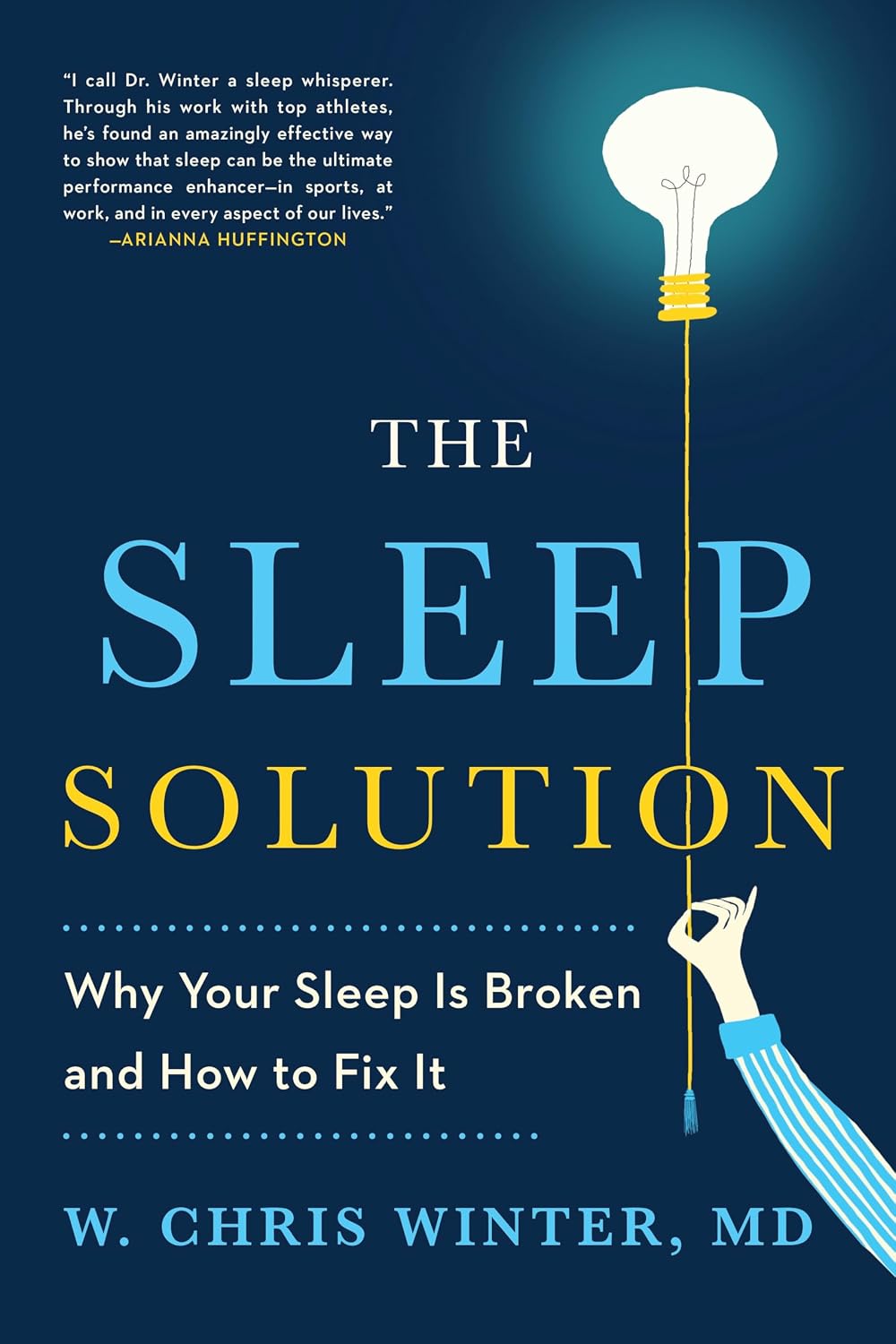
And how do [clears throat] you recover from jet lag? And by the way, what should you do if your schedule is totally out of control? Dr. Winter written two books, The Sleep Solution and The Rested Child. I'm a huge fan of him and his work, and I cannot wait for his advice to help you sleep better starting tonight.
Before we jump in, though, could you do me a quick favor? Could you leave a review? It means the world to me and I would so appreciate it. Let's go ahead and get into it. Chris, it's so good to see you.
It's great to see you, too. We've we've talked a little bit over the years. So I want to dive into sleep, obviously, but I want to talk about you. Why did you pick sleep as a specialty? What was what was your interest in it?
Because I feel like it's such a popular topic now, and I don't know if it always was. It wasn't. I I started in sleep because as a child I decided to be a doctor for no reason. I think the reason was when you say it to your grandparents and and my parents were the first in both of their families to go to college. When your grandparents and you say I want to be a firefighter or a pastry chef, nothing happens.
But if you say you want to be a doctor, you get a little bit of money and like hard candy. So I think there was a weird feedback loop that got established. I got to college and knew nothing about it. So I went to my adviser and he said, "Maybe you should work for a doctor and see if you like it." And he gave me this book of doctors who were looking for undergrads to help with their research. And I remember looking through it thinking, "This is not great.
This is really looks boring and maybe I should be a pastry chef." And there and I turned the page and it was this whole thing about sleep and looking at micro pigs and something about breast implants that they were using to create sleep apnea. I thought, well, this sounds wow really interesting. And so I started working for the guy who ran the sleep lab at the University of Virginia, Paul Serat. Amazing individual. And just kind of fell into it and never really thought it was anything more than like, you know, college credit beer money kind of thing.
But it just, you know, then you one thing keeps leading to another and then you find yourself in your 50s having never left. So, and I remember going we I just got back from the Baltimore Sleep Meeting, which is this big yearly meeting of all the researchers and cool people around the around the world who who work in sleep. And I remember going to a meeting that he sent me to as an undergrad in the early 90s. It was like 12 guys in a room, you know, it was like and I was thinking this year how far it had come just in terms of size and the leadership of the women. There's a se for the second year in a row, the president of the American Academy of Sleep Medicine is a woman and she's amazing.
Hello, Faria. And anyway, just it's it's such a cool field. It is. It's it's unbelievable. Total luck, though.
Well, I mean, congratulations. Could have gotten into like nail fungus, like really into nail fungus and like here we are like nobody cares. But I did choose that properly, I think. Well, you did choose very very well, especially if it was over. Your money got in early.
Well, you did the right thing because I'll tell you what, that is what everybody talks about. It's it's interesting because I talk to a lot of doctors and health experts on the show. And if I say like what's the one thing that everybody really needs to focus on, it really does drill down to sleep at the end of the day. It really really does. So, I think a lot of us us mortals are chasing this perfect sleep.
Like we think that listen, I've got to get the eight hours. I've got to get the perfect sleep. Is that what we should be doing at the end of the day? We we're inundated by all sorts of advice. What should we be looking at for a well-rested good night of sleep?
It might be a good idea to step back that we're all chasing perfect sleep. We all need, everybody says you need to focus on sleep. Sure. I also think you could also say we need to focus on breathing and blinking. Those are two really important things.
And as soon as you stop thinking about them, your body keeps doing them just fine without your thoughts. So I can sit here and blink a lot really fast. I can stop blinking. We have a staring contest. But as soon as my mind gets distracted to some other topic, the blinking continues.
So I think a better way to think about sleep is yes, it's important. We don't want to abuse it. Somebody who tells me, hey, look, as long as I get 4 hours, I'm good to go. You're not. But to some extent, I think that we have to recognize this is something that is built in and automatic.
There is no such thing as not sleeping. So, it's really about what do we do to take a process that's already really good and maybe make it marginally better. I think that's really the focus outside of you're working three jobs and sleeping three hours. Yeah, I think that person might need to maybe read Matt Walker's book and really understand that this is not a great way to live. But that's not the majority of people that I I talked to.
You know, it's interesting. The first time I talked to you when I interviewed you for my book and it was a few years ago. I remember getting off the phone going, "Oh, I feel a little more relaxed about it now." Because I remember I was chasing that perfect eight hours. I came from an industry where I bragged about the fact that I could exist on the four hours of sleep, which I could. I guess my my body did it for a while.
I don't know if I could do it now, but I was chasing that eight hours. So, for somebody who's saying I'm trying to figure out the perfect amount of sleep, you're saying there's no perfect's not a goal. Perfect's not a goal. I mean, there's nothing wrong with trying to make it better. I I think that we're already pretty perfect as we are.
I think your background is unique in the sense that that is a tough industry that prides itself on the ability to, you know, I always look at people like you and think, were you the best reporter, were you the best media person, or were you the person who could do it? I always think I always think about that. I think that I was be too in medical school. You look around, it's not about amazing knowledge or ability to save somebody's life. It's can you deal with the hours and you know I always think that my wife would have been a much better doctor than I am but couldn't she doesn't have that sort of gene, you know.
Yeah. Well, it's it's a grit that I think that Yeah, you're right. I think it's definitely be I've never thought about that, but it's you're so right about it. What happens though with fragmented sleep? Because you know I talk to a a lot of people that are going through pmenopause and menopause.
I talk a lot of people that are on all these different kind of you know shift hour different hours and stuff when you really have that or people that just can't sleep. When you have that that's the thing all the people that have a difficult time sleeping right staying asleep going to sleep what happens with fragmented sleep. What is the real risk with having fragmented sleep? So I think it's important to understand everybody has fragmented sleep. We talk about good and bad sleep.
Most people define bad sleep as getting in bed and not falling asleep right away or waking up not being able to get back to sleep right away. I don't think those are good definitions of bad sleep. We all wake up. We're supposed to wake up. And when you're eating, you take a break and you come back to eating or you don't, whatever.
So, I I do think that fragmented sleep beyond what is what we consider to be normal. And a lot of people come to see us now in clinics because they've gotten some sort of sleep tracker, realize they have fragmentation their sleep, freak out, and then they come to see us. [clears throat] But no, no, I mean, if you look at something like sleep apnnea, that is the sort of the ultimate in sleep fragmentation. You're fragmenting your sleep because your brain is making a choice to breathe and not suffocate to death or sleep and feel pretty good the next day and it chooses to live. So I think there's tremendous risk with that kind of fragmentation. So, you know, I always feel like it's a much bigger red flag for an individual to have difficulty staying asleep than difficulty getting to sleep.
Interesting. So, why? Well, I mean, think about it. I'm starving. Okay.
Well, here's a sandwich. I don't really want that. Would you like an apple? No. No, thank you.
How about a piece of celery or a brownie? I just made them. I don't want none of this looks good to me. You're not starving. I've offered you four different pieces of food.
You don't want any of it. So when somebody says, you know, I'm struggling with sleep. My sleep's so bad. I get into bed. It takes me two hours to fall asleep.
Well, you're definitely not sleepy. How do we get to be not sleepy? We sleep. It's really simple. So to me, I'm a lot more worried about the individual who can't sustain sleep than the individual who has more of a performance anxiety of, okay, I've gotten to bed now and now I can't fall asleep.
That that we can work around that very easily. I can't work your way through sleep apnea without some more significant intervention. If somebody can't stay asleep, what is that a sign of? Well, it can be a sign of a lot of things. And that's where it's important to really define when somebody's, you know, saying they can't fall asleep, what they're talking about.
I just saw a young woman yesterday who was going to bed like at 8:00. She had her alarm set for 7. Okay, that's 11 hours. You're you're seeking 11 hours. And she and she said something like, "Oh, but I'm not going to sleep the 11 hours.
That's the whole problem." Well, then why are you giving yourself the opportunity to? You're essentially buying two extra-L large pizzas every night for dinner and being frustrated you can't eat them all. Well, it was never in your car. You know what I'm saying? So, to me, the first thing I would ask somebody who's struggling to stay asleep during the night is what is your schedule?
And this is where the eight hours might come in or maybe nine. You know, individuals feel like when sleep is going in the wrong direction, more is better. Yes, I can't fall asleep at 8:00, so maybe I should go to bed at 7 when Jeopardy's over and that'll help. That's sort of, you know, it's people treat sleep like a bus station. I don't want to miss the bus.
Suggest them do then. So I think so. Yeah. Go to bed later. Your body is telling you that night after night.
You said to me it's taking you an average of two hours every night to fall asleep. Yeah. Why have you chosen this particular bedtime? I go to I go to the restaurant around the corner for lunch every day at 10:00 a.m. But usually I don't order until noon.
Said nobody ever. The waitress like, "What do you want to eat? I'm not hungry. I'll come back. I'll come back." You know, it's eventually the the the weight staff's going to say, "Why do you come here every day at 10:00?" "Well, that's my lunchtime." No, it's not.
It's noon, so stop. Go do some errands or do something. Come back at noon when you're ready to eat or get out of bed. Yeah. And I will say something about that.
We pathize this in in an interesting way that that is the dogma. I I love it. Every every expert you ever hear about it says if you get in bed and you can't fall asleep, get out. And that's fine. There's nothing wrong with that.
Or you could stay there. I I find being in bed awake lovely. That's what I love about you though. Why is that a bad thing? Like I'm talking to you right now.
Lovely sitting in bed. Nobody's calling me. Nobody needs something from me. My kids haven't wrecked their car and needs some like you know it's just like my own time. And I So somebody said to me, "What's the If you could sum up your best sleep advice in one sentence, what would it be?
Be equally happy in bed asleep or awake." If you can achieve that, insomnia has nothing on you. So, if you're trying to scare me, there's lots of ways you can do it. Threatening me with going to bed at night and being awake for an hour. Oh, I look forward to it. I love that though because I I've told you, you made me feel less afraid of sleep.
And I think I admitted this to you. I used to be afra I used to do any everything I could to not get into bed if I wasn't tired enough yet because I didn't want to lay there. And I did actually have a fear of getting into bed, which is crazy. F- word. Yeah.
Fear, fear and function. And so again, if somebody says, "It really upsets me to be in bed awake." We can explore why that is. [clears throat] But so get out if you want to, but if you're like, "Look, sometimes it takes me an hour to fall asleep. I don't mind lying in bed while I wait." Great. Because resting really helps your body. Every proathlete I work for, work with, I will tell them, "You need to find 15 minutes every day to rest.
If you fall asleep, awesome. But if you don't, the resting mattered. And if you do it every day, by the end of the season, you're going to be a different player. So, what is rest to you? What are those that 15 minutes look like?
Lie flat in a quiet place and close your eyes. That's it. Just And if you fall asleep, it's okay. You fall asleep, you fall asleep. And And what's so interesting when you talk to people who struggle with sleep at night, they often will fall asleep at times during the day, take a nap or, you know, whatever.
And so I always ask people, you know, who use sleeping pills, what pill do you take to take a nap? Nobody in 30 years has ever said, "Oh, I use this pill." They always say, "Oh, I don't use a pill to take a nap." Why? It's performance anxiety. Napping is like bonus. It's like you've walked into a gymnasium, there's a ball on the ground, and you're shooting free throws just for fun.
Nobody's looking, and you make 10 in a row, and you can't believe it that nobody was there to see it. Right. Right. It was good. So versus, okay, now you're in a real basketball game with a with a crowd and your girlfriend's there and your family's there and your teammates are there.
It becomes a completely different action even though it's a stain ball through an iron hoop.
Now, what about people that struggle to stay asleep? So, they get to sleep and then they wake up at, I don't know, 2 o'clock in the morning and now they're up for another half hour, hour. What What's the risk of that first of all, and then what do you recommend? So, if it's just somebody who's wakes up, you know, they go to bed, they wake up at 2 o'clock in the morning, can't get back to sleep.
I don't think there's a whole lot of risk there at all. I think the risk becomes the panic. Mhm. So to me, this is where, you know, keeping logs of sleep or diaries can be very helpful. You I want you to write down kind of what happens every night.
If every night you wake up at 2 and you can't get back to sleep until 3, that might be a sign that maybe going to bed an hour later, but keeping your wake up time the same. And that's where the 8 hour myth can really hurt people. Yeah, a 7 hour person and you're trying to sleep eight. That's why I always think that when people get married, the partner that sleeps the fewer hours always gets the short end of the stick. It's like, "All right, it's time to go to bed.
We'll watch this episode of, you know, House of the Dragon tomorrow." And, "All right, let's go to bed. Good things happen in bed." So, you go to bed and they're out cold because they need more sleep than you do. You're just sitting there waiting around. So, yeah. So, it's not fair.
I've learned just get in bed later, right? You just go to bed later. Exactly. So, if you're somebody who's decided you need eight, but you actually need seven, that might be the hour that you're waking up at 2:00 in the morning. That's your body saying, "Great that you're giving me 8 hours of opportunity.
I can't do this. It's not in my cards here." Is there any potential health risk to that though, not being able to stay asleep? Is there a blood pressure? Is there heart I know you talk a lot about different things in your book. Is there a potential any type of health risk with that?
If somebody says to me their problem is I can fall asleep just fine. Someone's wake up at 3:00, takes me a while to get back to sleep. I would say no. I I don't think there's a risk to that at all. That's where the acceptance of you might wake up tonight and you might be awake for a little while.
There's that's okay. So, when somebody, you know, if I meet somebody at a party and they say, you know, Chris, it takes me two hours to fall asleep. My first question is, how do you feel about that? The answer is, oh, I don't care. You'll never have trouble with this kind of stuff.
You're fine. Now, I would think the person who's constantly waking up over and over and over again, there might be some investigation that needs to happen. And that's a person who might really do well with a sleep study. So you would rather have 6 hours of uninterrupted than 8 to nine to whatever it is of fragmented sleep. No question.
That's a great No, that's a good question. I think you have to be careful with that because I can solve everybody's insomnia by, you know, sending them to the United States Naval Academy. They'll go to bed at midnight. They'll be woken up at 5. Or put them in your career.
Hey, go be a reporter. It's going to solve your insomnia. I think you create new problems. So, I can get anybody to sleep by, you know, putting them at midnight and I'll wake up at 5:00. We'll go exercise every morning and I won't let you sleep from 5:00 a.m.
Till midnight the next night. Yeah. Yes. We create, we solve one problem of, "Oh my gosh, Chris, ever since you've shown up my house and make me get up at 5:00 in the morning, exercise with you, and no naps, and no sleep until midnight, I'm having no trouble falling asleep, and I'm out cold during those 5 hours." I don't think that is necessarily healthy. Okay?
So, and that's why we go back to this definition of good sleep is when you fall asleep fast and you don't wake up is a little bit problematic in the sense that because the person who's listening who says, I've known I don't have any of these problems cuz I'm a trauma surgeon. She goes to bed at midnight every night. She's up at 4:00 to do her first knee replacement or whatever she's doing. In the media, we talk all about people can't fall asleep. People can't stay asleep.
So, if you're a trauma surgeon and you're going to bed at midnight, getting up at 4:00, you have no trouble falling asleep. In fact, you fell asleep one time in the operation. You know, we don't talk about that. And you have no trouble staying asleep because you're sleepd deprived. So, we put those people on a pedestal.
In fact, how many patients have I seen who will say something, I wish I could sleep like this guy beside me. He's asleep before his head. It's the pillow and he never wakes up, right? Cuz he probably has sleep apnnea. Well, that's what I was wondering.
It does that. Does somebody that falls asleep instantly, gets into bed, falls asleep instantly and doesn't have a problem, is that a sleep apnnea? It could be sleep apnea or it could be some sign that your body is so driven to sleep. Yeah. That every time your body gets horizontal or sits down, you know, we were the family that went to church once a year and we, you know, sit right in the front pew just to make sure everybody saw us on Christmas Eve.
Like we got credit for that year, you know, whatever. And I remember my father would often fall asleep. That's not a great That's not a great sleeper. That's a problematic sleeper. And it's unfortunate because 95% of what I hear is, "I wish I could be like that guy." And unfortunately talking to those people, they don't understand why you want them to do something different.
I don't know why you're on my case, Dr. W. I can fall asleep right here on a pile of gravel. Right. That's not great.
No. Why do you think that is? It's because your body is looking for sleep so desperately that it will take it on the gravel or in the church pew or driving down the road in your car. And is that when they need to come see you for a sleep study? Yeah.
Hopefully before they get behind the wheel of the car. Yeah. Yeah. When it starts when you start hitting that little rumble strip on the side of the road, you need to see somebody. So, let's talk about that because you see the elite of the elite.
And you're helping people not fear sleep and get to sleep and figure out what's going on. How bad should things get before you go to sleep study or should everybody go get a sleep study? I I think that I don't think everybody needs a sleep study, but I think most people that I talk to, it is rare when I have the thought after interacting with somebody related to sleep that wow, why did you come so early, you know, you this I've never met the patient who said, "My sleep really started getting funny last Tuesday, so here I am." It's always like five years later, you finally listen to your partner and and do something about or listen to your clinician. So, I would say I don't know the answer to that question, but I think it's earlier is better. Mhm.
No, I think it's good, but I think we're more aware of it, too. We've got the trackers, we got the beds, we've got the devices because now it's putting that knowledge and information in people's hands. You don't sleep. Okay. I just talked to this patient.
She said she didn't sleep. She said, "I'm lucky if I get an hour." Just wear a tracker. Let's talk in a month. You know, let's define this in terms of things that are more realistic. She's like, "You're right.
I do sleep more than an hour, but it doesn't feel like it." Okay, great. Now we're moving more towards a reality based problem versus, you know, I I can't sleep, which is not a reality based problem. So, we got people listening right now that are like, "Oh gosh, okay, I I had all these nights. I'm not I'm not falling asleep, not getting asleep, whatever it is. I'm listening to this podcast.
What can I do starting tonight? I know you're very big about making sure you wake up at the same time, going to sleep at the same time, too, or is that kind of a I think if I think if you take care of waking at the same time, the front end sort of takes care of itself. Again, you sort of thinking about like a military academy or a college situation or you like the show you're in makeup at 4:30 to be on air at 5. That that sort of creates sort of a guard rail. That's why I always tell people retirement is the worst thing for your sleep cuz all the guardrails disappear.
Your kids are gone. They're doing their fun things. So, you don't have to get up and get them on the school bus and sign permission notes. Your job doesn't require you to be in the office at 7 a.m. Anymore.
So, if you sleep in until 9:30, who cares? Take a 3-hour nap in the middle of afternoon, who cares? Now, your body's like, "Oh, we can kind of do what we want to do here. It's a free-for-all. It's a free-for-all." And people generally do not want a free-for-all. 90% of sleep problems is anxiety because you don't know what's going to happen at night and you want control 100%.
You talk about hibernation and you know like toolkits. Can we go into some of the things some of the best practices that you believe in as a sleep expert as somebody that's seeing people day in and day out because I love that you're actively practicing and have all these examples of people that are still coming in all the time. Yeah. So, you know, I think that we can sort of move forward with the toolkit in terms of two groups. You're a listener thinking, "My sleep's pretty good.
What could I do to make it better?" I think about British cycling all the time. British cycling many, many years ago had somebody come in and said, "We're going to revamp everything we do with British cycling. We'll make everything we do 1% better. We'll make our bikes 1% lighter, our nutrition 1% better, our sleep 1% better, our helmets 1% more aerodynamic. And if we do that 100 times, our cyclist will be 100% better than the competition.
And they were. They cleaned up that next Olympics. So, I like that idea of, hey, I'm listening to this podcast and I sleep pretty well, but what are some things I could do to find some 1%s and then multiply them over the next 30 years of your life? That's big time. So to me, I think that group is a little bit different from I'm listening to this podcast when I sleep.
My sleep is a disaster. Yeah. I I would just caution people. There's nothing wrong with these little tips and tricks. If your sleep is a disaster, I don't think it's going to solve your problems.
You need to go a little bit further. You need to go to the next step. Yeah. I've tried the spray. I've tried this.
I've tried that. And nothing worked. Yep. Yeah. Time to go on.
So to me, I think supplements are a big one. Supplements are something that I practice. I preach. I see it in every professional team that I look look towards. Again, it's supplement.
Think about the term supplement. You're supplementing something that's already pretty good. So, I I'm a big fan of the Natal suite of products. I've been using magnesium for years that they provide to help with some restlessness that I have in in in my sleep and just make it, you take it to a little bit of a different level. I travel a lot.
I flew in today. I'll leave today. So, I'm a big fan. You're welcome. It's my pleasure.
It's it's an honor. So you know, melatonin I think is a really awesome supplement for individuals who travel a lot. Yes. Moving across time zones. You you are a reporter and you have to be up at a very unusual time, a time that your body doesn't expect to get be up because the sun's not going to be up for another three or four hours.
So moving back and forth between a night shift and a day shift. I was just with a family member who had a knee replacement. And I was thinking about the nurses that worked, you know, the shifts and and they're all over the place and and you know, so there's supplements that can really help an individual. Even an individual says, "Look, I've been working as a shift work nurse for a long time. I do a good job with it.
You can do better." We know that people who work those shifts are higher risk of cancer. They have a lot more medical problems. So these are these are degradative jobs. You know, even if you like I always like being on call at night cuz people left you alone. There was never you just did your work.
You know, there's no meetings or superfluous kind of stuff, but it's just not healthy for anybody. So, I think supplements are great. I think your bedroom environment is a really important thing. It's it should be a place that draws you in, relatively free of clutter, a place that you kind of want to be. I'm not a hu I don't have a huge problem with you know if you want to watch a little television right before you go to bed as long as it's a defined sort of practice you know one little episode of something before you go to bed I think exercise is a must I do too you can't I I you know the number of people who have you know trouble with their sleep and have no schedule and don't exercise and like you can't you know I'm getting cavities but I really don't want to brush my teeth like I don't I got nothing for you here I'm still eating a lot of candy so you've how to do those things.
So, I think those are the big ones that really have the most evidence behind them. Is there a time of day if you are going to nap and you add a nap into that? Do you recommend everybody nap every day or is that if you as an unneeded basis?
I like napping especially if you know for and keep using you as an example as a reporter. You got to be up at 5:00 in the morning. Maybe you have a family. So you are sacrificing sleep at night. You're done, you know, at 2 o'clock in the afternoon.
I think individuals who would have gotten more sleep but don't have the capacity to do it. I think napping is lovely and time of day. Yeah. I mean earlier is typically better. I think consistency is really important too.
So if you're not getting off until 3, try to make that nap every day 3:30 to 4:30 or whatever. I think where you get into trouble with napping is individuals who say, "Get in bed. It takes me two hours to fall asleep." Yeah. So, I finally fall asleep at 1:00 in the morning. I have to be up at 5:00 in the morning, do my thing.
So, I'm going to take a nap later in the day to make up for the sleep I lost. Well, you had the opportunity, but you didn't use it right. So, I think that's where napping can really create make a small problem a big one. When my kids were about 6 years old, I have three of them. You know, when they got to be about that age, I would sit down with them and say, "You can go to bed whenever you want to.
You know, you're you're practically an adult. You're six. You you you no longer have a bad time. That's the coolest dad ever, right? Yeah.
You no longer have a bedtime. And I remember their little faces. They were like, "Really?" So, the rules were, "You have to be in your bedroom at this certain time." But in terms of when you get in bed and turn the light out, I don't really care. Just don't bother me unless you smell smoke or see somebody you don't recognize in your bedroom. But what I didn't tell them was I'm going to wake you up at the same time every day.
We do it nicely and kindly. So, there won't be a, "Dad, I was reading my Magic Treehouse book until 3:00 in the morning. Can I skip school?" No, you're going to go to school. So there was always a little bit of a natural consequence there, but we did it in the sense that if you want to stay up, stay up. If you want to have an alcoholic beverage, have an alcoholic beverage.
But you need to respect the fact that it will dampen your sleep a little bit. And we're not going to make an allowance for it. And sometimes napping does that for people, especially like I said, if they have flexible schedules, retired, medically ill, you know, often getting told the message, oh, you got to sleep when you can, right? Right. So, some of the worst cases of people with their sleep have been individuals who are struggling with some sort of illness that feel like anytime I sleep, I should sleep, but then their sleep at night just gets completely screwed up.
You know, I want to I I like the fact that you wipe away a lot of these to-do lists that like I'm sure that you've heard so many at this point that you know, you roll your eyes when you hear some Tik Tok videos come over. And I do want to go over some of these things. So, like standing in Himalayan salt. That was my I don't even I don't even I can't even make them up anymore. I can't even make them up anymore.
I guess my my one big question is this. I think it's a really important one up. Well, I we could make one start. I want to think about that. Make it go viral.
We'll we'll tag you on it. I've had this thought before and then I thought I'm violating some oath I took if I did it. But I would I'm curious. You're not. You should figure one out.
Like rub your teeth with your finger before you go to bed. It really helps you sleep. It relaxes you. There's nerve endings in your teeth. So, a good myth has to have some truth to it.
Okay. Okay. So, give me more nerve endings in your teeth. So, what should we do to fall asleep better? Sorry.
We'll think about that. If people have one thing that they take away from this, I think that the most important thing is that they're not broken. Their sleep's not broken, but they're going to eventually fall asleep. Is that right? Yes.
Yeah. No, absolutely. If you are human, if you're listening to this and you're human, you're going to spend about 6 hours for every 24 on this planet sleeping. There's nothing you need to stop that. And again, if you're like, "That's not true.
I can't sleep." just buy some sort of sleep tracker, put it on and forget about it for a month. At the end of the month, query it, you know, pull up your app and and look how many hours am I sleeping on average over the last month. It's I think the lowest I've ever seen is about six. Wow. Okay.
Tom Roth was a researcher up in Detroit. He looked for these people all of his life. The the the smallest he ever found, I believe, was 545 a month for the month. Five hours and 45 minutes per night on average for for a longer period of time. Okay?
So, that doesn't mean you can't pull an allnighter, but that's why I like to look at it over a month's period of time. And that's a powerful number because if you're getting a number back that says 6:22, 6 hours and 22 minutes and you're going to bed at 9 and your alarm clock set for 7, you you can try to sleep 10 hours, but your brain is set for about 6 and a half, which is very common in older people. Well, six and a half is not a is not a scary number to me. No, there's a problem. So, now you've got 10-hour opportunity, 6 and a half ability.
That difference is your problem. Are you seeing any type of I mean, you're seeing people with trackers and data and information now coming in. Maybe they're coming in to get sleep studies a little earlier because they're more aware of it. I think that it's we've normalized the conversation about sleep. Everybody wants to discuss it and talk about it.
It's like the weather. Is it is there anything you're seeing in midlife in particular? Are you seeing more cases of sleep apnnea? Are you seeing more cases of disordered sleeping? What are what are you seeing as a trend now, especially with the clinic that you have?
Yeah, I think we're, you know, for a long time, you know, sleep apnnea was woefully underdiagnosed. We see a huge trend with that. This is a big problem particularly in women as you know, as you start to, you know, approach menopause, the risk of sleep apnnea dramatically goes up in women. You know, something that's always been sort of protective about estrogen that we don't really quite understand. And so and and the other problem with that is you're getting a a group of individuals who were suddenly they were at low risk before, now they're at high risk, but they hide it well.
I think the medical community still has a picture of sleep apnnea, which is a 300 lb, you know, overland truck driver. Yeah. You know, named Mac, you know, that's what we're looking for. So when somebody like you walks in, this is not sleep apnnea. Women don't tend to snore as loudly.
Men are just oblivious. You know, if your partner is out cold with his own sleep apnea, they're not going to pick up on it. I mean, my wife has said many times if she caught on fire at night, I would never know. Like, until the next morning, I'd look over and there'd be like a weird name. Where's my breakfast?
I'm kidding. I'm totally kidding. So yeah, there's a lot of things that work against it. But, so a lot of sleep apnnea. A lot of you know I think there's some wonderful things that came out of working from [snorts] home and the way we've you know kind of where we don't have to commute to work and things like that can be great for some people but I think sometimes the lack of movement in our lives has created a whole subset of sleep problems for a lot of people I believe that and then I think that like you said this our focus on sleep and trying to perfect it is the big deal so I like sleep trackers I think they're great they're they're getting better and better all the time if that creates anxiety in you like you wake up and you look at your watch and you get a frowny face and you're oh no frowny face you know that's oh I got to get right now if I don't fall asleep right away I'll get a frowny face got a little guy if that's if that's the way you feel about it that might be not a great thing for you to have but I I think sleep trackers I think in general knowledge is power you know yeah there's no question sleep apnea if someone's listening goes like I don't I don't know if I have it or there are a couple of signs to look for a couple of things that could we could say to somebody maybe you need to the secrets.
Yeah. Excessive sleepiness. So to me that is my biggest red flag. If you're sitting in and watching a movie during, you know, normal movie watching time, not late at night, you're sitting in church, you're in a lecture, you're in school, at your work, driving your car, and you're struggling to stay awake. That is sort of the do not pass go directly to a primary care doctor.
If primary care doctor is is is not making a big deal about that, just go directly to a sleep specialist. What would a primary doctor do? Would you have to go into a study and what happens? I you know to me the the I think that you could go directly to a sleep specialist. I always like to involve a primary care doctor.
They're kind of the quarterback. Sure. So you talk to her and say look I'm really struggling to stay awake and I heard this podcast and and if the primary care doctor's like well it's okay. I mean as long as you're then I would maybe bypass that person. But I mean but for the most part you know primary care doctors have what?
Seven minutes to spend with you before they have to get on to the next patient. So, I think that they're very happy to sort of pass that on to the specialist in terms of, oh, hey, I mean, I I would be a terrible primary care doctor, but I would order sleep studies on everybody because from my end, whenever I get a chance to talk to primary care doctors, I'm always like, if you're not ordering studies that come back normal, you're not ordering enough. If all of your sleep studies come back with horrible sleep apnea, that person's had horrible sleep apnnea probably for the last three or four years, like and they've been coming to your clinic every six months to get their high blood pressure medication is highly linked to sleep apnnea, their cognitive decline, their weight gain, their name a symptom is related to sleep apnea. So to me, I would be terrible at PC as a PCP. I'd be really good at being like, "Okay, you're 50 years old, you get a sleep study." But I just snore a little bit.
I don't care. Are you getting to sleep tonight? I'm ruling that out. I'm ruling that out because that's easy. So to me, yeah.
I mean, anybody who snores, if you feel tired a lot, you know, fatigue is such a big problem in this country and we as as the medical community just kind of ignore it. I mean, you know, especially if you're a woman. I know. You know, you chose to have a job and two kids, you know, like pat pat on the head. So you know, to me, I I think you want to find somebody who's a real ally in I didn't feel this way when I was 35 and now I'm 45 and I feel like I can barely get myself out of bed.
Yeah. There's a problem. There's a problem there. I gave a lecture one time about fatigue and said to the audience, there's a cause of fatigue for every letter of the alphabet. And somebody in the audience said, name them.
And I got to like K or no, I got to J and couldn't leave a J. It's Joe Bear syndrome if you need one. But A for anemia, B for B12 deficiency, C for long CO, D for depression. There's so many things out there beyond sleep that all we do is check thyroid and B12 and tell people you're fine. I know.
I know. You're not fine. And hand them a heavy duty vitamin D. That's what I got. I mean, yeah.
And then no followup. Like that's all I got. Vitamin D. Good luck. Prayer.
Good luck. Yeah. We have trackers now, which is good news. We have supplements now that that make a difference. We have the sleep studies, too.
And I guess with sleep apnnea, there's a lot of other options beside the mask, which I think a lot of people fear having that kind of stigma, but there's now, you know, additional additional ways to to solve for that. We do hear a lot of things on TikTok and social media. Can I go through a couple of those before I before I let you go, Chris? Okay. So, I'd love you to rank these sleep trends out of 10 and why.
So, like 10's great. 10's great. And then just a quick one sentence yes or no. I'm scared you're going to yell at me with someone. I'm not a yeller. Okay.
I'm I'm a crier, not a yeller. You might cry. Mouth taping. I So, I would say I'll give it a four in the sense that there's not a lot of the data behind You said one sentence. I can't do one sentence with this one.
A lot of the data behind it is just not non-existent. But I do think that it could be a solution for minor snoring and by stabilizing your jaw. It wouldn't surprise me if it helped with some mild sleep apnnea. That's kind of what an oral appliance does. Okay.
So, just be careful if you're a heavy drinker or something like that or you take narcotics and you're taping your mouth shut. That could be a really ugly crime scene. Thank you for the warning. Yeah. Really?
Tart cherry juice before bed. Eight or nine. You know, again, I like it for a couple reasons. One, it's a it's a it's a habit. Every night when you have the tart cherry juice, it's sort of a signal to your brain.
Oh, sleep's coming. And so it's like that little zeitge, that little time cue. Plus, every elite athletic organization I've ever worked for has coolers full of it because of its anti-inflammatory properties. And it does have sort of sleepromoting properties as well, too. So, they take it any time of day or at night.
So, generally speaking, it's kind of like a once a day sort of thing. I always tell people to kind of time it at night. So, it's just kind of that little hot shower, dim the lights, cool your bedroom, drink your tart cherry juice. It's kind of like a little ritual. I think it's lovely.
Blue light glasses. So, I'm still a big fan of them. I would give it a seven. I like the idea of reducing light in whatever way you need to to do it. I think if your blue light glasses aren't yellow in they're not doing anything.
Okay. So, I think even just a pair of sunglasses can be really helpful. There's a lot of noise right now about blue light not being as important as what we once thought. Probably not. But reducing light is so dim your lights, put your sunglasses on and a few hours before you go to bed really help.
Weighted blankets, love them. I like I said, I've got periodic restless leg. I think weighted blankets are awesome for that. If you go to the I always tell people if you go to the dentist and they put that lead apron on you and you're like, I love this. I always ask like, can you just leave it on?
Is there a problem with leaving it on? So if you like that feeling as a lot of people with restless leg do and you mentioned what disorders do you see as you get older in life restless leg is a big one particularly in women lower iron levels or whatever. If you like that feeling it could be an easy non-farmacological way to treat that. So between weighted blankets and my natural magnesium I've really improved my sleep quite a bit with that. But I love a good weighted blanket.
In fact, I've got one got 10. Let's say Barbe, they make a weighted blanket that's very loosely woven. So, I can put it over my head and still breathe just fine. So, if you're somebody who's like, "Yeah, they're great." If you're somebody says, "Look, I would wear a weighted blanket, but they're too hot." Not Not at all. They let air move just perfectly.
So, I I think they're great. And trust me, I don't like being hot when I sleep. No, I don't either. Magnesium before bed. Love it.
I I think magnesium, you know, like I said, I use Naturrol's magnesium glycinate. Think that is a easy fix. Again, it's not going to change your sleep overnight. This is not going to knock you out. But, you know, do it for six months, do it for a year, and then ask yourself the question, are you better?
God, I I really am. Kiwi before bed. I like kiwi. I don't Is that a thing? I I don't know.
I'm This is new to me. This might be the Yeah. Maybe It always reminds me of the restless leg therapy of putting soap under your mattress. I don't even know that one. You ever heard this before?
This is a big thing. In fact, when I was really young in my career, a doctor called me up and said, "I got a patient with restless leg. How do you feel about soap as a treatment?" And I thought, I said, "I guess it would depend on the soap, but I don't know what the long-term effect of ingesting soap are." And he was like, "Oh, no, no. They're just sticking it under their mattress." I was like, "Great." So, kiwi before bed, awesome. Maybe kiwi under the mattress is our That's what we're doing.
That's it. Put kiwi under the mattress and you can sleep better. That's what Chris said. Unpeeled kiwi under your mattress. Amazing for your sleep.
And then throw the weighted blanket over it. Oh yeah, right. A glass of wine to fall asleep. Oh, zero. Negative five.
Listen, I alcohol is awesome and delicious. If you want to drink alcohol, drink alcohol. But I want you to have in your head, I'm drinking this alcohol cuz my friends are in town or I'm in Italy and it's just amazing, but this is going to hurt my sleep. But it's worth it because the family's together and we're at Lake Cuomo. This is amazing.
So, I'm going to have this alcohol or this Moscow mule, whatever your thing is. You know, every time I I lecture to the military or the police, when I'm done, somebody always walks up and says, "Great lecture." You know, I hear what you're saying about alcohol, Chris, but for me, just takes the edge off, helps me sleep better. And this is where we get into speed to unconsciousness is not a great not a great indicator of good sleep. I did that though for a long time. I got to tell you, I did the news till 11:30 and then I went and had a drink or you know, whatever.
And then I'm like exhausted, but who I mean I Yeah. And you're keyed up because I was young those days and I did young. You're still young. Oh, I'm going to keep you here. White noise machines.
I like them. Especially if you live in a place where you can't control the exterior environment or you got a snore beside you or something like that. Heavy breathing dog. I like them. Heavy breathing husband.
And there's only travel ones, too, that I really like. Oh, there are. Yeah, there's one called the Rome. It's about the size of a hockey puck. You can charge it up.
I just keep it in my bag because a lot of times couples when they travel, they're in closer quarters or there's some differences there. So, we just have that with us all the time so you don't have to use your phone, right? Smart. Morning sunlight within 30 minutes of waking up. Love it.
And and couple that with exercise and you're great. I always tell people any sleep should end with light, movement, and food. So, if you're a napper, okay, I'm going to nap every day from, you know, 1 to 2, then when you wake up at 2:00, get in the sunlight, have something to eat, and move your body. Naps in the afternoon. Yeah.
I I think that if you're somebody who struggles to get the right amount of sleep, I was just talking to somebody who's a caregiver for their adult, their their parents, and that often hurts their sleep. If there's something keeping you from getting the sleep that you need, I think a nap is a great way. And there's a lot there's a body of of sleep researchers who feel like we were kind of designed to be bifphasic sleepers anyway and have two sleep periods. If you look at animals, I think we're the only animal that tries to shove it all into one, you know, period. So if you look at your dog, your dog's like, you're doing it all wrong, man.
You know, follow me and you're going to be great and sniff this, lick that. So anyway, I love talking to you. You're great. Great. I enjoy talking to you, too.
You're welcome. Yum.