Do you think ADHD impacts a woman's confidence? That's what it impacts like first and foremost. You've had ADHD since you were born. Most women have no idea that they had ADHD when they were kids. You felt like you were completely out of sync with other people and you didn't know why.
Why am I having a hard time getting along with people? Why do I not have as many friends as I think I should have? Why do people seem to be annoyed with me all the time? Your brain is wired completely differently. And nobody knows it.
Shanna Pearson has coached tens of thousands of women. She built the largest one-on-one ADHD coaching program in the world, and her work is helping women understand their brains and take their lives back. Even if you've been getting by your entire life having ADHD, but you've created systems and you don't even know you have ADHD, pmenopause and menopause are when a lot of women go get diagnosed. Today, Shanna is breaking down what is really going on. 30 to 50% of our female clients have also been misdiagnosed with depression and mismedicated. And she's sharing tools to help you feel more in control, less guilty, and finally understood.
But if you write down the two things or the three things at the most, and then you draw with a very thick line a box around it, this is an impenetrable wall. This is what you're focusing on right now, and it's this and only this. So, how do you know whether or not it's anxiety, depression, or ADHD or both? I think it's a really important thing to talk about because before we start, I just want to say thank you. If this show is help you feel seen, less alone, and just a little more understood, it would mean so much if you hit subscribe and left a review.
I read every single one, and they're a big part of how we keep these conversations going. Now, this is a topic I have been wanting to cover since we started the podcast because I'm constantly asking myself, is this ADHD or is it brain fog? And I know I'm not alone. So many women are being diagnosed later in life. And I get your questions every single day about this.
There is good news. Shanna Pearson is here to break it all down and she's answering your questions at the end of this episode. So, be sure and stick around to the end and let's get into it. Shanna, I am so excited you're here. I am so excited.
I'm here and so is everybody else because three people came up to you all at once here in the studio and were like, "Okay, we need to talk to you about ADHD right now." Exactly. Which completely makes sense because I think it's been a really big topic of late. It has been, especially for women. First of all, not assuming that everybody knows these definitions. So, let's define ADHD and then how it differs from ADD.
ADD is an old term. They stopped using it quite a few years ago. It used to be like the, you know, ADHD without the hyperactivity. Okay. Now they call it ADHDI, which is inattentive.
Oh, so it's just a little bit confusing. Because it still has the H there, but you can have zero physical hyperactivity and then be diagnosed with ADHDI, which is pretty common for a lot of women. That's like the most common diagnosis for for the female population. But overall, we can still say ADHD, right? Definitely.
You're an ADHD coach. How did you become one? After I was diagnosed myself, thankfully, I was working in a nonprofit job creating a coaching program in health and wellness, which is not my expertise, but I got this job and I was doing a pretty good job because the the participant, it was for 2,000 career coaches across the province of Ontario in Canada. And that was the same time that I was diagnosed with ADHD. And so I was seeing the results that these, you know, career coaches were getting in their health and wellness coaching program.
And I'm like, well, okay, I know how to get people from point A to point B. So, and then I was diagnosed with ADHD. And I decided after spending so much time and effort in the health and wellness coaching program that I was doing, I'm like, I need to transfer this and help people that are me. Like, these are my people. And so I just started it really slow, like just get one client, you know, once I once that was at a point where I already had to start learning everything about ADHD and what works to help yourself.
Yes. Well, and so I I always think that's where so many things are rooted, right? You're dealing with something yourself and then you realize that there's more to learn, more to learn, and then and then something to teach. So much to learn. How did it feel when you were diagnosed with ADHD?
I was 32. My life my life was a disaster just to put it, you know, straight. And at first with a in the same it it was a bit of a mush because they actually diagnosed me with depression initially and it didn't quite make sense even though my life was very depressing at the time and I wasn't happy. And I answered all of the self- assessment questionnaires, you know, according to, you know, it it seemed to fit with depression, but I wasn't depressed. And so, you know, they put me on an anti-depressant, and that actually did make me feel depressed.
And, after a little bit, I was just I just wanted to I told the doctor, I'm like, this is not this is not me. This is not working. And then he, the doctor initially that told me to go get diagnosed in the first place, sent me to one of those ADHD specialist doctors that literally took two days with me. It was like six-hour days twice and looked at every part of my life all the way back to kindergarten. I had to bring in my report cards that my mother still kept.
And yeah, so he was he did such a thorough diagnosis. He basically told me, "You are the textbook." you know, textbook version of extreme ADHD and and it totally made sense based on whatever I knew at the time. So, you had been ADHD your whole life but didn't know that. Everyone everyone who has ADHD has had ADHD for their entire life. And it's interesting because a lot of especially especially girls, they're not they don't tend to be as visibly hyperactive as boys.
So, they tend to get missed when they're younger. They're not as problematic or disruptive and so they get missed and then you know later in life they might get diagnosed or for a lot of women and this is I mean you know everything about this when they're going through pmenopause or menopause because of the lower amounts of estrogen which basically influence dopamine and then you're you have an even lower amount of dopamine. So, even if you've been getting by your entire life having ADHD, but you've created systems and you don't even know you have ADHD, pmenopause and menopause are when a lot of women go get diagnosed because their life just falls apart because it's not being able to be controlled now anymore. Like you've had it all along. Your systems, you know, whether it's been like, you know, organization or time management or mood management, whatever, whatever systems you've made and you put into your life, they've been working.
But then you hit this time in your life where your dopamine levels are even lower and those systems stop working because it becomes a lot heavier and more severe and that's when people are like like they cannot they can't manage their minds in a way or it's just like they just feel like everything is spinning so far out of control and that's when a lot of people go seek a diagnosis. I will tell you that those words I have to imagine are going to make a lot of people hearing this, especially women, feel so much better and relieved that like maybe that is what's going on with me versus I feel like I'm losing it or I feel like something's really wrong with me or I'm going crazy. Because I I will tell you and I' I've not talked about this before, but about a year and a half ago, I was sent to a psychiatrist from my therapist who said, "I, you know, I think that you have ADHD, but I want to see you a little bit more and probably go through the tests or the few days that you went through, but I backed out and I never did it." And I think I really regret that now and I probably should go and and follow through with that. But I really do after reading your book and just continuing to learn more about it, I have to imagine that he was probably right. It was probably something I I didn't know if I was ready to hear.
If you're feeling great and your life is feeling like you you are feeling like you have your life under control, you don't necessarily need to go get a diagnosis if everything is fine. It's not like I I need to know that I have this now because I mean maybe it's good, maybe not. But I think if you're I mean you're definitely in the right profession and you are definitely doing the right type of work because you know every day is different and you're always like speaking to different people and you're I mean you're amazing you know. So if everything is if everything is fantastic and on a good level for you but those systems that used to work for me the systems that work for me for 30 years in news don't always work every day like they used to. And I definitely I'm definitely aware of that.
Interesting. You know, so when I was growing up, I guess the definition to me in my mind for a ADHD was always like a fidgeting little boy in the classroom, right? It wasn't a 40-year-old mother of two. It wasn't a 55year-old woman who switched. It wasn't any of anything that we're talking about now.
So, what is a typical client for you? There's no typical ADHD, which is why it's actually tricky to diagnose. However, there are some key areas that everyone seems to have in common. You know, if you're in your 40s and 50s and, you know, everything's been working up until a certain point, it starts to feel like everything's unraveling. Our typical clients are unbelievably overwhelmed where it feels like there's just way too much going on and it's all taking up the exact same amount of space in your head.
There's nowhere to put anything because we're not able This is something about ADHD that I think you and hopefully a lot of a lot of people watching this should know or listening to this should know. We don't have a very easy time compartmentalizing. Okay. So, we're constantly living in this deluge of everything all at once right now. And if you I have to I have to fix all this now and nothing really takes preced.
All the exact same level of importance, everything. You've described that to a tea, though. That's exactly That's exactly right. And I hear a lot of women say that, too. And it's like that nonstop every day.
There's no respit. There's no, you know, like, oh, well, you know, it was really stressful last week and and but now I'm done with that and and everything is good. It is like that no matter what. And you're living in that, which is incredibly stressful. There's no typical client for that.
There's no typical like just picture of somebody with ADHD. It could be all over the place. For a lot of women, honestly, we tend to be a little bit more not I don't want to say quieter. We tend to be more like expressive and enthusiastic about different things. Tend to be not everyone is, but but all of us are are drowning in overwhelm all the time.
And that's something that, you know, you can pretty much count on for for any woman with ADHD. What does ADHD look like in women today that maybe was different from I don't maybe 10 years ago. I don't know. I feel like the way that the world is spinning and the amount of I want to say it's like high volume. Everything is so high volume and there's so many places to look and so many areas to get completely lost on.
So we didn't have like doom scrolling the way that we do now. We didn't we didn't have anything like we didn't have our social. We didn't have we the phones like we don't even have we didn't have smartphones back then the way we do now. So it was easier to create systems that you can follow because there wasn't all of this other stuff pulling you in to different directions everywhere you go. And the stuff that we have now that's so distracting, we carry it with us.
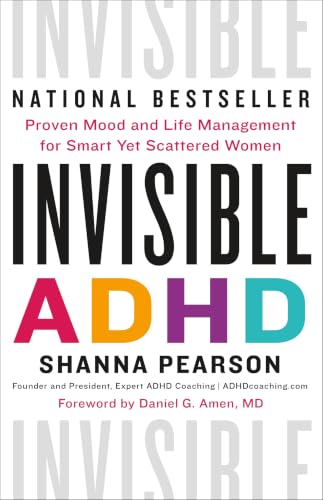
Like there's nowhere to go without it. So I feel like it's really hard. It it's really really really hard now more than ever to have to have this type of brain. You have invisible ADHD is the book that you have. And there's a lot of strategies in this to really manage what's going on.
There's overund strate I I did way too much. There's plenty of people out there that write an entire book on one really great strategy. And I guess because I have everything all at once right now brain, I'm just like put it in there like cuz cuz you don't know it's going to work for somebody or what might not. So I just put I put so many so many tools in this book that we that we used right now in our coaching program. I just want people to have it.
I want everyone to have it. If you're listening to this or watching this today and you're listening to what Shanna is saying and you're like, "Oh my gosh, I think that that's me. I need some strategies." I want I want to go through some of those. First, I want to go back to one thing you said. You said that I was in the right profession for somebody with ADHD.
Is there a right or wrong profession or are there certain professions for someone with ADHD that work better? I'd say as long as you're in a profession that you love, genuinely love and I know you love what you're doing. Like I know I can feel it in every, you know, everywhere. And not even just here in person, but you know, you can tell that you love what you're doing. That's the right profession.
Don't go into a profession that you should be doing. Don't go into a profession because it necessarily like pays 10% more than another profession. But it's going to be boring and like you will you won't you won't be able to stick with it. Okay? Cuz I always tell our clients like it's one thing to get a job and it's a completely different story to keep a job and ADHDers tend to have a tougher time keeping jobs in terms of like being able to stay with the same thing day after day.
You have to love it or have some variety in it. Yeah. That's part of loving it, right? If you have a job that has variety, then you're going to love like my job. I'm doing this.
I've been doing the same. I've been running this company for so many years and I cannot believe how I've stuck with it, but there's no day that's boring. So, your company, you have coaches under you, right? Yes, I have a lot of coaches under me. ADHD coaches that you trained?
I train all of them. Ex like I train them. They're they're in training for close to a year. Wow. With me.
And it's almost like the less they already know about ADHD coaching, the better they are because there's less unlearning to do. Because what we do isn't just I feel like a lot of ADHD coaching really focuses on time management and organization and I know for a fact that you have to go a lot deeper than that. Okay? Because you can have like a million time management strategies. But as an ADHD woman, if you don't feel like implementing them, you won't.
ADHD, is it genetic? Is it environmental? Is it both? It's genetic. It's highly genetic.
And it's almost 100% of the time if you're diagnosed with ADHD, somebody very closely related to you has it. It doesn't have to be your parents, but it could be your grandparents or or uncles or aunts or but you will find a very close family member who has it as well. So interesting. So genetic. So if you if you see, you know, if your mother has ADHD, it's quite possible that chances are pretty pretty high that you'll have it.
Or if you're a woman who has ADHD, chances are if you have two or three kids, one of them will most likely, not necessarily, but most likely, one of them will have symptoms of ADHD or just have ADHD. You know, I hear more than ever women in menopause or pmenopause with ADHD or feeling like they have ADHD or trying to figure out whether is it brain fog or is it ADHD? We have all this new vocabulary right now. And so if if there's a woman listening and says like, "Listen, I'm forgetting things. I feel like I'm kind of all over the place.
I'm working on my phone. The next minute I forget what I in the middle of an email, I forget what I was doing and I go over here." How do you differentiate between those two things? Because there's a lot going on with your body when your hormones start to decline. You really have to look at your entire life because again, you're not like ADHD doesn't just happen. So you'll know like with this with the brain fog, have you always been a little bit like that?
Have you always felt like you're in a you know when you're going through permenopause or menopause, you kind of feel like you're at a different frequency than than a lot of people around you, unless they happen to be going through the same the same thing that you're going through. But have you always felt that? Have you always felt a little bit like not in alignment with with the rest of the world and you're operating at a different speed or level? These are things to ask like about, you know, when you're in high school or when you're in your your 20s or 30s, has it always been like that on some level? And if so, you know, you might want to get checked out.
But I want to say, and I think it's really important because a lot of us when we're feeling off and, you know, we're not feeling great or we're feeling like, you know, I've just been like, I've just been feeling sadder than usual or more anxious than usual. And we tell our GP, they'll give us a self assessment. They'll always give us the same self assessment. So, we've all gotten these if you've ever said this to your doctor. So, I can show you what they give you in.
So, if you go into your doctor and you say, "I'm feeling a little bit off." Yeah. I'm feeling off or I'm feeling anxious all the time. I'm constantly worrying. I can't stop worrying. Or I just feel this is an this is one especially for women in their 40s or 50s.
I feel like my life just isn't turning out the way I wanted it to and I don't know what to do about it and I can't I can't make my life work which is something I hear all the time from our clients. They'll give you self- assessment tools and they'll either give it to you on a clipboard or on an iPad but you'll get the same self- assessments and the one for anxiety it's called the GAD7 and this is the anxiety self- assessment and they'll give this one to you and they'll also give you the PHQ9 which is the one for depression. Can you read some of those on the two? This is really important. So this is super super important.
I think everybody needs to know this. The G87 for anxiety asks seven questions. And every single one of these questions, for example, feeling nervous or on edge, not being able to stop or control worrying. This is for anxiety, so it makes sense, right? Trouble relaxing, being so restless, it's hard to sit still.
Is it starting to Cuz you can tell, you know, exactly. Starting to sit with me, Shanna. Yes. Yeah. You're starting.
You know where I'm going. Being annoyed or easily irritable. Okay. And you know, feeling afraid as if something awful might happen. These are all symptoms of ADHD.
But that's an anxiety test. Exactly. And I would say about 30 to 50% of our female clients that are, you know, around our age range have also been misdiagnosed with depression and mismedated and instead it was it was ADHD. And these are the lucky people who found out later that it was ADHD. They were told that they had depression and most people would just take anti-depressants.
Mhm. But then you feel even worse because what you're doing isn't working because that's not the right solution for it's not the right solution. So this is the PHQ9. This is the self assessment tool that they will give you at your GP to see if you have depression. So, feeling down, feeling a little bit sad.
If you have ADHD and your life isn't working out, you will answer that as as you know, many days, more than half days. Poor appetite or overeing. I feel like all of our clients fall into one of those categories. Trouble concentrating on things. That should be number one.
Yeah. Feeling bad about yourself. So remember there's only nine questions on this and already so okay being fidgety or restless that you have to keep moving around little interest or pleasure in doing things probably probably 30% of our clients when they come to us and they've try and they're they have ADHD and they can't figure out what to do when right and then they're doing something and it's not working for them and they get so frustrated and they just they lose interest and so of the PHQ9 N there are eight of the nine questions that women with ADHD would respond either a one to or two or 32. Well, yeah. So, how do you know whether or not it's anxiety, depression, or ADHD or both?
I think it's a really important thing to talk about because the ADHD self assessment that they give you in your doctor's office hits a lot of the productivity, but it doesn't hit the overwhelm. It doesn't hit the extreme levels of of feeling so stuck that you can't even move. And that's ADHD. And that's ADHD for women. So even the ADHD self- assessment tools, they're they're they're made for mostly it's for men.
Now, is this the ADHD? Is this how you screen for ADHD? This is how you screen for ADHD. It's much more indepth. If somebody wants to be screened for ADHD, where do they need to go?
Is it a doctor? Is it a coach? A doctor. And then after they give you the initial assessment, you need to go to an ADHD specialist. Because they are the ones that know about the deeper most of them know not everyone knows like but they'll know about the deeper the really the deeper overwhelm is that a doctor or is that a coach that would be a doctor a specialist okay yeah it would be a doctor but you know the ADHD self assessment is you know trouble keeping your attention on certain things you misplace things like it's a lot of the surface it's a lot of the stuff that people you know joke around about for ADHD but it doesn't talk about the emotional side and I think that For women with ADHD, everything is emotional.
Are you seeing more women being diagnosed with ADHD than you ever have before? Yes. Yeah. Thankfully, a lot I would say when I first started doing this work, a lot of the people that came to us, the adults, because we only work with adults, they came to us because their kids were diagnosed and they're like, "Oh, he was my my son was diagnosed and I just realized that I'm very similar to this." or you know like they they they figured out like where their kid got it from and so that was that was why they would they would be diagnosed but now thank goodness because there's a lot more awareness people are asking questions and I think it's really important if your doctor diagnoses you or if you feel anxious or you know depressed but not I don't mean like depression depression where you feel like there's no point I mean sadness and difficulty you know concentrating like those symptoms, you should also ask for an ADHD assessment proper and see where you fall on that scale because otherwise if you don't ask for it, it's unlikely you'll just get it cuz right now anxiety and depression self assessments, they're the they're like the default. Mhm.
So that's what you'll get and they'll they'll mark you off as you know moderate to severe anxiety, moderate to severe depression and here's your medication and then that's it. Yeah. And then you won't know. What is happening inside an ADHD brain versus a neurotypical brain? Everything all at once.
That's really what it is. It's like the same things are happening, but there's no place to put anything. Even when you know you have to focus on this and not on that. Even when you know that because we all know, again, we all know what to do. The thing that you're not supposed to be focusing on is always going to seep in and kind of overtake everything else.
And then you're just you're not able to regulate. So, how do you regulate? If if a woman is listening to this right now and says like, "Okay, I'll go to a specialist. I'll I'll take the assessment. I'll figure that out, but gosh, I'd like to get through the end of this week cuz I can't go make that doctor's appointment.
So, what can I start doing today to regulate?" Something super easy that everyone can start doing, and I think this is super helpful for me. Number one, I'm a big believer in in physical action. My whole coaching program is almost I I say this in the book, but it's more akin to athletic coaching, even though it's not athletic at all, than it is to like life coaching because life coaching is like asking yourself, well, what should I do? Or if I did know the answer, what would I do? And for people with ADHD, we cannot know those answers because we have a million different answers based on how much sleep you got the night before, right?
And and it's always going to change. Is it all based on sleep? It's not just on sleep, but it it's based on everything outside of you. It could be based on what you ate for breakfast. It could be based on what the driver next to you yelled at you on the way to work.
It could be based on how much sleep you got or just how you're feeling about yourself that day. But your answers within are going to change today from tomorrow from the next day. They're always going to be different. And so people who have ADHD have to figure out or I can tell you how to do things that go outside of of you. So, I love the action of writing by hand, not typing on your phone, cuz that's not asking chat.
Not asking chat. I mean, you know, there's there's good things about that, too. But, if you're in a in a place and you can't get out of it, I think something that's wonderful to do is just to purposefully think about a solution. Think about an explanation or solution to whatever it is that you're upset about and write it down with your non-dominant hand. Wait, can you explain that?
Say that again. So, if I'm thinking about a solution to something like or or an explanation like, you know, that guy cut me off on the highway and I can't get over it because I feel like, you know, he disrespected me and I always feel I always feel disrespected and even my family disrespected me. So you just start like going and spiraling and spiraling and so you you know you could just obviously we're all logical people. We're not you know we're able to think things through and you realize well you know maybe one out of every you know 200 traffic incidents and you know in my week somebody's somebody's a jerk right so really it's just a numbers game and so it was my time today to get some jerk to do to do something. So I would write down you know it's just a numbers day game.
This is like the one out of 200 driver that did that. And you know, and and and there's nothing wrong with it. It has nothing to do with me. But you're you're getting it out of you. You're getting it out.
But here's the thing. So it doesn't keep it doesn't keep But here's the thing. If you write it out with your non-dominant hand, so if I try writing with I'm a righty and if I write something down with my left hand, I have to focus so intently on every single letter that I'm writing. And it still looks horrible, right? Like it's barely readable.
But while I'm writing this, like it's just even if I just wrote down it's just a numbers game cuz that makes sense to me the way I think. Like numbers, okay, fine. One out of 200. Okay, it's once I've done that with my non-dominant hand, I've slowed down purposefully enough that it's completely registered. Wow.
If I think about it, it just went boom. It's like doesn't even exist. But you are right about the focus. I mean, I think I always feel better. I think a lot of women feel so much better when they can like even this silly as putting focus on your computer, you know, for just a minute to the text messages or whatever it is that's going to disrupt your day.
So that's one solution. Are there some other solutions that you can give people listening that want to just kind of regulate in the moment? Because we do have a lot coming at us, a lot more than we ever have before. We definitely do. And if it's just if it's something where I think something that's really helpful to do when there's so much coming at us and there's and at the same time there's things that we have to do in a certain time.
A lot of us will start to do something and then drift over to the next thing and then the next thing and then the next thing and then you're down like some rabbit hole and it's like six hours later and you didn't even touch what you were supposed to do. So, I love this and our clients love this. But if you write down the the two things or the three things at the most that you need to do this afternoon. So, you write down boom boom boom and then you draw with a very thick line a box around it. And it has to be thick because when it's just a thin Sharpie Yeah.
If it's just like a thin line, you can kind of like leave the box. But if it's a thick line, it visually shows you like this is an impenetrable wall and this is what you're focusing on right now and it's this and only this. And for some reason the box and the walls, it creates a compartment which as I was saying before we don't compartmentalize very well. And so we are purposefully creating visually and mentally a compartment. And so this is what I'm doing now and this is all I'm doing.
But the walls help a lot. That is fascinating. I've never thought because I will make to-do lists till forever. Yeah. And then I'm like, "Oh, here's another to-do list from last Wednesday that never got done." If you're in midlife and you've ever felt dismissed or talked over or simply told just to deal with it when it comes to your health, you are far from alone.
For years, women's serious midlife symptoms have been ignored or minimized. We have been handed vague answers, outdated treatments, or worse, nothing at all. And even now, 75% of women who seek care for pmenopause or menopause go entirely untreated. It is unbelievable to me. I know what it feels like.
And I also know it doesn't have to be this way. That's where MIDI comes in. MIDI is changing the experience of midlife health. They are a virtual clinic built by women's health experts providing personalized evidence-based care that's covered by insurance. That's right.
Midi is the only women's teleaalth platform of its kind that works with major insurance providers to deliver the care you deserve. You'll meet face tof face with a trained clinician who actually listens to you. They offer real solutions from hormone therapy to weight management to lifestyle changes that meet you where you are. This is not a one-sizefits-all care. This is your care for your second act.
Ready to feel your best and write your second act script? MIDI, the care women deserve. Do you think ADHD impacts a woman's confidence? That's what it impacts. Like first and foremost, you know, it impacts our self-esteem and our confidence because again, you've had ADHD since you were born.
And most women have no idea that they had ADHD when they were kids cuz back in those days, like they were not diagnosing girls. So when you were a child, you felt like you were completely out of sync with other people and you didn't know why. And that's the big thing is like why am I having a hard time getting along with people? Why do I not have as many friends as I as as I think I should have? Why do people like seem to be annoyed with me all the time?
And you're like this child and you don't know why and nobody around you knows why. And your brain is wired completely differently and nobody knows it. So you grew up like that. You grew up feeling like the square peg trying to fit into a round hole and you never could. And it affects your confidence.
It affects everything. Why do you think we start to see it or we start to believe we see it in pmenopause and menopause years? It's because of the estrogen and the estrogen you we we start our estrogen lowers naturally and because of that we have even less dopamine available in our brain and that's really what ADHD like a big part of ADHD is just not having as much dopamine available and so you now have less dopamine available to a woman who already has less dopamine available to her brain. And so now it's like you're doubling down. You you need systems.
Are is there enough research? Is there research out there? Is there enough of it out there? Because I think midlife has just been overlooked. Then women are overlooked, especially women in pmenopause and menopause years.
So where does ADHD come into that? I think that there needs to be so much more research. Like the fact that the anxiety self- assessment scales and the self and the depression self assessment scales have so much overlap with ADHD and nobody's talking about it yet is mind-blowing to me. It's mind-blowing because this is a completely different fix than to help a person who has depression actually or or anxiety. And a lot of people with ADHD have both, but they're only taking medication or they're only focusing on the anxiety part or the depression part instead of also helping, you know, helping themselves live their life with the ADHD.
So, they're never it's it makes things even worse because it's not it they're not able to help themselves the way that they that the way that they could and the way that they deserve. Do you have some good tools for women who are struggling in pmenopause? We're dealing with so much during this time just trying to get the physical part right. Then there's the emotional part that comes into play and then there's the relationship part that comes and there's a lot of things that happen during this time. Are there a few good tools that you think make sense for women especially during this time?
Definitely. There's so many there's so many tools but can you give us maybe two of them? One of the best things that we can do in this age range is and I don't know how people are going to feel about this but to increase the amount of dopamine and you know in our own ways using physical state changes is super popular in our company. Our clients love it. What's a physical state change?
So you would probably understand it naturally because it's probably what you do anyway. You just don't know it. But when you're feeling overwhelmed or you're feeling sad or just like down for any reason, you probably move your body naturally. Like maybe you'll go for a walk or maybe you'll run or work out or whatever. But a lot of people don't do that.
And when you see like when your your states are they're all connected. So your mental state, your physical state, your emotional state, everything is connected. And the way that you change anything is by changing one of them. And the easiest one to change is your physical state. So even if it's it doesn't have to be exercise, even if it's something, this is a really this is a scary one, but I love it.
If you like eat a mint, okay? And right after you eat this really strong mint, you then drink a really cold glass of water, that is a physical state change. You're going to be like, whoa. Your brain is just like boom. And then and you're out of whatever you were in, you know, whatever state you were in that wasn't working for you.
You've just woken up your brain. Obviously, if you go for a walk, go outside, you can do all those like obvious ones. I believe in like music especially, but just going outside of your head is the best thing that we can do as women. I I have a saying, the best way to get out of your head is to get into your body. And very true.
It totally works. And it works for productivity as well as mood management. What do you think about social media with ADHD? Should you limit the use of that or do you need to do something in a different way? I personally don't have social media, which is in You don't have social media?
Yeah, it's it's crazy. Nothing. I have I have profiles, but I don't go on them. Why? Because it would be a time suck for you.
Kryptonite for people with ADHD. It's so like a hot flash and ADHD. Like I think social media is actually beautiful. The fact that we can the fact that we can learn and share and and be with each other no matter where we are. Like this this is it's incredible what we're able to do.
It it actually is. I'm I believe in the idea of it, but I know myself. And so for me, it would be like if I were a recovering alcoholic and I went to sit in a bar. Like it's not a good idea. Or if you're if you've been trying to lose weight and get in shape and then you sit yourself in a really great French bakery, like just don't do it, you know?
What would it what does it cause you to do? Just lose track of time. I lose track of of my day. Like I just get lost in it because I'm really interested. Is it a time thing?
Is it a comparison thing? Is it a I think for me it's emotional thing. Not not just for everybody. For a lot of our clients because we talk about it. Every client has, you know, is has issues with their social media.
Comparison is is really it's a big one. I know that when I ask our clients, I want you to to to rate how you feel after spending one hour on your social. How do you feel? What's the answer you? It's never good.
It's never I feel awesome. I feel like I can do anything. I feel energized. It's always like it's either flat, right, or depleted or sad. I mean, I know what social media does, but I would also think that like your brain can really process a lot quickly.
So, you're Oh, yeah. You're done in like five minutes. You've gotten everybody's story, you know? I just I feel like if you've got incredible discipline, which a lot of people do, you know, limit your time. Give yourself a 20 minute time time yourself for 20 minutes and that's when you get your fix.
Yeah. If you know that that doesn't tend to work for you, then like that's that's something like I can't do that. I'm you know I just I just get sucked into people's stories. How does undiagnosed ADHD impact partnerships and parenting? So this book, interestingly enough, I've already known of three men, which is so funny because it's not a lot.
I mean, the book hasn't come out yet. So, these are all advanced readers, right? Who have read it because of their wives and because their wife is going through something and they don't know what to do. And so, you know, I'll be like, "You have to read this book. Just read it." You know, and it gives them all of this insight, I think, in terms of if you have ADHD, your partner needs to know.
And we have had clients who've kept this a secret from their partner because there's so much stigma where there used to be stigma. I don't know if there still is shame associated with it. Yeah. Because if there if especially if you're somebody who always wants to be perfect. Now you're telling somebody who you you're spending your life with that you're not perfect, that there's something going on with you that's not, you know, that's not amazing.
And that's a hard thing because now their husbands, especially if they're going through perry menopause now or menopause, their husbands are at their wits end. Mhm. And so, and I'm just saying this like for women who have ADHD and their husbands. There are plenty of men who have ADHD and their wives don't know. So, it's it works both ways, but just to stick with the women.
The people in your life need to know in order to understand you and in order to not blame you. If someone's going through that and their partner becomes gets frustrated with them and maybe they do or they don't or they don't know they have it, how do you how do you deal with that as a how do you teach a partner to deal with somebody who has ADHD? Give them the book. Okay. The book has all of the inner like it explains our emotional reality which is so much bigger than the I can't manage my time and it's hard for me to be organized.
Like that's surface. The emotional reality is everything. It's how we feel all the time. And so when people get that, like we in my coaching program, we invite partners to to participate every, you know, month and a half or so. Like just to just so everyone's on the same page.
The amount of understanding that the partners have changes. I feel like that changes just as much as the coaching changes the the ADHD person because them understanding what's going on is a game changer. So, does ADHD impact relationships? 100%. In such a big way because when you have ADHD and you're overwhelmed all the time and you're forgetting everything and you've always got this, you know, you you have such a hard time managing your emotions and you lash out or you impulsively do something that you that your partner wasn't in alignment with. So, there's the impulsivity, there's the emotion, there's a forgetfulness.
So many things that impact relationships that you know if if your partner doesn't know you have ADHD, you're going to you're going to be faulted. Is there a solution for that to to help you and also help a partner that's that's standing by your side through through a lot of this? Is there something that somebody can do to like really focus? Yes. Yeah.
These are like this is also like what I was what I'm writing about. It's, you know, there's communication strategies and being able as an ADHD person being able to listen to your partner is very challenging. It's al it's challenging to listen because you've got this you've got this dialogue that's so loud going through your head all the time. How can you possibly listen to somebody else? I mean, you are like amazing at it, but not everyone is.
And so, you know, just being able to actually zone in on your partner and hearing what they have to say. Whether it's a man or a woman, it doesn't matter. You just have to hear them and know what they're saying and know what you are saying to them. Know like commit to the one thing. Don't make too many commitments.
Commit to one thing that you said you were going to do. Write it down. Put a big wall, a big box around it. Just just one thing. Just that.
And and that's what I'm going to do. And make it visual. And then you can it's much easier to stick to your commitments because that's a that's a big one is when we break commitments. It's a big one to break commitments. Huge because when you're doing it constantly and your partner doesn't know that you that your brain is wired differently like actually is then they're just going to think that you don't care.
You don't care or I don't matter enough to you or are you just lazy or there's so many things so many things that we'll hear. What is a good morning routine for somebody with ADHD? Because I feel like we want we want everyone's day to kind of get started. And I think when you have too many of these self-care things, you get nothing done, right? Like I I feel like sometimes all the wellness things can make you feel unwell if you don't, you know, if you have a brain like that or or just really anybody.
So, what is a good morning routine for somebody with ADHD? I love I love m this this thing that I call mood scheduling, which is it's it works for a lot of us. And it's really the opposite of what a lot of morning routines are because a lot of morning routines are about centering and grounding and like and doing all the things we're supposed to be doing. When you have an everything all at once right now brain, it's also a good idea to know when your most productive times are. So, for a lot of us, it's it's actually at the beginning of the day.
And so, that's the part of the day or the time of the day that we're doing a lot of self-care. However, for a woman with ADHD, it's also a really good idea to knock out one of your like higher I guess like I would say like not high priority, but one of your tougher tasks at the beginning of the day when your brain is most on. So if the beginning of the day is a good time for you and according to your circadian rhythm cuz it's not like that for everyone but if it is you want to knock something out earlier rather than later and maybe do the self-care after that. Are women with ADHD or suspect they have ADHD doubted because a lot of people think that they have it right now or because it's being talked about quite a bit. I don't think so.
I don't think they're doubted that they have ADHD if they've actually been diagnosed. I hear a lot of people saying, "I feel so ADHD." And that's a big one. And it kind of to be honest, I mean, I just jokingly, it's good for business, okay, when when the whole world thinks that they have ADHD, of course. But the fact is a lot of people who feel like they have ADHD don't have ADHD. Some of them definitely do and they just feel like they're really, you know, scattered or it's a very chaotic time.
The people that are saying this are also lightening the ADHD because they're just saying like, "I'm so all over the place and I'm super forgetful." But it minimizes the emotional part of what ADHD is, which is I feel it's the biggest part. It's the biggest part. It's It literally takes us out. We can't move. We're paralyzed.
We feel like it's like, you know, you're you know, a house like a house deck of cards and everything is like stacked so perfectly in any second. Whole thing is just going to fall apart. That's how we feel every moment of the day and we're just on the surface. We're just holding it all up. Yeah.
And and it's not about I can't be on time. It's so much heavier than that. And I feel like really people need to understand that and not minimize it. And if people say they have ADHD, it's not light. It's not like a light and fluffy thing.
It I also want to say it is certainly not a superpower. It's not I wanted to ask you about that. I know I've heard a lot of people say that ADHD is a superpower. Yeah, there are some positives to ADHD for sure. The hyperfocus if you're hyperfocused on the right things, that's an amazing thing to be able to do is that you can just stay glued into whatever you're doing if you enjoy doing it.
It's it's no problem for us. What are some of the other positives? 80s she specific we tend to as a group be you know a little bit more enthusiastic and open to trying new things. It's been said that we tend to think more outside the box between you and I. I I feel like our clients are are both sides of are on every spectrum of the creativity spectrum. I have a lot of clients who are super creative and think way outside the box.
I have clients that are very like they're like, you know, bookkeepers and accountants and numbers are their game and they're and they're not thinking outside the box, which is which is great for them. They don't want to be outside the box. They we can't just say it's this. This is the diagnosis of somebody with ADHD and they're all like this. Honestly, the positives in my opinion are that we're very good at hyperfocusing when we're interested in something and that can carry you pretty far in life if you if you find yourself in something that you love.
You wrote a chapter in invisible ADHD titled ADHD medication management pills don't teach skills. How do you feel about medication? I think medication is a lifesaver for for many people and I have nothing bad to say about medication at all. That said, you have to make sure you're on the correct medication because there's a lot of different medications for ADHD. And I also have noticed a lot of our clients come to us on these dosages that are extremely high.
And I'm sensitive to that because when I was first diagnosed with ADHD, I was put on a medium low medium dose of of a common medication and I thought I was about to lose my mind because why? I don't know. I was just like I couldn't do anything. I was I I mentioned it in my book like I was so focused on the most irrelevant things. And so it's interesting because the ADHD medication when it's a stimulant, which most of them are, it does help you focus.
It does. Mhm. That's a good thing. It doesn't help you focus on the right things though. Oh, it just helps you focus your box.
What is your box called? Well, I just call it break it into boxes where you take things and you put it in a very thickwalled box. Right. Right. But, you know, if you can focus, it's great.
But if you're focused on your Twitter feed for 6 hours straight, it's not great. And so, you have to then have the tools and the skills. Exercise, meditation, routines, are those all essential if you're diagnosed with ADHD or you think you might have ADHD? I feel routines definitely. I think you need to have like categories and and times to do things so that you don't fall into a billion rabbit holes.
Yes. I I personally am a huge believer in physical activity. It makes me feel amazing and meditation is something I am horrible at. When I I wrote about it in my book about my random trip to India and I was like trying so hard to learn how to meditate and I just I terrible at it. But I I did a lot of hiking and that's what I guess they call moving meditation and that was my thing.
I was like running and climbing and moving and my mind would just quiet. Why invisible ADHD? There's two reasons why invisible. Number one, the female symptoms of ADHD are not noticeable. They're just they're a lot less noticeable.
You can't see. You can see when a a person is like fidgeting non-stop or or like unable to make eye contact and like like just like constantly distracted by everything around them. You can see that. But a woman who's overwhelmed and is just sitting there like daydreaming, you can't see it. So our symptoms are invisible, we tend to feel invisible because we're living in a world that's wired for neurotypical people and we're not.
And we can't tell whether, you know, what's wrong with us or we can't we don't know what's wrong with us. And so the symptoms are invisible, but we're invisible. Like the amount of women, especially with these self- assessment diagnosis that are living with this wiring of a brain and have no idea, we're invisible women with ADHD. And I hope I hope you know in in the next few years we can we can bringing a lot of light to it. And really people need to get the help that they need to get because it is like this is my whole thing.
And after working and and managing this our coaching company for so many years, I know for a fact that the right skills totally turn people's lives around. What are those right skills? Are those routines? The routines, a lot of the tools that I put in here, but they're not all going to work for everyone, but some of them definitely will. But just there's ways to slow down your brain so that you're able to focus on what you need to focus on, whatever that happens to be.
There's ways to slow down. It's really, you know, just controlling your runaway brain, right? There's ways to be able to communicate in ways where you can tell that you understand what they're saying and they can tell that that they they can understand what you're saying. And so it's much much more understanding rather than constantly feeling misunderstood, which is a big thing for people who have ADHD. If there's somebody listening right now that says it that that's what I feel like that I feel like everything she's saying, what should they do?
ADHDcoaching.com will will help you. However, I wanted I want to say, and this is super obvious, you have to get this book. You have to because nobody's going to be nobody's going to read the book and not get anything out of it. Like that's impossible. Should you go to a therapist or a doctor?
Get a doctor to diagnose you properly. Don't the self- assessment questionnaires, if you even are able to have the ADHD self- assessment questionnaire, that'll help you know whether you should go get a real diagnosis. And if that's the case, please go to an ADHD specialist and somebody hopefully who understands women's ADHD because it shows up so differently than men's, which is why, you know, the ADHD self- assessment even is very productivity based and it's not very emotional based, but no, just know that you need to go to a specialist and figure out what's going on with you. We asked on social media for some questions for you and we got flooded with questions. So, I just I just want to read a few of them.
Do it. This is from Instagram. Jenny asks, "What is a reset, refocus tool I can try? No meds, no pills, just a mental tool." There's so many mental tools. Or to get back on track, please try a physical state change.
So, just get off your butt because a lot of us are doing everything that we need to do sitting either at a computer or on our phone. Stand up, put on your favorite song, whatever it happens to be in that moment, and just like move around to that song and get back onto whatever you were doing. Meg from Instagram. I was diagnosed with ADHD before pmenopause. I do play the game daily.
Is it ADHD or menopause? I take both HRT and ADHD meds. I am doing better on both. Some days are tough and sometimes it's hard to tell if it's menopause or if it's ADHD at this point. I think that's a question a lot of women have.
So many because it's really it's it's almost the same thing. It's if your dopamine if your estrogen is lower and your dopamine is lower that is that it's almost like women in menopause are like are like a I I don't want to say are like a woman with ADHD before menopause because they have lower dopamine. Like a woman in menopause is going to have less dopamine, right? That's kind of like how women with ADHD feel all the time. That's what we're dealing with all the time.
But I don't want to like say that it's the same because it's not the same. But whether it's ADHD or menopause, if you're treating both, then you don't then it then you need that's what you need to do. Then she's doing it. She's treating both of them. And then why does it matter if it's this or that if you're treating them both?
If you if you still feel like you're super disorganized or you're having a hard time regulating your emotions, tools and methods, including some of the things that we just spoke about today, are going to help you regardless of whether it's ADHD or menopause. So, it doesn't matter if it's ADHD or menopause. If you're getting help for both, now you have to figure out those reset tools. Exactly. The reset tools will work regardless of your diagnosis.
Sarah said, "Why can't I plan everything perfectly, but never follow through?" Is that ADHD? It could be ADHD. That is for sure. That's a big one. Planning is easy.
Following through is the more overwhelming part. It is. And you don't necessarily know exactly what to do when, and that's where you get stuck. I think what you said that's really that's really hitting home for me is that everything seems urgent. Yes.
Everything seems like it hap needed to happen yesterday. Exactly. Or last week or like you're behind no matter what. Behind. I'm always behind.
You're always behind. Yes. Yeah. And you're constantly running and it's like it's literally the quicksand dream. Can you tell me always behind?
Oh my gosh. You are there. Where's the end goal? Like where are you trying to get to? That's a big one.
That's something that everyone should write down. Like what am I behind on exactly? Why do I feel like I'm running behind? Where am I going? It's so true.
Cuz we get caught up in all these running to where are we going anyway? Do you know where we're going? I don't know where we're going. Do you? Okay.
Well, maybe we should stop and get a smoothie. I don't know. Or keep running. Yeah, Shanna, you're not on social media, so we're going to give you some rapid fire that we see a lot on social media. Okay, good.
Bring it on. ADHD medication fixes everything. No, it helps you focus. It doesn't help you focus on the right things. If your mom has ADHD, you probably do, too.
Not necessarily. But somebody in your family closely related to you might have it. Genetic. Yes. Everyone that has ADHD is lazy and unmotivated.
Definitely not. ADHD is caused by too much screen time. No. ADHD is something you are born with. ADHD is a superpower.
You just have to unlock it. I don't believe ADHD is a superpower. I believe it's extremely hard when people have ADHD. But there are some positives. The positives are hyperfocus.
That's an amazing thing to be able to do. People with ADHD are more sensitive to rejection. Yes. In general, we are definitely more sensitive to rejection. It takes over all of us.
How long and how do you get rid of it? You have to be a lot more objective and get out of your try to get out of your head and look at what's happening objectively rather than subjectively. People with ADHD often interrupt others. Yes. The volume in our own mind of what we're wanting to say is extremely loud.
People with ADHD always procrastinate. We do not always procrastinate, but we do tend to procrastinate because of the overwhelm. People with ADHD have hard time making decisions. Yes. Cuz every option is awesome or horrible.
Like everything, you just diagnosed me. Yeah. If you can hyperfocus, you can't have ADHD. Incorrect. Women with ADHD are more likely to struggle in relationships.
Yes. Absolutely. Divorce rate is higher for women who have ADHD. Is that women and men or whoever has it or it's it's women and men. We have a there's so many reasons why we have a hard time in relationships just because of emotional regulation, communication, but also commitment.
It's tough because the grass is really always greener because you're constantly looking at every option. You don't need a diagnosis, just self-awareness. I believe a diagnosis is very helpful. If you were successful in school, you don't have ADHD. Incorrect.
We've had so many clients be told by their doctors they don't have ADHD when in fact they do just because they were doing well in school. Everyone has a little ADHD. It's just modern life. Incorrect. ADHD is not chaos or disorganization.
It's it's a lifelong condition. Planners don't work for people with ADHD. Incorrect. Planners are great. I love planners.
If you use it, you need to make a planner. Yeah. Oh, Shanna, thank you so much. You're so welcome. If you're walking away from this episode thinking, "Wait a minute, that totally sounds like me." You're not alone.
You're not broken. And you're not lazy. You're most likely underserved, misunderstood, and overdue for support. If this conversation helped you out, share it with a friend, subscribe, follow, leave us a review, and follow us on social at The Tamsen Show. If you have a topic you'd like us to cover, my email's in the show notes.
Thank you for Midi, the care that women deserve.