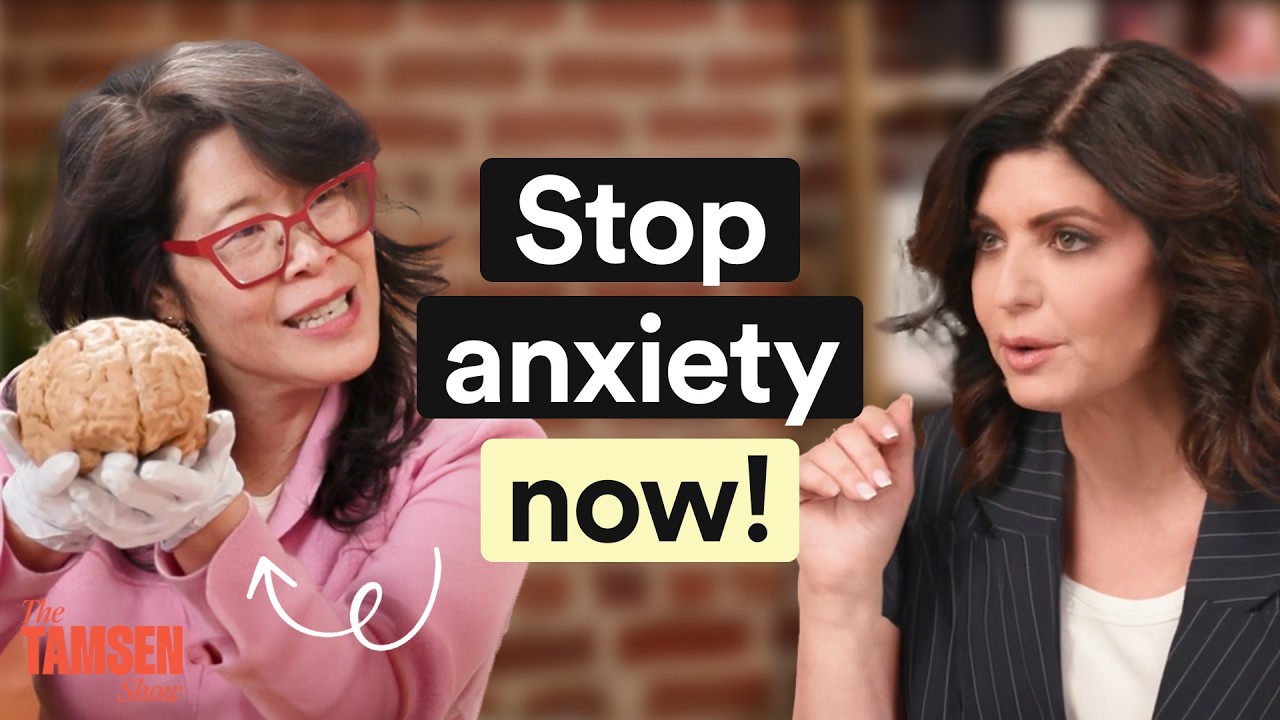
I don't know if I have ADHD or not. I really don't. I had a doctor tell me I should go get tested. I forgot to go get the test. So, I'm so excited for you to hear this conversation because Dr.
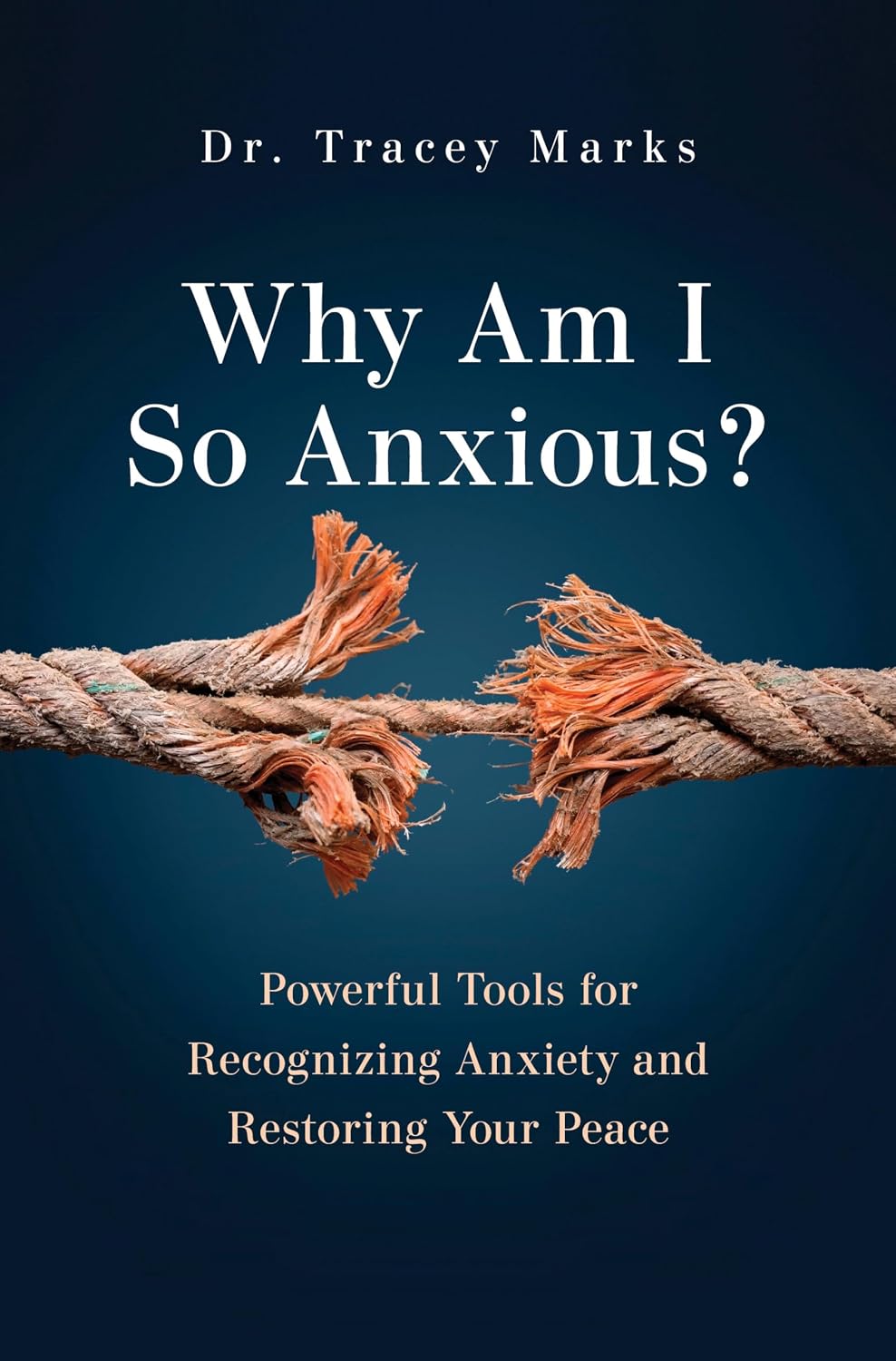
Tracey Marks came to the studio. If you don't know Dr. Marks, she has over 2 million plus followers on YouTube. She has been a psychiatrist for 25 years. She's the author of the book Why Am I So Anxious?
And we had just a great conversation of what you can do if you're dealing with these symptoms, what you can do if you don't know whether or not you're dealing with ADHD. She talks about something called body doubling. If you don't know what that is, she's going to explain all of it. And what I really love is she helped me understand exactly what some of the other signs were to figure out whether or not it's ADHD or something else you're dealing with. So, let's jump into the conversation.
Dr. Marks, it's so nice to have you here. I'm happy you have me here. Yeah, I think this is great. I I have so many questions.
First of all, personal questions, but I'm going to make them make sure they apply to everybody. Okay. I found you on YouTube, which I'm sure a lot of people tell you, scrolling one night and talking about so many different topics, in particular ADHD was the big one for me at the time. I will just tell you my own personal story. I had gone to a a doctor and a therapist and they said, you know, I think you might have ADHD, but you need to go and take a like a you know, actually do a form and go through all of the process and I totally like it's get my mind to do it and I never wound up doing it.
So, I'm like, that must be something going on with my life. But that's my own my own personal like what has happened to me. I'm 55 years old. ADHD was never something we talked about at in my generation or that I remember. There is so much talk out there right now and a lot of new information about ADHD in adult women.
So, what do we need to know? Let's start there. Wow. So, I get a lot of questions and comments. A lot of the comments though have to do with people being thankful that they feel heard and seen and that wow, this sounds like me.
I didn't realize no one's ever talked with me about this. I knew something wasn't clicking. Yeah. And probably once they get that realization that maybe there's a possibility I might have ADHD, where do I go next? But I tell you, I mean this is this is a real common thing what you mentioned about like not really hearing much about this earlier on.
I mean I trained, I'm older than you, but I trained 25 years ago. Yeah. And at that time, the thinking was or what we learned was that ADHD was a neurodevelopmental disorder that starts in childhood. We still believe that. Okay.
But you grow out of it. You grow out of it. Out of it. And that only a small percentage of people may be left with some leftover symptoms in adulthood. Okay.
Predominantly it's a childhood issue. A problem with that is and so that's changed over time. We realize that's not really what happens. It's a lifelong issue. But you have a whole generation of doctors who still believe that.
And if they're not in psychiatry psychology, they have no reason to stay up-to-date. So then there's there's still this idea that it's not real. Right. Right. It reminds me a little bit of the menopause conversation we were having before we turned the cameras on where you know, there's a lot of doctors that are still not educated about the changes and what we've learned in terms of guidelines and data when it comes to to menopause, perimenopause and treatment.
I guess the conversation about ADHD came on my radar because there were so many women talking about brain fog and so many women saying, "Wow, I've I've hit this time in my life where I have no focus, no concentration, no ability to walk into a room and remember what I was doing or I'm on my computer and I'm doing a hundred different things all at the same time." And I think that's where it came on my radar first to start having that conversation about it and then dig into it a little bit and see are women finding out or people finding out later in life that is something that they've been dealing with and they didn't know, or is it something that can develop later in life? Yeah, that's a great question. So, it's really multifactorial. ADHD isn't something we still believe it starts in childhood. It's a long a lifelong issue.
And it just doesn't start in adulthood. But what can happen is you may have enough compensatory things that you do or some what we call like subthreshold symptoms that don't get to the point where it causes a lot of problems for you because pretty much all of the diagnoses in our manual have a list of symptoms, but then also it's included if you have these symptoms, it causes significant dysfunction. So, it's not just the presence of some symptoms that it causes significant dysfunction. So, you may have some issues or some, you know, focus, disorganization, those types of things that are going on in say grade school, but because you're a hard worker and you persist, you can just keep going and you don't you just push through it. That's kind of like your norm anyway, right?
Like that's what you've known. That's the only thing you've known. That's right. I mean, we're not in everyone's head, so we don't know that this isn't what everyone's doing. And I've even seen this in my practice where I'll see people at different inflection points.
So, there may be someone I see in college who was never, say, on medication or got a diagnosis in grade school, but now that they're in college and the the the load is heavier now if they just they can't compensate anymore or professional school or a new job with a lot of demands. So, similarly, as we get older and we have more responsibilities and things, if there's any kind of vulnerability regards to ADHD in your brain, it just gets uncovered now because the load is too great for you to just handle it. Wow. And I also wonder, I guess, with with digital and the way we're never we never turn off and we were joking that, you know, we don't go far from our phones, but that's really the truth. Do you think that that has brought more things to the surface because we just can't manage it all or we're trying to manage it all cuz we think we can?
Absolutely. So, the whole, cognitive overload that you can get from too much input, that's a real thing. It's not I mean it it makes sense just common sense wise that you're just, you know, you're too stimulated. But like from, from a brain standpoint, one of the the functions, that's affected with ADHD is working memory. Your ability to take in information, manipulate it in real time, make decisions, etc.
So, if you're always kind of being loaded down with content that you're reading, responding to, even if that's entertaining, it's still work for your brain. Oh, even entertaining, yes. I didn't realize that. Even though it's entertaining, yeah. I mean I do feel like I'm on input all the time and I don't know I don't know where to expect anything some days.
So, all right, so let's go back to tools we can use if that's going on and then also deciphering the difference cuz I feel like we've got to do a little bit of both here. I think, if there's a woman that's listening right now that is in midlife and saying like, I have ADHD. I think we're I hear that a lot these days. I feel like I hear a lot of people labeling themselves with that. Do you hear that more and more because we're talking about it?
Absolutely. So, What do you want to warn people up because I think that's important. Yeah, so it really is a double-edged sword. On the one I love the fact that we have so much that we have more access now to information and learning, okay? Love that.
But on the one hand, you can get a dilution of what ADHD really is because people will just associate it with I can't focus. So, my ADHD has kicked in, I can't focus. And it's so much more than difficulty focusing. And like I said, with too much stimulation, you can have trouble focusing. With anxiety, you can have trouble focusing.
Like there's lots of things that can impact your focus. So, yeah, I do think there are people labeling or diet self-diagnosing saying they have ADHD because they watch someone on Tik Tok say, "I can't do this." Well, I can't do that either. So, I must have ADHD. They need to go to your YouTube because you make it digestible and you have millions of people that you are helping there every single day. That's right.
I give you real information. Seriously. Thank you. I I love it. On the other hand, though, there are many people who have missed the boat when it comes to being recognized as having ADHD, getting a diagnosis, and and doing something about it.
And then there are those people who may have had some milder form of it that then gets uncovered when they have a heavier load in life, like, you know, being older and taking care of aging parents, like all those things. [sighs and gasps] And so, I'm happy that people now are better able to recognize that, "Oh, maybe this is actually what I have." So, I do think there are a lot of people who've just not been diagnosed who actually do need the help because when I keep saying that it ADHD is so much more than focus, I mean the one of the things that I think we've kind of that we've missed with ADHD, and even the way that we diagnose it, we focus on behavioral things like impulse control, inattentiveness, hyperactivity. But, ADHD also negatively affects our executive function. Which is a part of the brain called the prefrontal cortex. I won't get too deep here with that, but those functions really kind of, in my opinion, are at the heart of difficulty with ADHD. So, with executive functions, that includes things like being able to we call it set shift or being cognitively flexible, being able to switch tasks, Right.
Working memory, being able to like hold things in your in your mind, kind of like your your RAM on your computer. Mhm. Planning, even emotion regulation, that's a part of executive function. So, with with someone with ADHD, they can have difficulty managing their emotions. So, it really is more comprehensive than just focus and attention or even hyperactivity for that matter.
Right, and I think that most of us know it as lay people know it as focus and attention, and that's what we're thinking. I can jump from thing to the I mean, that's what I think. I can jump from thing to thing to thing, and I'm not focused. Is it ADHD? And I've I've heard myself ask that question.
Mhm. So, how do you If somebody's going, "Okay, I have some of those symptoms you're talking about. I have some of the other symptoms that you're talking about with executive function, right?" How do you know at this point in your life if you're somebody that's an adult, your 20s, 30s, 40s? Is it It's not too late to be diagnosed, correct? It's not too late to be diagnosed, and that's the that's the next step.
Be able to do something about it. And be able to do something about it. Because the brain is still changeable all through your life. So, it is never too late. I love we're going there.
Okay. So, yeah, so I would say instead of only relying on AI, you know, or social media to get evaluated, there are some self that some measures that we call them measures, but some questionnaires that you can find online that are free. One of them is the I got to get this right. ASRS, it's adult ADHD self-report symptoms. And to we're going to put that in notes then.
We'll look for it. Yep. And what what it's for or what it can help you with is not to self-diagnose, but to take it and then take that to a doctor or clinician Okay. So that you're loaded with information already seeing the doctor. That's less work for them to do and they can spend more time getting deeper into looking at your your past history cuz it's not just the symptoms you're experiencing right now, but it's what's what's the the pattern throughout your life cuz again, this isn't something that only shows up in adulthood.
It could it could worsen in adulthood, but most people if they really think about it, will think, "Well, you know, actually I did have some struggles. I just never said anything or just dealt with it." And so you've got to look at all that. You've got to have a doctor look at all that, but I think the good news is you can go online, get a form like that, at least get that conversation started so you're looking at some of the other things you're talking about. Correct. What are some of those symptoms that would be would be part of that that somebody should be listening for right now or noticing about themselves?
It would be things like difficulty initiating tasks or or being motivated to do things and not just like, "Gosh, I don't really don't feel like sweeping the floor." But the it it's almost like your your mind just can just go blank when it comes to I have this thing to do and there's just this this huge barrier. Almost feel frozen. You just cannot go there and do it. So anyway, difficulty getting motivated to do things. You may have difficulty sustaining finishing things to the end.
So you've got a lot of leftover projects and things that you know, that go unfinished. Scares you're on my to-do list, Dr. Marks. I'm scared that you've been on my to-do list. Needing to create to-do lists.
I mean, to-do lists are great, but needing to create too many tasks that you've got to write down cuz if you don't, you won't do them at all cuz it just kind of slips out of your mind. I feel like that's menopause though, too. I don't I'm I'm in between. It's all the same. Like it's all the same thing.
I'm sorry, keep going. Okay. Also, so one of the another this is an executive function of called inhibition, being having difficulty holding back on an automatic response. So, an automatic response, say in a conversation with someone, would be to just as soon as you say something that triggers something in my mind for me to just blurt it out and say it. Okay.
Okay. But, that's not socially acceptable. So, my brain inhibits doing that and I listen, finish listening to you, and give you my full attention, and then and then have a response. But, the person with ADHD has trouble with that, and so they may, another sign, may be trouble holding back and interrupting people a lot. Mhm.
Mhm. I like hearing some of those because of the fact that I do think that they overlap with a lot of things, and I do think that it's something that a lot of people are talking about now, so they feel confused. But, if they want to fill out that form, I guess, first, and then figure out if they go to a therapist. Is that what they would do with that? They could go to a therapist.
As far as actually getting a diagnosis, it just kind of depends on the training of the therapist, but generally you think of either physician or psychologist. There may be some therapist who within, you know, be able to help the person see, "Yeah, I really do think Midi, the care women deserve. Is there a difference between girls and boys at a young age with ADHD? Because I remember I had a a cousin years ago, and they called it ADD AD ADD. Attention deficit ADD.
Is that different? No, it's just kind of slang. It's Oh, it is? What Is it It's just not a lot You're not That's not the word they use anymore? Not really.
So, the official terminology is ADHD. Okay. But people will just kind of shorten it with AD ADD if you don't have the hyperactivity portion, but technically it's still ADHD inattentive type. Got it. And he was put on medication.
But I never remember I always remember it being like the boys because he was hyper, and I never remember there were conversations about girls. Is that normal? That is normal. Yeah, what's normal? I don't know.
Yeah. It it's it's common. Okay, let's say that. In the sense that even in developing the diagnosis or even like the people who created the criteria studied boys. I mean that's kind of what the data was based on hyperactive boys.
So that's the picture that's kind of locked in our minds of the boy bouncing off the walls and disrupting class. And so that would really be more the hyperactive subtype or type of ADHD. But if someone is purely inattentive, they don't have the hyperactivity, the impulsivity, things like that, the blurting, interrupting. They can be quietly disorganized in their mind and cover for it because they're they just work harder Mhm. Or and they don't get the attention of the the disruptive child.
So girls can potentially look less disruptive Mhm. But still have the trouble with manipulating things in their working memory and keeping up with things. Tasks drop. They can get overwhelmed with trying to keep up with things to do. And then as we get older and become the people and with families who they expect you to be the one taking care of things, then it becomes even more burdensome.
They can mask symptoms in the sense that they still over perform, maybe sleep or go you know, go to bed really late cuz they're doing stuff while the family's still sleeping and they're still up doing all this stuff and finishing things and no one knows but them that they're struggling. What that's taking. I know cuz I know people say like it's a superpower, but I think it's it's also that it's it's somebody that's really working hard through all of it, correct? Yeah, they're just they're they're doing what they think they need to do. And in their minds and that's the beauty of, you know, online information.
In their minds they could have just been thinking this is just this is just what it is. I've got a lot of stuff to do. And it and everyone like this, but everyone's not necessarily like that or it's not as much of a struggle for them. I think it's just so important how digestible all of your responses are to everything cuz I think things can get very overwhelming out there in the content space and confusing. And then we have people that are are trying to figure it all out or just give up and you allow people to have real answers with with your answers.
So, thank you for that. You have said over and over again the brain is changeable, which is very exciting. Can you explain that a little bit better? Yes. So, just like when I trained in early 2000, I finished in early 2000, we did not really think of ADHD as being lasting until adulthood.
We also didn't think that the brain changed. It was you got what you got and it's fixed and you do what you do with it and oh well. Well, I mean it's just in in in the concept of neuroplasticity with your brain changing with experience. It it did exist, but it just wasn't adapted or adopted well in the scientific [clears throat] community. So, probably I would say maybe early to mid 20 2000s is when it really started taking hold that the brain really does change, rewires based on your behaviors and the things that you do, which is a wonderful thing because it means that bad habits that form can be unformed and new habits can be built on top of that, allowing us to do things differently and not just kind of get being stuck in a rut that doesn't change.
What do How do you do that? Can you teach us? Can we do that today? Yes, I would love it. Hearing it is one thing, right?
Knowing that you see it in yourself, how do How can people go about How can they walk away today with some tools that say like, "Hey, you know, and I have some habits that I don't like. I hit my alarm 15 times in the morning and and can't get out of bed. I put off I procrastinate things. I try to take on too many things all at the same time. And then the big one I think I hear these days is I can't I don't have a memory like I used to have, so I'm not even going to bother.
And I think that that's kind of this, you know, it bumps me out that people feel like that cuz I feel like they're not trying. So you're giving us hope for that. How do you start changing habits first? Yeah, so I would say that I kind of look at this two-pronged. One is increasing brain health in general because the healthier your brain, then it's primed and ready to take on and remember these these things you want to do differently.
And then there's the habits. So as far as brain health goes, probably the most evidence-based activity that you can do that improves neuroplasticity, that is the formation or neurogenesis, the formation of new nerve connections, is cardiovascular exercise. Mhm. Okay. Cardiovascular exercise increases brain-derived neurotrophic factor, which is like fertilizer for the brain, which helps prune damaged or dysfunctional nerve connections and reform new ones or grow even new ones in certain parts of the brain.
And then things like preserving or paying attention to or or being intentional about your sleep. Mhm. Often, you know, you hear the you know, sleep I can sleep when I'm dead. Yes. Okay.
Well, I That was the generation I grew up with though. That was what it was. If you if you went on 4 hours of sleep and and worked hard the other 20 hours, you were a hero. Yeah, people use it as a badge of honor and it's it's a it's a horrible thing for your brain. I think it is too.
Prioritizing think that before. I know. Cuz culturally, yeah. So prioritizing sleep, trying to get 7 to 9 hours for an adult. Pri- What does that mean to prioritize sleep?
That means you are planning for it. You have a bedtime. I can't tell you how many people I ask when I see them as patients, what's your sleep What time is bedtime? Mhm. And I get the it depends.
It should not depend. You should have a bedtime and prepare for it. So, an hour before, whatever that time needs to be, you start doing a wind down. That That's what I mean by prioritizing sleep. And then try as far as like diet and what you eat, reducing processed foods and all of that stuff.
So, that's brain health issues. Or And blueberries, walnuts, the omega All those are really make a difference. Yes, the anti-inflammatory foods. So, yeah. So, all of that stuff.
Then, and on the habit side, you know, I think you could start with identifying things that you would want to change cuz it can be it can feel overwhelming to just say to approach it as I need to be a new person. I need to stop this. Then you're not going to do it cuz it's just it there's going to be a block there. So, start with one thing. That one thing could be your sleep, but we'll move past that.
Let's say it is you know, getting your day started earlier. Or Or coming up Here's a Here's a different one. Another thing that's brain friendly is reducing decision decision Not having decision fatigue, essentially reducing the number of decisions that you need to make in a day. Mhm. And I think that's something that's that we easily overlook is not seeing as all that significant.
Yeah. But, you know, you think of your brain as a battery. You wake up in the morning, it starts at 100% charged. If you've got ADHD, it might start at 70% charged. And then all the things that you do during the day just drain the battery.
So, if you've got to figure out what you're going to eat, what you're going to wear, what what what what, like those are all things that you could unload from your your brain and stop draining the battery by having some things that are set in place that you just do. It just like hit me that when I feel organized and I know exactly what I'm wearing, exactly what I'm eating, exactly what the day looks like, it everything is not cluttered, I feel so much better. Is that what we're talking about? That's what we're talking about. Okay, good.
Why is that so difficult though? Because I feel like you know, you you kind of like set and and repeat, it you know, and you it does make you feel better, but but I go off track on that and I can't do it all the time. I feel like I'm not supposed to have it's not supposed to be that organized for some reason, you know? I agree. And it's you know, it because it does take planning.
So, that's another step to it and it's easy to feel like it's it's easy to deprioritize it. You know, I have that trouble with with meal planning. I know all of this stuff, but yet I can still be like, "What are we going to eat today?" And and not want to do the whole like going to the grocery store and figuring out all the meals, but so that's that is a habit that you could start of taking one thing, not planning out your whole life, but taking one thing where you're always kind of thinking about what what do I need to do with this, a decision that you've got to make, and trying to turn it into just a habit that becomes autopilot for you. So, you plan it out so that you don't have to make those decisions. And I guess that would be the same thing with when getting you're getting up in the morning, going to sleep at night, you've eliminated two decisions if you've decided to put those on your list.
Absolutely. So, you know, another part of that with the waking up at the same time all the time or going to bed at the same time is habits or or structure and predictability is neuroprotective. Our brains like protect knowing what's coming. So, having routines, I mean, we see this in toddlers. You know, they get off their routine, they get fussy and melt down.
Well, just because we grow up to be adults doesn't mean we don't feel the same way. We just don't express it that way because we know that we can't just scream when we're upset. Some of us. Some of us are still doing that, but so having structure and routine is very soothing Mhm. For the brain and it helps it be more productive in other areas.
I have noticed one thing. I have I get very hyper fixated on if I have a Well, I don't know, something for breakfast or something for lunch, then I want to do it every single day until I'm so sick of it for 3 weeks. Is that Is that because I want routine? Is that because What is that? Yeah, so could be a couple of things.
It could be that you've got a routine that you've got. So, that just feels good to just do that same thing. You don't have to choose what you're going to do the tomorrow. It could also be that, you know, you're fixated on something that you like. You know, the brain likes novelty.
It likes It gets stimulated from things that excite you. So, if it is something that you really like or that gives you a lot of pleasure, then it could continue It can you can arouse or activate your brain for a while until it starts to get boring. Okay. Mine's a sandwich, so I don't know. But, I have noticed that, but I've noticed like I order like one day I want it and then I want it for the next 2 weeks and then I never want to see it again.
So, I don't know that's been a habit over and over that I've noticed and I don't know where it came from, but that's It's some Maybe that's what it is. I don't want to make any more decisions. That could easily be that. I think I get I get I do want to go back over into talking about the brains being changeable for a minute because I do I think that that's not discussed quite enough and I do feel like we feel at 55 years old or whatever age somebody is listening to this right now. I've learned everything I can learn.
I've, you know, memorized as much as I can learn. If you're talking about some of the other habits to incorporate in a day, what would that be? Would that be in getting back to writing, not in not having AI do it all the time? Would it be reading instead of watching television? Are there some things that we should, you know, exchange on that list that would be helpful to help our brain continue to grow?
Yeah, so those are some good ones you've already named as far as doing activities that require thinking and problem-solving and things like that. So, unfortunately, as wonderful as AI is and making us more efficient and whatnot, it can make us dumb. You know, I mean, it it can make you rely too heavily on another intelligent source that you don't need to read yourself and just being told things. So, all the things that we learn earlier in life of reading makes you smarter or smarter, continuing to read, continuing to you know, to to do things where you're you're making decisions. But, also, I would say the thing we probably don't talk about a lot is the social connection.
And it doesn't mean that you have to have a lot of friends, but just continuing to have connection with someone or something. Could be an animal. But, we know that the social connection piece is very important when it comes to brain health and in neuroplasticity and in enhancing how we think. Why is that? Why is that so important?
You know, I think that from a chemical standpoint, you know, from a mechanism standpoint, forming connections activates other chemicals like oxytocin and whatnot that also have positive effects on the brain. That would be kind of my scientific answer. Also then the the bonding that happens that is just kind of a feel good mechanism. We know that isolation is damaging. So this is the opposite of that.
We certainly saw that. And we we saw that for for sure in real life with COVID during COVID period. So so yeah, I think that's kind of a missing piece is not always factored in is the social connection. And again, it doesn't have to mean that you have a lot of friends that you're always going out with. It's just connecting with someone or something.
I think I've noticed it as I've gotten older. I I think I don't know, the word community was you know, always thrown around a lot, but I think I didn't really understand what that meant that it didn't mean that you needed 50 people in the community. It could be two, but you knew that that was the person to rely on. And I've noticed it as I've gotten older how important that is in in a given day. That's right.
I mean, knowing that someone that there's someone there who cares about what you think. I mean, and that you matter. Like that's really that's huge. You know, I've talked about this a lot. I was that person googling symptoms at midnight, spiraling, and then doing absolutely nothing about it.
Finding a good doctor always felt like so much work. Zocdoc makes it easy. I found a doctor I actually love based on real verified patient reviews and booked her in about 2 minutes. I didn't have to play phone tag. I wasn't sitting on hold waiting.
Zocdoc is a free app and website that helps you find and book Thanks, Zocdoc, for sponsoring this message. So, I want to go back to ADHD because I I don't want people to to you know, to feel like I left it off, but I want to make sure that the brain being changeable was a big part of this. If you have somebody that doesn't know whether or not they're dealing with ADHD or they're living with somebody that that might be experiencing that or something else, what do you recommend them do first? Do you recommend them to go online, take a do a form, do you recommend them having a conversation with a doctor? I recommend both.
So, the thing with the form is to be able to quantify or at least just kind of see on paper what are some of the symptoms that you have that correlate with ADHD. And then take that information and then see a doctor or clinician for a proper evaluation. Because then that with that form for so, it helps you kind of get a better sense of is this my imagination? Oh, wait, I actually do have 20 out of 30 on here. Hm, and then you can take that information and now you've it's just a richer experience that you could have with the person evaluating you.
I feel like nowadays I hear women especially coming into perimenopause confused about what's going on, you know, feeling like there's no focus, feeling like they can't remember things, feeling like they're struggling in some way, feeling like they were managing perfectly before, but not anymore. Are you seeing that more and more, or do you think you're seeing it more and more because it's a conversation we're having online? So, I think we're seeing it more because it there's just more conversation around it, but I also think that we're seeing more of it, or maybe the prevalence has increased, and I not that's not supported by any study I've done, but the prevalence has increased because of the more demands on our lives these days. You know, extended families with working, with you know, parents, like all of these things. So, and we take on more.
I think we were taking on more now than, you know, like my parents did. They went to work, they came home, Yeah. Watched TV, and went into work the next day, but now there's there's this, that, this, that, this, that, and there's all this stuff. There's one thing that I I do want to, include that I didn't mention before when it comes to perimenopause and menopause and ADHD in women having this drop-off around that time is estrogen is a is actually a big brain chemical Yes. That also is involved in reproductive health.
Mhm. [gasps and sighs] And that actually is was a a mindset shift for me in recent times, of not realizing how important that estradiol is the form, is has on our brain. Estrogen is like a dopamine amplifier. And so, it helps kind of keep things in line for us, helps us have better executive function and all of that. So, for women who are vulnerable to ADHD and again may have had some subthreshold symptoms and just kind of managing through life, when that that estrogen drops off, now their buffer is gone for that reason as well. Estrogen also enhances neuroplasticity, too.
So, estrogen is big for the brain. It is and I know that, you know, we've had Dr. Lisa Mosconi on the on the show in the past talking about our brain and the menopause brain, obviously. And I think that talking about it Was that something that you had ever paid attention to? Was estrogen?
Cuz I don't know that anybody had. I mean, this has been a very recent conversation. So, when women and I and I hear it all the time, like, "Why didn't anyone tell us? I'm so frustrated. Why didn't I know this?" It's not our fault.
Like, this was not a conversation that was being had and I don't even know if all the data was there, quite frankly. I agree with you and you know, I'm getting ready to go to one of our psychiatry national conference and I'm I'm curious as to how much I will see about this because I don't feel like this is being talked about that much. Yeah. Of just how much estrogen affects the brain and the loss of it affects the brain. Well, and we have estrogen receptor We have receptors in the brain and and I've seen enough enough of those I'm not a doctor, but I've seen enough of those graphics to know when something is missing.
So, if you have a woman that is coming to you that's in perimenopause or menopause and says, like, "Look, I think I have ADHD. I can't focus. I can't I don't know what's going on. I can't remember things. I'm feeling off." If they're already on hormone therapy and they're already, you know, having that estrogen, you know, com- you know, coming back into their system, are they also able to go on to a medication for ADHD?
Absolutely, they can. So, yeah, so there's the hormonal piece of restoring that even though we HRT or hormone replacement therapy is not an established treatment for ADHD. I just have to say that as a qualifier. Yes, say that again actually because I think the people because I will say this, I do know that I had severe brain fog and I do know that when I went on estrogen it helped me regain my confidence and I felt like I had less brain fog, but that is not what it is for. That's right.
It it is not a treatment for ADHD. Okay, but given how impactful it is, given all the work that it does in the brain, it stands to reason that replacing it will enhance your function if you get it replaced. Okay. So, that's you know, that's kind of that's basically just restoring your biology, getting HRT. Then there's the treatment though for what's still left over.
And so, the main treatments or medication treatments are stimulants and non-stimulants. So, the stimulants, the the main two categories are methylphenidate, Ritalin is a brand name, and the amphetamine-based drugs, Adderall, Vyvanse, and whatnot. Now, those can be good or bad. There are some people who can take stimulants and it's like the lights turn on and everything's wonderful for them. However, it doesn't always cleanly work like that.
They have lots of side effects and people can lose their appetite, which if you're overweight, you might be happy with that, but that's still not great. But it can disrupt your sleep. Some people can get crashes with their emotions after the medication wears off. Mhm. So, you know, so it they're not always easy to take, but they can be a very good solution.
And and one good thing about them is they work for a certain period of time. It's not like antidepressants where you need to take them for weeks consistently every single day to see what the effect is going to be. With stimulants or like pain pills, you take them, they work for 3 to 5 hours or if you take a long-acting, it's longer than that, and then when it wears off, it's out of your system or it's done. Okay. So, you for some, you know, I have some patients who they know that afternoon meetings are really where they slip.
They're good in the morning, so they don't want to be on something all day long. So, they'll take a short-acting stimulant just in the afternoons or just on Tuesdays and Wednesdays when they have these meetings. So, stimulants are able to kind of laser focus in on these times. Then there's the non-stimulants. These would be things like the brand name Strattera is just one example that you would take every single day.
This medication increases norepinephrine, so it works by a different mechanism. And for some people and and it's argued that they may improve executive function a little bit better than the stimulants. But it is something you got to take every day. Again, every medication can have side effects. There really aren't good There are some non- There There are some others that like clonidine and things like that, but in my experience, they haven't been quite as robust in their effectiveness.
If somebody says, "Dr. Marks, I don't want to take any kind of prescription medication. Are there other things that I can do? Are there tools, other habits that I can build to help me during this time if I have been diagnosed with ADHD?" Sure. So, there is like ADHD coaching, ADHD or executive function training.
There's There's lots of that. There's a proliferation of that now that we, you know, are talking about these things more. And you know, that would involve things like, this isn't an exhaustive explanation of it, but things like teaching you or coaching you how to shrink tasks. If you struggle with motivation, you don't wait until you're motivated because it's not going to happen. Or we just can't command motivation on demand, but to start with the smallest step.
And then once you get going, it's like engaging the clutch. Once you get going, then you can have you can build motivation through that. If you don't, you give yourself a time limit, you're going to you're going to do this one piece of the task. So if I want to organize my office, Mhm. I'm just going to start with clearing the desk.
That sounds very basic and like, well, what does that matter? I've got all of this over here to clear too. No, you start with I'm just going to clear this desk. I'm going to do it for 5 minutes. And after 5 minutes, if I just can't take this anymore, then stop.
But you might find that after 5 minutes, you're like, oh wait, I can go do that shelf, too. So you give yourself something to succeed at or achieve. Right. Before you're overwhelmed. Right.
Yeah, something manageable because the the succeeding then builds more it's reinforcing that I can do this actually and I don't have to wait for all of this, you know, motivation. Okay, now I'm ready kind of thing. The planets have aligned perfectly for me to clear this desk. I know, and sometimes I feel like I'm waiting for the planets to align. Women during this time are also looking at I'm kind of done with this career.
I kind of want to move into something else or I want to stay in my career, but do something a little bit different and more maybe more purposeful. Are you having a lot of them come to you saying, I want to do that, so I'm going to do two things at the same time and try to balance everything and then they're just exhausted by by the end of it. Because I do know that there are a lot of women that are looking to that next chapter and they want that chapter to be wonderful, but sometimes it's hard to get there. Yeah, and so you don't know how to get there. And because they're probably just used to doing, doing, doing and overachieving.
They just start this new thing not recognizing that wait, you don't want to increase the load and you're going to have distracted attention from trying to do two things at one time and then and then you can fail and then just feel like I'm not capable of this. Yeah. So really it's and this is where kind of the ADHD coaching can come in of someone helping them see how to chunk out things or how to do it in a way that reduces their cognitive load and like let go of this a little bit and transition into that so that they can, you know, make that switch over better. And also remembering that their brain is changeable so they can do something else because I think it's so important especially during this time to have that hope that your brain is still evolving in another way. Correct.
Correct. You know, if you've been it can feel like a mountain that you've got to move. I think we all know that. Go from here to there. But but yeah, you can number one so just kind of knowing that up front but then okay, how do I actually believe that in my heart and do it?
It's the tiny steps that are doable and just going one step at a time. You make everybody feel really good I'm sure when they after they're done talking to you. I hope so. They can do anything. Dr.
Marks, if there's one thing you want to leave people with who are listening whether or not they've been diagnosed with ADHD or they know somebody that's dealing with the symptoms or they're dealing with something that they're not sure what it is. What would you like to leave them with? I guess I'd like to I'd It's so hard for me to just do one thing but do two or three. You can do whatever you want. I think it starts with going from awareness to actually taking action.
It's one thing to like listen to this podcast and watch see a bunch of things online and say, "Hey, you know what? This might I this sounds like me." And then have nothing happen from there and just kind of keep struggling through life and and having nothing really change. So, I would say if you suspect that you have ADHD, go get evaluated. Not just for having a label, but for accuracy to know is is this really what the problem is? Because as I mentioned before, there's other reasons that you could be struggling.
It could simply be perimenopause or menopause and restoring that balance just helps you keep going forward and you don't really have ADHD per se, but it looks similar. It could be other hormonal issues like thyroid. Thyroid can slow you down with your thinking and get create the brain fog and it's very common for women to become under have an underactive thyroid over time. Depression. I mean, so there's it it's about getting clear on what is it that you should be focusing on to improve.
And one more thing I wanted to add to the, you know, what can people do with with to help their ADHD? Another thing is body doubling. I know it's kind of random. I'm just bringing this up. Take it.
I'd like to have a body double a lot of days. [gasps] body doubling, I know, right? Body doubling is where you you do work in the presence of someone else. You could even do it remotely like getting on FaceTime or something and having someone who's you know, it doesn't have to be like sitting at your desk work. It could be cleaning. It could be organizing and having someone else on the other side doing something similar or even just doing anything.
They could be doing some kind of work and you're organizing your room. It helps keep the brain motivated. So, when you struggle with the motivation thing, Right. So, it kind of wakes the brain up and says, "Oh, okay, there's somebody else doing this. Let's Let's Let me do it, too." Even if you're on the phone with them or something, just to hear a voice, or is it better to see them?
It's better to see Okay. Than on the phone. And the reason I slot this into what I was saying about getting evaluated is if, say, your brain fog or your disorganization, dropping tasks is more related to, say, thyroid dysfunction, then body doubling isn't necessarily going to help you or apply to you. Oh, interesting. You still might like it, but So, getting specific about what the problem is can help you know what needs to change.
Where can people find you? I know where I find you on YouTube all the time, but where can people find you? Sure. Yeah, so, my handle on YouTube is Midi, the care women deserve.