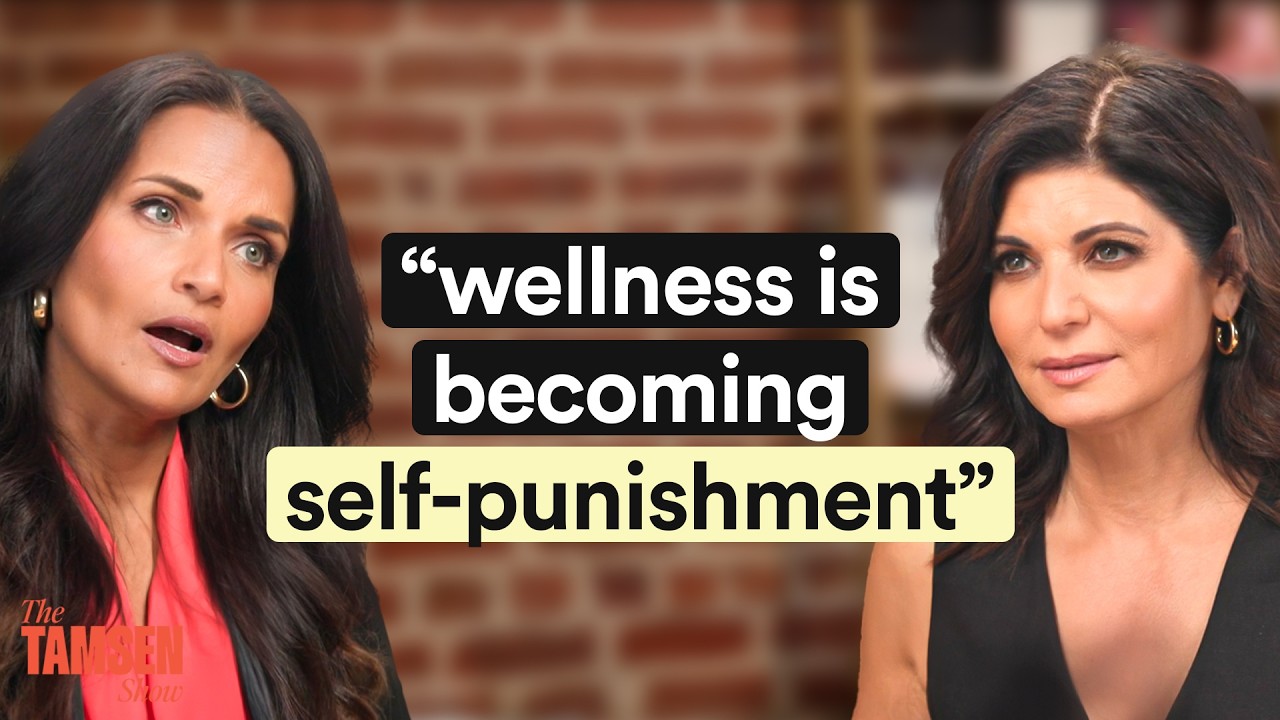
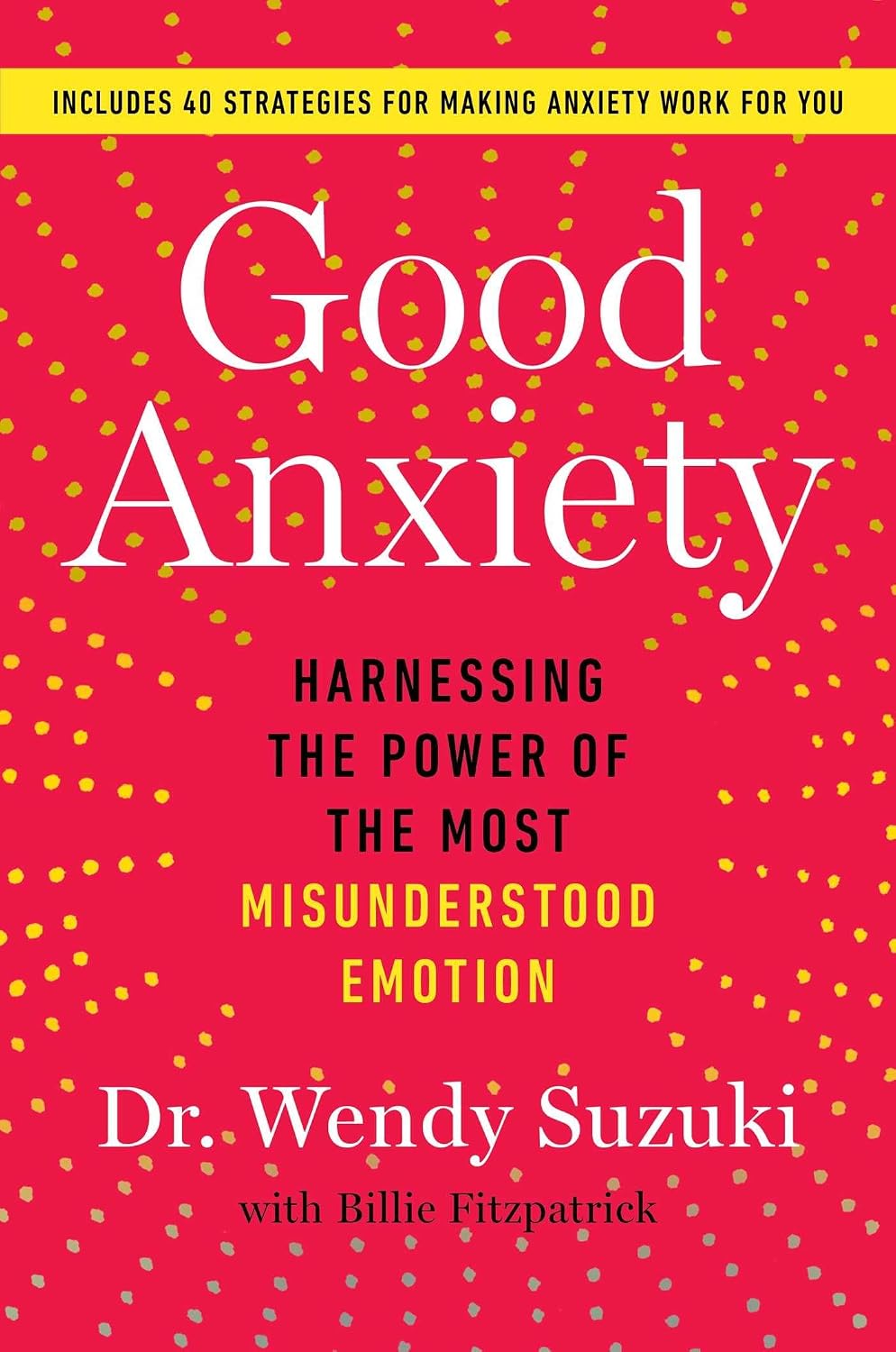
My thoughts were spinning. It felt like everything was just moving too fast inside my head at once. And let me tell you, if you have ever been there where your chest starts getting tight after that, your mind starts racing and you're thinking, "What is happening to me right now?" You know how scary it feels somewhere along the way? A lot of us learn to treat anxiety like a problem, like something to to shut down or just deal with later. But what if that is actually information?What if your brain is trying to tell you something, not break you? That question is why I really wanted this conversation to take place. Dr. Dr. Wendy Suzuki is a neuroscientist, professor of neuroscience and psychology and dean of the college of arts and science at NYU and the author of the book Good Anxiety.
Her work changed how I think about what's happening in my brain when I start to feel overwhelmed or I start to feel that anxious feeling or on edge. She studies how the brain changes and more importantly how we can work with it instead of fighting it, which I found out I've been doing for a long time. So, if you've been feeling more anxious than you used to feel, more distracted or like your brain is not cooperating lately, this conversation is for you. I think it's going to help you in so many ways. Dr.
Wendy Suzuki, welcome to The Tamsen Show. Thank you so much for having me. It's so nice to see you. You, too. It's been a bit since we saw each other, but I I follow you avidly and I'm always looking at what you're doing next.
So, we're going to bring out something shortly, which, you know, is going to surprise everybody. But first I want to ask you what pulled you into this line of work in particular? What pulled me into neuroscience was an amazing mentor, a I like to call her the Beyonce of neuroscience. Who was a professor that I had and I took her for my very first class of my freshman year and she was a neuroscientist, the very first female PhD ever given by UC Berkeley in neuro anatomy. I didn't know.
I just chose the class by the title which was called the brain and its potential. But she was a pioneering neuroscientist and she was an extraordinary instructor. Made us all want to understand every little cell in our brain. That's what she did for me. And ever since that first day, I wanted to become a neuroscientist.
That's incredible. So fast forward to today where you're going around teaching about it, overseeing thousands of students, making sure people understand, and I think there's so much curiosity these days into what our brains are doing, where they're working for us and where we sometimes maybe feel they're working against us. Yes. Is there something that you're seeing nowadays or is there some kind of trend, you know, we we know social media is a big thing out there. We know AI has a lot going on.
Is there some kind of trend you're seeing nowadays in how we are thinking and how anxiety plays a role into all of this in society? Yeah, absolutely. So, I think one of the most interesting trends terrible interesting trend is we know how much social media is contributing to the higher levels of anxiety and then the pandemic happened and that made everything worse. We came out of that. But then came AI and AI is an incredible tool.
It can be very very valuable. But in the way that it's been used by particularly young people for social companionship for every time anxiety might come up or a worry might come up, what am I going to say? And ask AI and and create that script, which could be a little bit of a crutch, but if that's all you do, then your AI is is is creating your own life for you. And that is is kind of doubling down on the anxiety caused by social media and it is it is making anxiety overall worse. That's what we're starting to see.
And I can imagine that's something that's pretty new on the horizon. We've seen social media for a while, but how quickly AI has become part of our lives in in all of this. So can you define anxiety for for us because I think that that's it's a very broad definition but let's talk about what anxiety is. Yeah. I like a simple definition and I use a simple definition of anxiety which is the feeling of fear or worry typically associated with uncertain situations.
That's very very broad. And anxiety is a normal human emotion. Everybody has it. Don't think that oh there's some lucky people that don't have anxiety. We all have it.
And the thing about anxiety is that exists on a very very wide spectrum from kind of normal everyday anxiety maybe it went up during the pandemic and then it goes all the way to clinical levels of anxiety. You can't go about your normal every day. My book anxiety was really written for what I like to call everyday anxiety. You're not required to go to a medical professional for your level of anxiety, which is approximately 80% of the population that experiences anxiety, but would like to decrease it. That's why I wrote good anxiety.
Can you explain what is happening to our brain when we're dealing with anxiety or we're anxious? Let me start evolutionarily. Okay. Because anxiety is again a normal human emotion. Everybody has it.
I like to say that over and over and over and if it was truly detrimental it would have evolved out of us. So you have to ask yourself why do I still have that anxiety? Why do we all still have it? Maybe you might think oh it's just a mistake some some you know evolution made a mistake. But the reason why it is there and that it has survived all this time is that it is protective.
Anxiety is protecting us against something that might happen. You were just talking about, you know, you couldn't think of a word that that is worrisome. You know, maybe maybe it went it's very scary and it is priming you to say, "Okay, this is something unusual. It hasn't happened before. I need to do something about it." And so that was good anxiety in some ways, right?
Yes, it was. It was. And at its core, anxiety is protective. And you can I think the best way to think about it is if you are a female 2.5 million years ago when anxiety was first evolving. Anxiety came up when you were searching for food and you heard a crack of a twig and that could be that could be just nothing or it could be a lion that's going to eat you.
That caused emotion of anxiety and it stimulated your fight orflight system to either get ready to fight or to run. That's great. That is why you and I are sitting here today talking about anxiety. Fast forward 2.5 million years. We still have that same anxiety emotion that that stimulates our fight or flight.
But there are so many more things that stimulate our anxiety. Just scrolling on the social media, especially these days. You can't open up the newspaper or any news outlet without really being so scared and depressed and and just sad about everything going on and everything from that to you know how am I going to get a job is causing more higher levels of anxiety. So you think well your your explanation me Wendy doesn't help at all. It it does because it's about refraraming that feeling of anxiety from ohh it's just a weight around my head.
It's it's it's come to get me to ah what is it telling me as you were just saying what is it telling me about what I should pay attention to something that's a little bit unusual going on lots of things in the news right now might be going on it is it is warning you towards what you might be paying attention to but the thing that I want everybody to understand is that your anxiety really points you towards those things that you hold dear do you hold safety dear safety of your family, safety of your country, your country, men and women. If you do, then it's normal that you get anxious when there are events that scare scare us in that realm. Sure. And everything from that to more mundane things like paycheck, you know, everybody's worried about money. I don't care who you are, how much money you are, you're worried about money, of course.
And that is because you're worried about your well-being and the well-being of your family. That's a beautiful side of the worry around money. Everything, every anxiety can be flipped on its other side to reveal what you hold dear. And that's something beautiful to actually appreciate. How do you do that to where you're not constantly feeling?
You go from anxiety to so anxious that it's like it's debilitating, right? Yeah. And I think that we see that often times is it you have to close that part out or you have to understand what's going on. Again, I use from the book you'll read a lot about my own anxiety. There are usually not new anxieties coming up to find you.
These are very old established anxieties. And part of it is an exercise of reflecting what causes you anxiety. Sometimes it's those things that are in your life. Difficult co-worker at work every single day that cause anxiety. Family members very very common relationships when they go bad cause of huge anxiety.
And if you can identify those and then you know do that flip before it happens. It's like ah that anxiety about my mom it's been there for years and years and years. It's going to come up. Oh, this the holidays. I'm going to see her.
Can I preview that for myself and remind myself before I get into the situation? You know, my mom is is always like this. I have this response. Maybe that response is because you want to have a good relationship. You don't.
What is that story? Can you can you explore it before you you get there? And the other thing that that can help is that probably if we got into it, you and I have very very similar anxieties. Can you find friends and help talk that through? Because sometimes your best friends are the best mirrors so to show you some of the things and especially the beautiful things that are on the other side of your anxiety.
I do feel like I've seen community more of a calming response than anything else as I the older I get. You have your own personal story that you have shared. Can we talk about that? Sure. Talk about your story and what's what happened with regard to anxiety and your brain and Yeah.
Yeah. So, you know, I started writing good anxiety first because I noticed this is before the pandemic how much more anxious the students that I teach were. That's interesting. And this was, you know, 2015, 2016. But then if I was really honest, it wasn't just the students.
It was me. It was my friends and I, my colleagues, everybody was getting more anxious. Go back. So much beautiful research on social media and there were political we almost forget what was happening in 2015. So many things that were causing anxiety.
So I set about to write this book and and I wanted to focus on the protective aspect of anxiety. But something happened in the middle of writing this book that really shifted the way that I looked at it. And and it caused the book to be the book that it was. And that was something that was not anxiety. It was it was true grief.
So in the middle of writing the book, my father passed away. He had Alzheimer's. He passed away, thank you, of a heart attack. It's so sudden. He was, you know, he was getting worse and we were we were caring for him, but it was just sudden and and so devastating.
But then just three months later, my younger brother had a heart attack and he passed away and I had to stop writing the book. I couldn't write a book on anxiety. I I was grieving so terribly and so naturally like so many others have grieved. Yes. And so I was coming out of it.
I was using all the techniques that I was you know halfway writing in the book exercise you know meditation trying all this and one morning I was working out on my video workout and the instructor said with respect card to exercise you know with great pain comes great knowledge. She was talking about your body with weight. You really work out. You get better knowledge of yourself. But that somehow was exactly what I needed to hear because I was going through great pain.
And I asked myself, what knowledge is coming of this? What can I learn from this grief? And what I learned was that on the other side, the flip side of that deep grief was a deep love that I had for my brother and my father. And yes, did I did I love my father? Of course I would.
I would have said, "Yeah, of course I love them." It came out in such a deep way. Of course, when they were they were gone. And once I made that realization that I couldn't feel this great grief without that deep love that I hadn't even realized existed, it helped me understand it in in such it I just exhaled. It's just like h okay that's a that's a beautiful way to understand the grieving process. Profound way to like just also remember them and understand how you felt about them on another level.
Yes. And it helped me go through those feelings cuz of course you want to just I just want to get get over those feelings. No, I it almost made me want to not that I could help it kind of really feel into that because that was the depth that was showing the depth of my love. Yeah. For them.
And once I went through that grieving process a little bit more, I became obsessed with finding the flip sides of all difficult emotions. Turns out I was in the middle of writing a book about anxiety, a difficult emotion. Yeah. And so I I became obsessed with understanding that flip side. What could it do for us?
Because I needed to understand that about grief. And so I pushed all that effort into my desire to understand that about anxiety and it made me re-evaluate my own anxiety in a new way. Like I needed to find something good. What came out of it? And that evaluation really let me come up with the superpowers of anxiety.
What was it giving me? I didn't even realize it. And had that horrible thing not happened, it would have been a very different book. First of all, the fact that that one sentence while you were doing that changed everything for you is is incredible. But also, the fact that you were writing it in the middle in such a two tragedies back to back, but what you've been able to do to help so many people heal and see those things and see anxiety and and maybe understand it better for themselves.
What's happening in the brain when we feel that anxiousness? There are a wide range of brain structures involved in feeling the emotion of anxiety. One famous brain structure called the amydala is involved but it's not the only structure. We think that many cortical areas are involved in in feeling this emotion of anxiety. And then what happens is that feeling of anxiety will stimulate the hypothalamus to stimulate the fightor-flight response which is I think we all know that too well that that feeling of your heart rate goes up, your breathing gets shallow.
You get ready, your body is getting ready to either fight the lion or run away. I love to at this moment in time remind everybody that on the flip side of the fight orflight system is the rest and digest system that every single one of us also has. This is the automatic system that comes online when you have a free weekend and you have nothing to do that glorious weekend where everything is just you have a free 48 hours and your heart rate goes down. What is literally happening is your blood is being shunted from your muscles because you don't have to run away. Yeah.
Or fight and it's being shunted into your digestion and reproductive systems for those fun weekend activities that you use your digestive and reproductive systems for. So that is something that everybody should be well aware of. And the other secret is like, okay, how do you, everybody should be asking, how do I stimulate that one because my going to say I want to break that way down. Yes. Yes.
So, here is the best way to stimulate the rest and digest system, also referred to as the parasympathetic nervous system. And it is, wait for it, deep breathing. Is it really that simple? It really is that simple. That is why breath work is the oldest form of meditation.
Those monks were smart. They knew that just breathing in and out in a patterned slow way. It's like, "Oh, my heart rate is going down. I suddenly feel more calm." So, if you feel that fight or flight and you feel that and I can I I can almost feel it when you say it. Your heart's racing.
You can't catch your breath. You're trying and now you're jumping on top of your breath and you can't get there. Yes. If you try to do breath work in that moment, is that the answer in that moment to help you for whatever reason you're feeling anxious, is that the first thing you recommend? I have two go-tos for kind of dissipating the fight or flight.
And it depends on the situation. First one is take a good walk. 10 minutes of walking has been shown to decrease levels of anxiety and depression immediately. You don't even have to change your shoes. Go out, walk on the street, go walk around the parking lot for 10 minutes. Sometimes you can't do that.
Sometimes you're in the situation, maybe you're asking me really, really hard questions and I'm starting to sweat. There without you even knowing, I am doing boxed breathing, which is inhaling for 4 seconds, holding it for 4 seconds, exhaling it for 4 seconds, hold it for 4 seconds. And I love that because you don't even know what I'm doing. I'm calming myself, getting myself ready as Midi, the care women deserve. Why does movement have such a powerful effect on your brain?
It's because every time you move your brain, you're releasing a whole bunch of neurochemicals in your brain. You've heard about these neurochemicals. They are serotonin, dopamine, noradrenaline, endorphins. These are what anti-depressants do pharmacologically in a pill form. Yes.
In a pill form to increase dopamine and serotonin. They make you feel good. These are the feel-good neurotransmitters. So I like to say that every single time you move your body, it's like giving your brain a beautiful bubble bath of neurochemicals that will make your brain feel good. It's it's a great visual.
We're talking about movement. Yes. Weight training, cardio, movement. Are any of them okay? Is there one that's better than the other or are they all good for you?
Yes. I like to say any way you like to move your body. We know walking has a significant effect on mood. If you want the best strongest evidence about what is the best thing to do for your brain, the answer is clear and that is cardio workout. That is get your heart rate up.
And in fact, you know, strength training is not is not relegated to non-cardio workout. Well, you you can get your heart rate up. Exactly. A lot. So, if you have 10 to 15 minutes a day, either one, whatever gets your heart rate up.
Yes. Exactly. Well, I mean, I recommend whatever you think is fun that will get your heart rate up. That is what you should do. How quickly do you have somebody feel a difference with with mood or energy or foggess?
Is that right away? Immediate. Yeah. So, it's been shown that 10 minutes of walking has an immediate effect on your anxiety and depression levels measured by quantified, you know, measurements. Also, I should say it doesn't last for the rest of your life, that 10-minute walk, but it has an immediate effect and it can last for, you know, depending on the study, between 30 minutes and a couple of hours.
So, that's pretty good. So, what did you bring with you? So, I brought for all the people watching. Yes. I brought a real Well, let me just show you.
Yeah. Okay. So, I think the thing to say before I bring this out is that I like to say that exercise, what we're talking about, particularly aerobic exercise, is the most transformative thing that you could do for your brain because of that bubble bath. But in the long term, if you don't just do it a one-off thing, but you you keep your exercise up, what you're doing is you're literally releasing not just the neurochemicals, but growth factors that will increase the strength and increase the size of key parts of the brain. But there's something very powerful called brain plasticity, right?
Which is the things that you can do in your life, bring into your life that will strengthen your brain literally by growing new brain cells in the hippocampus, critical for memory, or new synapses in the prefrontal cortex, critical for focus and attention. But, you know, you can throw around these words. It's really good to see what it looks like. So, what I've brought is a real preserved human brain. This is belonged to somebody.
It defined how they saw, felt, laughed about, talked about the world. It was their whole being. It defined their personal histories. And so this is a very precious example. It's preserved in formaldahhide.
Her name is Betty and she is the most photographed preserved human brain on the east coast. But to put some locations to the names. Yes, please. Because we talk about all these different areas of the brain. If Betty was in my head, she'd be sitting right here.
So, this is at the front, right behind my forehead is right here. This is called the prefrontal cortex. Critical for your ability to shift and focus attention. Personality is here. Humor is here.
Emotional regulation is just down here on the bottom of the prefrontal cortex. And if I flip it over. Oh wow. This is the temporal lobe. You have one on the right and the left.
And deep down in the temporal lobe, we can't see it from the surface, is the structure called the hippocampus. Critical for our ability to learn and retain new long-term memories for facts and events. And that is the structure where new brain cells can grow if you exercise regularly. For our audience that is listening right now, you are holding a brain, a preserved human brain. It is unbelievable.
You can see this on YouTube. You can see it online. We'll make sure. But this is the most photographed brain, too, by the way, on the East Coast. Yes.
Can you explain a little bit of it again for people who are listening and what they're seeing? Okay. Here is a little tour of the human brain. Frontal lobe, prefrontal cortex, right behind the forehead is right here. Okay.
The other loes are the temporal lobe right here right behind the ear. That's where this sits. Occipital lobe is at the back of the head. This is your primary visual cortex. So if you lost your eyes, you couldn't see.
But if you had damage of these two areas, you would also be blind because you need your brain to process visual information. Parietal lobe is up here. And you could also see some key areas if I turn it over like this. This is the pawns on the other side of the cerebellum. Critical for fine motor movements.
Walking is actually very very complicated. Without a functioning cerebellum, you can't walk smoothly simply down the street. And is that what you're helping preserve and helping grow and help strengthen when you do things like that? Motor cortex is absolutely benefited by regular exercise. But so much more is you get brand new brain cells born in your hippocampus just deep in this region right here.
That make your hippocampus as I like to say big and fat and fluffy. How often are they born? They're born regularly. You can be a couch potato and you get brand new hippocample cells. Okay.
However, with exercise, you are feeding the hippocampus and your brain growth factors. And the growth factors make more of those hippocample cells grow. And we know from lots of experimental studies that that causes significant improvement in your memory. When you show people this brain, Yes. Does it shed a light in a whole different way?
Because it feels like something now that I'm looking at I'm like I want to protect it and what do I feed it and how [clears throat] do I take care of it versus having not really thought about it ever. Yes, absolutely. Not everybody has seen a real brain. We all have one. Yeah, everybody should see their brain says the neuroscientist.
But it is a structure just like the body. It is benefited by many things that you can do in your life. And I like to remind everybody that the human brain is literally the most complex structure known to humankind. I'm gonna say that again. It it's the most complex structure known to humankind.
We still don't understand after hundred years over 100 years of studying all the capacity there. Why? Because it's very very complicated. So why is it all so for people who are listening to this is very like you know it's you've seen pictures of the brain before. It's very what do you call it?
Ribbed or rough. I don't know what it's corrugated. The outer covering is called the cortex. And if you flatten this out, it would be huge. It would be bigger than this table right here.
Really? And why did it do that? It did it because every cell in this cortex is a computational unit for the brain. How do you get more computation in a small space? Well, you fold it in on itself.
So little rats. Love little rats, flat cortex. But the most intelligent species like us, chimpanzees, whales have very very corrugated brains with lots of folds in the wondering I'm just looking at I'm like why wouldn't it be smooth on every side? I don't know if that's the dumbest question ever, but I'm just I'm just wondering how does food impact our brains? The brain is part of the body and what's good for the body is also good for the brain.
I would say the most wellstudied diet that is beneficial for the brain is the Mediterranean diet and there are now multiple variations of that but it is basically a colorful diet that is has less red meat, lots of lean proteins and very very colorful. That's a simplistic way to put it and and it is good for the brain as it is for the body. When you look at things like that we talk about all the time now. We're talking about protein all the time. We're talking about fiber.
We're talking about creatine. Are any of those very very important? I'm assuming protein is very important for the brain. Are some of the other things that we've talked about? Supplements are not regulated.
Yes. So, you know, take that as as as you will. I don't take supplements. I follow just the Mediterranean diet, frankly. I mean, this is what I has protein and fiber in it.
Right. Absolutely. So, so if you're doing protein and fiber, you make sure that's all in your diet and that's important for your brain. Let's talk about water. I feel like everyone goes, I hate water, but your body [clears throat] is made up of so much water and your brain in particular.
Can you talk about water and its impact on your brain? Absolutely. I think it's important to talk about this because too many of us are a little bit dehydrated all of the time and water is the best way to to get that done and it's been shown that water does affect cognitive performance. Dehydration is not good for the brain. So I never remember I'm not an MD so I I can't recommend the exact number of cups of water that you need to drink but if you are thirsty that is a bad sign because it takes a while for that sensation to come up and so just keep drinking so that you never feel that that sensation of thirst is coffee water well it is but it's also a diuretic so it will you know dehydrate you a little bit after drinking the coffee.
So you shouldn't only drink a diuretic for your liquid. What is happening in our brains when we exercise? Yeah. So here the brain is experiencing something that has fascinated me my whole career which is brain plasticity. Brain plasticity is the ability of the brain to change and grow in response to the environment and environmental stimulation including exercise.
And what it does is brain plasticity in the positive direction can improve the brain's anatomy, physiology and function including adults, including adults at whatever age. Which is just amazing. So we have that capacity. Exercise is one thing that contributes. Meditation unfortunately what goes up can come down.
Other things like chronic anxiety, chronic stress can shrink connections, shrink anatomy and that's called negative brain plasticity. But that understanding that and understanding the science of the positive realm has been one of my most cherished goals in my career. I have tried a lot of makeup over the years, especially on camera, and so much of it always felt like I was chasing perfection or covering myself up. I you purchase, they will ask you where you heard about them. Please support our show and tell them The Tamsen Show sent you.
We have a lot of conversation now about memory and fear of memory and brain fog and people worrying about their memory getting worse. Is that normal as you age that you start to see some of that? And when should you really start paying attention? If you're noticing, I'm forgetting things a little bit. I'm walking into a room.
I'm not I'm not remembering. I'm in the conversation, but I'm not necessarily remembering what, you know, the next the next part of it is or what we were talking about. So, here's the thing. Aging is very, very variable. You can be great until 99 years old and sharp as a pin or you can start, you know, having some difficulties much earlier on that could be caused by natural things.
So when you're in high school, you have many fewer things to remember than if you have a stressful job and you're handling your family and your kids and everything. That is attacks on your memory. So you can't remember things anymore. You can't remember your grocery. What?
Well, I understand why because you have so many things that's called interference. Interference is a normal thing. So, when should you be worried? Well, when it starts to affect your normal ability to work. Absolutely.
Go go go see your neurologist. That is the best thing to do. Do stress and over stimulation really play a big part of lack of memory or focus? Sure, absolutely. Lack of sleep.
The experiments that they've done on pulling all-nighters, it is the difference between the students that had eight hours of sleep learn things to a level of an A. The students that had pulled an all light liner had the equivalent of an F. Wow. Yeah. Why is sleep so important?
I mean, we we hear about it in a lot of different ways. I talk a lot about women's health. But in particular for the brain, is it because you're shutting it all down there? There are many critical physiological processes going on during sleep that help your brain reset. And what it does is it doesn't go to sleep like your computer.
There are cycles that your brain goes through. But going through them multiple times between seven and eight hours is the average really does many things for your brain. Number one, it helps strengthen or consolidate those memories. You don't have that. And whatever you learned the previous day is not going to be strengthened as it would be and your brain isn't prepped to be able to take in new things.
So you you're doubly you know screwed on both ends. The other thing that happens during sleep and this is for everybody every single night. The brain is the number one user of oxygen in the entire body. So because it does there billions of cells in there being active all the time. Just us sitting here talking to each other, looking at each other, listening to each other.
So much of our brain is active and that creates metabolites. They the brain uses energy and it it's the equivalent of garbage. So your brain cells are putting out garbage during sleep is when the proverbial brain garbage truck goes around to all the different cells and picks up all that garbage, cleans it up. You say, "Ah, I'm I'm strong. I only need five hours of sleep tonight." Well, you end up with garbage filled brain.
You do that for too long and you are not working at at your optimum capacity. And I I like that because it scares me to have a garbage fil brain. So, I'm hoping it's scaring other people to get that sleep. Yeah. Can you improve your memory?
Yes, you can. Absolutely. One of my favorite books as a memory nerd. So I started off studying memory, how memory works. I'm an expert on the hippocampus and hippocample anatomy and physiology.
But one of my favorite books is moonwalking with Einstein, which is a book about a US memory champion and all the techniques that he and all the other memory champions use to do those feats to get them the memory championship. And yes, you could you can get better at names. Everybody says, "Ah, I'm terrible at ma doing names." You can get better at remembering random lists of things. And some of these techniques are ancient. So, and they're based on how the hippocampus works.
So, the hippocampus is this amazing structure that pulls the who, what, where, when of events like this one together. So, my hippocampus is now encoding your face, your beautiful jacket, the sound of your voice, the beautiful set here. And when I think back on it, I'm going to remember all of these things together and where the camera was and all these things. And so that's what it does automatically. I don't even think of all those things like all those things you just named, the visual, the sound, the everything.
Yes. And so the technique which is called the memory palace technique, it's very famous. They talk about it in moonwalking with Einstein is let's say you have a list of 10 grocery items. The trick is to picture a spatial location that's very familiar with you. Usually people use their childhood home because it's so familiar.
Okay. You walk in and on the front stoop you put the first item that you need to remember grapes. And you picture the grapes on your front mat. And then you open the door and right to the left of the front door, whatever that is, you put the next item, the milk, and you place the milk down. And you just picture those items in that spatial location.
And because the spatial location is so familiar, it helps you make those associations even with unfamiliar, you know, lists of things, items. And you know, you think that sounds weird. It has worked for hundreds and hundreds of years. People have used this including current memory champions. How can we remember names better?
So I think visualization can be really helpful. So what I like to do is if I'm trying to remember your name, I put a visual image of something that reminds me of your name on top of your head and I I try and also repetition. I try and rep rehearse it many many times. But for certain names it's really helpful. For example, anybody that is named Jessica, I pictured them with rabbit ears.
Jessica rabbit and I brilliant. Yeah. And so you could, you know, sometimes it's harder with foreign names and it's just hard. But you could come up with, you know, fun things like that. And it does help you remember.
Yeah. I wanted to give people some of those daily tools so things like this don't feel overwhelming, especially as we we're getting busier and busier and adding more stuff to the list. Even if we say we're not, we really are. So, we hit memorizing, especially with social media and AI and, you know, in their own world, maybe not, you know, going out and talking to people quite as much as we used to. Yeah.
What do you think? Is there anything else? Yes, there are key things that make memories stick. Okay. One is the obvious one, repetition.
You know Jessica Jessica Jessica with with the bunny ears or not you will remember that better. Next is association. So the hippocampus associates things with each other the the episode that I just talked about the the memory palace and so for example you tend to remember the friends of friends that you met because you can remember the friend and that they were their friend. So that's what the hippocampus does does well. So if you find some relationship of something new you want to learn to something you already know that will help you remember it.
So repetition, association, novelty. Our brains are focused on bringing up novel things because it's danger. It could be danger. So we naturally focus on things that are novel and they're easier to remember. Why are they danger?
Because uncertainty, you know. Uncertainty. Got it. Got it. So we want things that we remember and we feel safe with.
Exactly. Exactly. And then my the fourth thing that makes things memory stick is my favorite one which is emotional resonance. So we remember the happiest and the saddest moments of our life and that's because of a structure called the amydala that is there to strengthen all those terrible sad memories. I wish I didn't have to remember them.
But also you know the the joyous memories are strengthened as well. What kind of role does loneliness play right now and what is it doing to the brain? So we are in a loneliness epidemic. It is not good for the brain because I think the simple way to think about it, it is a pervasive stressor. We are social animals.
We were meant to be social and to have those social networks, the family networks. And if we become more and more independent as we like to be here in America and then and then lonely, we've come to be lonely. That turns out to be a long-term stressor and and it stresses the brain just like all the other stressors we've talked about anxiety. And what do you suggest people to do? Because I agree with you.
I think that social connection is not so easy these days. I think you know we know it plays a a big role in brain health. Is it finding a core group of people? Is it just making sure that you're you have interaction every day? Is it making sure that it's not only the computer that you're talking to like we talked about at the beginning?
What do you recommend? My recommendation depends on where where you are in that loneliness epidemic. If you're really having a hard time coming out and there's so much anxiety just talking to somebody new, I would go and seek out free things that you can do. Low low stakes kinds of things, places to go to just to have a short conversation. You don't even have to have a real conversation.
Just go to a place where it's easy just to, you know, greet somebody and kind of build up from there. This is all of my recommendations. People ask me about how do I get to exercise more? Again, start small, bu big. Social interactions, same thing.
Start small. There are so I know this from being dean of the college of arts and science. We are have so many different programs. Low stakes, easy come come and hang out and just make it easy for people to meet. Of course, they're at a university, but the city has things like this all over the place as well.
And free events, too. If you could give everybody one daily practice for their brain that's not overwhelming, is there one that you would give them? I'm going to go for the one that I think is especially here in New York, sleep. Can you can you add just a little bit longer good sleep each night because it c you can't go from 5 to 8? Like I I'm not going to ask people to to do that, but I want to ask people to pay more attention to their sleep.
You don't need a a fancy thing monitor to know how long you sleep. Pay attention and try and get up a little bit higher this week. That that's what 15 minutes 15 minutes 20 minutes, whatever it is. I think when you do things in those small little areas, it feels so much less overwhelming. I hear a lot of women say, "Oh gosh, my brain doesn't work like it used to when I was younger, or I just don't have any focus, or and I'm I'm one of the ones guilty of doing that." What's the one thing you want women to stop telling themselves about their brains?
Yeah. That it's broken. You're too old. It's not going to be fixed. I like to focus women on the idea that at this stage in life, there are so many things to be grateful for.
I have so much more wisdom now than I did. And one thing that I am particularly grateful for is I know which hand I want to hold and which one I want to shake. And that is a really valuable thing to understand. And it's not just me. It is you.
It is all those women that are thinking about this that wisdom that comes with our age is too often overlooked. Oh, I love that. Which one you want to hold and which one you want to shake. It takes time, right? It does.
It takes time. I I hope women hear that because I think that is so absolutely absolutely important. Yeah. Wendy, thank you so much. Thanks for your time today.
I know you had a long busy day and then you came all the way across town to come in and see us and have this conversation. But I think it's so important. It was so powerful. So, thank you for that. If this conversation made you feel a little more seen or a little less broken, Wendy's book, Good Anxiety, goes even deeper.
The link is in the show notes for you. I cannot wait to hear what you think about the episode. Please take a minute to leave a review. It helps so much and it means more than you know. Thanks for listening to the Tamsen