Friendships are the biggest predictor of happiness, but many of us are getting them wrong. I noticed that in our culture, there's generally a system on how we terminate certain things. When it comes to relationships and a marriage, there is a divorce. But there hasn't been a system that we develop when we terminate a friendship. The person who wants to end the friendship just disappears.
And then what happens to the person on the receiving end is what I call grief. Mina B is a leading therapist, best-selling writer, and community care expert. She's revealing her framework for building healthy friendships, spotting toxic ones, and the rules of friendship nobody taught us until now. Another thing is this comparative suffering where we pull out our measuring stick and we say, "Look at what Mina has. Look at what Tamsen has achieved.
Why would I be valuable to them?" That honestly is the number one thing I see impacting people's ability to make friendships. It causes them to shrink themselves and create this story that I don't belong. The more people are becoming emotionally mature and emotionally aware, they're seeing these same dynamics play out in certain friendships where you have the friend that doesn't hold themselves accountable. They are very disrespectful, but then when you try to have healthy conversations with them, they dismiss you. If somebody feels like their friendship world is just crumbling today, what is the first thing they can do today to help that?
I would say before we dive in though, I'm going to ask you a quick favor. If you're loving this podcast, please take 30 seconds to leave a review. It would mean so much to me and it really helps us bring you more incredible conversations like this one. Thank you so much for being part of this community. Let's go ahead and get into it.
Mina B, welcome to the show. Hi Tamsen. It's good to see you. You too. I was excited to have you come here because I feel like there were a number of topics I could talk to you about, but I want to talk to you about friendship today.
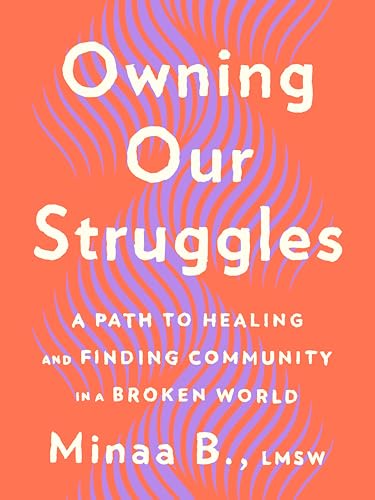
So I know we're going to dive into that. Before we do, can you describe the work you do for people who are hearing from you the first time? Yes. So I'm the author of the book Owning Our Struggles. I'm also a therapist based in New York City where I work with adult clients who struggle with mental health conditions ranging from depression, anxiety, as well as trauma.
I'm also a mental health educator. So, I work with adult clients who also struggle with sibling dynamics and I also help people foster community care. You just have a lot of different areas that you cover, but that's what our life is about, a lot of different areas. I think one in particular, friendships though, has been on my mind a lot lately. One because I actually was having a conversation with somebody who said, "Oh, I've got this group of friends that we've had since high school and we're always around each other and we hang out.
Now we're older." And I didn't have that. Like I moved around a lot. I didn't have those. I have a couple of friends in different areas of the country. But I realized that the concept of community and friendship has gotten a lot more important to me through the years.
Maybe as a result of getting older, maybe as a result of social media. Do you find people are bringing up the concept of friendships and community more these days? Absolutely. I think within the last five years, especially due to the pandemic, I think a lot of people have started to recognize the value of friendship because our society has placed a lot of emphasis on marriage as the ultimate relationship for so long. And I think a lot of people started to realize that their marriages were suffering as a result of your partner being your partner, your best friend, the person you're parenting with, the person you're going through life stages with, and the strain that that was putting on the marriage in itself.
I also think the shift in just culture due to social media, I think it made us want more proximity to people because we could see their lives more. It made them more interesting. I think we also wanted to be more invested in their lives. And so I do think that kind of was the benefit to social media and recognizing the experiences you were missing out on. And I think that made people yearn deeply for friendship.
But I think it also made people recognize what they were missing in their own friendships. I guess I could have thought it could have gone a little bit opposite like, oh, I I have a bunch of friends. I have, you know, a million friends. And so maybe they would look at it differently. You have a very interesting way you look at community and I think it's really important that we map that out a little bit for for listeners because it taught me a lot about how to look at different friendships and community.
Can you talk about those different area what do you call them areas or levels of friendship? So when I talk to people about community care, I tell them I define community care as a framework and I utilize the circle of support as that framework which contains four different domains. And I'm going to walk you through those four domains. And as I walk you through them, domains, that was the word I was looking for. I'm like stages, areas.
So domains of community. Yes. And I actually want you to be thinking about who fits into these domains. I want listeners to be thinking too. So, the first area is your circle of intimacy.
Now, when I think of my circle of intimacy, I'm thinking about the person who was coming over and I'm like, "My there's dishes in the sink. There's dust all over the house. I'm not cleaning up." Yep. Okay. You can see the mess because there's so much trust in this friendship and in this relationship that I can be my most vulnerable self that I know you're not going to judge me.
I'm not afraid for you to see the naked truth of who I am. I'm not afraid for you to see when I'm struggling. I'm not afraid for when for you to see the days when I feel a little lazy. How many of those friends do we have? Does it I mean those are those are like the those are your really deep rich friendships.
And so generally we do categorize your circle of intimacy as your family. But we're talking about friendships today. And I want people to remember that your friendships can also be your chosen family. I love that. I think it's so important in this day and age where we we move around, where there's loss, where there's all sorts of things where we think we have family and then we have friends and there there is that I mean there's in some ways that my best friend is one of the closest people in my life and it means a lot.
Same, you know, and I feel the same with my best friend. I've known my best friend since I was 6 years old. I was literally in the delivery room when she had all three of her children. Wow. Talk about circle of intimacy.
That's a circle of intimacy. So she has seen your dishes. Yes. Okay. All right.
Right. That's intimacy. So now we're going to move to the next domain which is your circle of friendship. What we're talking about. But one of the things I'm always teaching my clients is that friendship falls on a spectrum.
In our society, we we very much loosely use the term friend. Mhm. And when I'm working with my clients and I'm asking them to define the characteristics of the friendship, often what I'm hearing is what I would maybe describe as an acquaintance. Sometimes what I'll hear is that kind of sounds like your coworker because you never hang out with them out hang out with them outside of work. But do you think it's insulting to not insulting but it's difficult because you're trying to refer to somebody like, "Oh, this is my friend Sue and you don't want to go like this is my acquaintance." Yeah.
Then it doesn't right so I think in the context of labeling right especially in social settings it is okay to probably refer to someone as this is my friend but I think that intrinsic perception of what's actually happening here can be very profound because I think what happens is a lot of us are expecting our acquaintances or our co-workers to behave as if they exist in our circle of intimacy and do certain things as if they were our best friends when they really are our acquaintances. So when we recognize friendship falls on a spectrum, it allows us to understand the multitude of the and the vastness of friendships we can invite into our lives, [clears throat] right? And the varying degrees of friendships that exist. There are some people you're going to be super super close to. And there are going to be some people that you realize we pretty much connect with each other once every 3 months.
It's not that the relationship isn't valuable, but I have closer connections with other people. And maybe I share more of my business with that person. I go deeper with that person. Where this friend, I find that because they're more of a coworker, we talk about different things. So, there's a spectrum here.
Now, the third domain is your circle of participation. And this is very important because people are always asking me, Mina, how do I make friends? And I always say, tell me about your circle of participation. Are you sitting in the house all day? Because if you are in your home, especially now in our environment where a lot of people are working from home, right?
It's causing people to be more disengaged from community. Y and research does help us understand that the core foundations of building intimate connections is repeated encounters and opportunities for vulnerability. Okay? And so when we have those frequent encounters with people, it allows us to feel safer because you become more of a familiar face. Okay.
I remember I saw Tamin at the Pilates class last week and this is about my third time seeing her. Maybe I should say hi. Maybe I should compliment her on her outfit. And the more I see Tamin, the more I talk to her, the more I might want to say, "Want to grab coffee?" The more I might feel safer to do that. But if I saw a Tamsen three months ago, right?
Right. I may not feel ready to do that because it's there's been such a gap. You don't you don't even know how to get there. And you don't want it to feel inauthentic too. Exactly.
And [clears throat] and maybe just feel it feels right. It feels inauthentic. I think that's the word. Okay. Exactly.
You know, and so our circle of participation sometimes as we become adults starts to shrinken. Yeah. You know, because most of the places we're frequenting our work. It's it's our work environment. Do you feel like you're having to to remind people or tell people more?
Or you've got to I don't want to say like get out more but but you do have to find some other areas to participate to make sure you keep that whole. Yes, absolutely. You know, I think a lot of people tend to forget the importance of participation, the importance of finding places that you can network in. But most importantly, there's a difference between, for example, I'm going to go to that event that I saw on Eventbrite that it's just a oneoff event versus going to a book club where there's an opportunity for me to have those frequent encounters. And I think that's also important.
If I go to book club, there's a chance I'm going to see the same faces. But if I go to this event that I found on Instagram, I'm probably going to be doing a lot of networking, but I'm probably going to have to put a lot of a lot more effort into maintaining the the connections I make there cuz I'm going to be swapping a lot of numbers and a lot of emails and when am I going to see these people again? Yeah. And I guess it feels it almost feels like that's more work because now you've got to go to another one just like that and another. So you're still sitting at that surface versus if you were at a book club or some other kind of function, you you go a couple of layers deep.
That's that's fascinating. That's fascinating to think of it like that, right? And so I'm going to take you to the last domain, which is our circle of exchange. And this is our paid and professional networks. So I'm a therapist.
So I always tell people as a therapist, I exist in my clients circle of exchange. Okay? They're telling me all their secrets. They're coming to me and they're unloading. I know their deepest, darkest traumas.
I know all the things that they've dealt with, but there's a boundary, right? And it's the same thing as for me, for example, I've been going to the same hairdresser for about 10 years, right? I don't know. Think about maybe your makeup artist or the person who does your hair, right? Same.
Right. As women, we tend to stick to the same person. She just told me she's going out of town. I'm like, how long are you going out of town? Exactly.
We don't mess with other people when it comes to our hair. We're not looking to experiment. No. Exactly. And so these people fit in our circle of exchange and when we see them there's intimacy.
They tend to know a lot about what's going on in our lives. They're also doing our hair, right? So we there's a level of trust that we there's touching, right? And there's rapport that [snorts] we've been able to build. But we also know that when they're done, they did a fabulous job with the curls and the blowout.
We have to pay them. Yeah. Y right. And that's where the boundary is. And so the reason why I teach people this framework is because often people will say, "I have no one in my community." And then I'll say, "Well, help me understand your circle of support.
Let's break this down." Wow. Because it's possible that the people who exist in your circle of participation can be upgraded to your circle of friendship and eventually move to your circle of intimacy. It's also possible that the people who exist in your circle of exchange have value in your life, right? And so, how can we not exclude those people as people who aren't adding value to you? Those are people who are playing members of your community.
And so, it helps people to really diversify how they see community. It also helps people understand the different spectrums of community that exist because often we say community must mean I need a best friend and we don't even realize my hairdresser is a member of my community. I love that. And I also think it allows you to know that those positions can shift, right? Whether they're in one of those domains, not in any anymore, which is, you know, another conversation I want to have with you because I think that there's a lot of, you know, people coming in and out of our lives.
But I like the fact that you've expanded community because I do think and I I don't know about you but as a therapist do you hear people in their 30s 40s 50s say like I don't have any real friends or I don't have any time for friends is that becoming more common place that is that is and I think that just has to do with burnout I think that has to do with life transitions especially in that age range you know the 35 to 45 age range [clears throat] is that's very very common why why in those I find that especially in this day and age women are having children at a later age. Okay. And so we see that parenting is playing a role in that. We also see that the more people are focused on their career that is leading to burnout. We've also seen a societal shift after the pandemic especially with work from home that's become a permanent thing for a lot of people.
It's impacted their mental health. A lot of people have moved after the pandemic. Some people even left the country. Yeah, I know. Right.
And so now you're thinking about how do I sustain a friendship with someone who lives in Europe, right? And I'm here in America. And so I do find that around that age, you see a lot of the factors that once felt familiar and once felt stable in your [clears throat] life become disrupted. And that's where those life transitions come in. That's when we start to recognize that those life transitions are causing a sense of disruption to the familiarity we're used to.
And I think a lot of people struggle with that. Why is making friends as an adult so hard and I do think it's hard. And I don't know if it's because we're we've got more rules of what you know what we're going to let in or let out or boundaries or because we're busy or because we already feel like you know what I don't have any space for that just mentally I want to go home and watch Netflix. It's actually speaking to a multitude of things that research speaks to and what you're saying is a few of those things. One it is it is the burnout.
A lot of people are more career focused especially women. They're building businesses and they're moving up within the corporate world. And so that is a lot of strain emotionally and mentally. And the reality is friendships require effort. It requires investment.
And so if you come home every day and you're exhausted and you're also overstimulated. Yeah. Right. A lot of people are experiencing sensory over stimulation. And as a result of that, they don't want to talk on the phone.
They don't want to text. They just don't want to be bothered. It can be really hard to sustain friendships because that requires communication. Yeah, it's it's actually real work. I know there are women out there that are saying, "I have zero friends." But Mina is here to explain that you don't have zero friends.
I mean, I think that those domains really set that up. But if somebody really does feel like they just don't have any friends, they're going on walks by themselves, they're, you know, they want to go out to dinner, maybe they're single and they want to have somebody at least, you know, once a week to just go hang out with, where do you start when you feel like you don't have friends? Yeah. The first place is thinking about that circle of participation because, as I shared earlier, we're not going to make the friends in isolation. Yep.
And so I would encourage people to start doing the work of figuring out their social infrastructure, which basically means what are the recreational centers and what are the different activities that are happening in their social environment, their neighborhood, their zip code or their neighboring zip codes that they can participate in that will allow the opportunity as I shared earlier for frequent encounters. So, can you go on apps like Yelp or Eventbrite or Luma that highlights different activities or programs that maybe it's a book club happening? Maybe there's a run club. We saw all of these clubs pop up after the pandemic. Right.
All of a sudden, we knew how to be back in person. Right. Right. We did. Right.
And so, that's often what people are really missing. I need something to participate in so that there are opportunities for me to see other faces. So that there are opportunities for me to build connections and also make opportunities for me to be more vulnerable in these spaces. As a therapist, what is the healthiest thing somebody could do right now when it comes to friendship? I'm going to say you have to be willing to be seen.
I work with so many people who struggle with their self-esteem and they don't recognize that the stories that they're telling themselves that are riddled with inadequacy and this belief that I'm not good enough. I'm not worthy enough. I'm unlovable. Why would Tamsen want to be my friend? Why would Mina want to be my friend?
Another thing is this comparative suffering where we pull out our measuring stick and we say look at what Mina has look at what Tamsen has achieved. Why would I be valuable to them? Do we do that? People do that a lot. And that in my line of work that honestly is the number one thing I see impacting people's ability to make friendships because there is this deep inadequacy that people are holding on to and it causes them to shrink themselves and create this story that I don't belong instead of recognizing that sometimes belonging requires you to pull up a chair and have a seat. [sighs] If you were listening to these words right now and Mina you you just like it it just touched my heart like I felt that but if you were feeling not good enough you're comparing yourself you're you're listening to this right now and saying like why do I what I'm not I'm not good enough to be around these people that is wrong that is wrong thinking right how do you correct that thinking though because that is very deep rooted it's very deep rooted and it's hurtful to hear it's very it's and I think we've all done it to an extent but it's hurtful to hear yes a lot of that is rooted in our attachment styles, our core wounds that we've had from childhood.
A lot of it is rooted in trauma. And so if some people have dealt with a friendship breakup, they create this assumption, nobody's going to want to hang out with me anymore. Especially if that friendship breakup didn't come with closure, if they were ghosted. Sometimes people create the story that I was the problem. I was unlovable to the point where someone didn't even confide in me and have a conversation with me, right?
So something must be deeply wrong with me that you would just disappear after 15 years of a friendship. So we start to tell ourselves stories. And one of the things that we have to do is really start to challenge those negative belief systems that we have about ourselves. One of the best ways that we can challenge it though is by putting ourselves in environments to allow people to see us and to allow people to see the fullness of who we are. Mhm.
And so when you start to tell yourself a story of I'm not going to go into this environment because if I do, people are going to judge me. The first thing I want you to know, honestly, when you go into a a restaurant, when you go into the gym, people are lifting weights. Nobody's thinking about you. Do you know how hard it is to lift 50 lbs? No one's thinking about you.
Right? So the first story we have to tell ourselves is I'm not as important as my trauma is making me think I am because it's my trauma wound that's loud and my trauma wound is yelling at me and saying everyone in this room is judging you. Everyone in here is critiquing you. And the reality is when you look around nobody's looking at you. People are in their own world.
So I think that's the first thing that we have to do to silence the loudness of that anxiety and that trauma that we have. We have to challenge it. The second thing I think you feel safe when you do that. I think safer because if you're thinking that because I do I think we all think that like everyone's looking like they have time to do that but it's hard. It's very hard.
Another thing Tamsen I think has been really fun for me to do with my clients is I challenge them to take themselves on dates. Okay. I like this. Let me hear. And I think that this has allowed them to feel more confident in who they are because I've heard so many stories from my clients where they'll come back and say to me, I took myself to the movies or I took myself to this place wherever I went and I actually met someone who was also alone and we engaged in small talk and banter and it wasn't as scary as I thought it was.
And being in this environment because it helped me combat social anxiety and social anxiety is I don't want to enter certain spaces because I fear judgment. So you have somebody take go as a so someone's listening goes like I can do that going to dinner going to a movie going to a show what just going out just going out doing something loweffort right go take yourself to dinner and sit at the bar do you know how many people just sit at the bar by themselves talk to the bartender meet someone new that can fit into your circle of exchange my favorite moment of 2025 so far when Halle Berry sat on this set and called How to Menopause the Menopause Bible. I still can't believe it happened, but I am so grateful because that's exactly what I wanted this book to be. A go-to guide, a companion, something you keep in your bedside table and open to the exact page you need when you need it. If you've gotten the book already, I thank you so much.
I've been reading every single review you've left. And it's helping push this movement forward in ways I never imagined. And if you haven't yet, you can get your copy right now at how to menopause.com. I have to tell you something funny and it's so it's it's ironic that you're here today because yesterday I was talking to a young woman that I've known for a long time and I said I haven't seen you in a long time. She goes oh yeah I just got back from Paris.
I said I didn't know you were going to Paris. She goes yeah I went for 10 days and I said that's amazing. I said did you go with friends? She goes no I went by myself. I decided to take myself to Paris.
I said I wanted to go one day and if I didn't have somebody to go with, you know, a partner or something, I was just going to take myself. And I and I was I was fascinated. I mean, I went through a divorce. I'd taken myself out to dinner. I've never gone out of the country by myself.
And so I said, "What what did you do every night? Like did you go to the like were the restaurants close to the hotel? Were like for some reason I needed to visualize her there and understand how it worked." I think it's I I felt like she had this glow of so much confidence of being able to do that. Is that what happens? Absolutely.
Because first you start to build selfrust. You start to say to yourself, I can do this really hard thing. This thing that I told myself that was so jarring, so scary. I was incapable of doing it. I taught myself a new practice.
I taught myself I was capable of doing this hard thing. And then by doing it, you also start to learn more about yourself because sometimes when we we're in friendships, especially if you are someone who didn't learn skills to erect boundaries, to manage symptoms of people pleasing, sometimes in my work too with my clients, I notice they lose themselves in friendships because they're so focused on pleasing their friends because they don't want to be abandoned. And then when they do things by themselves, it allows them to see the things that they really like and the things that they really value. And then it then helps them to go out and create new relationships around those new value systems that they believe in, you know. So I think it's just an opportunity for you to get to know yourself better so that you can bring that new version of you into the relationships you're trying to build, but also the ones you've that already exist.
Let's talk about the relationships that exist. I've done a few videos on this breakup that nobody prepares you for, right? Which is a friendship breakup. We we haven't talked about that for a, you know, a long time. We we talked about breakups with partners, relationships, workplace, you leave your job, you get a new job.
Breakups with friends hit in some way that I just I still don't even know how to verbalize. First of all, you mentioned somebody leaving you, right? Leaving the friendship. How do you help people put that into perspective? Because I think that could be the hardest thing in the world.
You reach out to somebody that you think is your friend and there's not a response or not a response that you thought there was going to be or they fade away. And then I want to talk about the other side of it when you're doing that to somebody else. So, let's start in the the first area of, you know, if you're being broken up with because I think that is really really difficult on so many layers. Yeah. You know, in all of the research that I've done around this, I think the core thing that I find as to why friendship breakups can be hard, especially if you are the friend who you realize your friend broke up with you, is that in our culture, there generally is a sense of closure attached with endings.
So, when it comes to relationships in a marriage, there is a divorce that finalizes the ending of that relationship. Even as you mentioned, if you quit a job or even if you get fired from a job, there's a whole process attached to that. A resignation letter, there's a whole thing, right? It's actually a piece of paper. You actually get an email.
Exactly. Right. So, I noticed that in our culture, there's generally a system on how we terminate certain things, but there hasn't been a system that we develop when we terminate a friendship. And because there hasn't been a system or a framework, the person who wants to end the friendship just disappears because they never learned the framework. And then what happens to the person on the receiving end is what I call grief.
Yeah. And I think mourning are the symptoms that we see. It's the sadness. It's the confusion. It is that ambiguous loss because that person is physically present but psychologically absent.
I see you posting on your stories and my text message has not been answered for 6 months. Right. And so that's what ambiguous loss is where someone can be earthside. They're physically present but psychologically absent. And so there's this yearning for wanting to understand how can you be gone.
Normally when we talk about ambiguous loss, it's usually with dementia patients. Oh gosh. I never So understand the grief with that and now attach that to friendship loss. Wow. Wow.
That is the type of pain people are experiencing because we're like, we're thinking to ourselves, you're here. You're a full person who's capable to have a conversation. I just text you. I've been calling you and I'm witnessing that you are, it seems to me, living your life, right? And I think about the fears that a lot of people go through.
They thought their friend died. They thought they had an accident. And then when you start to it's like those different stages of grief, the bargaining, the anger, the confusion, right? Sometimes even I I have friends I have clients I mean who they're engaging in what might kind of sound like stalking, right? Where it's like something has to be 11 times, but I'm just going to do one more.
I'm just going to pop I'm just going to drive by to see if I see the TV on through her window. And I do, right? Something's not right here. What do What do you do, though? How do you put that into perspective in your head?
So you say, "Okay, this person has decided this. I didn't do anything wrong cuz that's that's the first thing, right? What did I you you said that before, what did I do wrong?" How do you get that out of your mind? That's a hard thing. I'm going to be honest, you know, and I I I like to sit with my clients and just be truthful about the fact that some things are very hard to reconcile with.
And I think one of the things we have to grapple with is being able to separate a person's behavior from our worth and our value and try to be able to see their behavior is a reflection of them. Their behavior is a reflection of whatever it is that they're going through. Their behavior is a reflection of potentially their inability to communicate, their emotional immaturity. It might be a reflection of their own frustration and they just did not have the skills to communicate with you and have a proper ending. Yeah.
With you. And I think that is one of the things I try to do because sometimes what we do is we overidentify with our pain. And so what we do is we say if this person left me this way, I must not be good enough. I did something wrong. I did something wrong.
Instead of being able to view it from a lens of this was her actions and there's no way for me to understand why this happened without a conversation. And so I always help my clients to just recognize the stories that they're telling themselves because what we want to do is we want to fill in the gap. Do you recommend people write a letter to themselves, write a letter to the friend? And what are the what are the so often if you find that you have done multiple forms of outreach at some point I do encourage that this must mean that the person has decided they're not going to respond and so I do encourage one you can write yourself a letter I think that is a great thing to do right figure out what are the thing what is the thing that is causing you to mourn which is clearly the loss but what what else did you lose as a result of this friendship ending what is the grief behind and that journal about it. One of the things I also encourage is audio journaling where I encourage my clients to speak out loud and record themselves.
And the reason for this is because when we're talking out loud, we can hear the discrepancy in our thinking. And so sometimes we're saying we're thinking something and it feels very true, but then we say it out loud, we're like, "Oh, that sounds a little that that doesn't really make much sense when I hear it back to me." I love that. And so that's why audio journaling can be really helpful. I also encourage healthy escapism. Sometimes pain and grief is just so difficult to deal with that what we need is a healthy distraction.
So I encourage adaptive coping skills versus maladaptive coping skills. Basically what that means is adaptive coping skills are tools that you are going to utilize to help your nervous system engage in rest and digest so that you can regulate yourself so that you can increase your mood so that you can decrease those symptoms of anxiety and depression. And examples of that could be moving your body, exercising, watching a funny show, listening to a podcast, doing something that actually releases that dopamine, releases the oxytocin, which is the feel-good hormones that you're probably missing out on because you're yearning for your friend, right? Where maladaptive coping mechanisms are those practices that kind of lead to those it it creates those short-term effects where it's like the short-term reward but long-term consequences. So, I could go binge drinking and it might feel really good in the moment because I'm not thinking about it anymore, but the hangover may not feel good.
Yep. Right. I might decide to spiral and curse the friend out and be angry and that might feel really good, but there might be a long-term consequence because if I want to reconcile with the person, I just did damage because I sent a really awful text message to them that you can't take back. That I can't take back. Okay, now I want to flip to the other side of it.
Okay. Is there a right way to break up with a friend or you know create distance if you feel like that friendship is not working for you anymore and it's not making you feel the way you used to feel or you just outgrown each other. Yeah, I definitely do. I think that that's a very common thing. One.
And I do think sometimes there are friendships where a conversation needs to be had, but I will say, and this kind of goes back to what we were talking about before, sometimes a friend is trying to have a conversation and they feel unheard. They feel dismissed. They're trying to talk to someone who just won't allow them to talk and they feel like the only option is for them to ghost. I see. So, I've seen that.
So, you're trying to do the breakup, but it's not you're trying to do it in a healthy, mature way, and maybe you have a friend who exhibits some emotional emotional immaturity, some really controlling tendencies, some toxic tendencies, and it's been difficult for you to manage the situation in a healthy way. And so, you decide, forget this. I'm just going to just cut back, right? I'm just going to decide to distance myself or I'm going to cut this front off completely. So I do want to say that happens sometimes and I do think sometimes that is necessary because I do believe that we should at least try to have a conversation with our friend but you can't talk to a brick wall.
Exactly. Right. You know you mentioned toxic and there is that kind of dark side of friendship sometimes like that's actually odd when you're saying the word friendship. How do you actually know when a friendship is toxic? Mhm.
First, I want to describe the core elements of what makes a friendship healthy because whatever falls out of that window can help us understand what falls in the realm of toxicity. Okay. Research helps us understand that respect, reciprocity, active listening, and mutual exchange allows for friendships to flourish because there's safety there. There's emotional safety, but most importantly, psychological safety, which basically means I can tell Tamsen this thing, and she's not going to ridicule me. She's not going to belittle me.
I also don't have to worry that when I leave here, Tamsen is going to pick up the phone and say, "Girl, I want to tell you what Mina just told me." Right? Because there's a level of safety in this friendship. Now, in a toxic relationship, we see the opposite. So, some behaviors we see in toxic friendships is the belittling, the judgment, and the putting down. So, you might have a friend who they might struggle with their self-esteem.
They might struggle with insecurities, and they might feel inferior to their friend. They might have something going on with them. And so, it causes them to be psychologically unsafe, which basically means you cannot divulge critical information to them. You can't share private details with them. They also judge you.
They put you down and they belittle you. You also find that they're just purely disrespectful. Yeah. Right. You ask them, "Please don't touch my cup." They go ahead and touch it just because they want to see what you're going to do about it.
Yep. Right. So they they test you. Exactly. Exactly.
So now they're testing to and they're pushing limits to see what you're going to do. They guilt trip you. Oh, you went away to you went on a vacation without me, but I invited you. I couldn't go. So why would you go without me?
So they make you feel bad about the decisions that you make without them. They also try to alienate you from other friends. This kind of goes back to this inferiority complex where if they see you creating new friendships with other people, it makes them feel very insecure. And so they want to alienate you by talking bad about other people so that they can keep you to themselves. And so one of the things too, Tamsen, that I I really want to highlight when I'm noticing a theme amongst toxic friendships and why I see a prevailance of it too and why it's also becoming a thing now where people are sick of it.
Yeah. Is that it mimics a lot of the dysfunctional culture people are seeing in their family dynamics. Oh wow. So now the place that they might have felt safe has become that same type of bed of jealousy, passive aggressiveness. Okay.
And so the same way you may have grown up in a family where we swept things under the rug, I'm passive aggressive because I'm upset with you, nobody apologizes, no one holds themselves accountable. The more people are becoming emotionally mature and emotionally aware, they're seeing these same dynamics play out in certain friendships where you have the friend that doesn't hold themselves accountable. They like to sweep things under the rug. They are very disrespectful, but then when you try to have healthy conversations with them, they dismiss you. So, it's almost as if they're resistant to healthiness.
They're resistance to they're resistant to emotional wellness. And that often helps us to understand a very toxic dynamic in a friendship. How unhealthy is that for a person that is dealing with somebody that is got that that toxicity and that is causing those things? Is that unhealthy? Because I feel like it's emotionally draining.
I've been around those people that I'm tired after I'm around them and I think what am I doing? It's very draining. It is very emotionally exhausting and I think it's speaking to why we have this culture of friendship breakups happening more often or at least people are talking about it more. You know, we're hearing more conversations about it just because it's exhausting. It is.
It's almost like you just don't have time for one more problem to add to your life, right? You know, and like I said, especially if you have a friend where it almost feels as if they're resistant to change and they're resistant to engaging in patterns or behaviors to make the friendship healthier, then it almost feels one-sided. It feels emotionally one-sided where you're doing the emotional work and the emotional labor to keep the friendship going where the other person is engaging in behaviors to keep the friendship dysfunctional or to keep the friendship in a place that benefits them. You know, there was a I think it was a study or an article or something recently talking about intergenerational friendships. It's kind of this like untapped secret and I'm noticing it more and more and I'm assuming, you know, I don't want to thank social media for everything, but I think in a lot of ways we get on a feed and you know, you've got a 20-year-old, a 60-year-old, a 40-year-old, a 20-year-old.
You, you know, you when you actually flip through your feed, it's all different ages doing all different things. And maybe that's made it okay. Maybe it's [clears throat] because our lifespan is is different than it was 20 years ago. How important do you think intergenerational friendships are? Intergenerational friendships has allowed for more chosen families.
The amount of people who have chosen moms, right? The same way I have people who have chosen friends, right? I have learned from clients where they have a friend where they're like, "This is my work mom because their mother passed away, right? Or their neighbor who has now become their mother figure to them." And so there are some people who have dealt with a lot of grief, who have dealt with loss. Some people are estranged from their parent and now they made a new parent.
So this is where intergenerational friendships can serve or at least fill a gap. Yeah. And nurture parts of us that has been yearning for love and safety. Another thing that I think is very very helpful and very interesting from the research is that intergenerational friendships actually helps us to manage our biases around agism. Oh, that's great.
Yeah, that's that's what we need right now. What we absolutely need right now because, you know, think about scenarios where you're hanging out with somebody, you admire their clothing, you think they're fashionable, they have great skin, and they're amazing, and then you find out they're 30 years older than you, right? And you're like, I have seen that, right? You know, and so in our society, older women have been painted as frail and brittle. And I think what happens with intergenerational friendships, is that it helps us to combat these belief systems that we have about agism, especially in regards to women, because society has created this idea that the more women age, right, we should be fearful, right?
I see 20 year olds being afraid to turn 30. I know. I know. Right. And so I'm like, just you wait.
Just you wait. Right. I think it gets better. But I didn't think that when I was 20, but you know. Right.
And so what that does is it allows the younger person to see that a rich meaningful life can still happen. It can still exist. And there's a model for it. Another thing that I find is very helpful, especially for men, is that when men don't grow up with emotionally available figures, which kind of leads to why men deal with emotional loneliness in their friendships, is that when men have emotionally present figures, but older figures that can serve as more of a parental guide, a someone who's a leader or a pastor to them or some sort of mentor to them, it actually helps to increase their interpersonal skills. But it also helps to increase their mental health.
That's great though. And so it helps us see that intergenerational friendships allows us to be more curious. Yeah. And it also allows us to sit in the depths of life with people who have experienced different things from us that we can learn from, people that can guide us, people that we can even guide. And it also shows that it helps to combat the loneliness epidemic.
Oh, the loneliness epidemic. I want to talk about that with men and women because I think it's I don't know if it's a little bit different but it seems like it is. But with intergenerational, you know, I I lost a mom at an early age and I I didn't have children of my own. So, I did find myself gravitating toward women who were much older or 20 what what age my mother would be and and looking to guidance from them. And then I've noticed now that I really enjoy younger women because I learn so much from them first of all, but then I also I I see I see things through their eyes a little bit differently.
And so I don't feel this, oh I'm so old and they're so, you know, I don't feel that difference in those in that age because I think we're all going to get we're all going to get to that place, right? So you're right, the bias is not there in either direction, right, of aism or of of a youth. The loneliness epidemic is a real thing. So much so that the city of New York, you know, had a loneliness ambassador, right, with Dr. Ruth and it's real.
Is it the same for men and women? Yes. But I think there's differences as to why men and women are experiencing loneliness. And basically the research helps us understand that men and women form relationships differently because of men's socialization and how they have been conditioned to see themselves as having to suppress their emotions to see vulnerability as a weakness. They don't necessarily engage with their peers over emotional intimacy and bonding through that capacity.
They generally bond with their peers through activities. So, this is where you have the golf buddy. Yeah. The the drinking buddy, the sports guy, you're going to the game. And as a result of that, when they're in these spaces, sometimes surface level conversations are happening as well because they also weren't conditioned to be emotionally vulnerable to say, I'm really depressed right now or my wife is leaving me and I'm afraid or work is hard and I think I'm dealing with burnout.
I think I'm really anxious right now. We're a woman. I mean, I'd tell anybody in the grocery store. I tell any I tell anybody. And I'm happy you pointed that out because women are more valuebased and so we bond over shared experiences and as a result of that it leads to more emotional intimacy because I can see your dress and say, "Girl, that that dress is so cute.
Where did you get it from?" And now we're talking about fashion and now you're telling me about my you're my grandma. You know, she made my dresses and now we're we're going deeper and deeper and deeper quickly, right? And so because of that mismatch, men generally don't have the ability to have a space where they can deepen their bond. And as a result of that, as men age as well and then deal with life transitions with their male peers, studies also show that they don't do a good job at friendship upkeep. Yeah.
Especially if their peers move to different towns or different cities or they become a parent. And so they become lonier as they age because emotional intimacy. How do you engage in emotional intimacy was never taught to them? How what do you what advice do you have for men that that may be listening right now that are like I I want to have friends like I'd like to but I I don't know how to keep up with all that and I got a lot going on. What is there advice or or some tips or some action they can take?
Yeah, I think one start with what you have and so the golf buddy, you know, the friends that you already have. I think it's about figuring out who is a safe person that you feel like they mimic your values. And as a result of that, one of the things that we always have to do is try. And so I always say to people, get go out there, put yourself out there and say, I need help. Right?
That's the first thing. It doesn't mean I need help with my feelings, but maybe I need someone to come over and just help me build something. Right? You know, because that is bonding. That is still a form of bonding, but that is also vulnerability because I'm letting you know I need help with something.
Not too much help. Exactly. Right. I also think it's really important to diversify the types of friendships that you have as a man, especially just because again in American society since this is a form of social conditioning, you know, it's it's what you're exposed to. So if everyone has the same belief system, you're most likely exposed to men who may not feel comfortable talking about feelings.
And so I think this is why you might want to diversify how you learn. Sometimes you might realize I can't learn from my friends, but I do need to read more books. I do need to listen to healthier podcasts. Good. You know, I do need more mentor is going to be on The Tamsen Show.
I got to listen to that shameless plug. I love it. [gasps] men in friendship now in a different way. Men men and women friendship. I guess that's the the bigger question. Can men, you know, I'm thinking of the Harry Met Sally one like men and women can never be friends.
We know that they can. I think that they can, but I also think that there's that issue with, you know, especially if if one of them's got a partner. How do you bridge that gap? I definitely think men and women can be friends. Me, too.
I'll just say that. I do think it does get a little complicated when a partner is involved and has a different perspective. Okay. You know, that was said nicely, Mina. But I do believe that there is so much women can learn from men and so much men can learn from women, you know, and so I do think that when we get I hope that we can create a culture where men and women can feel safe enough to bond and build those friendships where it is rooted again in mutual trust, there is respect and there is reciprocity in the relationship and safety.
Okay? And when those core elements are presented, it allows friendships to flourish. That is not gender specific. And so I think when people recognize those are the core elements of what makes a friendship healthy. This applies to both men and women, right?
And it's not just women with women and men with men. It's both with each other. And so when we have those elements involved or if there's a breach of those elements, we have to communicate that and we have to address it when it happens. What can men learn from women with regard to friendships? I think one of the things that men can learn is the importance of vulnerability, right?
I think women are very very comfortable with being vulnerable and I think that men can learn to reframe how they perceive mental health, how they see perceive even emotions because I think men are very open with anger and rage. Yes. But they've been taught that feelings of sadness and depression and anxiety are more feminine, right? But I think what happens is they're not really paying attention. They weren't taught to at least to pay attention to those symptoms and the correlation to how those symptoms have a direct impact on other things happening into their life, their life and the ripple effect of that, right?
And so I think women can teach men to be able to see that ripple effect and learn that sometimes you do need to ask for help, right? Sometimes being a provider is not just what you do with your money. It is what you do with your emotional health, your emotional intelligence, and your emotional maturity. But I think what men can also teach women is the importance of going back to that activity based thing, right? How men build friendships in that way.
I think it's also helpful to know that everything doesn't have to be deep. You know, there are some connections that are beautiful even if we are just golf buddies, right? This also allows for emotional intimacy if I allow it. But I think that it allows us to release the pressure of creating this idea that everyone that I meet or every relationship that I form, we have to go deep right away. Yeah.
Because the golf buddy can eventually become the best man at the wedding. Yeah. Right. They can change areas of the domain. Right.
And I think women can also learn that over time. This friend that maybe I go to the gym with or dance class with eventually a deeper connection can form. But it doesn't have to be this rushed experience. Yeah. Because that would scare that can scare people off.
You know who whatever gender that could just scare people off. Men, women. And I I really do believe that if somebody feels like their friendship world is just crumbling today, what is the first thing they can do today to help that? I would say address it. I would say address it.
I think friendships because for a very long time we haven't had the language or the resources to one acknowledge the importance of friendships the way we do with parenting or relationships. There's a plethora of books on parenting. There's a plethora of books on marriage and dating and even engagement. But friendships, it's just been tossed to the wayside for a very, very long time. I think people are now recognizing that friendships are valuable.
Friendships are important. If you are important to me and there is a rupture in this in this friendship, let's talk about it. And I think that's important. Is there one friendship rule you wish that everybody would live by? It's okay to have boundaries in your friendships.
Okay, I like that. What do the boundaries look like? It's okay if right now I can't answer the phone. I think what what I want to say say here really quickly is that a boundary is a request that I put on me where a boundary in many ways is the rules that I place on myself where a request is the rules that I place on you. Because we we're using that language wrong.
We are we put boundaries. I I picture boundaries as like a thing blocked around me and no one can go either direction. Okay. So I want to clarify that. So a boundary is the rules and the guidelines that I am going to place on myself.
So if I know that I am too tired to talk on the phone and my phone starts ringing, I'm not going to answer. A request, however, is me texting you, Tamsen, I'm too tired. Please don't call me after 8. If it's 8:05 and Tamsen is calling me, a boundary is I'm not going to answer. So that's what I mean when I say it is okay to have boundaries.
It is also okay to make requests such as please don't call me after 5:00 or please don't do XYZ. But I think what happens is we're using those words wrong in our relationships and we're also saying if you don't abide by my request, you're an awful person because you're crossing my boundary. You can't cross my boundary. Only I can cross my boundary. Oh, that's so good.
That and you're right. We do. We use it so loosely. Yes. We use a I mean, I'm sure it makes your ears like Okay, we have some questions from some listeners.
Is it okay if I ask away? Is it normal to bond with friends over gossip? Like sometimes it feels harmless, but then I wonder if it's toxic or if it means we don't really have anything real to talk about. That's a good question. That's a very good question.
The person answered it in many ways. So that is actually a thing where people do bond over gossip. It can be because there is nothing else to talk about. I will go a little deeper here and say there might be a fear of being vulnerable to talk about yourself. So you feel more comfortable talking about other people, their problems, their issues, the real housewives and other people's issues because you don't want to talk about yourself.
So it's a way for you to safeguard yourself from having to dulge and maybe this fear of maybe judgment. But there are times where people use that gossip to bond. The times that I find people are using gossip to bond though is when there is a core wound that the two of them have experienced and that gossip whatever the situation is has allowed them to talk about the situation in a way that illuminates a wound that they have experienced but they are talking about that wound as well. Well, it's almost like when you say like I have a friend who, you know, when you start that conversation and we do it jokingly now. Okay, that makes that makes total sense.
My partner doesn't really have any friends and I can feel the pressure on me to be their everything. How do I explain that having friendships outside our marriage is important for both of us and a healthier relationship? Yeah, I think first by explaining to your partner the strain that it is having. I think sometimes people they don't see the strain. They don't understand what that strain is.
So to them it's like I am your partner. How can this be a strain? So I think sometimes we have to use language to say it's really hard that you have no one to hang out with and so when you get depressed or when you get sad I have to be I'm the only person available and it impacts my ability to hang out with other people. So I think you have to get really specific to give them examples of what the strain actually looks like. But I also would encourage you to figure out with your partner, right?
Going back to that circle of participation, what would it look like for them to build that up? Because it is possible that they might have friends, they might have a golf buddy, they might have a football friend, but there is no intimacy. Yeah. In that relationship. And so one of the things I would encourage is are there spaces where instead of just going do why don't you call your golf buddy and say, "Can we go have dinner?" Mhm.
And so those are some things that I also encourage people to do when I say I don't have friends. I also want you to examine the relationships you do have and how can you again try to move these people from your circle of participation to your circle of friendship into your circle of intimacy. I like that because we all have that circle because we're right, you know, floating around the world. My friend was an absolute bridezilla at her wedding and I'm trying not to take it personally, but ever since her wedding, I haven't felt as close to her. I don't necessarily want to break up with her, but I can feel her putting more effort in than I do.
I'm nervous to bring it up because I think it'll blow up our friendship. What should I do? So, whenever I hear someone say, "I'm nervous to say something that's on my heart because this is what the consequence is going to be." I can tell it's a conversation that needs to be had. You're nervous about feeling discomfort. Yeah.
And I think what you need to do is find ways to regulate yourself during that conversation. But I also think it's important to understand that you're holding on to some feelings that might lead to resentment. It might start to show at some point because I always tell people your body language starts to show things for you when you're experiencing animosity and resentment. I also think it is okay for us to adjust the degree of closeness that we have to our friends, but it sounds like since this friend is kind of being a bit more pushy and it doesn't seem like she wants to adjust the degree of closeness, the bride, I mean, I think it might be important to just have the awkward uncomfortable conversation and if it does blow up, then that might help you understand where the friendship needs to go. Yeah.
And and where it's been and you have wanted to acknowledge it. Okay, this final one. I introduced two of my close friends to each other and now they hang out all the time without me. I feel left out and honestly kind of jealous. Is it normal?
And how do I deal with it without looking petty? Oh, this is so interesting. This is a I know. I like I already I feel that one. This is very interesting.
I do a lot of sibling work as I told you. And one of the things that we we talk about is this concept of being dethroned when a second child is born. Oh, dethroned. Dethroned. Right.
And so this happens in friendships too where a new friend came into the circle and now I'm not as valuable anymore. And so there's this competition, there's this jealousy, there's this rivalry. Because this person is in a position where they were intro they introduced them. I would just say, "Hey, I feel a little left out." Really? You would just say it out?
I Okay. I would I would I would I would talk to my friends because I don't know what there's something either clicked for them that's allowing them to bond deeper. And so if you feel left out and you're still yearning for the friendship, I would just encourage her to say, "I notice you two are hanging out often and I would like to be included and give them an opportunity to respond to that." And if they continue to exclude you from things, then that's just showing you that there are certain things that they want to do without you. And can you adjust to that? Can you be okay with knowing that they've developed their own internal friendship within your friend group?
I feel like that can happen at every age. That can happen. That can absolutely happen and it's hard and we take it very personally. But I do think it's okay to just speak up and let them know how you feel. But also know that people sometimes develop a bond that we can't control.
And you know, if they keep hanging out with each other outside of you, then that that kind of lets you know how they feel. Okay. My best friend just had a baby and now I feel like I've completely lost her. Our lives couldn't be more different and I don't know how to keep the friendship going without feeling like a stranger. What do I do?
I think I probably went through something like this myself back in the day when when friends were having when friends were having babies. Is there some good advice there? Yeah. Well, I'm not sure how old the child is, but you know, first thing I would encourage this person to think about is postpartum. And this parent's world is wrapped around trying to take care of a new life, while also taking care of herself.
And so, I could understand that feeling of being a stranger because she has a lot of priorities right now. And she has to think of the well-being of a a living, breathing child, and that can be really hard, especially with hormone shifts and postpartum depression and all of these things that happen after pregnancy. So, I would just consider that and think about compassion and what that would look like to offer your friend compassion in that way, but also see it from that perspective where it could be that's what's going on. Another thing is I would also encourage you to think about ways you can support your friend through this process because maybe your friend is trying to juggle a lot and so can you support your friend with bringing meals to the home? You know it right now with a new baby I would one of the things I always encourage people to know is that a transition especially when a baby comes is there's going to be a period and that period might be long where the brunches and going to the movies and planning the vacations that's going to be on pause for quite some time but understandably and understandably and so what's happening is you're asking yourself how do I now adapt to the newness of our friendship because she's a mother.
And that adapting might mean for a period of time we might have to be couch friends because I might have to be at her house helping her change diapers, helping her wash dishes, bringing food over. That might be what this period of friendship looks like. So, I would just encourage you to think of it from the perspective of she might need help and she might need support. And maybe you don't know how to support her. So ask her how you can support her or examine her life right now and figure out the gaps where you realize she might need some meals and so let me order some food from her for her.
Mina, where can people find you? They can find me on Instagram at mina_abb. Mina is spelled m I na. You can also find me at my website m I nabab.com where you can subscribe to my newsletter mindfulwithina. You can also listen to my podcast mindful with Mina and order my book owning our struggles wherever books are sold.
Thank you so much. It's so good to talk to you. It really is. I enjoyed this. Thank you.
All through this conversation, I just kept thinking about so many of my own friendships. What's working, what's not, and also the kind of friend I want to be. I would love to hear what you think about this. Maybe what stood out to you, and also what topics you want us to cover next on The Tamsen Show. You can always share your thoughts with me on Instagram at The Tamsen Show.
I read every one of your messages. And if you haven't yet, take a minute to leave a review. It means the world to me and really helps us keep bringing these conversations to you. Thanks for listening and I'll see you in the next episode.