My husband called and said, "It's all done. The deal's done except they want you to sign a 25- year non-compete." And then I was like, "2 years?" You know, I was 34 and I'm like, "I'm going to be in my 60s. I'm not going to want to work then. So, no big deal. I'll sign it." Well, guess what?
I left at 59 and a half and I still don't own my name. She's a trailblazing entrepreneur, bestselling author, and business powerhouse. Bobby Brown transformed the beauty industry once and then came back to do it all over again. I don't think you've ever really told your story like you've told it in here. I mean, this is layers.
When I ended my relationship with the corporation, it happened really suddenly. I mean, it was them that pulled the plug. So, you feel bad and you know, you feel like a loser. I really didn't talk to anyone that was on my team. This was my posi and they were told not to talk to me and it was tough.
And so, I really took two days off. Two days. And then I'm like, "Okay, this isn't working for me. I got to go do something." And I found a chemist. I told them what I wanted.
And this jar came and I stuck my hand in it. It wasn't what I wanted. And I went like this. I said, "Oh my god, look at my face." I said, "This is a miracle." And that's how Miracle Bomb was born. Oh my gosh.
People want to know all the time. How do you do this? You just start. You start. Stop asking.
Just start doing it. Bobby Brown is a beauty icon who rewrote the rules. She really did. She's built one of the most recognizable names in cosmetics. Walked away at the top and proved she could do it all over again as a serial entrepreneur and founder of Jones Road.
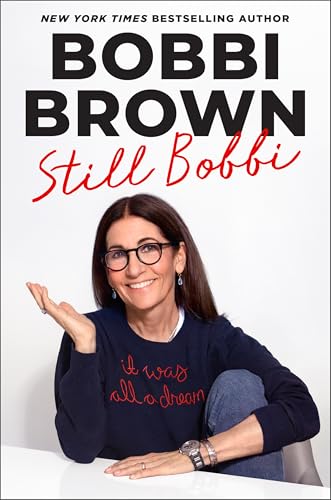
And now with her new book, Still Bobby, she is pulling back the curtain on what it really takes to keep building, keep creating, and really just keep trusting yourself even when the world may be telling you to slow down. If you've ever thought it was too late to start over, or ever looked at your life and thought, I don't know what's next, Bobby's story will give you the courage and clarity to answer it. It's so good to see you. Oh, it's so good to see you, too. I really love your story.
Every time I think like reinvention or starting over, your name always comes up in a conversation. And I think that there's something to be said for that. I guess I'm becoming known for that. You know, I've been known for so many things, but now that's the newest thing that people are like, "You did it again. How'd you do this?" I'm like, "I don't know.
I just did it." I I like that answer, though. I just I just get up and I You know, people want to know all the time, how do you do this? You just start. You start like I'm sure you thought about that before you started this chapter of your life. How do I do this?
How do I do this? Yeah. Stop asking to start doing it. I love that advice because I feel like you're right. People wanted to do a list, right?
They want a list of like, okay, get up in the morning and then make and I don't know that they're really it's really just starting. You're right about that. Sometimes that's the hardest part, right? Sometimes that's the hardest part, but it is the only way you're going to get there, right? And by the way, if you do something and say, "Well, that didn't work or I didn't get any, you know, eyeballs on that." Okay.
We'll do something different then, right? And that's where we that's where we miss out cuz sometimes I think that fear holds you back. I want to go back to young Bobby. Did you always young Bobby now? I think I am.
I'm as young as I'm going to be, baby. Under under. I know. I know, right? That's what my father said to me one day.
He's like, "This is the youngest you're ever going to be." And I was like, "Yeah, that was a realization." Yeah. See, I think we're in the second half. I'm in the second half of my life of my teenage years. That's how I look at it. I like that.
Do you think of things differently when you think of age? Because I don't think of age like I used to. When I was younger, I was more worried about being older than I am now. I was never worried about being older. I just never thought I'd get there.
Right. I just never thought I'd get there. And you know, I'm and I talk about my age all the time. I don't want it to define me because really in my head I am the same 30-some year old kid, but I'm going to in two years I'll be 70, which is incredibly ridiculous. I know, but you're still acting like the 30some, right?
And that's what that's what makes all the difference in the world. I talk about my dad a lot and he's 85 and I swear I he still acts very young and it's it's really it's it's actually been a nice thing for me to look at and see because it's taught me like that's all that makes all the difference in the world. When you start acting like you're you know I can't I won't this is not what normal people do at this age then that's what defines you. What's normal? I I don't know anymore.
I don't think that there is. I think we're creating the right images and thank you for to you for putting those out there. Well, the biggest problem I think with the TV world is HDTV was created for football. All right. Not for people's faces.
I know it's that is trust me I live through the brutalness of that and I know you have too. It's a it's a whole new world. Did you always know that beauty was going to be a part of of your life? Did you know from a an age when you know like I did make I I put makeup on when I was a little girl. I did all these different things.
But did you always know that inherently somewhere? Well, my mother did the most incredible thing when I came home and announced I wanted to drop out of school. She said, "You can't." She didn't finish college and I had to. But mom, I don't know what I want to do. She said, "Forget what you want to do, what you think you should do, or forget how you're even going to make a living.
If today was your birthday, you could do anything. What would you want to do?" And I said, "I wanted to go play with makeup at the department store. Why don't you be a makeup artist?" I said, "Mom, I don't want to go to beauty school." And she said, "No, I'm sure there's a college somewhere, and I found a college that let me make up my own major." How old were you when you said that? You're into college. So, I must have been 20, 21 at the top.
But a lot of people, a lot of parents would be like, "Well, see what you want to do, maybe study some of these things, get a job, then then you can decide if you really want to do that." So that's an amazing conversation to have out loud and also to be able to follow that, not feel like you've made some mistake. You just got to go after what you wanted, right? But then it really defined me because I found Emerson College and I went there and you know I told them what I wanted to do and they said, "Huh, we don't have that here, but we have something called an interdisciplinary major." And I'm like, "What's that?" You just make up your own major. And I did. And that was really my start of being an entrepreneur.
What did you call the major? Theatrical makeup with a minor in photography. Oh, wow. Yeah. Is it still there?
Well, it was never It was never there. I just I just did as I went. Gosh, I love that. Yeah. I I feel like you've been doing it as you went all along.
I feel like that's been a common theme. It is because when I moved to New York and said, "Oh, I better start working because I have no money." You know, there was no computers. I couldn't like search the internet. I didn't know anything. And I opened up the yellow pages and just looked up anything that said makeup or models or fashion.
And I just started making calls and figuring out how to become a makeup artist. How to become a makeup artist. And then how to have such a name that is synonymous with makeup in cosmetics now. Well, I never thought about that. As that was happening, what what were you thinking?
Were you just thinking, I like doing this and I'm going to keep doing it? It honestly was never enough. It was never good enough. I was like, I wanted to get better. I wanted to get better jobs.
I wanted to do, you know, work with people that I thought were cooler than me. I wanted, you know, I just always wanted to push myself. And so I figured out how to move in those kind of circles and built, you know, a name for myself. And then they interviewed me again and it got written up in a magazine. And then someone else interviewed me and asked me questions.
And I think because I was giving advice to the readers that they could understand. Okay. I have one small favor to ask you. If The Tamsen Show has ever made you feel seen, stronger, more informed, whatever it is, I'd really love your help. We have just been nominated for a Signal Listeners Choice Award in the self-improvement and self-help category, and your vote would mean everything.
You can just scroll down to the episode description, tap the link, and cast your vote. I promise it takes less than a minute, and it really helps us keep amplifying the voices and the stories that matter. Thank you. Thank you. Thank you for being a part of this community.
I'm so excited to keep doing this together. You have played by We've all played by rules, right? How do you feel right now in your life? Do you feel like you are you making up the rules? I'm definitely making up the rules.
Like I'm, you know, people say that I'm a rule breaker. I'm not really a rule breaker. I just make up rules. I like that. Do you have any now that you're you're living by?
Just to do what seems right, not what people think you should do, but just what makes sense. And you know, my biggest rule is just to be nice. Even if you're working with a team of people and you're not happy with what you're seeing, you could say it in a nice way. Yeah. I'm sure you've been at all end of that over time.
I mean, the industry that that you have been in in New York, you know, and and you have been with I mean, you've been with very very big people with big teams and a lot of people speaking for them. So, what did you learn from all that? Because there are a lot of lessons I'm sure that came along the way whether they were red carpets or standing next to you know big big names through the years and I I read some of them in here and I I knew a lot about you but I was like oh wow like you have really you know been with so many big celebrities and big names and big thought leaders at the same time do you was there a common theme with all that people said to me or it's been said about me that I'm very disarming and I I I take that as a compliment you you know, because I I don't judge and I see people all the same. I don't care how famous you are, how not famous you are, how regular you are. People are just people.
And so, you know, I think I got that from my papa Sam. He was like that. It didn't matter who you were. My mother also, it didn't matter who you were, what you did, what your, you know, where you come from. Everyone was treated the same.
And, and I just, you know, I'm someone that I really genuinely like people and I'm genuinely very curious about people. And I have to imagine because you're touching people all the time and you're near them all the time and you feel their energy all the time that there's something about that that you can get people instantly. Being a makeup artist, you know, I go to people's house, you know, I did. I used to go to people's houses. They'd be coming out of the shower and their bathroom, their husband's home, their kids, their dogs, their chefs, their cooks, their chauffeers.
You know, I've seen it all. I know you have. Yeah, I've seen it all. I love that about you, though. And I I love the fact that every single day you're still out there talking to real women.
And I I think that that's what makes you very special. And I also think that that's what really resonates now. I mean, it's it's not easy to cut through the noise. And and you have done that yet again. So I want to ask you, you know, you built one of the most iconic beauty companies in the world and then you decided to sell it.
Do you remember that moment? Do you remember that moment of making that decision? I do. And we weren't looking to sell. But it was 4 and 1/2 years after we started. 4 and a half years after we launched Burgdorf Goodman.
And somehow in those four and a half years, we became the number one line in Burgdorf and Neimann's. And then we got a phone call Frederick Fakai called and said, "Lonard Lauder wants to meet you." And we said, "Huh, okay." So, you know, we went and had dinner with Leonard on his roof and he said, "You guys have done a phenomenal job." And he said to me, "You remind me of my mother." And you know, his mother was Estie for anyone that doesn't know that. And he ended up, you know, probably took about a year, but he ended up purchasing the company. But I stayed as a corporate employee for 22 years after we sold the company. People didn't even know that it wasn't my company anymore.
And I didn't act like it was. I literally thought I still owned the company for for a good 20 years. A company with your name on it. So it had to feel like that all along. No, a company with my name on it.
A company that, you know, the products were based on what I believed women needed, what I believed, you know, women wanted. I didn't care what your skin color was. There was a color for you. And you know, we used to have meetings that, you know, they'd want us to discontinue the lower selling 5% of the products. And I always put my foot down.
I said, "I'm not getting rid of the dark colors. If you're not selling enough of them, go get more customers. You know, go, you know, I don't have enough women of color as customers. Go market to them." And it kind of never happened. But I never I never discontinued any of those colors.
Did you see that early on in the business though, the need for inclusivity and what was not happening in the cosmetic space? Well, I wasn't worried about what's happening in the cosmetic space, but I understand women and I understand people enough and it wasn't like, oh, I should include everyone. No, a woman comes to the counter, there's got to be a color for her. When you, you know, when you go back to the the first company you started, I know that you were not allowed to use your name if you were starting anything else. Is that right?
Can you explain that what you did? When we sold the company, my husband called and said, you know, great news. It's all done. The deal's done except they want you to sign a 25-y year non-compete. And I never heard of that before.
I'm like, I never even heard of a non-compete. I'm like, okay. And then I was like, 25 years? You know, I was 34 and I couldn't even count to 20, you know, plus 25. And I'm like, I'm going to be in my 60s.
I'm not going to want to work then. So, no big deal. I'll sign it. Well, guess what? But I left at 59 and a half.
So I had 4 and 1/2 years on my non-compete before I was able to launch something in beauty. And I still don't own my name for cosmetics. I don't forever. Forever. Forever.
That's all right. You have a new name. I mean, yeah, kind of. I mean, you know what? I'm still Bobby Brown, though.
I am. That's who I am as the person. Still Bobby. I was always wondering what that was like. I mean, we I've talked to you before.
I've interviewed, but I just I don't think very many people have that kind of experience to be able to understand that. Yeah. I mean, look, it you know, it goes with the territory. I knew what I was getting into and I, you know, also we have the internet, so everybody knows that Bobby Brown is behind this. Not everyone, but a lot of people know.
I think a lot of people. Yeah, a lot of people know. I think close to everyone. There's still plenty of people that don't. I mean, people DM me or write in and say, "I went to the counter of Blooms and they didn't have the Miracle Balm." I'm like, I'm not with Bob Bobby Brown Cosmetics anymore.
They're like, I don't understand because I think that could be that that's not what we would normally think. You think like you got you got Well, you're still Bobby and Bobby has something else now. So, let's talk about how this transpired into Jones Road because when you and I met, I don't know if you remember this or not, but I'm going to remind you in a minute. You were in between, right? We both went to Institute for Integrative Nutrition and I was so excited because I had just I think I had just signed up and you had just finished going there and and I was promoting a brand that I had an inside beauty brand, a wellness brand.
Yes, you were which you know didn't work but yes that's okay. It's totally okay because we all we all have all these different things that we start. Did you already know that Jones Road was the next thing? I don't know if I did or if I did, I wasn't at liberty to talk about it. Okay.
So, you know, I was experimenting and playing. And what happened was, so when I left the, you know, the the brand I had four and a half years, you know, I went home and it was, you know, it was a little bit of a rough period. I'm not going to lie. You know, there was the emotions of sadness, loss, anger, excitement because all of a sudden I didn't have, you know, things on my calendar anymore and fear. I mean, it was it was a very emotional time, but I needed something to do.
So, I started doing a bunch of projects and, you know, built a hotel with my husband, built a TV studio, an event studio, and then had this opportunity to create these inside out, products. So, I'm going to show you something if it's okay because this was the the it's nothing bad, but it was just something I thought about quite often after I did the interview with you. You know, every once in a while you do like thousands of interviews and then there's one that sticks with you. And I was at the time trying to figure out, you know, who I was. I was a news anchor.
I wasn't I wasn't sure. Like I liked what I was doing. But do you remember this to teach women that it's okay to age and evolve? So you have to just really just tell yourself to calm down. We are all the same.
You know, there's times where I look, I'm like, "Oh my god, what happened?" But okay, it happened. And it's going to and guess what? In 10 years, I'm going to look back and say, "I was so young. It looks better then. Really work on a couple things that I've never done before.
What are they? Meditating. I haven't done sitting in a chair and reading a book in the middle of the afternoon. It's on my list. Nope.
So on my list. It's still on my list. So for listeners, I interviewed Bobby Brown when I was in television. It was 2018, right? And I was just so I think I was just so mesmerized by really who you know who you have been.
Like you know I knew you by name. I didn't know you by person. Now I've been lucky enough to know you by person. But but you were in the middle of those stages. And the message you had then is still the message you have now.
And I think that that's a real beautiful thing about you. So when you talk about being authentic, right, you're really authentic. Like you proved it to me over and over and over again in real life. By the way, and by the way, some of my earliest interviews, even though I was only in my 30s, I sound exactly the same. You do?
Oh my god. I say the same. Yeah. I just talk about, you know, it's important to use makeup to just feel good about yourself. It's important to eat healthy.
I mean, I' I've been very very consistent. I found it last night and I was like, I've got a show for this. It was from 2018. And you were And so, I didn't know I So, I don't think that Jones Road was No, it wasn't a concept. No, cuz I left in 17.
Okay. So, that was 18, right? So Jones Road, let's talk about how that came about and what you were doing. So I know you went through some I can imagine actually, but you went through some difficult times. What is that kind of grief like?
Was it grief because you were leaving something behind that you'd had for so long or was it fear of not knowing what's next and knowing you still had some excitement about wanting to do something? Or were you not even that far along yet in your life? You know, when I ended my relationship with the corporation, it happened really suddenly. And and it wasn't me that said, "Okay, guys, I'm finally done." I mean, it was them that pulled the plug. So, that's, you know, rejection, you know, no matter what.
So, you feel bad and, you know, you feel like a loser. And then you start and then I really didn't talk to anyone that was on my team. This was my posi. You know, I wasn't at liberty to talk to them and they were told not to talk to me and it was tough. You know, that was a really hard period.
And so, you know, I I really took two days off. Two days. I took two days off. And then I'm like, "Okay, this isn't working for me. I got to go do something." And I would just go in the city.
I'd make, you know, people I'd never had time to see cuz I was on a treadmill of obligations. And I was able to, you know, have lunch with people, have breakfast with people, and and in between walk around and go into stores and touch things and see some of the new makeups that was out in the market. It was, you know, it was a really cool time. And then come home and try to, you know, figure out a few things. And I started doing projects.
I, one of those breakfasts was with a friend of mine who I really liked who owned Lord and Taylor. And he said, "Why don't you come work with me?" And I said, "Okay." And he says, "Why don't we do the just Bobby shops at Lorden Taylor?" So, I got to pull a team together and I had something to do. You know, I always need creative projects. Like, whatever it is, I just like to create. When you say, "I felt like a I felt like a failure.
I felt like a, you know, I think we can all understand that. It's hard for me to understand you feeling like that. You know, we look at somebody like you and go, how could you ever feel like that with everything that you've accomplished?" But we all feel that way. And I think that's really important to to just talk about for a minute. What do you do with that?
Is it just that you kept you had to keep moving at some point and say like I'm going to take my time to grieve to feel badly to to feel confused maybe by by rejection because rejection I think is confusing too along with grief. And then say I have to keep going. Well, I'm really lucky because I have this incredible husband that he just listened. He listened until he was like I need a break. You know, which he did.
He he often said, "I need a break." But I, you know, I had to talk about stuff a lot. I didn't go into therapy. I just I wasn't in therapy and didn't feel like doing it. But I ended up going to see my chiropractor. Now, my chiropractor is this incredible guy who does emotional release techniques.
It was really helpful. Dr. Jeff and Monontlair, really helpful. Got a lot of emo like a negative emotion. You know, what are you feeling?
Where is it? Weird. There was tapping, there was releasing, and you know, I'm not that woo woo, but it really works. I still see Dr. Jeff every week.
Do you really? Oh, wow. I still see him every week. And you know, he's a chiropractor, so he works on all sorts of things. So, that was helpful.
And then I had a very another dear friend who called me up. He was my yoga instructor. He said, I I can I come over? And I said, sure. And he said, I'm a life coach now.
I have my degree and I would like to give you a session. And I'm like, what's a life coach? I had no idea. I didn't I'm like, why do I need a life coach? Came over and we talked and then he said, I'm going to give you another session.
And you know, and he just said, how are you feeling? What are you going through? And it was about work, but it was also about things that I was frustrated in my house. And I remember saying, every room I walk into, there's something that's bothering me. It's a mess or a project.
And he said, "Okay, this is your assignment this week. Walk around the house, take a picture of every eyes sore, what's bothering you, and send it to me. I said, "Okay." I did that. Next week, he came back with printed pictures of all of those things and a Sharpie. He said, "Now sit down and circle and tell me what's bothering you." So, I would do it.
And then he took it and he said, "Okay, we're going to go through these." He said, "Okay, your couch where it's torn. This is where you call to get someone to come in and repair it." He gave me the phone number and address and he said, "See how it's all mushed up? That like it was a I'll never buy a down couch again. It was a down couch." And I said, "You know, it's just not firm anymore. It always looks messy." He said, "Yeah, do me a favor.
Tell me what you have been doing on that couch." I was like, "My kids, their friends, they jump. They were out of the house." He said, "Look at that couch with love. That that couch is pure love to you." And I started looking at it differently. And then, you know, little by little, some of my things went away. Okay.
And then we talked about, okay, what are you thinking about for work? What are you doing? And we would just talk about it and he would help me prioritize and you know, it was a really great experience. It gave you clarity, I guess. It gave me clarity cuz that's the thing that bothers me most when I'm like when I don't know what to do and I can't make a decision like that makes me feel stuck and I don't like to feel stuck.
I I Well, I don't think you're stuck at all. At all. All right. So that was during that time in between and then tell me how you got to Jones Road. Okay.
So my projects were combination of Lord and Taylor just Bobby shops. I started hiring a small team. One of them is sitting right there. She was one of my first employees. And you know I got an assistant from the Apple store.
I hired someone right out of the Apple store. And I started just kind of figuring things out. And one of the girls said, "You got to meet my friend that's a vitamin manufacturer." I'm like, so I had to go in, met him, pitched him. Turns out he wanted to do a line of products with me. That's why I was sitting on your couch to talk about Evolution 18.
We launched it at Walmart. I worked with I worked on that pretty hard. And then I started just randomly getting calls. I missed being a makeup artist. So I we started doing our own shoots.
And one day I got a call from the Indian makeup show. They wanted me to go to India and be the keynote speaker of two different makeup shows. So, I was building a kit together and I didn't want to use Bobby Brown. I never used it since the day I left the company. And I started buying other things and calling other companies and I just didn't find things that I loved.
I just thought there was something wrong with everything. And I just said, "You know what? I wonder what's out there. And I found a chemist and I told them what I wanted. And this jar came and I stuck my hand in it.
It wasn't what I wanted, but I stuck my hand in it anyways. And I went like this and I said, "Oh my god, look at my face." I said, "This is a miracle." And that's how Miracle Bomb was born. Oh my gosh. Yeah. Yeah.
What a difference from how you started your first company to to here. I mean I think I feel like with with Jones Road and you these are my words but tell me what you think is that it all came about like it flowed differently. Did it flow differently of how you started the the products and the line and your thought process was all of that very very different from the first time around? Not really in the beginning. In the very beginning so before Estee Lauder bought us before we were in Burgdorf before we were a real company I was selling lipsticks out of my house.
I was a new mom. I was still a makeup artist going to New York. I lived in New Jersey and I just started selling things out of my house. So I had about a year of that, maybe a year and a half. You know, my husband would mail the things to people.
He's such a good sport. He's a very good He was in law school cuz the real estate market crashed and you know, my husband is a dynamo. He really is. But he's a really, you know, I we can do anything kind of guy. I love that though.
Yeah. I mean, you're a we can do anything kind of girl. I got to tell you. I am. Yes.
And I I have, you know, he's my enabler. What made you want to popularize the no makeup makeup look? I didn't want to popularize it. It just got popular. Or what made you Well, what made you think it was important?
Well, because I really tried to conform to the makeup that was happening in the 80s and I just thought it looked terrible. And I I didn't think I was very talented, you know? I was not a painter of the face. And every time I would do someone's makeup, I just I couldn't really get the hang of it. I didn't think they look good.
And You felt like they were overdone. Yeah. It didn't look like skin and I couldn't really paint to correct their noses. I could I just couldn't. And I started doing makeup my way and it ended up on a cover of an Italian magazine.
And then people were like, "Wow, this is nice." And then people that liked that look started hiring me more. And eventually, you know, I got to work with some of the biggest best photographers from Bruce Weber who actually taught me how to do makeup without realizing it. So, I was had this very light hand and I did makeup that I thought the girls looked beautiful. And he came in and he said, "Bobby, it's really pretty, but can you wash her face?" And I said, "Okay." He said, "Look at her face." And he pinched her cheeks and pinched the lips and said, "That's what I want her to look like." I said, "Oh." So, I went back in the makeup room. I mixed my things and I blotted them and then I took it off and I'm like, I see that, right?
So, I really started looking at people's natural coloring and then using makeup to kind of get that look. And it caught on in a big way. Yeah. In a big way. And by the way, I did fashion week.
So I took that look and then I would work with the designers vision and make them whatever God, you know, yeah, that they had in their heads, which were often very crazy. How important was it to trust yourself? Trusting your gut is one thing, but just I've always kind of tried to do things that I thought were were the right things, you know, things I was you more comfortable with. I mean, but every day of my life, you know, like I remember being on Oprah once and the producer, you know, I I used to go on Oprah a lot and and the producer wanted like this big crazy reveal and wanted me to do this over-the-top makeup thing and I'm like, "She doesn't look very good, you know, can't we just do it with the clothes?" Like it, you know, so and you know, my team was like, "Are you not doing what they want?" And no, I didn't want to make her look ridiculous. You went on Oprah a lot, the Today Show a lot.
I mean, you I was the beauty editor of the Today Show for 14 years. Yeah. Because I met this really nice lady at a book signing and she told me that she was a big fan and she asked me, you know, she said, "I saw you on the Today Show." I'd been on once. She said, "Is there anything else you'd want to do?" I said, "I'd like to be a regular on the Today Show." It popped into my head. She said, "Honey, Jeff Zucker is my grandson." Oh gosh.
And so, Grandma Fran got me on the Today Show. It's all about putting out what what you really want or or what you don't even know you want, I guess. Yeah. And then when the Today Show after 14 years said, you know, we're going in a different direction, I was crushed and I started thinking and then I called my my friend Elvis Duran. I said, "Can I be the beauty editor of your show?" He said, "Okay, you're the beauty editor of the show, so at least I had another purpose." Is there one beauty me myth or makeup myth you wish would just go away?
I don't like contour. I mean, I just don't like contour. You don't? Oh my god. Why do you have to contour your face?
Hard contour or just put blush and that's the end of it. I like enhancing and brightening and luminizing. I don't like trying to change the shape of something. You're saying contour everywhere. All these things everywhere.
Yes. I'm not a big fan of contour because that's not what you would really look like. That's not where your color would actually be. Right. Right.
I Yes. I take a much more natural approach and I kind of enhance instead of take away. And I also think it's really bad for girls self-esteem. Yeah, let's talk about that because I think that a lot of people think makeup and they think like the more more is better, more is better, less is wor, you know, and that's not the approach. Talk about self-esteem with that because a lot of young girls are, you know, watching.
They're watching and they're and they pick it up and we don't even know what they pick up and they pick it up much younger now obviously with with the with social media. I mean, I think it's really complicated because there's a lot of things on social media that, you know, make you feel bad, you know, from taller people, skinnier people, prettier people, and, you know, there's a lot of ridiculousness. Also, there's great stuff out there, too. So, it's, you know, I don't have daughters. I have three sons, but I can imagine if I had girls, you know, it would have been a tough raising them in in this social media where my boys didn't have that issue.
Yeah. But, you know, I think anyone that does have daughters, the important thing is to not make them feel bad about who they are. Why did you decide this was a book you needed to write now? Because I don't think you've ever really told your story like you've told it in here. I mean, this is every part of it, but you know, it's layers and a lot of the backstories and a lot of the reasons why you want the truth.
Yeah. I I never thought about writing a memoir really. And a friend of a friend said, "Can I send my my friend who's an agent to come see you cuz she wants to do your book?" And I wanted to do another makeup book. So, I said, "Sure." And she came in. She says, "I want to do your book and I I want to do your a memoir." I said, "I don't want to write a memoir.
I mean, I'm not that interesting, you know." And she goes, "You have so much to teach and so much to tell." And she said, "What I see of you on social media helps me in my life. What I've read about you and I think you know look she's in the business of doing books and she basically got me a really good book deal so I said all right I'll write my story right but I'm sorry my story is a memoir I mean that's what your story is right if there's a listener you want to talk to and this listener reads a book is there something you want them to take away from because I think that most people would come to you and say or will come to the book and say like I'm I want to learn you I'm going to learn something and I and I do really think there are a ton of lessons this book there's a It's not a I mean it's a memoir, but it's it's a book about lessons. I mean, I'm a teacher. I can't help it, but you know, and I like sharing my experiences to help other people, but I I think there's different audiences will get different things. I think younger girls in their 20s and 30s will see it as a blueprint for their life.
Oh, that's how she did it. Oh, I could do that. Oh, and I think, you know, a lot of women that are trying to figure out, you know, reinvention or what what they're doing or they're stuck. You know, I had a very well-known writer interview me recently. She's in her 70s and she said, "This book really was what she needed at this time." She said, "Because I've been trying to figure out what my next and I don't know, but I know it doesn't matter.
I'll figure it out." So, I was happy about that. It's incredible. But I mean that makes all the difference in the world. I think it's sometimes those those words. So I want to read one little or maybe I'll have you read it, but you probably can see it better than me.
But I just think right here, you know, I was going to say, "What do you want to tell your younger self?" And then I read that right at the end, and I went, "Okay." I wanted to go back in time and tell those younger Bobbi’s and all the girls to stay true to yourselves, to stay true to themselves and their vision and their belief in real beauty, and to know that things will work out. Trust me, they really will. I just think that those are like the words that young women need to hear now. Yeah. You've changed women's lives when it comes to makeup in midlife and you make sure that your models represent that and what made you know that that was that was what you had to do?
Is it because that's where you were? Is it because you understood that there was such a a lack in the market of people talking to us? You know, I've always known about diversity from age to skin color and I always want to represent everybody. So, you know, I looked hard, you know, to find a woman of a certain age who didn't look like she was full of plastic surgery. It wasn't easy.
I was in the Hamptons. It wasn't easy, but I found this amazing woman and you know, she was one of my first women of a certain age. And then people were just so excited. You know, I just kept doing more. I I represented not just women of a certain age, but all women and just women of a certain age were just thrilled to be able to look at these, you know, vibrant women that are not overm made up, but they just look cool and great wearing, you know, great jeans and, you know, a nice blazer, great makeup, but also they're styled in a cool way.
They don't look like 50-year-old women or, you know, 60y old women. Bobby, I just think you're such a gem. I really do. Thank you so much. Thanks for taking the time to do this.
I know you've had a busy day and I appreciate it. And on behalf of all the women of all ages, guys, thanks so much for being here for this episode of The Tamsen Show. Bobby's new book, Still Bobby, is out now. And I that women deserve.