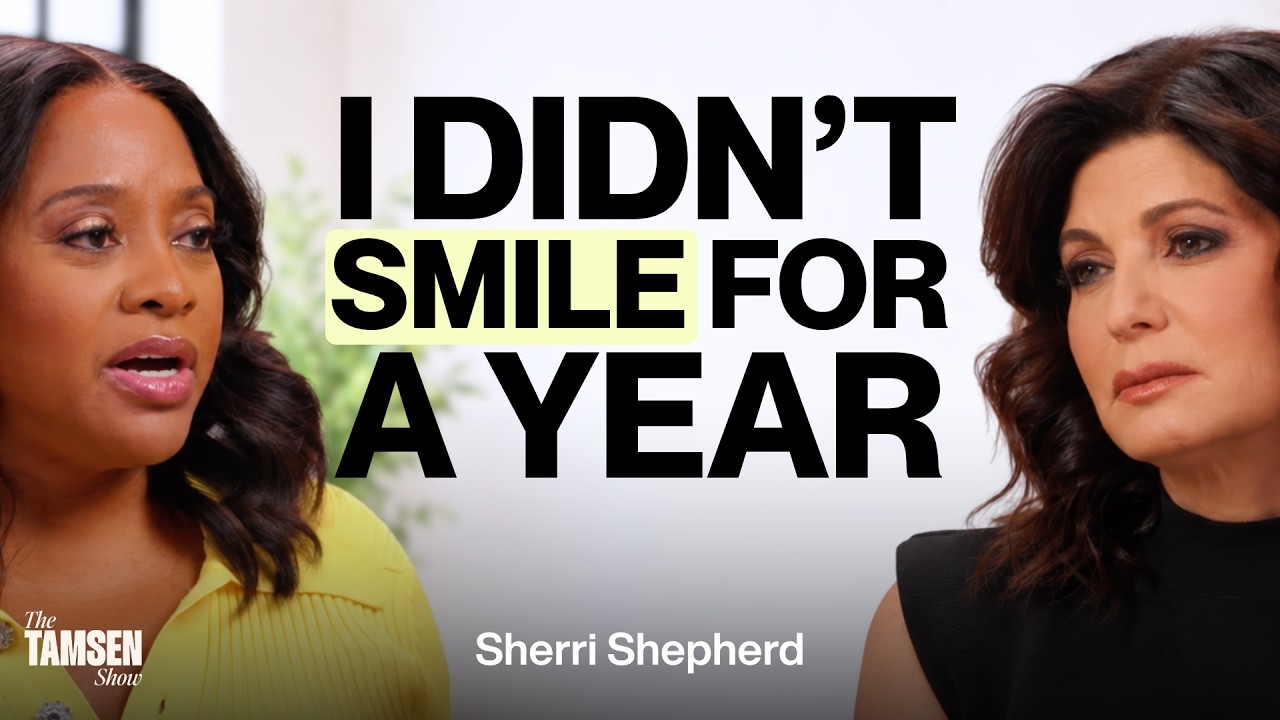
On What Not to Wear, I wanted to feel sexy. I wore tight pencil skirts and 5-in heels, and I wanted people to be like, "Hmm, she's kind of hot." Stacy London helped millions rethink their relationship with style, but behind the cameras, the confidence she projected didn't tell the whole story. I am experiencing so much shame and so much pain and so much fear around this experience. I wish that I had really understood that I was lacking so much self-esteem. You got to say yes.
Now she's helping women do the same using personal style as a way back to confidence. Everyone knew you as style, style, style, Stacy London, style. You're the definition of reinvention, of change. Now she's on The Tamron Show to share how you can do the same, starting with the way you get dressed. Be honest about what doesn't fit, what will not continue to fit, what you are torturing yourself with that is psychological torture.
It is psychological torture. It is I used to be. Because it's not just about getting dressed, it's about reclaiming who you are at any age. It's about identity. We are one person that evolves through a lifetime with multiple identities.
This is Stacy London on The Tamron Show. You know, I always love when when we first met, I loved you. Then I fell in love with you again like 10 years later, and I'm so glad you're here. Thank you. Sister.
You mean so much. I know, I want I want to move this mic and run up and hug you. Want to hug you. But it's also that you and I realized very much around the same time Yes. What was happening to us was not okay.
We didn't know that we were in menopause. Nobody gave us any information. I know your story, you know, of of passing out. How can you be a newscaster when you can't read the prompter? And I was really I went into true existential crisis.
I was just like, I don't know what to do. I don't feel like myself. I don't look like myself. How do I do this and and still hold on to who I am? And that's been a real learning process.
Let anyone know that I feel like that. We met first on your famous show, What Not to Wear. We barely knew each other. We were kind of like we were there. We were both there.
It was a real interesting episode. Yes, it was a very interesting episode. I met you and then we didn't see each other for a while and then we were told to reconnect. Thank you Marisa Tomei. Just a little shout out.
About menopause cuz we both happen to be I think we were talking her ear off about it, I guess, and she was like, "You guys should connect." And I'll never forget we went down to the West Village. It was like a I I don't know if it was I don't know what month it was. Was beautiful. Remember? You were wearing I can tell you you were wearing a white T-shirt and these skinny jeans and first of all nervous seeing you cuz I was like, "She's all fashion.
I have to be perfect." god, and I was wearing some flouncy dress. I felt like a like a weird I did not feel like myself at all, clearly. But I remember thinking, "Oh my god, she's beautiful in a T-shirt and jeans. Can you imagine?" We've got to get this girl in some amazing clothes. Okay, I really love that part of the story.
I didn't know. But I remember we sat there and we just after we got past like, "How are you? How are you?" and all the things that we do with each other, right? In life that we all are like, "Okay, everything's going to like we really got down to it probably in the first 20 15 minutes. I think we got down to like this this raw, real conversation that I think I've been missing for a long time or maybe I wasn't ready for in my life, right?
Maybe I had put up this glossy front for such a long time that I wasn't ready to let that down yet. And I remember we did and we started talking about this new midlife, this this what was going on menopause, the mystery of menopause, myths that we thought, we weren't sure what we were understanding and learning. I mean, there was not conversation out there. There was This was not all over my Instagram feed at that time. It was just this conversation like, "What do you think?
What do you think? Are you going through this? I am, too." And I just remember that being such a pivotal moment in all of this in this like very beginning time. Yeah, this was a long time ago and you know, look, I think one of the things that I felt after that lunch particularly was such a sense of relief. Yeah, me too.
That I could let down my guard, that we were speaking the same language, that I didn't feel uncomfortable talking about things like loss of libido or painful sex or things that we had been taught just taught culturally not to discuss. Right, we can't talk about it in the doctor's office if you're going to talk about it. Actually, in the doctor's office you don't even talk about it. No, and this idea that I think that women, you know, continue to think that they are competing against each other and this whole idea of women supporting women and you know, everybody supports that publicly. To be honest, you know, I'm sort of on Miley Cyrus's side here.
I don't think all women support women and I think they do continue to do real damage in terms of female friendships, but the one thing that I've really learned was that menopause not only brought me close to you, it brought me closer to my friends because I was able to say to them what they were afraid to say. And the minute I was like, "Come on, ladies, let's get into it. Let's start talking about it." It really you started to see people let down that guard. You started to see people be like, "Oh my god, there is a community for me." And I just kept thinking I spent all this time isolating myself so sad hiding when all we needed to do was have lunch for me to know there was one other person out there. Actually, it turns out it's a billion of people out there who are going through something similar, who are going through what we have been referring to as some sort of midlife crisis, but I don't think we've actually really unpacked what a midlife crisis is and why women in particular with female physiology, anybody with female physiology is experiencing this radical shift and change physically and emotionally.
And saying those same words, saying the same words like, "What's going on? My body's changing. I can't believe this. Are my best years behind me? I mean, those are scary, awful words to come up on.
I think I What I also remember from that lunch, I remember going home and and and telling Ira, like, "Stacy London was talking about menopause." Like, I mean, if she was going through that, you know, because I I think there's something to that when you see when you see somebody who's so public and so beautiful and so But I don't know that we all know who we are from the outside, right? But But when you're looking at you from the outside, I'm like, "She has got it together. She is smart. She's bold. She's brave.
And she's talking about this." And I would just remember thinking, like, "Wow, like, there's somebody else that understands me, and she's so real about it, too." You know, it was There was no I think we were both there talking about this, and I think that that's what I like seeing evolve in this conversation is that real friendship and community is formed because of the need for that. Absolutely. And we're learning a lot about midlife. You're the definition of reinvention, of change, of going out there as a a CEO and not being afraid of those words, which I think are it was very bold. And very hard.
And very hard, and you were very honest about it. I remember you getting out there every day at your favorites to favorite CEO. I was like, okay, got to come up with something. But But But you were really bold about all that when you started your business talking about menopause, and everyone knew you as the fashion, you know, style style style Stacy London style. And now you've come back and brought it all together.
I think it's such a beautiful weave, and I don't know you know, I I think it's just all kind of come together beautifully, not without a lot of hard work, but it's come to of mistakes. You know, I I love I really love talking about mistakes and failure now. That's another thing that we don't talk enough about. And you know, I went into this thinking I am experiencing so much shame and so much pain and so much fear around this experience. If there is one person that is going to like, I'm going to help by putting up this product or do, you know, having a website that you can go to, that will have done something right.
And there were a lot of difficulties that I was facing. Not only did I have to acquire a company that had started but not been launched yet without really understanding the economics of it all, just knowing that I wanted to get it out there now. And I think perhaps I was like maybe a little bit early for what we would now call the menopause gold rush, but I certainly think that at that time, look, a lot of people in style said to me, you are committing career suicide. The minute you start talking about menopause, nobody is going to let you talk about style. And I thought well, first of all, audiences did not accept me as talking as being a CEO and talking about menopause immediately because they were like, well, we want fashion advice.
And I thought, well, why am I not allowed to change? Why are my priorities not allowed to change? Audiences like what is familiar and people want you to stay in your lane. And I think that's true for most women in general. And this idea of being entrepreneurial or this idea of being multifaceted and not staying in your lane is another way to prove that we can do whatever we want in life and it that it is never too late and that you're never you're never past where you're supposed to be.
And for me, trying out, you know, being an entrepreneur was an incredibly difficult experience, but it taught me so much. Not just about business, but about what was going on in the medical world in menopause, in psychology, what was going on in terms of Dr. Judith Joseph talking about high-functioning depression and how that's something that really can happen in menopause and how to tell the difference and so many things that I learned that were helpful in my own evolution. But I'll tell you what I learned very quickly about about the company. We were getting millions of hits to the site.
It was incredible. People were reading all of our articles. It was wonderful. But we got almost no conversion. And I couldn't figure it out until I realized the biggest issues in menopause weren't about skin or hair.
And that's not to say that there aren't great products out there for menopausal skin and hair. It's that to say it wasn't the issues that women were really struggling with. What they were struggling with are what I like to call the big feelings, right? The shame, the guilt, the anger, the rage, the depression, the anxiety, that they didn't know where to put those feelings. Confusions or or or how to talk about them.
That we had taken a wrong turn. And that to have to sell product to people in such desperate need felt really wrong to me. It felt like the wrong side of the fight that I wanted to be on. How hard was that? It was incredibly painful.
Because to think that I wanted to bring something into the world that would be helpful and realized it was really just we did not have proprietary ingredients. I did not realize how important that was going to be. Because frankly, you know, if you're going to do skin care, hair care, vaginal care, you really have to think about A being clean, which we were, but also you have to think about what what Stay in your lane is kind of funny, right? Menopause is not a lane. There are so many different aspects to it.
We're all going in that lane, by the way. Right. And everybody said to me, well, how are you going to make a line that everybody is going to use for menopause? Like you're going to you're going to do everything? And you realize, you know, people now, the way you roll out product is one hero product.
You prove that it works. Then you add two more. Then you prove that those work. What you learn from all that to go into now the business that you're in, which I am so proud of you. Well, but you know, the reason that that happened one of our New York lunches, you know, that we talked about.
That we talked about. But one of the reasons for that, and I should explain going full circle, was closing that company, Clinton, Kelly, and I, you know, my my previous co-host and now future co-host of a new show, we went out on tour. Like we just wanted to see if people were interested in seeing us together. We called it the Stacy and Clinton show and it was like a variety show for an hour and a half that we did around the country. And women our age, like really, I would say between the 40 and 65 range, would come up to me at every every show and say, "Where are the clothes?
I don't know what to wear now. I'm not in my 30s. I'm not even in my early 40s where I could get away with, you know, wearing clothes for my 30s and late 20s, maybe. I don't know what I'm supposed to look like. Trends don't mean anything to me, but I want to look put together.
I want to look relevant. And at that very same time, QVC was really looking to amplify the Q50, all of these female ambassadors who are doing incredible things with their lives that start at 50 and go all the way up to their 80s. I just love that group of women. Yeah. An incredible group of people and to to ask to be a part of that was amazing, but then to realize that I could introduce clothing that was specifically for this woman Yeah.
Who is maybe a little bit more fashion-forward and, you know, might do fast fashion shopping sometimes at Zara, has designer clothing as well. You don't think of QVC as being the place where you're going to find modern not necessarily trend forward, but certainly relevant clothing that you can wear for many years that is specifically meant for this age group. Thinking about, "Hey, is is that zipper clear enough because I want you to be able to zip it without your reading glasses?" Or, you know, is a pull-on pant? How do you make a pull-on pant that looks tailored? Things that you do when you're feeling bloated and awful, but you still need to look put together?
I mean, those are those are real questions. Like when I when I, you know, I wrote the book and and interviewed you for that and I thought and I was like, am I okay putting clothes in a menopause book? And then I went, oh, I have to do that because that that all these you can't leave anything out of this time in life. Because it's about identity. It is about identity.
It is about identity. That we are one person that evolves through a lifetime with multiple identities. Now, I this comes very naturally to me because I'm a Gemini. Like we don't know what our favorite color is. You see there's too many of them.
Too many of them. There's a lot to choose from. Right. There's a lot to choose from, but I do believe that part of being self-aware is actually understanding. Like let's say every 7 years your cells completely turn over.
You are literally a new person every 7 years. You need to think about every aspect of your life and whether it's 7 years or a decade or whatever works for you every year, you know, people make resolutions, whatever it is. But you need to be aware enough that you are evolving which takes incredible self-awareness to realize that evolution means change. So you're not going to wear the same clothes you wore in your 20s. You're not going to want to.
And it's okay. And that's okay. It's like saying, you know, you loved baked beans as a kid and now you don't want to eat them. It's just your taste will change. We have to allow those things though and we talked about this before, you know, you you talk a lot about allowing yourself.
Mhm. You have a very interesting a viewpoint of it. Allowing yourself is not the same thing as being passive and just sitting back and watching things happen. That's right. I I don't believe it's the same.
Letting go is a little bit more passive. Allowing requires being the work of being self-aware enough to understand when pushing back or fighting against something is actually in your own disinterest. And allowing also means that you are looking at every possibility as an option. That you are not limiting yourself. That you are not self-criticizing what you see as a potential option for your future.
I noticed that I I have this voice, this mechanism that kicks in the minute I think about doing something wild and crazy that's like, "Stacie, that's not practical." Shut up, that Stacie. Stop being, you know, negative Nancy. Let positive Polly like think about things for a while. And you really have to be very much in control of the way that you think. The way that you think is going to determine the choices that you're going to make in your life.
And I think it's very hard when menopause is literally the most disorienting stage of life. That's why we needed to start like asking questions and getting answers. It's why, I hope in our future, we are going to get much more research on female physiology and how bodies work because we're not little men. And the minute that we start putting the clinical dollars towards that research, I think we're going to find that our systems are much more complicated. I wonder what we're going to find actually.
I really do wonder that. I I think we have we have barely scratched the surface, like barely, barely. You said you and Clinton did an interview and the host asked you both a question. Your eyes were opened after the the answer. Can you can you tell that story?
Yeah, well, Clinton has opened my eyes in a lot of ways. And it's funny, a lot of things that I think I used to be more envious about are things that I truly admire in him now. Mhm. And one of the things that I admire most is he said something on that podcast that literally like struck my heart. We were both just asked to say something that we'd never said before.
And I said, "Oh, you know, I don't know if I know what my taste is." And I thought that was kind of like a big confession, right? Like, I love French country and Italian mod from the '70s and that doesn't always work together when you try and put like, you know, colorful ceramics with like, you know, lucite or whatever. And I was saying sometimes I don't know how to mix all of those things together. But Clinton said something that that literally blew my hair off. I He said, "I do not live a fear-based life." And I really like I almost started crying.
I actually started crying when I got off the podcast because I thought I have been living a fear-based life most of my life. And it stopped me from doing things that I wish I'd taken a chance on doing. And I got braver as I got older, but I'm still I'm still living in that fear. That's not where I want to live. I don't think are now?
I do. I still think there are parts of my personality that I am having to overcome the thinking. Now, I grew up in Manhattan. I am a very proud New Yorker. I'm also proud to say I never learned to drive.
I did fail my test when I was 17 cuz I had a small argument with my official. They told me not to take the test at the end of the day cuz the inspectors are usually grumpy. But he was mumbling and I said, "Sir, you're mumbling. Did you say left or right?" And he was like, "Listen, lady, it's not my problem if you can't hear me." And I was like, "Listen, sir, it's not my problem. This is your job." And he was like, "Get out." You bet.
So so much for that and where are we now? Almost 30 years later. I still don't know how to drive. So the goal for this year is to learn to drive. I'm 55 years old and I'm terrified of driving.
It bothers me that I'm so afraid to take responsibility for my own life. And I think I spent a lot of my life waiting for somebody to come and save me. Many people have already said that. I know Mel Robbins has said that. Nobody's coming to save you.
There is no Prince Charming. Sorry, Walt Disney. You know, your rom-com fantasies of my childhood do not actually mean anything. I always think of the Sex and the City episode where Sarah Jessica Parker says to like Charlotte's daughter, "You know that these are just fairy tales, right?" In the book I don't Did you watch Sex and the City where you live? Not watch it.
What? You're a New Yorker. How what? Cuz I lived there. Oh, you were working.
Never mind. You were You were Sex in the City. I'm sorry. I'm like there's nothing Sarah Jessica Parker has on me that I have not done in on this island of Manhattan. Dare I say.
Maybe that's That's something for a different podcast Stacy London. Exactly. Exactly. But I understand what you're saying about living a fear-based I mean I've done that for a long time. I think it's a I I don't think I've ever put it that way though and I don't think I ever I don't consciously think about it but when you say it I do.
And when Clinton said it, I hadn't thought about it either. And I have to say I thought, "Oh my god, that's a real goal." And that also requires allowing yourself to be brave, right? What does that mean? That means being terrified and doing it anyway. And there are things in my life at 55 that I'm realizing I was always of this mentality.
If I can't win, I won't play. Instead of I was always afraid of being embarrassed or humiliated by being a novice at something and instead of looking you know trying to learn something new in actually in order to be good at it, I just either if I was not good at it, I just wouldn't do it and if I was good at it, that's what I would gravitate towards and I realized what a shame that is. I realized how that shuts down so much that we can learn, so much wonder in the world and instead of having all of this anxiety, if I had trained myself to be better at taking chances, then I would be more prepared for this stage of life. Where do you think you're not prepared for this stage? Well, I I feel like I'm prepared for it now because I mean we've been talking about it for so long but I still think that at 55 to feel fear around things that other people do every day.
What you learn to drive at 14, right? There are things that literally I think would change the quality of my life dramatically. Like I'm finally moving out of an apartment that I've been in 20 years because I've just been too lazy or too bored or too afraid or, you know, what if I don't find any place I like better than this and I've seen apartments in New York City, they're not like that my apartment, you know, how am I going to find a balance and moving and I think about all the things that are difficult and overwhelming rather than, and I know you're good at this, you make lists, you love to check things off. I am way too messy for any of that. The last couple of months I completely cleaned out my entire house and it has been one of the most interesting experiences.
I did not believe that a cluttered house lead led to a cluttered mind. Oh, you didn't? I really didn't. I was like, my house is fine. I've got like prototype clothes everywhere.
I've got like my desk, which a friend of mine said she didn't know was there because there was a rack in front of it. Well, you have clothes everywhere. Piled high with papers, important papers, contracts, my will, like my stock options for my apartment, like literally in just piled on top of each other. I'm going to come over with a label maker. And I was like, these are the things I need to deal with.
If you came over to my apartment today, you you can see my desk. Not only can you see my desk, there is nothing on my desk. I have cleared it out. I have made holes been so busy creating that that's okay that that's forgivable. Magical.
That I have to tell you, I don't know if I like styling or designing more. Really? But you were always styling, right? Always styling. Now Now I'm designing my line at QVC is called By Stacey London.
That was really with this idea in mind. Make sophisticated clothing that's as easy to put on as sweatpants and do it in comfortable fabrics at an affordable price that are well made that will last. That will not be something you wear for a season and then say, yeah, got to throw it away cuz ripped at the seam. You know, it's also been very challenging to understand how to create a good and universal fit when you're talking about fabrics that don't stretch. I've learned so much about technical design and draping and you know, where do you how do you know that a shoulder seam is a 16th of an inch off?
I work with a technical designer who can see that from 5 ft away. I was like, what? So, there's so much to doing your show, you didn't you just knew you knew how to style though, right? And now cuz I came from magazines. Right, of course.
And now now it's all about the design. Well, those are different those are very those are three different careers, Stacy. So, I don't think you have fear. I don't know that you live in fear. I don't you know, I maybe I feel afraid, but I do it anyway and and I think that I felt really desperate when in like 2018 when I felt like the makeover show genre was kind of over.
I didn't feel passionate about fashion. I lost my father. I I was in a like darker place and I think it was also because I had was already in perimenopause and didn't know it and I was really struggling with all of the symptoms, the brain fog, the joint pain. We've talked about this, the weight gain, the headaches. I mean, all of it, the nausea, the food allergies, the itchy skin, the itchy ears, the itchy underarms.
You name it, I had it. And I just felt I needed to do something. And what I find very important is that when you are lost, don't look out. You got to look in. When you are lost, that path is not outside of you.
You will not be able to take the step until you can imagine that there is a path for you. And I thought, I'm so unhappy with where I am. I'm so unhappy with what I'm feeling. I have to turn this into something else. I get this can't just be me that is experiencing it.
How am I going to take what I'm feeling and this feeling of being lost or this feeling of decrease in income and this feeling of wanting to be saved but knowing that I have to take care of myself. All of these things, why don't I start talking about them? If I start talking about them, at least they're not boiling up inside me. And I knew that I couldn't be alone. And the community that has been created out of this is not is is a is part not of this movement but of this movement.
And even in Frank Lipman's book, which came out years ago, How to be well was the name of the book. Community and friendship is essential. It is actually more essential for women as they age than having a partner. Isn't that amazing? Cuz I I always kind of underscored, like it's just a community if I have time.
Yes. If I have time have time to see my friends and have a drink. Right. I'll do that. Exactly.
And community, I you know, you have your It does not mean a ton of people. It means that you have your people. That you can, you know, lie down and say, I can't go out tonight. Make me a martini. I'm coming over and sob on your couch.
I like this, Stacy. I like this, Stacy. Do you feel like you're saying yes these days to more things? I'm saying yes. Like tonight I'm doing archery.
What? Yeah. My friend Kendall started a company called Wild Captives. And during the pandemic, she taught herself archery. And now she makes her own bows and arrows and has an archery like archery area at Okay.
At Industry City. Day you're going to drive to. Right. Exactly. At in in Industry City in Brooklyn.
And you can book lessons. You can go there and just shoot. And you can do all of these things. What is that lesson to somebody younger? Cuz I I always think about this.
I always think like, I wish that I had this, whatever this is, when I was younger to myself. I I do really, and I I know that we we say that over and over, "What's your advice to your younger self?" But I do feel like I wish I had some of this. What would yours be to young to a younger Stacie? Yeah, I think I would have said yes more. Right?
And I know that a lot of women our age love to talk about that no is a full sentence. But you got to say yes. You got to say yes. You have to say yes even if things aren't exactly perfect. Whatever interests you, whatever strikes you as potentially something interesting.
Doesn't have to lead anywhere, doesn't have to be a goal, doesn't mean you wind up with a million dollars at the end of the day. You're just trying something new is a yes. That is a yes. And I have missed a lot of yeses in my life. Why?
Out of fear. Out of fear. Out of fear of embarrassment, out of fear of looking silly or stupid. I have a real fear around humiliation. Now, to be honest with you, I have no idea where that comes from.
That's probably for a therapy session. But that's part of the reason that I wouldn't do things that I wasn't good at. I didn't want to be laughed at. And I don't know why that I had such a sensitivity to that. But I really lost a lot of that.
I really feel like that's a skin I'm I'm in the process of shedding. Wow. Well, I am back in therapy. I think that's really important. And I'm I'm actually making different choices.
Instead of what my first reaction is, I give the opposite reaction. Or I give the opposite answer. So, if you say to me, "Stacie, come with me and Ira. Come come visit us in California for a long weekend. We're hanging out.
We'll go to the farmers market, whatever." And I'm like, "Oh my god, you know, is the ticket going to be really expensive? And oh, like do I have to behave a certain way around Tam and Ira?" You know, like all of these things would run through my head. Now, if you said that to me, not I want Ira to know that this is I'm not inviting myself. If you guys decide to invite me, all I mean is I would say yes immediately. So, my friend said to me, "Let's go to Palm Springs." I said yes.
My friend said to me, "Let's go to Barcelona." I said yes. So, each month I have a trip now planned all the way through May. Wow. And I'm just trying to spend more time with more people. Mhm.
I am very good at isolating. I am very good at staying home with my dog and watching binging every series and never going out and never putting myself out there. And at 55, I that's lonely and that's boring and I don't want to do it anymore. Now, if you'd asked me during the pandemic, like I think I still have a little bit of that residual pandemic kind of social anxiety, but I'm really fighting it now for the first time instead of being like, "It's okay. It's okay.
Give yourself a break. Give yourself a break." Yes, but self-care is it that's another word that I think has just been completely bastardized and that self-care is not about being indulgent. It is about true care. Your health and your happiness are absolutely intertwined. And I'm finding that I haven't let myself be happy, really happy in a long time.
And I'm I'm working on it. I don't think happy is a constant state, right? You can if you're shooting for happy, you're going to miss cuz it's a moving target. But, I do feel like you can get to a place in your life where you're pretty content. Life is hard.
Anybody who read M. Scott Peck and knows The Road Less Traveled or any self-help books since knows that we come into this world thinking or somehow think that we're entitled to you know this perfect life or that's what we've been fed as the American dream or any dream, right? But life is hard and I think if we come at it from that aspect then everything else feels like a win. If you know what you're doing, being alive, getting up every day, breathing, brushing your teeth, taking a shower, getting dressed and going out is hard. It's just hard.
Facing everything you have to face in life is hard. Financially, with romance, with family, everything is just meant built in to be hard. So every good thing is a win. How do you deal with the hard things? Well, now I try and deal with them head on.
I spend a lot of my life ignoring the hard things, pretending that I was like everything feels hard, therefore I'm sad, how can I be happy? And I wouldn't say the only thing I've ever really been addicted to is food, but I wouldn't say that I did this on a podcast called soberness. I was talking about the fact that there are crutches that we need sometimes in life. Now, look, sometimes that's food and I'm like I need chocolate right now or it's a martini or it's going dancing or it's buying myself new pants. I call them crutches.
I say that they're temporary and they're necessary when you're going through something hard. That is indulgent, right? That's a way of being good to yourself that's indulgent. Self-care is making sure that your mental, emotional, psychological, and physical health is under your control and that you are keeping your side of the street clean no matter what you encounter in life. That you are aligned with your values, your words, and your actions.
And I haven't always been aligned, but I am now. I love the fact that when you walk into an interview people are like, "Okay, Stacy, what do I wear? What do you wear? What do we wear? What do we wear?
What do we wear? Got like 25 layers of you that I feel like I always want to keep on peeling, I'm peeling. I'm like, oh yeah, I'm supposed to ask about clothes. But what should you wear? But what what should I wear?
You're so right about that, but I think all of that works together. Like I don't I don't think of of clothes and style and and all those things as very separate, you know, I do think that ever all of this is part of us. How much we how much stock we put into that, how we think about things, how you've re I like to say invented. I think invented. Yeah, I don't like re cuz it's like you did it wrong the first time Or or that invention isn't something that you can continue to do your whole life, right?
You don't have to re just because I was here before doesn't mean I'm not inventing an entirely new version of myself. Every 7 years I'm a new version anyway. And I I love the idea of that because I really believe that this this you're you're right, everything is connected. Everything is about self-expression and identity and self-awareness and self-esteem and self-confidence. All these things are things that I have cared about my whole life.
I've cared about helping instill them in other people because I've been trying to find a way to instill them in myself. And that's a lifelong journey. I just think that I feel better about who I am now than I ever have and I think a lot of the ways that I was misaligned in life really was because I was trying to please other people. I was trying to bend myself or contort myself into somebody I'm not to make somebody else happy. To make my boss happy or my partner happy or my family happy and I won't do that anymore.
I just won't. I love that you've learned that though because there are still all those years ahead to not do that. That's right. And that's why when we talk about unlikable women, which Minnie Driver talked about in a recent round table, she was like, I hate the fact that we never say men are unlikable. We say women are unlikable.
And listen, I think there are a lot of pain in the ass women. Sorry, there are and they're not people that I want to associate myself with but at the same time I want women to help each other, to work together and I want women to really come from a place of there's room enough for everybody here. There's room enough for you to all shine because guess what? You're made up of billions and billions and billions of atoms arranged in a way that is like no one else in the 8 billion people on this planet. You have something to offer just by existing.
But I love that you do that and you lift all of them up and you I think you do instill that confidence and I can't imagine the stories you're hearing now are a lot deeper than you've heard before with women helping them feel better about themselves, look look like they want to look and not feel like they have to look. Exactly. And I think that's a big deal. That have to look, we should talk about that for a second cuz that idea of what we think we have to look like, part of that is cultural and part of that is societal and contextual. And so what I mean by that is like listen, you can dress how you want to dress, right?
I'm not the Stacy of 2003 who's like you're going to wear that. Right? I mean I I probably I think that's what I was thinking when I first met you. I was like I just have to make sure that this is not a what not to wear outfit. Right and most people Now I don't know I'm like oh it's Stacy, it's fine I can wear whatever I want but before it was like I hope this isn't what not not what not to wear outfit.
Well but I think that most people think of me that way. They're a little afraid like So who's the Stacy today? Well the Stacy today is more like do you feel the way you want to feel in what you're wearing? Okay. Do you feel like you want to feel Yeah.
In what you're wearing? Or are you not thinking about it or are you cuz I can pretty much tell when somebody's not happy with their body if they dress in a way that makes them look like they're ashamed of their body, right? What do you do for people that feel like that? That because there that's a real thing. That is a real thing and and you can keep going down that hole.
It's like I noticed cuz I'm working from home more that when I had to I was coming to you know get clothes and like oh I have to pick out some outfits now. What what? It's you can get into a place where you don't you you're working against yourself. Absolutely. And look, part of that comes from COVID.
I think so too. I think so. Got used to the pajama-fication of being home all the time. That's also why I really wanted to rethink the idea of a wardrobe as how do you make something easier that's going to look good? And that that really was the conceit behind By Stacey London.
Not your clothes don't have to be black to be flattering. And they need to be easy, work with what you have in your closet, and help pull your closet together. So when you go to get dressed, you can have an experience a feeling of joy and excitement rather than dread. And this has nothing to do with size or how much you can spend on your clothes. I always say spend as much as you can afford to reasonably, not what however much money you have.
What can you afford reasonably? And then what are the pieces that are if you opened your closet and you looked at it as a living breathing organism, then think of the clothes in your closet as sort of the bones. If you have a lot of disconnects, things that don't go together, one-off pieces that you don't have any way to mix and match, then I say take that piece out of your closet. And hang those pieces up. One, decide if they really belong in your closet, if they were an impulse buy.
Or what you can start to do with those kind of difficult pieces is you can start to write down what would go with that. What would go with all these things that don't seem to have like an outfit to go with. Well, let's see. I if I bought a tan suit, that shirt would go great, and that tan blazer would look gorgeous with that pinstripe, you know, pencil skirt. You start to think about what's missing, what would be the connective tissue of that body?
So, if you think about what you already own as the bones, what is the muscle? What are the joints that are going to create an actual functioning, breathing, changeable wardrobe that that feels like it's really truly a beating heart, like a part of you. I see that in so many ways and I've noticed now I'm like, what do I need to make this complete and get rid of all this other crap? Because you know, my I I think all of our styles evolve, but mine went from I had two you remember I had two Oh, I remember. News girl dress or sweats with holes in them.
That was it. There was no in between. There was maybe a pair of jeans, maybe. Maybe a pair of jeans. And so now it's it's you know, I'm I'm evolving.
Like I'm learning. I'm learning. You're learning and you're also experimenting, right? I mean like you're wearing a color that I introduced this fall, right? That I I call it in bloom, but it it's sort of like a red violet.
And what I love about this color is that it for me this is a bolder version of wearing burgundy. I love it. Version of wine. So, what I also love about this color is that it's bright. You can wear it in winter, but you can also wear it in spring.
So, I love for people to start thinking about their wardrobe slightly differently. One, you don't have to just think about things in season, right? God, that's such a relief. It is buy clothes that you love because even if it's winter and it's -3° outside, you're still going to need a silk blouse at some point. If it's on your list and I love making a list of the things that are missing, Yeah.
Right? What's the missing connective tissue? You start a running list so that when you go shopping, instead of being like, oh, I love this tweed jacket, you're checking off did I find a great tan suit? I'm checking it off my list. And as that list kind of, you know, goes down, you can see maybe you need accessories as those things.
And the the other thing that I always recommend to people, especially when you're experimenting, is if you come up with an outfit that you absolutely love, leave that outfit together. Hang it up together. Hang Yes. For animals. 10 outfits for the Gen X's. That's right.
Hang them all together. 10 outfits that are your number one favorite outfits for different kinds of occasions and keep them in rotation. Good. Doesn't mean you can't spend weekends making other outfits, but when you're on the go, somebody like you who's incredibly busy between the film and the book and all of these things, you've got to have at least 10 go-to outfits that are easy to pack, easy to wear, work on multiple occasions, go from day to night. Those type of things. Consider what your needs are in your daily life and that's how you can create a wardrobe that matches it.
I always say to people, first, you've got to take You've got to look at your wardrobe. That is the first thing, okay? Honest. And be honest about what doesn't fit, what will not continue to fit, what you are torturing yourself with that is psychological torture. It is psychological torture.
I used to be and I'm not that person anymore. And you know, I remember one time Oprah said to me, if you're actively losing weight, if you're, you know, dieting, if you're exercising, if you know that you have a goal weight, whatever, maybe keep one piece as that inspiration to keep you going. But if you have a closet full of clothes that no longer fit you, it is psychological torture and dread to open up your closet. So, one, you've got to look at what really needs to go. What's stained and can't get, you know, can't be taken out by dry cleaning, what's ripped, what's missing buttons, things that like either you're going to fix or you know you're not going to.
You've got to got to figure that out. And then there's all the clothes that just don't suit you anymore that are perfectly wonderful that you should absolutely donate to charity or you can put on consignment and just generally speaking, you'll probably get back about a quarter of the retail price that you spent if you put something on consignment or thrift. That's usually what you can expect. And then you need to stand in front of your mirror naked. I'm sorry.
This is part of the process. Where did that come from? It sort of came from left field, but I don't want to leave it out because I wrote about this in my book The Truth About Style. You cannot be truthful about what looks good on you if you don't know your own body. And sadly, our judgments of ourselves and our preconceptions of ourselves, that takes a long time to burn off.
You have to stand in front of a mirror until you stop saying, "God, I hate my back." Or, "Look at the Look at My ass has somehow melted into the back of my knees, and I don't know when that happened." But, you've got to stand in front of that mirror until you can say without emotion, "I love my shoulders, but I hate my upper arms. So, I know I want to show You know, I like the cold shoulder look, but I don't want to show this. I love that I have a small waist, but I don't love my hips, okay?" Now that you can look at those things objectively and just say, "I don't love my hips." You're going to look for clothes that are that work not against you, not trying to hide them, but make them look or compliment your figure in a way that looks better than not paying attention to it. So, for example, if you don't like your tush, if you're wearing all black and you wear a long knit sweater over your tush, I immediately know that you don't like your tush. But, if you were wearing a wide-leg trouser that and a blazer that kind of cut off right at the top of the back pocket, then I would think, "Oh, she might not like her tush, but look how great her body looks in those clothes." Because once you know your shape and once you know the shapes that fit your shape, which again, also takes a little bit of work to understand, but that's what Dress Your Best was about, the book that Clinton and I wrote.
That's That's geometry. That's color forms. Do you need more volume on top, more volume on bottom? How do you You know, how do you work those things out? It's like putting a puzzle together.
Once you've done that, then you have to get your brain, cuz that's where style starts, to stop thinking what used to look good on me doesn't look good on me now. What you have to think is here is the body. I know what I like and I know what I don't like. I'm starting from scratch. I'm starting with the body I have today.
And then you think about what in my closet compliments me still and what does not. And I don't mean compliments or flattering in a way that's just patriarchal. Like look pick me, all that In a way that makes you feel however you want to feel. For me, when I was younger on what not to wear, I I wanted to feel sexy. I wore tight, you know, pencil skirts and 5-in heels and I I wanted people to be like, "Ooh, she's kind of hot." I do not feel the same way.
When you walk in now, so I listen, I I will take it, but but that's not how I define beautiful anymore. For me, beautiful is about feeling powerful. Mhm. Same way, I don't go to the gym anymore because I'm like, I gained 10 lb, I've got to get it off. I and and punish myself.
I go to the gym because I want to be stronger every day because I want to walk when I'm 85. And that is a question of perspective. Your perspective changes as you age. Your priorities change as you age. And if you can think about that across every aspect of your life, every aspect of your life will only get better.
You have to allow for things to be different. And we hate change. As humans, we hate it. We're afraid of it. We're terrified.
Who moved my cheese? That's what I always think about. Like, what? Change? And also, I saw it in my grandmother.
I see it in my mom. Yep. There's a narrowing of what feels safe. If we don't stay out there. You get scared of things.
To be organized in a certain way. I I remember moving my mom's aspirin or something. She was like, "Put it back where you found it." Right? Those are things your world will get smaller if you don't go out and do big things. You got to do big things.
You're always doing big things to me. Are you. Laura she wrote in, 48 from Tampa. Hi, Laura. This is what Laura says, "Every time I wear a mini skirt or something that is determined too young for me, somebody in my family makes some kind of comment.
What do you say to those people?" Right. Well, I mean, if it's family, you can't get rid of them, right? You can just be like, "Nobody asked for your opinion, Mom. Thanks." Right? That's one I think it's really important to stand like on What Not to Wear, there was a sign that said, "No mini skirts after 35." Because at that time, we were we said, "Look, this is not age appropriate." If it works for you, I don't care.
I don't care whether you're skinny or you're curvy or you're plus size or you're petite or you're an extra tall, I don't care. If you feel the way you want to feel in that mini skirt, there is nobody who can tell you otherwise. And you can tell your family to stuff it. You know what I mean? They don't have to wear the mini skirt, you do.
And if you're happy in it, then whatever your family says really has to kind of fall on you like water off a duck's back. I love that though. I I think that we have to we have to hear that. We've said age appropriate for a long time. We've also put too much value, and this is where I talk about societal and and contextual.
Mhm. We put a lot of value on what what other people think. Now, what you wear matters if it is going to get you what you want as well. So, for example, I would say talk about the suit. If you are job interviewing at a bank that's 200 years old and it's old and it's stuffy and it's like a very traditional system, I recommend wearing the pinstripe suit.
But, if you are auditioning to be a dominatrix, why not wear the latex catsuit, right? Because the context is different and your employers are looking for a difference in your appearance to say that you want this job. The latex suit could work at the bank too, depending on how you want to shake things out. Depending Depending on what you're there for. How you want to shake things out.
Things to shake out. So, like maybe somebody hires you at the bank, just not to work at the bank, right? But But I'm just saying contextually we want people to accept us so we can move further in our lives. That's what that that that public opinion should be about. Public opinion by itself should make no difference in our sense of self.
It's so hard. It's so hard and so I always feel for people who are or younger and I feel for young women that are are hearing and seeing even my 13-year-old nephew. You know, he hears public opinion and it's it's mind-boggling to me. TikTok. It's social media.
It's just everywhere and it's it's getting younger younger younger. If you had advice to get and I always think about like what what do I wish? I wish I had known this when I was younger. I say that all the time. Like I wish when I was 26 I had known this.
Is there anything you say when I was younger I wish I had known this? Yeah. I wish wish that I had really understood that I was lacking so much self-esteem as a child because then I would have known what to work on. Mhm. I remember that you know, I'm a New York City kid, right?
My parents got divorced when I was four. They threw me into therapy because that's what you did in the '70s. Your parents get divorced, you throw the kid into therapy so she doesn't become like a serial killer or whatever. I don't know. But I didn't know what was wrong with me.
I didn't know what I was feeling and I for a long time felt that I I look back on those child therapists and I'm like they should not have a license. I mean, a lot of them just did nothing but sort of actually make that feeling of insecurity worse. Wow. And when I talk about insecurity, I think also because as a child of divorce, there was a lot a loss of a sense of safety. And maybe that's why I've been more afraid than I would like I want to feel safe in the world.
And really again, this is all work you have to do yourself. That you know, it's great as an early childhood development. Oh God, here I go. I'm being a little bit intellectual. Michael Winnicott talks about early childhood development and says that you know, one of the ways that children really become their own person and really develop a sense of self-esteem is knowing that they can explore but that they're safe.
So if you put a baby on a blanket and that baby goes to the edge of the blanket, that baby knows that they're safe if somebody's watching them and it's okay to step off the blanket. If you feel like you're not safe when you're young, it's very very hard to develop that sense of safety later in life. And it's a sense of safety I didn't even know I was missing until now. And I look out you're missing it? I think you know, by my actions, really by who I have spent time with, also what I've settled for in my life, you know, staying in jobs for longer than I wanted to, being with partners that were probably wrong for me.
I think that a lot of choices that I've made in my life, I chose things out of a low sense of self-esteem, low sense of self-worth and really no self-awareness. Self-awareness, that is it is hard to face the dark side of yourself. It is hard to face the ugly, mean, yucky, spiteful, jealous, gross, awful side of yourself. Like you do it now? I I do.
I really do. All day long? No. No, no. Because I you have to face those things and accept them.
Not be embarrassed and ashamed of them because again, that shadow side of yourself, that darker side of yourself, we all have it and and to ignore it is to live in a way that is not aware, right? Instead of just being mean and spiteful because I've been triggered, now I can I can say, "Wow, somebody triggered me and I am feeling really mean and spiteful. Okay, what am I going to do with that? Well, now I know to talk about it. I feel mean, I feel spiteful, I feel awful, I feel so angry, I feel this Wouldn't that be great to have when you were young, though?
It would have been amazing, but it would have been amazing to know that it was okay to admit to feeling like a shitty person instead of trying to hide it and be perfect and lovely all the time like most women are taught to do. So, anytime a woman is called unlikable or difficult, I struggle with that because I'm like, "Who says that she's unlikable and difficult and why?" Yep. Right? Because if you have boundaries and you are a person who knows themselves and knows their worth, you're not going to put up with the bunch of Mhm. You're not going to put up with that women are that won't put up with that?
You can feel them. Of course you can. And I used to be afraid of those people because I was like, "Wow, they're so strong, so tough." And now those are the people I admire most. You've been around tremendous women. Yes.
Best advice you've gotten from another woman? Actually, this is kind of funny considered considering we're all friends. Sherri Shepherd. Sherri Shepherd was on The View. It was the first time I was on The View.
I was in Barbara's seat. Terrified out of my gourd. And we sit down at the table and you know, there were coffee cups on the table. This was in in the old studio, not where they are now. And there was that semicircle table, right?
Where we all sat. And I had Sherri on my left. Can't even remember who was on my right, but Sherri, the table was lit. Yeah. So, that you got light from below.
Sherri said to me, "Move your mug. It's blocking your light." And I thought That's worth remembering. That's good advice. We want light from below as well. Okay, move your coffee cup.
And it was hilarious to me, but it was one of the smartest things. And I'll tell you something else about Sherry, one of the reasons that I really admire her was she was the first person to talk to other women about their salaries to make sure that people were getting what they deserve. And that's something London. I do tutorials on buy Stacie London on Instagram. And I'm Stacie London real on Instagram just for all of the things that I do.
And I think I'm Stacie London on Facebook. I don't think they're all Stacie London real. We'll find you. I could have talked to Stacie for 10 hours. Seriously, she is the best.
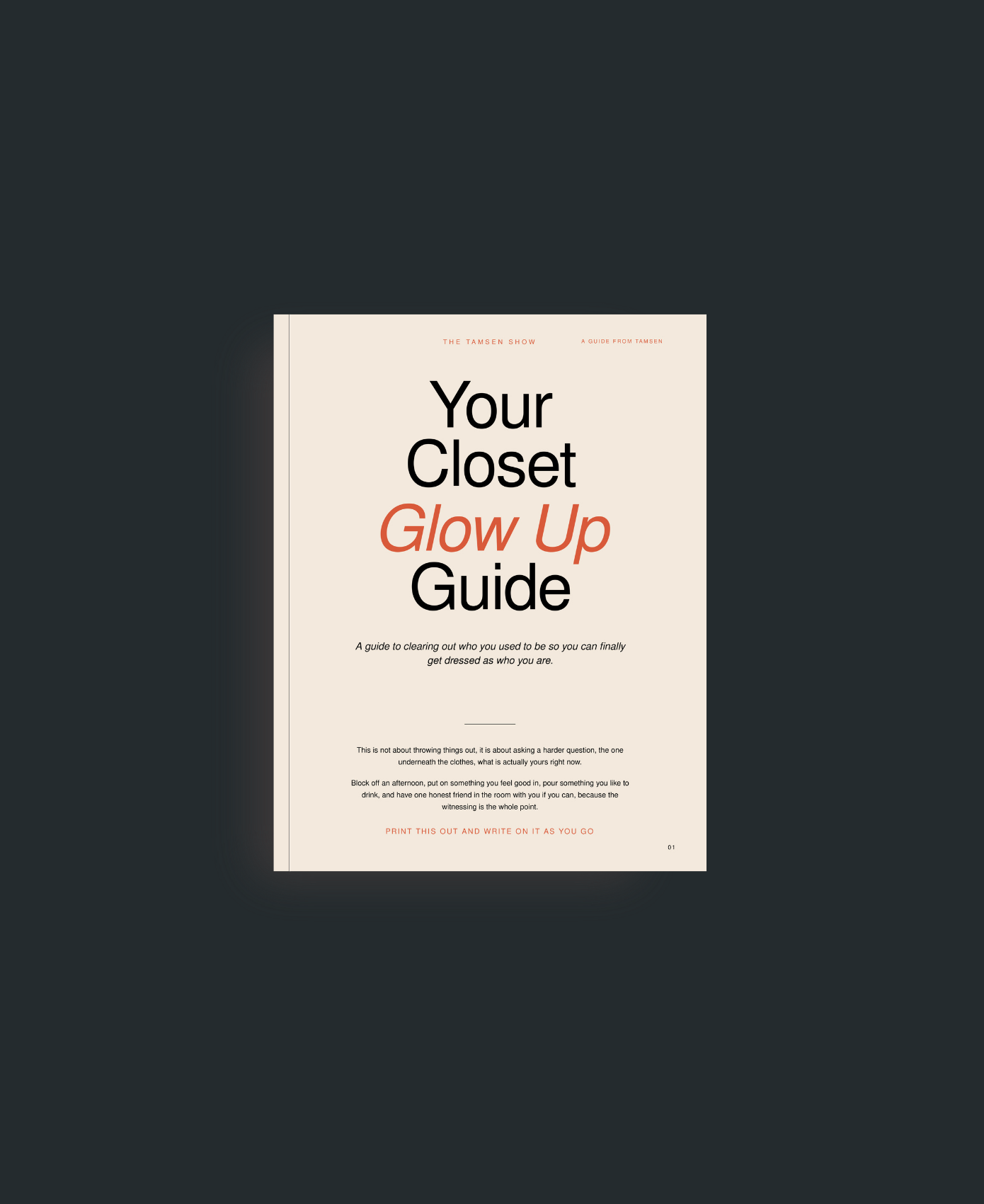
I feel like every time she opens her mouth, there's some perfect mix of wisdom and wit, and I just want to write it all down. Clearing the closet hit me hard. You guys know I talk a lot about decluttering. I have clothes in my closet that I know don't fit, don't work, and honestly just don't make sense anymore. So why am I holding on to those?
I was thinking about that while she was talking. It's time to let go of the maybe someday and start making room for what actually fits in my life right now. Let's not forget the moment that she talked about standing in front of that mirror naked, seeing yourself, like really seeing yourself. And that is not easy to do, but it really feels so necessary. So I'm going to give that a try even if it makes me squirm a little bit.
Let me know what you're thinking, if you're going to try the 10 outfits, stand in front of your mirror naked, or do a closet cleanout. I would love to know and love to hear more about it. And if you're loving these conversations as much as I am, leave a five-star review on Apple Podcasts, Spotify, or wherever you are listening right now. It would mean the world to me. It's how we keep these conversations going.
If you've got questions for me or a future guest, shoot them over to podcast@tamsenfedel.com, or come hang out with us on social at The Tamsen Show for more behind-the-scenes moments and chats like this one. Thanks so much for spending the time with us. I'll see you next time on The Tamsen Show. The Tamsen Show is an original production by Authentic Wave. Executive Producers, Scott Weinberger, Kevin Bennett, and Rebecca Grierson.
Brand Director, Johanna Offsinik. Our line producer is Sabrina Sarac. Editing by Zack Smith and Mark Key Harris.