Can you go back to that time for me because I think there are a lot of nuggets in there that people might not know. I was living in Los Angeles at the time and I was working out with this trainer Gunnar Peterson and he had this sort of private at home gym facility and he'd say you know Bruce Willis is coming to you know check the place out and I was like okay cool. And I'm not really like a big Bruce Willis fan like I you know grew up watching Moonlighting and had seen Armageddon but I wasn't like an action movie star fan. Anyway, so as I was, you know, wrapping up my workout, sweaty, a hot mess, and I'm walking out and Gunar was already outside greeting Stephen and and Bruce. That was Steven is Bruce's friend.And Gunnar's like, Emma, come over. I want to I want to introduce you to these guys. And Gunnar is like the ultimate connector. Like he was always introducing people to, you know, everyone. And I was like, "Oh, boy.
Okay, here I go." So I go and and meet them. And over the course of that year or so, two years, Bruce and I our gym times would kind of overlap. So I would come in like let's say like 9 to 10. He would be there from 10:00 to 11:00 if we were kind of in in town. So over that time I really got to know him a little bit, you know, kind of small talk, but I just thought like what a lovely man, just very humble, always asking questions about me, just, you know, wanting to know more, but never pushy.
I made a comment to my mom like, "You know what? I I've met Bruce Willis and you know what a great guy and like he's very handsome." My mom's like, "Emma, you're engaged to be married." Because at the time I was. And then, you know, it took a while for us to go on our first date. Obviously, my relationship, we called off my engagement, not because of Bruce, but just because things didn't pan out. And I you know Bruce asked me on a on a date and I went out on a date with him which wasn't a great first date.
He was very like awkward and and kind of shy and it just didn't like pan out well. But after that first date we started talking to each other on the phone which was like very sweet and it felt like high school where you'd be like on the phone with someone for hours. And that's kind of how I got to to know him. And from there he asked me on this other kind of big date which was to go to the Turks and Caos in Parake for the holidays where I would be there with his ex-wife or then husband. There are three young children and I was like that is crazy like why why would I do that?
And I was like you know what thank you so much I have other plans with my friends Ali my friend Ali let's pick this up in in the new year. And when I told my friend Ali about Bruce's idea and he was like, "You know what? Like you live everything so by the book, like obviously his intentions are fine. He his kids are there. The ex-wife is there.
He's setting you up in own your own private villa. Like take him up on the offer. Like let's just go see what that new adventure might be." And I'm really happy that he pushed me to do that because I I normally would not have. But I really got to see another side of Bruce on that trip, which was a family man. And I really I really took to that.
So after that, you know, started our our relationship. You know, that story made me really smile because I think at first I I thought the same thing you did. I was like, I don't I thought to myself, would I have gone? Like I thought that was a very bold like I I understand your apprehension of it. And I thought that was that's an amazing invitation for for a lot of different reasons for the fact, you know, that that children were there, that ex-wife was there, a new husband was there, and I think it it speaks a lot to you as well as him, you know, of being adults and and where that ended up as a blended family that you know, so beautifully came together.
Yeah. And and being there and just seeing what that kind of blended family is versus what the media was portraying it as. You know, I just saw a very I just saw it from a different lens and I just thought like this is so so beautiful and so commendable and I really loved that I was able to witness it and then become a part of that. When you see a man as a dad, does that change things? Yeah, I think I've always wanted to have children.
I, you know, I have this vision of marrying someone, white picket fence, two children. That was kind of my north star. And seeing Bruce as a father, I was like, God, like what a great what a great dad, you know, to his three girls. And that really stood out to me. So, yes, it definitely made all the difference.
When you look now at when changes started to happen, you have two girls together as well. How old were they when changes started to happen or that you noticed changes starting to happen with Bruce? Yeah, it's so hard and it's so gray for me to sort of pinpoint exactly when this disease started to come in and and where Bruce stopped. And I hear that from a lot of different people on this journey as well that it's it's it's it's gray. It's hard.
And what I say about, you know, FTD is that it it whispers. It doesn't scream. But what I noticed was that Bruce's stutter started coming back. He had a severe stutter as as a child and that started appearing again. You know, our communication just felt very off and I felt like we're going through a lot of different kind of bumpy patches a little more than normal.
Where just things that we were like aligned on we weren't anymore. It just things were just off. And it got to a point where it was so off that I just thought there is something going on here. This is not my husband and I just went around him and and got to his doctor. I think that's probably a really difficult thing to do, right?
Did he notice that there was anything off? Did he feel that or No one was flagging it. He wasn't flagging it. But I just I just knew and it was really hard. I mean, I didn't want to do that, but you know, I had asked like, "Are you okay?
Is everything okay with us?" And it seemed like everything was fine, but I was like, "No, this isn't this isn't right." You know, I always think about people that are listening that might not know if something's going on. They might not be at the place that you are. What did it take for you to finally get that diagnosis for him? Oh gosh. I mean, you know what they say with FTD is that it takes an average of three years to get to that diagnosis.
It's often misdiagnosed as depression, bipolar, midlife crisis, you know, so by the time you get to that diagnosis, things are your person is usually very sort of advanced in their disease. It took a while to to get us there. You know, it's like it's like a workup, right? You have to go do the the scans and then have it be evaluated and you know and and we didn't even land on FTD wasn't even the first diagnosis that we got you know for us it was aphasia and that was in early 2022 which was really a symptom of a disease which was FTD. So when Bruce was finally diagnosed in late 2022, he was diagnosed with FTD PPA, which is the subvariant or the variant of FTD, which is primary progressive aphasia that affects your language and comprehension and reading and and all of that.
And you know, FTD can come out in three different ways. So either language, behavior, or or movement. So there's three types. So for Bruce, it was it was the language. And as hard as it was to receive that diagnosis, it all started to just make sense once once we got it.
I just think I had no idea until I until I dug into the book of how many how many different different things it affects first of all and what it all means. Like I had no I had no understanding of that whatsoever. Oh, I don't think anybody does until that you're faced with it. You know, like dement when people hear dementia, they automatically think Alzheimer's because that is the most common form, but there's like 120 different forms of dementia. And your brain does so much more than just hold memory.
So, each part of the brain is, you know, doing something different. And yeah, so you don't know what you don't know until you kind of half have to. So you say in the book that you walked out of that doctor's office with nothing but a pamphlet after that diagnosis. It's impossible to envision that that's what they they leave somebody with after telling them news like that. But that is what happened.
Yeah. You are we left with with no hope, no road map, no support, just to check back in in a couple of months because there is no treatment and there is no cure. Yeah. It was really traumatic cuz I walked out of there thinking, what is this disease exactly? You like, what does it mean?
What will this mean for Bruce? What kind of support will he need? What will I need? What will our two young daughters need? Because they were eight and 10 at the time.
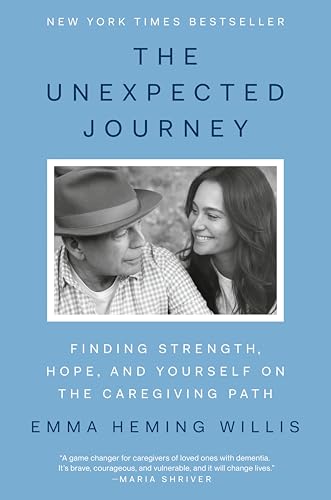
How do I manage this? How do I figure this out? But I wasn't given any kind of resource there. Which I'm, you know, this that book is is really what came out of that traumatic experience. I guess, you know, as I as I was reading it and I and I'm looking at it, I was like, I had no idea what caregivers and care partners really really need with all of this because you're right.
I I had I had no idea of of all the different risks of all the things that happen with what happens to their health because you you don't realize until you really lay it out what you're doing in that role. You you don't know. You just don't. And you're learning on the fly. You know, again, we're thrusted into this with no previous knowledge or if we do, even if you do have previous knowledge with dementia, dementia plays out differently in each person.
So, you know, you really have to kind of be a little bit ahead of the the curve in in the sense of understanding and knowledge. But yeah, it's it's playing out differently. The the kind of support that one family might need might look different to somebody else and you really have to try and figure out what what is the right support system team to sort of put around your family and and you know and we're lucky in the respect that you know we have access we have resources that many don't so as I started to figure out what who were those experts who were those specialists and they were helping me tremendously you know just growing my like caregiving skills understanding more about FTD, how I can support Bruce, how I can support our children. I had to dig so deep for those resources and support. And I knew that other caregivers, they don't have the time or energy to do that.
No. Or nor they have do they have the, you know, the access. You know, sometimes it's hard just to get into the neurologist office. Could take like a year to get, you know, an appointment. So, I knew with the information that I had that was helping our family, I wanted to be able to bring their expert advice and insight and wisdom and put this in this book so that it could help another care partner.
I think you're saving so many people with it. I I really do. And I I don't know that I I'm sure that people have come up to you with their personal stories. I'm sure they do it every single day now, but but just the extent to which that the the help is really really needed. You have something else on top of that.
It was trying to figure out if, how, when to go public with Bruce's diagnosis. Where did that fit into all of this as you were dealing with so much trauma and dealing with two young daughters and you know trying to be a caretaker and then figuring that out at the same time? How do you decide that? I think it it part of it stemmed from them this part of me being so isolated and alone and not being able to fully talk and express about what we were going through. And I was so scared to say too much because I was so worried about it just landing in the wrong hands and the next thing you know it's in tabloids and so I just kept very quiet and what I realized was that that was not helping me at all.
I wasn't able to get the right, you know, support around us because I was keeping it so secretive and and close to the chest. It wasn't helping anyone. And I realized that once we landed on this diagnosis, and you know, FTD is is a rare disease, but it's the most common form of dementia for people under the age of 60. And I saw that there could be a really maybe like beautiful opportunity to be able to talk about this diagnosis and to be able to help somebody else, you know, maybe help somebody else you know, be able to understand what FTD is so that they could get an earlier diagnosis than we did to be able to help another caregiver. And I just I also like there's so much stigma around dementia and and so many people talk about it in hush tones and I didn't want our two daughters to think that that's what they needed to do.
You know, I said, you know, we we're not going to be we're not going to carry any kind of shame around this. We are going to talk about it and we are going to be loud about about it. And I really wanted the girls to see this kind of reach that their father has and you know he is pretty well known in America but even past America like his his he's so beloved and I knew that this could change things. It could change the space. It could change the narrative.
And I you know what I'm so happy that that we decided to do that because now I'm I'm able to connect. I have a community. I feel a little bit lighter being able to share. And it was it was it was the right thing. It was the right thing to do.
I think there's so many people that are learning a lot from hearing his story, right? And especially because of the age of this cuz you're right, when you think of dementia, you think of Alzheimer's, you think of somebody much much older. You think of somebody in their their 80s beyond. I don't think you think of it as these these younger ages and how progressive it is, you know, when you're dealing with something like this at such a young age. Yeah.
I mean, I didn't know anything about a young onset dementia. I didn't know about FTD or a young onset Alzheimer's. I had no idea about about that. So yeah, I think it's important to bring it to the forefront because what's crazy now is that the amount of stories I hear about people being diagnosed with a young onset or just you know have gone through it and you know those the numbers are are are climbing. You know in dementia alone I mean I think they're saying by the year 2050 that dementia cases are going to triple.
So it's it's very much here and it's very much present. I wonder how many cases are coming forward now because of his story and because somebody didn't look at a symptom or said, "Oh, it's midlife crisis or it's, you know, stress or somebody's tired." I wonder I wonder what we're going to see as we move forward with that. I have to imagine. Yeah, I would think that, you know, you will hopefully see a shift. Yeah.
You know, I've met countless people that are like, just because you guys came out and because you've talked about FTD and what that looks like and what early symptoms might be, I, you know, realized that my husband was experiencing like, you know, that I was went through that checklist and, you know, was checking so many things off and now we're getting ready to receive a diagnosis. And I just think that's beautiful because this family is going to get supported earlier on, you know, because a lot of times when people get this diagnosis, families have already fallen apart. Marriages have already crumbled. You know, that whole family system is is destroyed because you don't understand what could be happening to your your spouse, your partner. So I think that being able to raise awareness is really important.
I want to see people get diagnosed earlier so that they get the support that they need to get into the clinical trials that exist because the issue is that when you're diagnosed too late, you can't participate in those trials. How early do you have to be in your diagnosis to be able to participate? I mean, that's early on in the process. Is that what that is? Yeah.
I mean, you know, the person who has FTD has to be willing, right? And dementia is is hard. I mean, imagine trying to explain what FTD is and and please be still for the MRI and now we're going to do blood work. It's it's not as easy, you know, it's the communication part of it is is is hard. But they're really also looking at genetic families which I want to say about 30% are genetic where the rest are sporadic meaning it just sort of happens where they the the people can person the family they can get tested genetically to see if they have the gene and if they do then they get into the clinical trials early before symptoms start and that's how they're kind of testing these out.
Was there a moment when you realized, look, I you had the diagnosis, I I can't do this myself, but you felt like bringing on help was, you know, was showing that you couldn't handle it all, which is completely not what that is. But did you feel like I've I've got to just I think a lot of women do that, like I just got to do it on myself because that's the right thing to do. Yeah, that's I think what I've subscribed to that, you know, that you I'm a woman. This is my husband. This is what you do for your your spouse.
To, you know, I'm going to be a caregiver. I've got this covered. I'm going to raise my children. I don't need help. I'm not going to raise my hand.
And it came to a point where Bruce's neurologist said, you know, it's it's time like you you have the resources to be able to bring in formal caregiving and it's time for you to do that because this is a progressive disease and you think that you can handle it now, but I'm going to tell you that this is going to he will decline and he is going to need more support and you are not going to be able to do all of this on your own. And I really needed that permission. I really needed to hear that to be able to then get the help that that we needed. If she hadn't have told me that, I would not be here today. Like I would be back home caregiving, taking it on myself.
But you know what I've learned is that caregiving is not a solo mission. We need to ask for help to know that we're not a failure if we do. To be able to sustain this journey. We need to really look to friends, family. It's not just like a a personal issue, it's like a societal one, you know, how can we bring more people in to to help and support this?
I think what you wrote is a permission slip for a lot of people. I really do. And I hope I mean I I hope you know that. I I I don't know if you even have the right now there's so much still going on and so present that I'm sure it's impossible to even realize the the impact of your voice, but it is it is definitely really there and and I think there's so many people that don't even know they need that permission slip right now. That was one thing I was very aware of that hearing giving that you know being given that permission.
I really wanted that to come through in the book and not just from me but from the experts and specialists because that that when I heard it from them I again that was just I knew okay I I I got it. I understand that and I that's what I hope came through in the book. So I'm very happy that you just said that. I think without question because I I think that no matter how look I don't I don't know you know there's there's different types of caregiving right? I did caregiving when I was young my mother with breast cancer.
Every type is very different of caregiving and I think that women don't don't always have somebody gives them that permission and I think that this does that. So yeah, I really do. I I mean that I I felt it. You know, I got through the middle and I was like, "Oh, this is giving people like the okay to say like I'm okay if I I'm allowed to ask for help." And unfortunately, a lot of women still feel like we need to we have to hold on. Yeah.
We we have to take it all on and we don't want to be a burden to anyone else. And you know, that whole sort of narrative that we have in our head, we need to shift that. I think something else that you said which was you know some people always saying like let me know let me know if I can let me know what I can do. I stopped saying that to people like I had a friend of mine who you know has going through something. I said and I started to say let me know.
I'm like oh no no Emma said don't do that don't do that and just you know just really go do it. I think that that that means a lot. Yeah. I mean I think people are so well-meaning right? They they want to help but they just don't know how or what you need.
So you know what I what I say is that you know caregivers when the help is that someone wants to help the caregiver needs to accept the help but what I ask the caregivers to do is you know just have a list of everything that you do things that you really need help with support in you know as little as you know getting that prescription filling my gas tank up picking my kids up from school you know whatever that might be so that when you get that text or you see that person and they say if there's anything I can do please let me know just be like I have something you know open up your phone you've got your notes there and just say can you please x y and z or instead of saying if there's anything I can do please let me know tell them what you can do you know give them three things to be like you know I can go get your groceries for you this week and drop them to you at your front door you know there's plenty of things I can mow your lawn whatever I who knows what those boundaries might be or what you're capable of being able to show to show up and do. So, you know, let's just be more actionable is I think important and there's nothing too small really at this point, right? To to do whether it's a prescription or it's a a groceries and things that we might think are, no, that's not enough. I want to do more. Those things really matter.
Yeah. Because I mean, I think as caregivers, we we're doing so much. We're taking on so much and we can outsource so that we can find more time to make time for ourselves as a caregiver because that's so important to be able to you know sustain this journey so that we can make time to make a doctor's appointment for oursel not for our person because you know like I think it's like 40% of caregivers aren't making their own medical appointments because they don't have the time or they don't have you know support at home to watch their person while they go get their blood work done and they're not taking care of themselves at all. So, you interviewed more than two dozen experts for this book. What did the research teach you that you didn't know?
What did the research teach me? Gosh, there was, you know, all different types of research. We we brought in like this one neurologist who's talking about music and how you know they were doing research around like making sure that you're playing music at home because that's so beneficial to the person with dementia but also for the caregiver. There was also this study that someone did Dr. Lauren Mossimo that showed that when caregivers looked after themselves, when they made more time for themselves, that there was actually a beneficial behavioral shift for the person that they were caring for.
So, it showed that if you cared for yourself and sort of, you know, whatever that might look like for you to care for yourself, that that there was a benefit, you know, for for the person that that you were caring for. Has that been hard for you to do? I know you've got two two young girls, too, at the same time. What is what has it been taking you to try to learn how to do that? Because I can I can imagine it's hard.
Yeah, I mean, in those early days when I had no support, I wasn't thinking about myself and and what that what that even means. You know, again, it was Bruce's neurologist who told me about these statistics of caregivers dying before their loved ones. It's like 30% of caregivers die before their loved ones. And I didn't know that caregiving could be so bad for your health. And that was a big wakeup call for me to learn and to prioritize myself and that knowing that that wasn't selfish, that that would be self-preserving to be able to sustain the journey of caregiving because I want to be able to give the best care that I can for my husband as well as our two daughters.
And and Bruce would want me to do that. You know, he would not want me to neglect my own health to make sure that he is better, you know, that that just I knew wouldn't wouldn't work for him, for myself. So, that's that's what I did. I started to prioritize myself. I feel like he told you that quite often though before, right before the diagnosis, didn't he tell you to to slow down and kind of enjoy life and and be and be present?
That was sort of his I mean his he's so fun and his motto is like live it up, you know, and he would want our daughters to do that as well as myself. He wouldn't he would hate to know if I was just not caring for myself, not enjoying life. I I know that he wouldn't he wouldn't want that for me. I think the a number was shocking when you when you wrote 30% of in what you just said, 30% of caregivers die before their loved ones. Did did that kind of set you on your heels and go wait a minute what what is going on?
How how does that happen? That number is staggering. It's staggering. I mean I didn't know that. I had no idea.
So yeah it it is really big number and I think that that just goes back to this idea that you know caregivers are not supported and we are absolutely in in a crisis. You know, you've got 63 million caregivers in the US, 11 million of which are caring for someone with dementia. You know, I think they say like every 3 seconds someone is d in the world is is develops dementia. You know, how how are we supporting caregivers? How are they getting respit?
You know, our health care system isn't great. It's very confusing. I know you said that Scout was the one that said, "Hey, I'm worried about you." Yeah. Did that scare you? Yeah.
Her telling you that that she was that she was worried about you. I mean, that that really shows you something is going on. Yeah. I mean, what she'd said was that like, I'm more worried about you than I am my dad. And I thought, oh gosh, okay.
And that's when I knew I was like, I Yeah, that was another person to tell me like, get get your act together. Like, what are you doing? And and you know, it's important to have people in your life that can really like call you out. And I was appreciative to to Scout to my doctor, Bruce's doctor for, you know, speaking up and seeing it and and sort of, you know, flagging it for me. Who do you have to lean on these days?
Do you feel like that that that network has grown in a lot of ways? I'm sure there's one that you're very very close to and then there's people that, you know, that come in and out. I I think it's the caregiving community. You know what's been so beautiful about sharing our story is that it's also you know I have been able to tap into more into that that unit of other of other people on the same journey who get it. You know that for me has been really important when caregivers share their stories.
I mean what we learn from each other is really magical and very helpful. So that is really I would say my support right now because you know we're still on our journey. I'm still learning as I go. I'm going to make mistakes as I go but you know I can always you know pick another caregivers's brain like you know this is what's happening like what did you do? So there's a lot of different people I can kind of tap into that's really been very supportive and helpful for me.
If there is somebody listening right now that just got a diagnosis like this or is suspecting a diagnosis like this? Is there a first step you would want to see them take tonight? I think what's most important is that they know that they're not alone and that to know that there is actually support out there and that when they do receive that diagnosis, they will probably leave that doctor's appointment with nothing. But I want them to know that there are actually resources out there. There is a community that they can connect to.
You know, I just want them to walk away feeling the complete opposite of how I did. You know I'm working with UCSF right now that when someone is diagnosed instead of just you know a check back in in a couple months they're actually leaving with a road map a caregivers's road map that has just a couple of resources you know we're not trying to like overwhelm the caregiver but gosh I just think back and I was like if our if that doctor would have just said you know what contact the AFTD which is the association for fronttotemporal degeneration you'll go on their website, you're going to see a ton of different resources and support. I mean, that would have just just one resource that would have been incredible for me. So, I just want other caregivers to know that there is support and to start knowing that it's okay to ask for help and that you're not a failure if if you do need it. Do people ask you what to expect if they if you know if they're if you're further along the process than they are?
Do you do you explain that to them and talk to them about what you've seen in the progression of Bruce? Dementia plays out differently in everyone. And I think that's why it's even so hard to sort of get like, you know, I do I try to pick the brain of our neurologist and it's sort of be like, oh, okay, well, this is what's going to happen. You know, it's hard to know, but I like to be able to hear from our neurologist who's who can kind of give me sort of like the broad strokes of things that they've seen. But I it's hard for me to be able to tell someone how their person's disease will will play out.
It's really hard. There's it's like not one sizefits-all. You communicate with Bruce and I'm sure that you see flashes you know of of different things at different times. Do you what how do you do that and how do you work through that because you're watching everything in real time right now and you're the one that's aware of everything that's going on. Yeah.
I mean, I again, like we've been with Bruce every step of the way of his disease, and his disease progresses and he declines. And so, it's not like this fast track into like, oh my gosh, he's not communicating. We're not able to have a conversation anymore. It's just been a slow burn. And that's very painful to watch as well.
But we have learned to we communicate with him in in our own special way. That works for him, that works for us. It looks different from you know what the norm would be but we're not dealing with anything that is normal today. So, you know, like listen, as as hard as this is, there is still so much beauty in it. I think that this this picture of dementia is painted in such a negative way.
And I think that when that conversation is only negative and how terrible and and and horrific it is, I think that that narrative is harmful because then people are scared of it and it just adds to the stigma of it. And I think that it's important to shift that because if we keep with that narrative, the person with the disease won't get the support that they need, nor will the caregiver. So, you know, our life is still very there is joy. We have laughter. There that's very much a part of it.
There are things that Bruce does that's, you know, funny that we can laugh with him and and it's not all it's not all bad. I like how you're showing up though and showing your daughters that it's not something to be shameful of because I think we've had enough of shameful conversations and whispering about things. I mean, we didn't say the word cancer for a long time. You know, we really had a lot of shame if somebody wasn't completely what we consider, you know, in quotes normal. And I'm grateful for that for your daughters because they're learning that at such a a young age to to have a voice.
Yes. To have a voice and and be able to meet people where they're at and to have compassion and understanding. I think is really important in this world. I mean, not only are we trying to teach our, you know, our two daughters that, but like, you know, other other people could use that lesson, too. Are there things that have shifted the way that you show up daytoday, whether I know there was one part talking about what, you know, what you're wearing, like not wearing black.
Can you talk a little bit about some of the things that might have surprised you? I think when you're talking to so many experts and you did talk to a lot of experts, there's a lot of different advice that you wouldn't. You talked about music, but there's a lot of other layers of that advice. Yeah. So, Tepa Snow is a dementia care specialist.
When we came out with our family statement, I was like, "Oh my god, I can finally like really just tap into all this different support." And Tepa Snow was a name that sort of surfaced, you know, multiple times. And I was able to work with her just to kind of help me like as I was develop my caregiving skills. And you know she she told me that when you are with someone who has dementia don't wear black because it looks like you are a floating head. Remove all black doormats at the front of your door because it looks like a black hole in the ground to someone with dementia. When you are talking to someone with dementia, don't talk to them standing straight on because that looks like you're being confrontational.
Instead, stand sideways with your shoulder towards them. You know, using a lot of different like hand movements like thumbs up and okay without talking too much. You know, sometimes it's very hard for people with dementia to be able to just sort of understand all the words and just keep it, you know, short and concise and sometimes like a thumbs up or thumbs down is really, you know, and you don't know all this stuff. So, I just again that's, you know, the the beauty of Ta Snow and and the specialist that she is to be able to really help me and to be able to pass that knowledge off. You've said that if this disease one day became known as a Bruce Willis disease, you would be okay with that.
Can you go into that a little bit? I mean, I know, you know, we've we've talked like his globally, you know, of of who he is, but I also think that his story is allowing other people to speak out like you're speaking out about their loved ones. Well, it's like how Lou Garrick's disease how that was, you know, from ALS. And I felt like, you know, for if this you FTD was to be called the Bruce Willis disease because it would help with funding research and support and different types of advocacy. I would be okay with that.
And I think that Bruce would too if he knew that it would help the next person to feel seen. I mean, I know that, you know, I hear from people a lot that say, you know, I hate that, of course, that this has happened to your husband, but it's also made our journey a little bit easier because when I tell somebody that like, "Oh, my, you know, my husband has FTD." And they're like, "Huh?" Like, "What's FTD?" He goes, "Oh, you know, like the disease that Bruce Willis has." Oh, and then you see sort of the compassion and the, you know, then they want to know more. And, you know, and I and I hate that it has to come to that. I just wish that people would just be a little bit more curious and, you know, have a little bit more compassion, but that does help. It This is the world we live in.
And but it does help headlines and and media coverage and the whole family is together. I think I think there's something really special about that and I'm assuming that, you know, it's very special on the the inside, too. But I think it's very important for people to see. I'm so lucky, you know, again, like I came into a blended family and I'm so blessed to be a part of that. And I think that we all show up in our own way.
We all have our own special relationship with Bruce that goes, you know, all you know, even his mother and his brother and sister and friends and, you know, we Bruce is so lucky, you know, he's he's surrounded by so much love from so many people as well as our as our family. So yeah, we're in a we're in a in a in a blessed position that he he feels that love and he feels that support and not just from, you know, our sort of inner circle core crew, but you know, there is such so many people are are are rooting for him. Well, so many people are rooting for you, too. I know that I've heard Demi talk about you and and what you've done and the girls and I think that seeing that and then seeing that's really where the, you know, your love story began with him just open and bringing family all together is is what he would, you know, would be loving and probably loves to see. Yeah.
And he just wants I know that he would want me to do whatever I needed to feel supported and cared for. And this is what it is, you know, it's the advocacy piece. It's for me to be able to also connect with with other people and not keep this so tight and close to my chest. I think that he he would want me to find peace in in whatever way that works for me that would work for me. Well, I think you were keeping it quiet on so many different fronts too, publicly because it was going to, you know, because of reaction so globally, most people are not dealing with that.
And then just, you know, within your family, what are you hoping that your daughters carry with them watching you walk through this and seeing you step up with your voice and watching you advocate for more dollars out there and for more awareness and creating a roadmap for other caregivers? I don't know. I just, you know, I think it's so important that we stand up for the causes that we believe in and my cause doesn't need to be theirs, you know, but I think that it's important for them to see me support others and that are unseen and are unsupported. And I would hope that that will they'll see that and that will filter through to them. And I already see that, you know, these kids are very compassionate, very kind.
They are walking through life with a little bit of a different lens. So I don't know, you know, I I think I think from what I see, you know, children are very resilient and I think that they have been handed some, you know, hard cards, but they they will play them, but they will play them well. Emma, I have so much respect for you. Thank you. Thank you so Thanks for your voice and and and what you're doing and the people that you don't know whose lives you're changing because I I believe that's happening every single day.
Thank you so much. Thank you for having me. Thank you. Nice to see you. Thank you so much for being here for this conversation with Emma.
If this resonated with you in any way or if you're caring for someone you love, I hope it reminded you as she said, you're Midi, the care women deserve.