If you grew up feeling like you had to shrink yourself just to keep the peace, if you spent your adult life overfunctioning, fixing everything, or chasing love, that feels just out of reach. You're not alone in all this. When you haven't had a solid foundation in feeling worthy, feeling lovable, feeling like you can be yourself. Midlife becomes an increasingly challenging time. Lindsay Gibson is a clinical psychologist with over 30 years of experience.
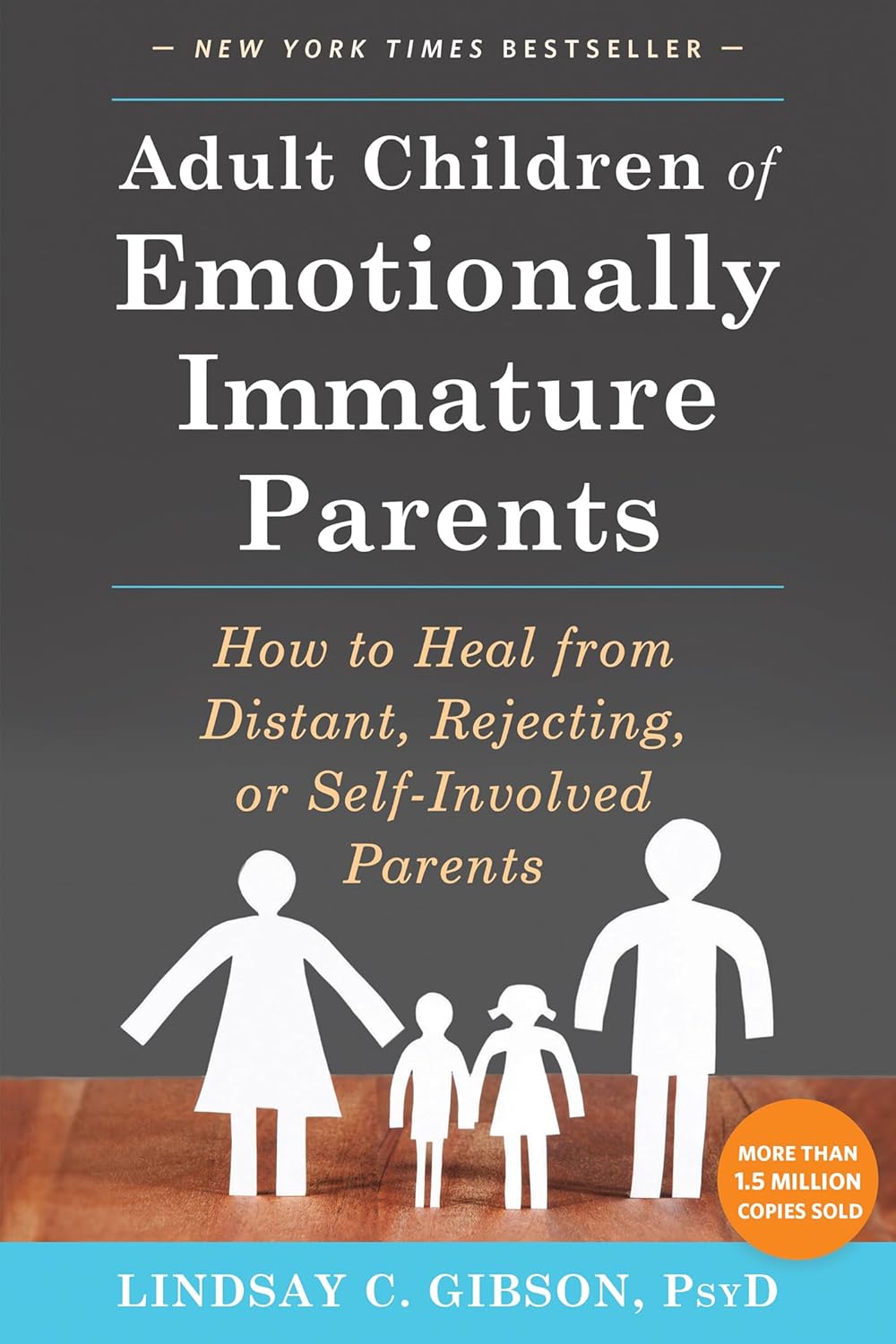
She's the author of the book Adult Children of Emotionally Immature Parents. They deny, dismiss, or distort any information they don't want to hear. In this episode, we're going to talk about the four types of emotionally immature parents, how they show up in our relationships, and why so many of us start facing this pain head on in midlife. Moving into middle age is like your last best chance to grow up. We're going to dig into the patterns that keep us stuck and talk about how you can set yourself free.
You're a person who is waking up to what it really feels like on the inside. So, let's get started. I'm so fascinated with your story and how you came into this space, but I also want to talk about this book that has sold over a million copies right now and is continuing to resonate with people of all ages. How did you start exploring this topic of emotionally immature parents? Well, in my psychology training, I'm a clinical psychologist and in my training, we emphasized a lot about child development.
And so when I did psycho diagnostic testing, when I was evaluating people, I would always be thinking about how far did they get psychologically in their development. That would be sort of like the basis of my report. And then of course I would add on their personality characteristics and so forth. What I really started to notice was that with my psychotherapy patients, I had people coming in who were describing their loved one. Could be a spouse, could be a parent, could be a boss, you know, and I was sitting there thinking, the wrong person is in the office with me.
These people have been willing to come in, get a diagnosis for insurance, call themselves mentally disordered in order to get help dealing with these incredibly difficult people. And so it presented this kind of crazy picture of all the people who needed to be in therapy were running around co causing other people to be in therapy. And I got very interested in in the nature of the behavior of these problematic people. And I began to reflect to people, you know, this person sounds like a four-year-old or your dad's behavior really seems like a tantrum. Have you ever thought about it that way?
And they would say, oh yeah, we joke about, you know, dad's tantrums all the time. He really is like a three-year-old when he gets going. So people knew it, but they had not conceptualized it as a problem with emotional maturity. That's unbelievable. And so that was a pattern that you kept seeing over and over again, whether they were talking about parents or co-workers or partners.
Yeah. Anybody that you're in a you know, sort of a a relationship that is has some substance to it or you're doing it on a daily basis, something that makes it a an important relationship in your life. So, you wrote the book titled Adult Children of Emotionally Immature Parents. What year was this first written? That came out in 2015.
And what happened last year? It went on the New York Times bestseller list. I mean, it just all of a sudden people started really taking notice of this topic and been social media helps obviously, but really it's it's it's hit home in a lot of different ways. Yes, it has. And I think that you know overall our culture is also part of the the heightened awareness or is creating a heightened awareness because we run into this problem a lot where people are behaving in emotionally immature ways but externalizing the blame for everything.
So, it appears that they had nothing to do with the problem and somehow the other person, usually the person that's coming to see the therapist in your in in your in your chair. In my chair. Yes. Is, you know, taking the brunt of that and trying to figure out how they can make it better, right? Which is kind of sad actually.
Yeah. Because it's so hard to make it better when you're the only one who's trying. Yeah. So, all right. So let's let's start by defining emotionally emotional immaturity in a parent.
How do you define that? Yeah. Well, emotional maturity is is its own line of development. Just like intellectual development, social development, you can have a person who's very intellectually bright. Person who's very popular, very socially skilled.
But when it comes to the area of stress tolerance and intimate relationships, that's where the emotional immaturity begins to show up because they are extremely egocentric and their approach to life. All roads lead to them. Any discussion, anything that's going on is interpreted by them as referring to them and their problems or their needs. They tend to be very unself-reflective. So, if there's a problem, they're not going to be the one who's asking, you know, gee, did could I have done something to make this problem worse?
Sure. Sure. Of course not. That's not happening. They're looking around for the other person.
Exactly. Exactly. At all times. Yeah. And for them, I just want to mention that the thing that makes people so upset and so confused is that for them, reality is optional.
They decide what reality is based on how they feel. So if I feel that you're disrespecting me, you don't love me, that's a fact for the emotionally immature person. They're not objective at all. And there's no taking them off that. There's no changing their minds.
No. Because they deny, dismiss, or distort any information they don't want to hear. And if you are the kind of person who is self-reflective, that's almost impossible to get your head around that someone could do life in that way or or not take it on somehow and and take on the burden of the of of being the fixer. Precisely. Okay.
So, you talk in the book about four types of emotionally immature parents. Can we go over each one of those? Sure. So, the emotional parent is just what it sounds like. These are the people that we walk on eggshells around.
Children grow up in these households and everybody is about don't make dad mad. Don't say that to mom. Or if mom is upstairs in the bedroom with the drapes drawn, don't bother her. Everybody is tiptoeing around that parents inability to stabilize their own emotional state. Okay.
All right. The driven parent is the one that here in America we think of as the normal ideal parent because they're very goaloriented. They get their kids to the best best schools, the best travel teams because they are so driven to have things be accomplished. But this isn't the kind of parent that would sit down with a child and say, "Honey, what's wrong?" They just don't pause. They're just going down the list of what they're supposed to do.
Yes. And they're looking for the problem to solve. They're not looking for the heart to listen to. Oh, wow. Okay.
So, then we have the rejecting parent, and those are parents who really I mean, you get the feeling that they would be just fine if they didn't have kids. One client of mine said that when her dad came home and she would run to meet him, she felt like she was throwing herself against a locked door. It's just that, you know, that refusal to engage. And then you have the passive parent who looks like they're fine. You know, lots of my clients would say, "My mother was this way.
My dad was great." Or vice versa. They were there for me. They comforted me. And the passive parent does that, but their immaturity comes through in that they don't really see themselves as a fellow adult with any authority. So they act like one of the kids, okay?
They let the other parent get away with murder be and they don't protect the kids. They don't step in. They're just sort of like, "What can I do?" You know, mom, dad would be upset. I can't do that. And often times they will recruit the child to take on the emotionally the more flamboyant emotionally mature parent.
Oh wow. As a way of saving them from, you know, doing the confrontation as a buffer almost. Thank you. Perfect word. That that that's the one where you've got the the mother that's like, I've they've got two kids, but she says, I got three children and one is the the husband included.
Yes. But they're often beloved by the children. Well, they're like a friend. Yeah. They're like a friend and they do have more warmth and more sensitivity to the child.
They just won't act on it to protect them. So, with the four types, is there one that's most common? I'm not sure because I know that in most configurations, you will have one of the the three types and a passive one. Okay? Because the passive one sort of facilitates the whole thing hanging together.
Probably, you know, in our culture, they're probably a lot more of the driven type than we realize. And this is why, you know, sometimes when we have mental health statistics that look like the child came from this, you know, perfect background, perfect family. I think sometimes it's worth looking at. Yes, everything looks really good on the outside and the parent is doing excellent parenting on a number of factors, but how is it at the level of emotional connection and listening to the child's emotional issues? The emotional type tends to be much more in the category of the someone who is emotionally ill.
Sure. Yeah. Sure. Can you see somebody that's a driven parent right away? Is it pretty easy to assess that in a person?
Lots of times these children of those driven parents are very accomplished. They are very fixated on success. They define themselves that way, but they always feel like they're never quite making it onto the boat, so to speak. They're never quite good enough, even though they're they're scrambling to do a good job. So, that's always a a tip off for me when the person, you know, is describing a good background, they're describing what and yet inside they're showing signs of emotional loneliness and a feeling like they're not measuring up.
So, could a parent be a combination of things? Could you have a parent that is emotional and driven or I guess you could have passive and rejecting? Can you be a combination? Yes. Yes.
I just I just broke them down into four categories because, you know, and categories are are really just groups of behaviors that tend to hang together. So, absolutely, you can have sprinklings of of one over the other. In fact, if you get a driven parent really upset, they can look like the emotional parent because Oh, right. Okay, stress tolerance isn't great. Tolerance for emotional intimacy isn't great.
So, you push them too far and you might get a meltdown or a screaming match. So, how does each type impact us then differently as adults? If you've got an emotional parent, how does that impact us as an adult? Yeah. Well, you can imagine the the kind of stress hormones that you grow up with.
If you have a volatile parent or a parent who can't manage their own emotional stability, you are going to be hypervigilant to other people's moods. You're going to feel an exaggerated sense of responsibility for somebody's state of mind. You will take blame on because that was the best way to restabilize that parent when the person was growing up. And unfortunately because it's like anything that we know how to do well, there's this thing called functional autonomy. And in psychology, what that means is once you can do something really well, you can't resist doing it again.
So if you learn it a lot in childhood, you're you're there's a propensity to be drawn to people that make you practice that in adulthood over and over and over again. A driven parent, how does that impact us as an adult? It it makes us feel that we can never be quite good enough because the driven parent is literally acting that out in their own life. That driven parent doesn't feel good enough. How do you ever teach a child that?
Yes. Yes. Passive parent. The passive parent is more the kind of parent that gives the child a certain amount of emotional confidence. Okay.
So they might once they get into a relationship they may be able to have a more emotionally intimate relationship because they felt very close with that passive parent. It's like it's just the basic warmth, the basic involvement. They get that from them. But when it comes to expecting the other person to pick up the slack, do their part, accept responsibility, you don't learn that with a passive parent. And so you're much more likely to let things slide and not ask for more than the person wants to give, even if it's really harming you.
And then the rejecting parent. Yeah, the rejecting parent, that's like your total emotional unavailability. And I know there's, you know, a lot of press about that. But we are drawn to what we're familiar with. And so when somebody has that sort of rejecting air, it creates this this fantasy that maybe this is a person that they can win over even if they weren't able to do that with their parent.
So So you're you're constantly working it. You're constantly trying. Yes. And somehow the rejection feels like not only a challenge, but it feels like hope. It feels like, oh, I'm a grown-up now.
I know how to do this. I can communicate. I've got all these skills. It's so fascinating. This time, I'll be able to get the relationship I want from this kind of person.
All right. Well, you brought up emotional loneliness, and you write about that. What What is it, and how in midlife in particular does that surface? Yeah. So emotional loneliness is a very particular feeling.
And if you've ever felt it, you will resonate with that expression because it's not that you're exactly lonely. I mean, you can be in a room full of people or you can even be with your best friends and yet you might have this little empty place in your heart that feels like I can't fully be myself with people. I'm feeling a lack of connection. I'm worried that if I am too needy or talk too much about what's going on with me, people will quickly lose interest and I'll be rejected. So, it's it's that kind of learned loneliness that when I try to reach out and have anything other than a superficial relationship, when I try to connect, that other person backs up from me or cues me that I'm asking for too much.
And so you learn when you have feelings of emotional loneliness not to ask too much and you start to to pull back. Do you see that more often in midlife in in women in midlife or during that that phase of life? Well, you know, midlife is such a difficult time and so tempting to be pulled into emotional loneliness because oh my goodness. I mean, when you're in your 20s and 30s, I mean, life has it's it's a constant offering. Yes.
Of opportunity and fun and you're at your peak attractiveness, culturally speaking, of course. So it doesn't feel like that that loneliness is anything other than, you know, something temporary. But when you move into midlife and you begin to see yourself as not riding that crest, not surfing that wave in quite the same way, then you can have a feeling of okay, well, what what is there about me and my relationships that I can really count on? Yeah. Yeah.
Yeah. And when you haven't had a solid foundation in feeling worthy, feeling lovable, feeling like you can be yourself with other people and let them know you. If you haven't had that, midlife becomes an increasingly challenging time. I hear from so many women that don't feel like themselves anymore. They feel very fears of feeling invisible and unseen.
And then on top of all that, everything's changing. Your body's changing, your mind's changing, your relationships might be changing, your career. And I think that that's a lot. It's a lot to tackle all at once. Does emotional loneliness come stem from that, too, or is there something deeper?
Yeah. I I think the emotional loneliness if it was there in the first place, if you grew up as the child of a emotionally immature parent, that that little squishy center piece is going to be there that makes you doubt your worth and your lovability and and your equal importance to other people. So when you have that feeling and you're beginning to move through midlife, which is a time when we should be, you know, sort of like the fires died down a little bit enough for us to begin to think about who we are and what we want to do with the rest of our life, right? So when that starts to happen, it's easy for people to get into the emotionally lonely situation because you can't find that immediately in in midlife if you haven't been doing it all along. Right.
Right. You feel the need for it, but you may not be able to transform yourself psychologically quickly enough to create this life for yourself as a person who's moved into middle age. And then you begin to feel like, oh, I'm I'm losing touch with who I thought I was. And that feels even lonier because now it feels like you don't have yourself as you used to recognize yourself. How do we how do we give women advice or actions to if you're feeling something like that, where to go with that next?
Because I think it's very prevalent. Like I, you know, over and over I hear those same words of I don't feel like myself. I'm not sure exactly what to do. I I feel lonely even surrounded by a lot of people. Yeah.
Well, if you have had these kinds of parents, you have learned to hide yourself, right? In order to be loved, in order to not cause so much effort or stress in the other person that they don't want to have anything to do with you. That's like your worst fear. So, you learn to keep yourself kind of hidden. Maybe you in your most intimate relationships, you can come forward with that, but you know, you've just learned it's a good idea not to show too much of yourself.
Well, when you are reaching middle age and it's a time when you should be self-discovering and then trying out more true intimacy with other people by letting yourself be known. That's terrifying. It is to them. Yeah. They don't know if you know if there is anything to them other than this person that they created themselves to be as a young woman for instance to protect.
Yes. And that young identity has been a protection for somebody who has had these issues. What we want to do is we want people to realize that moving into middle age is like your last best chance to grow up and to become yourself. That's what that's what the transition is. You know, we were were talking earlier about people who might look in the mirror and say, "Who is this person?
I don't even recognize her. Who am I? What am I do? What am I doing with my life?" And that feels like they've lost themselves, like they they've lost something important. And it also makes them worry, what's wrong with me?
Of course, that I'm looking in that mirror and having that thought. But really, the way to look at it is that the old identity that has been externally determined for them to to increase their lovability really, you know, you're over it and you didn't plan to be over it. You didn't want to be over it. It's a shocking feeling. It's a shocking feeling because you you feel like you did something wrong to be over it.
Yes. But you're over it. It's like it's like growth. You can't go back to enjoying the things that you did when you were a teenager, you know, when you're 35 years old or when you're 50 years old. It just doesn't hold the same thing.
So, our old identities have that same kind of effect on us. We feel like we should want it, but we don't anymore. And then they're like, who am I that I don't want to do this anymore? Well, you are a person who is finding herself. You're a person who is waking up to what it really feels like on the inside to be offered this or that or to, you know, to have the opportunity to do these things.
If it doesn't interest you, it doesn't interest you and there's not a thing you can do about it. But if you know that's coming and you realize that that's part of the age. Yes. Then you can say, "Wow, I get to figure out what this is all about." You can journal. You can talk to friends about it, watch programs like this, you know.
You can go to therapy, you can go to groups, and you can find out who am I going to be in my next installment. Yeah. I think I think you can either embrace that completely, but you've if you're prepared for it and or if once you hit it, you you know figure out a plan because I you know I think one woman after another I've heard from that that gets through that might pivot in a career, pivot in a relationship and all of a sudden they come out this other side like I can't believe I found this new purpose or this new person and they're really amazing. But if you I guess if you fight that going forward, it can be it can be a very difficult, you know, next third or half of your life. I know I I walked away myself.
I pivoted from a 30-year career in journalism, you know, to to do advocacy and a documentary and a book and people thought I was crazy, but I just knew I was over it. Not not over storytelling, but just over that that chapter. And yeah, it was a great feeling on the other side. Scary, but a great feeling. Yeah.
And and that that growth process. You can't do anything about that. You can't you can't I mean well you can be resentful. That's that's what that's what happens or scared or scared and and not do anything at all about it. I'm so glad you said that because so many women are like I don't feel like myself anymore.
And what we try to get them back, you know, we was like, "Oh, you got to get back to yourself." But really, you're saying it's okay that you don't feel like yourself. You have to go on to yourself. Yourself. Not get back to yourself.
A you have to go on to yourself. Okay. She's waiting for you. She's there. She's there.
She's there and it's going to be better. I love that there are so many women and men, but women caring for older parents during this time. If you are dealing or caring for older parents that might be emotionally immature parents that you have dealt with, do you have some advice for them? Because this is just, you know, one more thing that that is that is added on during this time. Yes.
And none of us do better under stress or fatigue or illness. Okay? And for an older person, stress, fatigue, and illness are like much more frequent occurrences than they are when we're, you know, hail and and healthy. So they're going to be more stressed, the older parents going to be more stressed. They're going to be more difficult to deal with because they will need more to feel stabilized emotionally and to feel good about themselves.
Their self-esteem is taking a bunch of hits in this culture. Okay. To be old is to take a hit to your self-esteem. Unfortunately, it really is. It really is.
How do we How do we How do we begin to tackle that in this culture? Because ours in particular in the US is well we we've got I mean our culture has become kind of emotionally immature in that we've gotten stuck in this one age of how people are supposed to be in order to be valuable and lovable and that's you know roughly somewhere between 18 and maybe 58 somewhere in there you know I didn't even know it was that high yeah I don't not sure it is it may be much less than that but there There's I think there is an emergence of acceptance of that that older end of that group. But when you move into really elderly years, then people begin to really sort of cancel out your importance as a person who can do things and get things done and all of that in in our culture. And this so that's terribly just discouraging awful to everybody and it's a way and it's a huge waste of resources. So that's going to get better though because the baby boomers are coming along.
Yeah, I think so. And by sheer numbers they're I I'm hoping they're going to transform that. Do you think they transform it through showing what the next chapter can be? How do they start How do you start transforming that if you have that mindset going into this? Because I I think a lot of people do as they get older.
You know, 50 used to be like, "Oh my gosh, I don't even want to talk about my age anymore." I think that's starting to change now and 60 and 70 is, you know, people will talk about it and are acknowledging incredible stories of people in those ages and on up doing amazing things. Yeah. Well, I mean, think about where the baby boomers started out. I mean, we were the flower children. Yeah.
Yeah. I know. And you know, and we had rock and roll and we There was a big revolution. Yeah. That happened in in the way that people saw themselves, saw relationships.
I mean, you know, divorce, sex, everything changed for this generation. So, they're not going to go quietly into the night. No, they're not. Plus, they're hitting retirement age and they have money. All right?
So, that's why I think things are going to change. And if we could just get people to stop saying sweetie and honey and treating older people like they've lost their minds. I know. I know. You're so right about that.
It's so It's offensive, right? It really is. And I But I do have hope for that. And especially with baby boomers coming in and I don't think people ever look back and realize how much has been done during their time in life and what and what they really did transform. Yes.
And I think I think they will I think they will. I think they will continue to transform. I I I agree with you. All right. Let's talk about healing fantasies and how what what those are and how they show up in our adult relationships.
Whenever you talk about healing fantasies, it sounds like you're making something up. And in a way, you are, but it's so much more personal than that. A healing fantasy is like a reaction to an injury or a threat. It's like a it's like a flinch. Okay.
It's it's a it's a pulling back or it's it's a it's a compensation for something that is too painful to realize. It's not just that people are sitting thinking, gee, I wish my mom was this way or I wish I could talk to my dad that way. That's part of it. But the healing fantasy is always caught up with a loving belief that that parent is going to one day be able to open up and make that connection and care about what's going on inside you. And people think that because at times those parents usually do do that if they're well resourced.
Things are going their way, they're getting what they want, things are pretty even, then they do have the capacity to move up in their level of maturity and show some empathy sometimes, which usually they're not good at, right? And they can be sweet, they can be generous. And of course the the child and even the adult child holds on to that hope that evidence that they could one day maybe be like that all the time. Yeah. And so it's it's a very poignant kind of defense mechanism where you hope that some of those glimpses you saw of real relationship can take hold and take root and you can have a good relationship with your parent.
But it's all predicated on a desire to not face the pain of realizing that that person can't do any better than what they're doing. That is crushing. It is crushing. How do you how do you face that pain? How do you how do you how do you even start facing that pain?
Yeah, it the pain is something that has to reach this is just my experience, you know, doing therapy with people because a large part of the work that we do together in therapy with my patients has to do with the person reaching a kind of a it's almost like a melting point where they just can't do it anymore. Or maybe it's because they get in that growth cycle I was talking about. Yeah. They just can't tolerate it anymore. And I've heard people describe it as it's like a twig snapped or like something broke and they just aren't interested in doing the dance anymore.
They're just not going to put up with it. And that's when healing can actually start. That's when you can actually start. That's when that's when they they're like they it's a very sobering Yeah. Kind of experience.
And I think that's probably why this book has been so popular is that people were already in the place where they were beginning to wonder what the heck is going on and then they had an explanation in the form of the theories in the book. And then I think that really has helped people see that, you know, maybe it's not them and maybe this is something that the parent can't help. They're not evil people. They're not bad people, but they're just people who can't give the kind of intimacy and caring that that that person really needed. When we talk about emotional immaturity, we often picture it in mothers, but what does it look like when it comes to men?
Well, you know, I think in our culture anyway that there is a lot of kind of prototypical male behavior that is endorsed and promoted and laughed about and whatever that really models itself after some pretty emotionally immature behaviors that and that's the inculturated part of it. It's unfortunate that it's sort of seen as macho or strong if a guy gets angry very fast or if he gets volatile or if he blows up you know in a woman that's seen as shrewish or unattractive or what in a man that's you know carries a connotation of alphaness or that you know he's a strong guy, he's an assertive guy. And so for men, emotional immaturity can really hide behind these behaviors that get confounded with that idea of the alpha male. But if you look at how they handle stress and you look at the quality of their intimate relationships, lots of times it's much easier to see that they are really not showing the empathy or the acceptance that the other person is psychologically real inside, that they have feelings and thoughts of their own. They're a real person.
It's not just the guy. Right. Right. Yeah. So it it has a different flavor to it, but it's still there.
Yes. And it's also more culturally sanctioned than what we see in women, I think. Has it fascinated you to see the different ages that have picked up this book and are reading it maybe in a different way and sharing it now, obviously in a different way, whether it's on Tik Tok or Instagram. Is that is that fascinating to watch and interesting to see how it's changed through the generations? Yes, it really is.
I mean, it's been surprising. I've had so many people ask me who does this appeal to and I have to say honestly I have people who are in their 70s and I have people who are late teenagers all ages have the same issue which is how can I have a relationship with somebody who can't tolerate emotional closeness who externalizes blame who gaslights me who tells me what I witnessed wasn't true and didn't happen and who thinks that they are the most important person in the relationship and that I have a moral obligation to give them what they want or I'm a bad person. I mean, there's so much to unwrap with that. You know, you brought up gaslighting and I and it's a we have vocabulary for a lot of these things. I don't think we had before or just, you know, we as as lay people just I didn't I didn't know that word forever, you know, and so I think that that's helpful, right?
It's interesting to me though when you're talking about younger people that are, you know, are learning more on social media about who they are, what they're dealing with, you know, parents, how it affects them. Is that surprising to you? And and is there a way to tell somebody like if you feel like you are being gaslit like a by a parent? That's a hard thing for a a teenager or maybe even somebody in their, you know, that that's much older to understand how to deal with. Yeah.
I mean, it's it's very hard to understand some of these things when they're happening because one of the biggest results of being in a relationship with an emotionally immature person is that you get so confused, so dumbfounded by what they're saying and what they're doing that you you hardly know how to respond. And so having terms like gaslighting or knowing there there's a another term that I just love that a friend of mine had which is brain scramble. You're trying to have a conversation with them, tell them how you feel about something and before you know it, you're practically speechless because their answers don't make any sense. They're they're not connected to what you're trying to tell them and they're off on their pet narrative over here that exonerates them and blames you for everything and you feel like you're losing your mind. And it's really interesting those interactions pull you down into the emotional centers in your brain.
So literally you are not able to think. You're not able to use the reasoning part of your mind when someone is doing that kind of interaction on you. So, actually really changing how you're able to to respond. Really changing the way you're able to respond because your brain is being forced to work differently and go into an emotional state to try to fend off what they're doing. And then you completely forget your point.
What do you do if somebody is brain scrambling you? Yeah. Well, the important thing to remember about anybody who of any type who's emotionally immature, I mean, you you have narcissistic people who fall in this category, other types of personality disorders. But the important thing to remember is that they will try to be the most important person in the relationship and they will try to get you to see life the way that they want you to see it. And there's if you understand that going in, you can protect yourself because the answer is always to pull back from this engagement that they're trying to lure lure you into unconsciously.
They're not doing it deliberately, but this is the way they roll. So if you keep in mind that you have a connection to yourself that must be maintained and you go into an interaction with them with a plan. I mean, you don't walk into these things unprepared. Of course, you walk in with a plan that I'm going to stay connected to my true self in this interaction no matter what. I'm going to talk myself through it.
If I start to lose myself or dissociate or begin to get confused, I'm going to take a break or I'm going to leave, but I'm going to protect my connection to my own sound mind when I'm with this person. That is like 90% of it. And also to determine that I will set this outcome that I want from this interaction ahead of time. Ahead of time. Not that I want to have a good relationship with my parent.
That that's too big. They don't want to do it. They're scared of it. It's an unrealistic goal. But I want to have a pleasant lunch with my mother or I want to stay for one night at Thanksgiving.
These are outcomes and goals that you can set for yourself that you can accomplish. Those are realistic goals versus assuming a parent is going to take some kind of accountability. Yes. Exactly. What what if a parent never takes accountability?
That is part and parcel of being emotionally immature that you don't take responsibility. So the odds are very high that that parent is never going to take accountability. I can guarantee that they're not going to take accountability if you're pressing on them to do that. It's almost like they might one day maybe circle back around and say in an oblique way, I'm so sorry I did that. Or gee, I I you know, I'm I regret that I said that to you.
But if you're coming at them with you know, you're being toxic, you're being you've been mean to me, you haven't loved me, you haven't met my emotional needs. What is that rather fragile person going to do? They're going to defend themselves and move in. So, they're not going to take accountability any more than you or I would if somebody got in our face and did that. Yeah.
All right. All right. I want to I want to hit on your authentic self because you have said authenticity often gets blocked because we had to adapt to survive. Can you explain what that means? Yes.
Well, if you if you've ever watched little children, they are like the masters of authenticity. Because you know what they feel is on their face. It's in their body language. We are designed to be authentic and then we get socialized into ways of showing our authenticity hopefully. That really are, you know, more or less socially acceptable.
With an emotionally immature parent though, authenticity is very threatening in the child. Now, it's fine if the child is happy and the parents enjoying them, but lots of times for little children who are working through their own emotions, that authenticity is going to be about some kind of emotional pain. Okay. Okay. Or loneliness or some kind of emotional need that scares the emotionally immature parent because they're just not equipped to deal with those kinds of deep feelings.
It scares them. There's one person even called it affect phobia, meaning that you bring up a strong emotion, that person starts scrambling away from you because they can't stand it. It's like asking them to put their hand on a hot stove. They they cannot do it. How do we start finding our authentic self when you're dealing with something like that?
Our emotions are always telling us when we're not able to show our authentic self. It feels bad. Like that pit in your stomach that Yes. Perfect description. Yes.
You feel a pit in your stomach when you know that you're saying something or acting in a way that is not what you really feel or what you really want. That authenticity, you know, probably, you know, comes from childhood, stays there, and then we build all our defenses around it. But yeah, it feels bad and we can get it back by beginning to focus on what we really feel and what we want. That's why I said like journaling, talking to friends, therapy helps us with that self-nowledge that brings us back to our authenticity. And then we can practice being more authentic in a way that is gentle and comfortable for our personality style.
You don't have to be a brazen, assertive person. You can just start being a little more real. Is that begin the healing process? Yes. Yes.
Isn't it interesting? It's something as simple you would say it sounds simple as being authentic and true to yourself is really is where we have to get back to, but it's so difficult sometimes to get there. It it is because we have so much learned shame and guilt because we've been taught that when we are most true to ourselves that we are somehow being bad to other people or we're being selfish. That's that's what emotionally immature parents stress is that if you don't do what I want you to do, it means you don't love me and it means you're a selfish person. So if you want to be good, forget about what you want and how you feel and pay attention to me.
And that is hard to get over as an adult because you feel that kind of shame that stops you. I mean, it stops you. You don't have a choice. You you just can't make yourself say it or do it. But we can learn how to be our own best supporters and and our own best coaches.
We can talk to ourselves inside. We can use the vocabulary that you just mentioned. And we can identify when we are not being true to ourselves and make little baby steps, you know, to try to get that skill back or to maybe to build it for the first time. What do you wish that every woman was able to say to themselves or every person able to say to themselves if they're dealing with something like this? Is there a phrase?
Those are something that they can put in their minds when they feel like they're being gaslit, when they feel like they're, you know, fighting with an emotionally immature parent. When they feel like they can't be authentic to themselves. Yeah. I wish they would say to themselves, "I'm not crazy. I feel it.
I can trust my feeling here. This is not right." this is not true. You may be feeling confused. You may be feeling bad about yourself, but you know, we can tell when the truth is being distorted or used to someone's advantage because that confusion that we feel that only goes so deep inside. There's another deeper soul feeling that goes like mm- it's not no then we may have all our confusion and you know conflicts on top of that but I think that's one of the things that really spoke to people in the book was I said something along the lines of I'm telling you something you knew all along and that's what people say is like yes this is what I knew was going on but I didn't have you know the language for it.
So, yeah, it it's absolutely something that people can really build in themselves. Well, thanks to you, now they do. Now, we all do. Lindsay, thank you so much. Where can people find you?
You can go to my website. It's lindsycgon.com and I'm easy to find on YouTube and other social media things. If you just plug me in, you'll find me. I feel like anyone that gets to sit across from you in your office is a very lucky person. Oh, thank you so much.
Thank you. If this conversation hit a nerve, that's okay. You're not broken. You're waking up. Emotional immaturity can leave you feeling unseen and emotionally lonely.
But as Lindsay Gibson taught us today, healing starts with reconnecting to yourself. If you are raised to be the easy one or the strong one, please hear this. You're allowed to have needs without always explaining yourself. Thank you so much, Lindsay, for giving us a road map to emotional maturity. If this conversation resonated with you, share the episode with a friend and subscribe to my YouTube channel for more relatable conversations each week.