And know going in, women have dramatically been understudied in medicine, especially around menopause. So when you hear somebody saying that the research is still building and it's not out there, it's true. It is true because the system was never built for us. They never bothered to study us in the first place. We're going to be smarter than the system was.
Maybe you're thinking about estrogen and the idea of starting hormones still freaks you out. I get it. Maybe you're already taking it, but no doctor ever bothered to explain things for you and so your body feels weird. Maybe you've been trying to refill your patch now for months and your pharmacy keeps telling you that it has been back ordered. Whatever you are going through and wherever you are coming in from, we have got you.
We're going to do this together and nobody is going to do it alone if I have anything to say about it. So let's get into it. What estrogen really is. I want to start with the basics because I think this is where we get lost. And for me, I have to have things simplified.
It's why I do this podcast. I want it explained to me very simple. I can't do a lot of big words and big talk. Estrogen is one of the three main female hormones along with progesterone and testosterone. And here's what nobody tells you.
Estrogen is not just a reproductive hormone. It is doing work in almost every system of your body. You have estrogen receptors in your brain, in your heart, bones, skin, joints, your gut, your bladder, your blood vessels, everywhere. Estrogen has been quietly running the show for decades and most of us just went along and had no idea until it starts to leave. That's when we miss it.
There are actually three different estrogen your body makes, but the one we're mostly going to talk about in midlife is estradiol. Estradiol is the powerhouse. It is the one that drops in perimenopause and crashes in menopause. So when you hear your doctor say estrogen replacement, estradiol is what they're actually replacing. In your 20s and 30s your estradiol is high and rises and falls across your monthly cycle.
In your 40s it starts to fluctuate wildly. One month high, the next month it's tanking. That is perimenopause and that's why this stage feels so chaotic because your hormones are literally chaotic. And by the time you're in postmenopause, your body is making almost none of it on its own. And almost every symptom you're experiencing in this stage of life can be traced back to that drop.
And that's why estrogen matters so much, which brings me to my next point. Let me tell you why this matters so much because this is the part that changed my entire relationship with hormone therapy. Let's start with your brain. Estrogen affects memory, mood, focus and the way your brain processes information. So here's the deal, when it drops, the brain fog kicks in.
The word you can't find when you're like, "Oh, what was I saying?" The reason you walked into the kitchen. Estrogen is tied to serotonin production, which is part of why so many women in perimenopause are suddenly told they have depression. What a lot of them have is a hormonal cliff. Now let's talk about your bones. Estrogen protects your bones.
It tells your body to keep building bone instead of breaking it down. When estrogen drops, bone loss speeds up dramatically. This is why one in two women over 50 will break a bone because of osteoporosis. It's not cuz we're clumsy or not watching where we're going. It's because we lost the hormone that was holding the bone together.
And by the way, these are the basics, just the basics. Now, let's look at your heart. Cardiovascular disease is the number one killer of women. Estrogen helps protect your blood vessels, and when it drops, your risk of heart disease, it starts climbing. And I want to flag something here because the conversation about estrogen and the heart, it's moving fast.
There are early signals from research that estrogen may help with cardiovascular health for women who start it close to menopause. A cardiologist told me directly that we are not yet at the place where doctors are prescribing estrogen just to prevent heart disease in women who don't have symptoms. So, that part of the research, again, is still building. But for women in the window with menopause symptoms, the heart conversation is part of the bigger picture, and I really believe it's worth having with your doctor. All right, I told you estrogen was like kind of everywhere, at least the receptors.
Skin and joints. Collagen production drops with estrogen, which is why your skin starts to feel different, and why your joints ache, and why you wake up stiff and you never have before. You're not just getting older. It's your body losing the hormone that was keeping your connective tissue elastic. Then there's sleep.
Estrogen helps regulate body temperature, and when it drops, your internal thermostat breaks. You get hot flashes during the day, you get night sweats at 4:00 in the morning that soak through your sheets. Sleep is disrupted in ways that can follow you for years. Your vagina, bladder, sex life, all of this is the part that nobody wants to say out loud. So, I'm going to say it.
Estrogen keeps the tissue of your vagina, vulva, and bladder healthy. When it drops, you can get vaginal dryness, painful sex, recurring UTIs, urgency, and this whole category of symptoms that doctors used to dismiss as just getting older, but that's not what it is. It is treatable and we have a whole episode coming up on this in particular, just this part. Estrogen and mood are closely tied together, more closely than most women have been told. The crying out of nowhere, rage that maybe you've never had before, a shorter fuse, the feeling that you're not yourself, estrogen, it's involved in all that.
And then finally, weight. And I saved this one for last. So many of you have asked me about this. I want to be really clear. The Menopause Society has been clear that hormone therapy itself does not cause weight gain.
Weight gain in midlife is real and it is happening to so many of us, but driven by aging, by the hormonal shift, by sleep loss, stress, and then this long list of all these other things that are going on in our body at this age. I woke up in my mid-40s when I was eating better than ever, working out, getting up early in the morning, earlier than ever before, and I could not fit into anything like around my boobs, around my waist, zipping up my jeans, my thighs, under my like my arms, I had these like wings. So if you are feeling any of that, I so see you. There is some early research being looked at on estrogen combined with GLP-1 meds and whether the two together could help. Research is still in progress and I'm sorry I have to say that all the time, but that's just the case.
We don't have a clean, easy answer yet, but I will tell you what I tell every woman who asked me about this. Hormone therapy is not the thing making the number on the scale go up. When I tell you that estrogen affects almost every single system of your body, I'm not exaggerating. The number of symptoms women are walking around with in midlife that trace back to this one hormone is staggering to me. It When I actually do the list, it always blows my mind.
When I wrote my book, I was like, how is all this traced back to something we we were never talking about? The number of women who have been told it's all in their heads is even more staggering though. I want to talk about who actually needs estrogen because this is where the conversation really has shifted dramatically in the past 4 years or so. If you're in perimenopause and your symptoms are disrupting your life, you're a candidate. Hot flashes wake you up, brain fog that affects your mood, mood changes that scare you, joint pain, heart palpitations, your heart like racing out of nowhere, sleep that's falling apart, any combination, any of these symptoms.
You don't have to wait until you've not had a period for a year. You can start that now. Most likely, your doctor is going to look at those symptoms and say, "Hey." Look at your age and say, "You're probably in perimenopause." If you're within 10 years of your final period or under 60, you're in what doctors call the window. Major medical organizations agree that starting hormone therapy in this window of time is generally the safest and most beneficial time. Inside the window, the data supports hormone therapy for symptom relief and bone protection.
We've talked about it a lot on this show with a lot of different doctors. Outside the window, that conversation gets a little more nuanced. So, if you're in that window that I just mentioned and on the fence, this is a time to have a real conversation with a real menopause-trained doctor. If you are postmenopausal and beyond the window, you're not out of options. You and your doctor can still talk about whether hormone therapy makes sense, especially for symptoms that have not gone away.
The you're too late answer is too blanket. Get a second opinion if that is what you heard. And by the way, if you have a uterus estrogen, you have to take progesterone with it. I covered this one specifically in the progesterone episode, and I'll make sure that's in the show notes as well with a link to make it easier to find. Estrogen alone makes the lining of your uterus to build up over time.
Progesterone keeps it in check. So, if you still have your uterus, the two come together. I want to talk about who cannot take estrogen because this matters just as much, and you cannot be left out of this conversation. Hormone therapy is not the right answer for every woman out there. If you have a personal history of breast, ovarian, or uterine cancer, hormone therapy is usually not recommended.
If you have a history of blood clots, stroke, or heart attack, you personally or you're at a high risk for any of those, your doctor will likely steer you toward other options. If you have unexplained vaginal bleeding, your doctor will want to figure out what is going on before starting hormone therapy. And that's exactly why the conversation with a doctor who actually understands menopause matters so much. They're going to take a look at your full medical history and figure out whether hormone therapy is safe for you. And if it is not, then they'll talk about what your other options are.
There are non-hormonal options, so I don't want you to worry about that, that are genuinely helpful for women who cannot or do not want to take hormones. And some we've just started talking about in the last few years. You're not out of options. You just need a doctor who's going to give them to you and recommend them to you. And finally, the breast cancer question.
And I want to address this head-on because I know this is the question every woman has. The study that scared everyone away from hormones in the early 2000s, the Women's Health Initiative in 2002, has been reevaluated and reinterpreted many times since then. The headlines that came from that press conference of that study were so scary to so many women, and the risk of that headline created was overstated for women in the window that I just described. For most healthy women under 60 within 10 years of menopause, doctors I've talked to say the benefits of hormone therapy outweigh the risks. So, talk to your doctor about your personal history, but please, please, please, do not let an outdated headline from 2002 make this decision for you.
I was petrified of hormone therapy because of my mom's breast cancer, because I was misinformed. A whole generation of women were denied treatment based on a misread of that study, and that has cost us decades and decades of suffering, and that is just not fair. So, if you're deciding to take estrogen, here's what you're actually deciding between. The most important word here is body identical. Body identical estrogen is also called bioidentical, you've probably heard of it.
Bioidentical estradiol, it's chemically identical to what your body makes. It is FDA approved, available by prescription, and it's what most menopause specialists are prescribing today. The form of it is where it gets personal, it's a personal choice. Patches, this is what I have on right now, and you've seen me changing those on social if you follow me there. You put the patch on, it's changed twice a week, and patches have been most doctors' first preference because they deliver estrogen through the skin and bypass the liver, which is associated with a lower risk of blood clots and stroke compared to the pill.
There is a major shortage of patches going on right now. They're getting difficult to get. It's not called an official shortage, but I know a lot of you have said you can't get those filled. So, I'm going to go into that next to make sure you have solutions. Aside from the patch, there are gels and sprays that you apply to the skin on a daily basis, not twice a week, and these have the same general benefits as a patch because they go through the skin and bypass the liver.
They're a really important option, especially right now, if you cannot find a patch. Pills, taken orally, usually once a day, they work in some women for those for convenience. They are processed through the liver, which is why patches and gels are often preferred for women with a clot or stroke history. They're still a real option, especially right now. And then we have vaginal estrogen, I mentioned that earlier, which is creams or rings, and that's a separate category for vaginal and urinary symptoms.
The dose is very low and very localized, so it doesn't raise your systemic estrogen levels in a meaningful way, and the safety profile is excellent. So, if you have vaginal dryness, painful sex, recurring UTIs, doctors will prescribe vaginal estrogen because they They it's one of the best-kept secrets in medicine, and almost every woman in mid-life should at least have this conversation about whether or not to use it. We also have compounded creams. These are custom-made by a compounding pharmacy with a prescription from your doctor. We're going to talk more about these in a minute because they are one of the biggest backups right now for the shortage.
The dose matters, too. Doctors usually start low, and then they adjust based on your symptoms. So, I started like at a 0.05, and I'm at a 0.075 now. So, it's gone up. Like, I had more symptoms, so they brought my estrogen levels up.
But, doctors usually start low, and then they adjust based on your symptoms. So, there's no one-size-fits-all. What works for me might not work for you, and vice versa. So, I encourage you to be patient with the process and stay in that conversation with your doctor because you might have to go back a few times just to make sure you get your dosage correct. By the way, if you are having trouble finding a patch, you're not alone.
You just need to make sure you do not stop taking your patch altogether if you're not able to find it. So, I want to tell you some of the options. First of all, have a backup ready before you run out. Do not wait until you're rationing your last patch, then cutting it apart, or anything like that. So, contact your doctor and ask about backup options.
An endocrinologist that I trust is very clear about this. Compounded creams from a compounding pharmacy are one of the best backups right now. They're made to order with a prescription from your doctor, so you're not relying on the same supply chain. So, whether you go to a doctor, going to telehealth, whatever you're doing, make sure you talk to whoever your provider is to try to have a backup. And then, you can switch to a gel, or a spray, or an oral pill at an equivalent dose.
But, make sure your doctor knows what you're doing and talks you through this whole process. Whatever you do, though, please do not just stop taking your hormones a waited out for a month situation. This is going to take a while. So, make a plan now with your doctor and know that the alternatives work just as well for most women. All right, there is one question that I get from so many of you, so I want to answer it directly.
For years, women were told the rule was shortest time lowest dose. The guidance came out of the same flawed 2002 study that gave us a black box warning and that scared the hell out of women, and women came off of hormones in droves earlier than they needed to. We were around 40% of the country on hormone therapy down to 4% after that study. The Menopause Society and most menopause specialists today take a different view. There is no single right time to stop.
The decision is individualized between you and your doctor based on your symptoms, your health history, your risk, your goals, how you're doing on it. Some women will take it for years and taper off, others will stay on it forever. I've sat on panels with OB/GYNs, top OB/GYNs, who say they will be buried with their patch on. So, that's coming from the experts. Some women come off, they find their symptoms come back, and then decide to go back on.
So, there's really no universal expiration date on hormone therapy, and what works for one woman is not going to work for you. So, please keep that in mind. So, if your neighbor's like, "Oh, it's perfect. I went off and I had no more symptoms." Don't worry about her. Worry about what's going on with you, because the conversation evolves as you do.
So, I want to tell you a few things to watch out for once you start. It takes time. Most women do not feel the full benefit for two or three months, and I want to talk about what happened to me in particular. For me, my hot flashes, they improved like in a month or two. Really, they did.
I also felt my brain fog lift. That doesn't happen to everybody, and that's not specifically what hormone therapy is for, but I definitely did feel that. And maybe it's cuz I was sleeping better. I don't know why, but I definitely felt better. Mild side effects in the first month are normal.
Breast tenderness, some bloating, maybe some breakthrough spotting if you're perimenopausal, most of this settles down. So, I want you to be sure and talk to your doctor if it does not. It's why you really need to have a doctor that you trust and you believe in and you're able to have those conversations with. If you're on the patch, the spot that you put it does matter. Most women rotate between the lower belly and the hip.
Avoid the breast area. The patch should stick well for several days. If it's falling off, talk to your doctor about a different brand. And trust me, there's going to be this glue that's going to be hard to get off. So, you can use all sorts of things.
You can use olive oil or lemon juice. Sometimes you can use like a sometimes I use a makeup remover and I can get that glue off, but those are the easiest things. And then finally, I want you to track your symptoms. Keep a list of how you're sleeping, how your mood's doing, maybe how your joints feel if you were having joint pain or brain fog. And bring that to your follow-up appointment so you can kind of monitor with your doctor, making sure that you're on the right dose.
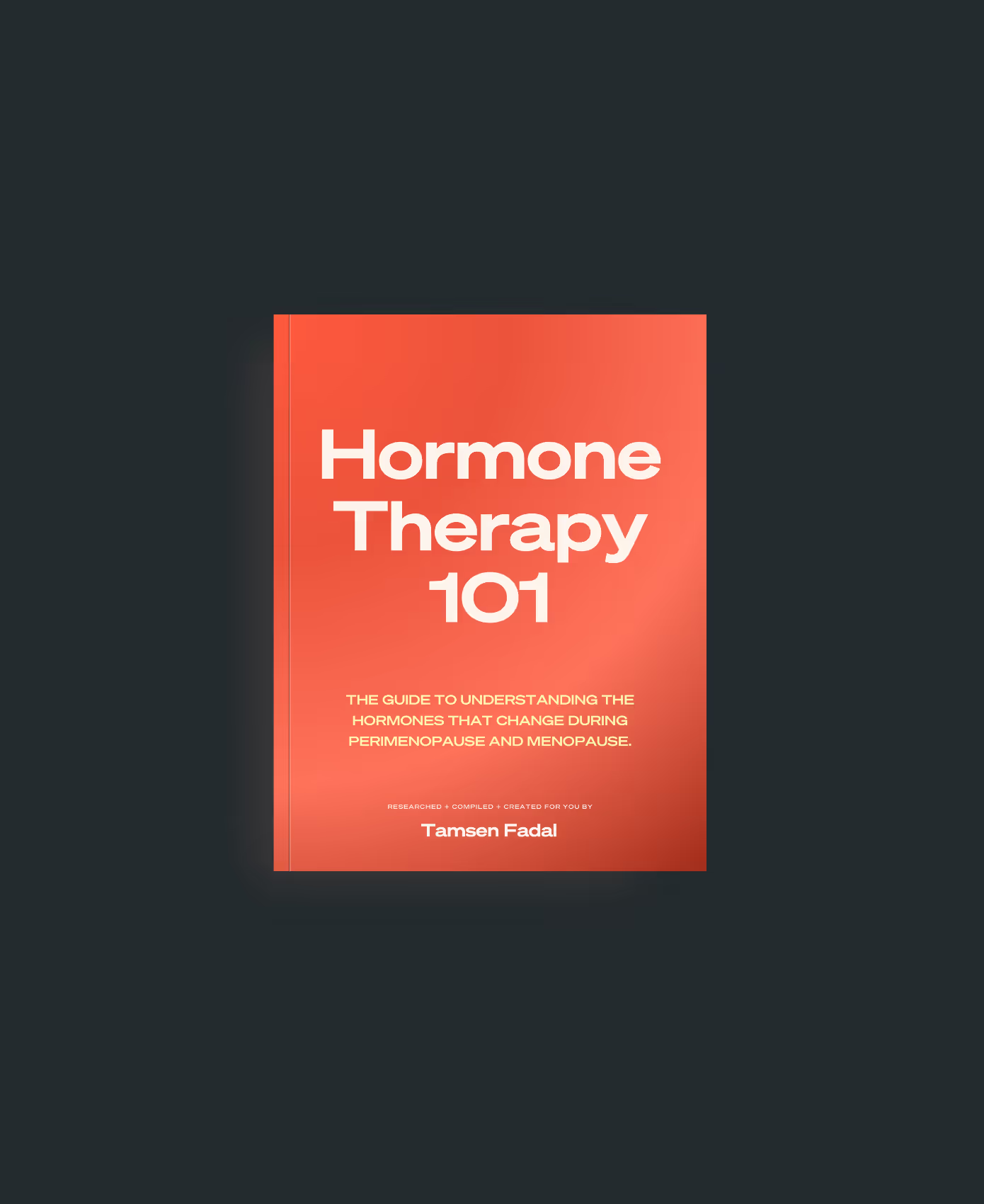
And remember, I have a free hormone 101 sheet in the show notes. It will help you track everything. I hope this episode taught you everything you need to know about estrogen. And if you do have more questions, my email is open for you always to ask away. Me or someone on my team is going to do our best to get back to you.
You can email us at podcast@tamsenfadal.com, or you can leave a voicemail or text me. The number's 917 382-427-7 382-427-7. My team loves hearing what you think. I love hearing it. We read every review.
So, if you have a moment, please leave me a review. Please help me beg. Please leave me a review. I can't wait to hear what you think and what you thought about this one, and make sure you subscribe so you don't miss any of the upcoming episodes. We have so many more for you.
I'm here for you, and together we're going to make this next chapter our most confident one yet. I love you all, and I'll see you in the next episode.