Finally, I had a blood test that came back showing I had essentially no testosterone in my body, like a zero, none, none. And I didn't even know what that meant cuz I didn't even know I was supposed to have testosterone. But, this is when I started going a little bit deeper and trying to understand what was happening. Testosterone's not just for the sex drive, but for so many things, and that clicked everything into place. So, today we're talking about testosterone.
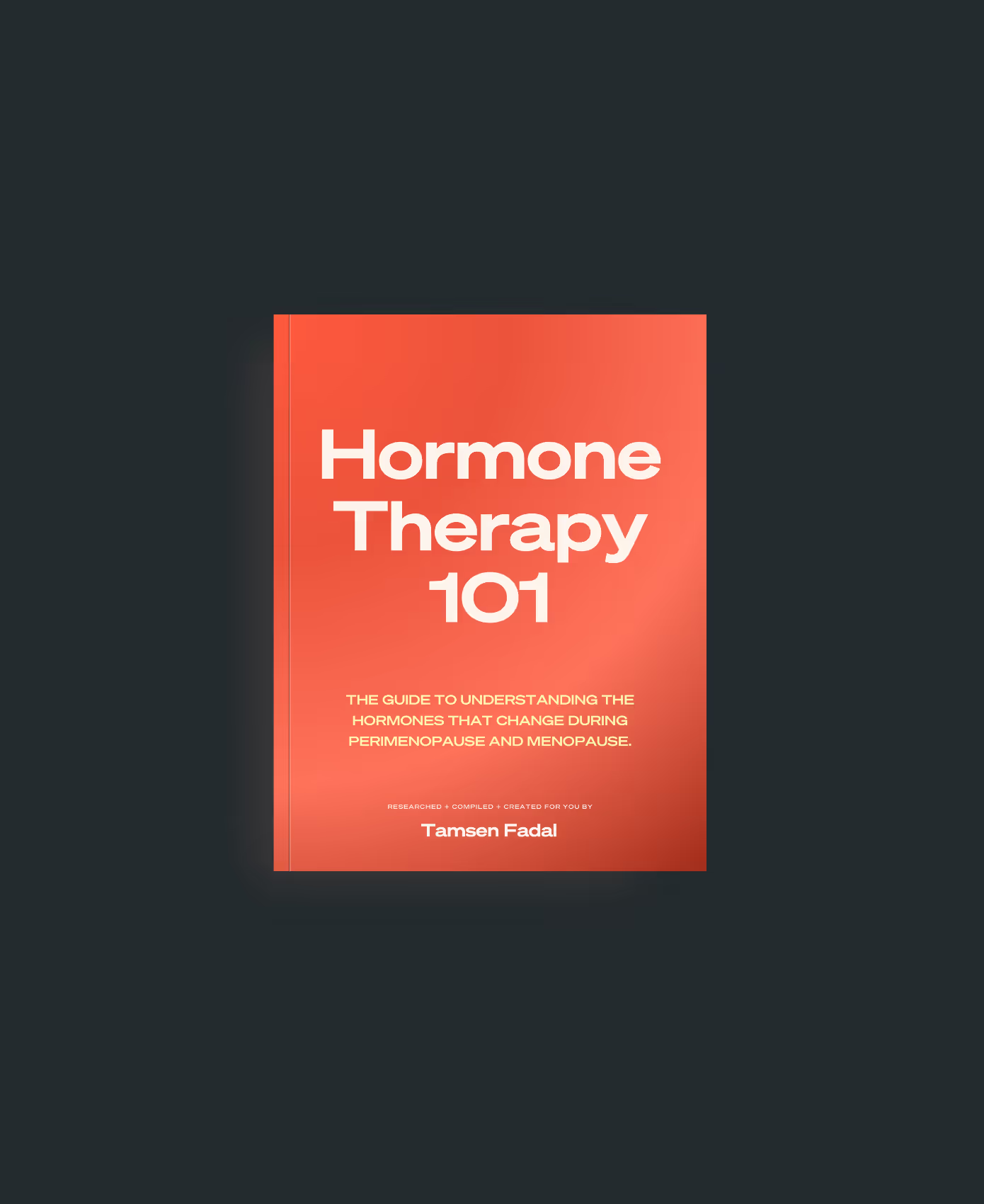
Sorry if my my sex story wasn't a very hot one, but that's my story. But this is part of our how to menopause series, where I take my book and we're going to go even deeper on this podcast. I'm so glad you're here. I'm so glad you found us. The book is how to menopause.
It's actually on sale now. It's linked in the show notes, but we're also going through each chapter right here on the podcast, so you can understand why I wrote it and maybe what you can get from it. I'm doing this series because when I was going through it, nobody sat me down and explained it to me. I didn't have a big sister. I didn't have a mom to help me through it.
And so, that's what I want to be here for you. I'm not a doctor. I'm a journalist who has lived with this and has interviewed hundreds of top doctors all around the world for you so this makes sense. Everything I share comes from them. So, I want you to take any of this to your own doctor because your body and your history are yours, and know this going in.
Women have been dramatically understudied in medicine, especially around menopause. We weren't even mandated to be part of research until the mid-90s. So, when you hear the research is still building, it's very, very true, and it's also because the system never prioritized studying us. So, keep that in mind. If you're confused and you ask that question over and over, why didn't anyone tell us this?
That's why. So, I want to tell you my experience with testosterone because I had been on estrogen and in progesterone for about 2 years. And they were helping. Genuinely helping. My sleep was better, my mood had stabilized, hot flashes had calmed down a bit, but my libido was completely gone.
Like not low, just it wasn't even anything I thought about anymore. And there was like kind of a flatness to everything. Like somebody had just turned my volume down a little bit. I was showing up for my life, I was going to work every day, but I wasn't really feeling it. My doctor brought up testosterone.
And I just was like not sure. I said like I'm going up Now I have to do estrogen, progesterone, vaginal estrogen, and testosterone? Seemed like a lot. I found a different doctor though, because I was like I need a second opinion. And the one that I went to was very confident that what I needed were pellets.
And I had no idea what pellets were at the time. The short version, I felt incredible for 2 months. They like did a little shot in me of these little pellets that went in my butt. Those 2 months were amazing. I was like attacking IR, I was all over him.
Like I I was thinking of sex again. I felt totally normal, and then I crashed hard. Like it just I had In 2 months, maybe 3 months, no more interest, and then I was back to how I was feeling before. And here was the mistake that I made. I did not have the right information.
I did not know there were different types of testosterone. I did not know what was going on. There were a lot of women out there that do pellets. For me, that did not work, because that was like all at once, and then I would have to go back there again to get it all at once again. And here's what I learned.
Our whole lives, we have been told testosterone is a male hormone. It's not just a male hormone. That framing leaves so much out. It's basically wrong. Women actually have more testosterone in their bodies than we have estrogen.
That blew my mind. I had to make sure that that information was right several times when I was writing this book. If you measured both hormones in the same unit, testosterone would be the higher number. I'm not going to get all technical with you about it cuz that's not my field. But, it is technically our dominant sex hormone, not estrogen.
And here's something most people don't know. Your body can't make estrogen without first making testosterone. It's like estrogen is a finished product and testosterone is the ingredient it starts from. They're connected. Dr.
Kelly Casperson, a dear friend of mine, a urologist and a women's sexual health expert, has been on this show several times and has a great way of putting it. We discovered estrogen in ovaries and testosterone in rooster testicles, and we have never gotten more nuanced than that. I'm going to actually link that episode down below, too, so you can listen to the whole thing. We just put estrogen in the women column and testosterone in the men column, and then we called it a day. And that one decision has shaped how women have been treated or not treated ever since.
Here's what you should know. Testosterone also works in your brain, not just your reproductive system. So, when it drops, the effects are everywhere, not just down below where you might expect. When I finally got on testosterone that actually worked, the first thing I noticed was my energy. It was amazing.
Getting through things without running on empty. That was such a big deal for me. Testosterone plays a real role though in that drive and motivation that a lot of us start losing and then we say like, "Oh, I'm so stressed out. Oh, I'm getting older." Sometimes it's just the hormones. The second thing I noticed is at the gym.
I'd been working out consistently for years, and somewhere in my mid-40s, the results that I was getting, without any hormones or anything, had just stopped. Same workouts, totally different body. Testosterone is a big part of your ability to build and maintain muscle. And when it drops, that process gets a lot harder. Testosterone is connected to the part of your brain that makes you want things, not just the sex, but like things in general.
So, when it drops, that whole system gets quieter. You stop looking forward to stuff, you stop feeling motivated. You can have a perfectly good life on paper and then just kind of feel nothing. The truth is is all the research that I've read is really more about that muscle and low libido, but this feeling in me totally I totally felt a difference. That Christmas of 2019 I was telling you about the year after the red bow story, I felt nothing.
I wanted nothing and I'm convinced it was partly the hormones. Around 60% of women going through menopause say they do not feel like themselves anymore. That is documented. That is in data and in research. And it can look a lot like depression from the outside, which is why so many of us end up on antidepressants.
Like we're thrown antidepressants, but what we actually needed was a hormone conversation. Not to say you don't need antidepressants, but you've got to have that hormone conversation, too. Now, let's talk about libido specifically. The major medical organizations that focus on menopause have looked at all the research and said, "Yes, testosterone helps with sexual desire in women after menopause." The evidence is strong enough that there's actual agreement on this across the globe, which is good news. Which Dr.
Kelly Casperson told me is rare. She said, "We don't agree globally on just about anything. So, on that specific thing, it's solid. Everything else that we're talking about, the energy I mentioned, the muscle, mood, brain fog, bone health, the research it looks good and the doctors who work in this space say they see it every day. But right now major organizations haven't officially put their stamp on those benefits yet.
And given how long women have been understudied, you can draw your own conclusions as to why that might be. You might be saying to me, "Okay, Tamsen, but my doctor never brought that up. My doctor brought up estrogen, progesterone, maybe vaginal estrogen if you have had a painful sex or UTIs." I had been on hormone therapy for 2 years before testosterone ever came up. And it turns out that's really common. When doctors say you can't take hormones, they almost always mean estrogen.
Testosterone is a completely separate conversation. Here's something I need you to know, so you're not surprised by this. There's no FDA approved testosterone product specifically for women in the US, none at all. In Australia, there's been one approved for women specifically since 2020. So in the US, when your doctor prescribes it, they're doing it off-label.
That's legal and it happens all the time, but you should know that going in. A testosterone patch for women was actually studied. The data showed it worked. The FDA still said no. And meanwhile, testosterone for men got approved within 6 months, 6 months of safety data.
And the doctors in the space know exactly what that reflects. So, we will keep working at it. If any of what I've described sounds like you, here's where to start. You need to get the right blood test first, and this part matters. Women have about 10% of the testosterone that men have, which means a lot of the standard blood tests are not built to pick up that level.
You can go in, get tested, get told your levels are {quote} normal, and that test may have literally not been measuring in the right range. I know this can be really frustrating, but when you get a doctor who understands this and can talk you through this, and does things specifically for you, you're going to feel so much better about it. You need to ask your doctor specifically for a testosterone test designed to measure women's levels. Be really specific about this, because a standard version could miss it. Not always, but could.
There's no magic number that tells you whether you need it or not. This is about symptoms, and what matters is whether something has shifted in the way that you're feeling right now versus how you've always been. The test though gives you a useful starting point, which is what is so important. But the conversation with your doctor should be about how you feel, not just about a number. My test came back at zero.
And that was finally the answer I'd been looking So, I brought a prop to explain this. If you are listening, you can also see this episode on YouTube, but I kind of wanted to show you what this was cuz anytime I show you this on social media, I get a lot of questions about it. And so, I wanted to make sense. And I'll also describe it for anybody who's listening. Since there's no FDA-approved product for women in the US, your doctor has a few off-label options.
So, let me walk you through some of them. The most common is taking a male testosterone gel and using 1/10 of that male dose. It's a small amount. It's absorbed through the skin, relatively affordable, and this is what I use. So, this is what the tube looks like.
Do not confuse it with your, you know, travel-size toothpaste, please, because I've done that before without my readers on. But it's just a little bitty tube, and you're just going to pop it open here, and you're going to take about the size of a pea. If you're listening to this, and then if you're looking at this, this is what it looks like. And then I put this behind my calf every morning, alternating legs. You can also do your inner arm if you want.
It would basically be a place that you wouldn't be growing hair or want to grow hair. Not that you're going to grow hair, so don't panic, but that's what you would be doing. You can alternate back and forth. And the difference in how I feel to where I was is so real. So, again, pea-size, take it, and I'll do it on my arm just because it'll be easier.
And you're just going to rub it in your arm. It's a gel. Let it dry, and then go on with your day. Like, don't throw your shirt on immediately. And then you're going to alternate that back and forth every other day.
The fears women have about testosterone, myself included, I was like, "I don't want my voice to change. I don't want more muscle." Like, actually do want muscle, but you know, not too much muscle. "I don't want unwanted hair." Those side effects are real, but they happen when your levels get too high. And at the right dose, those things are rare, according to doctors. If you're experiencing any of those, that's a signal you've got to talk to your doctor and adjust because dose is everything.
There's also an option of a compounded cream that I've also used from a compounding pharmacy. It's about $60 for a 90-day supply, same application. And then there are the pellets. I'm going to keep this one short, but I went to a doctor in New York City. She was like cost a lot of money, inserted a pellet without much of an exam.
I felt incredible for those 2 months and then I didn't want anything to do with I or sex after that. The pellets give a really high dose up front and then the level falls off. And because they're not removable, you can't adjust if something is off. You just have to wait it out. So most doctors who specialize do not recommend them.
Dr. Kelly Casper said you would have to earn your pellet meaning knowing that you can tolerate those hormones in lower doses before ever going on that higher dose, that non-removable option. So for me, I'm not doing that. I skip that. That's not what I want to do.
So this is what I do every day. One more thing. Most doctors recommend getting stable on estrogen and progesterone first and then adding on testosterone separately if you decide that's what you want to do. And then once you're on it, you just can't like okay, I'm on testosterone, that's just the way it's going to be. You have to get your blood work done regularly to make sure your levels are where they should be.
Quick easy blood test, it's to keep you safe and it means that your doctors have that information so they can adjust your dose if something's off. So it's not a one-and-done conversation. In fact, nothing about hormones is a one-and-done conversation. You have to continue getting checked to make sure you know what's right for you and a lot of that's also going to be based on your symptoms. So I think a lot about that version of me from Christmas of 2018, the red bow.
It took me a long time and some wrong turns to find my way back to that person. I saw a lot of the doctors that were not right for me. I went quiet for longer than I should have. I was really frustrated. I felt like crap.
You don't have to do any of that. Ask your doctor for a testosterone test that measures at women's levels. Ask about testosterone specifically, not just just hormones in general. Ask about testosterone if you are interested in that. If your doctor doesn't know how to have that conversation or doesn't want to have it, you need to find one who does.
I'm also going to link a provider search that's in the show notes as well. So, that can help you out. If you have more questions about this, send them to me. DM me. Find me on social.
Come to one of my live events. I want to hear what you're going through. We try to have these conversations as much as possible so you get all the most current new information. Because this is the exact kind of conversation I built this show for and I'm not done having it. We're going to keep breaking down all of it here on The Tamsen Show chapter by chapter.
If this episode of the book helped you, please let me know because that's what this is all about and I will see you next time.