When Halib Berry said on this show that she uses testosterone, the comments blew up. Things like, "Isn't that for men? Wait, should I be taking that?" When I was writing How to Menopause, I learned testosterone is not just a male hormone. It's a human one. Testosterone is actually women's dominant sex hormone.
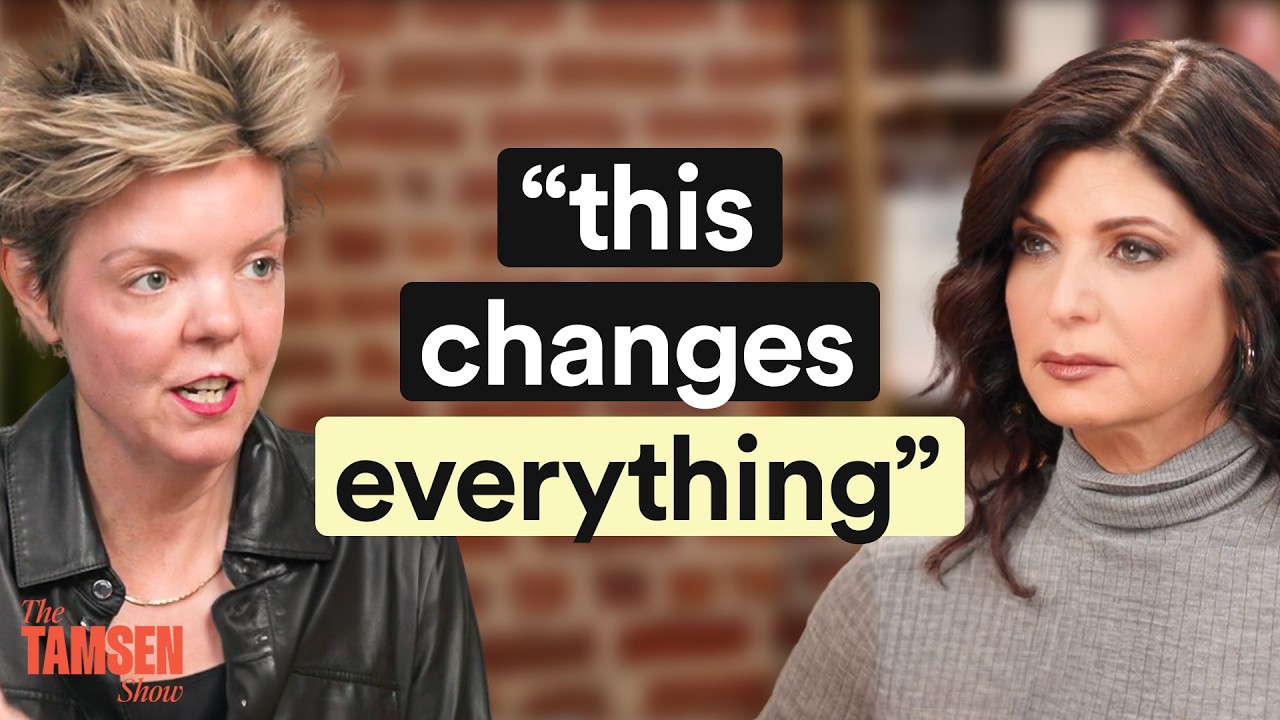
But people don't know that. My low testosterone was impacting my libido in a big way, and it's led me to start taking it myself. Today, I'm joined by my dear friend, Dr. Dr. Kelly Casperson, a board-certified urologist, hormone expert, and author of the book and podcast by the same name, You Are Not Broken.
It all boils down to we did not get a good sex education. If you're feeling confused or you're feeling overwhelmed, we're going to get you some answers that you're looking for. Feeling like yourself is one of the most important things we can do to help people in medicine. It's not about fixing you, it's about informing you on all of it. This conversation is going to freaking explode.
So, let's get into it. Dr. Kelly Casperson, it is so good to see you, my friend. Thanks for having me on. Yeah, I always look forward to our conversations because I feel like I I walk away with new things to implement.
So, I feel like our audience is definitely going to do that. Today I want to start at the beginning though with your story because I've always been fascinated by it. Urology is what you decided to go into and major in. Why urology? Because I know there are just a handful of female urologists in the country.
Yeah. So, right now there's about a thousand female urologists that are board certified in the United States of America out of about 10,000 urologists. So, it's still a it's a for for the fact that every human has a pelvis. It's still a very small specialty. So for people who don't know, urology is basically the surgery and the medicine of the genital urinary organs which includes the kidneys, the urer, the bladder, the prostate, the scrotum, the external genitalas, testicles in men.
And I fell in love with it because of the people. I mean the urologists very smart, very funny. They love instant gratification. I love knowing that because I showed up today, your kidney stone was gone, your bladder tumor was gone, you could pee again. It just very amazing instant gratification where a lot of medicine is well you know maybe try to smoke less or you know exercise a little bit more or let's adjust this dose and it just wasn't that like really sexy because I showed up at work today somebody's life got changed for the better so that was what the people and the instant gratification is what made me gravitate towards it and then about seven years into private practice you know just like you you get really good at what you're doing and then you're like, is is this all there is?
Is there is there more? You know, I'm kind of bored. I trained my whole life and I'm bored, which is, you know, a privilege to be able to say. I'm like super bored at urology now. But the universe, I think, knew that I I was at the seven-year itch and basically delivered the next path for my life.
And that was in the form of a patient who was I was very bonded with, and she was crying because of her sexless marriage. And it hit me like a ton of bricks. I was like, I don't know how to help her. I don't know if the gynecologist know how to help her. Does anybody know how to help her?
And went down this amazing path of female sexual health, female sexual function, what's the role of hormones? Then you just dig into why is everybody afraid of hormones? What was this WHI thing? And it's just my curiosity basically created this new career for me. Started a podcast, wrote a book, have the second book coming out because I was like, it's not enough just to know all this information and and just see people in clinic, right?
There's 80 million women over the age of 40 and nobody by and large rounding up, nobody has this information. Isn't it fascinating? I I don't think I knew the part about instant gratification or or knowing why you went into the field because when you and I met it was maybe it's five years, four or five years ago, four years ago maybe. And and both I think we both went down the same rabbit hole. We were probably just side by side in that rabbit hole trying to figure out exactly, you know, what was going on with women in this age group.
But that one story, it's it's so fascinating to me and I always remembered you telling me that is it was one woman and one story that hit you so hard and I think that happens because during this time we're all sort of, you know, in that same place rediscovering ourselves in a lot of ways. So, you went into women's sexual health and sexual health and along the way there's been a lot of questions to answer, but the big one I feel like is testosterone for you and sex and really being educated about it. So, we get a lot of questions on the show about testosterone and I really want to go deep with you on it so women leave here understanding what it is that we have it and you know what can change if you decide that's a path you want to take. Yeah. I mean, we really gendered the hormones.
One of my sayings is like hormones aren't gendered. Yeah. Right. But we, you know, for better, better, for worse, probably for worse, we said estrogen's for women, testosterone's for men. We could we discovered estrogen in cow ovaries, and we discovered testosterone in rooster testicles.
And like, we've never been more nuanced ever since then. So, we gendered these these hormones. And hor what are hormones? Hormones are me chemical messengers in our body that travel to other places in our body that tell our cells how to function and how to communicate. They actually help the health of our cells or mitochondria like the lining of nerves, right?
So to even call these hormones sex hormones is very dismissive because most of us aren't reproducing for our entire life and it kind of makes them extra, right? Like oh it's just about sexual health. That's that's not life or death. But really, these are neuro hormones. And when you dig into the whole sexual function, like libido, I'm always like, where's where's your libido?
It's in your brain, right? Oh, okay. It's in your brain. And so these hormones work in your brain as well as other places. And so testosterone is actually women's dominant sex hormone.
It is wrong when people say estrogen is our main hormone. Our main hormone is testosterone. And if you convert if you were to a normal cycling woman, not a post-menopause woman, if you convert her testosterone, which is measured in deciliters, it's like deciliters and then estrogen is measured in something else. And if you do the math, you will see that testosterone is higher than estrogen in your average woman. So wait, we have more tes we actually have more testosterone than we do estrogen.
Is that right? That's correct. Yes. So So that's what So let's let's go back a little bit. So let's talk about what is testosterone first of all and why women need it.
Yeah. So testosterone is considered a neuro or steroid and a steroid just means the the way the carbons are arranged in rings. Steroid itself has gotten a very bad reputation for bodybuilders and overdosing. All steroid means is what it looks like. Right?
So vitamin D is a steroid and a hormone and cholesterol. Right? And so cholesterol is the steroid pathway. Cholesterol will lead to progesterone to testosterone to estrogen. And you can't make estrogen in your body without it coming from testosterone.
See, I don't think I don't think I even realized that. I don't I don't think I realized that that's how closely aligned it is. I went to med school. I didn't know that. Okay, good.
I feel I feel better. You made me feel a little bit better. Don't feel bad. Okay. So, and I think a lot of menopause experts don't know that.
Well, I because I think it's very confusing because when we talk about HRT, we talk about estrogen and progesterone, right? And then testosterone is this third thing that maybe you might want to do or not do. Again, it's extra instead of like it's the dominant hormone. We were at this talk together in Dallas, which was awesome. Yes.
But every this is like what makes me cringe so much when somebody's like, "I can't take hormones because of X, Y, and Z." Which number one, that's usually wrong. But number two, what about testosterone? What about progesterone? Like when they say they can't take hormones, what they mean is estrogen. And it drives me nuts because I'm like that's one type of hormone and you can usually always take the other one.
So let's help women understand that. So if women think if we think we can't take hormones, let's let's go back and say, you know, why why it's been so confusing and perhaps why testosterone could be an option. Yeah. So like the biggest reason to not be able to take estrogen, which is what people mean when they say, "My doctor said I couldn't take hormones," which again is not true because most everybody can take vaginal estrogen. Right.
Right. So again, it gets like it gets nuanced and it's like, "No, most people can take some type of hormone." Okay? It just might not be oral estrogen. Right. So what a lot of people mean is that they're not allowed to take oral estrogen because of going through the liver.
So people with a stroke or a recent heart attack or blood clot risk. Also anybody being currently treated with breast cancer we are liberalizing the survivors pretty fast. Like even talk to me in three years it's going to be different than it is now. So e even I'm like that's turning from a red light to a yellow light treated breast cancer. Mean meaning it's somebody that went went through breast cancer and is now in remission might be able to take some type of hormone therapy.
I know many people who have been cured from breast cancer who are on hormone therapy including transermal estradile and so again things that make me cringe but you know we exist in the world of Instagram and it's hard to be nuanced which is why podcasts are so awesome. Yes, we're gonna we're gonna we're gonna clear up the misinformation. Yeah. The other big myth I think about testosterone is that people think it falls off a cliff with menopause just like your estrogen does. That's not true.
Our testosterone is the highest in our 20s and then has a slow decline. Actually, in some people after age 70, it tends to go up again. We have no idea why that is. Wow. Looks like it's heart protective.
However, tes again, testosterone works everywhere in our bodies. So, it is a myth that testosterone falls off a cliff with menopause. I think we're going to again, what are we going to see if you talk to me in three years from now? We're going to see more and more perry menopause people be treated with testosterone because there isn't anything to do with your periods or normal that has anything that tells you what your testosterone is. And I think as we expand the conversation into treating pmenopause, the role of testosterone is going to get greater.
This is the other thing. New Zealand just got their FDA approved and so now we have Australia, New Zealand, South Africa. It's available what we call off label. So the government doesn't cover it, but it is available as a female product in the UK now. So that's four countries.
It is not available as a female product in the US. Correct. At at this time. But it is coming. The people who know know that it is coming.
And I'm like, this conversation that we're having right now is going to freaking explode in about three to four years because once we get the FDA approved dosing for women and current the data we have in both the UK and America, it looks like women are taking as much testosterone as men are. Wow. But men have 20 products and women have zero. So a woman walks into the, you know, the the gynecologist or doctor, let's say, is in perry menopause. How how does she know whether or not one she needs testosterone and and what it's going to be what it's going to be good for?
How does she know her levels? Is that a blood test there? Yep. So, that's a blood test. You have to make sure it is a blood test that can detect female ranges because again, women have about 10% of a male testosterone level.
Okay? So, not all tests are sensitive enough to detect those lower levels. Okay? So you need the mass spectrometry test or it'll say testosterone comma female and MS which means mass spectrometry. Testosterone comma female is is easier to remember.
So you need the testosterone comma female test. Yeah, it's just that the other one isn't good at detecting levels under under 100 and most women have testosterones underneath 100. And again, I'm using America lab values here. So there this is not a red light green light meaning there isn't a level where you're like she needs it, she doesn't. That doesn't exist.
Okay, this is really a trial and error. Meaning I just don't feel like myself. I have lower energy. I cannot I'm going to the gym. I just can't see the gains.
I like sex with my partner. It's a great time, but I could take it or leave it. I just don't have that drive. That's what's so tricky about testosterone is there's not an absolute number indication and there isn't an abs these are all kind of soft things like all hormones all all hormones are pretty soft right especially in the in the pmenopause time because it's really symptom based so if you are dealing with certain type of symptoms most likely in pmenopause right irregular periods you got weight gain you're not feeling good you got mood swings now on top of that more of that soft area is the low libido And like you're not seeing any kind of gains at the gym. Is that right for testosterone?
Yeah. Testosterone is really good for lean body mass. Yeah. Right. And so it helps.
It helps in that arena. But I think these soft indications like not feeling like myself, which is huge. 60% of women in pmenopause not feeling like myself. That's a thing that's well researched. But it's soft. Like your blood pressure.
That's an absolute number, right? I absolutely know I should give you a blood pressure medication because of your blood pressure. We don't how how do I know Tamsen doesn't feel like Tamsen felt right three years ago, right? So, I can't measure that, but I would say feeling like yourself is one of the most important things we can do to help people in medicine, but completely blown over. How do we know if that's testosterone or that's a result of getting on what we would call I guess traditional hormone therapy of what we think of as estrogen or progesterone?
It's trial and error. Okay? You know, you can try things that most experts tend to try one thing at a time, what we call stacking hormones because we don't know what the side effects from and when you got a big win, what is it from? So, add things, you know, every every two months you can add things, adjust things. Another big myth I see with testosterone, people say this all the time on my Instagram, they'll be like, I'm on testosterone and my libido is not better.
It's not a onetoone, right? Libido is incredibly complex. It's like, you know, you're working 80 hours, your relationship's on the rocks, you don't feel safe at home, they, you know, you got all this stress. A testosterone level increase is not going to make you horny again. No.
And so really breaking that down for people to be like, libido's complex. Testosterone can help. But I mean, to tell you the truth, I have plenty of women we put on estrogen and they're like, I am good to go. I am loving sex again. So it it testosterone kind of gets stereotyped as the libido hormone, but estrogen also is lovely and libido at the end of the day is incredibly complex.
If somebody is going to the doctor and says like, "Okay, I'm willing to I want to do hormones." Would you suggest they start with estrogen or progesterone and then layer on testosterone? That's what most people do. Okay. But but and in pmenopause that might be different because in pmenopause estrogen can go very high and you don't want to add more to more. So it's really what are your goals?
What are you hoping to get out of this? You know are you having periods? Are you post menopause? Where are you? And so it's you know we don't have a cookbook of hormones.
Most experts will they say this is individualized medicine. What are your goals? What are we what are we hoping for? And you know, I think we're the pendulum's swinging back from we never need to test hormones. It's like, nah, they can be useful, but you have to know what you're looking at and understand that they move all the time in pmenopause, especially estrogen.
So, we don't use labs all the time to say you need hormones, but they can be useful to say, where are we with this? With testosterone, the guidelines do suggest getting a baseline. I always joke. I'm like, I'm trying to find the mythical permenopausal woman with high testosterone. I haven't found her yet.
No. But we check a baseline and then we check in about six to eight weeks to see that she's moved that up by being on a testosterone product. Okay. So, what do you say to a doctor if you think you need testosterone? Until more people get educated on this, this is what I recommend.
Make sure that they are comfortable doing this in the first place. Call the office, ask the receptionist, you know, see who your friends go to and love, right? Because even endrochronologists who are our hormone specialists, I would say the majority of them don't do sex hormones, right? But what I mean by sex hormones, estrogen, progesterone, testosterone, we've completely stopped caring about this after the WHI to the fact that our hormone doctors in this country don't do it. The urologists are pretty savvy with it because we give 10 times the dose to men every day, right?
So, we're like, we know how beneficial testosterone is and we're not scared of it because we give 10 times the dose every Tuesday and they do fine. Also the people, you know, I did an article what was it not in maybe in the Atlantic a year or so ago, a lot of women are getting great menopause care at trans clinics because they're they understand the role of hormones in feeling like yourself. They're comfortable with it. And I I hadn't known that that was kind of like an underground thing of like, oh yeah, that's where doctors actually care about hormones, right? We do have an international guideline, the Ishwish Society and multiple societies published, I think 2019, a global consensus on the use of testosterone postmenopause for libido.
So, that's a nice place to start. I think it's getting a little dated now that it's 2019. I I do believe they're going to redo that. In addition, most experts say there's nothing magical about a year with no periods with testosterone, so we can start offering it more in perry menopause, but you can bring in those guidelines to your doctor, but don't expect that the average doctor is going, we don't have an FDA approved product. One of the things I talk about often is how our health journeys in midlife are anything but oneizefits-all.
And yet, so many weight loss plans totally ignore that. They don't take into account our hormones, our stress, our routines, our lived experience. That's what first stood out to me about N weight. N builds personalized plans based on your biology, psychology, and lifestyle. So whether you have dietary restrictions, medical conditions, or you're simply navigating a busy season of life right now, new meets you where you are.
It's not about restriction. It's about understanding why you make the choices you do and then building those habits that actually make it sustainable. What I appreciated most is that it doesn't make you feel bad for wanting to treat yourself. There's no guilt, no starting over tomorrow mindset, just real tools and insights that help you stay focused on progress, not on perfection. And the app makes it really easy to stay engaged by leaning into daily lessons and then check-ins from a coach.
It feels less like a weight loss app and more like a wellness guide built for real life. I'm N's menopause awareness advocate, so it's important for me to be able to recommend programs like N when it comes to so many of the symptoms of menopause, especially since it's not a one-sizefitsall time in our life. Building confidence and personal empowerment is so important to taking control of our mental and physical well-being. Stay focused on what's important to you with N psychology and biology based approach. Sign up for your trial today at n.com.
That's nom.com. So, let's talk about what we have in terms of options for testosterone because you and I both know that there are a lot of changes that need to be made down the line. A a lot of things that are not available for women, a lot of research that's not been done for women's health. But when it comes to testosterone in particular, what makes most of the women that I talked to very concerned is the fact that there is not a testosterone for women. So, can you explain what that means and what they are able to do?
Yeah. So, in America, our FDA approves medications, meaning we've got great data to say this is safe and it's effective, better than placebo. Here's our basically stamp of approval, which is a very expensive process. We've had female testosterone go in front of the FDA twice already to the tune of a billion dollars and five years of safety data. And the FDA just moved the stick on that again and said, "Nope, we need five more years of breast safety data on this." Keep in mind the men got an FDA approved testosterone with six month safety data.
Viagra approved six month safety data. Why do we need Why do we need it so long? I mean, we've been giving women testosterone for 80 years. In addition, love the trans data. We give women 10 times the dose because they want to transition.
We've been doing that for 50 years. We have 50ear safety data in the trans community. I don't know what other drug can you dose people 10 times the amount. Will follow them for 50 years and say they don't have more cancer, heart disease, or death. Yeah, I heard you say that at the conference.
The safety data that we have. Yeah, I heard you say that at the conference and I I wasn't aware of that. It's I mean, I love pulling it up because it's so stinking obvious like what burden of proof is needed at this point besides just gender bias and giving women safe access. So FDA keeps moving the needle on that. There are a couple of companies that are going to go forward again.
So that's why I do believe in the next couple of years we will have one. And when we get a female dose to FDA approved testosterone product, it'll just normalize this conversation. Like it's going to explode. And so that's going to be very exciting. If that is in a pink box and cost $500 a month, we'll still use what we're using now.
So what what are we using now? Most common things that we're using now, I'd say, are three things. Number one, we take a male product. Most commonly the andro gel or test them and we micro dose it to women that's onetenth the dose so it's very small amount of gel pretty cheap second option is we compound a tes testosterone cream usually starting at around five milligrams very cheap I can get a 90-day supply for like 60 bucks at my compounding pharmacy and the third option is pellets and now if the FDA thinks that we're keeping women safe by not approving a normal dose amount we're actually making them less safe because we're giving them the most expensive and the highest dose which is a pellet. Kelly, I had no idea.
I had no understanding of pellets because I did them initially. I had no idea what I was doing. I did it one time. I went to a doctor and they said I said, "I'm not feeling good. I'm feeling This is before I knew anything and I felt great and then three months later I felt like crap and I didn't know what had happened." And I was so scared that I had such a difference in how I felt.
And now I've heard you talk about pellets quite often. But I really I want to stop for a second and talk about pellets because a lot of women I've been traveling all over the country for my book and a lot of women are telling they're coming up saying like I'm feeling great. My sex life is back. I'm doing pellets. And then I'll talk to somebody else that said I did them but I got too much testosterone.
So can you explain the if there are pros and cons or just cons? Pellets are a drug delivery method that is implanted usually around the buttock. Really small like a piece of bird seed. It's the most expensive way to get hormones and it's the highest dose way to get hormones. And to me, especially if you're introducing yourself to hormones, that's not the best.
That's not ideal, right? I always say you have to earn your pellet. What do I mean by that? Know that you tolerate hormones. You tolerate them at lower doses.
That you work your way up to higher doses. And then, so who's the perfect pellet person? I tolerate hormones. I actually feel better at higher doses. I'm not getting side effects.
I have the money that I can do this for the next 40 years. And I like plugandplay where I just have to think about this four times a year because it's a longer acting. There are two schools of there's like the pellet only people, then there's the we should ban pellet people. To me, I think it should be on the menu. Like it's your most expensive bottle of wine.
That is not what everybody needs. It's not practical and it's the highest dose. And what we know, again, let's use our wonderful trans data because we have it. It takes a while to start seeing t higher level testosterone side effects. I don't give you a high dose and you, you know, look more burly tomorrow.
It's slow. And in the women that continue to take the pellets, I worry about their their androgenic side effects over time. Sure, not everybody will get that, but that's what I worry about with higher dose is like, eh, testosterone at 250 for a while. Give do that for a couple years. There might be some things you might not like, but you don't know that right away.
So, I I did the compounding testosterone because I was nervous in full disc. I was very nervous despite everything I knew, read, studied, researched. Then I went to another doctor who said, "Why are you spending the money on compound when you can do gel, but you've just got to do like a she put a circle in the middle of her hand and said like just like the top of an eraser and just do that much." So now I have the tubes that you're talking about, which are, you know, pretty generic. But I will say that like every once in a while I'm like, "Is that too much? Is that too little?
Is that too much?" Because we're asking women to I mean to measure and that's what's so silly, right? So we're like hey FDA FDA is like we don't have enough long-term safety data and it could be unsafe. They're like, "Oh, so you're happier with women poorly dosing a product that was in no way designed for them?" Like to me makes no sense that we can't provide women with a safe, effective dose. And and that's, you know, that's what it is until we get an approved product. So, if somebody decides, "Yes, I'm going to do testosterone," they're going to want to know the real side effects, right?
What are side effects that they're going to be afraid of? Anybody that I've spoken to says, I'm afraid that, you know, I don't want to be too muscular. I don't want to I don't want my voice to change. I don't want to lose my hair. So, let's talk about some of those real real side effects.
Well, don't take don't take male doses. Yes. Male doses. Not not male testosterone. Male doses.
Male doses. So, the you know, one thing that comes up time and time again on Instagram, people do not understand dosing. They don't understand like it's a concept that why would the average person understand that, right? I got a thing today and somebody's like, "Well, if testosterone goes on the skin, but that's in your bloodstream, but estrogen goes in your vagina and that's not in your bloodstream." They both go on skin. And I'm like, "It's not how it's delivered.
It's the dosing of it." Right? And so many women when they're like, "I don't want to turn into a man. That's a dosing problem, not a again, testosterone is way higher than estrogen premenopause for women." But people don't know that. So you have to educate that first and say female doses, female dose testosterone. But again, it's weird because we don't have an FDA approved female dose.
We do in Australia, New Zealand, South Africa, and you know, off label in the UK now. So you can actually go and get it appropriately dosed. And again, it's about onetenth the male dose. Onetenth the male dose. All right.
Let's talk about how it helps with libido because I know I know that we said it's in the brain. I know estrogen will work for some women, but can you talk about how testosterone helps with libido? Yeah. So, basically the sex hormones estrogen and testosterone help modulate our neurotransmitters. Neurotransmitters being serotonin, neurotransmitters being dopamine.
So, dopamine is a big neurotransmitter in seeking out rewarding behavior. That's key. Sex has to be rewarding. I can't make you desire mushy broccoli, cold old chicken, mediocre sex. I hope none of that comes up together.
I'm like, it it must be a reward worth seeking out. Yes. And so many women when they're like, I I wish I wanted sex. And I'm like, is sex good when you have it? They're like, no.
I'm like, I can't make you like something that's not rewarding. Right. So that's very important in the whole libido thing is like dopamine works for things that are rewarding. Yes. Right?
Casinos, alcohol, sugar, right? Feel good. Netflix and Netflix and ice cream, right? Like that is all dopamine. And so what testosterone does is will increase through the dopamine pathways.
You being like, you know what, humans are more attractive now, right? And so so it works in the brain by increasing those reward pathways. But if you if sex is painful, if you're just having sex for somebody else, you know, if it's a chore, right? If you're never having an orgasm, testosterone won't make you desire something. That's mushy broccoli in the first place.
All right. So, I just learned this term. I did not know. Hypoactive sexual desire disorder. Yeah.
Why didn't I know that? HSD. Because it's a mouthful. Okay. HSD.
What is it? Can you explain it? It's basically the medical term for low libido. Okay. That's like the That's the distilled down answer to that.
Is there a certain amount of time that your libido has to be low to decide you have low libido? Look, painful sex, we totally understand why there would be no interest in that. If you have just no desire, you look at you just have like I'd rather watch TV. I'd rather have a glass of wine. It didn't even occur to me we haven't had sex for a year.
Is that something different? Yeah. Yeah. Yeah. And you'll, you know, the classic libido is so complex that you always have to sus it out.
But if I was to give you the classic low libido person or HSD person, my relationship's awesome. My work life balance is pretty great. I'm sleeping wonderfully. I I had this we had this great sex life. Like we we are so attracted to each other.
And now I could totally take it or leave. I still love them so much, but I could take it or leave it. Like it doesn't excite me. Like something's changed, right? It's not like I always thought sex was shameful and I've never had an orgas.
It's none of that. It's it was really great. Like I didn't really have to think about it and now it's just kind of gray and blah. That's more of your HSDD because you're ruling out all the other things that it could be. Also, medication side effects, yes, really affect sex life.
And many people will agree that we do not do a good job in informed consent of letting people because again sex is extra. Sex isn't important. Keep in mind many relationships end over it, right? But in the medical world, it's just extra. We don't care.
And then people are like, "Man, like my orgasm's gone." And you're like, "Oh yeah, no, that happens like 50% of the time on anti-depressants." And people are like, "What?" Nobody told them. Well, sex is not extra if you have Dr. Kelly Casperson as your doctor. Sex is not extra. Everything sex is not extra.
So you it feels really good. You starred in the M factor documentary and really you know talked about sex talked about testosterone had brought a patient in whose life changed. I mean several patients one said I didn't feel like myself anymore. And then I you know I I became a new person after you know I was put on testosterone. I felt like my old self coming back to me.
Didn't want to have sex. And so I I want to go into the the sex conversation because you talk about it all the time in your podcast which I have loved to be on because I always just love I love talking to you. You've talked about it in your first book and now you've got another book coming out that we're going to talk about shortly. But you know we have a very confused idea of what sex is supposed to be and we think we failed at it if it's not the Hollywood romance according to you. And I I think you painted such a great picture for me when you said that a while back and I've repeated it so many times and attributed to you because I think that we think sex is supposed to be one way and don't think that we have to work at it or that it is in our brain.
We think that it's supposed to be you know what it was at 20 years old. Well, I mean it all boils down to we did not get a good sex education. And when you have a gap of knowledge, what do you do? You try to fill it in, right? Fill in the knowledge.
Where are we filling this in from? We're filling it in from country music, Hollywood, religion, our parents, our first romance, all shitty ways of getting sex education, right? You know, possibly a disease and pregnancy prevention plan when you were in eighth grade that mostly made you afraid of it and taught you about ovaries, although it didn't teach you that ovaries make testosterone. I mean, where was the clitoris and the labia in any sort of sex education? Pleasure, right?
Why do people have sex? It feels freaking good. And you're not taught that, right? We're not taught anything about our bodies. I mean, most of us have never looked at our bodies, right?
The biggest show, if you want a reaction on Instagram with hormones, you tell women that their labia minora goes away and it's like you're tell like to me again, not not to say that sex is extra, but it's like dude also osteoporosis, heart disease, dementia, like all these bad medical things. They're like, but the labia minora like dude women care. Explain what that is. Explain what the labia minora is and and why it goes away and how to stop it from going away. Yeah, exactly.
Labia minor is the inner lip. So, non-hairbearing genitalia. So, the the area with hair that's labia majora on the inside before you enter the vagina are these little h I hate the word flaps, but they're pieces of tissue. That's labia minora. And they're incredibly responsive to hormones.
They're there because you went through puberty and you had huge surges of testosterone and estrogen. Perry menopause, birth control, post-menopause, these hormones are blocked in the pelvis and so the hormone responsive tissues can resorb, go away, atrophy, whatever horrific word you want to use. But many women, they'll say it's just it takes a lot longer to get turned on, to get aroused. The clitoris has some skin that goes over it, kind of like a turtleneck. That can become kind of stuck to the clitoris.
We call it fimosis or adhesions making orgasm a lot more challenging, right? And to be fair, women are not examined. Like they come in complaining of this. They're told, "Oh, everything looks normal down there and or they're just like drink a glass of wine of like there are anatomic biologic things that happen when hormones leave the body. We must get an education about this because every time women freak out about their labia minora on Instagram, I'm like, we didn't get a good sex end.
And what does the labia minora do? Number one, there's nerve endings, erectile tissue. Incredibly responsive for arousal. It's how we feel pleasure. Also, it's protective to the inner workings of the urethra.
Helps it prevent it from having micro trauma. Maybe helps recurrent UTI. It's just a protective structure as well. So sexual and protective goes away. The sec the next question is can it come back with hormones?
Probably. There's no studies on this. You think anybody's you think the NIH is researching like getting your labia minora back after you weren't on hormones for a while? I mean we got so many other things to focus on. I that's probably the last thing on the list right now, right?
It's extra, right? It's extra. Women really do care about it. Of course. You know, that's why the people like me, the female urologists who care a lot about GSM, we're like, why don't we just be starting vaginal estrogen around age 50 so we don't have to play catchup once you've suffer suffered enough?
All right, let's talk about the one hormone that pretty much every woman is is it safe to say every woman could take it or pretty much every woman can take it? Vaginal estrogen. The biggest fear people have is breast cancer and our breast cancer survivors. We have new GSM guidelines that say it's safe. Just let your oncology team know.
If you're a rare condition being actively treated with hormone blockers, still probably pretty safe, but you know, you want your team to know. But we have over we have studies of over 55,000 breast cancer survivors looking at the safety of vaginal estrogen. This is not a we don't have enough research. We have plenty of research. It just isn't getting out there.
So to us, we're we're always saying there's not enough research. We have enough research. We have so much research. We have guidelines now. Explain what GSM is.
And then vaginal estrogen and you know every woman can take it now. Is that what we're saying? Pretty much there is a rare like I would say every woman can take it. Asterisks. If you're being currently treated for breast cancer, check with your oncologist.
Just let them know you know that you're on it. And then number two, there's a rare rare form of uterine saroma, not endometrial cancer. Yes. Rare rare rare cancer that I would say check with people. Okay.
But I would 99.9% of people can be on vaginal estrogen and we know in America right now less than 4% of women who can be on hormones are on them. We have a lot of work to do. Isn't that unbelievable? I I keep thinking the number is going to go up. I I keep thinking it's going to go up and it hasn't gone anywhere.
GSM, explain what that is just so so people know what what it means and and what what you could be dealing with as a result. Yeah. So, GSM stands for genital urinary syndrome of menopause. Basically, it's the effects of the pelvis as a result of low hormones. This can happen in pmenopause.
Again, there's nothing magical about a period. You can still have low low hormones, breastfeeding, birth control pills, all things that are low hormones in the pelvis. So, trouble with sexual function, trouble getting aroused, trouble having orgasm, trouble being lubricated, bladder issues, urgency, frequency getting up at night, urinary tract infections. An amazing abstract just came out at the Urology Association like two weeks ago. Women with recurrent urinary tract infections, who were on a vaginal estrogen versus who were off vaginal estrogen.
The women who are on vaginal estrogen, decrease risk of hospital admissions, decreased risk of sepsis, 70% decreased risk of death by recurrent urinary tract infections for taking vaginal estrogen. And this is like sunscreen and seat belts. It's so stinking safe. You should be able to get it pretty darn cheap. It's covered by insurance.
And of all the things that can kill you in the pelvis, urinary tract infections can. Well, I was just going to say UTI are so deadly and so dangerous and they they increase with age. Correct. What is it? What is the average age that we start seeing that increase?
I I really start seeing GSM kick in 5 to 8 years after menopause. And the problem is women don't know what menopause is. Yeah. They just think it's hot flashes and no periods. So they have no idea that what's happening now, 5 years after their periods, is a result of low hormones.
Yep. Because they didn't know they had low hormones in the first place. But GSM is the gift that keeps on giving. Meaning it's cumulative. The longer you go without hormones, the worse and worse it can get to the And I see this a lot of like women haven't been treated for like a decade.
They stopped having sex eight years ago. They're on antibiotic after antibiotic and they actually start the estrogen product and it's stingy and it's irritating to them because their skin is so destroyed. It's so thin. It's so sensitive that even the treatment hurts. It's like walking around with like raging sunburn, right?
And you try to put pushing through it. If you're if you're on vaginal estrogen, there's a there's different options. So, you can get vaginal estrogen in a suppository form, in a ring form. You can get it compounded without the alcohol base in it to make it less stingy. U there's a vaginal DHEA, which is chef's kiss for the vulva.
DHEA is a precursor hormone that in the cells of the pelvis convert to testosterone and estrogen. So, it all ties in, right? Remember, our bodies are responsive to testosterone everywhere, especially our genitals. We have there's this amazing paper. They put women on testosterone and they actually measured the velocity of their clitorol artery before and after testosterone.
Clitoreral blood flow goes up when you're on testosterone. Shocking. Penis blood flow goes up when you're on testosterone, right? So, it's like our pelvic structures are responsive to testosterone. And people, you know, they'll when they poo poo testosterone, they're like, "It's just for libido." No.
Testosterone helps every single domain of sexual function, desire, arousal, orgasm, lubrication, distress from your sex life being off, lowers distress from sex. So testosterone's way more important. And again, I think like buckle up because if you're part of this conversation with testosterone now, give it three years when we have an FDA approved product and it's just going to be the conversation is going to be huge. Well, I know you're at the front of that movement and I know that we're all there behind you because it's it's a big deal and a big conversation. So, I want to ask you one more question about it if if you know I want women to have actionable.
So, if they're listening to this and saying like, look, I don't feel like myself or I have no libido, not low libido, I have no interest in sex or sex is painful, what is the first thing that they should do after listening to you to either talk to their doctor about or do so they start feeling better? Yeah, it's a great question. Education, I think, is number one and understanding that libido, there are treatment options, but a lot of things for libido aren't medications, right? Like how your how your lifestyle is? You know, are you abusing drugs?
Are you sleeping? How's your work life balance? How's the relationship? Are you allowed to touch yourself? Is masturbation bad?
What do you think about sex? Right? Has it ever been about you and your pleasure? So, there's so much personal growth in getting an adult sex education. So, I'd say, you know, my podcast, my book, I've got a sex ed course on my website of like just get educated on it because you're doing the heavy lifting that doctors can't do in the clinic anymore because let's be honest, unless you're doing a cashbased clinic, you got 10 minutes.
No education happens in a 10-minute doctor patient visit. Plus, you're too stressed. So, get educated first and then be like, I think I might want to try hormones. My best resource is anybody who's been trained by Dr. Heather Hirs is great.
Anybody who's been trained by Dr. Rachel Rubin, great. International Society for the Study of Women's Sexual Health. Great. Why?
Because those people are comfortable with sex and hormones. So, like Ishwish is like the ven diagram of sex and hormones. Not everybody who is menopause certified by the menopause society knows a darn thing about sex. No. And truthfully, they don't all know a darn thing about hormones.
Okay. So, that certification is not a guarantee that that person knows how to prescribe. Ishwish is probably by and large dollar fordoll the better bet. So go on the ishwish.org type in your zip code, find a provider near you. So there's a provider on there.
Also the I mean the online companies, right? So the online companies that are dedicated to perry menopause menopause because you've they've already done the work of like we do hormones here. Now you're not wasting your a visit going in. They're doing it every day. The other big item that I'm part of and I want to see is we need to deregulate testosterone.
What's that mean? It's a DEA regulation class three. So it is like ketamine, Tylenol with codine. It is heavily restricted. Why?
The doping scandals of the 80s. This the athletes ruined it for us. Whether or not we get a female dose product or not, the athletes ruined it for the average person. We need to deregulate it because the online companies have big trouble accessing that because their doctors have to have a separate DEA license for every single state. Wow.
We need to deregulate a hormone that our body naturally makes. It's unbelievable. I feel like we we have work to do and then we have work to do. It just keeps layering on itself. There's a lot like Yeah.
You know, like this isn't one hurdle. It's like a It's like a track of hurdles. I know. I know. I I I keep going along.
I'm like, we're going to get this. Oh, wait. There's seven more things to do. But it's okay because because we're having the conversation finally. So, nobody worried because Dr.
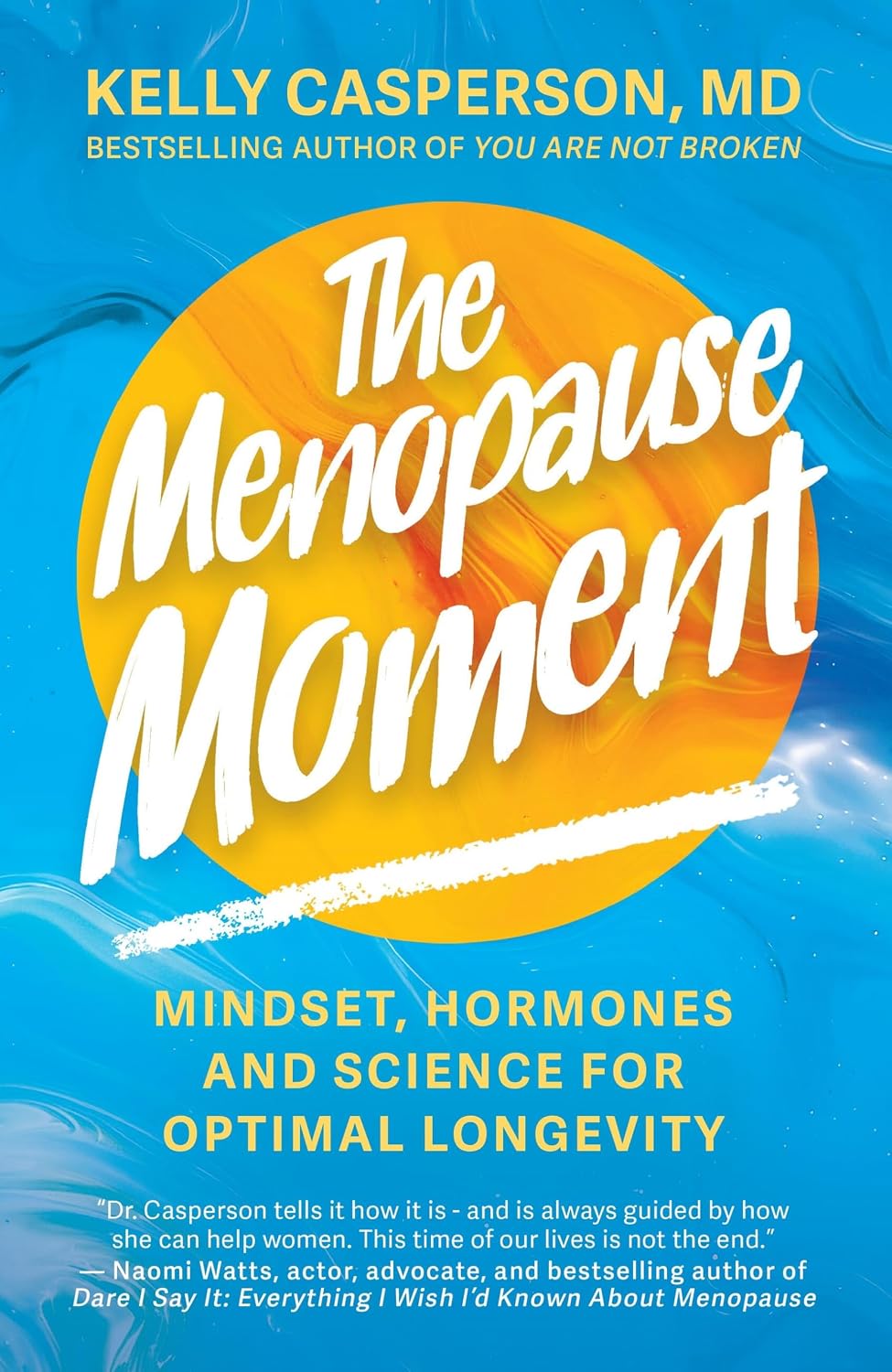
Kelly Casperson is going to be back. You're going to be back on in September because you have another new book coming out which I'm so excited. The menopause moment, how hormone science and mindset create optimal longevity. Tell me real fast about this book because I I feel like so this book is like, you know, in college where you have the 101, like the 101 book, you wrote a 101, Mary Cla wrote a 101. Naomi Watts wrote the 101.
We've got the 101's women understand this is the 2011 of like you want all the data on prevention, bones, heart. So, we got two two chapters on sex, how to talk to men about it, how to talk to your doctor about it. So, this is the 2011 to the amazing 101 books that my friends have already written. I cannot wait. I cannot wait.
I cannot wait to have you back on to talk about it and to see in person. Dr. Kelly, thank you so much. I appreciate Where can people find you? Oh, Kellyaspersonsonmd.com is the website.
You are not broken is the podcast. And then on Instagram, I like to hang out at Kelly Casperson MD. All right. Thank you, my friend. Good to see you.
Thanks for having me. Thank you so much to Dr. Kelly Casperson for the truth, the clarity, and of course, the work she is doing to change the conversation. Her book, The Menopause Moment, is out this September and available for pre-order right now. If this episode spoke to you, share it with a friend, leave a review, please.
It helps us get this podcast and all your questions answered, and get more incredible guests like Dr. Kelly on. I'm Tamsen Fadal. I'll see you next Wednesday. The Tamsen Show is an original production by Authentic Wave.
Executive producers Scott Weinberger, Kevin Bennett, and Rebecca Greersonen. Brand director Johanna Offnik. Our line producer is Sabrina Surere. Editing by Zach Smith and Marquee Harris. The views and opinions and information shared by guests on The Tamsen Show are their own and do not necessarily reflect the views of Tamsen Fadal or the production team.
This podcast is forformational purposes only and is not a substitute for professional, medical, legal, or financial advice.