This is a testosterone gel 1%. A man would take this entire tube in one day. The female dose is to make this tube last 10 days. There's no other medication where we're like, "Hey, figure out the dosing on your own." Dr. Kelly Casperson is a leading urologist, sex expert, and one of the loudest voices pushing for women to finally have FDA approved testosterone in the US.
Can you explain exactly what goes on with our hormones that impacts our libido? Estrogen and testosterone modulate our neurotransmitters in our brain. And libido is a mood. Moods come from our brain. So this is a brain change.
So when estrogen and testosterone go down, the dopamine pathways that drive libido also don't work as well. And then libido is also very complicated. It's not just hormones. You're overworking. You haven't managed your stress.
You're not exercising. You're sleeping really poorly. You hate your partner. I think I've heard all the I'm sure you have. I've heard all those things.
I'll see women, they'll be like, "I got on testosterone and I still don't have a libido." Like, testosterone is a part of it, but it's not all of it. Today, she's answering your spiciest questions. It's been months since I've had sex with my husband. How often are we actually supposed to be doing it? Are there natural ways to get my sex drive back?
Sometimes I get these sharp pains during sex, even when I'm totally turned on. Should I be worried? My husband has Viagra. Is there anything like that for women? I saw on social that our vagina disappears as we age.
WTF? Is that true? And I don't think a lot of women know this. When it comes to sex, we have been taught to whisper about it, right? Well, not today.
I asked you guys to send me some of your questions totally anonymous. And boy, did you deliver in a big way. You went there in all sorts of ways. So, we decided we're going to do something a little bit differently today. I'm asking your questions, and a leading menopause expert is going to answer them.
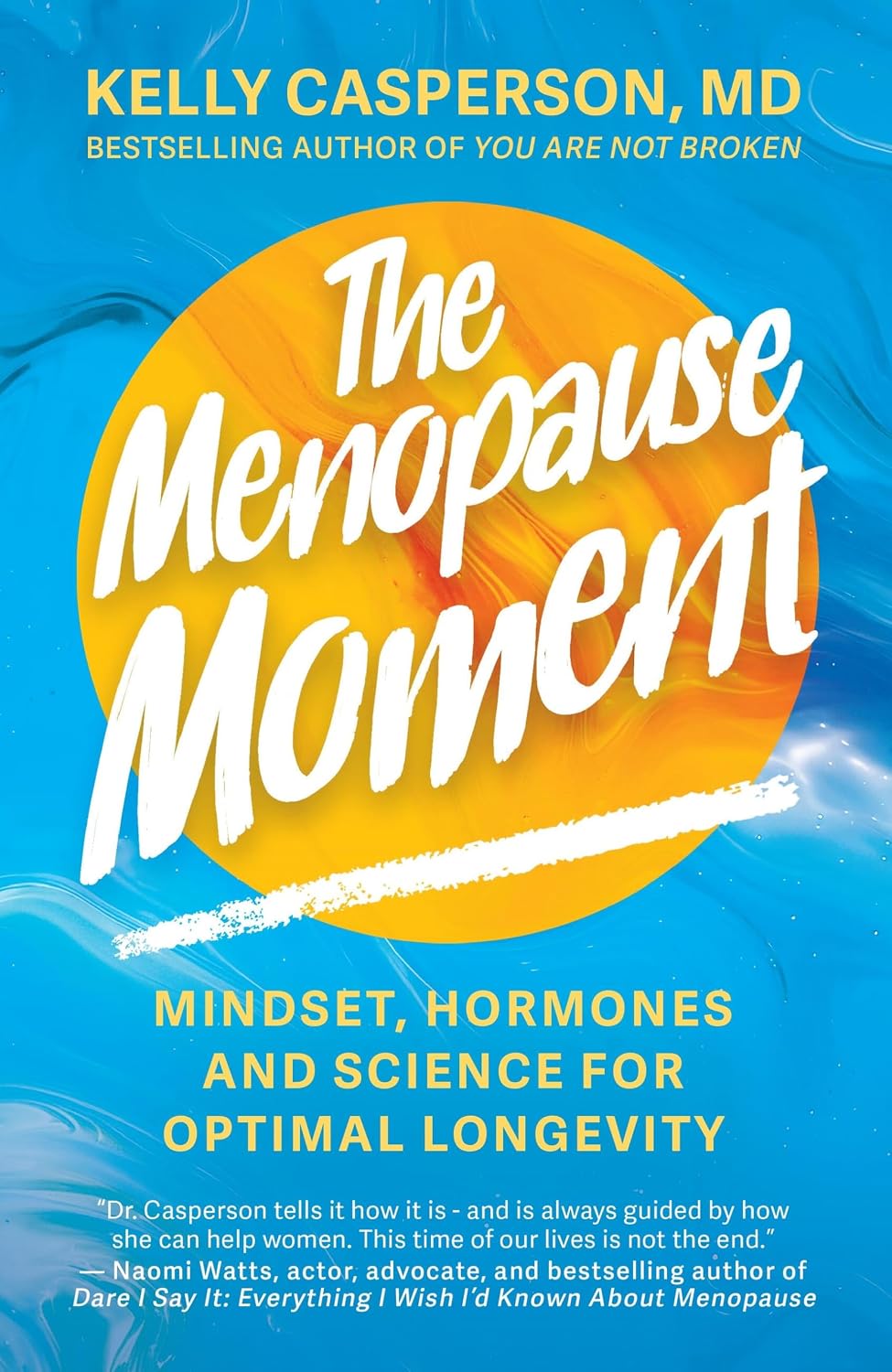
We got to as many as we could get to and we'll we'll keep going. We'll figure it all out. But my friend and one of the top urologists in the country, Dr. Kelly Casperson is here with her new book, The Menopause Moment. This is the book that every woman in midlife needs on her nightstand.
It's going to show you how to get your energy back, how to feel like yourself again if you're feeling a little bit off, and finally understand what is really happening in your body. She covers all of it in the menopause moment. Today she's here on The Tamsen Show to take on the questions you have been dying to ask and you did. This episode is a sex ed we should have all really had as adults. And by the way, if you love the conversations and you want more of them, leave us a review.
It really helps. Thank you so much. Let's keep this movement going and let's go ahead and get into your questions and all of it. Kelly, with you nothing is off limits ever. That's right.
Thanks for having me. Yeah, it's so good to see you. So let's start with the book. Your new book is called The Menopause Moment. Why did you write it and what do you want people to take away from it?
So, this is book number two and in book number one, which is the adult sexed book called You Are Not Broken, I have a menopause chapter in it. Yeah. And I at that point when I was writing that, I was like, should I put this in here? Are people not going to read it if I put this in here? And then I put it in there because I was like, people need to know what's coming, right?
Yeah. Even if we want to teach sex ed when you're 23, you need to know what's happening with your body. And that chapter, people kept saying, I'm so glad that was in there. I had no idea what was happening. And I got a lot of really good feedback from that chapter.
So when the publishers came back and they're like, "Will you write another book about sex?" I was like, "I kind of want to write a book about menopause." And they were like, "Yes, write that." And so like I'm wrecked as far as book publishing goes because I'm like, I just told them what I wanted to write it about and they said yes. And so this one has sex chapters in it. So it's kind of inverse from the first book, but I'm like now we know enough about menopause. And the other thing is like people say we don't have enough research. And I agree.
We we need more women's research. I always say yes when we say we need more research. But I think what people don't realize is how much we already have. And let's not forget the hard work that's already been done about what's beneficial for our bodies. And so I really wanted one place to put the studies that we already have.
So when people think like, oh, we don't have anything, it's that's not true. I'm really glad you did that and you're right about that because we do say that over and over and then we kind of, you know, just believe it. But the truth is, and you've shown that in the book, that there are actual studies out there, a lot of studies that we need to be looking toward when we're asking for information or trying to figure things out. So, let's go back to your story because you are a top urologist in this country, one of very few women urologists. Is that correct? 10% of urologists in America are female.
So, there's about a thousand of us now. It's incredible. It's a tight club. It is a It's a very tight club. Was there a patient or was there a story or an incident that made you say I have got to go deeper into women's sexual health?
Yeah. So, seven years into my career, you get you get good at your career. You kind of know what you're doing. You're like, why am I doing this? It's the like seven-year itch.
And so, I think the universe knew I was ready for something new. And so, delivered in front of me was a patient that I love dearly. I'd actually treated her for cancer. And now I see her once a year. How are you?
Scans are good. Everything's great. But that year, she was crying in my office and the reason she was crying was because of her sexless marriage. And so I'm handing her the box of Kleenex and realizing I don't know how to help her. And everything from my training came up in that visit.
Women are difficult. We'll never figure them out. And don't worry, the gynecologists are taking care of them anyways. And that's what that's what your training taught you. That's what my training taught me.
And so I just started questioning all that. Are women too complicated? Will we never figure them out? Is there no data? And are the gynecologists taking care of their sex lives?
Because here I'm the urologist. We're best known for Viagra, right? 90% of men are heterosexual. So the ultimate billion-dollar question is who's taking care of the women who are supposed to be sleeping with the men that people like me are giving Viagra to? Well, like to be in the office going, "Oh my goodness." You know, not realizing all those years of of all the people that you've treated over time and to to have this woman in here come in and really open your eyes to to everything. It's really been a whole new chapter for you in a lot of whole new chapter.
And I mean I always joke that sex got me into menopause literally and figuratively because as I learned about female sexual health and female sexual function and the domains you know arousal, desire, lubrication, orgasm, what role do hormones play and what happens when those hormones go away? And so the question that kept coming back was but you know what happens to your sex life during menopause? And people kept asking it enough that I'm like I I don't know what's the data say. And so started peeling back the layers of the onion on like what happens when the hormones go down. Oh, hormones are actually really important and really vital.
Why are we so afraid of them? Yeah. So then peeling back that onion of the the media misinformation from for any listener that doesn't know the 2002 Women's Health Initiative study that basically scared women into thinking that something their body naturally makes is trying to kill them. Yeah, we've talked about it a lot on this show and I think every time I talk about it and and somebody is is here, I I just go back to it and I can't believe how long ago that was now, but still how that is so fresh in everyone's minds and they don't even realize. Yeah.
Yeah. It's like ether or the zeitgeist, right? Because if you ask a woman, if you say, "Well, why do you think that hormones cause cancer? Why?" They can't say. People won't say, "Oh, the 2002 women's health initiative." It's it's just permeated through the culture enough that they're like, "I don't know.
It just does. I want to address women that still feel so unprepared for midlife and so blindsided. Why do you think that happens? Oh man, I think it's the culmination of like there wasn't any solutions for a while. We live in a society that literally sells you things with the belief of you should not age, which flies in the face of anything that lives on planet Earth, right?
So like we live in such a society that is like shrouded in don't age, fear age, and then pregnancy happens. Whether you choose to become a mom or not, we all know puberty happens. Nobody knows that we outlive our ovary function. And that's actually what menopause is. Even though the definition of menopause is one year, no natural periods.
That's just a consequence of us living longer than the ovary functions. And who else on earth outlives their ovaries? Any animal that lives in captivity, actually. So, it's a myth. You know, I hear I get so irritated now because of the research for the book because like only humans and four whales have menopause.
A couple of things about that. First of all, most mammals don't menrate. They resorb their uterine lining. So, it is true not many mammals menrate, but if you take a mammal and you put them in captivity, for example, there is a harbor seal in a Oregon zoo right now that's 49 years old. In in the wild, these animals live about 18 years, right?
So what we're doing is we're you got a good water supply, you've got food, you've got shelter, we can treat infections, we can treat tumors, you're not going to die in childbirth. We're literally in captivity and that is preserved along all animal spans. So if you take fruit flies and you put them in captivity and you provide all those things, they live longer than their reproductive potential. Same with mice, same with yeast, same with monkeys, same with same with the harbor seal. All the stuff that you've learned since looking into this.
So, I mean, the funny part is I was like, I'm going to name my book Aging in Captivity, because I wanted to I wanted to I think the menopause moment, if I'm not an I'm not an editor, Kelly, but the publishers didn't like my title, but my fans love that title and you know, Amazon search terms, the menopause moment works better, but I wanted it was a nod to Esther Pel, right? She's an OG for sex, but it's like we need to realize because everybody will say, "Oh, menopause is natural." Yeah, I know. I know. Living to 84 as a society on a global scale, we've never done it before. It's actually not natural.
So, I really wanted to and I put all that in my book to really be like, let's stop thinking that like we're these unique things that we must, you know, go through it and that what that means is suffer through it. Yeah. Right. It's like, no, no, no. We're aging in captivity.
We get to make a choice to try to age as well as we can. There's a term GSM and I want to talk about that in particular because I think it's something that a lot of women hear and might not necessarily understand where it fits into everything. Yeah. So GSM is a mouthful when you spell it out. It's genital urinary syndrome of menopause.
Syndrome in medicine means a constellation of things and then genital urinary means the sexual structures and the bladder urethra structures. So genitals and urinary syndrome of menopause. Prior to that it was called vaginal atrophy. Nobody likes terrible words. People don't like that.
Plus, it doesn't include the bladder stuff. And then prior to that, in the 1980s, in medical literature, it was called the scenile vagina. What? Yeah, I don't think I knew that. I know.
I didn't know that. Yeah. What is it? 50 to 80% of people will be affected by GSM, you can be affected before your periods end, right? That's why the period is a stupid arbitrary thing. Like, as your hormones go down, you can have these symptoms.
Recurrent urinary tract infections, getting up at night to pee, urinary urgency, bladder leakage, pain with sex, burning with urination, all of that is this constellation of genital urinary syndrome of menopause. It happens because our hormones go low. So, it's treated by putting hormones back. I know it's complicated. Can you explain exactly what goes on with our hormones that impacts our libido?
So, estrogen and testosterone modulate our neurotransmitters in our brain. And libido is a mood, right? Mood moods come from our brain. So this is a brain change. So when estrogen and testosterone go down, the dopamine pathways that drive libido also don't work as well, right?
And then libido is also very complicated. It's not just hormones. So if you're overworking, you haven't managed your stress, you're not exercising, you're sleeping really poorly, you hate your partner, right? Like all of these things. I think I've heard all the I'm sure you have.
I've heard all those things coming from but it's important to cover it because people will you know they'll get back on hormones and they'll be like oh I still don't have a libido and it's like because libido is really biocsychosocial it's all of the things like what what kind of sex head did you get right are you having orgasmic equality in your relationship so all of that affects libido because I'll see women they'll be like I got on testosterone and I still don't have a libido like testosterone is a part of it but it's not all of it how does mindset play a role well if you were trained that sex is dirty that you're not allowed to touch yourself that you need to prioritize your partner's pleasure instead of yours. Right? There's all these negative beliefs around sex. If sex is a chore, right? So, if you're thinking all of these things about sex, I can make your pelvis perfect.
I can make sure your vaginal estrogen's on point. We can do your testosterone. But if you're still like, "What's the point of sex? It's just for my partner." Like all those negative beliefs. And that's where the education comes in to be like, "This is for you to enjoy the pleasure that your body can give you." And in a in a amazing world, you get to share that with a partner, right?
You don't have to have a partner to experience the amazing pleasure that your body can give you. But really reframing sex is like this is a joy. This is adult play because most people weren't taught that, right? It's a it's a spously duty for a lot of people. We were taught it was purposeful.
You know, there's a reason that you're having sex, right? And and I think that you you're the first person that really explained this to me in a way where I went, "Oh, I get why we think like that." Because you said Hollywood's like, "Oh, you fall into bed and you're sweating and all of a sudden you like the the soap opers in Hollywood make like sex is this easy thing and it just naturally happens and if it doesn't, you're screwed up and something's wrong with you and it's your fault." And I think you're the first person that really explained that that that is how we think about our sexed, right? That's crazy. Yeah. Sexed is Hollywood.
Sex is is porn. Sexed is any, you know, negative beliefs that's coming from your family or your church or your education. So, it's like we got a sex education. It might not have been a very positive one. What is the biggest myth about, and you hear a lot of stories, but what's the biggest myth about sex or hormones that you're hoping that women in midlife will unlearn?
That you should just sit there and wait for desire to spontaneously blow in the window and then when that happens, you can have great sex. So, meaning like, I'm turned on now. I'm going to go have sex. Yeah. Like, oh, I actually want it.
I'm going to go have it. Like a spontaneous desire that a lot of people have. And when you when you and I see so many women, they're like, "Oh, if I only had desire for sex." I'm like, "Why don't you just go have some great sex?" And it blows their mind because they think like, "This has to this has to be a green light of desiring it before you go have amazing sex." There's an amazing book by Dr. Peggy Klein Plat. She's a PhD.
And she researched people who have amazing sex. She was like, "Raise your hand. If you have amazing sex, great. Can we talk?" Right? So, she put this whole book together.
Nowhere do these people say, "Spontaneous desire for sex is why I'm awesome at sex." They're like, "I prioritize time to be sexual. I can troubleshoot. I'm okay with failing. I am a great communicator. I prioritize pleasure.
I And you're like, nowhere do they say it's just cuz I dig I, you know, I desire sex all the time. That's why I'm great at this." I think people sometimes are shocked if someone's been married a long time and they're like, "Oh yeah, we have sex every week or every twice a week." People are shocked by that. Is there a how often we should be having sex answer? No. There is a what works for the relationship answer.
Okay. But not what all humans should do. Well, no. I mean, obviously it's not like two times or you're not. But I'm just wondering if there's like, hey, that's a health.
We consider that healthy or not healthy. I guess not because every relationship's different, right? Every relationship's different. Yeah. And whether or not you have a partner is different.
I'm excited about the Q&A. And by the way, full disclosure, let's get there. When I told you I told you we were going to do this, you're like, "Bring it on." And I said, "Are you sure?" Because there's going to be a lot of questions. I love Q&A. It's like my favorite thing.
I think it's so important. I think it's also really important before we go into it is I I don't know that a lot of women know how to walk into a doctor's office and say, "Hey, I have I'm not having sex with my partner or I don't I don't feel comfortable having it or it's painful." Can you just give somebody who's listening that sent that script if it if it's two sentences of how to approach that conversation and who to approach it with? That's a really hard conversation because most doctors aren't trained in sex. And so like I could write a book on like the [ __ ] that doctors tell women about sex, whether it's like just deal with the pain, go get another husband. Recently, very recently, a top cancer center told a woman to use Crisco.
What? Yeah. And I'm like, we don't even bake with Crisco anymore. What What is What? How does that happen?
How does that happen? Well, in medicine, again, like medicine has a culture, right? And the culture of medicine is that sex is for reproduction. So dismissing any sort of pleasure thing. Like I didn't dissect the clitoris when I was youn I I disagree.
It's nice that the woman's turned on and likes her partner and all the good signs. But like I we didn't even dissect the clitoris and that's a anatomic body part solely designed for pleasure. So there's that and it's a very you know patriarchal man teaches a man teaches a man teaches a man. So there's not a lot of like let's talk about the women happening. So, I think it's it's a hard question to answer because it's like, how do I set a woman up to go into where she might fail because the doctor didn't get a good sex in?
I know that's the that's the confusing part. That's really hard. I would say sex therapists are a great place to start. Doctors are, and I'm overgeneralizing, but they're your go-to for vaginal estrogen, for GSM, for hormones, but for like sexual health issues, sometimes you don't need a medical doctor for that. Like, sex therapists are worth their weight in gold.
There's sex coaches. There's amazing people that don't need to like prescribe medications that are trained to deal with sex. But here's the other crazy thing, and this is what my sex therapists say. Marriage therapists also didn't get trained to talk about sex. I know.
I mean, you got people going to couple therapy, couples therapy for years, but no one ever brought up menopause or pmenopause or lack of libido or sex. Or sex. Yeah. That's what's so crazy. So, I met I met one recently.
She was like, "Well, I was a marriage therapist, but we needed to address sex issues, and I didn't get trained that in marriage therapy." And I'm like, "That marriage is like a sexual union, like amongst other things." So, yeah, a sex therapist. So, a sex therapist. Okay. I I mean, I I want to give women that kind of answer because I don't know that when you're in the doctor's office, someone's coming looking down at a chart and they're looking up at you and they're like, "You're naked except for naked." And then they're like, "Okay, well, you know, are you feeling okay?" And you're like, "Oh, yeah. Sex hurts and I don't feel like having it." and and and I don't know what part of that conversation you when you bring that up.
Some people might be fine bringing that up, but not everybody is going to be. So, yeah, the other people that are really good and trained in sex and pelvic structures is our pelvic floor physical therapists. Okay. So, they're amazing people and they're pretty good at knowing, hey, you've got GSM, you've got some thinning of the tissues, why don't you go ask your doctor for some vaginal estrogen? Yeah.
So, to me, I'm like, we got to get the doctors more trained, but they're already very busy. But lowhanging fruit is if every doctor listening can realize that vaginal estrogen is incredibly safe, incredibly effective and to help with painful sex. Painful sex and to prevent painful sex to decrease urinary tract infections to help bladder issues. Right. If you got bladder issues, you don't really feel like having sex.
No. Right. So, it's really treating the whole pelvis so that it's optimized. It's been months since I've had sex with my husband. How often are we actually supposed to be doing it?
I feel guilty all the time. Okay. So that's very very common. But the way she's asking it is kind of like it sounds like it's going to be a chore for her. And to say you should do it this amount of time because this is what the marital contract says is like it's very shouldy.
And never expect a good libido or healthy enjoyment of sex to come from a chore. Right? So that would be the first thing of like what does sex mean to you? What does sex mean to your partner? Can we just talk about sex in this relationship first?
Because it's I guarantee you if it's been months they probably haven't talked about it. So to skip the talking part and going straight to the like three times a month as a prescription, it's it's not going to work. It's going to backfire. Where do you do the talking part? You're making coffee in the morning.
You're sitting down. Both of you are like looking at your phone. Yep. You know, or you're having dinner out. Where do you how do you I mean those all those are all great places cuz like make it casual, you know, like if you're not in the bedroom, not naked after a failed orgasm attempt or a failed like a penis that doesn't work.
Like that's a bad time. Walking is very safe, right? I feel like you're gonna be in a lot of bedrooms this week, Kelly. I know. Oh, I mean, you can use me.
I would say use me as an excuse. Like, I was listening to this podcast. I was reading this book and it turns out that it's very common for people to, you know, lose interest in sex and midlife. I am interested in figuring out how we can make our sex life better. Would you like to help me with that?
Right. And what we're saying there is let's partner. Don't do a you never, you always, I never, you like the those absolutes and like making it one person's problem. Like sex in a relationship is a relationship issue, not a her fault, his fault, etc., etc. Do certain positions really make it easier to orgasm or is that just something in magazines?
It is true. So, different positions put different forces or pressure on different body parts, right? So, some people might notice that the anterior or front side of the vaginal wall cuz that's where the clitoris is. That might be more arousing or, you know, doggy style is might be more arousing for the male, right? So, all the different positions just hit things in different angles and that's why it's fun to experiment.
There's some very cool pillows out there. If I could Oh, I'm going to think of a name of a of a cool pillow. What is it called? There's an amazing sex pillow that is made by Taboo. T-Bu.
They make an amazing sex pillow. Oh, Taboo does vibrators and a sex Oh, yeah. Okay. So, they have a pillow. We'll put Taboo in the Yeah.
You know, you think of sex pillow. I don't know if you think of sex pillow. I don't even know what a sex pillow is. So, so a sex pillow is a good question, right? Like, what's a sex pillow?
So, a sex pillow traditionally is like a black velour foam triangle wedge. Okay. Okay. I do know what it is. I guess I just Yeah.
So, it's like, you know, it's a little kind of x-rated and like where are you going to put that in your house? I don't know, right? Like you had a closet to hide your black foam wedge, right? So, what Taboo did is they made it like it comes in a very nice kind of a thing that you would just have a throw pillow in your bedroom. You wouldn't know.
That's great. People wouldn't know that that's a sex pillow unless they also have one. Okay. Right. All right.
And so, it's just it'll have to start gifting them to people. Yeah. Oh, it's a great It's a like a wedding gift. That's great. Like a retirement gift now.
You have more time. But so what it does is it changes the angles of the pelvis. Okay. Right. So the angle is tilted up.
It's great for people with like lower back pain or maybe a better position is different positions. Yeah. Oh, no. A better position is what? Whatever works for you, man.
Like, you know, some people are like, "Hey, I love doggy style." Some people are like, "Hey, I love, you know, I'm on the bed. He's standing." Like, okay, lots of different things. There is no like best one because we're all built differently. There are so many lubes out there. Is there actually one that works better for women in our 40s and 50s?
Great question. So, lubes in general come in three forms. Water-based, oilbased, siliconebased, and then they do hybrids of like combos of all of those. So, in as we get older, our skin can get thinner and it can get more dry. The silicone and oilbased are really nice because your skin isn't sucking in a water-based like a like a water-based face cream, right?
You're going to absorb it really quickly, especially if you have dry skin. Also, water-based lubes can be cold. I I don't know about you, but I do not have desire for sex when I'm cold. No. So, I won't put something cold on my private parts.
No. So, waterbased tends to be cold. That's like starting back over at square one. Yeah. I mean, some people think ice cubes are sexy, but like that's not my jam.
Yeah. Waterbased and it also tends to be t what they call tacky or sticky and it's just kind of an unpleasant unsexy thing. But, condoms, water-based, that's your go-to. Silicone stays on the skin. It doesn't get absorbed.
Okay. So, it will stay lubricious for a lot longer. And, you know, Uber Lube, I always plug Uber Lube because they're amazing and there's no there's no smells, there's no tastes. It's very natural. Triathletes use it under their armpits and groin.
Yeah. Very, very slippery if you use it in a shower because there's water and it's very slippery. But for skin that's dry and you want this slipperiness to stay there for a while, Uber lube or a silicone lube. And then oilbased lubes, they're warm, they're not cold. You just don't use them with condoms.
Because it can break down the what the condom is made out of. But oil based lubes also longer lasting. Try if you have really expensive nice sheets that you're very attached to, maybe sample a little bit on the side of the, you know, under the sheets so you know you're not going to wreck your sheets with an oilbased lube. Sometimes after sex I get super itchy and irritated even when we use lube. What is going on?
Could be friction, right? Is there is there shaven hair or anything that's more frictiony? Something to think about. You could be irritated. Are you irritated by the lube?
You know, are you irritated by the friction? If it self-resolves by itself, I would think more just an irritation. But if you're itchy for a long time afterwards, then I'm like, is there some other, you know, allergy? There's very rare allergies to sperm or sensitivities to the makeup of sperm and in male semen. But that's pretty rare.
So, I would see if it's bothersome enough, I would see somebody who's trained in sexual health, but otherwise, if it's just a little bit irritating and it resolves, it's probably fine. I've heard that working out can boost libido. Is that true? And are there workouts that can actually help more than others? Yes.
So that is true. Working out increases endorphins, feel good, also helps body image, also helps cardiovascular fitness, also helps your strength. And sex at the end of the day is a physical activity, right? So the more fit you are, the more you can sustain long-term sexual health. There's actually a paper that showed the more a woman exercises, the more sexual health she has, meaning less pain, more desire, like all the sexual health markers.
Up to a certain point when you get to your overex exercisers, the ones that are doing it kind of pathologically are too m much, they actually have less sexual health. They have worse sexual health domains probably because they're exhausted. They're drained. They're not they're tapped out. They're tapped out.
So, it's like exercise up to a healthy point, but over exercising then back to the baseline of of issues with sexual health. I think that's interesting. I know. And then as far as as types, I don't think there's one over the other. I mean, yoga is fantastic for like being embodied in mindfulness.
Cardiovascular health, great for endorphins and cardiovascular fitness. Weights, that's sexy as hell, right? You feel you feel strong, you feel confident, right? So, it's like it's all good. I always think yoga because I feel like I get to know my body again when I'm on that mat.
Yeah. Looking at my body, I can see I don't usually do that. Usually, I'm like get up in the morning, put my workout clothes on, but yoga I feel like I connect with myself again. Yoga's Yeah, I think yoga is the a great I I say trick, but like for people who are like, I can't get out of my head. Yeah.
Or I can't turn off from the day. Yeah. Right. Because a big myth is like you should just be ready to go for sex whenever. And it's like, dude, you you see what you did with your day.
Like you're not you're not in the relaxed, parasympathetic, accepting, you know, state that it's really great for sex. Yoga can help get you there. Are there natural ways to get my sex drive back? I don't always want to jump to medication. So I would say communication with your partner, prioritizing having good sex, right?
That's incredibly important. So if you're eating Chef Boyardd Spaghettiios for dinner every single night, then people are like, "Why don't you love Italian food?" And you're like, "Cuz my Italian food comes in a can and it's cold." Right? It's the same thing. Meanwhile, this guy's having like a five-star Italian meal. Yeah.
Right. He's like, "I love Italian food." And so prioritizing sex worth having. Prioritizing sex like, hey, you know, we're gonna we're not going to like eat a big meal, go to bed, watch TV, not there's like nothing sexy about any of those things. Is it like going in, shutting the lights off, having conversation, relaxing? Is that Make sure you're enjoying the experience.
Yeah. Right. Because that's how that's how dopamine works, right? Dopamine goes up because you're you're headed towards something that's pleasurable or rewarding. And if sex isn't pleasurable or rewarding for you, don't expect your brain to desire it.
Sometimes I get these sharp pains during sex, even when I'm totally turned on. Should I be worried? I would be worried. I'd say pain that's uncomfortable is never normal. So pel that going back to that pelvic health physical therapist because they're going to be able to target that.
And there's pain in so many different locations. Is it pain on entrance? Is it the vulva? Is it pain deep around the cervix? Have you had surgery?
Is it around the scar? Right? So there's a lot of different things to investigate. When we investigate pain with intimacy, a great place to start is that well-trained pelvic floor physical therapist. Yeah, pelvic floor comes up over and over again.
And we've had a pelvic floor therapist on on the show before. Sarah Reed. We did. Yeah, she's amazing. Yeah, Sarah's great.
Amazing. It really is. And I I just I just didn't know very much about it. And would you say that somebody should be looking at that before they're dealing with any kind of problems just to be aware of it or is this when you need it? No, I mean I think you know we're all busy to say to say you need to go to see a pelvic floor therapist just to check things out is like I think it's in the if it's not broken don't fix it.
And if something is a hint of being broken like oh my gosh my bladder just leaked. That hasn't happened in a while. Like don't wait seven years. Okay. Right.
Like nip it in the bud. Small problems are easier to fix than big problems. Okay. I get close to orgasm and then I panic. I'm going to pee.
Yep. How do I get past that? Yeah. So, I would dig into that to be like, do you ever actually pee or is it just a panic about peeing? Like, do we need just to work on the on the brain and saying, you know what, we can relax.
We've never actually leaked before. We probably won't this time. Or have you leaked in the past and now it's kind of wrecking the the sex pleasure because you're worried about leaking again. So, pelvic floor physical therapist to say, why are we leaking with orgasm? But it's actually pretty I don't say pretty common, but in my world like I see that a lot or or leaking of urine with orgasm.
Sure. Which they can sometimes fix and sometimes they say, you know what, it's a big pelvic floor contraction. Make sure your bladder is empty, but be okay with a little bit of urine when you have sex. Okay. I mean, that's that's the other big thing is like it's okay, right?
Right. You might not think it's okay, but like get it checked out, take care of any issues that you can, and then at the end of the day, like, you know, some people think like if sex isn't a mess, they're not having fun, right? So, I and I don't mean that to downplay anybody's symptoms. See somebody and get it checked out. But sex is a is a big pelvic floor contraction and you are like not in your brain.
You are relaxed letting pleasure happen. You shouldn't be in your brain, right? Exactly. So, it's like sometimes you just kind of let things let things go and sometimes it's a little messy. Okay, next question.
Now I'm in my 30s but preparing for pmenopause which I always thought those millennials they're so good. Those millennials are so good. I was not thinking about this at that age. Is there something I could do now so I don't lose my libido. So just prioritize your health.
You know that's number one is like metabolic health your fitness that you're prioritizing sex worth having pleasurable sex. And when the time comes and you might notice that hormones are changing or you're having symptoms stay on top of it. Okay. So the next question is, I saw on social that our vagina quote disappears as we age. WTF?
Is that true? So the first thing to know is your vagina is the tube on the inside. The vagina is where the tampons go and where the babies come out of. What disappears. So your your the tube of the vagina doesn't go away, but what disappears is the outside tissues and that's called the vulva.
Okay? So the vulva is the clitoris, the labia majora, the labia minora. And the clitoris and the labia minora are adult structures because of hormones. So what happens in midlife is that your hormones go down to the point where and I don't think a lot of women know this or men that post menopause so when you're done reproducing your estrogen is lower than that of a man's if you're not doing if you're not taking a hormone replacement therapy. Yeah.
Like people do not realize that because they don't know men have estrogen and then then they realize, whoa, I must really have a low amount of estrogen if he has more than me, right? So when the estrogen and the testosterone go down, the labia can resorb or disappear. And that's where the question came from. The clitoris can shrink, the clitoris can atrophy, it arousal can become more difficult because blood flow also goes away. And this is where vaginal estrogen comes into play.
Correct. Which is is separate from estrogen. If someone's putting their patch on, that is not your vaginal estrogen. Correct. So vaginal estrogen or or vaginal DHEA, they can come in multiple different forms.
And that's local or pelvic dosing of hormones. I think it's skin care down there. Okay? That's all it is. Like, and what I mean by that is it goes on your skin.
It doesn't actually go inside your body. If I drew your blood, I wouldn't know you were on vaginal estrogen, right? Whereas systemic hormones, systemic means full body. If I drew your blood levels, I would know that you were on those. Let's go into hormones and treatment because you talk a lot about testosterone.
You were recently on Capitol Hill at an FDA meeting talking about testosterone and what were you talking about there? We were tasked by the FDA as experts to bring to the FDA what they could do to help the American people. So, a lot of us were talking about the importance of correcting and removing the boxed warning on vaginal estrogen. Just for your listeners, there's a boxed warning on vaginal estrogen that says it causes lots of scary medical conditions and it simply is not true. So, a lot of us were there saying that's the lowest hanging fruit FDA.
That's your job. Take that warning off. So, and that is not that's vaginal estrogen only. Vaginal estrogen only. So, I came as a representative of the American women to say, "Listen, American women need a female dose testosterone product cuz right now we're bootlegging, bootstrapping, micro doing men's doses, taking highdose pellets.
We're trying to figure it out, but we don't have a safe female dose testosterone product. Four other countries do currently. The UK, South Africa, Australia, and New Zealand." Are those relatively new? New Zealand's new, but the UK's had it for a while. Australia's had it for a while.
I think South Africa was like a year or two ago. So right now when a woman wants to take testosterone, she has to do what I do, which is take a tenth of a man's dose. Correct. And figure out how much to put on her hand and where to put it or compound it. Yep.
And then is there another option too now? Yep. So you can micro dose a male tube. I brought that. I brought that first.
Can we show that? Can we show the amount? This is a testosterone gel 1% which is this is a man would take this entire tube in one day. The female dose is to make this tube last 10 days. Okay.
So that well that's hard to do. You have to kind of learn you can and women can figure this out. Right. But there's no other medication where we're like hey figure out the dosing on your own. Right.
Right. Like it's very that's very non-standardized pharmaceuticals. And so this that would be this is a 50 yeah 50 milligram tube. So over 10 days you're going to be taking five milligrams a day. And five milligrams a day.
How my doctor explained it to me. But I want you to explain it is basically the top of an pencil eraser. Is that right? That about that dose. Yeah.
And then you can see, you know, today whatever today is the first of the month. Can you is are you dosing it appropriately to make it last 10 days? And if you're like, "Oh, there's still a ton left in this tube." You got to start taking a little bit more out of it. And where should you put it on you? Where's the best way if you're going to use a gel?
So lateral thigh is kind of the most common place. Why? Because the side a side effect is hair growth at application site. So forearm might not be a place where you want to have that. Right?
Same with face. And lateral thigh tends to have less hair follicles than on here on your sides of your thigh. Okay? And the inner thigh has more hair follicles. So you might just have more hair growth.
But at the end of the day, if you don't care about hair growth, who cares? And if you do care about hair growth and you shave, who cares, right? So it doesn't really matter. Don't put it on your chin. Don't put it on your chin.
Yeah. Or your or your elbows. Okay. So that's that's kind of the standardized. So I said FDA, we want a female dosed testosterone product.
We want this FDA approved for hypogonatism, which means low hormones. That's what men have testosterone dosed for. I want a quality in that because what's happened with these other countries is it's approved for libido. Remember, libido is a mood. It's in the brain.
Happens because of low hormones, right? But what happens when you get an FDA approved medication for libido? Two things. Number one, insurance doesn't cover it because they have sexual health riders and they say we don't cover sexual health because that's not real health. Not not true, but that's what insurance does.
So, if we get it FDA approved for low libido or hypoactive sexual desire disorder, we'll have insurance coverage issues. That's not helping anybody. And this is what happens in Australia. A woman either has to lie to her doctor and say, "I want this for libido." But she wants it for to try it for something else. So, she has to lie to get it.
Or when she says, "I do want this for libido." There's doctors over there who say you can't have it because you're not married. Well, you know, I was sent to a sex therapist when I asked for it. Did you know that? Did I ever tell you that? I didn't know that.
Yeah. But that you're not the first person. And that's the same with Addie. I didn't even understand what was going on. It was the same with Addy and Fleancerin that especially first.
And we're like, do you make a man fail sex therapy for Viagra? Do you make a man fail sex therapy for testosterone? No. I couldn't believe it. I didn't even know what was happening.
And I went through and I did it. And then I was like halfway through I'm like, "What the hell am I doing?" Do we make people fail? Am I Why am I Do we make people fail therapy to get an anti-depressant? Yeah. No.
Like that's it's insanity. It is insanity. Sex therapy is awesome, but you shouldn't you shouldn't have to fail it to try a medication. No, mine was you need to talk to a sex therapist to to explain to them why you want testosterone. Stop it.
Yes. That's what I'm saying. I was I was at Yeah. So So you can see why I do not want this FDA approved for low libido. It needs to be FDA approved for low hormones.
Low hormones. I understand what you're saying, not for low libido. Okay. Yes. So that's what men have it approved for.
If I want to try testosterone, who do I go to? Will my OB/GYN prescribe it or do I need someone else? So this is the first thing I say is just call the office because the receptionist should know if the providers provide female dose testosterone or not. Don't take a day off of work, find parking, pay your co-ay to go in there for them to be like, we don't do this, right? So do your a little bit of leg work ahead of time.
If you have a friend who you know is on it, hey, who do you get it from? That can be useful. Some of the tellahalth companies do testosterone, not all because again, testosterone is DEA restricted in this country, which is a whole separate podcast. But and then the other thing is not only obese are the ones who can do this. Primary care doctors do it, psychiatrists do it.
Like a lot of people do. Endocrinologists. Yeah, totally. And I I mean I think a big harmful thing that we've done is we've brainwashed women into thinking that only obgynes take care of your entire body, right? Why did we put them in charge of hormones?
Right? So, and there's 28,000 obgynes in the country, maybe maybe 40,000 obs and they're busy doing other things. So, I hear it over and over and over again is like women want to go to their I'm like, why was 50% of the population shouldn't have to go to like one type of doctor for all of their issues. It's like brainwashing that we did I think when we were younger, but you know when you're going to get when you get your period and then that's when you start and then you know you're going to start your papsmears and then at that point you're like that's the that's the girl doctor. That's the doctor for my woman part.
It's like that's literally what I think we think in our head. I never thought 50% of the population. That's unfair. Yeah. This is a conversation and you and I have sat on panels for a long time and this conversation always comes up and there's like one side that groans and another side that cheers.
My doctor put me on testosterone pellets, but now I keep seeing online they're not good. What's the real story? Testosterone pellets have been around for a long time. For men, they are FDA approved and covered by insurance. So that's I I just say that to be like it's not some weird thing, right?
It's a it's a legitimate option for men. What happens in the in the female community again because we do not have our own FDA approved proper dosing of of female testosterone is and what gives pellets a bad name is women are supraphysiologically dosed on them. So they'll means that nowhere in nature does a woman have the testosterone that they're getting when they receive a pellet. So you get a pellet and your testosterone and estrogen and what else depends on it depends upon what's in the pellet. Some people tell it estrogen, but of what we're talking about here is the testosterone.
So, normal, and this is American values, but roughly a normal female testosterone value, it's under 100, just very large round numbers under 100. And a pellet, we've seen people with pellets of these are male levels. They're coming in with levels of 600, 400. So, it gives all pellet people a bad name. And this is what I tell people because I'm in the middle of the camp, right?
Like, I don't think we should ban them. And I think some women do benefit from higher testosterone levels, but it shouldn't be the only option on the menu. If if a doctor only does pellets and they don't know about the other ways, that's a onetrick pony. And then the you get more side effects with testosterone when the higher of a dose you do. So, watch out for side effects and realize that side effects can happen slowly over time.
Side effects. Hair growth, voice change, voice change, hair falling out can be, but it's more because you shocked your system with a drastic hormone change than the dose of the hormone. I mean, see that? Yeah. There's a lot of men with really high testosterones and they have hair, right?
Right. So, it's not this it's not a absolute that's going to happen. If you start seeing some of those symptoms, you should go see your doctor and you should get your levels checked. Correct. And how often should you get your levels checked if you are on testosterone?
Get it checked at a baseline just to kind of know where you are. Get it checked about two months afterwards to make sure you're absorbing it. But what we care more than lab values is your symptoms. How are you feeling? Are you seeing benefit?
Are you experiencing side effects? Because we know that labs, if you checked my testosterone lab four times today, it would give you four different results. Oh, interesting. Yeah. Okay.
So, it's like people rely on labs like they're gold or like that's the the profit of telling you what to do. It's like, no, we have to we use it as a tool to interpret how you're doing, but it isn't like the end- all beall. One more thing about pellets. I tell women, hormones, our goal is for you to be on hormones for like 40 years. So, is the most expensive, the most invasive, and the highest dose option what you want to do for a 40-year plan?
And that gets people thinking like, oh, maybe pellets aren't what I want to do forever. Yeah, it's 40 years of a little butt incision, right? And it's expensive. Yeah. So, pellets are good for a small subset, but I don't think it's where women should start necessarily.
I I mean, I joke and I have an Oprah daily article on it is like you have to earn your pellet. What's better for vaginal estrogen, the cream, the tablet, or the ring? And why would a doctor choose one over the other? So, they all have different prices, right? So, the doctor might choose based upon price.
Again, 40-year plan, right? We don't want something that's $800. I have a cream bias because I like targeting the vulva, the clitoris. I like the vulva to get the hormones and the especially the vaginal tab isn't always high enough dose. I mean, I see women where they're they're on the tab, but they have horrific atrophy and gsm in the genital.
It's just not enough, right? So, lots the good news is we have lots of different options. Yep. And it's not one sizefits-all. So, again, my favorite is the cream because it's the cheapest and I can target the vulva with it.
Next question. If I start vaginal estrogen, how long before things actually feel normal again down there? Six to eight weeks. Yeah. Because I hope you're you're literally rebuilding healthier skin.
It does take a while. Six to eight weeks. I think that's a that's a nice amount of time. I don't think that that's not six months. It's not bad.
It's better than hair growth. If I stop using vaginal estrogen, do I lose everything I gained? Do things just go back to being thin and dry if I stop? Yes. And the underlying reason is because you have low hormones after you've outlived your ovarian function.
So if you give your hormones back, great. Vulva likes to be an adult vulva again, but you take that away, goes back to your low hormone state. Okay. I'm 50 and I've never used vaginal estrogen. Is it too late for me to start?
No. How old? There's no age at which you're too late to start. 70. Start it. Really?
Yeah. Vaginal estrogen, anybody can start it. And it's really important because it also helps prevent things like UTI. Is that is that a correct way to say that? Yeah.
Okay. Yeah. To me, I'm like, get your get your 93-year-old aunt on this stuff. If she has recurrent UTI, it will decrease her UTI by 50 to 60%. Nothing is more effective.
And very recent data shows that for women with recurrent UTI, the ones who are on vaginal estrogen, decrease risk of hospitalization, sepsis, and death from UTI. My husband has Viagra. Is there anything like that for women? Yes. What do we have?
Let's go. So, Viagra works by increasing blood flow. It's a blood flow drug. It's actually a failed blood pressure medication. So, blood flow drug.
Vaginal estrogen improves blood flow. You can actually get female dosed Viagra. So, some people take it orally, doesn't work in everybody. And it works more for blood flow issues, right? It works for for a man, it works for erection, but it doesn't work for his desire.
Right. Right. Separate two separate things. People think of like sex is sex. It's like there's actually lots of different pieces going on.
So if a woman has arousal issues, like I would love to have sex. I'm into this idea. Let's do it, but like I just cannot get aroused. I can't get turned on. It takes forever to have an orgasm.
That might be more of an arousal disorder than a desire disorder. So blood flow medications to increase blood flow to the genitals can help that. And what are those medications? Viagra. And you can get it compounded in cream.
Yeah. Okay. So, you can take oral. There's a lot of different types of Viagra. Now, Viagra is the brand name, but there's a lot of different types because for men, we we need to have 10 different products for their erections, right?
So, there's a lot of them. Do oysters and chocolate and foods that are supposed to turn us on actually work? Yeah. I mean, do you remember reading that in like Cosmopolitan when you were like 23, right? And then you're like, I'm 23.
Oysters are expensive. I'm not super into seafood. What's a woman to do? I know. If it works for you, fantastic.
Yeah. And to me, I'm like, dude, if you're eating oysters, you're probably in a nice restaurant. You're probably pretty relaxed. You don't think it's oysters? No.
I mean, no. Yeah. No. I mean, I guess if you're dripping chocolate all over yourself or off over somebody and you know, that's I'm sure there's people who are like have oyster fetishes and it is the oysters. But but most modern sex birds are telling you to go shuck some, okay, to get to get a good sex.
We can put that to rest. I've been with my partner for 30 years. I love him, but the spark is gone. How do we get it back? I heard this important thing from a sex therapist very recently and they're like, "You can love your partner but not like them." And if you don't like them, you don't want to have sex with them.
And so there's always that piece of like are do you want to be connected in a sexual way with this person? What if you do and you still just don't feel anything? Yeah. Well, then you say when you get to the party, like if I said, you know what, don't wait for a spontaneous desire to come around. We know you don't need that to have a great sex life.
We talked about that. When you go to the party, do you love the party? And if a woman says, "No, I don't actually like being at the party." Then I'll say, "Okay, is this an arousal problem? Is it a pain problem? Is it an orgasmic inequality problem?
Why don't you like the party? Let's tackle that." And if she says, "Once I go to the party, I freaking love the party. I have a great time. I just forget that I like the party." Like, great. Then remember you like the party or put the party on the schedule.
And the party sucks. The party sucks. Okay. If anybody wasn't tracking, but but it works. So, you know, a big myth is that, yeah, we shouldn't have to schedule.
Good sex isn't scheduled sex, right? All sex therapists disagree with that. That's an absolute. But, you know, the only people who would disagree with that is like, at 2 p.m. On Sunday, I must have sex with you.
Like, don't make it that. Yeah, that's that's that's the that's a thumbs down. But, if you're like, hey, I want to have a sexual relationship. I need to prioritize time to have sex. I mean, if you think about it, 150 years ago, was there anything better than sex besides like whiskey?
No. No. Like the light, there was no electricity. It got dark. There was nothing to do.
Now we have like ice cream and Netflix and like theater and it's like our dopamine is being given to us in so many easier ways. Yeah. Oh, sex. I forgot about that. Yeah.
You want to go do some physical activity with a partner at the same time? Like sex is actually a little bit of work compared to what we have available to us now for dopamine. Okay, this is from a guy and I want to ask it because I'm sure there are a lot of guys that ask this question. My wife's sex drive has dropped and I don't know how to bring it up without making her feel badly. What's the right way to start that conversation with love and curiosity?
No blame in no blame in this game. Understand that what happens to women is we're living longer than our ovarian hormone production and hormones are important. Not to everybody's sex life, but that it is important. And also, what's on her plate, right? Is there anything you can take off of her plate?
Is she like completely packed and then has to schedule sex in when she's exhausted, right? So, what's your scenario of sex in your life? And is it being prioritized? So, safety, love, communication. Do it when you're on a walk where she doesn't feel backed into a corner and be like, "Hey, you know what?
I really like I like having sex with you. I would really like us to try to prioritize that. Can you think of any way that I could help you with that? You know, is there anything?" And even you can have another thing to start with is like just talking about sex, right? Just talking about it because if you've if you spend 30 years never talking about sex.
Yeah. Yeah. And now your sex life has a problem and you don't know how to talk about it, right? So it's like, dude, talk about it when it's good. Talk about it when it's good.
That's so It's so true. All right. Will my sex drive ever actually come back or is it gone for good? Oh, well, sex drive is very complex, right? Like, are you working 80 hours a week and raising three kids under the age of five right now?
Right. So, are you breastfeeding? Did you just have a vaginal delivery? Right. So, there might be something going on in your life that absolutely is affecting your sex drive because you got a lot of stuff going on right now.
Are your hormones down? Are you having hot flashes? Are you not sleeping? Right? So, sex life, I think the big myth is like this sex life exists in a bubble of like, no, like what's going on with your life?
And is there anything that you can say, well, this two shall pass, right? You won't be breastfeeding and have young kids forever, right? Or is there a health condition that we have to take care of? But it desire is not this separate thing that isn't tied in with what's going on in your life. So that's what I would say to say to that person is like you've got to examine where you are before we can say like oh it'll absolutely come back.
But I have to say this many many many people it's gone for whatever reason. They change something. They learn more about sex. They learn more about how their body works. They learn how to have more amazing orgasms.
Whatever it might be and they're like oh yeah sex is great. Like the big myth is like when you're 70 you don't have great sex. And I talked to a woman literally yesterday. She's been married for 50 years. Mhm.
She's 71,72 and her and her partner were like, "They're just at their house, right? Nothing special." And they're like, "Let's just pretend that this is a a hotel, a fancy hotel, and let's not do any chores today, and let's not wash any dishes, and let's just have sex multiple times and sit outside and drink coffee and like pretend we're at a hotel." Is that what they do? I love that. That's what they do. That was my next question.
It was people in their 50s, but you're saying 70s. So, I love it. H Kelly, thank you. I could do this for you for with you for a very long time. We'll have you back, you know, again and again.
All of you out there, I hope you're walking away with the same feeling. It's why the conversations like this matter. And I want you to know you don't have to go through this alone because we are here to talk about it. If you want to go deeper with Kelly, Dr. Casperson book, The Menopause Moment, is out now.
And if this sparks some more questions, send them my way. We're going to keep this conversation going because the more we talk about this, I promise you, the better it gets for all of us. If you love this episode, leave us a review. It helps other women find us and join the movement. I'll see you in the next episode.
So, one more thing. One of my most asked questions from you all is about hair. And if you're listening right now and you've noticed maybe more hair in the shower drain or your part looks a little bit wider than it used to, I want you to know you're not alone in this cuz hair is a huge part of how we see ourselves. And when it comes to changes in midlife especially, it can feel like a loss of identity. And I felt it too.
My hair got so dry, especially in pmenopause and brittle that I did the big chop. And that's why I wanted to have this conversation. Today, I'm talking to Dr. Isabelle Raymond from Neutrifall who leads a global medical and clinical affairs. She is not only a scientist, but she's going through it herself and going to help us understand what's really happening with our hormones and what we can do about it.
So, it's so good to have you here talking about this very important topic. Well, thank you for having me. Let's jump into it because I think that this is something that we don't even realize how hair loss is so tied to our identity and it really changes. Our hair changes in pmenopause, right? It does.
It does because if you go back to thinking about what goes on through menopause, we have estrogen receptors throughout our all our organs and that includes hair. So hair is going to be affected. It's just not something that we think about because we don't think that hair is going to be one of those organs that's affected. No, we think about hot flashes. We think about all the things that we've been talking about.
So what do you actually see? What is what do you often see at this stage with women? So we have done some research from our own consumers and patients and realizing that about 50% of women will complain of hair thinning at this stage of their lives and we know that aging is a factor here but really there's a slope that happens during permenopause that is absolutely related to the hormonal change. I have always seen hair in the drain and then all of a sudden I was seeing more and it was for me it was brittle, dry and like I could see it just you know it just wasn't growing the way it w it would before. And so it's I've really had to focus on that.
There's there's no question about it. When I look at my before and now pictures are very different. What's normal when it comes to hair loss? I hate to use the word normal because I think we all have, you know, we are all born with our own hair follicles and we're not going to grow anymore. Okay.
So, it's like you it's not a thing that you're going to be growing more hair. So, you have to take care of the follicles that you have. And so, as you go through changes of permenopause, your growth phase of hair is also going to change. So, how long you're in that growth phase, the antigen phase is going to start shortening. The texture of your hair is going to change because of the less, you know, sebaceous glands, etc.
That are really kind of feeding that hair. And so, not only is it growing slower, it's maybe in more of the shedding phase, but also the texture changes, which means that you do wind up cutting it off. I I see it over and over and you know, I hear a lot of women say like, "All of a sudden, I've got like clump of hair in the shower and I didn't used to have that." No. Exactly. And so, there's a couple of factors that are related to debt.
A it's al always important to speak to a dermatologist because they are the ones who see hair loss and hair thinning and they will know be able to see if it's due to something else right I don't want to say permenopause is the only reason why this is going to happen to you so getting you know really that the help you need to see is there another medical condition affecting my hair is super important and then you know yes realizing that this a lot of hair in your in your shower can be so devastating it happens to a lot of women post pregnancy right and I think we talk about that a lot of women are aware of the fact that when I'm going to give birth, chances are I will lose some of my hair because during pregnancy, you remain in the antigen phase a lot longer. And so all of a sudden now because of the loss of estrogen, the the rapid loss of estrogen, you suddenly now are in that tiloggen phase where you're shedding all the hair you were supposed to shed over the nine months. So that is devastating. So we are expecting that. But when it happens during pmenopause, I didn't even know about it.
And you know why am I a scientist who does not know about hair thinning during pmenopause and these changes. And so when you start looking at the research and understanding that roller coaster of you know dips in estrogen and testosterone and progesterone you start understanding that your hair is going through that ride with it. And depending on on you know your own antigen phase and your hair texture it will be affected a lot more than we think. So, let's talk about your personal because I I think we all have these personal experiences of wait what is going on now with my hair was what did you do? What happened to you when you were going through that?
Because I had I didn't even know I was in pmenopause and I was you know I have really dark hair and really light floors and those you know I would walk around I'm like what is happening to my hair thinking it was stress and and it very well could have been but what happened to you? I think all of us very similarly at this age we no one talk t talk t talk t talk t talk t talk t talk t talk t talk t talk t talk to us about this you know we don't talk about pregnancy very much you get an idea but when it comes to premenopause it is silence no one mentions it every people are women I don't know if there's an embarrassment or a shame about it because I never I knew it was I thought it was a moment I couldn't even define it I didn't know what menopause was and again I have a PhD in biomedical science I'm a neuroscience by training I have worked in cardiology in neurology in all of these different phases and I not once was menopause ever brought up? And so, when I was, you know, in my early 40s, I was at a conference and I feel like I hit a wall and some of my lovely colleagues, women dermatologists just looked at me and they knew because they were, you know, 10 years older. They knew. But for me, it was a very much the the physical, the emotional, the anxiety, the rise of all those things.
And so, I've had my journey has been a lot more physically draining, insomnia has been very hard. And then add insult to injury, here I am joining this company working on hair thinning and we had a study on menopausal women looking at their hair and I said, "What's why would hair change during menopause?" Again, clueless. I cannot believe I'm clueless at this point. And then looking at the cameras because we're all on Zoom at that point during the pandemic and realizing that, oh, oh my god, this is happening to me. And it took me studying it to realize that it was happening.
And I said, if I'm I cannot be the only one. And I cannot be this educ well educated and not know about this. So I think that we really wanted to to bring this to people's attention and I think you have to be really sympathetic then to women that you know I we didn't know I we didn't know a lot of things that were going on and we're just now talking about it. You talked about the studies, so I want to get back to those because you've done a number of different studies from what I understand. But then, you know, you're also talking about moving the conversation forward.
So, along with talking about hair loss or changes, you all published the menopause edit, which I was excited to be a part of, but you really write an an incredible, you know, introduction to who you are and to why it's so important. So, let's go into, you know, why this is so important for us to be having this conversation. Not just the studies, not just you know, you know, how we find solutions, but really the conversation. Yes. No, thank you.
And this menopause edit is is, you know, the brand did a wonderful job at gathering experts because what I love about this brand is they have been talking about conversations on hair loss and thinning for women. And I think as women, men can have this conversation. It's well accepted for a man to, again, I know it's not easy for them to go through this, but a man can shave his head and go on with his life and make that decision. And it is well accepted in society. Women having hair issues is incredibly embarrassing and and they were not able to have a conversation with their physicians.
So I think what I've loved about Neutrifall is really being able to have these awkward conversations about hair thinning and then expanding that to menopause because I think it's again one of those things that a we're talking about a change that happens in women that we don't want to talk about. So creating those opportunities to speak about it and make it okay. So, let's talk about the studies that you did because Neutrifol started a certain way and now you've really got a a focus on women and women in menopause and I I love it. Yes. I love that and I think it's having women who are deciding what studies that we're doing is very helpful.
This is what it's very helpful. You know, when the company started 10 years ago, they had a formula for men and a formula for women. What was important that is because they know that the root cause is this integrative approach that we're looking at. The root causes are going to be very similar between men and women, but men need a little more hormonal support because of of just the the biological sex. But then women in their 40s started getting the men's version because that there was that additional hormonal support that dermatologists were recognizing was important as women were going through pmenopause.
So, they taught us, hey, we're giving this to women. And so instead of just deciding that we'll just give the men's version to women, we've formulated a specific product meant for menopausal women, really addressing not only the hair root causes, but also any other root cause increasing, you know, so in terms of stress, in terms of metabolism, lifestyle, all these things actually geared to women and not just extrapolating from what would be good for men. So already there not realizing I think that we were doing the first and only at this point menopausal study in in hair thinning with a supplement was huge. And I was at the menopause society meeting presenting this abstract and we had a press release and I was like why is this so important because it is and I didn't realize how important it was and from there we really opened the door to this conversation and not only because we did a study in menopausal women because the end points are women driven the results are women driven and what that does is it feeds the conversation that you as a woman are worth being studied. Yeah.
And you see yourselves in our results and then you know that it's easier to have that conversation with your physician because a company decided to study it. Well, two shout outs there. The menopausocciety.org obviously they are educating physicians all the time and so it's exciting to to hear that this is all part of that conversation. And for anybody who who doesn't know what the menopause society is, they really do an incredible job of that. And if you're looking for a doctor that is has a specialty in menopause, they have a patient provider directory there that you can go to the menopause society .org or menopause.org, correct?
Menopause.org. And again, you don't have to you don't have to these doctors are trained in menopause specifically for menopause and they can help you. So you don't have to have that conversation to explain to them why you need the help. They're already trained for it. Yes.
So menopause.org there. And then one of the doctors who has been on The Tamsen Show, Dr. Doris Day is an incredible dermatologist in New York City, my dermatologist, but she has done a lot and talks a lot about hair, hair loss, dry, brittle hair, and just how important it is to pay attention to what's going on in your body. Yes. And she's actually one of the dermatologists that we've worked with that I've known for a very long time, who's not only been a help in terms of working with the brand, but also as a as a friend helping me go through menopause.
Yeah. What is one thing you wish every woman out there knew about hair thinning or hair loss so they could just understand what's going on? So if they're if they're listening to this and saying, "Oh gosh, I'm going to be going into parmenopause." What can they know before you know the pause to help themselves? Are there other things that they can focus on? Is it lack of stress?
And however we can do that, is it sleep? Is it food? What is it? I mean, I think to me the most important thing is knowing there's a theoretical knowledge and then how it applies to you, you know? When I go back to you had a guest Jane Morgan, Dr.
Jane Morgan talk. She's a cardiologist and she knows she knew the symptoms and she didn't recognize them in herself and that just really hit me because I you know as scientists we see or I see customers and and and subjects and I I hear it but when it happens to you it's very different. I think we are very good at gaslighting ourselves that it's fine. It's okay. So I think respect your understanding of what's happening to you and knowing that it is true.
If you're seeing a change, if you're feeling a change, if you're feeling something's not right, whether it's related to your hair, whether it's related to your health, do something about it and and trust that voice even though you might have to fight for it. And hair is just one of those things that it's very subtle, right? You know, you're in your hair growth phase for a long time. So the changes that are happening if they're hormonal or stress or metabolism it takes three to six months to to see growth of of hair to see results but it also takes that long to be able to see changes because it's not over unless you have this huge tilogen of but even tiloggen ofluvium what is that I don't tilenluvium is a condition where it's related to stress so you have this stressful event and then 3 to six months later you start shedding okay so that is that big shed that's shedding that we see postpartum but also can be due to a big stressful event surgery and things like that but because it's not directly timely related to it we also we always wonder what's what did I do now when is something that happened three months ago to you because again it takes time for the hair to get out of the antigen phase into that tilogen phase so the antigen phase is a growing phase and the tilogen tilogen yes tilogen phase is the one where 3 to six months after some type of event you could see that if you start taking a product like neutrfall how soon can you see the results and what do those results look like? Is that new hair growth?
Is that stronger hair? Is it is hair that feels healthier? Yes. And yes and yes. So like any product for hair growth, hair takes again because of the nature of of of how the hair grows, nothing is going to grow your hair overnight.
No. It's not and you are again born with the follicles that you have. So you're not going to grow any new follicles. You may have dormant hair that you can awaken if you will with you know either topicals, lasers. There's a lot of modalities now that are exist.
And I believe that we should always think about the entire picture of it in terms of a treatment phase. But in terms of a supplement, you really want to look at what are the other root causes that can affect that are not treated by conventional medicine. Right? So you know that stress is going to affect your hair. When you know that metabolism, when you know lifestyle, all of these things if you can address them internally, you are going to give your hair follicles the best shot at growing.
It's still going to be the same 3 to six months because that is how long it takes. If someone is listening right now and feels overwhelmed by all the changes going on in their body and their appearance, what is the best place to start? Oh my goodness. Well, I think you Thank you. I not even a scientist, but no, but I think just being being aware.
I think you know five years ago we none of us were having this conversation. I think that the the amount of knowledge and information that is now available to the public is huge. So I think women have a lot more resources today than they did even even 5 years ago. So going through, you know, the the documentary or going online to the menopause.org, there's a lot of social media, you know, physicians who have a mission. I mean, I've never seen so many smart, brilliant women getting together to help other women.
And so I feel super privileged to be part of this, to be able to share that information. And so find someone that you see even on social that you they have resources for you. And in terms of hair, they'll also everyone's talking about hair right now. I know. Always because it's so important because it we're it's it makes us feel it's our identity.
And though as we go through all these changes per menopause, you're like, can I just hold on to one of them? Can I please just hold on to this? Don't change this one. I want women to stop thinking it's just vanity. Don't you like about hair?
Like I think sometimes women are ashamed to say like that's a problem, but I think it's okay to talk and they should be talking about this. It should be because also when you think about hair is a reflection of your health just like your skin. So we take care of our skin. We wash our face. We put moisturizer.
We put sunscreen. We brush our teeth. Hair should why is hair different? I don't know why all of a sudden hair a vanity thing when it's a health thing. It is.
And it should be showing you something that internally may not be functioning as well as it did before. Well, and I think that's so important and I'm I'm glad that you're at the helm of of a company like Neutrifall to really get out there and really talk about evidence-based solutions because I think that that's what all women are looking for right now. Is this something you would take if you if you want to just strengthen your hair too and you want to be proactive when it comes to going into pmenopause? Yes. So again, we the way the company was founded really to address hair thinning from within whatever stage you are in your life.
So, we have different formulations for younger women, vegan women, postpartum women, and post-menopausal, postmenopausal. And so, I think it's never too early to start taking care of your hair because again, it is it is biology and they're organs, and you want to take care of them because you're not growing anymore. And once they're gone, they're gone. I think that's the first message I want people to know is you you like anything else, yeah, you put your sunscreen on, take care of your hair. Secondly, in terms of looking at studies, it's important to be able to choose products that have been studied in in in you to so you see yourself and also the different methodologies that were used.
So it's very easy to provide a questionnaire to somebody and say, you know, do you feel like your hair grew? Mhm. It's another thing to actually do photo trioggrams to count the hairs to do placebo control trials to look at hair under a microscope to see if it has if the diameter has changed and all of these things we have done. So to go back to your answer I know I said a lot of things but it does grow stronger because the we have a study that we just submitted to the American EADV in Paris. We were just coming back from there where we showed that the the root of of the hair once we pull it out having taken neutrfll for three and 6 months there was a an increase in the diameter.
So that's one of the first studies that's shown that. So again, we keep increasing the amounts of studies we do to be able to give data to women to make sure that if they are going to spend their time and energy on something that they can know what to expect. Wonderful. Dr. Aman, thank you so much.
That women deserve.