Quick disclaimer before we dive in. I'm not a doctor, I'm a journalist who has lived this. Take what I share to your own doctor, because your body and your history are yours. And know going in, women have been dramatically understudied in medicine, especially around menopause. So when we say things like, "Why did no one tell us this?" It's true.No one told us this. When you hear someone say the research is still building, it's true. But it's true because the system never bothered studying us in the first place. Not just about menopause, just as women in general. Dr.Jane Morgan, I was with her at a event a few weeks ago, and she'd be like, "The health care system, and what I mean by that is, men." And she had the room like dying laughing, because every time she would say it, she'd be like, "Men, men." Because that's what's been studied. So we're going to be smarter than the system was. Maybe you're thinking about progesterone, but the idea of starting hormones freaks you out, you're scared, you've heard terrible things, you're not sure, or you're confused. Maybe you're already taking it, but no doctor explained exactly why. Maybe somebody you love is in the exact spot, and you should send this episode while you're listening to it.Wherever you're coming from, we're doing all this together, and nobody has to do it alone. If I have anything to say about it. All right, let me start with the basics, because I think this is where a lot of us get lost. Progesterone is one of the three main female hormones, along with estrogen and testosterone. You might just think of it as a thing that gets paired with estrogen like if you take estrogen you have to take this other thing called progesterone and nobody told me why.Here's the simplest way to think about it. In your fertile years progesterone is the hormone that prepares your body for a possible pregnancy every month. It rises in the second half of your cycle and if you don't get pregnant it drops. Your period comes, cycle starts over again. It also is a hormone that calms your nervous system.Like I wish I was taking it starting when I was 20, right? It helps you sleep, it helps balance out your estrogen. In perimenopause progesterone is one of the very first hormones to actually start dropping and it's why so many women feel different years before they even get a hot flash. Anxiety that comes out of nowhere. 3:00 a.m. Wake ups where your heart is racing, can't get back to sleep.The PMS suddenly got worse. That's your progesterone leaving the chat. By the time you're in menopause, which is 1 year without your cycle, your body is making almost none of it on its own. And here's why this matters. Progesterone's not just a sidekick to estrogen.It's actually its own thing. And it is doing real work in your body. Progesterone binds to the same receptors in your brain as anti-anxiety meds. So when you have plenty of it your nervous system is calmer, you fall asleep more easily, you stay asleep. When it drops you start waking up 3:00 in the morning, brain spinning, spiraling, out of control, can't get back to sleep, you don't know why, you used to fall asleep anywhere and sleep like a rock.
Progesterone is also calming. The metabolites your body makes from progesterone act on the part of your brain that handles fear and stress. So when it drops your baseline anxiety it goes up. You feel jumpier, you're edgier, you're like knocked sideways by things. I mean I personally think a lot of mine started I don't know, years before and then driving made me anxious.
All of a sudden out of nowhere. I covered a lot of this in our anxiety episode, which I'm also going to link for you in the show notes. So, they'll have a lot of information down there. Let's talk about hot flashes. Progesterone helps with hot flashes.
And I didn't even realize that at first. All of us think that hot flashes are about estrogen dropping, and mostly they are. But, progesterone also takes the edge off there. And with the night sweats, too. That's what wakes you up when you're dead asleep at night.
So, everybody's different. If you still have your uterus and you're taking estrogen, you absolutely need progesterone with it. Estrogen alone, just that, could make the lining of your uterus build up over time, which raises your risk of uterine cancer. So, that's why you get Those are like kind of paired together. Progesterone keeps that lining in check.
So, if you're on estrogen and you still have your uterus, progesterone is non-negotiable. Your doctor knows that. Any good, you know, menopause specialist, obviously, hands down. This is the part that nobody explained to me when I had that bottle in my medicine cabinet that eventually had to throw away. All right, let's talk about who actually needs progesterone because that's This is a little more nuanced than just everyone in menopause.
So, I had to take a little more time when I was doing this research to really understand it for myself. If you have a uterus and you're on estrogen, you need it, full stop. Like I said, it's protecting the lining of your uterus and not optional. If you had a hysterectomy, the conversation's different. You don't need it for the uterus reason.
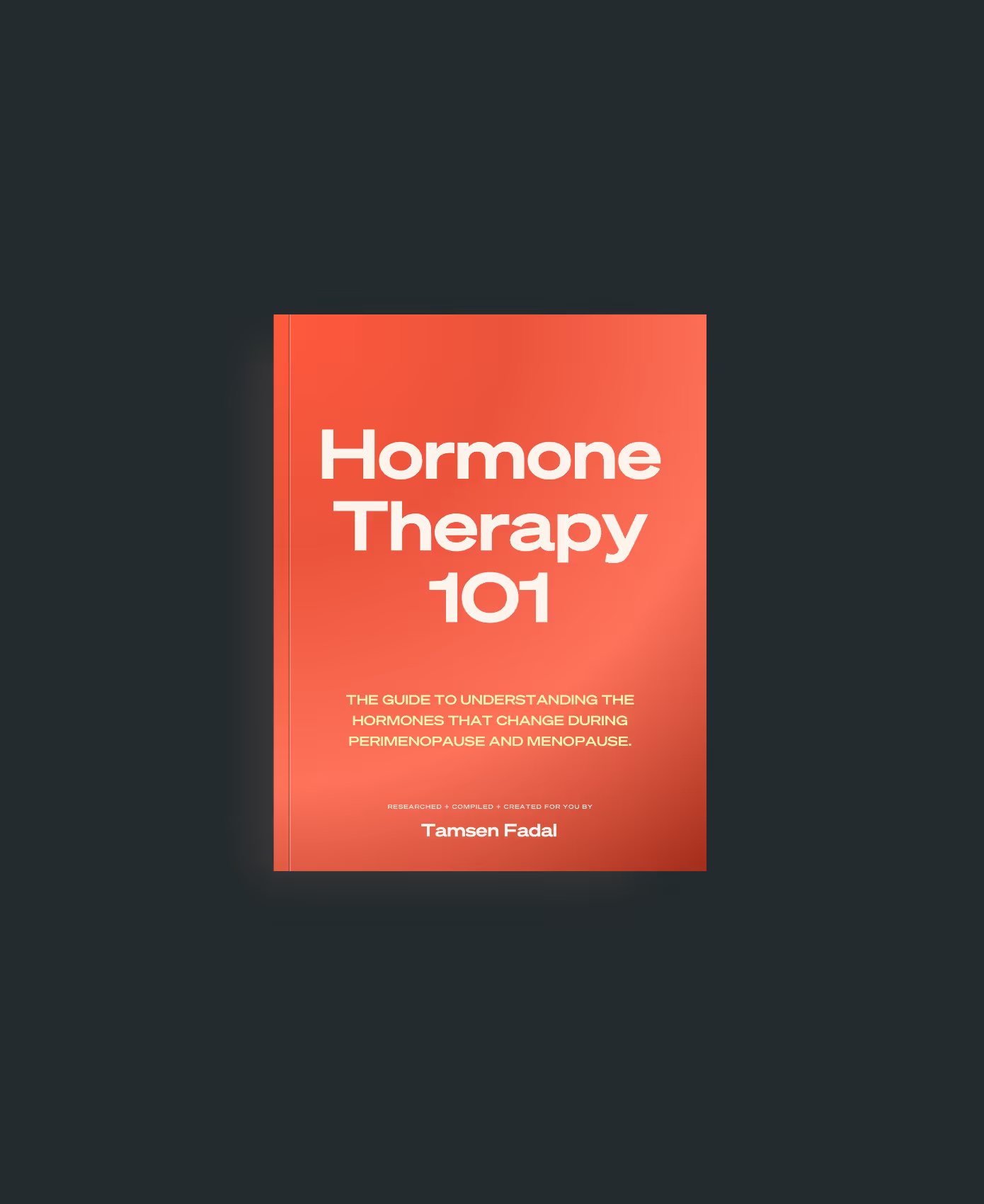
Some women who have had a hysterectomy still take it for the sleep and anxiety benefits, and that's a conversation that, again, everyone's individual. Everyone needs to have this conversation with their doctor. And there's not really a one-size answer here. Before we get back to the conversation, I put together a free one-page guide, Hormone Therapy 101. It is everything I wish I had known walking into my first conversation about hormones.
What estrogen does, what progesterone does, what testosterone does, what labs to ask for, and also the questions to bring with you to the doctor. I made it for you. It's free. It's all there in the show notes. Download it, print it out if you want to, bring it to your next appointment.
You deserve to walk in there knowing exactly what to do and also what to ask for. If you're in early perimenopause and your main symptoms are anxiety or brain spinning at night or insomnia, progesterone alone without estrogen is sometimes the right starting place because often it's the first hormone to go and fixing it can be transformative. So, you don't always need to start with estrogen. A lot of doctors will tell you that. And then there are those of you who maybe past menopause and maybe within 10 years of that final period.
And if you are eligible for hormone therapy or you're able to take it, you could start hormone therapy if you haven't already. The window matters here. Major medical organizations agree that hormone therapy started within 10 years of menopause before age 60 is generally safest and most beneficial. So, if you're in your 50s and been told it's too late, I encourage you to get a second opinion. And if you're past that time, I encourage you to talk to a doctor because different doctors may recommend different things depending on your health and where you are right now in life.
Everyone is different. I also always want to address breast cancer head on because it's the question that was on my mind initially. It's the reason I didn't take hormone therapy initially. It's what a lot of us have been led to believe. The data on progesterone and breast cancer is actually reassuring when we're talking about body identical progesterone, bioidentical.
The studies that everyone in the early 2000s were on synthetic progestogens, which we're going to talk about in a second. Bioidentical progesterone, the kind chemically identical to your body, has not been shown to meaningfully raise breast cancer risk. So, talk to your doctor about that. But, the blanket fear that gets handed out about all hormones is outdated. It's based on a study that has been reevaluated now.And, that's the 2002 study, Women's Health Initiative, we talk about a lot. A lot of great things came out of that study, but a lot of fear came out of that study, too. So, that is why we talk about it all the time. And, I think that where we are right now, the good news is is that a lot of women understand that, but there's still a lot of these nuances that can be confusing, and I completely get it. If you're deciding to take progesterone, what you're actually deciding between, there are two categories.Bioidentical progesterone and synthetic progestogens. Bioidentical progesterone And, by the way, here's what's interesting. They're all made in the lab. So, I know that, you know, when I first I was like, I just want it natural. That's all.
But, it's made in the lab. That's how they get it into the pill that you're you're taking that shouldn't sit in your medicine cabinet for a year. So, bioidentical progesterone is chemically identical to what your body makes. It's FDA-approved. It's available by prescription.
You got to get it from your doctor. And, the most common brand name is Prometrium, though there are generics, of course. It comes as a capsule. You take it at night. I was at 100 mg, now I'm at 200 mg because I was having problems sleeping after I was on it for about 2 years.
The pill in my bottle is a small little white pill, about the size Well, mine's a little bit larger now, but it was the size of a pea. Now, it's like a double pea. Bioidentical, the generic form of Prometrium, currently prescribed by my doctor, is what I take every single night. And I do not miss it, ever. Synthetic progestins are different.
They are man-made versions that act on progesterone receptors, but not identical to your own body's progesterone. I'm not going to get too detailed, again, not a doctor, not a pharmacist. But they were a standard for decades, but body-identical is now generally preferred, especially for the breast safety profile and also the side effect profile. So, that's most likely what you are being prescribed. Some women still do well on the synthetic, so that's totally fine, and some prescriptions still default to them.
So, it's worth asking your doctor specifically one way or another, like, what What am I being given? Is it bioidentical? Is it not? What's the difference to you as a expert? The form matters, too, though.
Pills are the most common, that's for sure. I don't think I've ever been on anything but the pills. There are creams, there's vaginal suppositories, IUDs that release progestin locally. We've talked about that before. The right form is going to depend on your situation, your symptoms, and what you are trying to address.
So, all those are going to be taken into into consideration by the right doctor. And let's get to that now. The most important part of this whole episode to me is the right doctor is everything. When you walk into your appointment, you want to specifically ask about bioidentical progesterone, not just progesterone. And I would use those words.
If your doctor doesn't know the difference, that's your sign. Ask them what they're recommending and why. I always do. I always want to know. I would just say, like, Is it bioidentical or synthetic?
And could you tell me the difference? What's the dose? Why am I starting on this dose? What's the form? What should I expect in the first few weeks?
Am I going to fall asleep right away after a week, or am I going to feel What is it going to do? I would also ask about interactions with anything else you take right now, including antidepressants, ADHD meds, blood pressure medications, anything. And by the way, I was on a SSRI and hormone therapy at the same time, so you know, that did not have any interaction for me, it was fine. Bring a complete list and ask point-blank about those interactions because they matter. If your symptoms are sleep and anxiety, I would tell them that for sure because that affects the timing and the dose.
Most women take it at night because it's calming, but if anxiety is your biggest symptom, you could benefit from a different approach. And again, there are other options. Like everything is not oh, I'm in menopause, I got to take hormone therapy, that's the only option. It doesn't work like that. Here's the most important thing.
If your doctor dismisses you by like, maybe it's not for you or I don't know very much about it or doesn't want to talk about hormones or says it's trending right now or says you're too young or hands you an antidepressant without discussing hormonal options, you might still need the antidepressant, but they should be discussing both. You need to break up with them. You deserve better care and I promise you it's out there and I know it sucks to break up with your doctor, but you need to get the care that you need right now. I'm going to leave some resources in the description for telehealth options because I am a big fan of telehealth and for how to find a menopause specialist doctor in your area. A few last things to watch for.
It can make you groggy in the morning. Like especially when I went up to 200 mg, I really noticed it. Your body's adjusting, that's normal. I would take it about an hour before bed. It can cause some bloating or breast tenderness in the first month, but that doesn't last forever and usually that settles down.
And talk to your doctor if it doesn't. Good news is like you can talk to your doctor on patient portals now, so you don't have to like sit on the phone and wait and wait and wait. You can have a conversation. It's so it's so much easier now than it's ever been before. If you have a history of severe PMS or PMDD, which is a more extreme form of PMS, you could have a reaction to progesterone where instead of feeling calmer, you feel more anxious or more down.
If that's you, I would not write off hormone therapy personally, but I would see if your doctor can adjust the form, the dose, the type. There are workarounds for so many things. I'm just make sure to flag that early. But if you're going to somebody you've been going to for a long time, they hopefully have already seen all that and know that. Okay, we went through a lot.
I hope this episode help with every question you could have about progesterone, at least that's kind of the top level. If you have more questions, my email is open for you to ask away. My team or I will do our best to get back to you ASAP. I cannot answer like personal medical questions. I'm not a doctor.
But email me at podcast@tamsenfadel.com and we will try to at least get you a resource or get you in the right direction. Or if you want to leave me a voicemail or text message, the number is 917-382- 4277. 917-382-4277. I do not have it memorized yet, so I'm trying to remember it. My team loves hearing from you. I love hearing from you.
We read all the reviews. And by the way, if you can leave a review, I would love that. I'd love to hear what you think. I'd love to know what you want to build out on the next episode. So, pop in a review.
It'll take like, I don't know, 15 seconds. I can't wait to hear what you thought about this one. Make sure you subscribe so you don't miss any of the upcoming episodes. We drop podcasts on Mondays and on Thursdays. We have so much coming up for you.
Some like really cool guests I'm excited about and more information like this. I'm here for you and I know we're going to make the most of this next chapter together and make it be really a great one. I love you all and I'll see you in the next episode.