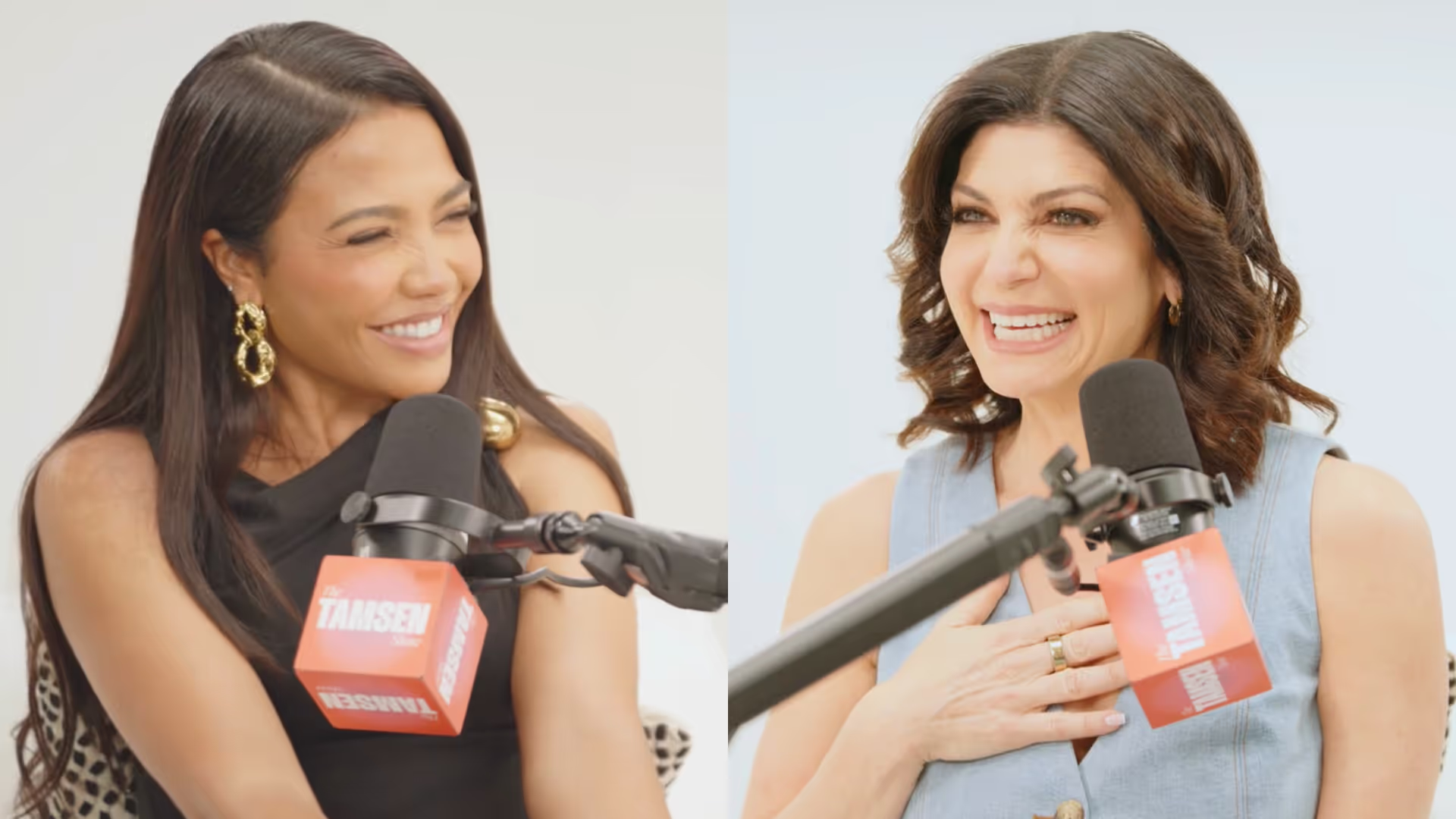
Some of the people would share their investment memos with me. On one of them, I saw the comments on the side and there were a lot of comments and the comments were, "A company like this will require an iconic CEO. I'm not sure Joanna is that." At the same time, I had another investor say, "I don't know if you're brave enough for this." What did you do when you read that? Know what? Actually very motivating.Joanna Strober is a founder and CEO of Midi Health, a company built to give every woman in perimenopause and menopause access to the care she actually deserves. She built it into a billion-dollar unicorn in a space nobody believed in. And today, she's talking about resilience, reinvention, and why the women around you change everything. You know, there's that saying you can't be what you can't see. Even though it sounds trite, it is not trite.One advantage that I had is I had a very close friend who I loved and I watched Google get started in her house, navigate politics at Google, and really change the world with what she was trying to do. Also be a great mom and a great friend. Well, welcome back everybody. You know, confidence is something we all want more of, including me. I don't care how accomplished you are, how old you are, how many rooms you've already walked into.
There's always another one that makes you pause for half a second longer than you'd like. For a long time, I thought confidence was something you either had or you didn't have. Something you worked up to or just kind of arrived at when you had checked enough boxes. But what I've learned slowly and often times the hard way is you can't think your way into more confidence. It comes from experience, from being close enough to watch how it actually works.
And most importantly, at least for me, it comes from seeing other women do it. Most of the women I know who seem confident didn't wait until they felt ready. They leaped, stumbled, stumbled again, adjusted along the way, and every time they did it, that next step got just a little bit easier. Which brings me to our guest today. Joanna Strober is the founder and CEO of Midi Health.
She is building the kind of company that changes how an entire category operates. After two decades inside private equity and venture capital and multiple successful exits, she stepped back into the arena at 52 years old. She's been recognized as a CNBC changemaker, a Forbes 50 over 50 innovator, and one of Time's 100 healthcare leaders. But what matters to me is how many chapters she's lived. What I want for you listening, I want you to hear how to walk into a room you're not totally sure you belong in and not talk yourself out of being there.
I want you to hear what it actually looks like to trust your instincts after you've been told no over and over again. After a door didn't open the way you hoped it would. I want you to hear why leaning into the women around you is not a weakness. It's often the things that makes the next chapter possible. And by the end of this episode, I think you're going to look at the world reinventing completely differently.For all of you listening, I want reinventing to become about moving forward and building on what you've already not going back to square one. Before we dive in, I'm going to be a little direct with you here. There are almost half a million of you listening to this podcast, which still blows my mind. The reviews aren't adding up. Reviews are the biggest way this show grows and reaches more women.
If you've gotten something out of this conversation, this is the easiest way to support it. If you're listening right now and haven't left a review yet, I'd love for you to do that. Okay, let's go ahead and get into our conversation with Joanna Strober. Good to see you. Thank you.
I'm very excited. I'm so excited. We've known each other for a long time now, which is great to me. Yet, I was getting ready for this interview and I was like, there are so many things that I learned about you along the way. It feels like you have lived 100 lives.
I feel like I have, actually. In in a good way, though. Where did it all start for you? Oh, interesting question. I mean, I have had five careers.
It is actually true. I've had five careers. So, A lot of it has just been an iteration and trying things and seeing if I liking them and and trying new things after that. But you knew that you were an entrepreneur since you were very very young. I found a old LinkedIn post and I want to read it to you.
Susan and I started a business in fourth grade selling spice ropes door-to-door on the Stanford campus. We used yellow and orange yarn, created braids, inserted cinnamon sticks and little satchels of spices and sold them for $5. We made a lot of money for 10 years old. We did. Oh god, such a great memory.
Tell me about Susan and where you started. Yeah, so I grew up on the Stanford campus or near the Stanford campus and it was actually a pretty magical place to grow up because I was surrounded by a lot of the most smartest people in the world and most creative people in the world and so the opportunity growing up there really felt limitless and so I felt very I felt actually I had a very privileged childhood being able to to just grow up around a lot of very successful smart people. Did you even know the word entrepreneur at 10 years old? I guess you didn't even know the word, but you knew what you were doing or maybe you knew the word. Actually, it's funny you say that.
When I grew up in Silicon Valley, I actually thought when I left to go to college I would never go back because at the time Silicon Valley was all chips and I wasn't an engineer. And so it wasn't the internet really hadn't started yet at when I when I moved back later it had, but at the when I left I actually didn't think that I was going to be there because it was a very engineering heavy culture and I wouldn't fit in. Isn't that funny to say that the the internet hadn't happened yet? For anybody listening it's like, "What do you mean the internet hadn't happened?" Hasn't it always been here? But you're right, it was a very very different place.
Silicon Valley was not a place that you would think it is now for sure. So you ended up going to law school, right? So I went to law school and I I did a good job in law school and I got a good job and then I actually had the job and I hated it. I hated You hated being a lawyer? Hated being a lawyer.
Of lawyer were you? I was just a corporate lawyer, and I was very interested in the clients and not very interested in the work that I had to do. I think I was a really terrible lawyer. I was not just a did not hate it, but I was very bad at it. Yeah.
It's a great story. I started telling all of everyone that I knew that I needed a new job. I didn't really care what it was. Along were you into being Only like a year. I was very new.
I I lasted about a year and a year and a half being a lawyer. So, I started telling everyone I knew that I needed a new job. And [snorts] Susan, who at the time was working at Intel, knew a friend from college who was starting a venture fund in Silicon Valley, and she said, "Oh, you should go work for him." I was like, "Well, I don't know anything about venture." She says, "You know, you can learn." [snorts] You can learn venture. Now, let's go back real fast to who Susan is. Yeah, so at the time Susan was, as I said, working at Intel.
She eventually became, well, she was still Susan Wojcicki, and she became the CEO of YouTube. Google was started in her house, but this was before any of that. Yeah. So, just Susan. This was just Susan.
Exactly. And so, she introduced me to her friend who was starting a venture fund in Silicon Valley, and she told him that he should hire me. And he also said, "Well, she doesn't know anything about technology. I I don't think I can hire her." But we Susan and I both convinced him to let me work for him for 6 months for free. That's a good friend.
And exactly. She was an amazing friend. And she did She convinced him, we both did, convinced him to work let me work for him for 6 months for free, and I learned the business and did a lot of hard work to get the job, and then eventually he hired me as his as his analyst. Is that where you learned that you weren't going to listen to the word no? I think my parents would probably say I have never listened to the word no, but So, you're a lawyer, you move into investing.
As an analyst, though, like way lower than being a lawyer, right? Like, the job I took was actually like an entry-level job for someone right out of college. And what did you learn walking into a room like that that you could figure it out along the way? Yeah, that you could figure it out. Exactly.
That you could figure it out. Were you like one of the only women in the room at that time? Like there were were there a lot The only woman in the room at that time? Yeah, there were very few women in in working in in venture capital. Very, very few.
So, the I was the only woman at my firm. I was the only woman in most most meetings that I went to. Historically, and still, venture is a pretty male-dominated firm and world. I mean, I can imagine what it was like then, but I have to imagine that it's changed a little, but not that much now. It's changed a little, but not that much.
But it has changed. But what was interesting for me at the time is so, as I mentioned, the internet, or you know, the consumer internet was starting, and I was using it and and learning you know, I was using it to go shopping. I was using it to do research. And so, I started thinking about companies that were going to serve people like me. And so, one of the first companies that I invested in, actually when I was pregnant, was a company called BabyCenter, which is still around today.
It's actually owned by Johnson & Johnson, so 28 years later. But I funded it. It was one of my first investments. I was pregnant. I knew how valuable this would be and that women would need this.
And I saw saw the value in it because I myself needed it. And we actually I my my fun story is I think we actually sealed that deal when I was going into labor. I gosh. I was going to say you really did things that applied to you, but that really applied to you. No, that's right.
And then another company I invested in was called Blue Nile, and Blue Nile is also still around today. Is it the diamond company? Diamond company. So, there was a huge question whether anyone would buy diamonds on the internet. I met this brilliant entrepreneur, Mark Vadon.
Mark had found a jewelry store in Seattle, and that store had started selling diamonds online. And they couldn't keep up with the demand of selling diamonds online for a discount. And so, he ended up buying the diamond store and we invested in that diamond store. Pretty fast grew to being, you know, one of the largest sellers of diamonds in the world. But it was really about finding needs, right?
Real needs and solving those. Which brings you to where you are today. But before we we go to Mitty, where did you go next? So you're an analyst, you're investing, everything was applying to you whether, you know, you were a mom to be or now a new mom. Diamonds, I mean that's every girl's, you know, whatever, best friend.
Where did you go after that? So, you know, it's not all ups, right? All careers I suppose have They all have They You know what? It's not a career if it doesn't have ups and downs. No, that's exactly right.
Where That's Those are the areas we learn. That's right. So I actually I lost my job at at that venture fund during the dot-com bust and I I lost my job. I had just had a second baby. It was actually a pretty stressful time.
Sure. I ended up working for a nonprofit for a little while and then getting a job at a private equity fund. I found out that I didn't love working at a private equity fund. Private equity funds are much more about saving money than growing money and that was not a great fit for me. And then I ended up starting a a joining a a larger fund and actually starting a fund of funds business where we would invest in private equity funds and venture capital funds.
I was there for quite a while. It was actually a great job but it was not my passion. And so I When digital health came around, I I thought maybe that would be my passion. I got very excited thinking about the phone and thinking about the power of the phone to help people make better choices. So I actually ended up leaving my job there to start a company targeted at childhood obesity.
We saw that there were companies getting started to help adults with weight issues but no one had started one to help kids. And so, we ended up licensing the Stanford pediatric weight control program and turning it into a platform to help kids lose weight. You said you had like the downs in that time. While you were in that time of, you know, the like it wasn't where where you wanted to be, were you learning along the way there? Like how did you pull yourself out of that part?
Cuz I think that sometimes that's where people get stuck and they feel like they don't know what they want to do next and you kind of kept going to figure it out and and you might have heard some no's along the way, but it seems like in every one of these choices you've made, you've listened to your gut, you've either been researching all along or you've just been paying attention to what's happening out there with you know, peers or people around you. For me, it was actually very helpful that I never gave myself the opportunity to quit. Mhm. One of my favorite sayings is when you get tired, rest, don't quit. And for me, that is really motivating to think about.
Like there was opportunities that were really hard, right? You're losing your job when you have two young kids at home. It's hard to go look for a new job, but I never really gave myself the option of quitting. It was always, okay, what are you going to do next and what are you going to find to do next? What do you What is interesting to you?
What are you excited to do? And that was very motivating to me. When you look at digital health and I guess during that time, now you've got kids and you're you're in that space looking at, you know, at health a little bit differently, I assume cuz it's not just about you, it's also about the kids. That's right. It was very exciting actually to start the company thinking you could make I mean, the great thing about digital health in particular is that you're you get to build a company and do something that really helps people and I you know, honestly, when I think about that company, the the obesity crisis is a big issue for children and so it was very motivating to be able to do something that would that would help people.
And so, what was the name of that company? Kurbo Health. What did it feel like the first time you realized people are using it and it's success Like I don't know how that starts. Like how does that start? You say, "Okay, we got a digital health company.
Now, we got to wait for them to come or go find people that are going to be using it." How does that work? Yeah, I mean, we started putting out notes on on LinkedIn and on Facebook and Instagram, do you have a child that would like to learn healthier eating habits? We're here for you. And yeah, you start getting one and then another one. It's very nerve-wracking to start with those first people, but I I have to imagine.
And are there you know, I'm sure you get people's feedback all the time or critiques all the time. There's critics of almost everything out there. You know, you could find a critic of of just about anything and you don't have to look very hard. What did you do to to to sail through that and deal with that? I mean, a lot of it is asking for feedback, right?
And you have to be super open-minded to getting the feedback when it's positive or negative. There's that saying that feedback is a gift. It doesn't always feel like a gift, even though it is. I know. Trust me, I know. [gasps] so, yeah, you need the feedback.
You need to hear from people of what they like and what they don't like and you got to figure out what what to take and what, you know, what what what is the right feedback to evolve from. And I guess how to respond to it, too. Whether you're responding by changing something or you're responding verbally. One of the hardest things with that company in particular is that parents wanted to help their children lose weight. Right.
But they didn't want you to tell their children that they wanted them to lose weight because weight is such a heavy term in our society that if we put on the website, help lose weight, the parents would come, but they would never show their children. Yeah. And so, we spent years trying to figure out the right messaging that would make both parents and children comfortable. So, then we got to learn healthier habits, which made everyone comfortable, but was much less interesting. But but people still came, right?
Came, but it was interesting, right? So, we ended up in a healthier habit cat- category rather than losing weight because weight has so many hard terms in our Yeah. In our ecosystem of health and no one wanted to hear that they had a weight problem and so you didn't you couldn't tell people they had a weight problem. Which is really interesting now I think because if we look at two or three years ago it you know healthy habits is everything we were talking about and now with GLP-1s we're more comfortable it seems to me anyway more comfortable using the word weight. I think it's changed a lot.
Yes. Now where are you where are you at this point with Kurbo? So we sold Kurbo to Weight Watchers which seemed like the perfect exit for us because we could only grow it so big. It was clear we were never going to grow it to be a huge company and we knew that a lot of women who struggled with weight would have children who had who also struggled with weight. So Weight Watchers seemed like the perfect place and we were very excited to sell the company to them and first we kept it very quiet and we didn't tell anyone.
And it was going really well. Honestly we were still getting lots of kudos in the press. People really liked us. It was we were growing to take thou tons of thousands of kids. Wow.
And then this was at a period when health at any size was a big deal Mhm. And Weight Watchers made the announcement that they had bought the company. And [snorts] overnight we turned from something that was helping children to something that was really destroying the lives of children in America. Because people thought we were putting kids on diets and that we were going to create eating disorders. So you woke up one morning with this success of this the company to what do we do now?
I spent 15 minutes as like most hated woman in America. Did you really? Well I didn't hate you cuz I didn't know you. So I just want you to know that. I did.
I I hid and my kids would come and read me the texts and I yes I was literally in hiding. I couldn't believe it. Like everyone had decided that I know I haven't really talked about it but everyone decided that the helping kids lose weight was the equivalent of giving them eating disorders which is just not true and the science is not true and the CDC had approved our product the we had you know a lot of papers written about it talking about how effective it was but this was a time in place or you know a time in history when there was just a lot of backlash against weight and so the the New York Times published two articles against our program. Can you imagine? Two articles.
This is the same New York Times. Yes, that talks about the childhood obesity epidemic all the time. 40% of all kids are obese. And then they publish these articles how helping obese kids lose weight is bad. What did you What How did you I mean you know we've talked about like our shared critics but that's a whole different level. I mean feeling What did you do?
Did you really hide? Did you just not I was just told to hide it would blow over and they were right. And honestly we got more downloads of the product. People did still want to help their kids lose weight but I learned how quickly the press can turn against you and how quickly things can alter and it was it was definitely like living in a tidal wave. What did that teach you because I think that you know now in in in where we are a lot of people experience that whether it's business or whether it's personal.
I mean do you feel like at this point hey I I've I already went through that that worst thing like I can handle anything. It's still really hard when you're handling it. So it's funny when you say you can handle everything. I won't I won't give you I won't take all that on you. I don't think of it as like oh I'd love to do that again.
NO NO NO NO OH DON'T DON'T EVEN say that out loud. But I I but I think you learn lessons along the way of how to It's it's you know, you get a thick skin, right? You you get a thicker skin. It's just not always how you want to grow it. No, that's right.
We did get a thicker skin, but there was a lot of pain. It really was very painful for the team. I was really proud of the team. They had really built something that was special and to be criticized so heavily was actually very hard for them. Of course.
There was a lot of like, are we doing everything right? And we looked at the data over and over again. And now I think we've been pretty vindicated. There's actually been studies that show that help helping obese kids lose weight does not contribute to eating disorders. But you know, it was a time and place.
It's a very different I mean, we can talk about it, but it's a very time and different time and place than now. I think it is, too. I mean, now things have really changed. You think it's because of social media and now where we've seen the internet go, or where we see everyone's, you know, got different opinions of things. Why do you think it's so different now?
So, I think with particularly with regard to the GLP-1s, the or the weight loss medications, what it's showing is that people are not necessarily making choices to overeat. And so, I think there's a lot less blame now on people who are experiencing weight issues when they realize it's a metabolism issue. And so, now that we know there is a solution that is so straightforward that has less blame, I actually think that has contributed to changing the conversation. Yeah, because we're not talking about willpower now. We're not saying you're weak because you can't do that.
We're saying there's actually a scientific reason behind it. And you know, we saw that at Kerbo. It was so interesting because there were kids in the same family. One of them would be very underweight, and the other one would be overweight. And their parents were serving them the same food, right?And they were living in the same household. And so, it was clearly a meta metabolic issue, not a good parenting, bad parenting issue, or a lack of willpower issue. You were really before your time with that then. When do think about of of the concept of the why? The concept of the why.
Yeah. Okay, so now you're at Weight Watchers and then how did you get to where you are? How many years ago is that about? I think it was 2000 18 to 21. Okay.
And now you're going to take a step into where you are now, right? Yeah. So okay, so here's what happened. So when I was at Weight Watchers, I spent the first year integrating Curvo into the company. Mhm.
And then I started doing some business development work for them because I just got interested in how I could help Weight Watchers expand. And what was happening is that they had a scientific advisory board and everyone on the scientific advisory board was advising Novo and Lilly on their new Weight Watchers drugs. So I got really interested in those drugs and I decided that Weight Watchers should go into doing this. And this was before they were popular. Mhm.
It was very early in the in the evolution of these drugs. Do you watch I've I'm going to have to ask you this, so don't let me forget. I want to know like what you read, what you do in a given day, what your you know what that looks like for you to keep the information. News. I just love consuming news.
Me just ask you that now. So tell me what what does your day look like? A regular day for you? I spend a lot of time reading news. I love reading Axios, I love reading the New York Times, I love reading Slate and Atlantic.
I just I love reading news. So I've been doing news for 30 years. Exactly. [gasps] but is that just to kind of like what are you looking for? You're looking for trends? Happening, what's going on in the world.
I'm just fascinated by what's going on in the world. Do you wake up in the morning and do that first? First thing. I love it. Okay, I always like to know habits of highly successful people.
There was a book. Sure this is a highly successful habit, but it is mine. Is. I think it is. What Ira does every morning for 2 hours he reads like everything there is and so then I just go what's going on in the world today?
Cuz I spent a long time in the news so I needed a little bit of a rest from it. Okay, so now you are doing okay, so I I very interested in this and I actually pre the GLP-1 phase, put together a whole business plan for the company to go into weight loss meds. And what I learned how to do a national set up set up a national clinic and I learned how to really all the different things that would be required in order to set up a national weight loss program with medications. And I tried to get the company to come along with me. But it was just at the time too hard of a swing for them because they're a behavior change company.
They're they're habits. They're behavior change habits, the cards, all those things. So what do you do when you're a behavior change company and all of a sudden there's this medication out there that could make it so behavior change is not relevant? Welcome to 2026. Right?
Okay. So they turned me down. And but I was like, wait, I'm I this is just too exciting. And but also when I was there I had learned how menopause was such an interesting part of their discussions and how people were bringing up menopause all the time and same time I was having all of my issues trying to get access to good menopause care and so that journey was just everything kind of aligned and I was like, I'm going to quit and I'm going to go start a menopause company. What year was this now? 2021.
What's your story because I know I've heard it but I'd like people to hear it because there is one thing in particular I think that was always stuck out to me about your story. But I'm going to I'm going to let you tell it and then if I don't hear it I want to bring it up. So I had gone through issues a few years earlier where I was experiencing a lot of of stuff. I don't know what you call it, stuff. It's It's very menopause stuff, right?
But I was feeling angry a lot. I was having mood changes. I was having the hot sweats and waking up in the middle of the night, not sleeping, anxiety. And I had the classic experience of going to my primary care doctor and the primary care doctor basically said, "Okay, you're not sleeping. Let's go get a sleep study.
And you're having anxiety, maybe you need therapy and we can give you an SSRI to help you with that. And you should go to a marriage therapist. And maybe that will help you guys in your marriage and what were my other suggestions? I mean it was just a whole plethora of suggestions. Yeah.
I did try the SSRI. It was terrible for me. I immediately went off. I could not handle it. And it was Yeah, it was really hard and and there were really no no good advice.
So And you're in the height of your career. You're working You're working every day, leading teams, being a mom, doing life at the same time and and suffering. Yeah, right. For a long time. And so finally I was told about a doctor in San Francisco that I could go to and I drove an hour up there to go see her and sat in her beautiful office in I start crying and you know, she said, "Okay, well, why don't we try these two medications?" And I didn't very little about estrogen and progesterone.
I really hadn't hadn't spent any time looking. I hadn't Googled perimenopause. Like now that I think about it, it's pretty crazy, right? But I never Googled perimenopause and I hadn't thought about it in those terms. So yeah, pretty quickly my whole life got better very fast and you know, I was really I was very happy how much better I felt, but I did have a lot of anger about the fact that it had taken me so much time to get the right to get the right care.
And this is probably before you're hearing one story after another after another. You mentioned when we were in San Francisco last year when we were sitting on a panel together and you had talked about marriage counseling and how every marriage counselor should be trained on this. And Yes. As a year's gone by and I remember that very well. We're coming up in a year and and you and I have collaborated on a men's guide.
You're so right about that. You're so right about the fact that everybody has to be trained in this space, especially a counselor that's sitting there week after week with a couple, and it looks like the woman's got the problems and the guy's just confused, which is really interesting. I think it is really interesting. And I've never forgotten that. And I I just I really do think there is something to that that is a is a much bigger, you know, a much bigger part of this conversation.
So, you're angry, you have gotten some You're feeling better, though. You're on estrogen and progesterone, and you come back home and say, "I think I'm going to start a company." Is that what happened? Pretty close. I mean, it took a little while. Actually, I really was enjoying working at Weight Watchers, but a lot of just things came together.
So, there were a few things that were really relevant. First is that COVID happened, and the laws changed. So, what was really interesting to me was how you could offer the type of care that I had number one on remotely, so you wouldn't have to drive an hour to go get it, but number two, covered by insurance. When did that law change that you would get it? So, that was around 2021.
Okay. So, that And initially, it wasn't clear that the law would stay changed, right? But, when COVID happened, then everything started changing in with regard to reimbursement. So, what was interesting is that it became very clear that you could take a great care provider, put them online, and get their care covered by insurance. And that was not possible before this.
And at the same time, now there were pharmacies, so we could also get medication sent to your house. So, just a lot of things came together with regard to technology that would enable us to So, it was both technology and law changes that would enable us to to start this company. And what's interesting is I guess I didn't realize And I guess I don't think about it anymore because we're so used to telehealth now, right? But it really was during that time it was kind of unheard of like maybe you'd have a call with your doctor but you definitely had to still go in and I know that when you and I sat down and had lunch for the very first time I said well how do you where did you start the company? Where did you start the company?
Where did you start Midi Health? In my dad's office. So my dad had a had an office he was a doctor and he was able to teach us a lot. So he he was actually he was an orthopedic surgeon but he he was able to teach us how to set up a medical practice, how to collect insurance, like a lot of the basics we actually learned from him. That's amazing.
And he got himself initially he got himself licensed in all 50 states so that he could help us to to expand the company. That's incredible. That's really special. It's really special. So you decide that this is what you're going to do.
What is the next step that you have to do once you now you're probably hearing stories of women. What was the first thing you had to do though was it going after the insurance companies or what did you where did you begin? So the first thing we did was a pilot. So we recruited two extraordinary doctors, one OBGYN and one internal medicine specialist. And we said, "Okay, we're going to go out and we're going to offer free care to 150 women for 3 months.
And we're going to find out from them what they'd be looking for from a telehealth provider. What what type of technology would work, what type of onboarding they would like. Like basically every part of the journey we were going to map out. [snorts] Did you want to choose I'll give you an example. We eventually had a a questionnaire where you said I want to take a supplement route or I want to take a hormone route. Oh, yeah.
And it turns out everyone wanted both. I believe that. So we could we had to change that, right? We couldn't do you couldn't do one route or the other you had to do both. But like that was just one example of all the different things that that learned.
Is that like a focus group really? Is that is that Well, it was kind of a pilot. It's like a I mean, it's kind of a focus group, but so it was 150 people. We gave them care for 3 months. And at the end, we said, "Okay, we're going to go take all this data.
We're done. We're going to go figure out what to do next." And you know what? 148 of them called and said, "Well, you can't stop because we don't have any place else to go." Wow. Yeah. And so that's really when we realized that we had something that this type of care that combined OBGYN care with internal medicine care was something that's very different. Usually, if you go to an OBGYN, they'll give you one type of medication.
If you go to Mhm. Internal medicine, they'll give you a different type of medication. We needed to combine both. And then, we went out to other specialists as well. We went out to bone specialists, to cardiovascular specialists, to endocrinologists.
And we realized we needed to get all of their information into protocols. Mhm. So then, we actually spent the next 6 months basically writing care protocols. So we wrote 50 care protocols for all the different symptoms that women would experience. And in those care protocols, we incorporated all the different types of care.
Every one of them would have a hormonal care, a prescription non-hormone care, and supplements. So you could then choose what you wanted, right? Instead of telling people they had to choose one place to get one and someplace else, we would put it all into our care protocols. We also then figured out blood testing and what blood tests were appropriate and making sure that we would get blood testing for any of the things. We started looking at genetic testing if someone hadn't been genetic tested.
And then, we found out that a whole lot of the women who were coming to us didn't even have a primary care doctor. They weren't up to date on their vaccines. They weren't up to date on their Pap smears and their mammograms and their colonoscopies. So we realized we had to put all that into the care as well. So we started writing care protocols and getting more feedback from more women.
And that was really how the how it evolved. It was very much a collaborative effort with the women we were taking care of and the doctors to make sure that we could create something really special. You're you're a layer and layer and layer every time there's something new. Yeah. When did you say like, "Okay, this is big enough to be a company now, and what are we calling it?" Well, so what are we calling it came later.
I think at some point, and actually it gets back to Susan, and at some point this was over COVID, I went over to her house, and I was like, "Susan, I think this should This should be a company." you know, and she was she was running YouTube, and she was we we spent [snorts] a few hours mapping it out, and we sat at her kitchen table, and we just were like, "Okay, what would this look like, and what would this look like, and you know, how would we think about these different components of it?" And then you know, it was really helpful at the end of it she's like, "Yeah, it should be a company. It's a good idea." Wow, that's that's a that's like a stamp of approval, a blessing. And so, when did you come up with the name? You decide it's going to be a company, you map name came later, actually. So, we went first and then we went to go raise some money.
So, we actually got a few million dollars from angel investors, and then we actually hired a naming firm. So, we hired a Red Antler, which is a naming firm here in New York City, and we spent all you know, a while looking at what names, and decided that we were not a menopause company, we were a midlife company. And so, Midi was the perfect name for a midlife company. It is, it's a brilliant name. It's it's short, it's brilliant, it's easy to remember.
So, when you went to raise money, so the first the first round of raising money, that's angel investors, and then then you get started, and then what what happens next? Cuz I don't really know that process. So, you know, angel investors or funds can invest in you initially. Quite honestly, every fund turned us down. Wait, what?
It wasn't it wasn't as though we like went out and we had all these funds saying, "Oh, this is interesting." In 2021, no one was talking about menopause. It was not a thing, and It was not a thing. It was really not a thing. No. And most people did turn us down, and they just said it wasn't a big enough market.
It They're like very clearly not a big enough market that women didn't need this type of care. They were very nice about it. You know, I never really felt insulted. It was just when you have to convince people with professional dollars, you have to convince them to invest in you as opposed to something else. And wasn't clear this was going to be a good idea.
Like it was clear to us. But it wasn't clear. Yes. Deterred. You know, I wasn't, but I I just felt so exciting.
And it was so clear to me that this was a big market, but I clearly initially was not able to make a successful pitch to others. We got turned down a lot. And you know, I think about those turn downs. And honestly, what I learned from them is that a turn down is actually a not yet. Because it's actually it was about relationship building.
And so a number of those firms that I talked to at the very beginning, they did say no. And we ended up mostly getting money from angels, you know, from individuals. Not I mean, angels are funny term, right? Just individuals who supported us and who were excited about what we were doing. And it's very small checks.
But we had enough to get started and start building. And then we got some users. And then we would go out and get a little bit more money. And we were able to show a little bit more progress. And then all along I was actually bringing along some of the larger investors and saying, "Look, we have 100 people a week coming to us.
Isn't this cool? Very nice. We've got 7 of those. I just got an insurance contract in California. Isn't this cool?
And I would just keep updating them. And that was a process of showing, "Look, it's working. Getting more traction. Getting more users. People want this." And then helping the investors to come along.
So many of the investors turned us down one time, two times, three times, and then they eventually invested. It's just such an incredible story. And I guess it's even more incredible to me because I've watched you for such a long time. I think we met in I can't remember what year. It was a while ago.
While ago. We were very early. Maybe 4 years ago? Was that possible? And I remember you were in your sneakers.
We had had lunch and you're like, "I'm going to go talk to Google." And I was like, "You are?" Like after this lunch? Like you're just going to go talk to Google? Like I had no It was just such a It was cuz I was a news anchor at the time. So it was such a like so foreign to me to like even be thinking like where Where's Google? You know, I got I had no idea.
But I knew I did know and we had talked about that and share that menopause was part of it and then like there's this whole 360 around it that is all part, you know, part of this conversation of midlife. Okay, so now you've got some money to to get started. You've got some people that are using Midi. And then when did you decide I mean at some point I guess those two things have to level out like you have to move to the next level and really really get money. So now here we are 5 years later.
Yeah. Can you talk about where you are today? I'm going to tell you one good story though. And then I'll get back to your story. I love your stories.
So one thing that happened that I learned from is some of the people would share their investment memos with me. And [snorts] so and I would help write them and you know, we'd go back and forth and then on one of them I saw the comments on the side. Okay. And there were a lot of comments. And the comments were "A company like this will require an iconic CEO.
I'm not sure Joanna is that." What did you do when you read that? You know what? Actually very motivating. Yeah. You know, initially I was a little taken aback.
I was like, "Mhm, okay." But then I thought about it and I was like, you know, well, I have to prove that that I can be. Right? And they were like, "Here's some examples of iconic CEOs. Can Joanna be like that?" They weren't saying I couldn't. They just didn't believe yet that I could be.
What's an iconic CEO? It's a name a name brand that goes along with it. The world, big profiles. You know, to build these companies you have to really be out there. Not everyone wants to do that.
And I think they were actually asking, "Do you really want to do that? Does she really want to do that?" Yep. And I didn't really know. I wasn't thinking that I wanted to be a big persona. I was thinking I wanted to start a big company.
But then I had another at the same time I had another investor say, "I don't know if you're brave enough for this." Huh. And What? Like it was such good feedback, honestly. Really good feedback. Like, to build a company like this, to be brave enough to say that people should give us all this money, you do have to you do have to be brave.
You have to be really loud. You have to not be shy of press and not be shy of feedback and of positive and negative feedback. And so actually these comments, although they were they were a little devastating at the time, were very helpful. Well, they're devastating if you decide to step back and and absorb them. If you decide to go, "Okay, what do I do with them?" which is exactly what you did.
So, where did you start with like proving that you're brave enough to start with the brave? What what how did you feel like you needed to prove that? Yeah, so I mean, I started doing some Instagram posts. I'd never done an Instagram post before. It wasn't what I wanted how I envisioned myself.
I did start doing a lot of LinkedIn. I started writing a lot. I enjoy writing, and so I started writing a lot on LinkedIn, writing blog posts. We started having menopause Tupperware parties at my house. What's a menopause Tupperware party?
I was never I was never invited to a menopause Tupperware party. These were very early on, right? We were going to start That's how we started recruiting patients was we would have we called them our menopause Tupperware parties, and we would have parties at the house, and we'd invite 30 women, and we'd have our doctors come and just talk about menopause and talk about what you can do about menopause. [snorts] And then we found I found friends to host us in different cities. So, we had a menopause party in New York and in DC and in Boston and just talked about menopause and talked honestly about what you could do to feel better, but also what were the symptoms, and it was very grassroots. I mean, it was a very grassroots effort initially to basically just start educating.
Don't you think this whole menopause movement is a grassroots effort for us? It's great. But it's incredible to say you were doing grassroots to where it is today. Yeah, exactly. And that probably is more exciting part.
It [snorts] is exciting. It's different now, but we still love the parties. I mean, we had still had a bunch this summer at my house. It's wonderful to have people come and really give you feedback and have real discussions with them. That's actually really rewarding.
It is really important I have to imagine because it keeps you it makes you that iconic CEO, right? That iconic leader of the company. But still wearing tennis shoes. But still wearing your tennis shoes. I remember those I remember I don't know why I remember that in my head.
I remember you were like, "Okay, I got to go to Google." And that was all I remember and I went, "She's like awesome. I don't I mean, she's awesome." Well, where are you today now? Let's talk about this. 5 years later, where where are you with regard to fundraising and with regard to who the company is? It's very exciting. So, we have almost 500 people on our platform who are providing care.
So, one of the things that's actually most important to me is being a great employer. I want to give the women who are working for us incredible career opportunities and make it a great place to work. So, we're actively recruiting and hiring and training an army of great providers to be on our platform. We are taking care of over 25,000 women a week. Oh my gosh.
So, we are seeing a lot of patients in all 50 states covered by insurance. We have national contracts with all the big insurance companies, Cigna, Aetna, United Healthcare, Anthem. We have a lot of the Blues. So, we're we are very focused on democratizing access to great health. We believe that every woman deserves really high-quality care covered by insurance.
So, that is what we are what we're focused on doing. And you know, I think we'll be at you know, we're we're growing really fast. So, it's a lot of operational challenges. You know, we are not without our operational challenges, but mostly we're doing a really good job and we're serving a lot of patients and and taking care of them. And then, you know, that the type of care that we started with was pretty focused on menopause and perimenopause.
What we found is that so when many women didn't have a primary care provider that we ended up doing a lot broader care than we originally thought because we had to offer, as I mentioned earlier, the mammograms, the colonoscopies, getting people blood tests, finding out they have whether we have cancer and we then we refer them to partners who around the country who can take care of their cancer, but also we find out they have diabetes, we start taking care of the diabetes. Wow. For a while we were referring people out, but then we didn't have a place to refer them to. The shortage of health care in this country is so severe that it's not like someone could come in and say, "Oh, I have a neurologist and you know, go go see a neurologist." We often couldn't find a neurologist. So then we would find a neurologist on our platform to come consult so we didn't have to send them out into the wild.
Right. So when people need in-person care, we absolutely get them in-person care and we're connected to that all over the country, but we also have a number of providers on our platform who can now provide the virtual care. It's incredible and it I guess you with all new patients in the influx of those numbers that you're talking about, you figure out what what you what you need next, right? That's right. You know, a lot of people say constantly like, "Oh my gosh, my doctor went concierge.
I I can't you know, I don't know where to go." I mean, you are filling that need by making it accessible to women and I think that it's it's incredible when I look at the numbers of of people that you're you're bringing in when you started at 150. Yeah, exactly. [gasps] Do you go back and you ever look at that from time to time because I know you know, a lot of the conversation has changed in this past 5 years. Yes, you know, it's interesting cuz even when we started honestly like weight loss medications, right? The GLP-1s were not popular. Yeah.
And one of our early patients actually she told me she reminded me of a great story the other day. She was in our pilot, the 150, and I was in Los Angeles meeting with one of our doctors, and that doctor said about our patient, she should be on a GLP-1. And she I brought it home to her in a ice cooler. Oh my god. So that she could take it.
We couldn't get them, right? It was almost impossible to get them at the time. So I literally brought them back in an ice cooler. And We need a picture of that. That's iconic. [gasps] It was like bringing home a, you know, contraband.
Right. Right. But honestly, the weight loss medications were not very well prescribed at the time. [clears throat] We started prescribing them pretty early. And then we also got we were much more open about who needed them. So initially, it was only 30 BMI or over.Mhm. And we saw a lot of women who were 27 BMI, 28 BMI, who clearly should have been eligible for the medications. And so, we very early realized that we needed to change those. So we were we're very aggressive in terms of changing the care to what we think is appropriate, not necessarily on guidelines written by drug companies, but instead guidelines recommended by our doctors. Mhm.And that's made a huge difference, I can imagine. And also normalizing that part of the conversation, so women are not hiding it and feel shameful or feel like they shouldn't be talking about it. You've been really open about it to help normalize that part of the conversation, too. Right. So when you go in and, you know, you were saying that at first people were saying, "Oh, I don't know, there's no care for that.There's no market for this." Like, you know, look at me now. I feel like that's what that's what you can say. But when you walk in there to do a pitch or to to raise to do a raise, what is the reaction now that you get versus what you got in 2021? Well, it's funny. I never think look at me now, cuz I always think about what's next.Saying like I'm thinking Yeah, that's true. But I'm just thinking like menopause not being a thing. What do you think has happened? We could have a conversation about this. It is crazy what has happened in the last few years.In the menopause conversation, right? Like Now there are menopause influencers. Who knew, right? A few years ago there were no menopause influencers. None.Like it was perimenopause was barely talked about. So you're right, it's been a grassroots effort and it's been a effort of women looking for better care. And what I think about is it's a little bit from Field of Dreams, if you build it they will come. So true. Right?But it's also you had to get the money to build it. Mhm. And so otherwise it's just a great idea. That's right. That's right.And so what's interesting to me is women now have access to capital that they can invest in ideas that are a good idea that they know that women will come if they build it. Does that make sense? So I think that like that is the really interesting thing to me. There are great ideas that could not have gotten funding because only a certain percentage of society had access to capital. Yes.Now that there is more capital, we can create things that really can make a big difference in society and they're getting the capital. So you know, we have raised a lot of money. I mean, this past week we announced that we had raised another hundred million dollars. So now we've raised two hundred fifty million dollars. Wow.It's a lot of money. It's a lot of money. And Is that intimidating? It is intimidating. I mean, I'm trying to think of how many zeros it has.It is It is intimidating, but we are we're using it to build an infrastructure so we can treat millions of women. Mhm. And that is the goal is to build out a a technology infrastructure, to build out a platform that can support really high quality care for millions of women. And I think that's where the money's going and you know, it's a it's a really worthwhile effort to do that. Yeah.And you know, my job right now is to get to profitability so that we don't have to keep on raising money and we become self-sustaining and I think we'll be able to do that so that we can be here for 20 years and 50 years and keep providing care generation to generation. Yeah, exactly. You wake up every morning knowing your why. Yes. What's your why?You know, I am so lucky to get to do this company. And so my why is very much this is an opportunity that is given to very few people. Don't waste it. And that is very motivating to me. And what's next?We're just going to keep building. So the company although I'm really proud of 25,000 women a week, it's very small, right? That's is that small? What what is a Think about how many women there are in this country. There are We have insurance coverage right now for over 50 million women.So those women can go in person. We're not competing with their in-person provider. Most of them don't have More than 50% of them don't have an in-person provider that they can go to regularly. That's really important. Say that again.Because that that is always a question like do I do I go to telehealth or my provider? And most women don't A lot of women don't have that option, correct? They don't have either one of those lanes. So getting into a primary care provider can take months and months and months, right? And [clears throat] then that's because as you mentioned earlier, often they're going concierge.They are not well paid by insurance companies, so it's not a growing field. My understanding is we're expecting to have over a shortage of over 200,000 primary care providers over the next few years. A lot of primary care providers are retiring. So we mostly not competing with a great primary care provider that someone has. We're we're competing with nothing.We're competing with no care. Right. And so the you know, what we want to do is be a a really great alternative, not a mediocre alternative, but a great alternative. And then to be your companion to good care. So if you have a primary care provider, keep going to them, but you can come to us as well.I want to go back to Susan for a moment because she was a person that said to you, "This is a great idea for a company." Yeah. And I know that she saw some of it, but has you know has not seen all of it because sadly you lost her not too long ago. When you think about what you've built and you think about that friendship and how pivotal that friendship has been for your whole life really, right? How old were you when you when you two met? 10 years old? Yes.Talk about that and how important relationships are cuz you brought up relationships a few times and I I think that sometimes we see men out on the golf course, you know, doing whatever they do, but I think these female relationships are are rooted in in in take root and really just make can make all the difference in the world. So, I think one thing that's really important is to see people succeed and know that it's possible. And I think that you know, there's that saying you can't be what you can't see, but I think that's a very even though it sounds trite, it is not trite. It's not trite. And so, one advantage that I had is I had a very close friend who I loved and I watched you know, I watched Google get started in her house, but then I watched her navigate politics at Google and really change the world with what she was trying to do at at YouTube and also be a great mom and a great friend.And so, growing something that was world-changing what felt possible to me because I saw her do it. Wow. And right? And so, that to me is you know, I watched her and we had dinner all the time and when I walked she wasn't superwoman. She was a normal woman who was really good at her job, but also just a normal person.And so, watching her do that is was was and is incredibly motivating to me. So, I mean, she she was a normal person who became one of the most important people in the world and built something that has truly been world-changing. So, seeing someone do that kind of gives you the idea that you can do it, too. Yes. In a weird way, it's like it's very motivating and it's very helpful to see success like that.
And so, I think, you know, understanding what she went through, it wasn't all easy and I know it wasn't all easy and but yet she also persevered and kept going. And and so, seeing that as a model was was very helpful and I do I think about her all the time. Both in terms of some of it is very basic. I mean, Susan found out that she had stage four lung cancer after it had already expanded to her hip. So, I am really big fan of preventive screenings.
I you know, one thing that MIDI does is really push women to get their colonoscopies, get your breast cancer screenings, don't wait because if you don't find out until you have stage four, it's much much harder to treat. So, you know, basically thinking about preventive care is is something that's that's really important to me and that is in part motivated by her. But [snorts] I I do sometimes talk to her and I'm like, "Susan, what would you think about this?" And I hear her answers. I bet. That that's a life that's one of those lifelong friendships that a lot of people never get to experience.
And I know that was a it was a tremendous loss for for the world, but especially for you and people who were close to her. Yeah. And I'm glad that you talked to her and I'm glad that that's with you. And I'm glad that that's stayed with you. I know that confidence isn't always easy and I know we throw those words around a lot.
And for somebody looking at you from the outside, you know, they might go, "She's just so confident. She walks into a room. She does this. She does that." But I've been with you different times where you said, "I've walked into a room and they looked at me like I was like had three heads. Like, what am I going to you know, and what am I doing?
What do What do you want money for? Where do you get that confidence on the days that you're like, "I I know. Do I belong in this room still?" Or do you not have those days anymore? I definitely still have those days. I think that you know, obviously confidence begets confidence to some extent and you know, you you could what or fake it till you make it.
Those are all true. I believe that for me at this point you know, I see that it's working and so now it's really my job to make it continue working. And so that is the most important thing and making sure that I get to make this into a sustainable long-term business. So because that is so motivating to me, it kind of makes you have confidence. It means you got to show up and you got to keep going and you got to keep working on it.
And that I think that actually begets confidence. Just knowing that you have such a big responsibility. What do you get asked all the time by younger women? Because right now Midi is a unicorn. Correct?
Is that the right How do you How do you say it? Tell me Tell me how you say these words. Oh, funny. Midi, I'm joking with my children. I'm like it's the first menopausal unicorn.
To explain what unicorn means. Unicorn does means that it has over a billion dollar valuation. But I also think that want to say that one more time? Unicorn does mean that the company has over a billion dollar valuation. But it also means something really special that is a dream and and I feel like sometimes when I joke about being a menopausal unicorn, we're building this dream.
We're building a health care world that women feel listened to, they feel heard, they feel acknowledged by. That's a bit of a unicorn in its own. It is. And so our job is to keep building that. Well, I know you will and I get excited to be right here alongside of you watching it all and cheering for you because I you know, from the very beginning I felt very aligned with you in terms of your message, but then very close to you as a woman.
Like you're very gracious with your time. You know, we've done a lot of walks in the city together and I always appreciate that that you still are always there for those things too. You never let those kind of relationships go and I I think that that's really, really important and important part. They're really important, you know, I think I think friendships, I think relationships are are key to a lot of Me, too. What motivates me.
And so, you know, they're very rewarding. It's really it's really wonderful. Me, too. We've never sat down so formally and talked before. So exactly.
It's usually walking up and down the streets of New York City and we're like, you know, half awake with our coffee. Exactly. Okay, I want to do this cuz I always think it's interesting. Give me a normal day. I don't know if there's anything normal in your life.
But a normal day for you. What do you You get up in the morning, you're up early, you're late night person, you're what what do you do for fun? Give me some of that stuff. Yeah, so I do get up quite early. And as I mentioned earlier, I love reading news.
So I usually am voraciously reading news in the morning, getting my coffee at home. I usually go for walks. I listen to podcasts. So those are the things that are most important to me is getting my walk in, listening to podcasts, reading some news. I go to work 3 days a week in the office and 2 days a week at home.
And then, now that my kids are gone, there's no more cooking dinner. Okay. So, no more cooking dinner. I'm done cooking dinner. So I Dinner might be ice cream.
On the couch. I like watching TV at night. So I leave them pretty like I actually leave it that my life is very much I I like being at home. I don't go out a lot at night. I really enjoy watching TV and eating ice cream.
And Does your mind ever shut off? TV helps with that a lot. Okay. Yeah, TV helps for that. And then I do text my family a lot.
So Okay. My kids are gone, as I mentioned, but they're still we have a very active family chat. [snorts] So we spend a lot of time chatting to each other. I love that. Joanna, thank you so much. This is such a pleasure.
Thank you. This is really fun. If you just listened to this episode and thought, "Oh, okay. I'm not crazy for wanting more." Good. That was the point.
Joanna story isn't about doing everything perfectly. It's about staying in motion, trusting your instincts, and not shrinking just because someone else is more comfortable being loud. Sit with that. And before you go, quick ask. If you're someone who listens to this show, who comes back, who sends episodes to friends, thank you.
And leaving a review is how this podcast keeps growing and reaching more and more people who need these conversations. I really appreciate you so much and I can't wait to talk next time. Today's podcast is sponsored by Midi Health. So many of you know this, but I was dismissed over and over Midi, the care women deserve.