So, there is one question I probably hear, I don't know, 25 times a week. Am I too late? Is it too late for me? And I hear it from women in their 20s, 30s, 40s, 50s, and beyond every single day. I've said it myself plenty of times.I think so much of it comes from that invisible clock ticking in the back of our heads. And I hate it. The one tied to our careers, relationships, families, all the milestones that we thought we'd hit by now. Well, unfortunately, it shapes how we feel about ourselves and the decisions that we make in our future. We almost can't help it.But what if you turned the clock off or found a way to quiet the clock? What if you stopped worrying about whether a dream was realistic and instead started asking what would it actually take to make this happen? Today's story, I think, is going to inspire you in so many ways to do exactly that. I discovered Captain Carol Hopson recently, and her story blew me away, I couldn't stop thinking about it. So, I reached out to her.
Today, at 62, she's a United Airlines Boeing 737 captain, an author, a speaker, and founder of the Jet Black Foundation. But she didn't start training to become a commercial pilot the way most pilots do in their 20s. She started at 50 years old. This is a career where women are still dramatically underrepresented. And Carol entered the field decades later than most people would have even considered possible.
She is a complete badass to say the very least. And I want you to listen closely to how she talks about exactly how she did it. She lays it out. The plan she built, the setback she faced, and the people she surrounded herself with along the way. Because no matter your dreams, how big or small they are today, you're going to get the flight plan for building your next chapter from someone who's done it more than once.
Real quick, if you have a moment, like 30 seconds, maybe 15 seconds, take time to leave a review. It helps our team, the women who work so hard to build these episodes every week. It helps more than you know, and it truly means everything to us. Okay, let's get into it. Carol, it's nice to have you here.
Well, thank you for having me. I've been a little obsessed with your story, I have to tell you. And but but I'm going to tell you why. Every probably every day, but definitely every week, I have women that write in and are saying like, "Hey, I think I want to do something different. Is it too late?" But it's not women that are 50.
Sometimes these women are 30 years old. Oh man. Oh man. Right. I remember then.
It was really important for me to to get you here and just have a conversation with you about this. What do you tell those people that think it's too late because you are showing everybody the exact opposite? It's never too late. And not only is it never too late, but I think we always underestimate how much we've gathered. We are definitely a rolling stone.
And as you're gathering, right, you say, you know, rolling stone gathers no more. It's not. So, you are getting all sorts of experience as you get older. And there is something in our culture that doesn't like the aging of women. And yet it's that aging of women that gives us the strength, that gives us more knowledge, that gives us hopefully more confidence.
And it is that gathering that you bring with you to the next. I could not agree more. And I and it doesn't hold the same for men. And I know this as we both have a background in journalism. Yes, ma'am.
I was on the TV side of things where you would have a younger woman sitting next to an older man and the man would continue to age and the woman continue to get younger because she'd be replaced over and over again. So, it's it's pretty amazing to me. Did you always feel like that? So, let me just say to you, you are absolutely positively stunning. Thank you.
You're welcome. I'll take that. I will receive that. Right. And so, here's the thing.
So often in our culture, we say yes, men get distinguished while women get older. And I would have to say, have I always felt like that? I don't know that I really thought that much about it until you got to some of those milestones, like 50. But at that milestone, I don't think I said, "Oh my goodness, I'm getting older. Oh my heavens." I said, "I'm getting to an age where I won't be salailable, where I won't be an ROI, and I want to have a return on investment because I invested so much in myself." It's now or never.
I I could not agree more. I think like today is that someday, right? We're always like, "Someday I'm going to do this. Someday I'm going to do that." You had a someday, which someday I'm going to fly. Is that right?
Did you always want to fly? Since I was four years old. Look at this guy. Take take me back to four-year-old Carol. When I was little, we used to go to my grandmother's house in Collingswood, New Jersey, right outside Philadelphia.
And I would lay on the grass and foot kicking in the air on my back looking at airplanes. And I was fascinated by them. And my grandmother, my father's mother, would come out and lay next to me. It was back in the day when we weren't worried about ticks. And she would lay there in the grass with me and my grandmother loved roses and she was quite a gardener and so literally it was idyllic.
I would smell the roses and we would sit there and count the airplanes that went by. Now, while this probably wasn't a great sales pitch for some real estate agents, for me it was dogone wonderful. And my grandmother would say, "What do you think they're eating in first class? How many engines does that one have? Hey, what color is that one?Where do you think that one is from? Hey, let's go inside and spin the globe. That one's from India. That one might be somewhere in Africa. I think that one is h from somewhere in Europe.Wow. And it was a geography lesson with my grandmother as I grew up. It was a where are they going? What are they eating? I'm a good foodie.So, that was an important lesson. The wonder lust. It never left me and it felt like pixie dust that someone put into my ear and I couldn't get it out. So now you're in your teens and your 20s and you're on a flight. Are you always thinking about that?Are you always trying to peek inside the cabin and see what's going on in there and looking at all the Really? Always. But when I was coming up in the 60s and the 70s, I know, I know, I know. There were no women who were flying. Not like that.Not common. It was And I wasn't on airplanes that frequently until until I spent time at Foot Locker. And I'll do it real fast. I was a journalist for seven years. I was a newspaper reporter at the Bergen Record.While you did as with your gorgeous self, while you did all sorts of camera stuff, I did print and I did print for seven years. I left there and went to National Football League and I left there and I went to Foot Locker. Wow. What a career though before all this. Before all of that.So you were traveling a lot. I was traveling a lot. I went from an EEO investigator to vice president and director of the entire learning organization for Foot Locker stores. So, we had, let me see, let me do it real quick. We had 5,000 stores, 150 employees.I was always on an airplane. I was in New York and Chicago and LA where my where I had offices and I went to Mexico City to do a lot of work there and on and on and on and on. And I always loved the flight. Now, fast forward, where do you say, "Okay, I've had a great career. I love it, but this is not my next there's something else out there that I want to do." Was it a conscious thought always?
Because I think that's where a lot of people, you know, get get stuck. I know where I am and I know what I'm doing and I know there's something else for me, but I'm either scared to take a leap or it was a dream that was so long ago. Is that really even tenable right now? So I say serendipity is when things line up. I was in the subway.
I saw this tall, handsome guy all the way down kind of [clears throat] all the way down the tracks. And I went up to him and I said, "Hey, how you doing? Do you remember me from UVA?" because it's where I went undergrad. And he said, "I do. Of course I do." He said, "But you're all grown up." I said, "Well, so are you." He said, "How about lunch?" I said, "How about dinner?" Look at Carol.
Well, have you always been like this? Well, only when I really want something. Okay. Well, you clearly really wanted something. So, let's keep going.
We went out to dinner and then on the second dinner date, on the first dinner date, he said, "You know, your career sounds real eclectic. What are you going to do with yourself when you grow up?" I said, "I don't know. I'm never going to grow up." He said, "But what are you going to do?" And I said, "Well, if I tell you, you might laugh at me." And I couldn't stand that. And he said, "Well, what is it?" And I said, "I want to fly." He said, "What?" I said, "I want to fly airplanes." Second dinner date, he cooked me dinner. He's now my husband of 30 years last week.
And in 30 years, he's made me three meals. So, if you're keeping track, I thought you were going to say he cooks for me every night. No way. If it's easy pilot math, that's one a decade. And when I when he finished when we finished dinner, he said, "If I cook you clean," and I said, "Okay, no problem.
I'm good at that. I picked up my placemat and there were gift certificates to go fly a plane. This is your second date? This is my second date with him. I love this man.
I do, too. And I said to him, "Wow, this is it, man. Bye-bye. I'm going to go." He said, "I don't think the airport's open right now." But he believed in your dream. Or at least listen to it.
Or at least listen to it. So that brings me to picking real quick because I want to just stop him. The right partner makes I talk a lot about this. Yes, ma'am. It It matters.
It matters. In fact, that's probably one of the best decisions that you can make because it impacts so much. And if I'd have to say the second decision is who is your board of directors, who's on it? Who's your team? Who believes in you?
Who says that is like such a ridiculous thing? Okay. Well, they're probably not on your team. Mhm. And so I went for my first flight and it was so remarkable.
He said, "What do you want to do with that?" And I said, "I'm going to quit my job and go to flight school." He said, "Whoa, whoa, whoa, big girl. This is supposed to be a fun treat. Not that big job." He said, "Let's create an exit strategy." Rule number one. Wow. So I said, "What's that?" He [snorts] said, "Well, that is a financial plan." Now, between the time we had gone to college and we both gone to graduate school, he took [clears throat] up banking.
So, everything to him was around future. And so, he said, "What does it look like for the amount of money that you're going to have to have to go through flight training? I would love to see you start and finish, not start and stop." Brilliant. And what does that look like in terms of resources, money, and time? Because those are two very scary things when we're talking about pivots.
Do So, where are you right now in around the age bra? Are you in your 40s at this point? You know what? You're so cute. I just I'm just trying to calculate because because I do think it's important.
We have people in their 30s telling me they think it's too late. And I think I my mind is blown. So, we went on our first date. I'm going to say I was 30. Okay.
And then so I was the exact same age as some of your listeners. I was 30. By the time I went to the library, remember those? I do remember. Some of the listeners might not, but I remember.
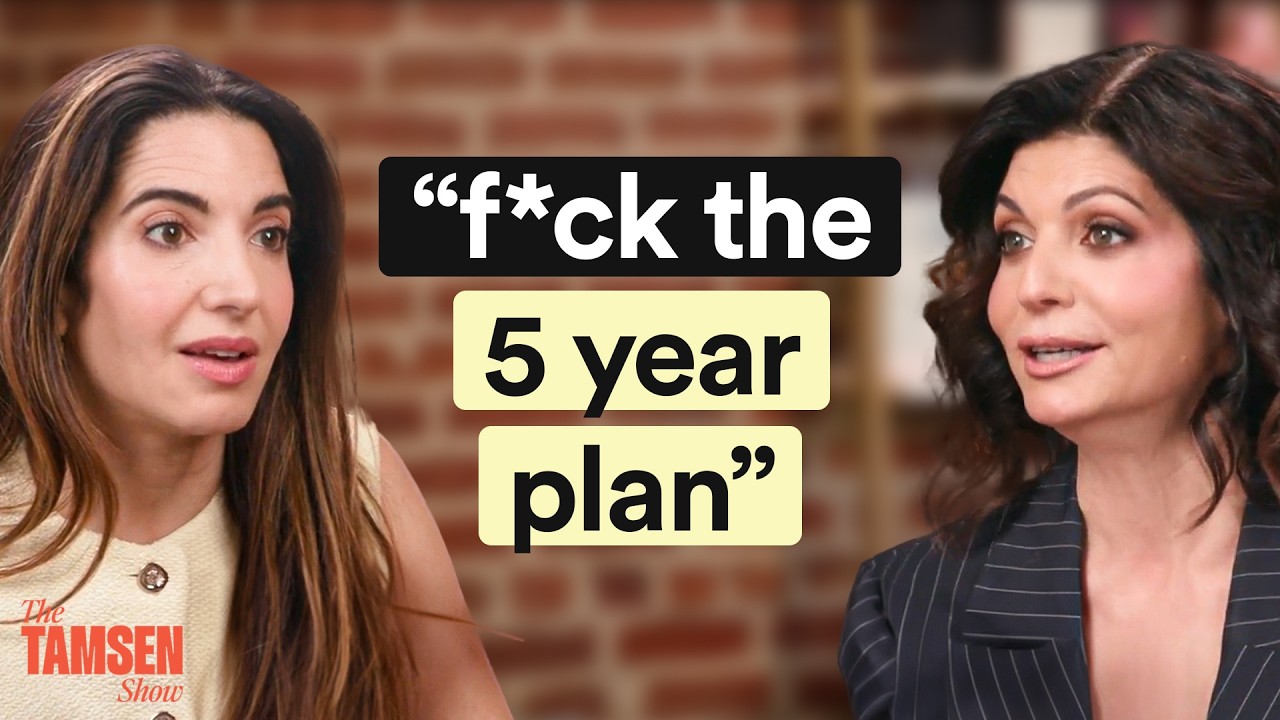
So, by the time I went to the library and figured things out, I went to two events. One was women in aviation, and that was in March. And the second one was Organization of Black Aerospace Professionals, and that was in August of the same year. And it looked like I was going to need five years of saving, five years of planning to get to flight school and again start in that stop. And so I went to the former in March and the latter in August and we saved for five years.
Still working your other job. You were you had one foot there and you had you had your other wasn't a passion anymore. It was not a plan now. It was a plan. It was a plan, not a passion.
It was a plan, not just a passion. And there I'm so glad that you pointed that out because there's so there's so much of a difference between having a passion and between having a plan. And I love to say this. There's a difference between a dream and a goal. And it's two words.
A date. And I love I went to Say that again for me. A date. A date. A physical date.
A date. The difference between a dream and a goal is a date. I mean, yours was actually a physical date actually. That changed a lot of things for you with your husband. But a date means everything, right?
A date means everything because when you put a date on it, now you're holding yourself accountable. And you can start backwards. You can say, "This is what I'm going to do in order to get here." Mhm. And by doing so, you start to really hold yourself accountable to the individual steps. So, what was your date that you put on it?
You said in 5 years 5 years 35 5 years was your date. 35 35 you were going to get your I was going to I was going to quit my job and go to flight school. Okay. I love it. And by this time I mean that's that's a big sentence. I'm going to quit my job and go to flight school.
I'm going to quit my job and go to flight school. And it was even a bigger sentence cuz by this time I was moving up. I was well respected. I had a group. I had all of training and development.
I had video production. I mean I I was you know I had a I had a dream job. I came to New York with nothing and I had and I had done this not by myself. That board of directors I had was at each one of the companies I had been to. I quickly found out who was on my team and how do I do what I need to do in order to learn.
I really really really am a serial learner. Who were some members of that board of directors for you? So back in the day there was a wonderful woman named Sharon Orlop who was the other VP. So she had EEO, there was a compensation VP and then there was training and development. And then we had a boss his name was John Kasowski and he was amazing.
He looked like Robert Mitchner and deep voice and a little grouchy and he gave me and I assigned myself a lot of stretch assignments and he ran cover as I made mistakes as I learned and I tried not to disappoint him. Mhm. And as I grew in this career, which I was learning and loving, I really was just so passionate about the flying and my travels took me further and further. So, Mexico City, I was going there every two weeks to help open up stores in Mexico. I was going to Amsterdam to do self-awareness training with our senior managers.
I was interacting with so many people. It wasn't that my job wasn't amazing. It's just that I wanted to do something else more. Were you doing that on the weekends and at night or what? How did you fit it in?
I wasn't flying at all. Not at all. This was just the plan to go to flight school, saving money because I knew from the research I had done that I was going to need $150,000 cash and I was going to need it over top of any college. I'd already been to graduate school. But for me, because I was starting later, that money had to be available and I had to I had to be able to spend it.
Now, if you have somebody who's listening that's 50 years old and says, "Okay, I don't know if I have I want five years to save to do that." What do you suggest? Do you just truncate that amount of time? Well, every pivot starts with teeny steps. So, you might have to say something different when you're 50 than when you're 30. I want to do it now.
Let me figure out how to do it. And I will say in the career that I selected, there are no shortcuts. You can do things fast, but your foundation is critical. So it depends what you want to do. How much money, how much time is it going to take you to do what you want to do.
So start building. And people say to me, well, weren't you afraid? And I say I was more afraid to not to than to do it. Why? Because you knew that would be the one regret.
Regrets are horrible. I don't want to have them. I don't like regrets. I've never lived that way and I don't want them. So I knew if I didn't do it, that little girl, that four-year-old would be disappointed.
The 20year-old would be disappointed. And so very often when I want to check how am I doing, I ask the 25year-old, would she be proud of what I'm doing today? And what does 25-year-old Carol say back to you? Hot dog girl. Hurry up and do some more.
Get it going. What else you got? Well, you did a lot more. So, let's let's go through your life from there because you made a decision to be a mother. I did.
You made a decision to to be a captain. So, where do we go from here? Serendipity. Once again, the things that align. And in my case, I finished flight school in eight months.
I went from that one flight hour to what's known as a certified flight instructor. So when you're very green, you teach. And at the beginning, I thought, "Oh my goodness, what in the world is that?" But when you're teaching, you must learn a subject profoundly. And the deeper you learn it, the deeper it's embedded, the better instructor you are. So eight months in flight school.
You had quit your job at that point. Oh, I had quit my job. Walked away from a career. Walked away. Anybody say you were crazy?
Everyone. Everyone said you were crazy. Everybody. What' you say back? [gasps] Watch me. I'm going to tell you.
We're going to send all of them a this episode. Okay. You walked away eight months as a flight school. Now you're teaching. Now I'm teaching.
Are you a mom already? No, ma'am. Okay. What happens next? So I finished June 2001, July, August, September 11th.
Mhm. Oh man. What happened that day? On that day when the whole world changed and it felt like the sky was falling and the twin towers were attacked and the Pentagon and the United Airlines and the American Airlines, those airplanes and those those brave crews when that happened I thought oh my goodness everything I have worked for is is is it's it's gone. Well, there were a lot of people who lost a lot more.
I remember I cried for about a day or two. And after that, my same by this time, my husband said to me, "Now's the time." I was like, "For what?" He said, "To have children." I said, "Oh my goodness, I think you should do that with your next wife." Not me. What are you Did you have any intention of having children? Was it Were you ever I think that was something down the road a piece. Yeah.
Okay. And I understand that the idea of having children frightened me completely. Why? You seemed so unafraid of everything else. Because I understood what was at stake.
I'd watched my sister have children and my sister's amazing. But I watched how your body changed, how your life changed. I'm a very selfish being. And I watched how one has to become unselfish. Mhm.
I felt bulletproof before children and I knew intuitively that I would become extremely vulnerable and that was something I wanted to avoid. And so in seven days I was pregnanting. [gasps] Now fast forward. Well, sadly, you can't fast forward. Yeah, right. Tell me.
Sadly, I I had a miscarriage. And all of the sudden, the thing that I thought that was so unimportant to me. Now, I understood both value Mhm. Vulnerability for real. And how important it was to to be given a gift.
Got pregnant again, second miscarriage. Why do I bring that up? Because it happens often and because women don't talk about it. Just like you wrote a book about menopause and people don't talk about that. Well, got back on and got pregnant again.
This time it stuck and I gained 140 lbs. You did? I weighed 301 lbs when my baby was born. What did you do with that mentally in your mind? Panicked a little because I had never ever ever been overweight.
Like I had never worked hard. I never thought if I gained a couple pounds, I ate salads for a week and it was good. And so now I had an infant. I would now weigh 280 pounds. And I was scared and I knew I was going to be scared and I wanted to avoid.
And now here it was. But when I took one look at that baby, holy canoli, the things that I was scared of, I found that I love the most. And so it is with extremes. What frightens us the most makes us the most strong. What frightens us the greatest makes us focus and really, really, really assign ourselves if you're there, if you're present for it.
And so the thing that I feared the most is my greatest joy in life. Now I had an infant and a toddler and the airlines seemed very far away. I enjoyed them so much. I blinked and a decade went by and then another half a decade went by. Now where were you with flight and and training?
Were you you were flying? You were I was still flying. I was an instructor and [snorts] I would instruct while my kids were at school or while they were asleep and I had a nanny and a babysitter. I was very blessed and fortunate to be able to do that. And so while my children were then at school I would flight instruct or at night I would go to a simulator company and work with captains from all over the world in particular jet and then before I knew it decade and a half it just rolled by.
So when you were teaching flight school, where did you make that pivot and decide it was time to become a commercial pilot? So I always wanted to become a professional pilot. But once I had my children, I realized that going around and kind of slinging myself up and down the East Coast and leaving my children was not what I wanted to do. You'd be far-flung for 4 days. Two days off, four days on, two days off.
I didn't want my children to say, "Hey, who who is that coming through the door with the suitcase?" Mhm. It just it just didn't it didn't fit. But I knew I wanted to do it once they got old enough. And I also wanted them to see an example of a working mom, a mother. Now, is this according to the plan that you had in terms of a date?
No, it went it went a little beyond. I went 15 years was way beyond the plan I had. That's okay. That's okay. It was beyond the time.
At that point, I readjusted everything because now I had children and I saw how important it was to be present and to be there. And I watched around me to people who and this is not the mommy wars. I can't participate in the mommy wars. Parents who work and parents who don't. [clears throat] But what I did know was that I needed to be present. I knew that and I knew it would delay things.
But when I turned 50, I remember telling my husband, "It's now or never." So you knew you were going to be a pilot for a major airline. That's right. That's what you decided. So what did you do next? So I never stopped studying and I never stopped my network.
I loved my network. Between organization of black aerospace professionals and women in aviation, I had a board of directors and those folks just literally embraced me and they pushed pause while I was busy. I was building flight hours. I was working. I was I was doing things.
I was doing things in my community. So, I was vice chair of OBAP twice. I was busy with women in aviation and at women in aviation the first time I went I met a woman named Jenny Batty and I love to say this sentence picture Winona Ryder with a leather jacket and you got Jenny and she gave me a gift at the end of the three days and it was a coffee cup and I can't remember what city we were in. I'm going to say it was Nashville. I said to myself, why did she give me a coffee cup that says Nashville?
And I was opening it cuz it was a coffee cup. She said, "Guess what this is?" is I said, "It's a coffee mug." And as I opened it, there was a picture on the front of Bessie Coleman. Now, I got to tell you, I had been to college. I had gone to school in Europe. I went to University of Virginia, St.
Louis University in Madrid, Columbia University for graduate school in journalism. I had never ever heard of Bessie Coleman. Why is that? I'm confident that she wasn't in any textbook. Book I had.
I'm confident. Neither had I until you. I'm confident that it wasn't part of a curriculum that included women that it included that included black women that included trailblazers. I was I would come to learn that she was in flight school two years before Amelia Heheart. She had to learn how to speak French in order to fly.
Her mother had been born a slave in Texas. And I love the sentence that we would come to call this woman a queen. And she was the daughter of a slave. Hot dog. I mean, get out your cape, flick it, and swing it on.
She was incredible. Why didn't I know about her? Mhm. And [clears throat] if she could do it 100 years before I even thought about flying, I could do it. And if she could do it, I needed to make room for others.
This wasn't any longer about me. I could do it. I had plenty of resources. Had an amazing husband. I had a board of directors, right?
I had OBAP. I had women in aviation. I had these groups of people who literally surrounded me and kept me going for a decade and a half and reminded you who you were and what you wanted. Yep. And what I could do and that I could do it.
Mhm. So, what happened from that moment on? Well, it germinated. It just stayed there. It marinated.
We went up to Martha's Vineyard. We were playing all over this amazing corn field and it was dusk and my husband said to me, "Hey, listen. I [snorts] want you to look out in that field over there." He said, "I think I see a Steerman, a Boeing Steerman, World War I trainer." I said, "Whoa, my god. Is that like a apparition? Is that real?" He said, "No, that's a real Steerman, honey.
It's bright yellow." Yes. And I said, "Oh, can we go over there?" And it was getting dark and we flew across the field. When we got there, the guy said to me, "Would you like to sit inside the stairman?" I said, "Oh, buddy." I was already crawling up the ladder. So, it's a World War I trainer built out of cloth and wood, and it's just, oh my gosh. I mean, I get I get dreamy just even describing it to you.
My little foot moves around when I think about it. And I climbed in. It caks and it moves and it feels almost like a person, a 98y old airplane. And as I and but by the way, it was mint condition. And as I sat in it, the idea that I should write a book about Bessie Coleman.
That was where the idea came from. Is that where it came from? Came to life in that moment. And you wrote a book. What year when what year did you write a pair of wings?
So I wrote it and I wanted it published on the same date that Bessie Coleman earned her certificate in France in France June 15th 1921. So I self-published in June 15, 2021. So her story has lived with you all these years from writing the from hearing about her first of all story losing her way too early at 34. That's right. Right.
Go ahead girl. Do your homework. I have a little bit of your your journalism thought, a little numbers game. But you've lived with her really all all through this. All through it.
Let me ask you this question. So, you get to United, is that right? At the age of 50. That's right. Well, United Express.
United Express. So, the regionals are first. The regionals going city to city within the US. City to City, honey. Four, five, six legs a day.
Really? So, give me a give me a normal day. So, a normal day would begin a 4-day trip. Okay? So, you'd start in Newark, cuz that was my base.
And then you would go to cities north and south, let's say east of the Mississippi, and you would do three, four, five, six legs a day. Oh my gosh. Were you deterred ever? Were you like, "This is just too much to take on." Or had you worked so hard that you said, "This is what I want to do." I wanted to do it. And let me explain.
So those flights were an hour to hour and a half. You were doing great if you got down to Savannah. If you got down to somewhere in Florida, Pensacola, woohoo, that was a great overnight, right? So then once you were on the road, you're on the road for 4 days. And I didn't realize it at the time.
I thought, "Oh, I'll be in Newark so I can come home and this and that." Nah. And you [clears throat] were far-flung for 4 days. And once you went out there, you were going and it was so fast. I don't think that you had time to say, "Oh, boo, woe is me." [clears throat] It was It was awesome. It was a great thing.
And then you go from Express, United Express, TransCon, right, to to Big United to Big United. What was it like the first time? I mean, I I don't know. I just think about this. Every time a captain gets on, I'm like, are they nervous?
Are you always a little bit nervous? [gasps] No, I would never call it nerves or nervous. I love my job. Can you tell? I can. I can.
So, I mean, I I would never say nervous, but I'm on. And I would say this. I sign now as the captain. So, you you do your your you learn. So, you're an apprentice in the right seat.
Yeah. But I like to say that major airlines, they hire captains. So, yeah, you learn as a first officer. And then when you upgrade to captain now you sign for every single flight that you do. What does that mean?
You sign for every flight. You sign a release. So you say, "I have checked everything about this flight, the fuel, the planning, where we're going. Is the weather's okay? Is the runway okay?
Is the airport okay? Do I have backups? Do I know what my team is? Have I talked to them? Have I briefed them?" [snorts] And the minute I don't get a little when I sign that release, I mean, it's computerized.
Yeah. I know that's the time to not to. So, when you get on there and say, "This is your captain. Hi. Good.
Good morning, everybody. We're heading to beautiful Los Angeles today." I've done that trip quite a few times. When you do that, do you always do you get a response? I have to imagine now from where it was before when you're 50 years old doing that and and I don't know if you were doing those like announcements at 50. Did you get like oh it's a it's a woman captain all the time.
Did that annoy you? No. Okay. No, you were just I mean in the beginning I was like ah here we go again. But not now.
Not now. It's almost like you know when you brush your teeth and oh darn I need to replace my batteries you know my electric toothbrush. Oh boo. Right. What a great problem to have.
Ladies and gentlemen, good morning. This is your captain speaking. Everybody puts down their book, puts down their Why? Because it's a woman. Because I'm a woman.
Because I'm black. Because I force engagement. I want it. I encourage it. So, what do you say?
Good morning, ladies and gentlemen. Welcome aboard. This is your captain speaking. My name is Carol Hopson. 2 hours 22 minutes, too. It's going to be a wonderful ride today.
You guys picked the best day of the week to fly or ladies and gentlemen, it's a little bit like life. It's going to be a little bit bumpy, smooth in the middle, bumpy at the end. So, please pay attention to the seat belt sign. You have amazing flight attendants. Let us know how we can help you.
We have the best customers in the business as well. Welcome aboard. Oh, I love that. That's it. I want to come fly with you.
Let's go somewhere. So, I want to you bring this back for people that are listening right now and might say, "Wow, I mean, she's so motivated and disciplined and she was focused and she had her, you know, husband's support and it's just so amazing, but I don't know. I'm nervous about being the oldest person in the room or how am I going to remember all that?" Or I'm at this time in my life in midlife where I just my memor is not what it used to be. Can you give us some carololisms for that? I'm just going to point that.
I love it. So, I'll tell you really quick. I was in the classroom for the very first day. My I was like so excited, right? And I'm all ready for my express jet, which was my first day at the regional airline.
And back in the day, and I think they still do the same in some airlines, they pass around a piece of paper. It's got your first initial and your last name. So, nobody knows if I'm Chris or Carol or Caleb or Carl. And they pass around the sheet of paper and they have your grades and it has your date of birth and your date of hire. So, I always sit in the front and I'm always paying attention.
So, that's one. Yeah. Pay attention. And as they pass a piece of paper around, it got to the end of the line and somebody said, "Dear Lord, who was born in 1964? Oh my goodness, this must be a typo." [gasps] Oh my gosh.
Well, it was great cuz a they didn't know that I was born in 1964. So, that was great. And the second thing is I must say I think you sit for a moment without your device, without your iPhone or your, [sighs and gasps] you know, Tik Tok, Tik Tok or any of those things and you and you literally you face what it is that you're most afraid of. And is that fear greater than the desire? If it is, stay where you are.
If it's not, get moving. You said somewhere that I read, I listened to an interview, I think that you did, and it said that women often see obstacle versus opportunity. That's right. Can you explain that a little bit? I sure can.
If you look at your hand, you've got this part of it and you've got this part of it. And they're both very front and the back. The front and the back. And they're both very functional. [snorts] And there's two sides. There's always an obstacle in your life.
Pick it. It's time. It's my family obligation. It's my health. It's my decreasing focus.Now look at opportunity. You're decreasing focus. Figure out how to make it better. You wrote a whole book about it. My family obligation involve them.
When I was going over my memory items, I used to post it. Memory items are if something happens, what's the first thing you do? What's the second thing you do? What's the third thing you do? So, I'm going to wake you up at 3:00 a.m.And I'm going to ask you those questions. What are your memory items? And so, I sat my children down and I would make them go over the memory items with me. What are the memory items? Tell them what the memory items are.
Like for example, if something happens, what's the very first thing you do? And so I would have my children go over them with me. I involve them. [clears throat] Instead of making them my obstacle, they became my opportunity cuz they would love to correct me. No, mom. That's not it.
What do you think the obstacle is that most women hear at this age? Oh my goodness. Menopause hits, pmenopause hits, life hits, you've been in your career for 30 years and you're kind of over it, but you don't know what to do next because you don't know your passion. All of those. All of those.
All of those. Or you can't do that. You shouldn't do that. Why are you going to leave? Who's going to walk the dog, make the dinner, make the bed?
I don't know. You You can do that now. What do you do when you have a little bit of doubt in your mind? Do you ever have that? Sure.
Absolutely. To make sure I wasn't the only one in this room with some Come on. No. No. But I I rely on that board of directors and now my children, my two sons are on that board of directors.
So it could be family, it could be friends, it could be employers, it could be employees, all of that. Okay. All of that and depend on them. Now you are you you have a lot more that you want to do. Yes, ma'am.
Correct. Yes. You wrote your book. You want to do a lot more [clears throat] with that right here next to me. And you've been a pilot now for how many years?
Let's see. I've been flying since 2000, so 26 years. But with the airline since 2015, and there is a time limit that the airline gives. That's right. Right now it's 65.
That's right. They're trying to expand it to 67 or 70. Is that what you told me? Yes. So, what do you want to do?
So, I think it's 65. It's time. It's time. There are other things I want to do. And I gave myself 15 years at this run.
That's a good darn run. Are you excited about what's next? Oh, absolutely. Do you know what's next? Yes.
So, book, movie. I would love for a pair of wings to become a movie. And I want to send 100 black women to flight school. Let's talk about that. Oh gosh, I'd love to.
You've always simultaneously had yourself [snorts] and a whole other group of women's career in your hand at the same time. It feels like thinking about them all the time. If Bessie Coleman could do what she did and one of her biggest goals was to start a flight school. Now I don't have to start a flight school anymore. There's a ton of them.
We just have to get people to them. How do we do it? Couple ways. There's always the obstacle of money and access. But guess what?
We got a lot of opportunity that we never ever had before. We have the internet. We have each other. We have this opportunity that you're giving me right now and these organizations have raised so much money they can't wait to give it away and they can't wait to give access so in or since the time that I joined women in aviation an organization of black aerospace professionals there's national gay pilots association there's papa I love the name professional Asian pilots association there's LPA Latino Pilots Association. I mean, there's so many other organizations.
There's aircraft owners and pilots association and they have money every year and people do things every year to expose young people. Is there a place people can go if they're interested? Absolutely. They can go to any of those organizations.com or.org and certainly jetblackfoundation.org and we raise money. All of my speaker fees, all of my 20% of every book sale goes to sending women to flight school.
How many women pilots are there and how many women of color pilots? Thank you for that question. So, in the United States, approximately 150,000 people fly for a living. And of that number, 2 and a half% roughly are Asian Asian-American, Latin X, I would say African-American roughly 2 and a half% 2.3 2.5 2.4 four and the total number of women who fly for a living 7%. Oh my gosh.
Really? In 2026. In India, 16% of pilots are women. And in the US, it's seven. Seven.
Wow. What why the difference in in the countries? What what what makes such a that's a stark difference. I wish I could tell you definitively. I mean, I have thoughts about it.
You know, we're looking at nations who have had women leaders. Sure. Right. Sure. Right.
Right. Good. Good point. We're looking at opportunity all over the country. And so as STEM or as I like to call it, steam education steams along science, technology, engineering, aviation, math, and medicine.
That's the future. That's where jobs are. And so we've stopped training people the way that we used to. And so how do we begin to get young people, very young, interested in steam? How do we find them?
How do we keep them? How do we incite wonder? If you look at a frog on your iPad or you look at a frog in the ground on the [snorts] ground, you're going to have a whole different reaction. Sure. In your hand.
But it's fascinating, right? So, the sense of wonder has disappeared and we need to incite that once again. I feel like you're going to bring it back. I sure am. I I feel like that.
I have to tell you something. I when I was a reporter, I was up in a chopper all the time, helicopter all the time. So, I want to get back and do that and not not for, you know, not professionally, but I just want to go do it again. So, my husband bought me tickets, bought me lessons. But I let them expire, Carol, we're going to call them and say because I love helicopters.
Like I I when I smell the jet, I smell the fuel at Yeah. Right along the Westside Highway, I like I can't My heart beats so I know that I want to do that. Let's get back to it. Yeah, let's call that place and tell them to get the expert date redone. And here's the other thing.
So, there is something very magical about being above it all, right? There's a perspective that comes with that and it's hard to replace that with anything. And because you've had that experience, you get it. Yeah. You want it back.
I feel it. If there's one thing, it is visceral. If there's one thing you can leave women with today who are saying, "Hey, I I want to do a pivot. I'm not sure I know what it is. I didn't know what it was when I was four years old or 20 years old, but I know there's something else I should be doing.
I know there's mine next. What do you say to them? Where do where do they start? Get yourself a pencil and a piece of paper. You can use your phone if you want to, but start writing down the pros and the cons.
What are the pros? How do you get there? Do your research. Write down the pros and the cons. Do your research and figure out what resources you need to get there and what resources do you have.
So, pros and cons, research, who is on your team, who's not on your team, and if it's your spouse, who's not on your team, don't leave your spouse. Don't do that. Just leave his mindset. Well, convince them or have a conversation. Why are those Why are they so afraid?
Because maybe there's something in there. Yeah. That doesn't mean you throw it out. You figure out what it is. Don't throw it out.
Figure it out. What would your advice be to somebody that says, "Hey, I want to do this in the next three years, but what how do I even block that out? I don't even know what to do." Or the next two years. So, I would say the very first thing that you need to do is we do the pros and the cons, right? Do I stay where I am?
Do I go and do something different? Now, I've decided that there are more pros than cons. So, now let's do some research. How much is the education or the certification or whatever it is that I need to do to get there? How much will it cost me in time and in money?
How many people do I need to add to my board of directors? How many folks aren't really going to come with me? Yeah. You make those decisions. Are they some tough decisions if it's people that are not coming with you?
Absolutely. Did you have people that didn't come with you? Sure. Were you sad about that or were you just very Yeah, sure. I'm surprised there were people that didn't want to come with you.
I'm surprised there weren't people that wanted to be up in first class with you. Well, remember what I said about my agent? Yeah. So, my agent said to me, "I have energy for one book." And she had been with me for 5 years and she was so important to me. I went to about 17 rewrites with the book.
Mhm. I get it. And over [clears throat] the years, over the five years, I said to her, "Please don't send me back with just a little bit, drips and draps [clears throat] of advice. Tell me what I need to do." And she said something that was critical in writing my book. She said this to me.
It's hidden in plain sight. I said, "Okay, you know, dummy in the room, explain to me." She said, "You were a newspaper reporter. You've done so much research. You have clippings from newspapers from 100 years ago. Take those newspaper articles, take the headlines and hang your story the way that you would a dress on a hanger because it gives historical heft.
I wrote a historical fiction because we didn't know the conversations. We knew the events but we didn't know the conversations. And so she said, "Use the headlines of newspapers of that day from the New York Times to the LA Times to African-American newspapers across the country. Use those headlines like you would a hanger on a beautiful dress." That's all I needed. And so when she said to me, "I don't have the energy to get your book to a major publisher." But I had a date and my date was June 15th, 2021.
That was my promise to me and I wasn't going to break it. Yep. So, I had to She left me. I left her. But she's still a friend.
She's still But I couldn't I I couldn't get to that next step with her. With her. Mhm. And so, [clears throat] and that's okay. And that's okay.
A beautiful bush needs to be pruned so that it can flourish. If you don't prune it, it won't reach its full potential. Well, you certainly have, and I would love I would love to see those women make that pivot. I have a feeling this is going to have a lot of of women thinking a lot of things for these next 30 plus years. I hope so, because guess what? 30 years is quite a while.
And think about this. What if you do what you don't want to do for the next 30 years? That makes you realize I'm more afraid to not to do it than to do it even though it's scary. And what's so scary after you start picking it apart? You're such a gem, Carol.
Thank you. You are. Thank you. I can't wait to have you back here when this book, A Pair of Wings, is a movie. And also, we're working with the Newark Board of Education to get our young people started.
Will start this summer. So, you have something exciting starting this summer. Starting this summer, we're going to begin with the Newark Board of Education and we're going to be working with students 20. They're going to be in middle school and in high school and we're also going to document it. That's that journalist, right?
And so, we're going to have one student who takes stills and one student who does video camera. And at the end of chronicling this, I'm going to come back to you and we're going to call it flight plan or flight lessons. I don't know which. But we're going to start with 20 students and we're going to begin this summer and we're going to teach them how to fly drones. It's almost a little bit like sugar or honey with your medicine.
And what we're going to do, Jamar Hunter, an all-American for St. Peters, who will be one of our our our instructors, he said it's like taking applesauce with your medicine. So, they're going to learn airspace, great and what drones do and how in the world they fly, Berni's principle. They're going to learn Newton's third law of relativity. And they're all going to do it while they're making drones and playing drone soccer this summer.
You're unstoppable. Thank you. Thank you so much for being here. Oh, thanks for having me. Delight.
I hope you took something away from today's episode.