If you listen to our episode with Dr. Rocio Salis Wayan on belly fat in midlife, you'll know why part two of this conversation is going to be a game changer. GLP1s are going to allow us to go to the next level. GLP1s, Ampic, WGO, Muro, we're talking about weight loss meds that have been marketed as miracle solutions, but then also criticized as vanity drugs. But what's actually the truth?
I like to describe them like the iPhone. Different types of iPhones, all do the same, but the newer iPhones, they're better. Is the same with the GLP1s. Dr. Salis Whalen is a triple board-certified endocrinologist, an expert in obesity medicine, and the person I went to when I was struggling.
It's a good time right now to be in midlife because we're having all these options. In this part of the conversation, we're going to get into the reality of what these medicines can do and what they can't do for women in midlife. We're going to live longer years in a healthier society because of this medication. So, let's get into it. So, I'm excited to have you back in this conversation.
I know this is going to be a more in-depth conversation about GLP-1s. We talked about them when you were here for part one and then we paused and said, "Hey, wait a minute. We have a lot to dig into for GLP1." So, you are a leading voice on GLP1s and obesity medicine. So, I I want to start with understanding it all and understanding what we know right now, but you wrote a book on it. So, what made you write a book on it?
Because there's a lot of misinformation, right? I also wrote a book because what I've been able to do since I have my own practice is really redefing it to body recomposition because that's what we want to do, right? We want you to have more muscle than body fat. So many patients come with the opposite, which is less muscle mass and more body fat. So what I've been able to do through the years, I it's been very successful for my patients and I wanted to give it to the people that don't have access to me or that have access to specialized physicians on GLP1 so they can really understand it.
I mean, it really is almost what we're doing with hormone therapy as well, right? Is like trying to understand it and trying to give people the knowledge about this the yeah exactly the right information and the right guidance because otherwise it can have opposite effects of what we want right so many patients can up with sarcopenic obesity also known as skinny fat and we really didn't improve any of your metabolic numbers right yeah you lost 30 40 pounds but you lost 10 pounds of muscle so that is not healthy either so really to give what I said in this book is at this time we don't have enough educated practitioners on it but with this book I want to have enough patients educated on this matter right now it's so so important all right so so to educate patients and what they're going to to get out of the book which I I am thrilled about because I do think there's a lot of confusion overall what is a GLP-1 so GLP-1 is a hormone that we make in our gut in our small intestine in response to food, we produce this hormone in our gut. Now, our own GLP-1, it it works great, but the problem is that it's broken down within 2 to four minutes from where is released. A GLP-1 analog, what we know currently as medications, OME, Wobbi, Monjaro, their synthetic version of our own hormone that has been designed to be longterm. So, that's why we can use it once a week or once a day.
It has it is not broken down by the enzyme that breaks down our own GLP1. So I didn't even I didn't even realize I don't think I didn't understand that. So we're seeing them everywhere right now. There's all different types, right? All different measurements of them.
All different ways to to take them, I guess. Maybe not different ways. Well, I guess so. I guess there's drops and there's shots and there's all sorts of things. I like to describe them like the iPhone, right?
Okay. We have different types of iPhones that they all do the same, but the newer iPhones, they're better, improve. Okay, I like that description. More have more different apps, more things that you can do. So, it's the same with the GLP ones, right?
We we used to have the iPhone 10, which could be the initial GLP1 that was twice a day, every day, and then the iPhone 12 came and we had the GLP1 that is once a day. Then the iPhone 14 came out and that's Oeneeg that you can use it once a week. And now we have the iPhone 16 which is typite with goi u I'm sorry sebon and monjaro and then next year is coming the iPhone 17 which will be retatri the new GLP1. Right. So every cycle they just come better and safer.
Okay. So what do they actually do in the body? So we have receptors for this hormone all over our body, but more importantly in our pancreas, it has receptors. So every time you eat something that increases your glucose in your in your blood, it releases it helps the pancreas produce more insulin. Okay?
But this response is glucose dependent, meaning your glucose level has to be elevated above normal to have an effect in your pancreas. But if you don't have diabetes or your glucose is con constantly normal, it's not going to touch your pancreas. So they don't cause hypoglycemia. In our in our gut, we have receptors for this hormone and what they do is they help increase satiety hormones. So the hormones that makes you feel fuller and then in between meals, it suppresses your hunger hormones.
So that's why patients eat smaller portions of food through longer periods of the day. In our brain in the amygdala in the hedonistic eating in area of our brain, we also have receptors for them. And what they do is they block the reward response either from food or alcohol. So if you reach if you reach for food when you're anxious or bored or depression that you are anticipating to feel a a relief or a release from food or alcohol, it blocks it. Right?
If you're hungry and you reach for food, that's not a reward response. That's a fuel. That's an energy response. Right? But if you're eating even when you're not when you're already full for other sort of response, that's where it it blocks it out.
So at the beginning when you start taking this medication, the behavior may still be there. So you go for it, you reach for it, but you don't have that reward response anymore. So the behavior, that's the point. So you stop you stop reaching. So you see it and you're like, well, it's not giving you back that.
So your behavior changes and you and you learn to do it without feeling like I'm deprived or I want to sneak in there and go get something again. You still eat and when you eat you you enjoy your food but then you get satisfied with a smaller portion and then it's out of your mind. Is it just for weight loss or is there more to it right now that we're learning about? For the first time we're having masses of a population use a drug, right? So we're going to to start seeing more and more feedback from people coming back with the medication, but we are seeing that also has an anti-inflammatory effect, right?
So I would say patients start to feel better even before any significant weight loss starts to happen. Feel feel better just say they feel Yeah, exactly. They feel less inflammation, their joints hurt less, they're sleeping better. And I really think it's one, it has some anti-inflammatory property, direct anti-inflammatory property. Also by decreasing your visceral fat, you're decreasing inflammation.
But what happens really quickly is that our consumption of food decreases dramatically, right? So if we're consuming processed food, ultrarocessed food, excess of sugar or excess of salt, all of that is pro-inflammatory substances. By if you start decreasing by half that you're immediately going to feel better. Incredible. Well, I you know because I know there's question about it.
I know there's been a lot of study about it leading up to this. Can we go back to what GLP1s were originally, you know, originally used for because for years and years, right? 20 20 plus years. It's a great story that I love telling. So, the first GLP1 isolated in human was in harbored by researchers in the 1980s. But again as I mentioned our own GLP1 breaks down within two to four minutes.
So nothing could be done with it. In 1992 about 10 years later an endocrinologist and researcher at the BA hospital the veteran hospital in the Bronx Dr. John Ang isolated the first GLP1 outside a human body and it was in a lizard the Gila monster. What he saw that this lizard did in the benom when he attacked a prey, it gave it pancreatitis. So him being a researcher in diabetes and endocrinology, he wanted to know what in the benom can affect the pancreas of the prey.
And it was a very similar molecule to our own GLP-1. But the difference too is that that GLP-1 couldn't be broken down by the same enzyme that broke down the human one. So it could be a longacting GLP-1 and that's where the first GLP-1 eccent was approved in 2005 about nine years later and it was approved for type 2 diabetes and another interesting part of the story is that when he discovered this he took it to the veterans hospital Mansa and I at the Bronx to patent it. The VA said we're not interested. So he had to mortgage his house to patent them himself.
Go. He took it to an endocrine society conference in the hopes that a pharmaceutical will be interested and Amlin a pharmaceutical saw it came to him and purchased the patent. So can you imagine fascinating can you imagine Mount Sinai the VA hospital having turned out down that patent that didn't believe on it and that is revolutionizing our life and the way that we're going to live. We're going to live longer years in a healthier society because of this medication. That is fascinating.
Your eyes lit up when you were telling the story because it it really it's just so fascinating that he saw it. He believed on it and they didn't believe on it and he and he never wanted the fame. Yeah. Well, he never wanted the fame. So, and to the to the point that we we don't hear about him.
No, not at all. But thanks to you, we do. And and yeah, because and I met him when I was doing my residency. I was going to ask if you knew him. I was he was presenting about this medication and I was so impressed that there was a new drug that he founded and that it helped patients with diabetes because at that point all the medications that we have for diabetes cause waking on the patient.
Okay. We never had a drug that would also lower their glucose and make them lose weight. Okay, so we had to almost pick right with the first time patients were also losing weight and their glucose was improved. So it was mindblowing, right? So in 2005 it was approved for type two diabetes and then in 2010 came the once a once a day version which was vtosa.
Then 20 and what was that for in 2010? Also type two type two diabetes and it was not until 2012 that we got the first FDA approval for weight loss independent of diabetes. So independent of diabetes and what was what was that product? Enda it's the same as vtosa luragotide is the name of the drug and it was by nova norisk basically they're they're the same drug it's easier to get it approved back then for type two diabetes and for obesity so they will go for the type two diabetes approval and then show studies that it also helps with weight loss rename it rebrand it and then get it approved for weight loss what matters really is for insurance right if you have type two diabetes they're going to approve the brand name for type two diabetes but if you don't have diab diabetes and have obesity or need it for weight loss, they're not going to approve it with the diabetes name. They're going to approve it independent of diabetes, which a different name, which is But if let's say you're paying out of pocket, sure, doesn't matter which one you get.
This is insurance purposes, right? This is insurance purposes. What percentage of the country would you say are on GLP ones now? Oh my goodness. I I think it's not enough.
Okay. I just didn't know. I didn't know. I didn't know how many. I just I wasn't sure.
Or I see more and more commercials all the time, but I know it's coming in all different forms. There's micro doing too. Is that correct? What is what is the micro doing? So micro doing is when you use amount that is not a therapeutic dose, right?
So when the studies are done, they find the doses where we start seeing results either in glucose control or in weight loss and then they move up to see more weight loss, more glucose control. But the first dose is at the minimum where we start seeing some sort of effect. Micro doing is a low a dose lower than the first therapeutic dose. Right? Really micro doing I see its use in the maintenance part once a patient has reached their goal and and weight and then we start backing off on the doses and some patients can benefit from a lower dose than the initial dose for long-term maintenance.
But to really get the results that we're looking, you really need the therapeutic doses, okay? Cuz I I feel like some of these words are thrown around and they can be confusing. Well, many people are saying, "I don't need to lose weight. I'm going to micro dose to get the anti-inflammatory effect, right? Or to get other positive effects." Is that a thing?
Well, if you don't when somebody tells me I don't need to lose weight, I need to see your body composition. Okay? Number one, right? If you have high muscle mass, low visceral fat, then that tells me that you have a very good diet, that you're eating lean animal protein, that you're strength training, that you're not consuming so much pro-inflammatory food, sugar, right, starches, grains, alcohol. Okay?
Then I'm going to say you already getting all the benefits that you can potentially get from the drug. Okay? Right? But if somebody says, "I don't need to lose weight." But then you put them in a body composition machine and maybe their weight seem normal because they have very low muscle mass and high visceral fat. Then you do need to lose weight.
You need to lose visceral fat. Yeah. Okay. If you don't feel like you're the kind of person that wants to inject themselves, you're afraid to do that. There are other ways to take GLP-1s.
So we have oral GLP1. We have oral semaglutide which is the same as omp. It's called revelsis and that was approved in 2019. All right. Now the current indication that we have for the oral drug is type two diabetes right but many times we use them al of off label when they came approved for type two diabetes of label for weight loss while we got the FDA approval the problem with the oral medication is that at the doses that we have currently we don't see significant weight loss we see good glucose control but we don't see weight loss and the side effects are worse than the injectable for many patients.
Oh wow. So what are the side effects? More nausea, right? More vomiting. So to go up at higher doses where we could see potentially weight loss, patients need to really tolerate.
Now this past week recently the FDA accepted the application from Novo Nordisk for the oral version at much higher doses. Just to give you an example, right now the oral dose max dose is 14 milligrams for type 2 diabetes. They're coming with a 25 milligram and a 50 milligram. Wow. So there we start seeing more more comparable weight loss than the injectable.
But we're going to have to wait and see if it's going to be tolerable to patients. Is there a right and wrong way to take them? Like is there right foods to eat if you're taking GOP ones or I mean if we're you know I mean obviously regular you know if if you're eating something greasy or eating something fat is that a problem? Yeah. And you have to I don't know.
Do you have to have different habits if you're taking Definitely. I mean this is not a an easy way out. This is not how I'm taking the drug. I can do whatever I want because then you're not going to have the right results and it's going to be hard to tolerate. So fatty food, processed food, fried food can give you diarrhea in any of the versions that we have.
So any of the iPhones that we have in JLP1's you can have diarrhea. Now with the older versions we have more side effects. So with simalotide which is ompic and wikobi we see more nausea more vomiting and with the newer versions as I explained they're safer there less side effects so we see much less of that but you do have to modify what you're eating otherwise what you're going to lose is muscle right because you're just losing weight at this point exactly because you're decreasing your caloric intake and you're just going to be losing fat water and muscle so you're going to become dehydrated and psychopanic right so that's not a healthy weight either So, you do need to increase your protein intake, lean animal protein intake. Start doing some whey protein shakes for supplementing, not to replace your meals, but to supplement to not lose muscle and to get the right results. You know, there's a lot of criticism about them being vanity drugs and obviously there's people that might not need them that are taking them and say like this is the fast and easy way to do it.
What do you say to that? And are there other side effects to be aware of? So I that's the the problem with society that we have right now is that we see weight loss as something cosmetic right as to fit in a dress as for something social or we associate thinness with health right right so it's our own bias when we say you're somebody's using it for vanity or it's just a vanity drug is because you yourself are seeing weight loss are some as something superficial y but it goes way beyond that let's go back to GLP1 ones and hormone therapy. Is that something that we're seeing more and more of now with women who are coming in with permenopause or menopause symptoms of of taking both those things? Is there some is there something good about doing that together?
Yeah, definitely. That's something that we're seeing more and there's studies that show that women that are on hormone replacement therapy tend to lose more weight that the ones that are not when they taking a GLP-1. So, this is to say that they're great options that we have now in midlife. I think I keep saying that it's a good time right now to be in midlife because we're having all these options. The fact that you're going to gain weight or not sleep or have all those symptoms.
Now we have options to not have to wing it and just like take it, right? We can use GLP1s for weight loss. We can use hormone replacement therapy to help us sleep to just overall well-being, right? So I think it's great that women know that there are options for them to use and it makes me even happier when they actually are using them. You can take GLP-1s if your hormones are out of whack.
Yes, 100%. It's not a contrindication. Is there a a philosophy of whether hormone should come first so you regulate your hormones or GLP1s or does it matter which way you do it? Do you do them all together? I don't know.
It does and it's very per case basis, right? So what I look when I have a woman in midlife and is having premenopausal symptoms and also coming for weight loss, I I see what is more impending in that in at that period of time for the woman. Right? If they're not sleeping, definitely that's something that I want to improve. So hormone replacement therapy may start first, right?
If there's some confusion of the symptoms that could be more the obesity or the weight gain causing some of the symptoms that can be attributed to per menopause then I go with weight loss first and then I always give the options to the patients and sometimes we start both ideally like to start one at a time just to see what's the response what did that improve and what's left and then we can bring the second drug in the second visit. Okay. Yeah, I was wondering about that because I guess it's really the symptoms of which symptom is really going to be the the more pressing symptoms. Yeah, the more pressing one, right? If it's brain fog, it might not be that the GLP one first.
Here's the truth. My bathroom drawer is filled with halfused skin care products that promised a lot and delivered very little. And like so many of you, I've been really intentional about what I put in my body. But it took me a while to get serious about what I was putting on my body. So many products call themselves clean or natural or organic and then you flip the bottle and find a laundry list of ingredients you can't pronounce.
That's why discovering Purity Woods has really been a breath of fresh air. Purity Woods mission is to provide the cleanest and most effective healthy aging products that are out there. Their entire line is USDA certified organic, non-GMO, free of anything artificial, free of synthetic preservatives, and yes, it's cruelty-free. Finally, a product where the label actually matches what's inside. Their agedefying dream cream has been my go-to in my routine.
Packed with powerful plant-based ingredients, including fascinating red maple leaf extract. So, if you haven't heard of it, researchers have been calling this a plant-based Botox because it actually helps protect the elastin in your skin, which keeps it firm and the checkout. We talk about belly fat all the time in in midlife and we've talked about it. We talked about it with you the last time. Can it be lost without GLP1s or hormone therapy?
It depends, right? So it depends the the the level of body fat that you have. It depends on the history of you and your weight. So if I have somebody who struggled with weight since childhood, right? Battling obesity through their life, then most likely they can benefit from a JLP1 and they will be hard to lose it on their own because I'm sure they've tried all their life to do it and it didn't work or it's not working.
But if it's a different case, if somebody after pregnancy, they hit midlife, they never struggle with weight, there's no obesity in their family, then they may be able to lose it without the medication. So it depends a lot on every individual history of their weight. Do you find yourself having to tell patients like, you know, you're not weak because you couldn't do it without GLP1s or with hormone therapy? Because I feel like that there is that real bias about that like, oh, you didn't work out hard enough or you didn't eat, you know, your diet's not perfect and maybe that's why. Do you feel like you have to almost convince patients that, you know, hey, it's not it's not you?
Cuz I feel like I hear myself saying that a lot. I've had grown men cry in my office when I relieve them of the guilt, when I explain to them what really is causing their weight or their waking or if they have obesity, right? It's multiffactorial. So we're moving away from a problem of willpower of h the patient having all the control in their weight. We understand now that obesity or waking it's a disease and it's chronic and it's multiffactorial.
So lifestyle has a a part of it of course sedenturism or or the type of food that you eat. But that's not it. That's not all of it. Then we have genetic factors, hereditary factors, right? So I always go through the family tree of my patient, the the mother, father, their grandparents, their aunts.
Is there anywhere that there's obesity? And very often there is. Right. Hormonal changes. If somebody's in pmenopause, mid-age or have PCOS or thyroid disorder.
So hormonal changes can also promote waking. And then we have aging, right? Nothing that we can do about that. It slows down our metabolism, more tendency of waking. And then the fifth one is environmental factors.
All of them putting in a broad spectrum, right? We have many other things. But in environmental factors, we have the area that we live. We have industrialization, right? In food industry, right?
We cannot talk about obesity or waking without talking about the food industry. Sedenturism, if you're working from home, if you live in an area where there's no walking that you always have to drive. So all of those things, even pesticides, plastics that we're exposed to, right? All of that can promote waking and obesity. So when you tell somebody that it's only one fifth of the equation what they're doing, it it gives them a sense of relief.
I'm sure it does. I'm I'm sure you've seen all sorts of emotions all different ways and people coming in there with a different type of confidence, you know, afterwards if there's weight loss and then that makes them want to work out or I mean I'm sure there's just a cycle with all of it, right? And and we tend to believe that motivation to exercise and healthier happens before the weight loss, but for many patients it happens during the weight loss, right? Either for physical restrictions, they pain for them to work out, confidence, they feel embarrassed, they feel shame, or they associate exercise with weight loss, right? But the moment that you separate those two things and patients start to lose weight without the pressure of if you don't exercise, you're not going to lose weight.
If you don't eat better, you're not going to lose weight. Things change. Yeah. Right. And they start exercising on their own.
They start eating healthier on their own. So, it's very easy for us to say, "Oh, the motivation should happen before." But actually what I see is the motivation happens after they start losing weight. I think that makes a ton of sense. I think it makes a ton of sense. And maybe they're sleeping better now and maybe they're Can you come off of GLP1s without all the weight piling back on?
You can. I mean, it's not a it's not an impl implanted type of medication, right? But it depends on your own personal story with your weight. Again, if you're struggling since childhood and you have a strong family predisposition of obesity, most likely you're going to need the medication long term. If it's something that the weight gain happened recently or more specific to a situation, then maybe but also will depend if now you're in midlife, then you have other things that are going to make it hard for you to maintain the weight.
Okay? So, it also depends on that. But I always want to put it in a positive than in a negative. The fact that you can use them long term because for the first time ever, we have something that is going to help you maintain the weight loss because anything else can take you that, right? Any crazy restrictive diet, it can make you lose 30 pounds.
Sure. But you cannot stay there because it's not sustainable, right? But with the medication, you can stay there, right? So for the first time patients are reaching weight goals that they thought it was not possible and they're staying there and many patients and this is something interesting that I'm finding and that I write in my book is that the after they lose the weight what are the implications when somebody loses weight because we can think oh when somebody loses 50 pounds they're going to be so happy. Yeah, but there's so many changes, psychological changes, right?
They don't see themselves as yet, right? Many patients have extreme anxiety that they're going to regain their weight that they feel so happy and so safe in this place that is something sporadic that they're going to suddenly go back to where they were like it's going to be taken away from them. It's going to be taken away from them. There's a lot of anxiety on that. Patients not feeling in that new body because they lived in a different body for most of their life.
So some patients take time to adapt. The the psychological part takes longer than the physical change. And then we go to social changes, right? How people see you differently now and how how you interpret that, right? I had a patient just today tell me, "Now that I'm leaner, pe people are nicer to me." Wow.
So, all of those changes, adjustments that we're just starting to see because for the first time, we're having masses of people lose weight and reach goal, weight goals that were never possible before, right? So, what we're seeing in the post is something that also needs attention, right? It's not just we got you there, you should be happy. No, there's so many other implications. I would have to say most of them are happy and patients would choose to go through that now than to go back to before.
Right. 100%. But you're right about that. I never thought about all those. It's a different person in a lot of ways depending on what the weight what the weight loss was. We're not talking about five or 10 pounds.
And then we're also talking about physical adjustments, the extra excess skin, right? So many patients of my patients have to go and do skin removal surgery, right? For for cosmetic reasons, for confidence reasons. And also because excess fold skins can promote infection, right? So also it can be detrimental to health and you're carrying excess weight that you know should not be there anymore, right?
So there's a lot of changes. Again, I don't want to scare patients from this. Not at all. Most of them, all of them are positive, but there will be adjustments that with the right doctor will help you also go through them. You shouldn't feel like you don't know what to do at that point and you're by yourself, right?
Are there other side effects from them? Is there is hair loss a side effect or there's some different side effects that people should be aware of? The common side effects could be nausea, right? And if you overeat your fullness, like if if somebody who's used to binging and don't know how to stop themsel at the beginning, the behavior is still there. So, it takes time for them to adjust.
There can be vomiting if you overeat your fullness. We talk also about diarrhea with certain fatty food or fried food. Those are the common and and not too bad side effects. And then we go to the serious side effects which could be pancreatitis. So that's an inflammation of the pancreas.
I've never seen this in somebody who has no diabetes because it doesn't in theory touch the pancreas if you don't have diabetes. Right. Okay. And then we have muscle loss. But this is not a direct effect of the drug.
The the the the the GLP1 analog the hormone is not going and attacking your muscle and destroying it, right? Is the decrease in caloric intake and then we decrease our protein intake. When we go in any caloric restriction, the first thing we cut is protein because it's what fills us the most and we want to have room to to have what we want to eat because we're eating less. That's the psych psychological part of it. So, we're going to have muscle loss because of the decrease in protein.
If you're having muscle loss because you're not eating enough protein, you're going to have hair loss because we need protein to make collagen and elastin. Okay? Right? So, if you're losing hair, you're losing muscle. And if you're losing muscle, then your hair losses from the same reason.
We need to increase your protein intake and that usually solves the problem. And that's why we try to avoid rapid weight loss. Rapid weight loss means muscle loss. So, how much are you usually losing depending on what is it the the but you go by the weeks or the months or what do you go by? So, in a week you can lose half a pound to a pound that is healthy and that could be purely body fat.
If you're losing more than that per week, you're also losing muscle. Okay. Oh, more than a pound. More than a pound per week, you're losing muscle. What do you think the future looks like for GLP1s?
I know when the when the book comes out, people are going to really be educated on it. Be able to take that book into a doctor and say, "Here's what I know." which is is my my hope for you because it sounds like that's where that's going. I'm going to give my predictions because you heard it first for me. I think we're going to change the way we practice medicine because GLP1s I think we've built medical specialties on the complications of obesity because that's what we had at that time to treat. We had the medications to treat type 2 diabetes, hypertension, high cholesterol orthritis.
We didn't have anything to treat the main problem which was the excess and body fat. Right? So now we can do preventive me medicine. We're going to prevent all this chronic complications. So I predict that we're going to have less type two diabetes.
And this is going to be in the future generations. It was going to take two to three generations for us to see this. But we're going to have less chronic disease. We're going to live longer. We're going to have less incidence of certain types of cancer that are increased risk from obesity, breast cancer, colon cancer, prostate, stomach.
Our military is going to be healthier. Three out of five in the military are overweight or have obesity. Wow, I didn't know that. Sounds big, but our health is going to be it can be our archilis tendon or it can be our superpower. Right.
Right. And I feel GLP1s are going to allow us to go to the next level. Right. I'm seeing more and more people want to weight train, concentrate on muscle, wants to feel strong. Why?
Because now they can. Now that they relieve the fat loss that we know that something works for fat loss, now they can concentrate on feeling strong and building muscle, right? So we are going to be able to get to the next level as a society when we decrease obesity in our in our in our country in our world. You have to be seeing such change come in and out of your office now really on all different levels. Where can people find you?
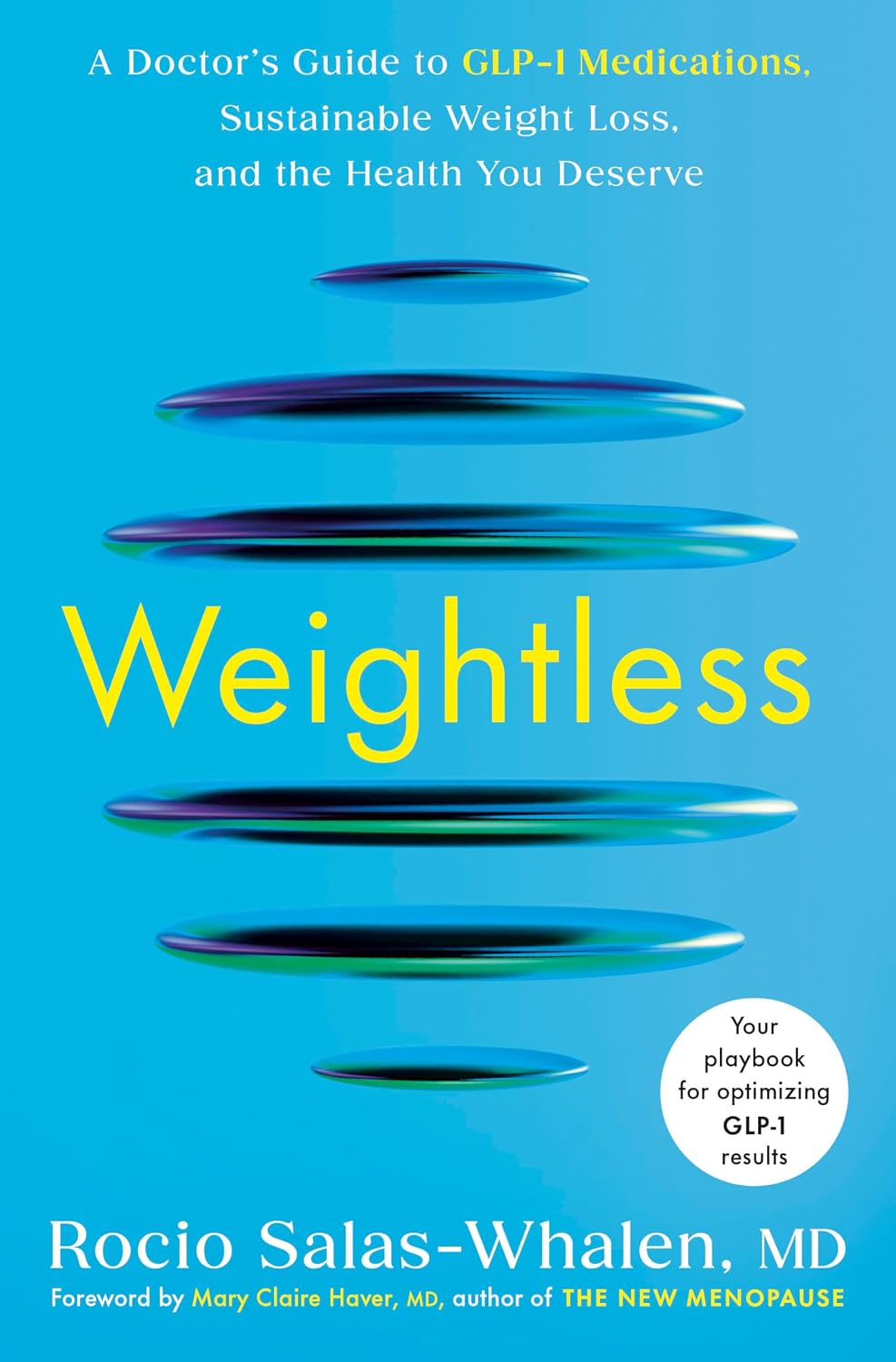
My social media is Dr. Salas-Whalen Wayan. My web page is New York endocrinology. I my office is here in New York, but I do tele medicine and that's where they can find me. And then my book is coming December 30th and again it's going to be pretty much everything I do in my office translated in a book.
So if people cannot get to you, you're going to get to them somehow. Exactly. Thank you so much for the time. I really really appreciate it. Thank you.
I hope this episode cleared some things up for you or made you think differently. You can pre-order Dr. Salas-Whalen Whan's new book. It is out soon and it goes even deeper into everything we talked about today. If you haven't already, make sure and follow the show on socials at The Tamsen Show and please leave a review.
We are figuring this out together, one conversation at a time, and I'm so glad you're here for it. I'll see you next week. The Tamsen Show is an original production by Authentic Wave. Executive producers Scott Weinberger, Kevin Bennett, and Rebecca Greersonen. Brand director Johanna Offnik.
Our line producer is Sabrina Surere. Editing by Zach Smith and Marquee Harris. The views and opinions and information shared by guests on The Tamsen Show are their own and do not necessarily reflect the views of Tamsen Fadal or the production team. This podcast is forformational purposes only and is not a substitute for professional, medical, legal, or financial advice.