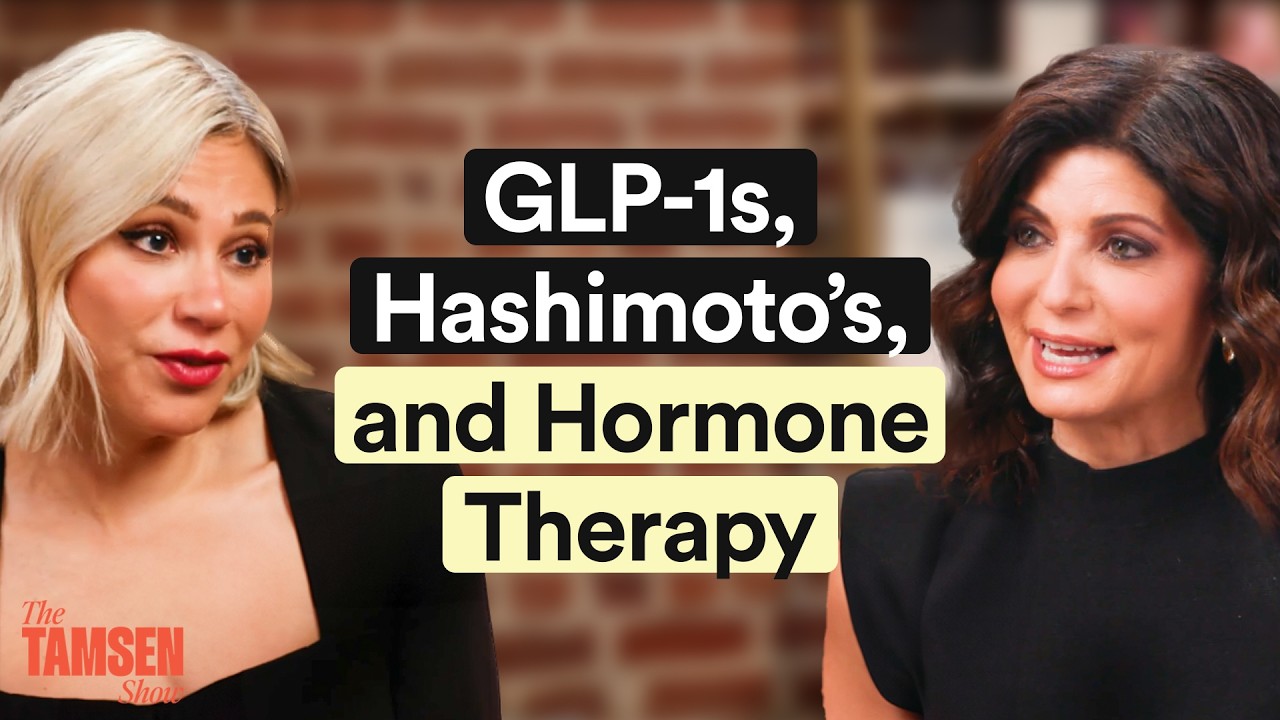
A drug that's changing weight loss, metabolism, and even menopause. But is it the answer? GLP1 medications have been around since 2005. If you have enough willpower, you will lose that weight if you're good enough, strong enough, successful enough. That's not the case.
It is science. Weight loss is not about willpower. It is biology. I talked to my doctor. I said, "Listen, the belly fat's not going away.
Are you seeing a lot more women in menopause talking about this, taking it alongside hormone therapy, realizing hormone therapy might not do it itself and they need something else? It's wonderful to use these medications in menopause. I think where it gets tricky. Micro doing explain micro doing. Micro doing is very trendy.
Once you get on these drugs, do you get off? That is the million-dollar question. Dr. Alexandra Sowa is one of the leading experts in metabolic health and obesity medicine, helping women understand their bodies and take control of their health. She's joining us to cut through the noise, to answer every question you've ever had about GLP1s, weight loss, and what it really takes to feel your best.
This is a Tamsen show. Let's get into it. Let's talk about something so many of us are navigating, our relationship with weight, especially as bodies change. So whether it's dreaded menopause belly or trying to untangle decades of diet culture or just feeling overwhelmed by all the new meds out there or treatments, it can feel really like an uphill battle. And I get it because I have been there.
When I was on a dance team in college, we were weighed every single day. Every day. And let me tell you, the pressure to stay at a certain weight was relentless. And I pushed myself to dangerous extremes at some points to fit into this ideal. And even when I fit into that ideal, I never felt good enough.
So, fast forward to now, my body has changed again thanks to menopause. Weight shifts. I feel the belly that I didn't have before. And it can be really frustrating and not something we like to talk about very much. And let's be honest, it's hard to not look for answers.
That's where GLP-1 meds like Ozempic and WGOI come in. The drugs are everywhere right now, but with so much hype, it's hard to know what's real. What are GLP1s? What do they do? How do they work?
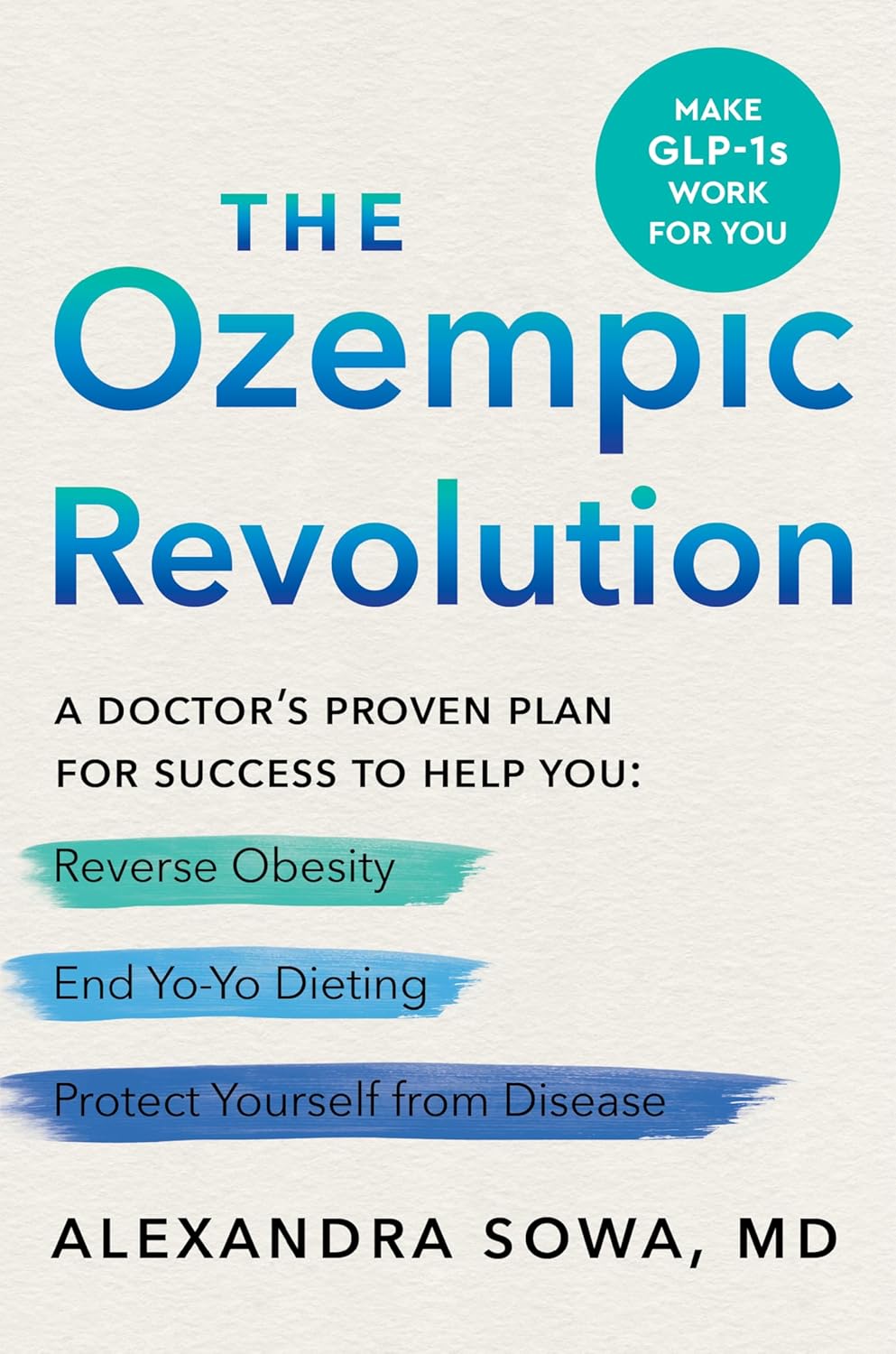
What are the risks? And more importantly, are they right for you? That's why I'm so excited to have Dr. Alexandra Sowa with us today. She is the author of the Ozempic Revolution and a boardcertified physician specializing in obesity and metabolic health.
She's here to break it all down for us. The science, the risks, the benefits, and also how to approach weight loss in a way that feels empowering and not overwhelming. If you are ever feeling stuck or frustrated or just plain confused about what to do next when it comes to your health, this conversation is one you're going to want to hear. Let's figure it out together. And welcome Dr.
Alexander SOA to The Tamsen Show. Dr. Sowa, let's start with your background. I am a dual board certified internist and obesity medicine specialist and I've been practicing exclusively in obesity medicine for 10 years and I found this amazing small specialty early on because I became very disillusioned with the traditional medical education. It was wonderful, but the majority of it was focused on end of disease care.
And I just knew there had to be a better way that we could help prevent. And we knew that losing weight prevented and improved a lot of diseases, but there weren't a lot of tools. And so then when I found this little specialty, I just dove head first. And I've been so lucky to be an early adopter and an early part of this evolution of medical care because this type of medical care has been going on for a while. And just recently we've started talking about it.
Really? Yes. Actually, GLP-1 medications have been around since 2005. They are not new. They have gotten better.
They've gotten more effective. And with that has come a popularity, a surge of awareness, but we know these medications and I've been using them for a long time. And that's so interesting to me because I think I've heard this 20 times when when these when GLP1s are brought up like well we don't know the long term you know what happens long term we don't know but we do know we do and there is a very robust body of evidence that shows us that these medications are effective and safe and what's coming forth is even more and more data as we look at subgroups. So people use that as I think a fear-mongering tool. I I hear that a lot, you know, they're new.
And I think people should be skeptical of medications and we should do the research and you should feel informed. But with this particular class of medications, we do know that they are safe. And by the way, anything that's overused, anything that's abused is not going to be safe. So, you know, put putting that out there and we'll go back and we can go back and address that because I think that's really something important that we have to talk about. So, let's start here.
For people who are listening who might not know, can you can you talk about can you explain GLP1? What is a GLP1? Yes. So GLP-1 encompasses this whole class of drugs that colloquially we use ompic, right? But really the drug class is GLP1.
And that is a hormone that naturally occurs in the body. And we've figured out a way to make a synthetic version of that that's actually more effective and stronger and lasts longer than our native hormone. And this medication has become very effective for managing both blood sugar and for weight loss. And now we're discovering added benefits of it. Not a one-sizefits-all solution.
No, not at all. Not at all. I mean, not a one-sizefits-all solution at all. But for particular subasses of people, it is the most effective tool we now have. And the reason for that when it comes to weight loss specifically is that it is not just an appetite suppressant.
It works all throughout the body. There are GLP1 receptors everywhere. And the biggest ways that we see them, I call them the superpowers in my book. They target the brain. They target the gut and then they target the pancreas at the level of blood sugar and insulin.
And together they make it so that you are not constantly thinking about food that your body is more effective at utilizing said food and keeping blood sugar nice and stable. I I found it fascinating reading the book understanding just trying to understand it all. Didn't know they were everywhere. I didn't know I didn't understand any of that because I don't I don't think we do. How exactly do they work though?
So you're taking it weekly. Are they all weekly? I don't no actually so the first iterations of this drug were actually daily for weight loss and weight loss and as we've moved through to more effective tools for both blood sugar and weight loss we now have weekly injectable medications and in the pipeline of drug development is actually a monthly injection or oral pills and so we are going to have different ways to deliver this hormone. The the medication mimics, as I said, a hormone that naturally occurs and is released in the gut. And ideally, we would have a great homeostasis, a great balance of how these hormones work, and we would all stay in a nice and lean state.
Unfortunately, something happened around 1980, and we can blame it on a lot of things, including corn subsidies and how we started processing food. We moved away from whole foods and our environment has changed, but we became significantly overweight as a population and it's grown year over year over year over year. And once that happens, hormones become significantly disregulated. And I I I really talk about this in the book. I hope in a very understandable way.
I think it's important for every patient who's trying to lose weight or needs to control their blood sugar and is thinking about these medications to understand why it's so hard to do it on your own. And it comes down to hormones and GLP1 and GIP, another hormone that we see in some of these dual agonist hormones, the two hormone drugs, they become disregulated and they don't work like they should. And so your hunger is out of control and you're no longer full and your body is not effective at taking food and burning it. Instead, it just shuttles it all over to fat and it's just very very powerful. You know, people think fat is just a nuisance, but it's a very powerful endocrine hormone organ.
So, it just kind of takes over everything out. So, it becomes almost impossible to lose significant amount of weight on your own because you're almost trying to play catch-up with your own body at some point, right? You're working it's your body is working against you. Let me ask you this because I I think it it it always brings up very emotional issues, you know, for people because we have we've we go out there and the magazine headlines and all sorts of are like, you know, do this, you'll lose weight. And essentially they're saying if you have enough willpower, you will lose that weight if you're good enough, strong enough, successful enough.
That's not the case. It is science. No. No. And we've all been fed this for a long time.
Weight loss is not about willpower. It is biology. Now, some people are able to do it through diet and exercise alone, and that's amazing. But study after study, person after person shows that the majority of people will have a very hard time losing a significant amount of weight for health through diet and exercise alone. So every person who comes to me carries the burden of every failed diet of every day that they get up and say today's the day and at the end of every day when they didn't do a good job they'll say tomorrow is another day I'll start the diet tomorrow.
They come to me with the trauma of childhood of a grandmother poking at a belly being well-intentioned but causing this deepseated pain. And so it is a super emotional journey. And people have been told for so long that they're failing that it can be such an amazing relief, but it's a complicated one when I say, "Hey, let's help and let's let's take some of this burden away from you." And it's not because you're weak. No. And I think that that's what a lot of the fear is like, I'll do this or I can try to do it on my own.
And you're saying it's not an either or scenario. No. And what's amazing about these medications, they really aren't a magic wand. And that's the biggest misconception. People think that, well, I'll just take this and I'll go to McDonald's every day.
And I do see this on social media and I really hate it. While you might be able to have an expanded repertoire of food when you're on this medication that you can eat a little bit of this and a little bit of that, you really have to change your habits. And so, actually, some of that those things that people can do on their own, we need to reinvent them and bring them forward when you're on this medication. And we need to embrace all the healthy habits and the nutrition and the behavior change and the exercise. We just need to shed the failures of the past in order to say, "Okay, this time actually will be different." So, how do you do that?
Because I I think that we're we're saying two different things. You're saying like, "Okay, I'm I'm going to do, you know, I'm going to do a GLP1, but I do have to do all that other stuff that I didn't want to do before I came in to see you." We start small. We start really small. And in the book, I lay this out. I start all of my patients just with habits.
Habits first because if I give you a food plan, you might be able to follow it strictly for a week, but you have to come to adopt those eating behaviors. And how do we do that? We do that by getting into small habits. So even before getting into habits, I'll have people tell me why they're doing it. They need to find their why.
And so it's not just me telling them to do something, but they know and they bring their unique why to this. And I always tell people, one of your three wise, give me three W's. One can be rooted in vanity. Like I want to like I was just thinking my wise while you said that and I was like, "Oh, mine mine's too vain. I don't want to tell her." Well, we're human, right?
So that's natural. But that can only be one thing. And then you have to dig deeper. And if you can't find a deeper reason for doing this, for improving your health, for getting on the floor and playing with your grandkids or being able to hike up a mountain, you're going to fail. And you need to write it down.
And you need to reference it often. People forget once they start feeling good and they start losing weight and they've started to master some of the habits and the eating. Sometimes people come to me and say, "Oh, you know, nothing happened this month. I didn't lose any weight and I'm feeling defeated." And I'll say, "Well, let's go back to our original wise." And they'll be like, "I can't remember." And I'll be like, "I have them written down because I'm your doctor and I keep good notes. They're right here.
And let me remind you." and they'll be like, "Oh my gosh, I I can't believe my why was walking up the subway steps without getting winded." Mhm. They forget. So, it's really important to actually go back, reference, and then create new wise, but always remember the original starting place. So, that's actually even more important than I'd say than getting into habits. But then we have to we have to look at creating good healthy behaviors.
And it really starts with just okay, what am I going to eat today? And let me think about how I'm going to plan and let me be emotionally neutral about this. Let's not make it charged. Let's not wait until the last minute. And so those are some of the healthy habits that I have people start even before we change anything else.
What's I was going to ask you before somebody comes in and you decide what what they're going to do, if they're going to do it, how they're going to do it, do you do they leave with something actionable? They have to put their wise together. And what is it that they that they should do that night when they go home? Because taking taking a pill or a shot or or however they're going to do it is not going to change right away. Exactly.
So, and actually even before I have I start people on on medications, they all get a little frustrated with me, but I'll say and and I lay this out fully in the book so you can do this at home, too. But I want you to just start writing down your food, not tracking calories or macronutrients. I want you to write it oldfashioned, old school. And then I want you to tell me how you felt about it. And I also want you to think about your hunger.
We get so far beyond being connected to our food that we forget that really it is sustenance on the primary level. And then there's an enjoyment factor. But I don't want to hear well I'll hear it. But I hope that we can work on I'm bored. Yeah.
I'm sad. And you're turning to food is your only sense of comfort. And that's really important to track. It's actually important to do this before we start the medications because the medications can very quickly quiet all of that noise. Okay.
And if you don't work on it first, you won't even be aware that it's something that we need to identify. So, I'll have people do that. I will also have people work on being emotionally neutral about stepping on the scale. That's a hard one. This is very triggering.
I know many people are going to say, "You sound like the diet doctors of yester year. That sounds terrible." But a scale is a tool. A scale is a tool like a blood pressure cuff. And we need to learn how to embrace it. And when you go on these medications, we need to know how fast you're losing weight.
You know, we need to know if you get to a place where we need to stop losing weight. And we have to work on becoming comfortable. And that actually I have my patients look at as a basic habit, too. Just like brushing our teeth. Like I'm a person who brushes my teeth and I'm a person person who gets up and just steps on the scale.
And if I forget, I don't beat myself up. I don't not do it tomorrow. I don't tell myself I'm a failure. I just I just do it. And so we really work hard on that.
And that is a big trans transformation for my patients. And most of them don't believe me at the beginning. But if we continue to work on it and build it into a habit foundation, it can be just it can feel like taking the old, I was in television and to me and the time and you remember that that time in life skinny equal success and anything else equal failure. And so I had come come up through being a a cheerleader and a dancer and you got weighed. You had weighed in weigh-ins and if you weighed too much you didn't perform that weekend and that was it.
And you sat out the game. And so I had no idea that those were all eating disordered thoughts. And so I hit 26 and went full into, you know, being bulimic. And worked out, you know, 888, worked it all off, starved, went back and forth and didn't get on a scale for years and years, maybe decades, and and would go into a doctor's office, turn around the other way before I got, you know, while they would weigh me. So I didn't see it.
I didn't want to be told. So those are really emotional things that are really hard to let go of even now even even now that I feel like okay I'm not I'm not doing that anymore but I do remember those things. So when you say step on a scale, I go, "Oh, whoa. Do you have to do that part?" Course of course. And I would say that everybody is individual.
And if you came with a story like if someone came to me with a story like that in in my clinic, we do things differently based on people's needs, right? So advice that's general might not always be right for you. But if we have something that's so triggering too and brings up deepseated fear, we need to work on that. We need to work on that and it might and honestly we might need to do it outside of our office and it's it's working with a therapist to kind of unwind some of that behavior and thinking. Did you think your career would bring you here?
Because I know you're a big advocate for these weight loss drugs. I I think I always hoped for it. You know, I have been standing on a very lonely soapbox for a long time shouting from the rooftops that we had medications that could help people treat disease. I am here because I come from a family of women who carry excess weight significantly and the conversations growing up. I was very very loved and I had two grandmothers who just constantly were talking about dieting and not really even in a disordered way but in a way that they just knew they had to lose weight.
So they would just try everything and anything. My poor grandmother was put on a watermelon diet when she was pregnant with twins and it probably set off a a firestorm of issues with her basil metabolic rate and every day after that she really obsessed over food and food brought her a lot of joy and it was a big part of how I was raised too. But there was a really deep sadness in her struggle. And so I think that has always carried with me. And I've teared up multiple times on the press tour for this book because I just keep thinking of her.
And I just wish these medications were around. I wish our knowledge of understanding that even independent of the medications, our knowledge of understanding that weight is so much more complicated than what you're necessarily eating or not eating or moving or doing. And it would have brought, I think, a lot more joy back into her life. So, just, you know, just for the why of I'm doing this, I think I've always hoped that this little specialty that was just about 4,000 doctors up until very recently. I think maybe it's doubled now to 8,000 out of a million doctors or obesity med doctors.
You know, I was hoping that it would come. And so it's amazing to be embraced and for people to be interested. But with that, I worry that some of that pendulum is swinging back the other way and instead of bringing a healthy message where there is room for, you know, negative thoughts and negative usage of these medications to come in. Well, that's what I want to talk about because I think there's a lot of mis misconceptions. We know that from the book, but also there's a lot of abuse and misuse of of of anything that seems to have a great outcome.
So I I want to get first to compounding. How how is compounding or micro doing? These are a lot of words that we have all mixed up into everything. Can you explain the difference with some of these things and what it means before we go forward into that? So, these JLP1 medications, especially once we talk about the weekly injectables, they're all under patent and they won't be off patent for many more years.
And the FDA has a little bit of a loophole that says when a drug is in shortage, we might create a copy in a compounding pharmacy. And because these medications did face shortage, there was a rise of compounding pharmacies. And it does remain at this very moment to be seen whether compoundingies will be allowed to continue to produce the the medications. People really do need to know that these medications are not FDA approved. And because they're under patent, we're not entirely sure what is in these medications.
That is not to say that compoundingies aren't amazing and they're not testing these medications, but it's just not what has been studied. And people need to know that. And my my big my biggest concern about compounding medications is that the way that I am receiving the ads and the messaging around it is that a lot of people who are getting it are getting it from places that aren't providing holistic care. It seems to be a little bit of a transactional like here it is. Yeah.
And then here's like a quick visit and it may be asynchronous and you're never really meeting with a doctor and nobody's looking at your labs and looking at the big picture and taking the full assessment from mental right down to like what's going on inside your body. So I think it really speaks to a bigger conversation of let's just be careful with how we use this medication, right? Micro doing explain what micro doing. Micro doing is very trendy. Truthfully, I'm not entirely sure what micro doing means.
I haven't Oh, good. Me neither. I I was like little amounts. Well, I've been quoted in like a million articles at this point talking about it, but I still am not entirely sure what we're all talking about. Okay.
So So micro dosing, I guess. Well, let's just talk about it. So these medications all have different dosages and it takes months to get up to the full dosage and the medications the FDA says this is the most effective for weight loss. This is where you should be at these different do is that right with someide you start at 0.25 and you go all the way up to 2.4 milligrams weekly and it takes 5 months to get there. Now not everybody needs to go up to that full dose.
So I have patients who start at the lowest dose. It's gang busters. We keep them there. Is that considered micro doing potentially? I guess because the FDA does say that we believe that we go V is most effective for long-term use at 2.4.
I actually have to fight with insurance companies a lot about this, which seems crazy to me. They'll say we only approve for long-term use the full dose. I'm like, well, my patient doesn't need that. And so, we have to go back and forth, and it's it's a huge pain in the butt. Is it because it's so new to them?
I think so. I don't know. We get lost in some crazy. I'm sure universe when it comes to this. The social media hype around micro doing I believe comes to let's take an even smaller than commercially available dose of these medications from compounded ones.
Compounded maybe they're splitting up the vials. I'm not entirely sure but generally I think this means that it's coming from compoundingies. In rare cases I have I have given patients smaller than standard doses be whether for side effects. My biggest fear is that I've seen it used as a technique to say we're use we're treating this for other things just general inflammation just we just need a little bit. That's not been studied like at all.
And so we have to be very careful about creating our own concoctions. This is it's an amazing drug but it's a drug. So what has it been studied for? Start there and where it started. So it started with management of type two diabetes blood sugar and that's where it was for a long time.
We had our first so 2005 weight loss drugs or sorry diabetes drugs type two diabetes and then about 11 years ago we got our first FDA approved medication for weight loss and now it's evolved and we have an equal amount for type 2 diabetes and weight loss in the most effective versions. So it's approved for weight loss at very specific BMIs a BMI greater than 30 or a BMI greater than 27 with something called a coorbidity. So, another health issue that that we believe and has been shown to improve with weight loss, that's not that much weight actually. And a lot of people say, "How much weight is that?" I'm curious. It just depends because BMI is not an exact number, but it's people will be surprised.
I I get a lot of comments, well, no, that that person and I can size them up and say, "I'm not sure if that BMI is healthy. Don't worry if you meet me in person. I'm not doing that in general." But I just think that there is a misconception that people are abusing it at at thinner weights. Now, we really don't want to take it if you don't meet this criteria because it is a lifelong medication, right? And so, we have to understand that for most people, it really is a lifelong medication and we really do need to understand that we need to look at the risk benefits and these medications have been approved in the management of type two diabetes.
We're having all sorts of new indications come out. So, recently we have approval for sleep apnea. We are seeing approval for secondary prevention of heart disease and stroke and cardiovascular disease with underlying known heart disease and it's being studied for a lot many more conditions. So I do think we'll begin to see more and more people using it because we're reducing their fat. Yes.
But also we are seeing independent benefits beyond these medications because they work all over the body. They do reduce inflammation and so disease burden is reduced even without significant weight loss. So you say okay this person is qualifies for GLP1. They started they started at a 0.025 which would be the lowest where they begin once a week. Let's just we go there.
When do they start seeing results first of all and how do they counter the side effects that you know somebody somebody that I know very close to me started and went off and said I I can't deal with it. So when do you start seeing this the effects? Same day, next week, next month. Every person is different. People might say, "I don't feel like eating today." Yeah, it's really different.
So, so I I let people know that in the book. And I think people freak out. They're like, "This drug isn't going to work for me." And I'm like, "Well, just this dose at this week. Let's trust the process and then go up next month." and then some people take their first shot at the tiniest dose and they are like, I I don't want to eat anything. I don't want to drink anything.
This is a miracle. Or I don't feel well. So, there are side effects with these medications. The side effects really are secondary to how the medications work. And so, people need to know that we they're there, but we can mitigate them if you're prepared.
And they do get better generally. So, as we kind of go through the weeks on the first dose, it gets better. And then as we get to kind of our final dosage, you'll be feeling well. If someone has to stop these medications due to side effects, that means two things to me. One, there was no behavior change, how we eat impacts how we feel on these medications.
And so, I laid out a whole plan in the book. It's like, here are the food foundations. This is how you're going to feel the best. It's also why I love people to log their food and how they not just what they ate, but how they feel because they'll often find that there are specific triggers. The greasy foods will have an effect.
Anything processed? Anything processed? Yeah, a lot of processed foods, especially carbohydrates, actually. Is it just fight it? Is it just fight the the medicine?
Does it It's because the medications are so effective at kind of scooping up blood sugar and you just don't feel great and our body really gravitates toward whole foods on these medications and that's where people feel the best. It's really fascinating. It really is. So changing food from the from knowing how to eat and most people who are getting the prescription are not giving any guidance. So it's not their fault and there are other behaviors.
So we need to make sure we're not overeing at all. Like that's why I have people track their hunger from the very beginning because if you overeat even a little bit even if it's such a small volume and it's not me pointing a finger saying you're eating too much but it can trigger feeling nauseous. And people don't know this, but the GLP-1 medications don't only decrease your appetite, they decrease your drive for thirst. So then you're not drinking water. And what happens when you don't drink water?
You feel terrible. And so staying hydrated, eating the right foods there, they are really important. The other thing that if someone is not doing well on the medications, it can also mean to me that they started at the wrong dose. Some I see that sometimes people the doctor thought they were starting them at the starting dose and the pharmacy filled the wrong prescription or the doctor didn't know better. It's very it can be confusing or someone wasn't asking them if their side effects had gotten better and then the next month they went up.
So every single person is unique and that's why I I tell people if you're not feeling well in this specific dose you have to talk to your doctor and we have to try to troubleshoot it. We see a lot of women you I talk a lot about menopause per menopause. There's a lot of frustration about belly fat, weight distribution, feeling different. Maybe somebody that wouldn't come see you 10 years ago is sitting in your office today because they cannot manage that and and feel different. And I think there's a lot of other things that, you know, come with it.
Thyroid issues, all sorts of stuff that happen as you hit midlife and especially menopause. Are you seeing a lot more women in menopause talking about this, taking it alongside hormone therapy, realizing hormone therapy might not do it itself and they need something else? Yes. And I what I also do see is people come to me thinking that a GLP-1 will fix everything in menopause and I'm like like it will fix it. Why doesn't it fix hot flashes?
Exactly. Or sleep. So they are being used in tandem a lot more now. And can they can be used? They can be.
Yes. Yes. I think that it's wonderful to use these medications in menopause. I think where it gets tricky is someone who's very very lean and then puts on a little bit of belly fat. They don't feel like themselves and they don't fit into their last size of pants.
There is a question of do we need to use this here? I the jury's out. Really? I think we really need to study this population. I'm I'm I'm laughing because I'm telling this to you.
You're like, "Yes, nobody studies this population. Please, I'm begging you." but I agree with you. And so what what is the answer to that? Because I I will tell you that I talked to my doctor and I said, "Listen, the belly fat's not going away. I'm not fitting in anything.
I feel everything feels tight and awful. And is it 5 lbs? Is it 10 pounds? Whatever it is, I just feel it. I do feel it." Yes.
And that was the answer to me. And I said, "Oh, I don't know if that is that for me." So, so how do you distinguish somebody that should go on GLP1s that's in menopause and dealing with 10 pounds, 15 pounds or somebody that is really at risk in terms of people you have studied and work with? Two things labs, labs become crucial. One of the things that happens in Perry and menopause is insulin resistance. Insulin resistance talk a lot about it in the book is a main driver of weight gain.
Mhm. And insulin resistance leads to significant disease. So we need to be looking for that and it's often very much overlooked. So hemoglobin A1C is a predictor of diabetes where it's it's the marker for diabetes, average blood sugar. By the time you get to an elevated hemoglobin A1C, pre-diabetes, you've had insulin resistance for a long time.
So we need to look at the level before full-blown insulin resistance. We need to look at early insulin resistance. And so if that's present, that says something to me. We do need to be looking at things like thyroid. We need to be looking at overall metabolic health.
The other thing is body fat. Okay, this we are behind the times on looking at body fat as a measure of of optimal metabolic health and using it as a screening tool instead of BMI. BMI is easy. It is cheap. It is a good screening tool.
I'm not going to throw it under the bus. People hate it, but it height and weight, body fat. Now, that is a lot more complicated to get and I talk about all the ways to test that in the book. And there are some more affordable options. That's where we need to start going.
And that if we have a body fat percentage that is creeping up in menopause, we know that that is not going to bode well for longevity and health. And so maybe it's time to have a more nuanced conversation about the use of these medications for a woman in in menopause. What is that body fat ratio percentage? So so there are many levels of what we consider from fitness. We want a body fat percentage under 30% for women.
All right. So under 30% if you saw somebody come into your office over over 30% 35% you would say here's what I suggest GLP1. Well, I think again, you know, we have to look at the whole picture and it depends on maybe where you started, too. So, if you're telling me that you went from a be a a body fat percentage of an 26 to well, 15 would be we were talking. There are some women though that are saying when I was 26 years old, this is what I was and this is where I am today.
So, help. Well, look at 36. Let's maybe not go back as far as 26. But having a predictive body fat percentage and then if there's a significant gain of body fat, that also signals to me, and this is this is the hard one, but strength training needs to be part of our education from a very very young age. And we need to stop looking at exercise for thinness because it doesn't actually work.
And instead looking at making us all strong and looking at body fat percentage. We talk a lot about the strength training. I also think there's going to be the need to really learn how to do it right and that the need to understand where cardio still fits in. Like you can't just forget cardio, but I think that we've we've got so much more to learn there too. It's like we're on a learning curve in a lot of different areas.
I know there's the concern of body positivity and making sure that we keep that as always part of this conversation. How do we do that when we have some people that go so far with the I mean sometimes you go so far with these that you are losing a lot of weight. How do you say okay it's time to scale back and feel okay with that? Cuz I wonder, you know, you start seeing yourself look different and you start getting praise and you start hearing people notice something different, you feel more confidence. It's hard to say, "Oh, you know, I'm going to stop." So, the third foundation in my book, we've got habits, we've got food, and then it's the thought mental foundation.
This is really important. We need to stay on top of how we're feeling in every part of this journey. And I've seen so many patients, I've gotten pretty good at predicting what people are going to feel. And there will be some time in this journey and where you receive what you think should be a compliment and it does it's not taken that way and you'll come undone or you get to a place of the BM your BMI is so low that I as a doctor will say hey you are one of the hyperresponders and we've gotten to a place that is so normal I need to pull back on the medication and people will say but I don't I don't look like how I thought I was going to look right and we need to address that That is mind work and that is mental. Body dysmorphia is real.
And it is very hard for someone to understand that the way that they looked at a certain weight 20 years ago might not be the way that they look now. Right? We age. We age every day and our body at the same weight will look different even if we don't gain a pound. So we have a we just have constant work to do.
And you know, my my therapist friends are my colleagues, they need to be a big part of this conversation, too, because it's not always easy for everyone. And when it comes to body positivity, I think GLP1 medications can be incredibly supportive of healthy at every size and body positivity. I do not think that they should be exclusive and I do not think that they should be seen as in opposition. I think we still have so much work as a society that thinness does not equal greatness. Right?
The goal of these meds is not thinness. It is health and potentially leanness. Right? It's not about thinness. So good to hear you hear you say that because it's so important to keep driving that message home.
Once you get on these drugs, do you get off? That is the million-dollar question. The majority of people will not get off these medications. And that is because we are treating a chronic disease. And if I treat you for any other chronic disease, no one really asks me when do I get off of these.
We have an understanding generally of when we start a medication that you may need this for life and you might need to add in a second medication over time as your disease progresses. So people don't want to hear that. Why do we ask when we can get off of GLP1s? Weight bias. People still want to think that this is willpower and that if they do enough and try enough and eat well enough and exercise enough that they can somehow be smarter than this drug.
There are people who can come off of it. You will have to do the work and you will probably fit into a pretty particular box. You will be someone who put on weight in a short period of time. You will be somebody who might have been on a medication that caused weight gain and you are going to be willing to lift heavy weights. You are going to build up that muscle mass and bring down that body fat.
But even then, you are not a failure if you cannot come down or off of these medications. And so anybody who's considering this needs to have this conversation. And this is where I get worried about these asynchronous platforms and medications that are kind of just being doled out as a skinny fix. People aren't having these conversations. So, we need to be informed.
So, GLP1s will reduce inflammation. How does that help when a woman's in permenopause or menopause? Because that's a word we hear a lot. Yes. And I will say that the studies and for indication on this are kind of loose, but the GLP-1 medication affects cascades that really do bring down inflammation.
And people will tell you all the time, they just feel less inflamed. And you'll say, well, what does that mean? My joints hurt less. My body hurts less. I feel less.
I feel more like myself. And in the when I say inflammation too, well inflammation comes from blood sugar often times and that's what drives heart disease and 16 types of cancer and dementia. So we will I believe in about 10 years time have the studies that tell us actually this lowering of inflammation is preventing dementia. You know I don't want to put anything out there that all my colleagues will say don't say it yet but this is what we are kind of predicting that we will see. But that's what we're doing as advocates in fighting for these research dollars because it can't be done.
I mean, I know we need time. I know we need time because that we have to have time to do that, but we need that research done. Mhm. Especially with the access. Okay.
So, we got an email from Sarah in Boston, 53 years old, and shared this. I gained 15 pounds during menopause. Nothing seems to work. I'm exhausted. My joints hurt.
I don't even know where to start anymore. Do I just accept it or is there something I'm missing from all of this? I can't tell you how many change the age, change the name, the same question over and over again. What advice do you give somebody like this? You got to find the right doctor.
It's really hard, but I think a whole evaluation from top to bottom, inside and out is necessary. There is some work with with a with the menopause transition that does need to be done that can't be fixed with any medication. And I know we all know that, but that shouldn't be the only answer that's given. So, working on everything from sleep to nutrition to getting to the gym and you're doing all those things. Well, then it's time to start thinking about medication.
Yeah. Yeah. And I think that's hard because I think that that's a part where somebody thinks, "Am I weak because I just can't do it because I just can't be that that that superhero." No. Advice to your younger self. If you had to give yourself some advice, your younger self, what would that be today?
Lift weights. Honestly, that that's all I can pass on to my daughter is just fitness. I How old is your daughter? She's 10 months old. Oh, she's got some time.
She's got time. She's ahead of all of us. And she's got three big brothers who are really into sports. And I I do hope that she kind of follows in the path of just being fit and don't pay attention to the thinness of it all. I would also tell my younger self to just have a little more fun.
I'm working on it. You're still doing it today. I hear you. Trust me, I hear you. I wish my younger self could hear that.
Any advice that you've gotten from a woman in time that that really resonated with you, a woman that's come into your life? Maybe it's your grandmother. It's my grandma. It is. Thought about her a lot in this process and she passed about 10 years ago.
She always told us to find joy in very small things. The the crocus is blooming in spring. Find joy in it. And I think I'm just getting the chills talking about it. I think sometimes we just feel like we need so much more and so much bigger.
And my happiest patients are the ones who can just find joy in the small things. Your grandmother would be very proud. Thank you. Thank you so follow us on social at The Tamsen Show for more behind the scenes and inspiring conversations. I'll see you in the next episode.
The Tamsen Show is an original production by Authentic Wave. Executive producers Scott Weinberger, Kevin Bennett, and Rebecca Greersonen. Brand director Johanna Offnik. Our line producer is Sabrina Sere. Editing by Zach Smith and Marquee Harris.