Today we're talking about something I know so many of us are struggling with. Belly fat. That stubborn weight around our middle that shows up seemingly overnight. Nothing has changed of what they do, but everything has changed around them. It can spill into every aspect of your life.
If that sounds like you, I need you to hear this first off. It's not your fault. You're not being lazy. You're not imagining it. I hear women saying, "Everything I did is not working." Or even some say, "I'm doing more and it's just not happening." Today I'm joined by Dr.
Rocio Salis Whalen. She is a triple boardcertified endocrinologist, an expert in obesity medicine, and the person I went to when I was doing everything quote right and still not losing weight. I've learned to believe women's symptoms. We're going to talk about the real reasons why your belly fat won't budge and what actually works. This conversation is so layered, we have two parts.
The first part's going to get into the science and the truth, sharing the tools you need to start making a difference in your body. Two easy changes that don't require any medication. So, let's get started. What made you care so deeply about helping women? Because when I growing up in in during my training of medicine, my early years in medical school and in my internship, I saw how women's symptoms were gaslighted.
Number one, but second, it was we were just misunderstood. I remember my male attendings saying, "Oh, she just needs to get a hobby." Or, "Oh, you're going to get one of those. Oh, she just needs to get laid. Oh, she has nothing else to do now that the kid What did you do? I mean, I don't know if you could say anything.
You probably feel intimidated by Yeah, I was like in the bottom of the I I was in the bottom of the ladder, right, in in the bureaucracy of of training. And I remember even seeing a female attending, if she was a female attending, she was doing a woman who was going to give birth and she was checking her in her vagina to see what was the if she was ready to give birth, right? You check the dilitation of the cervix. And I remember I was in a teaching hospital and women get touched by the attendant, the resident, the intern, the medical student, everybody's learning, right? So this woman was in pain from so many digital exams that she was having, right?
And I remember the female attending saying, "Well, I'm sure you were not complaining when he was putting it in." And it stuck to me till this day. And that's more that's 30 years ago. And I remember at one point in my career early on I remember thinking, "God, don't let me become one of those women." Well, you certainly aren't. Thank you so much for being here. I'm so excited to see you.
Yeah. I I you know, you and I have known each other now for a little while and I just so respect what you do and I know that so many women had so many questions when I said that you were going to be coming on the show. So, we're going to get to a lot of those because I think that there's a a lot of shame wrapped up in even having these conversations about our bodies and how we feel and belly fat and and solutions to it. So, thanks for sharing that story because that is, you know, you hear something like that when you're so young. I can't even imagine.
But that that framed you to make sure that you never 100% never were even close to and and through my journey as a doctor, I've learned to believe women, right? Not just necessarily because I'm in that stage of my life, but because through through my journey in training, I've learned to believe women's symptoms, right? I think that is the missing link in between gaslighting and and women's symptoms. Why do you think many doctors don't believe women's symptoms? Because I think it's misunderstood.
I think we science hasn't understood completely women right I mean we're lacking lacking so many years of research in women in particular even in pregnancy so we really have not enough knowledge as we do in men and we don't know what to do about it right and we question if it's real what they're feeling what they're going through because we haven't been educated on it right and especially the WHI study I think after that colleges is residencies we stop talking about hormone replacement therapy so we forgot how to do it we we don't know even how to to approach it right so I think doctors that's what they encounter is that the lack of knowledge but the lack of knowledge should not mean no treatment should mean I refer you to somebody who will know or at least listen and say maybe I should look into that a little bit more study you mentioned being the women's health initiative of 2002 we've talked about it quite a bit on this show because it really has informed where we are today in terms of so many women feeling confused. So I want to talk in particular about one symptom that shows up in midlife. I won't even say parmenopause or menopause yet but belly fat. It comes at a time when we have a lot going on. Maybe nothing that we're doing has changed yet we feel this this tremendous change.
We see it in our bodies, then we don't know what to do about it. And anything we try to do doesn't really seem to work. Can we talk about belly fat? Because I have to imagine with the work that you do, that has got to be one of the the top symptoms women come in there very emotionally about. Definitely.
And you you said nothing has changed of what they do, but everything has changed around them, right? So the surrounding the environment is not the same as it was before and not necessarily us doing something different eating more or exercising less. It's just the environment that we are on physiologically and socially also right so in midlife we encounter many changes in our life and hormonal changes happen parallel to social cultural changes at the same time. Right? So it's the combination of those things that I feel puts us in a place that we're almost set to failure.
Right? Definitely in pmenopause we seeing the shifting of hormones, the chaotic hormonal changes that we're going through that promotes visceral fat. Right? So the fat that we had in our fertile years where they tend to be more in the hip and the breast goes centrally. So our body composition changes and then on top of that we start losing muscle mass easier.
When you lose muscle mass, you're losing your burning calorie machine, right? So then it promotes also the accumulation of body fat and because of permenopause, the accumulation happens centrally. And then also if we're symptomatic for parmenopause, we're not sleeping. The lack of sleep has a lot of rippling effect that not sleeping is going to make us tired, irritable. We won't want to work out.
We may not be following a healthier nutrition diet, right? The lack of sleep can increase insulin resistance. The insulin resistant is going to increase carb craving, sugar craving, right? So, it's just in a vicious cycle. And on top of that, socially things or familial things are happening.
Our parents are aging. Our we're losing our parents. Our kids are growing professionally. We may be in changes professionally or a peak of our career. So it's all of this is multiffactorial really what is happening in a woman's life in midlife.
As you're saying that I'm like yes okay and then that happened and I can really remember those different times in my life and how just kind of one thing layered on top of the other. Yeah. Things have changed in all different areas. It's not just the hormones but hormones do play a big role in all of that. Right.
Definitely the the drop of estrogen causes us to change our body composition. We lose muscle mass easier to gain body fat. So, it just becomes a little bit more difficult and and I hear women saying, "Everything I did is not working." Or even some say, "I'm doing more. I'm exercising more. I'm being more cautious about my diet and it's just not happening." I mean, I want to give women solutions by the end of this so they can really feel like there are actionables that they can take because it it is this thing where we're like, "Well, move more and change your lifestyle." Well, that sounds great, but if that's not working after a month or two months, you just you just kind of give up.
A lot of women feel like they're they're being told like their levels are normal, they're pretty normal, but they're not feeling normal at all. How do we define that? Yeah. So, I think that's a misconception that we going to see it in your blood work, right? But many times, like let's just as an example, pmenopause.
We know that est the drop of estrogen from premenopause to menopause doesn't go from 500 to zero. It's more of a fluctuating period of 8 to 10 years. So depending where we check in that time of the month, your levels may be at a different level, right? So let's say your estradiol level is normal. That doesn't mean that you're not in perry menopause.
That doesn't mean that you're not symptomatic. It only means that at that time, that period of time that we checked at one point, your levels were normal. They're they're clinical diagnosis and not chemical diagnosis. Okay? So any woman that they tell them, "No, your symptoms are not real because your blood work shows something different," they really have no knowledge of what the hormone physiology is in midlife because we know going in there how we feel.
And that's what you listen to. Exactly. That's what you listen to. Exactly. Okay.
So, full disclosure, I came to see you maybe maybe a month ago, maybe maybe six weeks ago and I found out something that shocked me when you you looked at my work and we we did my my analysis. So, can you explain what I have going on? I know that I heard it and then I don't really understand know that I comprehended it all, but I'm pre-diabetic. Is that right? Which shocked me.
Yes. Because I I couldn't even imagine how that happened because I feel like I'm eating right. I'm working out right. And can you explain what my level showed you when you when you saw them? Yes, definitely.
So, with your permission, yes, you have my full permission. I didn't know what you I didn't know. I actually was like I said to my producer, I does she need my consent. You have my full consent. Well, we have the verbal consent right now.
Your A1C, which is a threemon average of your sugar going back from the day that we draw your blood. Okay. So, that's a measurement that it tells us your average of your glucose in the last three months. And how that test works is because glucose attaches to the red blood cell and the red blood cell lives for 90 days. So that's why we get a threemon average of your glucose looking back.
Normal A1C is 5.6 or below. Pre-diabetic range is 5.7 to 6.4. And an A1C of 6.5 and above it makes a diagnosis of type 2 diabetes. So, your A1C 6 weeks ago was 5.8, which puts you in the pre-diabetic range. So, I was stunned by that.
We talked a little bit through it. Can you explain how that happens or what's going on diet-wise, you know, it's mostly plant-based, vegetarian. Yeah. With some some fish, but I'm not a I'm not a meat eater. Definitely.
And then we did we did a a family history, and there's no type two diabetes in in your family, right? Even your body composition didn't show high visceral fat. So high visceral fat would tell me that there's insulin resistance. Okay. Right.
And if there's insulin resistance, then pre-diabetes can start to lurk on. In your case, your visceral fat was not elevated and you don't have any family history of type two diabetes. So then we went dig in further and you had mentioned to me that you had recently in the last few months changed your diet that you went from more of a lean animal protein diet into more of a vegetarian diet. Right. You were basing your protein intake in lentils, beans, chickpeas, which are starches.
So, when we eat them in our body, they convert into glucose. Yes, they have fiber and they have other nutrients compared to a Snicker bar, but it also raises our glucose. Can I go back to the Snicker bar? But I I felt like I was doing that to And I told you this because I was trying to get protein, right? And I thought, well, if I put, you know, if I go really heavy, I mean, I was eating quinoa and and also I overdid it.
And so we see those levels. So what else did it show? I know that it was pre-diabetic. And then we also talked a little bit about Hashimoto's and thyroid. Yeah.
And also your TPO, thyroid peroxidase antibodies were elevated. This antibodies are what causes Hashimoto disease. Hashimoto is an autoimmune disease with the presence of this antibodies. This antibodies as any antibodies in our body they attack and they attack in particular your thyroid gland. With time the antibodies can attack it to the point that it destroys and stops functioning.
Then hypothyroidism comes in. Right? In your case your thyroid function was still normal. The antibodies are elevated meaning that they're doing some work there. Right?
And it could be in your lifetime or not, you may develop hypothyroidism. And that will show in your blood work. And so what is Hashimoto's? Because I've heard it. I've read about it.
I tried to understand it, but I'm not quite sure I understand it or understand what to do about it. So Hashimoto is an autoimmune disease. Basically, we're born with antibodies. Antibodies normally will attack something foreign in our body, but autoimmune diseases, it's a miscommunication. They attack our own body.
So Hashimoto is they antibodies against your own thyroid that they can it can complicate with hypothyroidism meaning our underactive thyroid. Now having present or elevated antibodies for your thyroid doesn't mean that you need thyroid replacement at that moment. Doesn't mean that your thyroid is not working. It just means that it may happen with time or it may not. Is that is that a menopause thing?
Because I know there's so many weird things that have happened since I I hit menopause. Cholesterol was weird. You know, the word thyroid even is weird that I have pre-diabetic blew me away. I think during pmenopause, what happens? There's a lot of stress in our body and and a lot from not sleeping, right?
That's one of the most common symptoms. So the not sleeping, anxiety, all of those changes in our body cause stress. Stress decreases your immune system. That's why when you're very stressed, you're more prone getting an infection, getting a a cold, a virus because your immune system drops when there's stress in your body. So in those situations when the immune system decreases, any antibodies that are lurking there will take advantage and do their work, right?
So we it's common that we see in periods of stress autoimmune diseases pop up. I'm so glad you said that because I feel like a lot of women are saying, "Oh my gosh, okay, so I just hit menopause or permenopause and now this and this and this and all these things happen." But they're not alone. I mean, you're that you're consistently seeing this with people that Absolutely. And it's a rippling effect, right, during midlife? Yeah, there's no question about that.
I want to go back to fat and inflammation and some of the other dangerous kinds of fat. I know you mentioned visceral already. When we talk about fat and we talk about inflammation, can we talk about the difference between those two and how they show up in the body? So we have subcutaneous fat that is basically what's under our skin. So if somebody has liposuction what they're going to remove is subcutaneous fat right that is not a bad fat that is not a pro-inflammatory type of fat.
Then we have intraabdominal fat which is inside your abdomen that attaches to your internal organs to your liver to your gut to your pancreas. That's what we call the bad fat. And what was that one called again? That's visceral fat. The visceral fatal fat.
Right. Right. So this can cause inviscerat is a pro-inflammatory tissue. So in that fat tissue in the atapose tissue there's cytoines which are inflammatory cells right? So they promote inflammation in your body.
This is the fat that can promote different types of cancer because of the constant state of inflammation that the visceral fat is on. Now, if it surrounds your organs, it can lead to in your liver, fatty liver, right? In your gut, in your pancreas, can cause insulin resistance. So, that's the fat that we want to target whenever we're talking about weight loss, right? We're really targeting visceral fat.
That's why somebody, let's say, with that overweight and they have high subcutaneous and high visceral fat, if they go with plastic surgery and they have liposuction, it's not going to touch the visceral fat. So they're still at risk of disease. So they'll have the vanity part might be exactly the cosmetic external part, but the metabolic part is not touch. So how do you target both of those things? Because I know there are a couple of different ways.
I know there's some new ways and there's a lot to to discuss with it, but what are some of the ways to start targeting that if you're a woman that whether you're on hormone therapy, I guess, or not? Yeah. So two easy changes that don't require any medication and we want to talk about and that first is going to be strength training, right? Building muscle. The more muscle you have, the more fat you burn for energy anywhere in your body, whether you're doing your arms, your legs, anywhere, but you need to build muscle.
Resistance training and then strength training. Okay? Right? That's one. And the second is your diet.
So, increasing protein in your diet is a must. And this is for any age, but especially in midlife where we tend to lose more muscle mass, we need to up our protein intake in midlife. Right? Also, and I'm talking about lean animal protein or whey protein. Why this two?
Because they're complete protein, meaning it has all the amino acids for muscle protein synthesis. You gave me the whey protein. I put it in my coffee like my creamer now. I mean, that's where I that's literally where I start my day because of you. Sneak it in in I think of you every morning.
Every morning with my I'm having coffee with you. Well, cheers for that. You're right, though. You have to find some ways to sneak that in. So, let's talk about some of the different ways to do that when it comes to eating because I think that that's probably the the hardest one.
And how much protein is the right amount of protein? If you're 145 pound woman, how much protein should you have? The current US guidelines tell us about one gram per kilo per day. But that's really low. Okay.
What we want to say really endocrinologist we agree that is one gram of protein per pound for your ideal body weight. Right? And to know your ideal body weight, we really need to do a body composition. But what I've seen through thousands of patients that I do body composition, the sweet spot is anywhere around 90 to 100 grams of protein for a woman in midlife. Okay.
And that is difficult to get 100 grams of protein a day, right? You just have to structure it to through the day. Our body utilizes only about 30 grams per meal for muscle protein synthesis. It's not that we're not absorbing the extra amount of protein. It's not that we're wasting it.
That extra protein goes for other functions in our body to make collagen, to make elastin. But to actually for muscle protein synthesis, our body only utilizes about 30 grams per meal. So then you have to space in between three or four portions a day of 25 to 30 grams of protein a day. So it's got to be more than just I did one, two, three meals, 30 grams. It's not going to be possible.
It's going to be 20 in the morning, maybe 30 for lunch. Because if you're doing if you're if you think you're going to do 50 at lunch, that's not going to be helpful. Exactly. That's the problem. That's that's the message here is that don't count 50 for your muscle.
Count 30 grams for your muscle. Right. Because then we overestimate how many how much protein we're eating because we're eating large amounts in one meal. But it's not going for our muscle. Okay.
So that I think that's so important because I think we think we can just jam it all in there at some point. Like I ate pasta at this point, so I'll just be eat just protein at the end and that's all. Doesn't work like that unfortunately. Anything else with diet that we should focus on in terms of fasting or eating better at different times a day because there's so many I mean my goodness if I look back at the diets I've done. Yeah, I know there's we can write books about it.
I've done I could do a hundred books on that. Fasting I don't recommend it because it's it's hard to eat that amount of protein in a 12-h hour period, in a 16 hour period, let alone in an 8 hour period. Right? So we're missing vital time of the day by fasting to get enough protein in a day because protein is also very filling. That's why you have to space it out also is so you have room for more protein in your next meal.
But if you just try to condense it in a few hours a day, you're not going to meet the the number of pro the grams of protein that you need to eat in a day. Do you feel people get shocked with that advice of eating more? Because basically that's the advice eating more of the right of the right thing but eating more. It. I think they're shocked to know that fasting is not recommended.
That fasting is not going to cause weight loss because I think it was pro very promoted that and also the amount of protein that people have to consume. And and what I find is that we tend to overestimate how much protein we're we're eating. So when I see patients for follow-ups and they're still losing muscle and they tell me, "But I'm eating a lot of protein." And then when we go back, I say, "Walk me through a day of your protein." And I always see that they're they're missing or skipping 25 to 30 grams of protein a day because they thought they were having that amount of protein a day. One of the things I talk about often is how our health journeys in midlife are anything but one sizefits-all. And yet so many weight loss plans totally ignore that.
They don't take into account our hormones, our stress, our routines, our lived experience. That's what first stood out to me about N weight. N builds personalized plans based on your biology, psychology, and lifestyle. So whether you have dietary restrictions, medical conditions, or you're simply navigating a busy season of life right now, new meets you where you are. It's not about restriction.
It's about understanding why you make the choices you do and then building those habits that actually make it sustainable. What I appreciated most is that it doesn't make you feel bad for wanting to treat yourself. There's no guilt, no starting over tomorrow mindset. Just real tools and insights that help you stay focused on progress, not on perfection. And the app makes it really easy to stay engaged by leaning into daily lessons and then check-ins from a coach.
It feels less like a weight loss app and more like a wellness guide built for real life. I'm N's menopause awareness advocate, so it's important for me to be able to recommend programs like N when it comes to so many of the symptoms of menopause, especially since it's not a one-sizefitsall time in our life. Building confidence and personal empowerment is so important to taking control of our mental and physical well-being. Stay focused on what's important to you with N psychology and biology based approach. Sign up for your trial today at n.com.
That's noom.com. How do you do the body composition? Is that a machine that you get on? Is that the mach I think I was on a m the machine right so it's an impedance machine so the gold standard for body composition is an MRI but it's expensive and it has radiation so we're not going to do that on every patient on or in every visit the second best is a dexa scan like we do for the bone also a little bit of radiation and also more expensive so the third best option is an impedance machine and this is bio electrical current that goes from your the base of your feet up and it separates the tissue It separates fat tissue, water, and muscle. So that's what we have most doctors in our offices.
And the body composition is going to measure your skeletal muscle mass. A skeletal muscle mass is a muscle that you have control to to grow percentage body fat and then your visceral fat. What What is a DEXA scan? You mentioned that. So that's what we use to see your bone mass.
Okay. But it also is helpful to see body composition. Okay. So you can see both and you can measure all of those things with the DEXA scan. Are those recommended at a certain age or so?
DEXA scans or bone scans. I mean really after the age of 50, every woman should have one. But for body composition at any age. Okay. You talked about non-med.
What are some of the ways you can do that with meds? Definitely hormone replacement therapy will help rechange body composition. We never promote estrogen as a weight loss hormone. But it will help change recomposite your body again. Right?
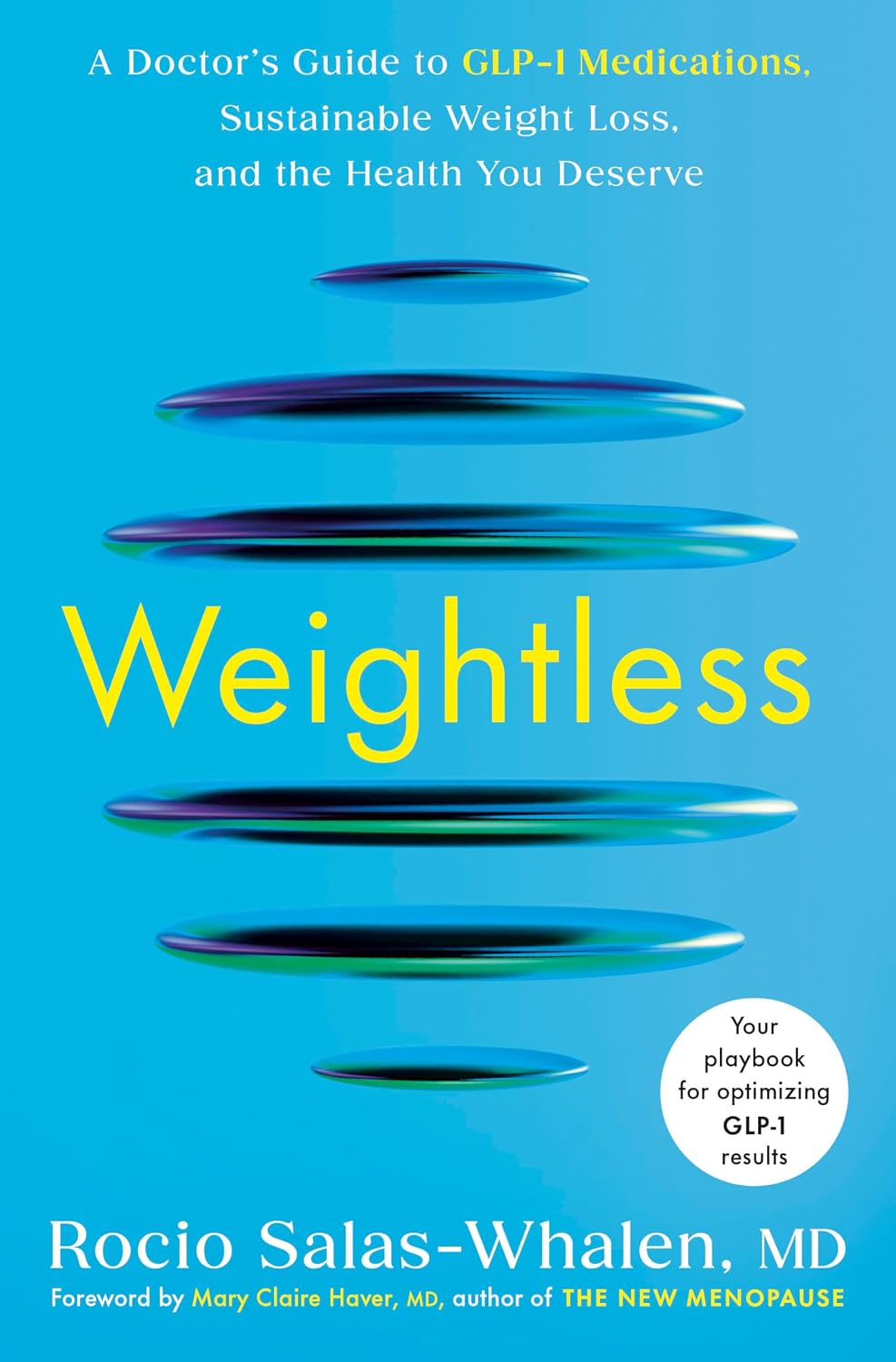
So remember in per menopause there's a drop of estradiol and an increase in visceral fat, decrease in muscle mass. So by giving you back what you're not making, we intend to see less visceral fat and more muscle mass. Right? So that's an option. And then we have GLP1 medications which are a great tool and really to have the optimal results which is body recomposition, right?
Increasing muscle mass, increasing visceral fat. GLP ones have to be along the side of strength training and protein in your diet. And I know we want to go go hard into that one because I think that there's a lot of questions about it. I think we're seeing a lot of it with hormone therapy and GLP1s doing a combination of those now, right? Is that relatively new?
It's relatively new that we're you think it's more new that we're using more hormone replacement therapy in women. Thank goodness than JLP1. Okay. So I would say it's new the com using them together the com the combination of and what about testosterone for for weight loss testosterone for weight loss also we don't promote it as as such right testosterone is an anabolic hormone so it promotes growth it can increase appetite if it's not used under supervision okay right so it will help build muscle mass if there's strength training you just won't build muscle because you're taking testosterone right you you need to strength train and building muscle will help you decrease visceral fat and body weight. I know you mentioned this time of life and a lot of things all happening at the same time and I think you know we talked about lack of sleep causing weight changes but also stress.
How does stress affect our weight? So stress chronic stress puts our body in a chronic flight response mood or moment and this can increase your cortisol levels chronically. Right? We have path a pathological disease called Cushings disease or Cushing disorder where our body is making too much cortisol right that is usually treated with surgery this is very different than from what I'm talking of just chronic elevated levels of cortisol from chronic stress but it's it still can have effects in our body so chronic stress with chronic elevated cortisol can promote waking Right. What do you see that all is that all over or is that more centrally?
Yeah. So, if you're not sleeping, you're going to gain weight. If you're not sleeping, you're not going to build muscle. So, everything that you do, even if you're eating properly, if you're exercising properly, even if you're taking a GLP1, your hormones, if you're not sleeping, that can promote waking anyhow. It's so shocking that sleep was never a priority ever.
Like, like never. It is shocking. And for many people it's still not right. Many people accept that oh no I don't sleep or or a lot of stuff is going on my life and I don't need to sleep or like they take it and accepted it. But it can spill into every aspect of your life.
So for me priority for all my patients for whatever reason they're coming to see me is that they sleep. Yeah. And how many hours is that? Eight plus seven to eight hours. Seven to eight.
Yeah. Nine hours is kind of hard. Seven seven to eight hours is more enough but the quality of the sleep too right that is continuous sleep and that is not interrupted exactly not getting up down naps and all that stuff cortisol can you lower your cortisol if you can lower your stress right so that's do you do you have a do you have a plan for that definitely I mean exercise is one right with exercise your stress levels decrease sleeping better right meditation yoga Pilates and then trying to see what in your life you can modify to decrease the level of stress. I think that you know we go we sometimes go and we learn about all these things and they feel like more stress us because we know we have to tackle them but it's funny that most of it comes back to the basics at the end of the day whether it's you know insulin resistance or thyroid. I do want to talk about the thyroid quickly and I know we we touched on it just a little bit.
It's little butterfly shapes right right in here somewhere. I'm trying not to look for it just in case I have something. What do doctors miss when it comes to thyroid? Is there something in particular they miss when looking at that or those traditionally just blood levels? I I think to be honest, I think it's quite the opposite.
I think we tend to attribute many things to the thyroid. I feel like now that we're talking about hormone replacement therapy, now that we have GLP-1, the gland that is having a ball is a thyroid. Probably that it's like finally they're leaving me alone because everything that happens is a thyroid, right? You gain weight is a thyroid. I'm not I don't feel great.
I feel tired. The thyroid I think we attribute too many things to the thyroid that that are that can be easily explained and that they're true being caused by other things, right? Such as such as midlife, waking life itself, right? Or or something else. I think if if we concentrate just on the thyroid thinking it's a we may be missing something else that is treatable and that it may be very important in health, right?
Because I feel like a lot of women in midlife seem to I mean I mean obviously you know have autoimmune never I don't think I've ever had an autoimmune. I never even heard the word before. Now all of a sudden it's right you know it's right upon me. Is that normal in midlife? Is that something that changes?
Definitely. And before we go into that, I want to say that nine out of 10 times it's not the thyroid. Really? So, it's stress and we're trying to It's It's life. It's the environment, genetics.
Okay. Hormones, aging. That's amazing. Nine out of 10. Nine out of 10 times that I see patients coming attributing symptoms to the thyroid.
It's not the thyroid. And it's okay. Okay. It's okay because we have health for other things, right? If you're permanent possible, we have hormones.
If it's waking, we have GLP1, right? Right. So, it's not that it's doom if it's not the thyroid. Actually, we have the tools if it's not the thyroid. Here's the truth.
My bathroom drawer is filled with halfus skin care products that promised a lot and delivered very little. And like so many of you, I've been really intentional about what I put in my body. But, it took me a while to get serious about what I was putting on my body. So many products call themselves clean or natural or organic and then you flip the bottle and find a laundry list of ingredients you can't pronounce. That's why discovering Purity Woods has really been a breath of fresh air.
Purity Wood's mission is to provide the cleanest and most effective healthy aging products that are out there. Their entire line is USDA certified organic, non-GMO, free of anything artificial, free of synthetic preservatives, and yes, it's cruelty-free. Finally, a product where the label actually matches what's inside. Their agedefying dream cream has been my go-to in my routine. Packed with powerful plant-based ingredients, including a fascinating red maple leaf extract.
So, if you haven't heard of it, researchers have been calling this a plant-based Botox because it actually helps protect the elastin in your skin, which keeps it firm and at the checkout. You know, I know we talked about some of the the things you have to change with diet. Gluten, dairy, alcohol. Alcohol is getting like a bad rap obviously in a very big way, but gluten and dairy are those things that we have to avoid. I mean I I just I get so confused nowadays.
If we do anything in excess, that's when we run into trouble, right? I think having more of a balance in our diet, not comp not being black and white, like completely off gluten or like in your case, right, that you went opposite, just trying to get the protein and you overdid it to the point that it increased your glucose and it put you in a pre-diabetic state. So anytime that we tip the the the scale from one side, it's it's bad. So we need to find the medium, right? We need to find the balance because that's also more sustainable long term than something extreme.
Yeah. You know, I I went I was very non-dairy for a very very long time and have now gone back to that with, you know, yogurt and some of the different things. And it actually is it's helped give me more options because I think that's what was going on is that I ran out of I ran out of options really and I'd look at a menu and I'm like oh I can't I can't have any of that and then I you know I put then I ended up in your office. Okay. If there is one thing that every woman should know right now or one test that she should do right now if she is in midlife or per pmenopause or premenopause and trying to figure out what she should ask her doctor for.
Is there one test that she should look at that you think is really important? Yes. And it's not what you're going to think. Okay. Go ahead.
I'm not going to I'm not going to say a body composition. That's the one. That's the one. Okay. Why?
Because you need to know what your muscle mass is. Longevity is directly proportional to muscle mass. A low muscle mass increases all cause mortality. We don't say that with high body fat, right? We say you're going to develop osteritis.
You we know chronic diseases can come out of high body fat mass but we don't say it increases all cause mortality as we say low muscle mass and the studies are there that show that patients that have low that have sarcopenia or lower muscle mass their mortality mortality is increased all cause mortality is increased why is that because then we're more prone to falls right if you don't have muscle mass it means that you're lacking protein in your diet and we need protein for our bones too, right? Then you're going to be more prone for fractures. It's just not going to give you the independence and also muscle is anti-inflammatory, right? So having more muscle mass, it's really equals to health. So for any woman in midlife or before midlife, you need to know what's your muscle mass, okay?
Because that's your biggest weapon to live long years and independent long years, right? That's what's going to help you get out of the toilet by yourself to get out of the bed by yourself if you fall to pick up yourself up. Right. So definitely I think very important that we know in midlife what's your muscle mass and we don't we I never I never think like that. I would never think like that.
It's not what I thought you were going to say. I know that's what I say. I'm glad but I'm glad I'm glad I did mine. Thank goodness. I can't wait to do it again cuz I'm hoping that I see some changes cuz I I do remember it was very borderline on everything and it wasn't it wasn't what I expected.
Yeah. Yeah. It wasn't and I didn't even understand how the test worked. I really didn't. Is there another way for people to figure out their body composition aside from the machine?
Yeah, they can do waist circumference. Okay. But really I mean body composition machines are pretty much everywhere now. It's I don't think there's a reason why not to have one. Even in your gym you can have one.
Okay. Okay. Okay. So, they're they're accessible. Okay.
So, you mentioned strength training and we know how important that is for muscle building. Cardio, we can't ignore cardio. It's in there, but that's not really what is going to burn that belly fat, right? Or remove the belly fat. Yeah, definitely.
So, cardiovascular exercise is good for two things. Mental health, right? And the second is for cardiovascular health, but it's not important for fat loss. Got it. Okay.
And I feel that's a lot of u a mistake that women in midlife make thinking that cardiovascular exercise will make them or help them lose body fat. For my patients, I tell them if it's good for your mental health, then keep it. But if the goal is fat loss, then really we need to concentrate more on strength training. I love that. I love when you told me that, too.
I was very happy. I well I grew up you know constantly in aerobics constantly on the stairmaster constantly sweating and off I mean you know that I I battled an eating disorder so I I have a lot of things that I have you know in the past so cardio was one of those ones where I thought I had to do it and so it's almost a relief that I understand that you know when I go for my walk in the morning that is what I do I love it I'll do some cardio but it's really the strength training I think that is making a huge difference yeah and also when you remove that pressure of weight loss fat loss with cardio you may enjoy it more. Or if you really didn't even like it, then you can do something that you actually like in regards to exercise. Right. I so agree with that.
It it makes you not dread it and count count the minutes down. Exactly. All right. So, we're going to do some rapid fire. True or false?
Cortisol phase is real. False. What is it? So, cortisol phase what we call Cushing syndrome. That's a true disease, right?
So in that disease when we diagnose confirm the diagnosis there we see cushinoid faces or or a large round face but just simple stress is not going to give us that round cushinoid face that you're mentioning. Fasting cardio burns more fat. False. It burns muscle. Right.
So, you need the energy, the fuel to support when you're exercising, when you're doing cardio. But if there's no food, then the muscle starts to break down to produce that energy that you need. You can't eat carbs after 40. False. You can eat carbs at 40, 50, 60, 80.
That one panicked me. There is no reason not to eat carbs after 40. Is ompic butt real true or false? Somewhere in between. Ompic doesn't cause muscle loss and ompic butt is referring to the drooping of the glucose and it's because you're losing muscle but not just in your butt everywhere.
Right? So it could be the oympic arm, the ompic leg. It can happen if you don't have the right supervision in this medication. All right. True or false?
You have to balance your hormones to lose weight. False. We really endocrinologists don't use the word balance so much. You can lose weight even in pmenopause if you're not using hormone replacement therapy. You can still potentially lose weight.
Midsection weight gain means you have insulin resistance. True or false? Very, very true. So visceral fat increases insulin resistant. Insulin resistant increases visceral fat and then you get into this vicious cycle.
True or false? Sleep affects your metabolism. Very true. Definitely. And we talked about elevated cortisol from not sleeping, right?
So that's going to promote waking gain. And if you're not sleeping, you're going to be tired during the day and you may be less prone to want to exercise and eat healthy. True or false? Women need less protein than men. False.
We need as the same amount of protein. True or false? Intermittent fasting works for everyone. False. It works for nobody, but many people do it.
But really, if we're talking about high protein in your diet, building muscle intermittent fasting, I'm going to make it very complicated for you to meet that that amount of protein to get that goal. Yeah. True or false? You can reset your metabolism at any age. True.
Very true. Because you can rebuild muscle at any age. True or false? Detox teas help with bloat. False.
All right. There is so much more I want to ask you about GLP1s and so we're going to stop this one here and we're going to be back with part two talking all about GLP1s. That was so fascinating. I am still shocked by some of the things she said about my lab results. I'll tell you.
Well, if you've been struggling with belly fat issues, you are not alone. It is one of the number one issues you have reached out to me about. We have part two coming up soon. We're going to get into GLP1s. We're going to talk obesity meds and then also what's really working for women right now.
Make sure you're following the show and you're subscribed. It really helps us to interview more experts and provide more answers for our amazing community. You can follow us on socials at The Tamsen Show and I'll see you back here next week. The Tamsen Show is an original production by Authentic Wave. Executive producers Scott Weinberger, Kevin Bennett, and Rebecca Greersonen.
Brand director Johanna Offnik. Our line producer is Sabrina Surere. Editing by Zach Smith and Marquee Harris. The views and opinions and information shared by guests on The Tamsen Show are their own and do not necessarily reflect the views of Tamsen Fadal or the production team. This podcast is forformational purposes only and is not a substitute for professional, medical, legal, or financial advice.