Hollywood, you know, it's all over at a certain age. And I went, "What? What do you mean? What age?" "Oh, around 40." "Okay, why?" "Well, you know, it's sort of when a woman becomes, you know, kind of, you know, she's done. She's finished.
She's unfuckable." Oh. I'm like, "Unfuckable? What? Just because you don't produce anymore. Like, that's absurd." Can you imagine if someone said that to you today?
I would have to sit on my hands. She's one of Hollywood's most powerful voices with a story bigger than the screen. Naomi Watts is rewriting the rules of midlife and she's proving it's never too late to start a new chapter. I'd met the partner, the man that I wanted to create a family. I was 36 years old.
I wasn't getting pregnant. So, I went got the blood drawn and then he called me back into his office and he said, "Your blood work is suggesting that you're close to menopause." At 36. At 36. I was so shocked. The first person I called was my mom and said, "Why didn't you tell me more about this?" I had only just separated from my ex and I had my head down with work and sort of grieving that and concentrating on my kids.
Met Billy at work and created a really lovely friendship and it took me by surprise. I hate never too late. Me too. I hate those limits that society puts on us. You just never know.
You just don't have that in your head otherwise it's just going to close you down. Today I get to sit down with someone who I feel has been by my side since the very beginning of this menopause movement. She is a true Hollywood icon. But what also makes Naomi Watts so powerful today is how she is literally changing the narrative around women and aging. She built Stripes, a brand that put menopause front and center.
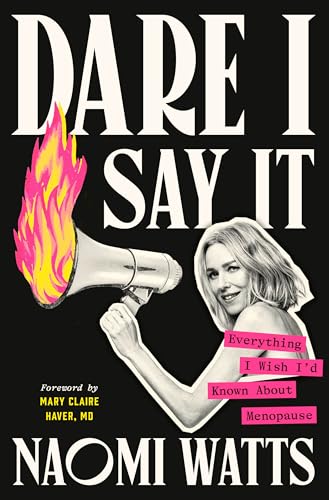
She wrote, "Dare I say it?" A book that's blowing the conversation wide open. And if you've ever wondered what is next for you, I think today's episode is going to give you the tools and the inspiration to step into this stage of life with more confidence than ever before. Naomi, it's good to see you. Great to be here, Tamsen. Thank you.
I always love sitting down with you and just talking. I know. We're just missing the cocktail. We should have done that. I'm sorry.
Yes, we should. I am. But you know what? Next time. I'm excited about sitting down and talk because we see each other at events and we and we we whisper backstage or we we sit down and talk at a dinner, but I don't think we've ever sat down and just really kind of shared all of that.
Focused one-on-one. Yeah. Oneonone. And we've been doing this now how many years where we've been showing up to places together. It's at least three.
It's at least three years. Yeah. The the very first event that you had, you know, that really where you were on stage and they told me it's very funny. So, I'm going to tell you the story and it's in my book is that I got a phone call from a mutual friend of ours, Alisa, that that said like two nights before this first time I ever met Naomi and she said, "Hey, can you come interview some people for a panel I'm having about menopause?" And I said, "yeah, sure. Who who's going to be on the panel?" And she was like, "Naomi Watts and Katie Kurrick." And I'm like, "What?
What are you talking about?" I was in a full-blown panic because I was like, "I don't what am I talking to them about? I don't know. It's like highly intimidating. And I got there and you put me at such ease and like it was such a great conversation. Be at ease.
No, I remember it. So I remember I remember it vividly too because it was my first real like sitting on a stage with a microphone in my hand talking about menopause. That was really Yeah, I'm pretty sure. I mean obviously I'd been building the brand to in the background and that is no easy feat. That's a was probably a year's worth of work.
We had product on the stage, but we weren't officially launched that day. So, I'd been talking about it with all my colleagues and whatnot, but that was my also first day. Oh my gosh. Well, I'm so I'm so glad you Well, thank you. I'm honored now.
I'm super a lot of things, T. I was very nervous. I remember my heart was racing out of control and I get up there and like I interview for a living. That's what I did for years. But I think there's something you know really vulnerable about sitting up there and talking about another part of your life.
And I I know that you and I have talked about this off camera, but you've been really honest and raw and relatable and vocal. How does it feel now, you know, 3 years later? It feels good. It really does. Very different today versus that day.
I was filled with all kinds of panic like you and particularly because of the industry I'm in and like you also was nervous about how that would you know how people would react and would that mean you know I was no longer hirable in some ways and I had been told much earlier that because I came into my industry quite late and launched in my early 30s I was told I'd better get my skates on because Hollywood you know it's all over at a certain age. And I went, "What? What do you mean? What age?" And they said, "Well," this agent at the time said, "Well, around 40." And I went, "Okay, why?" And I'm thinking I know where this goes. And they said, "Well, you know, it's sort of when a woman becomes, you know, kind of, you know, she's done.
She's finished. She's unfuckable." I'm like, unfuckable? Why are you unfuckable? What? Just because you don't produce anymore?
Like that's absurd. Isn't that unbelievable to think? But can you imagine if someone said that to you today what your response would be versus Yeah. I mean I would have to sit on my hands. Yeah.
No, it's it's crazy to think that's that was the I mean it wasn't the fault of the agent. It was just the societal message that had been seeped in so deep and been working for a very long time. I mean, when I was told that I was going into menopause at 36, I was so shocked and the first person I called was my mom and said, "Why didn't you tell me more about this?" I did know that she went in early, like 45, but I didn't know that she had a multitude of symptoms. I didn't know that it went on for a long time. And I said, "Why didn't you tell me more about this?" And she said, "Well, these are the conversations I didn't have with you because my mom didn't have them with me." And so no fault to her, it's just this message that somehow everyone agreed upon that we must suck it up in silence and soldier on and you know agism, sexism.
Yeah. And then you know patriarchy, all of it. Patriarchy. And and I think it's interesting because I mean we we both come from industries where youth is just revered, right? Did you always know Hollywood was what you wanted to do or acting was always what you wanted to do since a young age or I did I didn't know Hollywood.
I knew that I wanted to act but I didn't you know at a very young age but I didn't know that it was a job. I thought it was like a hobby like you know playing hockey or you know yeah fun doing ceramics or something you know like something you do on the weekends for classes and yeah I saw my mom on stage at a very young age. I was like five, four or five and I just remember she was gliding across the stage in all these beautiful costumes talking in a funny voice with a wig on and so professional. It was she was playing Eliza Doolittle in My Fair Lady and I was in the front row with my grandmother waving like trying to get her attention. And of course she was being focused and professional and not acknowledging me but I kept persisting and eventually I suppose to put me at ease.
She finally did a you know one of those and in that moment I felt transported into the world of makebelieve of and I sort of understood it like that's something I want to do. I want the wig. I want the costume. I want the story. I want that lady's voice.
And and so I went on as a young person to become part of what was called the Shorum Players, which was a small town I lived in. And every festive season there was a skit or a play or a musical to join in on. And that was that became my passion, my hobby, my favorite thing to do. I didn't know it was a job. I definitely didn't think it would be a career.
So your breakout role was that Mahaland Drive in a way. Yes. I I mean I had been what's called a journeyman actor before. I was working on lots of different things. What does that mean?
Job to job. Okay. Yeah. Bit parts here and there. And completely satisfied with that.
As long as I could pay my rent, I was doing what I love to do. And is it was this here in the US or was this where was I moved from Australia to the US. I had felt like I wanted a change. I'd seen a handful of people come over to America and done well and I thought, "Oh, maybe I could, you know, took some meetings over here on a on a trip through a worldwide trip. Met a lot of people and they're like, "Yeah, come on.
We love Australia. Come back." You know, a lot of positive reactions. And then I came back with my, you know, $1,200 in the bank and one suitcase and, you know, a handful of credits, but not recognizable to America. And met with agents again and they were all like, "Oh yeah, we met you. That's right.
Okay, good luck. Good luck." And I was like, "Wait, but I came here because you said." And yeah, then I entered into basically a 10-year slog of under the radar, you know, bit parts that would cover my debts and then, you know, I'd have a little bit more that would, you know, take me through to the next job. And I would consider leaving multiple times to go back to Australia to go back to Australia, pack my bags metaphorically and physically. Didn't think I was going to be cut out for this and then everything changed with Mahalland Drive. So, I sort of think about my career in two parts.
Okay. I have one small favor to ask you. If The Tamsen Show has ever made you feel seen, stronger, more informed, whatever it is, I'd really love your help. We have just been nominated for a Signal Listeners Choice Award in the self-improvement and self-help category, and your vote would mean everything. You can just scroll down to the episode description, tap the link, and cast your vote.
I promise it takes less than a minute, and it really helps us keep amplifying the voices and the stories that matter. Thank you. Thank you. Thank you for being a part of this community. I'm so excited to keep doing this together.
That whole time where you were a working actor, right? Journeyman, is that what it's called? And then you start and what what age was that then? I probably came here in my mid20s, early mid or early to mid. And then yeah, I I think I met with David Lynch around for Mal Holland Drive.
I think I was like 29 because it started off as a TV series and we did a pilot, a two-hour pilot. It was rejected by ABC for being too weird to David Lynch. Go figure. And then the French producers came back a couple years later, a year and a half later, and said to David, "Can we make that into a movie?" And he said, "Let me think if I can come up with some ideas." He wrote 20 extra pages and said, "Naomi, have you still got the costumes? Come up to the house.
I've got some pages." And I said, "Yes, I'm available. I have the wardrobe right here." And went up and read the most incredible 20 pages that took my character into a whole new sphere and life, right? Yeah. And from that day forward, I haven't had to audition again, you know, and wow, that was a very big change cuz I was, you know, in those, 10 years prior, I had been, you know, driving across town to pick up pages, you know, and then line up with 20, 30 people. They didn't fax you.
They didn't, you know, sometimes they weren't even looking you in the eye or shaking your hand. It was very demeaning time. And you were driving across town with no maps. You didn't have your maps. Yes.
Remember those? Yes, of course. What's it called? Thomas Guide or or Gregory's in in LA? I can't remember.
It's a guy's name. I know. I know exactly what you're talking about. Anyway, and pages were missing and you know, you'd figure it out though, right? Somehow we got there.
And being told that you were unfuckable. I guess that was at a young age. So, so what happened after that? I mean, not having to audition past that. I mean, David Lynch obviously like I mean just inc how incredible and for that to be kind of your first big breakout role and to go from there but at an age where I have to imagine and I get it because I was told in my first job and very different but in news that like when I hit about 35 years old I better start you know paying attention to what was going on because I was going to be sort of wrapped up and by 40 that would be done.
I mean I wonder if they the same talk goes to men as well though. Can you imagine being a man being told that? No. It doesn't even equate. But it really is how we got to the conversation where we are today.
There's no question about that. Absolutely. So we've had a lot of parallels in our lives, I think. Right. And but but the one in particular that that you have that's different than mine is that you did have a journey that started very young and you referenced it a a moment ago about pmenopause.
Can you talk about that that age and where you are where you were in terms of wanting to be a mother and and where you were in your life with relationships? Yeah, I'd met the partner, my the man that I wanted to create a family and I I was 36 years old. I wasn't getting pregnant and a friend of mine, an older girlfriend of mine said, "Why don't you go to your doctor and get some blood drawn?" And I said, "Okay, really? Why?" I knew nothing. I was clueless.
So I went got the blood drawn and then he called me back into his office and he said, "Your blood work is suggesting that you're close to menopause at 36." At 36 and that's when I just said to you I when I called my mom you know in a state of panic then I just sort of tried to figure out like how to deal with that or how to get pregnant. I mean that was my main focus. Can you get pregnant? And the internet was barely active. Mhm.
I It wasn't like I could find my way into chat rooms or anything. It was really really or chat. Yeah. Yeah. Exactly.
So I was peacemealing together what I would learn from doctors here and there and as you know as we've learned doctors at that time now things have changed were very uneducated. They had no real understanding. My doctor who ended up being my OB for my first baby as well. He was my gynecologist at the time. He told me a lot and he knew about the study.
He knew about a lot of things. You know, once I got pregnant, he talked me through the HRT thing very clearly and that was very because I've been on HRT now for I think since 2013. Wow. Which is Yeah. More than 10 years.
But yeah, the menopause thing, I I really just tried my best to conceal it. I with that unfuckable term in my in my head. I What was I I wasn't going to like brand myself as someone who's like the menopause lady. I mean, you must had double fear, triple fears. The word unfuckable going around in your head, the word menopause being mentioned, period.
Yeah. And being barren, like I wasn't going to be able to reproduce children. I was told. And who could you talk to about that? I can't imagine you went on set and were like, "Oh, well, you know this." Did you have anybody that you No, I mean, I obviously talked to my he's now my ex, but I probably, you know, it it was a very panicky, scary, lonely time.
I wished there was a book. I wish there was your book or someone else's book. There was there was nothing then. Nothing. Zero.
I do remember finding a book by Julia Indochiever. I think I'm going to get that name slightly wrong, but it was called Inconceivable. And that helped me with understanding what was going on with my body. And she talked about altering your diet and I was told that I had to do like an anti-inflammatory diet, cut out sugars and wheat and dairy and things like that. And I of course I was just latching on to anything at that time and it seemed like it all made sense and I was churning up wheat grass.
She told me to do that and yeah, lo and behold, I managed to get pregnant. Whether it was that or Chinese herbs that I trucked back from China from doing a movie there, or acupuncture or just my body working itself out, who knows? And I'm all I'm not someone to instruct what to do and how to do it. You know, everybody has a very unique system, but it worked for me and I got I got not one but two babies naturally and and then my symptoms started to become hardcore after my second baby, after I stopped nursing. And that's when the the sleep, you know, the disturbed sleep was really affecting my lifestyle, depression, anxiety, you know, the night while raising two babies, two young two young children.
Yeah. By the way, I'll just mention, and I say it in the book, I had been ticking, you know, in all of those medical lists for years, night sweats. And I was chalking it up to or doctors were saying probably an allergy, maybe If you're in midlife and you've ever felt dismissed or talked over or simply told just to deal with it when it comes to your health, you are far from alone. For years, women's serious midlife symptoms have been ignored or minimized. We've been handed vague answers, outdated treatments, or worse, nothing at all.
And even now, 75% of women who seek care for pmenopause or menopause go entirely untreated. It is unbelievable to me. I know what it feels like. And I also know it doesn't have to be this way. That's where MIDI comes in.
MIDI is changing the experience of midlife health. They are a virtual clinic built by women's health experts providing personalized evidence-based care that's covered by insurance. That's right. Midi is the only women's teleaalth platform of its kind that works with major insurance providers to deliver the care you deserve. You'll meet face to face with a trained clinician who actually listens to you.
They offer real solutions from hormone therapy to weight management to lifestyle changes that meet you where you are. This is not a one-sizefits-all care. This is your care for your second act. Ready to feel your best and write your second act script? MIDI, the care women deserve.
I think what's so remarkable, I mean a lot of women don't even realize that during that time in permenopause you can get pregnant. Yeah. But to hear that you might not be able to and you were much closer to menopause than most women are obviously at that age. And then also to be working and being that industry and the stress of a job and trying to balance it all. I I just have to say like, you know, I've I've known your story and I know your story, but as as we're just sitting here and being able to like unfold it like a little bit slower than we usually do when we're running, you know, running around doing something.
When I just think about that stress on top of stress on top of stress and nobody to talk to about it. Yeah. And the fact that you're so vocal about it now, it just makes me have even more respect for for what you're doing because you're really changing the lives of Naomi who might be listening to this right now and might be going through something really similar. And ultimately, that's why we're here, right? 100%. We needed help ourselves.
We needed community. The conversation being as shut down as it was, we needed greater support and treatment from our doctors and that required us to say, "I need help." And is there anyone else out there? Cuz guess what? Half the population. We're living longer.
They're going to need it. Chances are they're going to want the help that we needed. And like I said, I I had a friend I was saying to her, I wish there was a book. I wish there was a book that told us it's not the end. There's ways to, you know, manage this time.
How do we manage it? It I need information. I need to be told that I can still be fun and sexy and vibrant and alive and dignified and carry on with my career and owning this story. And she was like, why don't you write that? And I was like, well, I'm not a writer and I'm obviously not going to do this and tell now I have to write a book, you know.
Yeah. Tell Hollywood the the aegis industry that I know about is that would be career suicide. No way. So, you know, I I sat on that. But then I guess I got to being past 50, the average age where you're allowed to be in menopause.
And we were all stuck home with COVID and ideas were percolating. And so that's when I cold pitched the idea to start my brand, Stripes Beauty, and reached out to a biotech company and I said, I I've had all these problems with my skin and I'm on camera and we lose estrogen all over our body. It creates dehydration from scalp to vag. And I want a woman to feel empowered at this time. I want her to feel like she's earned her stripes, that she can she, you know, her experiences add up to something.
She matters. And because you didn't feel like that for a very, very long time. Yeah, I didn't. When did you finally feel like it was safe for you to talk about age in Hollywood? Or were you always a little bit hesitant even as you were making that call?
And even as you were saying, hey, I was hesitant all the way. I I mean I was really oscillating between is this a good idea or a terrible careerending idea all the way all the way through. Well like each sort of milestone moment. Yeah. Like the pitching of it.
I I you know I remember getting it on a on a Zoom call with mostly men and I'm like I was you know sweating bullets like thinking are they even going to know what are they going to be like get us off this call quickly? You know, but they seem engaged and, you know, I threw together a pitch deck on my own, like pulling pictures off Instagram and, you know, with the help of my assistant at the time and, you know, we just like churned it out and and I think we made it interesting enough that the conversation was going to be furthered and then it led to yes, we're going to take on this brand and we're going to spend this much money and this much time and do this many products and we were just, you know, thinking about it and in sort of a think tank way for a good six months and then we launched very very quickly and then you know the launch became another new set of nerves like actually letting the story out in public and yeah I didn't know how Hollywood would take it but I I in the back of my mind I just thought I needed help chances are other women would too. How has Hollywood responded? How do people that you're you walk onto a set with I mean I see one one show after another that you're doing how do how do they respond? How's Hollywood responded?
I mean it's been really great. I mean nothing but positive. I you know if the negative stuff has happened it hasn't reached me good. I feel like you know maybe someone's gone oh no she's the menopause lady or you know maybe but I don't know. I'm still busy.
The phone is still ringing. And we even got directors calling like Lena Dunham saying, "I've got this bit, you know, in my TV series and, you know, I want you to talk about menopause. How does that sound?" And I was like, "Oh my god, I just want to be in a room with Lena Dunham. She's such a incredible writer and someone I've always wanted to work with." So, yeah, it's it's worked in my favor. Ryan Murphy has created a lot of great work for women of a certain age and you know teams of women in one project whereas usually it's just you and a bunch of men.
So it's been pretty great and I've had like a bunch of people stop me in the street and say thank you for helping me understand and giving me the dialogue to talk to my partner, my husband, my you know family, my you know people at work. I'm sure you've had the same reaction. Does it feel different to you though because because I'm sure that they're like take a picture with me now and now they're like thank it's like it's a deeper level. It's it's much more meaningful. I yeah g gives me purpose.
It gives me pride and yeah I mean I've been stopped on the street and I think oh god I don't have my lipstick on. I'm out with the dog. I'm holding a poop bag and you know and and they want to talk about something really personal and meaningful and and ends up with tears in our eyes and hugging perfect strangers and and I love that. I really love that. I do too.
And I love that you love that. And I think that that's really important. I mean, you're not somebody that said like, "Okay, I'm going to take my name and put it on this product." It's it's something that you needed years ago. It's something that is a bold move, right, in an industry. We've talked about that, which is ridiculous that it's got to be a bold move, but it is.
But the bold risks, the bold risk, they do pay off. And and I don't even think you realize it when it comes from a place of of necessity and need and and purpose, right? And when it comes comes from a place of that relationships, you and I are on a parallel path of we both got married in our 50s y, right? I was 50 years old. And what when did you get married?
Won at city hall and we also did like a more celebratory you know invited lots of friends. So we've just I mean if we're going with the city hall one which is the official Yeah. It's it's just over two years. That's amazing. Congratulations.
Thank you. It's different, right? It's like 50 years old. You know who you are. I don't know what it is.
I don't know what the answer is. It feels far more intentional because you know yourself. You know you've done the work. You've had the good experiences. The bad experiences.
You've recovered, you've succeeded, you've failed, you've done all of it, and you've got this much time left. What do you want to do with that time? Yeah. And yeah, I met someone by surprise. I really wasn't even looking.
I I I had only just separated from my ex and I had my head down with work and, you know, sort of grieving that and and concentrating on my kids and everything. And yeah, met Billy at work and created a really lovely friendship and it took me by surprise and then it slow like the slowest build which I think was I don't know how it went with you and Ira, but too slow for Ira. He said it was very slow. I I wanted it to go slow and I think it made sense to both of us because you know we had our kids were still young and yeah and I I think earning building trust. I always say like Ira is a person I want to walk the world with now, you know, and I think that and I don't mean it like in a goofy like, oh, I want to walk the world, but in a way that like I I enjoy our time.
I enjoy our I enjoy him and it's easy and it's very different from other relationships that I've been in. And I I hear from a lot of women that say like, "Oh, is it it's too late? It's too late for me to find love." It's never too late. What do you say to people? Because I I feel like that's another part of your story that's really inspiring to women.
It has to be. I I hate never too late. I hate that expression. I hate those limits that society puts on us. That said, I know it's hard out there.
I've got a lot of women our age who are, you know, come out of marriages or whatever and they're looking to partner up and it's not easy, but it's you just never know. You just just don't have that in your head otherwise it's just going to close you down. And you have to have an open an open heart, an open mind. So the signal is there and it's I know, you know, attracting good vibes. I really believe that.
I I met Ira at a at a in a hotel at an elevator bank. Like that was like, you know, and I was like, "Oh, no, no, no, no, no. I'm never doing I got married before. I I'm not no thank you." And that was really And it wasn't even to be like a funny chase. It was just cuz that wasn't where my head was.
And so it was a really, like you said, surprise. Long, you know, a long road. Yeah. But but but I think that that's the way it probably should go at this point in our lives like because we've seen and experienced a lot of things and and you know where do you want to go? You kind of want to figure that out like is this my person?
Is this do we have common goals? Do we do we have the same values and things like that? Do you feel like when when you look at everything now and you look at career and relationships and you know empty nest in some ways? I know that I know that you're you know taking taking a trip to school. Every every mom I know has been doing like the college you know the college drop off.
How how are you feeling about it all? I know that's not easy. Yeah. Bittersweet. And I I'm put at ease by my son's absolute joy about the whole experience.
Like he this was his first choice. I mean, he's on the other side of the country. He's a bit far away from my liking, but you know, I get to Los Angeles a lot for work. So, and you know, we'll we'll go as often as as possible. But yeah, the anticipation was, you know, scary, but he was just there and just soaking it in and, you know, beaming ear to ear smiles and he's he's I I I think he's doing really well.
I you know, and he's very communicative as well. I thought, "Oh god, is he going to be bad?" cuz actually when they're here I couldn't get him to respond to phone calls or text messages at all, but now he does. Oh, that's good. So that's I like that. That's promising for the first year, right?
That's promising. When I look at where we all are now and we're in this, you know, the space of talking about menopause and pmenopause and you know there's the hormonal households and all of that happens during this time and empty nest and age. How do you feel now? Do you feel if you go back and look at Naomi at at, you know, in your 30s or 40s, how do you feel now compared to that? This is the thing that is great about menopause because we all fear it like it's, oh, it's over.
It's done. Oh my god, I'll never get myself back. Well, exactly. If you even understand what it is, but they I think the pmenopause stages are the most awful time. A because you don't know what's going on with your body.
Now we have the beauty of the conversation being slightly open and or much more open than when we were dealing with it. I think the fear of that is now dissipated because we have the education and the open conversation. But I was really flailing. I didn't know if I'd ever sleep again. I didn't know if my anxiety would go away.
I thought that my memory would never come back. I thought, you know, all of these things were just who I was going to be from now on and here out. But now post menopause, which, you know, sounds like an ugly term, but you know, it's it's fine. It's it's actually much more even. I've got my dosage under control.
My HRT is working. Occasionally, I'll have a sweaty night or I'll forget the meds. And you know, and yes, I still look for words. I'm like, "Oh god, I forgot the name and what is it?" or what am I looking for? You know, where are my keys?
Oh, they're in my hand. You know, all of that. Those things are still, you know, there, but they're not as as crazy all at once. I do occasionally get surprised like the frozen shoulder that what crept up on me a couple of years ago and stayed with me for a good amount of time and that was painful, aggravating, and no one seemed to know what it was. I first heard about it from you because we were standing there and you said something and I was like I don't know what that is.
I don't I don't have that. And lo and behold about a year ago I got it. Yeah. Isn't that crazy? I know.
And I even spoke to doctors and I said, "It's frozen shoulder." And they were like, "That's a cute name, but what?" And I said, "Yeah, it's caused by menopause, lack of estrogen, you know, all the receptors all over your body." And he was like, "That's cute." I'm like I'm not being funny here. I'm just saying that like I know 12 people who have got the exact same thing, but they just, you know, haven't joined the dots yet. If you've ever caught yourself wondering, am I in pmenopause? What is going on? I've made something for you.
It's my free guide called How to Perry Menopause. It's 18 pages. Inside, you're going to find insights from some of the top experts I've interviewed, the doctors, the specialists who are leading the conversation on women's health. Inside you'll find the most common early symptoms to watch for, the exact tests you should be asking your doctor about, lifestyle shifts that actually make a difference from nutrition to movement to stress, and clear next steps so you don't get stuck or feel dismissed by your doctor. You can download this for free right now at tamsonfidel.com/howto menopause.
It's also linked in the description because you don't have to figure this out alone. You deserve real answers backed by real expertise. I get interviewed often about like why do you think that this is a big conversation right now and you know and I always bring up your name in that because I do really think that because women say oh Naomi Watts went through something like that well maybe it's okay for me to talk about in terms of normalizing I don't I mean I'm I'm sure you realize you know your voice carries a a lot of weight and I I think it's a really beautiful thing and I don't know if feel pressure on that or not. But I think it's important that we have voices like yours out there talking about it to make women say because they might not hear a doctor's voice. They might not hear my voice.
They might but well I think I think thank you for saying that and I think I bring you along with that. We are normalizing it. We're all of us collectively moving the narrative and doctors as well and the doctors write their books and you know give us all the hard facts that we need and we get are able to get on panels with them and be in rooms and you know learn from them but also yes they need they need the collective experience to be reflective whether it's your story my story or the women that we include in our stories in our books your book over there so that they a woman feels seen, a woman feels understood and yeah, I'm I'm very proud, as I'm sure you are, to be part of that shift. Are you having more women in Hollywood that are talking to you directly about it on sets on what? Totally.
Everyone just owns it straight away now. They they'll go, "Oh, I'm having one, you know, like just it's their way of saying, "I'm in the club. I'm in the club." That's what I think, too. Yeah. And I get random text messages from celebrities I've not met before.
People connect us and I mention it in the book like it's like a you know behind the curtain confession thing or you know aunt or something. Yeah. Just just people want to tell their stories and they want to say yeah they want to know that they're not losing their minds or is this normal and yeah so I just I'm always there I'm a shoulder to cry on an ear to listen whatever I bring you know the menopause sister that's that's what it is okay so we know that we know that the calls didn't stop at 40 they they ramped up you've got a lot of projects out there I know that you're working constantly. I just saw the trailer to All's Fair and I can't wait. And by the way, it had the soundtrack of Chicago.
Oh yeah, I love it. I thought that connection. Another one, Tamsen. We are joined at the hip. We are joined at the hip.
How fun was that? Was that Was that so fun? Such a great group of powerhouse women who've done remarkable things with their lives in different ways. And yeah, Ryan called me and and I was taken by surprise again and and yeah, he told me the the the log line of what the story was about, which is a bunch of divorce lawyers, female divorce lawyers in Los Angeles. And already I just thought right there, oh my god, that is leaning towards highly juicy material.
Any mention on menopause? Can you tell me that part? Oh, sure. I sent them all a a box, you know, of course. So, I said, "If you're not there yet, that's fine.
It's there waiting for when you're ready." And everyone was kind enough to, you know, post about it and stuff like that. And yeah, it's we all shared our stories. I I remember that first night that Ryan bored us together and we had a dinner, a party, and we ran went around the table and talked about lube and things like that. I love that. I love what you bring to a set, Naomi.
That's very nice. The conversation, the products, the all of it. And this is Kim Kardashian's first. Is that her first? No, she had done something else.
She done American Horror Story with Ryan before. Yeah. Okay. I didn't know if you'd like if she went to you for advice. And I mean, I would be going to you for advice.
Oh, for for menopause or or for Oh, I don't know. Yeah, for acting. I was thinking, but I guess both. Yeah. No, I think she's she's still young, right?
She's still young, but you never know. I mean, let's I we don't want to put limits. No, we don't know. We have no limits. So, no, she's she's a powerhouse.
She knows what she's doing and she works so hard. She's so focused, so disciplined, shows up on time, full respect to her and look what she's achieved. Yeah, I know. I mean, and that comes from, you know, dedicating hard work. It It does.
It does. And it's And it's what you do every single day. I saw you last week at an event. I was like, "Wait a minute. I just I saw her at this.
I saw her doing this. I thought I saw her on the street acting. I I mean just really I mean for everything that you're doing, but really what you're doing for real women out there is making all the difference. So I hope you know that. I hope you know that.
I hope you know that. Thank you. Really, it's so special. Thank you for taking the time out to do this. I really appreciate it.
Thanks, Tamsen. A big thank you to Naomi. And by the way, to hear more of her story, check out her book, Dare I Say It, and her brand, Stripes. Actually, I should have done the full Monty because it's my favorite, too. It is game-changing when it comes to how to care for ourselves at this stage of life.
And I'm not saying it because she's sitting here, but she knows this. I use Resting Clean Face. I love Ful Monte every single day. You see him on my counter all the time. Thank you so much for that women deserve.