As an oncologist, would you or wouldn't you? Okay. Heat food in plastic containers. No. Don't recommend heating food in plastic containers.
All that plastic exposure can leach into the food. Use microfiber towels to clean your house. I have recently learned that they have contained plastics and that's not really safe. Wear regular deodorant. Yes, deodorant has not been shown to increase breast cancer risk.
Live near a golf course. If you're living next to a golf course, there's concern for pesticide exposure. Use nonstick cookware. I try not to use older nonstick cookware or anything that's been chipped or cracked or damaged. Burn scented candles in your home.
There are some concerns with what's in the candle. Filter your drinking water. So, let's yes, but Leading oncologist Dr. Eleonora Teplinsky is here and this is a breast cancer conversation I want every woman to hear. What actually raises your risk, what we've been getting wrong, and the things you can start doing today.
Hi friends, I am so glad you're here. Well, apparently men think about the Roman Empire all the time. I don't know if you guys remember that trend online. For women, I'm pretty sure it is breast cancer. It's one of those things that's always somewhere in the back of our minds.
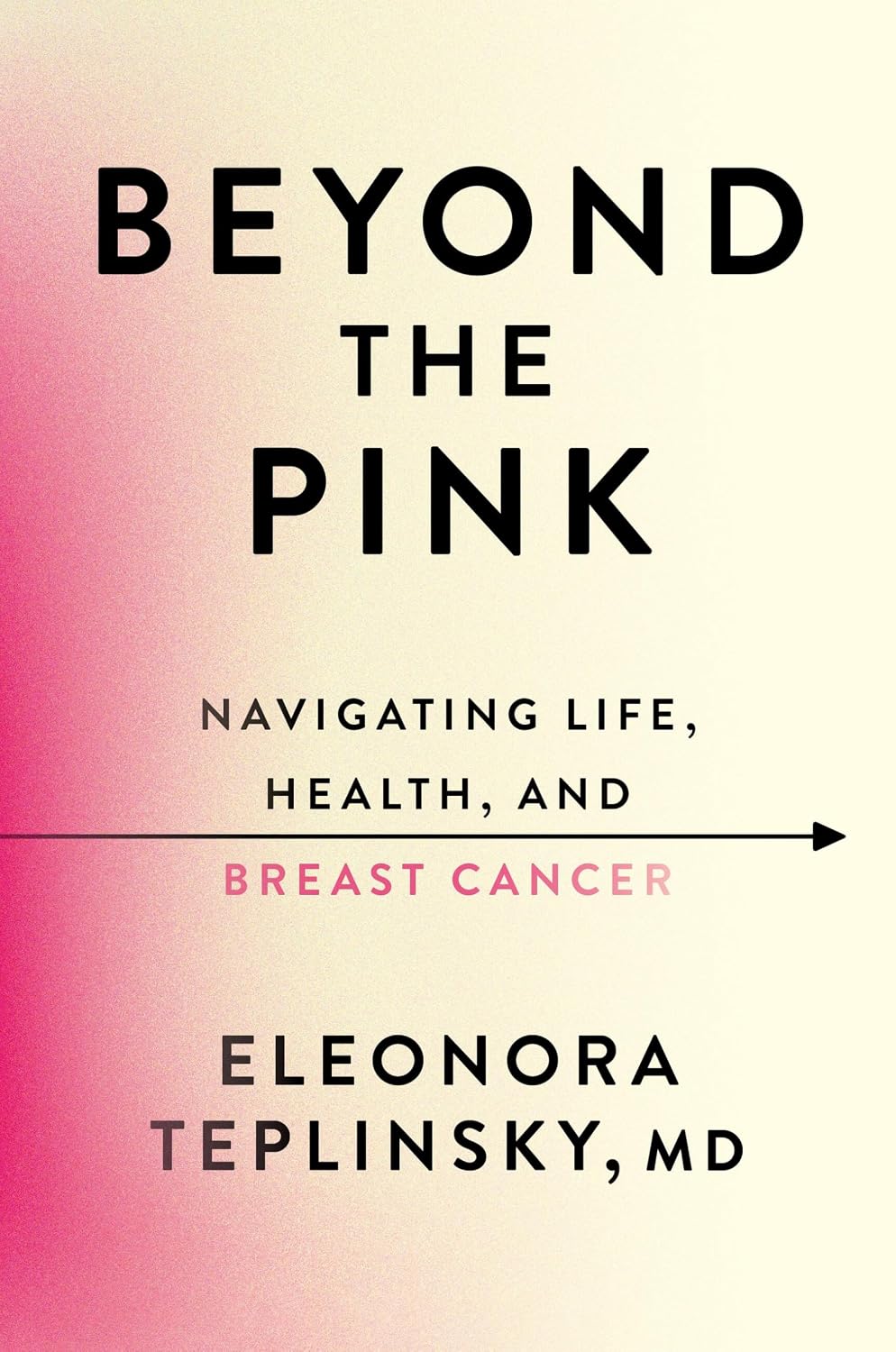
A friend is diagnosed, a mammogram reminder pops up, you hear another story about a woman who was too young, or you're like me and you watch a documentary about how harmful plastics are and you completely spiral. Whatever it is, I'm always wondering if I am doing enough and paying attention to the right things or worrying about the wrong ones. That's why this conversation today is so important. Joining me is Dr. Eleonora Teplinsky, a leading medical oncologist and author of Beyond the Pink.
She spends her days treating women with breast cancer and helping them make sense of an overwhelming amount of information. Today we're separating the headlines from the evidence and exactly where you can make meaningful changes. Before we get started, if you have a moment to leave a review, it helps us out so much and also helps us find our guests. Our whole team would really appreciate it. All right, let's get into my conversation with Dr.
Teplinsky. Dr. Teplinsky, nice to see you. Thanks for being here. Thanks for having me.
We're going to go through a few things as an oncologist. Would you or wouldn't you? Okay. Dr. Teplinsky, as an oncologist, would you drink a few glasses of wine every week?
Not every week. Maybe once in a while as a celebratory thing. So, how many times a I would say limit to less than three drinks per week on average if you're choosing to drink. Okay, that's fair. Heat food in plastic containers.
No. Don't recommend heating food in plastic containers. All that plastic exposure can leach into the food. How long have I been doing that? Use nonstick cookware.
I try not to use older nonstick cookware or anything that's been chipped or cracked or damaged. More modern-day cookware tends to be a little bit safer, but if you want to be safe, just eliminate and switch to something else. What would you use instead? Ceramic, glass. Wear shoes in the house.
No. You're just tracking in all that dirt from the outside. We're all guilty of it. I'm super guilty. Drink from plastic water bottles regularly.
So, I try to avoid single-use plastics whenever possible, but it's not always possible and that's okay. Live near a golf course. So, let's yes, but if you're living next to a golf course, there's concern for pesticide exposure. So, making sure and that can get into ground water and share drinking water. So, making sure you are test testing your water quality as well as kind of knowing where when they're spraying that golf course so you can stay away.
Wear regular deodorant. Yes, deodorant has not been shown to increase breast cancer risk. If people feel more comfortable wearing aluminum-free products, that's absolutely fine. But if you have aluminum, is it okay? It is okay.
I do. Use microfiber towels to clean your house. Yes, but I'm actually changing my thoughts on this one because I have recently learned that they are they have contained plastics and that's not really safe. So, I'm actually thinking about switching. What do you switch to?
I think I've heard all cotton cloths. Okay. Burn scented candles in your home. So, I love a good candle, but you know, there are some concerns with what's in the candle. And so, I do recommend if you are going to burn them, you do it sparingly, maybe use fragrance-free, and do it in a well-ventilated area.
Filter your drinking water. Know the quality of your drinking water, know what's in it, and then you can filter as needed. Feel reassured by a normal mammogram alone. I would say I would feel encouraged by a normal mammogram, but I would make sure you're still understanding your breast cancer risk, which I know we're going to get into, and knowing your breasts and what feels normal for you. Want to know if you have dense breasts. 100% dense breasts make it harder to spot a cancer on a mammogram and can increase breast cancer risk.
Well, before we dive in, I want to ask you something. You have spent years and years treating women with breast cancer. What made you decide to write this book Beyond the Pink Right Now? Years ago, I started really educating on social media, sharing what I thought was important. And then I started hearing from patients about what they thought was important and what they felt was important and what was not being discussed in the exam room.
And I think everyone can agree that our health care system is at a point where we have 15-to-20-minute visits. It's just not enough to cover things. And then we add in social media and some of the misinformation online. And so, there were a lot of questions. And so, my this book was my way of saying, "I'm going to put the evidence together in one place for patients who can bring that to their teams to advocate for themselves, whether it be on menopause care, whether it be on sexual health, cardiovascular health, mental health, that people have the resources in one space that will help them really thrive after a breast cancer diagnosis.
You've talked to so many women, treated so many women. Is there one thing in particular you wish women knew about breast cancer? Well, I think we can think about it in so many different ways. One in talking about breast cancer risk and and we're going to get into that, but I think for somebody who's already been diagnosed, I think understanding that it is a life-changing diagnosis, but it there is so much life after a breast cancer diagnosis, whether you're done with treatment, whether you're living with active metastatic disease, whatever it is, there are really good ways to thrive after a diagnosis and sometimes it can be hard to see that when you're in the midst of it and you're going through it. But my goal is that this book really empowers people to take charge of their own health and and live as fully of a life as they can after.
Well, I can't imagine, you know, I I think about my own mother who was diagnosed at 44 years old and I know more and more women are being diagnosed so much younger. How young are we talking about these days? Well, the incidence of breast cancer is really on the rise, especially women younger than 50 and that's the highest rise we've ever seen. And so about about 10% of women are diagnosed under the age of 45 and that is getting more and more prevalent. I will say that the average age still remains in the low 60s, but we're seeing younger and younger cancer and you know, the concern with that is that we don't yet understand why and there's a lot of research ongoing into it, but this is a population that really faces unique challenges, whether it be from menopause, parenting, fertility, [gasps] family planning, employment, all of these things are uniquely affected by a breast cancer diagnosis.
So, are the rates of breast cancer increasing these days or decreasing? They're really increasing in the younger population. So, in women younger than 50, we are seeing a rise of 1.4% annually, which is really higher than we've ever seen. We're not seeing as much of a rise in the older population. Why do you think that's happening?
Well, that's what a lot of research is trying to figure out. Why are we seeing this really epidemic of early-onset cancer? And And not just in breast cancer, early-onset cancer are on the rise in multiple other cancer types like colon cancer and lung cancer. And I think there's a lot of interest in really understanding why so that we can hopefully take steps to lower that risk. And it's not one thing.
You know, we point, we talk about lifestyle. We talk about alcohol use and diet and movement. We talk about fertility and reproductive factors. And we know girls are getting their periods earlier in life, which is increasing risk. People are having children later in life, which also can increase risk.
But that probably isn't all of it. And there's a lot of conversation now about environmental exposures. Right. Right. What is in our environment?
What are we being exposed to on a day-to-day basis? And if we can understand that, then hopefully we can take steps to lower or mitigate that risk. And environment goes to food we're eating, water we're drinking. Chemicals in our environment, plastics. There's a lot of talk about plastics and microplastics right now.
And the challenge with all of these is that we can't point to just one thing and say this is it. And then also, how do you study it? Right? So it's think about it. You can't you know, you'd have to expose people to one factor and then follow them for years and years.
And and then there's all these other factors that get in the way. And so that's what makes these epidemiologic studies so hard to do. And a lot of these studies, what they do is they actually go back and they ask people about their exposure. How much alcohol did you drink? How much red meat did you eat?
You know, all of these things. And there's bias in that. And it's usually asking at one or two time points. There's recall bias. And there's so many other factors that get in the way.
And so that's why these studies are notoriously very hard to do and have a lot of limitations in, you know, how do we interpret that data? I have to imagine make women feel blamed in some way. If you're saying, [clears throat] "How much alcohol did you drink during this time leading up to this diagnosis?" 100% and and I talk with this in the book and I say this to all of my patients at their very first consultation is you did not cause your cancer. There's nothing that you did that led to this diagnosis. There are certain factors that may increase the risk, but it's important to know that risk factors are not causal.
So, it does not mean that if you drink alcohol, you will 100% be diagnosed with breast cancer. And if you don't drink alcohol, it doesn't mean that you won't diagnosed with breast cancer. And so, I think thinking about this this is complex interplay of all the factors that we're really starting to study now and how they all work together. I think it's so important for women to hear that that you did not cause this cuz I think my mother thought that for a very long time. So many do.
Yeah, like she did something and if had she done something else, it could have prevented where where she was. Exactly. And I think that, you know, so many women will tell me and I'm sure you've heard this too when someone is diagnosed, someone will say to them, "Well, it's because you did this, right? And if you had only done this, then it wouldn't have happened." It's so awful. It's so awful.
It's puts blame, it creates shame, and it's never one thing. But I think that sometimes people think, "Well, you know, if I could avoid this one thing, then I won't be diagnosed." And that's just not how it works. So, let me ask you something as an oncologist that's seeing so many people, so many different types of of breast cancers coming into your office, what concerns you the most right now? I think that one of the biggest things of course is the rise in early onset cancers. We are seeing when I started out over a decade ago, if we had a woman come in in her 30s, that was rare and shocking.
And now so many women are being diagnosed at such a younger age. So, I think that part of it, but then the second part of it is how are we equipping our patients who are diagnosed at a younger age for both short-term and long-term optimal health. Right? How are we helping them take care of their bones and their brain, and their heart, and their sexual health after a diagnosis, not just immediately, but in the long run. And I think that there is a lot of ongoing conversation now about the treatment that we're giving our younger patients.
It's putting them into menopause, and premature menopause, and how are we, as a medical community, preparing our patients and helping them not just saying, "Well, here are the medications. Good luck." Right? We we need to do better. Well, I like hearing you say that, because there are a lot of of people that come in you come in and say like, "Look, I I got put into menopause. I didn't even know that was going to happen, more or less know what to do about it.
And here I am sitting here with symptoms, suffering." Or not even menopause. There's just been so many different things that they're dealing with. Well, in part because that was never something that was part of standard oncology education. What does that mean? It means like you you treat what you're treating, and then I mean, when I went through fellowship training, and I had fantastic training, we were not taught about we were taught, "Well, these medications can cause hot flashes, and you know, there's a to use a fan." And and that was what we were taught, right?
And so, partly is and it's changing. What one of the things I'm really inspired by is now at our oncology conferences, where oncologists are going to get their continuing medical education, at our oncology conferences, we are having conversations about menopause, about sexual health, about all of the impacts on quality of life. And that was not there before. So, I think that the tide is changing, and a lot of that has to do with patients and advocates and social media, and people standing up and saying, "Hey, this happened to me, and I deserve better." Yeah, absolutely. That's That's what this show is all about is making sure that women are armed with all of that.
So, what should women actually be worried about? Well, let's think about people who have not yet been diagnosed with breast cancer. I think the number one thing is it's all over the media. We see it every day. It's knowing your breast cancer risk.
I think this is really important. And that breaks out into twofold. One is talking with your medical team about what your breast cancer risk, when you should be going for breast cancer screening. And I am very concerned about there's a lot of misinformation right now online about breast cancer screening. And mammography is still the gold standard.
If you have dense breasts or are at high risk, mammography may not be the only imaging and we want may want to supplement that with either ultrasound or MRI. But I'm seeing a lot of conversation about not doing mammograms and I worry that we are then delaying diagnosis for the people, right? The goal for mammograms is to pick up breast cancer at its earliest point where it's the most treatable. I hear a lot of that conversation too. I get a lot of questions about that.
Should we be getting mammograms or do we not need those anymore? And to my mindset, just because that's how Well, my mom was diagnosed with from an actual appointment, from actually feeling a lump. But what do you say to people that say mammograms aren't necessary or not healthy? Well, yeah, there's a lot of concern and a lot of misinformation that mammograms cause cancer and that has never been shown and never been proven. And you know, it's not a it's not the most comfortable test.
I think we can all agree on that. But it still is the best test that we have today in 2026. Again, with that supplemental imaging. A lot of people are concerned about radiation exposure with mammography and it's really the equivalent of about 7 weeks of background radiation. We're all exposed to radiation every single day. 7 weeks of background radiation.
And mammograms save lives. There are a lot of voices out there saying they don't, but the studies show that mammograms reduce breast cancer deaths. I am really encouraged by exciting technology that is starting to use AI to actually predict breast cancer risk on a mammogram. So I think that things are improving and changing and I think we will get better at identifying breast cancer risk as we go along, but for now mammogram is the gold standard with supplemental imaging if you need it depending on risk. And that would be MRI or that would be a ultrasound.
Exactly. Yes. So let's go back to the list we were talking about at the top of the show because there were there were a lot of surprises on that. Women are constantly being told to worry about pretty much about everything. Alcohol, plastics, I saw this documentary on microplastics.
I went into my husband I'm like, "We got to get rid of all the plastic in the kitchen." And then I went I was like, "We're going to have to get rid of everything basically." And I think I've been pretty good about trying to replace things with glass. So that's not really it. PFAs, let's start there. What are PFAs when we hear that over and over again? Yes, so these are PFAs are these forever chemicals and you know, they don't get degraded and and so there's concern that they are endocrine disruptors and they impact our hormones and our endocrine system and you know, there are a lot of chemicals out there that may contribute to risk and like we talked about, you know, it's really hard to pinpoint one chemical with one risk because of the intricately difficultly to study them.
And so I like to think about you're right. I mean, we are told to constantly worry about change everything and it's like you know, you can drive yourself crazy, right? And so I think I like to think about what are things that we can do on a daily basis most of the time that are not only going to lower our breast cancer risk, but hopefully keep us healthy and feeling good. And I think a lot of that really starts with how are we moving? What are we eating?
How are we What are we drinking alcohol, stress, social connection, community. All of these things are really important. And then you add in, okay, what are the lifestyle factors that we can change? I did I I told my husband also we got to get rid of all the Tupperware. I went on this binge and I got rid of all my Tupperware and I replaced it with glass and I try not to heat up, you you take out and things like that.
But am I perfect? No, and no one's perfect and you can't you're going to drive yourself crazy trying to attain that level of perfection. And yet and I see people every single day that have done all the, you know, quote right things and are still being diagnosed. So, what are your non-negotiables as an oncologist? Because that maybe that's the best place to start.
So, maybe we get a few just non-negotiables right now. Limit alcohol use. Really? It's got It's gotten that It's Yeah. I got to tell you it's just in the last few years though, hasn't it been?
Yeah. I mean, the data on alcohol and it we know that the studies have actually shown that most many Americans are either unsure or unaware of the risk between alcohol and cancer. Yes. So, you're saying there is a risk Yes. No questions asked.
And not just breast cancer, about seven types of cancer. The World Health Organization states that there's no safe amount of alcohol to drink. So, there's always going to be risk, but the risk increases with the more that you drink. Mhm. So, some people say I'm going to cut out alcohol completely.
And other people say, "What's a safe amount for me if I I want to have a drink or two here and there?" And with breast cancer, the risk really seems to increase when you start going, you know, more than three drinks per week. So, I tell my patients on average, if you choose to drink, you know, less than three drinks per week. Wine, champagne, hard It doesn't matter. It's all alcohol. What I really want my patients to get away from is that drink of glass of wine with dinner.
The habit. The habit. The habit. And ask yourself, why are you drinking? Is it I'm a big mocktail person.
Is it I like, you know, for me I like holding that glass at an event, you know, when I'm cooking. Exactly. And so, can you substitute? There's so many good mocktail non-alcoholic drinks. So, thinking about again, why are you drinking?
And if you have been diagnosed, I hear all the time from people, "I had a drink and it made make feel guilty." Oh god. And I don't want that. Right? If you are going to have a drink, enjoy it. But, really start to think about your relationship with alcohol.
And it's not just alcohol and cancer. We know that as we get older, as we're drinking alcohol, it may impact our sleep. It may impact our metabolism. And these are all things that are also impacted by breast cancer diagnosis and treatment. So, cutting out alcohol or limiting it, it really has multiple benefits.
So, that's your first non-negotiable. Is there a Second, movement. Okay. Movement is medicine. Whether it's, you know, the American Cancer Society has really good recommendations and guidelines for how much we should move, about an average of trying to get to that 150 minutes per week.
Start anywhere, right? Start if you're not moving 150 minutes seems really hard. Start by 10 minutes a day. Walk to down the street and back. Movement, cardio, strength training, balance, flexibility, we want to build up to that.
But, movement is so beneficial. Perfect. A third? Diet. What are we eating?
And here I try to be think about what you're eating most of the time, and really limiting our consumption of processed and especially ultra-processed foods, sugar-sweetened beverages. Also, most Americans drink a sugar-sweetened beverage every day. You don't You know, at Starbucks, they just put that in there. And trying to limit that consumption. All right.
So, let's [clears throat] go back to that list that we were talking about. We talked about PFAs. Let's talk about plastics. We know we can't be perfect about it. Single-use plastics are the one thing we should try to avoid, right?
Try to avoid single-use plastics. Again, you're somewhere, they give you a water bottle. You one when you walked into the podcast studio, a a bottle of water. So, sorry about that. And that's okay.
I think it's more about and what I how I live my life and how I talk about it with my patients is what are you doing most of the time, right? Most of the time, don't have a single-use water bottle every day. Once in a while, it's fine. Okay. The other one I'm guilty about, wearing shoes in the house.
I I my husband does not do it ever, that is his thing. He actually has indoor shoes. Like he has a pair of sneakers that he wears inside. I don't I don't understand it. But, I'll bring I'll be lazy.
I won't leave my shoes at the door. Tell me why it's important to not wear shoes in the house. So, I also grew up with a no shoes household, indoor shoes. So, that was what I kind of grew up with, but there is data that, you know, as we bring we're tracking in things from the outside. So, you're tracking in dirt, and you're tracking in all these particles that then if you're walking around the house, where you spend most of your time, that can kind of get into the air that we breathe.
Okay. No shoes inside. I I promise you on that. I did a major closet cleanout. I mean, a real one, the kind where I pulled everything out, and I had to face just how much I'd been holding on to.
I cried more than once. There were pieces I'd worn one time, pieces that didn't fit anymore. Instead of just donating it all, or letting it sit in a bag in my closet, I decided to try selling with The RealReal. It was so easy. I wish I'd done it sooner.
They handled the photography, the pricing, the copywriting, literally everything. I just put it in a pile and let them do the rest. They even picked it up for me. I didn't have to do any of the steps that make selling online feel like a part-time job. And with over 42 million Cleaning products are interesting to me.
So, I went I went through another phase of this, like everything was going to be green, everything was going to be clean, everything I did my laundry with was going to be absolutely perfect. And then I I looked at them and some were and some were organic, but I didn't know if they were necessarily green. Can you talk about cleaning products? Yeah, I mean I I think that this is really an evolving field. You know, no one knows exactly what we should be using.
And you know, I don't recommend that everyone take all the cleaning products in their house and completely throw them out. Same with makeup. Really hard. I did it and I I replaced them all and then I'm like is what I'm replacing them with okay? Well, that's the thing and it's really expensive also.
So, I think thinking about, you know, there are going to be cleaner products. You know, I think trying to one of the big things that there's been a lot of talk about is really getting rid of a lot of scented Mhm. Things cuz that that may contain chemicals. So, as something runs out, try to replace. I like fragrance-free products cuz again that doesn't have anything added to that.
Okay, well, that makes that's a little bit that's a little bit easier. And by the way, as I've gotten older, I've gotten so sensitive to smell. Like I don't even like certain smell. I can't even tolerate them anymore. Exactly and that's what a lot of people notice as well.
So, fragrance-free will have some multiple benefits, but I really want to stress and say that, you know, doing one thing I think we so fixate right on all the right things that we can do and there's not always one right thing. I think about what are we doing? How are we taking care of our body most of the time and I think that really will help us feel as good as we can without again, driving ourselves, you know, crazy. Yeah, obsessing. Mhm. [clears throat] Makeup, deodorant.
I was happy to hear what you had to say about deodorant, but let's go into makeup and deodorant because there's a lot of clean makeup on the market these days. A lot of people trading out all of their makeup for clean makeup or or, you know, products that they feel are healthier for them. What do you think? Where do you land on that? Yeah, and again, this is one where we just don't have a lot of data.
The deodorant data we do have and there have been studies showing that deodorant does not increase breast cancer risk. With that, everyone has their own preference. If you choose to use an aluminum-free product, by all means, go for it. But, if you want to use an aluminum-containing deodorant, we know that there is not an increase in risk based on the studies that we have. Makeup, again, is is a little complicated, a little controversial, because we just don't have that data.
You know, think about what you're using, and you know, there is you can certainly use a cleaner product. Some people say that that doesn't help. Some people say that it does. I think this is very much an individual choice. What I try to do is lean toward cleaner products if they look good and feel good and there's some great ones out there right now.
So, I feel like that you know, you used to have like two options or whatever it was, and then you had nothing else. But, I think that's really changed now. It's really changing. There's some really wonderful cleaner products on the market. And so, and there's a number of apps that, you know, you can use to test certain foods and products and things like that.
Yuka's the one I know. Yuka's the one that is good. And that's one I use often for foods and things like that. So, you can test it on Yuka and see, and it gives you the ingredients, which I think it's all about reading labels and knowing what's in the products that we're using. So, is there anything when it comes to trying to avoid exposure that you highly recommend?
Like, where would you start? If someone wants to If someone says, "Hey, I want to really reduce my exposure, but not be crazy about it, where would I begin?" Great question. I think plastics, easy easier easiest one to do in in my mind. And I think also, as we reduce our exposure, coming back to what are we doing every day to optimize our health. And that is movement.
And what are we eating? How are we sleeping? We didn't talk about sleep. Sleep is so powerful. And social connection.
Being with people and community really helps in so many ways. So, I want to get into screenings and early detection. I know we touched on it just a little bit. My mom was diagnosed pretty early. She had there were there was a lump found.
My stepmom also had breast cancer. She had tremendous pain and then that made her go to the doctor. Can we talk a little bit about early detection first of all and how important that is? Yeah, 100% so we talked about mammograms save lives and so getting your screening mammogram allows us to find something at its earliest point. It's not like having a mammogram will prevent you from getting cancer.
You know, a lot of times people say, "I've had normal normal mammograms and now of some one picked it up." And that's again, it allows us to pick up something at its earliest point where treatment is hopefully going to be less intensive and we're going to have better outcomes. Now, knowing when you should start screening mammograms is really important. Currently, the guidelines say that for women of average risk, that should mean starting at age 40 and generally getting it once a year after that. But how do you know if you're of average risk? And that's the biggest question that I get.
And that is there's a number of factors that go into risk. If we should talk about those. You know, we start with family history. If you have especially if you have a first-degree relative who's been diagnosed with breast cancer, but most patients who've been diagnosed with breast cancer don't have a family history. So risk does not stop, you know, with family history.
And understanding we think about your family history, it's not just mom or your sister, it's multiple generations and it's dad's side as well and it's other cancers. We might see no breast cancer, but maybe there is a history of pancreatic and prostate cancer. That may raise a flag for hereditary cancer syndrome. So that could raise your risk factor if you have a uncle with pancreatic cancer. You need to just pay attention to all of these things.
Exactly because your uncle may carry a BRCA mutation that you you know, that may be in the family that you might have inherited And that would increase your risk. So, along with family history's genetic risk, knowing your family history will guide, you know, should you get genetic testing? Then we think about reproductive factors that increase risk. When you started getting your periods, the earlier you start getting your periods, that can increase risk as well. [snorts] We think about lifestyle and movement. We think about dense breasts.
Mhm. Dense breasts, this is something you can only find out if you have a mammogram. A lot of people will say, "I think I have dense breasts because I can feel it." But it's really a mam- mammographic finding. And so, having dense breasts increases breast cancer risk. If you've had prior breast biopsies with abnormal results, that can increase your risk.
So, these are all factors that we consider. And there are a number of calculators available. The Tyrer-Cuzick is That's what I wanted to ask you about. Yep. So, explain what that is.
Say it again for me, too. Tyrer-Cuzick. Tyrer-Cuzick. Okay. Publicly available, free calculator that people can pull up online.
And you plug in your history. So, you plug in you start with when did you get your period? Your family history is do you have a known genetic mutation? And it goes on and on. And it do you have dense breasts?
All of these factors. And it generates for you your lifetime risk of being diagnosed with breast cancer. Okay. If your lifetime risk is 20% or higher, you are at higher risk of being diagnosed with breast cancer. And what that means is that you would qualify for that additional imaging with MRI or ultrasound.
Generally, if you're high lifetime risk, we'll add in MRI. [sighs] The notable thing about that is that it's not a perfect test. I see so many patients who were diagnosed in their 30s, early 40s that were low risk by that model. So, I like to think of it as it's information. It helps us understand if you're at higher risk. But if you're low risk by Tyrer-Cuzick, that doesn't mean we shouldn't be getting our mammograms and shouldn't be paying attention to our breast health.
You know, it's fascinating to me sitting here listening to you say that. So, Tyrer-Cuzick is not anything I was ever talked to to about ever. I've never heard Tyrer-Cuzick until I read it in your book. And maybe I've talked about I've heard about a test, but I didn't know that. I have dense breasts.
I have a mother who died of breast cancer. And you know, obviously at at 44, so I've been getting my screenings at 34. So, I'm definitely in the high-risk category. And I get an ultrasound with every single one, but I've never heard about that test. And And this test has been available for a long time, but really was Olivia Munn's breast cancer diagnosis that made that test really public.
She's been very vocal about that. And it's something that everyone can do. And I will say that most people are not their doctors aren't talking to them about that test. So, this is something that I feel strongly that people can do on their own or go to their doctor and say, "I'd like to talk about my breast cancer risk. Can we do this test together?" You know, if you're unsure about some of the the questions.
And I will say too is that depending on your risk, if you are younger than 40, you might be recommended to start breast cancer screening earlier, just like you did, right? Because you had a mother diagnosed at 44. So, we think about 40 and once a year for the average person and then maybe earlier and with supplemental imaging for the higher risk person. So, think of these as all that are tools to help you understand when you should be screening. That's how I really look at it.
I do know the BRCA test because I did they gave me that. Can we talk about genetic screenings and how important they are or what they show or what they don't show? So, about 5 to 10% of breast cancers are driven by the presence of a genetic mutation. We now refer to these mutations as pathogenic variables or pathogenic variants. And these are basically changes in the gene that are pathogenic or responsible for causing disease.
And it's really important the American Society of Clinical Oncology a couple of years ago, broadened their criteria for who should get genetic testing. Before it was very limited. If you were diagnosed with breast cancer and you had all these things, you qualified. And now the criteria are broader. And what that does is not only does it help people understand their risk, if you have a genetic mutation, not just BRCA, there is many others like check two and ATM and PALB2, you understand your risk, you can have a conversation about higher risk screening.
It can impact treatment. Certain mutations, we actually have treatments for those with cancer. And then it helps your family. And it helps inform testing for your family members. But if you find out you have a BRCA gene, that doesn't necessarily cover all or or don't have it, it doesn't cover everything and say, "Okay, you're home free.
You don't You don't have the BRCA gene." Exactly. And nowadays we're doing more comprehensive panel testing that looks at multiple different genes. So people who've had genetic testing maybe 15 years ago should actually see if they need to get retested because maybe back then they were only tested for BRCA. I'm sure you have a lot of patients that come in and say to you, "Oh my gosh, aside from a breast cancer diagnosis, now I've gone into menopause. I'm having hot flashes.
I can't sleep. I'm gaining weight." I know GLP-1s are something that you talked about recently on your social media. Can you address some of those concerns that these women are coming to you with after having either a treatment or a surgery or whatever might have put them into early menopause? Great. I mean, these are the most common questions I get, right?
And how do we we have to support our patients? And one of the ways, there's been a lot of conversation about GLP-1s in the media based on some very large research that was recently presented. And we now have we have an abundance of research at least suggesting that there is a signal with GLP-1s reducing cancer risk. Wow. Reducing and reducing the risk of cancer recurrence or disease progression.
So there's a lot of excitement about GLP-1s. Now, these again are studies that looked back at medical records and saw in people prescribed a GLP-1 and looked at outcomes. And they're not studying the patients prospectively. There's some ongoing trials that are starting to do that. And so, what we know with this signal, this data, is that those were in patients who met the criteria for a GLP-1 as it currently stands, which is typically weight or diabetes, and there's some other factors as well.
We don't know yet if that benefit for a GLP-1 is going to be for somebody who doesn't meet that criteria. Okay. And so, people say, "Should everyone be on a GLP-1?" We don't have that information yet. And we also don't know how the GLP-1 medications are doing this. Is it because of weight loss?
Is it because of reduction of inflammation? That your risk for cancer could be lower. Okay. Inflammation [snorts] and metabolic health changes and insulin resistance. Is it something specific to the GLP-1 itself?
I will tell you my patients on a GLP-1 who are on our cancer treatments, they do generally feel better. And so, that allows them also as they feel better, they're able to move more. And you know, and so, there's there's a number of factors that we just still haven't figured out, but there's a lot of really exciting research ongoing in studying GLP-1s prospectively in patients who've been diagnosed with cancer. If someone's been diagnosed with cancer and they have done their treatments, are they able to go on GLP-1s now or is that So, it depends. You still currently, as of today in 2026, have to meet the criteria for a GLP-1.
Now, can you get a GLP-1 if you don't meet the criteria? Yes, but it's it's coverage and cost and and all of that. So, and I I'm hesitant to say that everyone should be on a GLP-1 cuz we just don't have that data [clears throat] at this point. Other things that women can do that are dealing with other types of symptoms. So, that one could cover weight.
Are there other symptoms that women are coming to saying, "I need some help?" Yeah. Vaginal hormones, we love vaginal hormones. They can absolutely be used in patients who've had a breast cancer diagnosis, even in hormone receptor-positive breast cancer. Low-dose vaginal estrogen can be very helpful in treating the genitourinary syndrome of menopause. A number of our patients experience hot flashes and night sweats, and there are for people who are not candidates for hormone therapy if they're in menopause, there are a number of new non-hormonal medications approved to treat hot flashes that have been really very helpful.
Can you list a few of those and we'll put those in the show notes, too. The two that are new and that are really hot flash specific that are approved are fezolinetant and elinantant. And these are really helpful for patients. And elinantant can actually also help with sleep. So, that's a little benefit there.
I recommend patients who are really having trouble with sleep get a sleep medicine evaluation. We're We're seeing more and more sleep apnea in our patients. We talked about lifestyle a lot already. And really talking to your doctors about what are the side effects that you're experiencing. You know, I for so long, I mean, people were told, and I hope no one's ever told us anymore, but for so long people were told you're you're lucky to be alive.
People were told I mean, breaks my heart. And And so, people were suffering. But that's what the message they were getting. And I think things are changing and people are really advocating and speaking up for themselves. And I ask me patients make a list of your top three concerns.
Maybe we we can't [clears throat] fix everything all at once, but if we can start to fix and chip away, we can fix even 10% better in one thing helps with something else. And so, it's a process. Is there anything new coming? I know AI is in all parts of everything and all parts of our lives right now. Are you seeing anything new with regard to AI and perhaps detection?
Well, I think that's what we're really excited about with AI in breast cancer detection. So, there is a new technology that recently came out called Clarity Breast and they're piloting it in Massachusetts right now. And what Clarity does, it's an AI tool that uses your mammogram your existing mammogram to predict your 5-year breast cancer risk. Wow. Which is amazing, right?
Imagine being told this is your risk. One one scan? One scan. And what's really exciting about it is that the National Comprehensive Cancer Network, this is the society that makes a lot of our guidelines, they actually changed their guidelines to include AI image-based risk assessment starting at age 35. So now, right?
We talked about 40, here we go with 35. And so if this is covered and patients can get this paid for, imagine getting a baseline mammogram at 35 and knowing here's my risk. Then you can really start to take individualized proactive steps at what you should be doing for imaging, for screening. I think it's going to be a game-changer. If ever it sure sounds like it is.
If every woman listening could do one thing, take one step, one action after listening to you, what would you want them to do? Move. Movement is medicine. And know your breast cancer risk. I gave you two.
Where can people find you? Dr. Deplewski on all social media platforms and my book Beyond the Pink, Navigating Life, Health and Breast Cancer. It's really this patient-centered guide to everything after diagnosis. Comes out on September 29th and I would love if people would take a read.
Thank you so much. Thank you for having me.