This is a really emotional conversation for me. Breast cancer is something that has deeply shaped my life. I lost my mom from breast cancer when she was just 51 years old. I watched her go through six years of treatment from a double mastctomy to seeing that cancer spread. In 2021, I had a scare of my own.
They found something during a mammogram. I remember just sitting there in that pink gown waiting for the answer and it was probably the most vulnerable and scared I've ever felt. Just like many women, I have a whole self-narrative of laying small, not wanting to upset the doctor, not trusting my own gut. I knew within seconds what was wrong with me. So that fear of breast cancer is something that I know so many of you are carrying around.
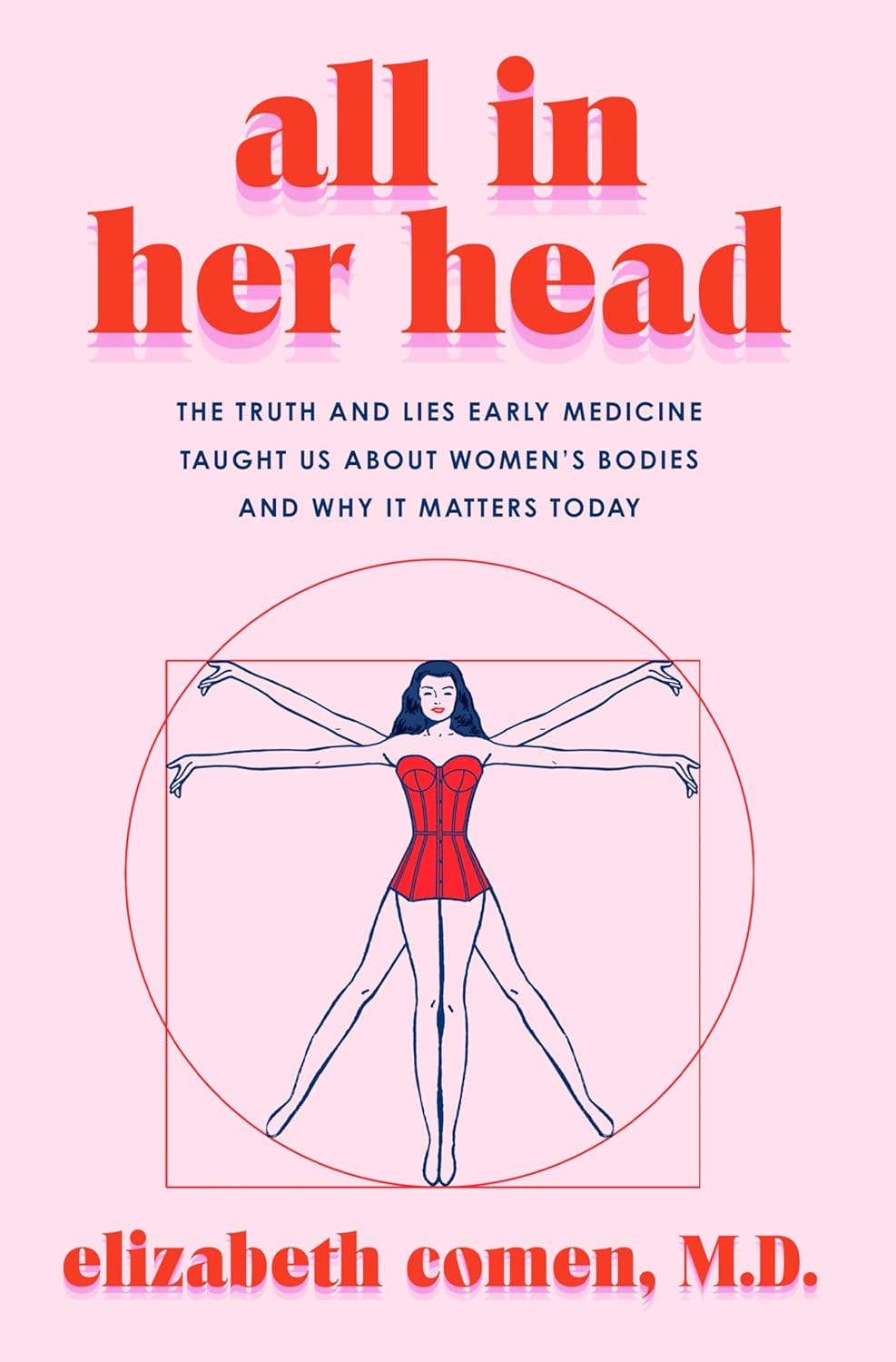
Our guest is Dr. Elizabeth Coleman, a leading oncologist specializing in breast cancer and author of the bestselling book All in Her Head. The science that we're doing has to meet people where they're at. What are women actually feeling and experiencing in their day-to-day lives? Can we listen to that and design better trials?
I still have so many questions. I want to know more about dense breasts because I have them. Dense breast is not something that you can see or feel. It's something that you will get information about from a mamogram. A lot of women were not getting that information and also the new tests that are out there because there are a lot of things I don't know.
I don't know. Most doctors don't know. So, if you have ever felt this dismissed, overwhelmed, wanting to figure something out, need help, don't understand something, this episode is for you. When you care for women, you care for all of society. When we are sick, all of society fails.
Now, let's welcome Dr. Elizabeth Coleman to The Tamsen Show. Well, good to see you first of all. Yes. Yes.
I saw you in DC last, which was super exciting because I know that the conversation about women's health is finally taking root. Talk a little bit about yourself and how you became such a passionate advocate for breast cancer and for women's health. You know, I my interest in breast cancer really started off when I was in college. I worked at a cancer hospital in Boston affiliated with Harvard when I was an undergraduate there and I worked with women helping them with breast prosteses so inserts into their bra and wigs and it really didn't have anything to do with the biology that I was learning at the time as an undergraduate and organic chemistry and all of that. And I knew I wanted to go into medicine.
Was really about their sense of self, their vanity, so to speak, and how much that was affecting their experience of illness, and how they were able to move through the world and deal with their diagnosis. At the same time, I had a relative who was diagnosed with breast cancer, and because of that, I ended up talking to some of these world leaders in breast cancer. And I was just so inspired by both the potential advances in breast cancer, but also understanding that for each woman that how they would go through their diagnosis was so related to who they were as an individual. And I never really wavered in that interest. But what I didn't imagine is what it would be like to get older and care for breast cancer patients.
Initially, everybody was older than I was. And then as I got older, the age, you know, I got older, but the patients could be at any age really. And I started to be invited into these conversations with patients about their hopes, their dreams, and what really held them back from their best health, their best sense of self, how they find joy, how they experience their bodies in these much broader existential ways. And that really allowed me to converse with women about all the aspects of their health, the things that were missed, dismissed, the ways that they were struggling with our health care system way above and beyond the breast cancer diagnosis themselves. And I really felt passionately that as I learned myself as a patient but taking care of women how far we have to go and and how do we dismantle some of those walls and give women back the as Dr.
Muscounty says the hundreds years of research that we've really left them behind. You know I think about that when you talk about where your early start was because I remember my mother had a mastctomy and the year that she was diagnosed was 1984. So very very different then. And they would try to save the breast, right? They were trying not to do a full mastctomy.
She wound up having a double and then had a real aggressive form of breast cancer. But I remember with the prosthetics, the confidence and and feeling just not a woman and feeling so lost and the money that you know you couldn't if you couldn't afford this and this is the other option you had. There's a whole another emotional aspect to it that often times you think is secondary is not secondary. No. When you're going through this.
No. And for every woman, for every person, for every individual, how they experience their bodies is so unique to them. And we can't devalue those conversations because for many women, how they look at themselves is a huge piece of how they thrive in the world. And we have not always been able to meet women where they're at in terms of what they want those reconstructive options to look like, whether it's implants or reconstruction using their own tissue or in some women, you know, they don't want any sort of reconstruction. And we don't want to shame them for that.
That's an option that's perfectly viable for many women and and their right to choose. I love hearing you be so open about that conversation because I I think it's a it's one that has to be and you're right, every woman wants something different at that at that time and should be able to have that conversation openly. You have been a vocal critic of a lot that goes on in the medical profession and the health care system. Was there one thing in particular that really made you angry or was it just a culmination of years of watching it over and over again repeat itself? It's interesting that you use the word angry because it's not often a word that we can associate with an emotion women having.
We can be emotional, but can we be angry? Can we have rage about about something that went wrong or that an injustice? I sort of cringed when you first said that. So, when have I been angry? I think probably a lot of times, but maybe suppressed it and it came out other ways.
For me, it really came from a medical experience that happened to me myself where I had all the resources in the world, all the access to amazing doctors. I had a misdiagnosis for years and years that really led to some weakness in my leg. I had surgery and then had a complication from that that really went missed. And I couldn't advocate for myself. And I think I was angry at myself.
Why do I not have the confidence given everything I am? And it happened when I was writing this book. I'd written the whole freaking book. And yet when it came to advocating for myself, I could not do that. And so many things were why I think I just like many women, I have a whole self-narrative playing small, not wanting to upset the doctor, not wanting not trusting my own gut.
I knew within seconds what was wrong with me. I am an intelligent doctor and yet I suffered for days and days in excruciating pain with a basically fluid leaking from my spine that decreased the amount of fluid in my brain. So every time I lifted my head, it was like being sucked down into my spinal cord. You know, I I had to wrestle with my own anger towards myself and disappointment in myself and not trusting my own gut. Even though I had written the whole book, the stark contrast between what I was trying to advocate and the disconnect between my own self- advocacy really me really made me emphasize and empathize with what women go through on so many different levels.
It's so incredible to me because when I think about that and I think about the fact that you unders you actually understood what was going on with you and somebody like me or you know another woman would have no idea and still would not be able to advocate for themselves. So for you not to be able to speaks volumes. We don't play small in in in the world. Yeah. But when it comes to our own health and it comes to how we look at ourselves sometimes in certain scenarios.
Why I don't know why we do that. I don't know if we have an answer. I don't know. I don't know. But I think what I hope this what my book I which is called the all in our head.
What I really wanted it to do is invite the conversation of yes going back in time and history and to all these misdiagnoses or ways that women have been dismissed and invalidated for their medical experiences. But can you see yourself in the 17th century woman who was admitted to an asylum for having political views or the 19th century woman that wanted to have more sex than her husband and what was the problem with her libido and she should go, you know, never have sex again. Really trying to invite the conversation for yourself about why do we think the way that we do about our body? What is this legacy that we've inherited about ourselves? And I think honestly some of the instances where I've taken care of so many different types of women, socioeconomic backgrounds, all walks of life, but sometimes it's these absolute bosses, right?
The politicians, the celebrities, the lawyers that are incredible in public spaces in terms of their power. But when it comes to the doctor patient relationship or shame that they may feel about their bodies, the obstacles are extraordinary. And how do we break those down collectively but individually so that we all can access better care? How do we do that collectively? Because I think it has to it has to be collective so we know that we have some support before it's individual.
Right. Well, look what you're doing. You have a massive platform, right? And you're engaging with the public in ways that are not only powerful but empathic and authentic. And I think that's what we're missing in so many of these discussions.
The ability to just be ourselves and say yes, we may have these lashes on and look fabulous, but we all have private battles. Yeah, we do. And I think facing those private battles alone is a real unwanted aloneeness that I wish more women didn't have to face, including myself. I wish you didn't either. And I I understand why the word anger probably made you cringe a little bit because because we do get angry with ourselves when we know better and we know better but we're scared to say something and and we and we feel like we shouldn't have an excuse for it but we do have an excuse because history has taught us in so many ways that it's not okay and we're just realizing our own power.
I think I'm also a personality and in a field that is really driven in the best of ways by kindness, compassion, gentle behavior, right? But sometimes you have to say this isn't right. And how do you do that? How do you teach women to do that and not feel like they're annoying, they're loud, they're a burden, they're bothering you? I'm still working on that.
Yeah, I am. I think we all are. I think we all are. I watched my father who's 85 years old almost be apologetic to the doctor for bothering him. And I said this the you can't apologize.
You can't be afraid that the doctor's going to fire you. But but really like sometimes we get to that place where we're just grateful to be there and you know I'm working on it myself. The introduction to your book that story and I heard you you know summarize it in DC talking about a woman that was hours from death apologizing to you. Can you just in your own words tell that story because I that story was so just such an incredible way to to start the book first of all because it spoke to so many things that spoke about you know what what she's gone through obviously the fear of health the fear of of dying and then those two words I'm sorry well I think it speaks to so much of what we're talking about now about this somehow woven into our fabric as women the need to apologize even in the most subconscious ways that we not may not be aware of. And when I was first writing this book, there was a little bit of controversy because I really open with such a sad story.
But I felt that this really drove home what I was trying to accomplish in showing in the history of women's healthcare and and the contemporary experience of it. So this was a woman that I had taken care of for many many years. When you're diagnosed with metastatic breast cancer, that's breast cancer that's spread from the breast to another part of the body. That is something that you can live with but is is usually not curable. And yet she had many many great years and I felt so connected to her for having given her that life and hopefully joy.
She had four children and she would always bring me pictures of climbing mountains and taking these extraordinary trips with her and I went to see her when she was really on her deathbed hours before dying. And I reached down to give her a hug and she, you know, had trouble breathing and it was so clear that she was dying. And, you know, she she apologized to me for sweating and, you know, and she was more worried about that I would have her sweat on me. And I just thought, you know, this how is this possible that that in her last breaths she feels like she needs to apologize to me? And I felt that it really encompassed a lot of what women feel on many different levels in their lives.
And how can we make this better? If that's how she feels on her dying day, how does she feel every day of her life? For you as a doctor to be there and and feel that story makes me understand your compassion and why you felt that way you did when you had your own diagnosis and you were dealing with your own medical battles. I want to talk about some of the the real things that women women are afraid of breast cancer. Like that is our cloud of doom.
It just sits there and and I don't think it's just because I lost my mother to breast cancer. I think it just sits there. So for me, when menopause came up, I was like, I wasn't thinking of this. I was I'm thinking of breast cancer. I'm thinking of all those things.
Where do we start with helping women first understand the progress that's been made, which is we have to understand that part. And so I I almost always kind of shrink back a little bit when I say that I lost my mother to breast cancer because I don't want people to always be afraid. Yes. If there's a diagnosis. I love that you're saying that.
So moving away from a very sad sad story, there is a lot of hope with breast cancer. Majority the vast vast majority of women that are diagnosed are cured of breast cancer. And that's because early detection saves lives. And early detection saves lives because it's not just about catching a cancer sooner when it can be treated with more what we call curative intent, meaning more likely to be cured, but also less aggressive therapy. The smaller something is, the less likely you are to need chemotherapy, more invasive surgeries, and more invasive treatment after that.
And even in the course of my career, I've seen so much change in terms of how we understand the molecular biology of breast cancer. And we're able to offer very individual treatment to patients. And so I think there's this historical understandable fear of breast cancer because we've seen so many people affected by it and it is so common. But I really want to be hopeful in the messaging today that I really hope it doesn't pull women away from the important screening because while it may be common, it is almost always curable. I love those words and I those words weren't around when my mother was diagnosed.
They just it was a it was a death sentence. It is not. It is not today. And I so let let's let's start with some of the basic facts because I know the guidelines have changed. It's very confusing.
It we try to we try just keeping we try to remember our own anniversaries and birthdays. So to remember guidelines of what we're supposed to do early. So can you just break down for all of us the guidelines for breast cancer screening so we all know what we need to do every year when we reset. Okay. So let's start with this first.
If you are of average risk and I'll go into that in a moment. You should start in general screening for breast cancer. I say every year starting at age 40. There's maybe some slightly different guidelines, but I would advise for most women of average risk, start at age 40. Now, as that is your mammogram, correct?
With a mammogram. Now, as of September 10th, the FDA has mandated that you be informed whether you have dense breasts. If you have dense breasts, you should talk to your doctor about the additional screening with an ultrasound or breast MRI to better visualize a potentially small cancer that could be missed on mammogram. It doesn't mean you don't do the mammogram. You start with the mammogram first.
That is the gold standard. Now, how do you know if you may have a higher risk of breast cancer? You need to talk to your doctor about your own individual risk factors. That includes a family history, not just your immediate relative. And a lot of times people will think, "Oh, if no one on my mom's side had breast cancer, I'm not at risk for breast cancer." You need to know what your family history is of any cancer on your mother's side, but also your father's side.
Any cancer. Any cancer, right? And you need to bring that to your doctor. You may need to talk to a genetic counselor because there are different genetic hereditary syndromes that aren't necessarily just associated with breast cancer. For example, prostate cancer can be linked to breast cancer.
What if your father only had brothers? They all had prostate cancer. And you're missing an increased risk for breast cancer because that hasn't been delineated and that's in the hereditary screen panel screening. Yes. So what you want to do is talk to your doctor about both sides of your family history.
Your doctor will then take that into you know different algorithms to better understand your breast cancer risk. If you need to start sooner than age 40 may also mean that you need to screen with things like breast MRI if you have a greater than 20% increased lifetime risk of breast cancer. Now, how do you find out if you have that 20%. So, in part by looking at your family history and potentially with genetic testing, which we can go over in a moment, there's also the breast cancer risk assessment tool, which is something that you can do online. Olivia Mun was very public about that, about how that pushed her to get a breast MRI that caught her breast cancer.
So, that's something that all women should be doing online. They can do it with their doctor, bring that information to their doctor, and help determine, do I need to start screening before the age of 40? Genetic testing. It used to be historically that we were testing for only two genetic mutations or two genes that could have mutations in them. BRCA1 or BRCA 2, otherwise known as BA 1 or BA 2.
There's been so much research about hereditary cancer syndromes since the discovery of BRCA1 and BRCA 2. So you want to make sure that if if appropriate, you're tested for a broader panel of genetic mutations that could be associated with breast cancer or other cancers as well. So what is fabulous to me and un unbelievable to me, maybe not fabulous, it's not the right word, the BA, I was tested for when I was maybe 40 years old and that was negative with my mom, but I was never tested for any genetic testing since then or recommended. Well, now you can, isn't but that's you have an immediate relative who had breast cancer. So, you should probably be tested for some other things.
So, if somebody wants outside of formal recommendation, of course, if somebody goes in though and says, I my mother had breast cancer, is that what the doctor should say, you should be going in and getting this next type of testing? What should happen is is there should be a broader view of your family history on your mother's side and your father's side and potentially visit with a genetic counselor who can then help determine what's the best genetic panel for you to be tested for because they're different to have that to write that information out and not kind of blow off that part of the form. You know, sometimes I look at the form and it's like family history, whatever. In my mind, I was like, "Oh, there's nobody else that had breast cancer in my family. It doesn't matter." But I didn't realize any type of cancer.
Any type of to dense breast, but I also want to talk about those baselines. So, if you have a family history of breast cancer or a immediate relative, your baseline goes a little bit earlier. Is it within 10 years of when they were diagnosed? Is that correct? Or is that a guideline anymore?
In general, so if your mom is diagnosed at 45, you you probably want to talk to your doctor about screening 10 years prior to that. But again, it depends on not just your mother, what's the rest of the family history, what else is going on. Oh gosh. So, it's just there. It's so important.
But this is manageable. It is manageable. This is doable. It's Oh gosh. But there's action.
No, you're right. So much of medicine. Yeah. So much of medicine is scary because we don't want to just give information and then no path. In this setting, there is a path to one, two, three.
You know what? You we put ourselves last though. That's the problem. That's the problem is often times we go, "Oh my gosh, I totally forgot about it this year." Or, "I got the p I got the letter in the mail, but I didn't make the appointment." How do we How do we stop doing that? Because it is I do it too.
I mean, I've got parents that I help take care of. I have three little kids. I have a full job and a big life. I don't know other than let's keep talking about it and keep reminding ourselves and saying maybe today is the day I'm going to make my appointment for my mammogram or follow up with that ultrasound or get that colonoscopy. Start at age 45 or go for your paps.
Colonoscopy 45. 45. Okay. Unless you have a family history. Make sure you're also getting checked for cervical cancer paps smears. The brackagene was the Angelina Jolie.
That's who really put that on the map. Correct. In terms of people being aware of that and talking about preventative ways to do things. If you are diagnosed and maybe it's a stage one or less than a stage a stage zero, would you still recommend a preventative mastctomy? Like I I this is my scenario and I've said this a hundred times.
If there's any diagnosis of anything, that's immediately what I would do. Okay, that's your decision. Yeah, my totally my decision. So, let's break down one of the biggest myths about breast cancer. There are two big ways that we treat breast cancer, okay, that they contribute to the confusion in the public.
So, when you are diagnosed with breast cancer, we focus on two big things. Local control and systemic control. Local control refers to what we're doing for the breast and maybe the the lymph nodes that are underneath the armpit. Two different ways we can do that. We can do that with surgery, a lumpctomy or a mastctomy.
Okay, lumpctomies are usually combined with radiation. However, a lumpctomy plus radiation versus a mastctomy, I know we're getting biological here, people can play it back. Lumpctomy plus radiation or a mastctomy are equivalent in terms of survival from breast cancer. Wow. Okay.
Why is that? Because what makes breast cancer potentially deadly has nothing to do with what's in your breasts. If I had both my breasts filled with breast cancer and it was rock hard and it looked weird and I touched it and it was terrible, but those cells never traveled outside my breast, it would never be a threat to my life. So when women say, "I want to get a bilateral total mastctomy. I was diagnosed with breast cancer and I never want to die from it." That doesn't make sense.
It doesn't make sense because the risk is did any sneaky cancer cell travel? It's a lymphatic system. So you're looking at your lymphatic or blood, we don't know. So the second purpose of breast cancer care is systemic control. And there are different ways that we do that with hormonal therapy, with chemotherapy, depending on the type of breast cancer a woman's diagnosed with.
So when a woman says with stage zero or stage one breast cancer, I never want to die from this. I'm getting a bilateral mastctomy. That doesn't there's no logic in that because it's about what we're doing to find or decrease the risk of what we call metastatic disease. What local control does if you get a bilateral mastctomy is decrease your risk of a new breast cancer. I see.
Or a recurrence from the one that you had. So if you are diagnosed with an early stage breast cancer and you say I want a bilateral mastctomy, maybe you're saying it because you don't want radiation. Maybe you're saying it because the stress of going for a mammogram is so damn high. I never want to go through this again. I don't want to worry about a new diagnosis of breast cancer.
And that's what's driving the decision. But it does not change the curative outcome from breast cancer. What changes the curative outcome is whether any cancer cell escaped and is looking to build a tumor elsewhere. Most people don't know. Most doctors don't know.
I had no idea. And the reason I've said that is because I watched what my mother went through. She went through the biopsy, the lumpctomy, the radiation, gold seed implants. I don't even know if they do that anymore or that, you know, we had we had to stay away from her for like 5 days. We couldn't go near her because it was, you know, and then chemo chemo, you know, a lot of that.
So, I had no idea. Yeah. But that's something your doctor would Well, hopefully. It's very nuanced though because it makes sense. I got diagnosed with bre breast cancer.
Cut them off. Get rid of it. Get rid of it. What you really have to have is a nuanced conversation. What is my risk of metastatic disease and what are we going to do to decrease my risk of metastatic disease?
And those are things like pills that you take by mouth or chemotherapy that you do via an IV. The tmoxifen or things like that. Okay. That's I don't know. I I'm like rethinking everything right now because But when you say if I were diagnosed I'd want a drastic surgery, that's a reasonable decision if somebody says for aesthetic reasons or because they never want to go through screening again.
Okay, so let's talk about screening because for me it's more emotional than physical. So emotional. That's the hardest part. It's really emotional. Terrifying.
That pink gown, that plastic bag, that opening up the curtain and going in there and like laying whatever. And my heart's racing just thinking about it. I know and so you know we are certainly not alone in that don't know how to make that process any better but I do know that that emotion and just the physical part of it too deter a lot of people from doing that I mean I think the idea is can we improve the technology can we improve the science to make this eas easier can we one day not now because thermography is not the answer can we you know develop better blood tests to pick up early breast cancer so that we can you know one today not have to be doing mammograms. That's where we really should be investing the fear into actionable change. That's why I want doctors like you to have so much access to resources to be able to do that research.
Yeah. All right. I want to talk about a few things that I think are are are common symptoms that come up especially when we're aging or we're going into pmenopause. One of the big ones that we hear a lot about and women talk about is is breast pain during pmenopause. Do we run to the doctor when things like that happen?
Do we is there a is there a oh that's what's normal or is that something to be concerned about? Well, I don't think pain should ever be ignored and it's never normal to be in pain. I think that's when you kind of have to track it a little bit. Is it fluctuating with your period? When is this pain happening?
Does it come? Does it go? Is it persistent? Are there any lumps? What else is going on?
And really bring that information to your doctor and say, "I'm worried about this." And and making sure that you are doing appropriate screening. Okay. But pain is never something you should suffer from. Dense breast. You mentioned it earlier.
Yeah, I have dense breasts. What does that mean for me? So, first of all, dense breasts are really common. I have that as well. So, dense breast is not something that you can see or feel.
It's something that you will get information about from a mammogram. So, a radiologist will look at your mammogram and be able to determine whether you have dense breasts. If you have dense breasts, it means that it may be harder to detect a breast cancer on a mammogram. What it is is a reflection of the amount of fat versus breast tissue that's helping to make up the architecture of the breast. Okay?
If you have a lot of that breast tissue and less fat, it makes it harder to see a cancer on a mammogram because the fat is black on a mammogram. It's just like an X-ray. The tissue is more white. But breast cancer can also look white. So, it can be I always say like finding a snowflake in a snowstorm.
If you have dense breasts, you're looking at a lot of white breast tissue, but also trying to find a cancer that could look white as well. It means we start with a mammogram and you may need additional imaging such as with an ultrasound or breast MRI. What were the guidelines again from September about dense breasts? So, as of September 10th, the FDA mandated because it wasn't uniform across the country that all women be notified if they have dense breasts in the report that they get of their mammogram. Why is that?
Because a lot of women were not getting that information. And you need to know because that could be very important for secondary screening such as with an ultrasound or breast MRI. Can we talk a little bit about the age of women with breast being diagnosed with breast cancer now? Is that getting younger? So the incidence of breast cancer and other types of cancer such as colon cancer is rising and there's a lot of research that needs to be done in that area.
In some instances, we're concerned about girls getting their period younger, longer lifetime exposure to estrogen. Why is that happening? Also with the rise of obesity in this country, we know that disruption of fat and hormonal regulation is probably a risk factor for breast cancer and other cancers as well. But that is not the whole story. We need to be looking at environmental causes and other reasons why the rise of cancer among young women and frankly young men is is really catastrophic.
Are you surpris you're probably not surprised, but are you surprised with all the focus on alcohol right now with regard to to cancer? Because I there was a recent the Times article surgeon general. Yeah. Can you go into that a little bit about Yeah. So, I'm not surprised by it.
I'm I'm I'm really applauding that the surgeon general has come out with this. We've really misled the public in terms of what we've said about the cardioprotective effects of alcohol which the research is muddy at best and I think there are lots of better ways to improve your cardiac health than drinking wine. We know that alcohol is a carcinogen and we've really misled women in particular and you see that a lot of times particularly in this oh you're stressed about being a new mommy like have a glass of wine or you've had a long day like sex is painful with your husband have a glass of wine and relax like why have we normalized all of this? It's not to say that I think that you know abstinence or sobriety is the right choice for everybody but if you want no risk from alcohol don't drink in the first place and even a drink a day is associated with an increased risk of breast cancer. So for 270,000 new breast cancer cases in the United States, about 16% of those are felt to be attributable to alcohol consumption.
That's mindboggling. That's mindboggling. So you must That's about 44 over 44,000 women in 2019. You must cringe when you hear somebody say, "Have a glass of wine and relax tonight and you know things will be a little bit better." Yeah. I mean, if you need that once in a while, but every night, that's not ideal.
I know. I'm a little bit of like the Debbie Downer for some I think I think what it is is we want answers. That's the truth. And I think that when we know what when when we hear that at least we know what direction to go in. You know what I mean?
It doesn't mean you have to be all or none. That's not realistic. I think you have to be aware and also mindful of why are you having that glass of wine? Is there another what are we trying to escape? What are we trying to manage?
What other burdens are women experiencing in at at home? The unpaid labor that so many women do for them, for their families, for society, and and maybe they're trying to take the edge off in a way that we could do a little bit better on. I would be remiss if I didn't talk about the big fears of hormone therapy and breast cancer. So, can we go into that a little bit? Yeah.
I'm sure you're hearing so much more from patients now, too, as well. So, I mean, we've definitely done a disservice for women. Obviously the his the history here is when hormone replacement therapy first came out, we had lots of women on it. Then we had 2002 study which was really misinterpreted that overemphasized the risk of breast cancer for patients and the use of hormone replacement therapy dramatically dropped. And now we're at a point where we're opening up those conversations to figure out what are the options for women and really inviting more individual conversations.
But it doesn't mean that hormone replacement therapy is right for everybody. We don't want to swing in the wrong direction either. These have to be very individual discussions about personal risk factors, what your fears are, what you're concerned of, what's going to keep you up at night, is it hot flashes or fears? And and not have blanket statements without really informed decision-making. One of the areas that's really concerning for me is breast cancer patients who may be deprived of estrogen because a lot of the treatment that we do drives down their their already limited estrogen production if especially if they're postmenopausal or the young women that we are effectively castrating.
Historically, we've told them that they could not use intravaginal estrogen which we now know is safe. So there's nothing that's systemically absorbed by that or absorbed in any appreciable manner that would increase their risk of breast cancer. And yet we have many young women and older women that are really suffering from painful intercourse, repeated UTI, and they're not being offered intervaginal estrogen when we know that this can dramatically help their symptoms. Talk about what intervaginal estrogen is. So it's basically estrogen that you can use locally or inside the vagina that is not like a patch or or a cream that you would be using that would be systemically absorbed in the body.
So, it's acting very locally on the vaginal tissues and the outer tissues of the vulva to help replenish some lost estrogen and hopefully improve symptoms for women. And that is safe. If you've gone through breast cancer, you are you are able to use that. Yeah, you need to talk to your doctor about that option. If you have had breast cancer or you are at risk of breast cancer, what is the treatment when it comes to hormone therapy?
If you have debilitating symptoms, sure. So, at risk is different than having had. So, if you're at risk for breast cancer, well, what does that mean? We're all at risk for breast cancer, right? So, how do we stratify that?
What is your personal risk factor? And then really walking through what are some of the symptoms? Are you having hot flashes? Is there a non hormonal treatment that we could consider if we're concerned about risk of breast cancer? And and there's a lot of debate in this.
And what I would say is no one has perfect answers right now. Lots of people think that they do, but we just don't have perfect answers. And we have to be informed in the decision-m that we are are having with patients. If you have a history of breast cancer, then it is more particularly estrogen-driven breast cancer. We have to be thoughtful there about what the options are.
There are no good studies and we need to really do these on women who've had a history of breast cancer, particularly what we call triple negative breast cancer, which is not felt to be hormonally mediated. Why can't we give these women hormone replacement therapy or physiologic levels of hormone therapy? Many young women that I see go or are thrust into early menopause because of chemotherapy. Why are we not giving them back physiological hormone? These are clinical questions that we need to ask that are not going to be answered on Instagram.
They're going to be answered by thoughtful, prospective, randomized control trials that are done academically and thoughtfully. And we need to push academic centers to do the type of research that will really move the needle in women's health so that it's not just being driven by the lay public or science that's not truly informed. How come we haven't done those tests? How come the academic centers have not done that? Or are they being done and we just need more time?
Well, they're not being done enough. We do need time and and science can be painfully slow. I think part of the problem certainly in breast cancer and it's not to say there haven't been pockets of greatness and people who have really championed these issues but the voices haven't been loud enough the idea has been well you're alive and when it comes to sexual health we're two times more likely to ask you know men about sexual side effects from their cancer treatment than we are women and so for so much of the history of breast cancer treatment particularly when it comes to sexual health and issues that they may face from menopause in that regard we've said yeah but you're alive you're alive just be happy you're alive, right? So, so manage that, you know, it feels like sandpaper when you're having sex. And now, you know, we're really starting to drive home that that is not good enough.
That we need to be thinking about women's quality of life. And why are we neglecting the full spectrum of what it means to find joy and feel good in your body, whether it's reconstructive options or your sexual health or whatever it may be, or healthy sleep. I I always hate to say like advocate for yourself. You're your own best advocate. Feel it in your gut and say something because I feel like they're going through so much pain at this point, whatever it is, whether we're talking about pmenopause symptoms that are debilitating or menopause or breast cancer or or cardiovascular health and saying like now now we're putting it back on you to make sure you know what to to tell the doctor when you go in there.
But what do we tell women that they that they should feel it's their right to advocate for if they've gone through breast cancer treatment, if they're, you know, in the doctor's office? I mean, I think it's such a tall ask in so many ways because our health care system is broken. How much can people accomplish in on average 15-minute appointments with their doctor? That's neither the doctor's fault or the patient's fault. I think first of all, going into your doctor's appointment and saying, "What what's our agenda for today?
These are the things I really want to make sure we have time to answer. And if we don't, what what's the best way to contact you? Is it your nurse, your nurse practitioner? Is it a portal message? How do I connect with you?
Because these are the things that are really important to me that I want to leave having a better understanding of and recognizing that it's not a war between your doctor and you. Most doctors are really in it because they do care. It's just they're under immense pressures. And what's really interesting about medicine recently is that certainly in ivory tower medicine, social media, and other sorts of public movements were not as valued to be quite honest. But that's part of our own arrogance.
We need to kind of get with the program and realize that there's a lot of power in media where doctors and academic institutions are really trying to now play catch-up right now and realize that you can't ignore these voices and that we have to pay attention and that the science that we're doing has to meet people where they're at. Not what we think necessarily should always be done, but what are women actually feeling and experiencing in their day-to-day lives. Can we listen to that and design better trials both from the boots on the ground and also from leadership positions? I feel like that's what you've done in your book though is open that conversation in a very big way because it's so necessary trying you know you talk about the internet being so full of you know there's so many experts what to eat what to wear the bras this how do we start working through some of those myths or at least get good information where do we get good information so I think the qu the answer is really not to say okay never google anything I google everything and I go down the rabbit hole at 3 in the morning and I've diagnosed myself with everything I call me whenever I'm doing oh my gosh 3:00 a.m. I'm your best psychotic friend.
Okay, there's nobody crazier than I am at 3:00 in the morning, but by 6:00 a.m. I'm on it. So, I think the goal of the internet should not be to find answers, but really to bring those questions that they bring up for you to your doctor and say, "I'm not like trying to find the next supplement that's going to cure me of every problem, but I've heard about this. What do you think? What's the rationale for ordering this test or not ordering it or advising this or not advising this?" so that you feel more informed about the questions that you ask but not the decisions that you make about your healthcare.
You wouldn't Google how to fly a plane and then be like d I'm like ready to fly to Egypt on this plane, right? But yet we do that with our healthcare because we feel so desperate. We want to know what we can do. We want we want actionable takeaways that we could do the minute somebody is listening to the like I want to know what to do next. Yeah.
What can we control and not control when it comes to cancer? It's such a great question because there's so much fear and there are things that we can't control. We can't control getting older and for the most part. Cancer risk increases as we get older. We can't control our family history.
For the most part, we can control when we had our first period. In many instances, we can't control when we have children or whether we breastfeed and things like that. But there's lots that we can control. Not to decrease our risk entirely because no one can say, "Oh, I did these things. I'm never going to get cancer." But we can control what we eat.
We can move. We know that exercise significantly decreases our risk of a number of different cancers and that includes cardiovascular training but also strength training which can really alter your metabolic health. There's so much about strength training right now. It's it's kind of mindboggling. I know it is.
I mean I didn't learn about this. I grew up dancing and playing sports and it was all about being lean and agile but you know the fear was that if you lifted things you'd be bulky. Bulky. Don't get too bulky. Don't get too big.
You don't want to I lift all the time and I'm not bulky. No you are not bulky. I got I mean like some bulging muscles but maybe not muscles I see your muscles first when you get your period does that have an effect on anything how how old you are. So one of the concerns is and we can't go back in time and change that right but you we are seeing that the age of first period is getting earlier and earlier and some concern is that that is a result of the rise of obesity in young girls and excess fat contributes to more hormone production more estrogen and it might be driving that earlier age of puberty and the concern for that is that you have a longer lifetime exposure to higher levels of estrogen and progesterone which in some instances may drive an increased risk of breast cancer. There's a lot of myths out there.
Can we go through a few of them? Let's do it. Well, I mean, you tell me if they're myths. Okay. Wearing underwire bras causes breast cancer.
I'm wearing one. Okay. Yep. So am I. So that I'm very happy.
Using anti antipersperin or deodorant causes breast cancer. No, we don't have any evidence for that. But if you're worried, there's lots of, you know, non-aluminum containing things. If that's going to keep you up at night and disrupt your sleep, which is a problem, choose differently. Google something else.
Right. Yeah. Carrying your phone in your bra causes breast cancer. No, but I wouldn't carry it in your bra. No, me neither.
It heats up. Yeah. Also, that's not gonna look good, right? I know. I don't understand.
I'm thinking about that from a vanity. Think about some of these. Like, think about some of these. Let's not do that. Does sugar feed cancer?
Sugar does not directly feed cancer in the way that I mean, I've seen patients starve themselves almost to death trying to avoid anything with with sugar. But if we can avoid less processed things, less artificial sugars, be looking at fruit as opposed to, you know, the Twizzlers and the Sour Patch Kids, that would be ideal. But in general, the things that have all sorts of ingredients that you can't pronounce and have never heard of are probably not the way to go. You want to be looking at whole ingredients, a plantforward diet, lots of fruits and vegetables, legumes, nuts, fish. Limit the red meat.
Not to say you can't have it, but you don't want to be eating it at every meal. And the more processed something is in terms of the ingredients, the less likely it is to be good for you. If you don't have a family history of breast cancer, are you not at risk for breast cancer? No. Most people diagnosed with breast cancer have no known family history.
So only a small percentage. What percentage of people have a family history of breast cancer? So it's a great question because most people actually don't have a family history of breast cancer who are diagnosed with breast cancer. Only about 10 to 15% of women who are diagnosed with breast cancer have a firstderee relative with breast cancer. Is that staggering?
Has that gone number gone down? Is that what is that? Well, you know, it's complicated. Family history is complicated. Some people think they know who their father is.
It's not their father when you do genetic test. Yeah. Right. Right. You're right.
Right. Or or they've been adopted or they don't know their whole family history. Families can have traumatic past. You don't know what happened to people. And we we have we haven't been doing that that long in terms of knowing everything.
Okay. Breast implants increase your risk of breast cancer. No. Mammograms expose you to harmful radiation and can cause cancer? No.
Breast cancer. Brea make sure that's a no. It's a no. Breast cancer only affects older women. Definitely not.
We know that there's a significant rise in breast cancer including among women under the age of 40. Over I think it's probably now close to 13,000 women are diagnosed under the age of 40 with breast cancer. So no, no, and no. Breast self- exams are enough. You don't need mammograms.
Definitely not because breast, if you're doing a self breast exam, first of all, you're not a doctor. You might know your body really well, but that's going to catch a cancer when it's palpable when you can feel it. What you really don't want to do is catch a cancer before you can even feel it. And and your chance of cure is much higher. Your chance of less invasive treatment, less invasive surgeries is much higher.
Let's talk about self-exam because I think that that's another thing that we say, well, if I did the mammogram, I I did my mammogram, I don't need to do the self- exam. How often, when, when do you start, what age? So unfortunately the guidelines for that have really there are no guidelines and most of most of the medical societies will say they're not of benefit. I disagree with that. Your breasts are on your body.
You should be touching yourself in any way you want and knowing what your breasts feel like. And that is particularly women under the age of 40 because we're not routinely saying that they need to be screened because they're not women under the age of 40. Under the age of 40 in particular, they're finding their breast cancers. Over 80% of women diagnosed under the age of 40 are finding their own breast cancers because they feel them. Right. 80%.
Yes. Because how else are they going to find them? Or it's or it's a boyfriend or a husband or some other partner that's finding their breast cancer. So, I always say that if you are menrating, checking in with your breasts before, but really after your period because before they can be tender and more lumpy, once a month or even just throughout the month so you understand the fluctuations in your body. Looking and there are lots of great tutorials online with different types of pressure moving from the outside of the breast towards the nipple, checking for any nipple discharge, checking underneath your armpit as well as around the clavicle here as well.
Any new skin changes as well should be noted. How often should you do it? If you're over 40, you should still be doing that though, correct? Yeah, I would say once a month. Okay.
But, you know, doesn't have to be like there's these different things like feel it on the first and picking a day of the month, but you know, every now and then in the shower, checking in with your breasts. Women of color, those numbers go up. So, it's not necessarily an increased incidence. What it is is very tragically an increased risk of mortality. That's because not necessarily biological differences, but really access to quality care.
And that really points to tremendous inexcusable discrepancies in our health care system for minorities. That black women are often getting diagnosed later with breast cancer, having less access to quality academic centers with a doctor who is really experienced in breast cancer. And because of that they may have worse outcomes or there may be fears about going to the doctor because of you know biases that that we really have to unpack. How do we start to break that down where we at least start fixing some part of that? I mean the biases that and the and the fear is is is been there and and understandably so.
How do we how do we start there? I mean there's so much that that needs to be unpacked there. But I think part of the issue is is that, you know, we need to have a diversity of voices in leadership. And that's not just respect to race, but all sorts of different ways that we think about what does it mean to be in positions of power in medicine right now. You know, only 2% of doctors are are black in this country.
How do we make sure that we have diversity of options for people who are interested in going into medicine? But it's not just at the first level of becoming a doctor, but also positions of leadership because what it means to be a leader is has certainly changed and evolved hopefully for the better. But we need to have those voices from the top so that we have encouraging means for what it means to be valued as a doctor and that value also gets translated into caring for the public as well. I want to talk about access. I know that there's work being done to try to give women access, but it is minimal at best of being able to help women at least, you know, that that do not have insurance try to get mammograms.
I know there's scan vans out there that try to go into, you know, a neighborhood park and say, "Look, if you have time to come and get a mammogram, well, we will help you through it." What What do we do to try to to figure that out so we can bring access to women? Because it's not always really reasonable to take four to eight hours off to go get that one, you know, that one exam or that one doctor's visit. I mean, you're right. There there are some excellent free resources that that certainly we offer as a society, but really speaking to just the broken nature of our health care system because it's not just the hospitals and the outpatient facilities or that it's so hard to find a primary care doctor because we don't make it easy for primary care doctors to even have a job. It's also the social economic factors of do you have a job where you can get time off because you can't go after work because the the office may be closed, right?
Or you've got to care for a child or an elderly parent and you're not getting time off from work. I think we really need to push companies and employers to think about how we care for women because when you care for women, you care for all of society. I say this all the time, which is that even if you actually don't care about women and you don't care about women's health, but you care about your bottom dollar and you care what paycheck you go home with, remember this. Women are the primary caregivers, deliverers, and providers of our healthcare. When we are sick, all of society fails.
So, if you only care about yourself, care about women's health. I love that. I love that. So, we have a a question from a listener. Can I read it to you?
Yeah. All right. Good. And I think it's one we can all relate to. Olympia, Washington, and she's 49 years old.
Her name is Lori. Tamsen, I was diagnosed with breast cancer last year. I've been going through treatment. I've got a lot of support from friends and family. I'm very lucky, but my problem is anxiety.
I have panic attacks before my treatments. I stay up all night worried about how it's going to affect me. I worry about how my family is coping. I've always been anxious, but this is making a tough time even worse. Any tips on how to get through it?
First, I'm I'm just so sorry that that she's has this debilitating anxiety. It's extremely extremely common. Of course, breast cancer is a huge trauma and it's not just about the diagnosis. What often we see with patients is that they're diagnosed and then they kind of get into this like warrior soldier mode, which I hate all these she's battling breast cancer. Okay, everyone wants to win that battle.
No one who loses that battle wanted to lose it. So, let's not use the war stuff. But there is this mentality, okay, I'm going to get to the next treatment. I know that on January 1st I'm getting this and on the 15th I'm getting that. And there's this structure and then what happens?
The treatment is over for some women and then they've got to wrestle with, oh my god, what did I just go through and even the smells, the picture of a hospital, the hospital gown, anything can be re-triggering. I always say that for women who are diagnosed particularly with that type of anxiety that they talk to a mental health professional while they're going through treatment and after so that they can help process it in real time, but also in the months and years that follow because a trauma is a trauma and we all need help with that. You're so right about the smells. I I couldn't go into a hospital for 20 years after my mother. I couldn't I would just like almost fall to the floor.
Terrifying. Advice to your younger self. If you had to give your younger self some advice, what would it be now? I think in a lot of spaces I was advised to kind of behave and and and play small. And I can have a big personality and I can have opinions, but I definitely kind of fit that typical, you know, not not to sound arrogant, but I went to like Harvard and Harvard med school and, you know, I was like a dancer, but I'm a little out of the box.
And I think we're all out of the box. Yeah, me too. And I think that's the thing, which is that especially for women, it's kind of like how do you have an opinion? How do you advocate for yourself? When to be loud, when to be quiet?
And I think I spent a lot of my life people pleasing and worrying about what everybody else thought as opposed to just being myself. And so, you know, I have two boys and a little girl and I I just hope that I give them the opportunity to feel good in themselves, being whoever they wish to be and worrying less about what the rest of the world is going to say about them because at the end of the day doesn't really matter. But I spent a lot of my life worrying about that. I feel like as women, we have like three different thoughts going on at the same time. What am I saying?
How are they going to perceive it? Are they okay with it? Somebody said to me once, you go into a conversation painting what the other person is going to think. Like you're you're thinking about what they're painting of you. And I went, "Oh, I am.
I do all the time." As women especially, how do we make the next person comfortable? Yeah. Let me make you feel okay first. Yeah. Like, are you okay?
What if you're What if you're not okay? Right. I can handle me, but I don't want you to be okay. Are you all right? Are you right?
I mean, I have friends that would joke be like, "How many times you say, "Are you okay? Are you okay? Are you okay?" So, I mean, there's a little bit of self-sabotage in that. Best advice from another woman that you've received. I have been privileged to know some incredible people in my life.
So I don't know that there is one woman and one statement but there is a beautiful poem by Mary Oliver called summer day and it ends with what what should you do or what will you do with your one wild and precious life and I think in light of my work in light of how much I've seen about on the precipice of where we all will face which is death what will we want to do with our one precious and wild life so I thank her for her poetry It's really inspired me. What do you want to do with yours? I think what we're doing right now, which is hopefully doing good, inspiring people to feel better about themselves, invite more interesting conversations about what it means to truly feel alive and find joy and live our best lives in the moment. Reaction to your book, what what kind of response and reaction did you get? Because I feel like anyone I talked to, especially when it when it was published, like, have you read this?
I think it just really spoke at the core like it really touched from beginning to end women and struck a nerve. Thank you so much for saying that. You know, when I thought about writing the book about including the history of women's healthcare and these painful stories from the past and the present, I really had no idea if anybody would care. I was at a place in my professional world where it really wasn't cared about that much, particularly by people in positions of power to really affect my career and change it. And I had to kind of go out on a limb and say, I really care about this.
I know my patients care about it. And my friends seem and my family seem to think it's important, but I don't know. Is anyone going to buy it or care about it or read it? I really didn't know. I think sometimes in life, we have to bet on ourselves and bet on our passion and bet that if you really believe in something that you've seen and lived and absorbed with every ounce of your soul that that there is a place for it and maybe you can do good by sharing that.
And so I I really really really appreciate that. It's been a volcanic year of change for me where I didn't know if there would be a place for it and I am I'm just grateful that I hope it's helped women feel a little bit more empowered about themselves and their lives. I am glad you bet on yourself, Dr. Comen. Thank you.
Where can people find you? I I I practice medicine at NYU. I'm also on social media, Dr. Elizabeth Coleman, and otherwise, you know, out there out and about. Thank you.
I wish I had these kind of conversations with my mom and I wish she could have heard all of this. There's just there's so much out there right now that we just did not know back then. So before we wrap up, I have to say this for all of you out there, especially young women, 80% of women under the age of 40 find their own breast cancers. That blows my mind. And it happens through self- exams.
I think that number is it's staggering. And it's not a doctor or a machine. It is you knowing your body and not just knowing your body, but paying attention to it and then trusting yourself enough to act when something just feels off. Trust me, I know how easy it is to put yourself last. We get busy.
Life happens on and on, but before we know it, another year's pass without making that mammogram appointment. Here's the truth. You've got to prioritize this. You have to prioritize yourself. I've been there in that pink gown, heart racing, waiting for answers.
It sucks. It's terrifying. And I know so many of you have been there with me. But we have got to show up for ourselves. We've got to make the appointments.
We've got to ask those hard questions. And then we have to push back when something doesn't feel right, just like Dr. Comen did. If you have dense breasts, don't just stop at the mammogram. Talk to your doctor about ultrasounds or MRIs.
And if breast cancer doesn't run in your family, don't just assume you're fine. Please bring it up. Advocate for genetic testing. And if something feels wrong, even if it's a little small thing, I beg of you not to ignore it. Okay?
I'm not letting you go before we talk about alcohol because I know this is a touchy subject. I have been the woman pouring the glass of wine, getting the glass of champagne at the end of a long day. But knowing that 16% of new breast cancer cases are linked to alcohol is making me pause. That's just shocking to me because it's not about cutting it out completely. I know that.
But being mindful of what we're doing every day to just take care of ourselves. And some of those are little changes. This is not just about breast cancer. It's about changing the way we think about our health, about your worth, knowing you're not overreacting, knowing you're not a burden, and it's not all in your head. You have every right to ask questions, to demand a test, to fight for the care that you need, all those things.
And you have a doctor right here saying that. Dr. Comen reminded us of something really important today. Breast cancer is no longer the death sentence it once was. The advances we've made are really incredible.
We need more. We have more work to do. Early detection we know saves lives. And right now we have more tools than we've ever had to catch it early. But we've got to use them.
So here is my ask of you. Do that self-exam. Make the mamogram appointment. Write down your family history. And above all, trust yourself.
If anything in this episode resonated with you, I'd love for you to leave a fivestar review on Apple Podcast, Spotify, or wherever you're listening. It helps us get these conversations and keep them going. If you have any questions for me or one of our future guests, send them to me at podcasttamsonfidel.com. And of course, don't forget to follow us on social at The Tamsen Show. I'll look out for your comments and for more conversations like this one.
Thanks so much for being here with me today. I will see you next time. The Tamsen Show is an original production by Authentic Wave. Executive producers Scott Weinberger, Kevin Bennett, and Rebecca Greersonen. Brand director Johanna Offnik.
Our line producer is Sabrina Sere. Editing by Zach Smith and Marquee Harris.