I would love for everyone to get to know you like I know you. You became such an expert in the women's health and wellness space. And I remember I was crossing 11th Avenue. It was freezing cold out. I don't know why I remember this.And I was like watching you on Tik Tok while I'm waiting for the light to change. I'm like, who is this woman? And I need to get to know her. And we connected on like through Tik Tok for the first time years ago. We did and we just hit it off and became friends.
And I know it's been a really long time. I was thinking about that the other day. So So let's Yeah, let's go a little bit into your background, how you became such an expert in this space. Yeah, so I've been in health and wellness for 26 years. So it's been a very long time of me studying nutrition and I actually have been a nutritionist for 20 plus years.
And then when I kind of realized I was in pmenopause, I started doing deep dives into pmenopause and menopause and that was almost 10 years ago. So I've spent a lot of time educating, looking at data. I'm very much about data and research. I love it. The more the better.
And I just became an expert because I was going through it myself and having come from knowing absolutely nothing thinking, well, wait a second. This is my job. I should know more about pmenopause and menopause and helping other women understand what they're eating, putting on their body. How did I not know anything about pmenopause? And that led me down that rabbit hole so I could really understand it and then I could help others understand it as well.
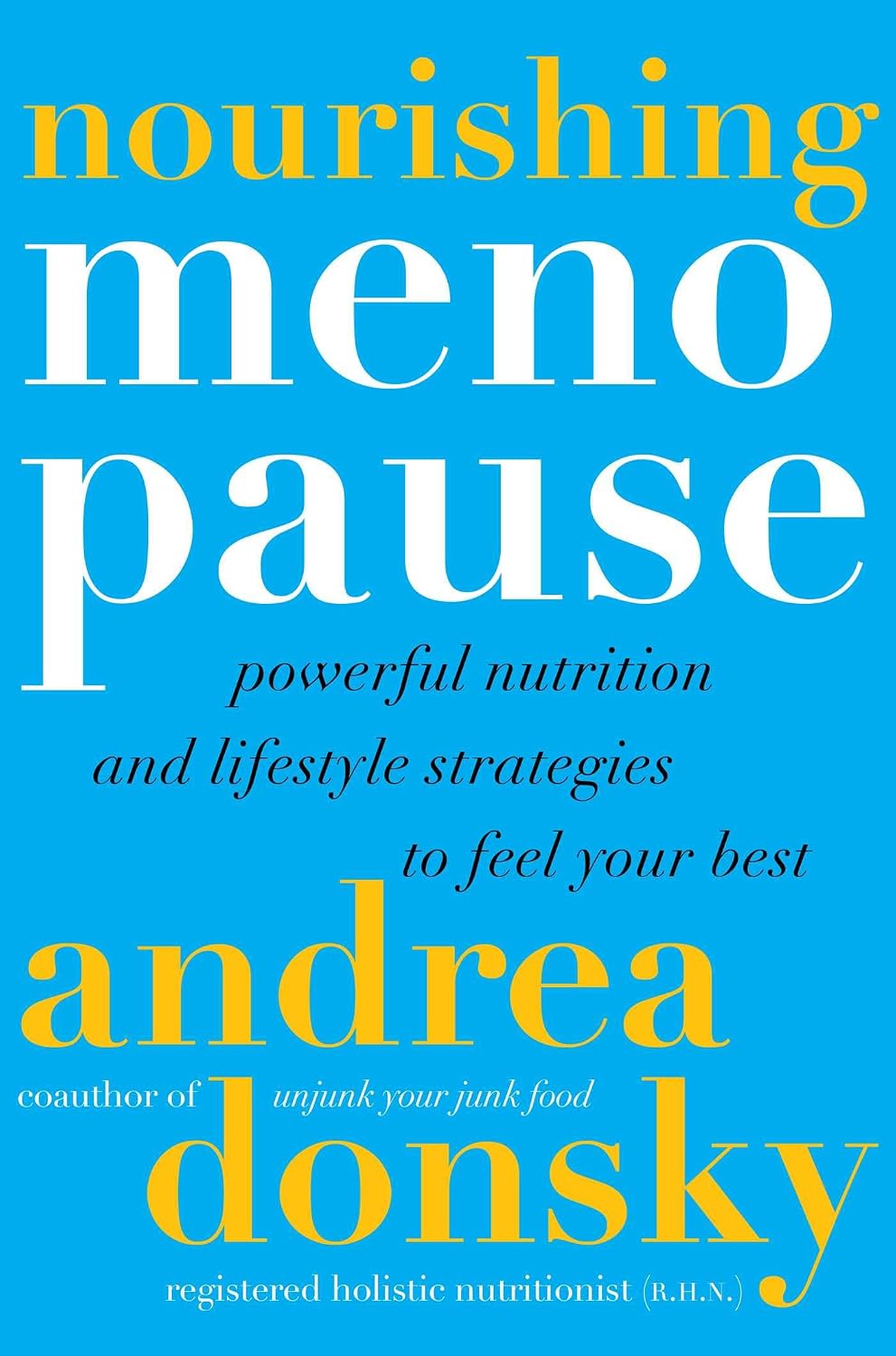
So, let's talk about the title of the book. You call it nourishing menopause. Can you explain that? Yeah. Yeah.
So, it's a play on the word nourishing obviously because I'm a nutritionist for for such a long time. And it also means nourishing every part of our body, mind, body, and spirit because this is the time for us to take care of ourselves, self-care, self-love, and whether that's through food, nut, like nutrition, lifestyle, like mindset, exercise, all of that is encompassing. And when we were looking to name the book, I actually did a little bit of some research. And of course, that's what I love to do. So, I asked a lot of women.
And I'm like, "Okay, when you hear the title, Nourishing Menopause, do you like it for my book?" And they're like, "Oh my god, Andrew, I love the name. I feel like you're giving me a hug." And oh, nice. Isn't that so nice? And I was like, "Well, that is exactly what I want to get across. And I want you to feel seen.
I want you to feel validated. I want you to feel supported." And I was like, "Done. That's the name." I love it. So, you know what I love about you is you simplify and put things into like very understandable, short, like actionable items that I always I remember and I can repeat, which is really great. So, I think that women are going to get a lot out of this conversation.
So, anything that you mention or talk about we will make sure and definitely put down in the show notes along with the link to the book, too, because I know you have so many things going on. So, let's start with this. You you mentioned it. So many women feel like their body changes overnight in midlife. Can you explain why that happens?
Yeah. So, when I was in pmenopause and I'll share a little bit about my story because I started pmenopause symptoms at the age of 36 and I didn't know what was happening to my body. I went to a lot of doctors. I was getting MRIs and tests and everything came back. I was like, "Oh, we can't find anything wrong." And my first symptom was phantom smells.
I would smell things that other women didn't. And that I was smelling like something burning and cigarette like cigarettes or like electrical wires and gas and burnt toast. And everyone was like, "So many women say that." So many women say that and it was and actually one of the research that I'm going to be published again. I was just telling you in the journal Menopause in December and it's going to be one of them is on phantom smell. So I am so excited to smell that research because it is so common yet a lot of people don't really realize that it's connected to pmenopause and menopause.
And then I had my third baby at 41 and all my postpartum symptoms like a lot of them just didn't go away and in fact several of them got worse. And that's when I was like, hm, what's going on? And then at 47, I got my first hot flash and I was like, wait a minute, am I in menopause? Is it menopause for like older women? Like I just couldn't get my head wrapped around it that I was still in my 40s yet I was, you know, could be could I be in a menopause?
And that's what kind of led me down to start researching and understanding it. And what I realized is that in pmenopause, our estrogen, our hormones, like estrogen is fluctuating like a roller coaster. Progesterone is steadily declining. And that could lead to a lot of the symptoms that women are feeling. And what I was doing changes, our body changes, like so many things that were happening like exactly weight gain.
I had a lot of weight fluctuations. Like I was going up and down 8 to 10 pounds until I eventually put on 20 lbs. Like my muscle mass, my insulin, like my sleep, everything was changing. Even how I responded to sleep, to stress. So what I was doing was doing what I always did.
I was eating the same. I was exercising the same until I realized I have to actually relearn it. And that's when I was writing my book. I'm like, I have to just relearn everything I thought that I knew. Every everything from what I was eating to how I was exercising to, you know, to mindset to what I was thinking.
And I thought, okay, this has to be a new way of looking at things so that I can actually help my body thrive now that I'm in this new phase of life. So, I want to go into the eating, the exercise, the mindset. But first, I have to go back to phantom smells because I keep thinking about it right now. So, for women out there who are listening, and it does I don't even know if it has to be permenopause or menopause related. I'm assuming it's hormone related somehow, but I I smell eggs on every glass that I ever drink.
So, I'm like, if you're watching, you know, if you're just listening, I have a glass here. I'm always like, I have to smell the glass. I have to smell the rim of the glass. And usually I'm like, oh, I can't drink out of this glass. I that's what I smell all the time and no one else smells it.
I make my husband smell plates. I put it on social the other day. He was like sniffing a plate in a restaurant because I shoved it in his nose. I was like, "You have to smell this and tell me is this smell bad? I have to tell them." What are the phantom smells?
Yeah. So, according to our research, we know that the number one phantom smell that women are smelling in pmenopause and menopause is something burning. So that could be cigarette, cigar, campfire. It could be any like the burning electronics like I mentioned, burn toastes, burn coffee. So and that is by far, by the way, that's it's a huge number of women that are smelling it.
And then there are things like smelling bleach and sulfur which could be part of what you're smelling as well. Gasoline. And then some women, I always laugh. I'm like, why couldn't this be me? Some women actually have sweet smells like chrysanthenums and perfume and like chicken soup and chocolate chip muffins.
I'm like that would have been a good phantom smell to have as opposed to right as opposed to one we have. So it is a common one. So eggs are one of the phantom smells. And the thing is and you're asking everyone else and you're like wait am I going crazy? Like am I the only one smelling it?
So I mean listen there are a lot of reasons as to why we can have phantom smells. But if you go to your doctor, you get everything checked out and they give you that clean bill of health and it'd be like okay so now let's look at permenopause and menopause as a symptom. And eventually they do go away. When I went into menopause it actually went away. Well, why am I getting it now?
And why isn't it burning? Why is it eggs? It's Everybody's different. I I need another research paper, Andrea. I need another research paper from you on that.
Okay. So, let's go ahead and touch on some things. We talked about weight gain. You know, I know that you talk a lot about digestion, gut health. So many women feel bloated, not tolerating foods they've eaten their entire lives.
Menopause changes our gut microbiome. Is that correct? Yeah, it is correct. So, as we go into pmenopause and menopause, our gut is shifting and changing. So, actually, chapter 4 is all about gut health and digestion.
As a nutritionist, I I had to include it in the book because that is the foundation for so many different things. So, our gut motility can change, meaning how quickly food is moving through our digestive system. It could slow down. We can have changes in our gut microbiome. It might we might become more sensitive to certain foods that we weren't before.
And what these can lead to are things like gas, bloating, indigestion, loose stools, constipation. And we hear that a lot from the women in our community. And in fact, and I know you and I have talked about my symptoms, the 103 plus symptoms. I'm in I'm in your book quoted for the 103 plus symptoms. And we know that 49% of women are experiencing digestive issues.
So almost half of the women who have answered our survey, which now we have 5,300 responses, it's a large number. So almost half of us are experiencing it. So it can happen for a lot of us. Why does food move through our digestive system slower during this time? It has to do with our hormones and it has to do with how our hormones help our digestion.
So and it affects so many different parts of it so many different parts of our bodies including the digestive part of it. So let's talk about how we nourish that. What are some of the things that that women should know about nourishing ourselves to prevent some of these things that can just feel like, you know, I know what clothes I'm going to wear on those days. I just I can feel really it can really be just really frustrating. It is frustrating especially when you're having all of these symptoms that you know you were able to eat certain foods before and now you're like I can't even put this in my mouth without getting gas or getting bloating or getting something that's causing some type of digestive upset and I provide almost 30 different actionable tips like you were talking about in the big in the beginning in chapter 4.
So what are some of the things that we can do? So, one of the most important things is to chew your food really well and chew it until it's mush cuz that makes it How many times is that? Like 50. Well, it's like 30 to 40. And that's more for like if you're chewing like steak, right?
You're chewing some kind of like protein or something that's a little bit takes a little bit more time to break it down. And when it's in that liquid state, it just makes it easier on our digestive system to actually digest it. But also, what's important now is absorption. We want to make sure that we're actually absorbing absorbing the nutrients of the food that we're eating and that's like a whole other conversation. So I would say definitely chewing your food really really well, taking a deep breath before you eat because so many of us are eating on the run and when we're stressed and cortisol is increase is is released, we're not going to digest our food as well.
So sit down, take a couple of deep breaths and then that what that's going to do is stimulate the parasympathetic part of our nervous system which is also known as rest and digest. So that'll help us do that. So you know and we know our nervous system also is the most effective part of the bo the body system of the when it comes to pmenopause and menopause that also came out of our research of for our signs and symptoms. So anything that's going to help us relax and digest our food better is really important.
You know, a lot of women, you talk about things that we're sensitive to. I found that, and I do love my glass of wine, but from time to time now, a lot of women feel like they cannot tolerate alcohol, caffeine, or sugar the way they used to. Why is that?
Yeah. So it's not like it's like we can't so much tolerate it's we become more sensitive to it because our bodies are changing. So for me like I for Tamsen same thing like I can't even have a glass of wine or anything like any type of alcohol without it sparking some or triggering some type of hot flash and then it'll go into night sweats and then it'll affect my sleep. So I definitely understand you in terms of that. And even something like chocolate if I have chocolate before bed I know that I'm going to have night sweats.
It's just our bodies are ch Yeah, I know. It's so interesting and we're all so different, right? So the way it affects me may not affect you and vice versa, but we're just becoming more sensitive to it as our hormones are changing. So I know there's so much information online. There's the high protein, there's a creatine, there's low carb, there's intermittent fasting, there's I don't everything, fiber, there's a lot of things that are overwhelming.
If you could design as a nutritionist the ideal menopause plate, what would be on it? So, I love this question because and it's exactly why we created something called the balance blueprint. So, in chapter 11, I really wanted to look at because we're all different like you and I were just talking, right? So, something that I might say, you know what, Tamsen, this is really healthy. You should eat this.
And you're like, wait a second, Andrea, that gives me like a ton of gas. I just I cannot put that in my body anymore. Right? So the way we look at nutrition and Lisa Taco, she's my co-author on the book is and she's been in clinical practice for over 30 years for nut as a nutritionist. We were like, well, let's provide some guidelines, a blueprint for women so that when they are creating their plate and we can talk about what that is, what what do we want to look at?
What are those guidelines that we want to follow? So balance is actually how I live my life. It's a play on it's actually an acronym and it's a play on the word balance. So balance the B stands for balancing blood sugar. The A stands for adding more fiber.
L is loading up on protein. A is adding good quality fats like omega-3s. N is nurturing digestion. C is choosing more plants. And E is ensuring you're hydrated.
So when we comes to building that plate, to answer your question, like we really want to focus on lots of vegetables, eating the rainbow of vegetables because that'll have a lot of different nutrients that we need as we're going into pmenopause and menopause. And we want to look at protein. You want to look at good quality fats like omega-3s are really important for reducing inflammation for brain health, heart health, hair, skin, and nails. So, getting those good quality fats, even like olive oil. These are these are fats we want to include on our plate.
And then making sure that we're eating whole foods because that'll help our body digest our food better. Our body recognizes how to metabolize those foods and digest those foods. And making sure we're getting at least 30 different plant options a week because plant foods will also have fiber. And we want to make sure we're getting at least enough fiber in our day that will help move things along that digestive tract. So, if there is one food every woman over 40 should eat every day to feel better, is there is there one you can think of?
You know, in terms of picking one because we're so different and we're all affected differently. I don't necessarily maybe feel like it's one food, but maybe it's a category. Like I do feel like we need to be focusing on fiber because if we look at everything that's online and to your point that there's so much information online, there's a lot of focus on protein and protein is really important. It's one of it's the a you know it's it's part of our balance blueprint. But I also want women to not forget about fiber because fiber helps with so many different things in our body including getting rid of the metabolized hormones that we no longer need undigested food that our body just wants to kind of get rid of.
And I I laugh cuz I have my emoji, my little poop emoji behind me. And I love using props because I I do a lot of TV segments. I'm like, props are my thing. But we want to make sure we're going to the bathroom at least once a day. And fiber will help doing that.
Will help us do that. So you talk about I want to go symptom by symptom if we could or just a few of them, not all of them because there's over a hundred to figure out how nutrition can be used as, you know, food can be used as medicine to help women in midlife. So when we're talking about food as medicine and we're talking about brain fog, are there foods that support cognition and brain health? Yeah. So an important thing to mention is that from the research that we did is we know that when it comes to cognitive health or brain health, it's it represents 90% or up to 90% of the top 10 most common symptoms.
So it is a huge percent. So we hear about the physical symptoms, but we don't always hear about the mental, emotional, and cognitive health symptoms. So that's what our research showed from the signs and symptoms survey. So there are certain foods that can help. So like I mentioned, omega-3s are really great for brain health.
Protein can help with brain health, right? So foods that are going to help to reduce inflammation. And by the way, foods that are going to be good for us overall are still going to be good for our brain health because our brain and our gut is connected through the vagus nerve, which you know, so foods in the omega-3s that we're talking about in particular. So when it comes to omega-3, so we're talking salmon, fatty fish, herring, mackerel, sardines, and vegan sources would be chia seeds, basil seeds, hemp seeds. Those would be the foods that we want to we want to focus on.
Are there any foods that make brain fog worse? Yeah. So food like you were mentioning before. So for and again, everybody's really different, but so some women will be affected by alcohol or some women will be affected by ultrarocessed sugar or caffeine. I know for me, if I eat gluten, that'll affect my brain health, too.
So, it's a matter of listening to our body and and again, reaching for those foods that are nutrient-dense and that are are whole foods because our body knows how to process those. So, listen to what it does for you. And if you notice that it's making it worse, then I would just switch it up and choose some other options. For the person out there listening that says, "Okay, I get hot flashes." Are there foods that trigger hot flashes that really trigger them? Oh my gosh.
For me, alcohol, spicy foods, caffeine, and even ultrarocessed sugar will trigger it for me. And then, like I said before, like if I eat chocolate before bed, I'm going to have night sweats. So, those are very common foods that can trigger hot flashes. And what about any foods that help hot flashes? I I'm just thinking like ice.
That's not really a category. Yeah. Well, so there's actually research now, which is nice. There was human research done on for vasom motor symptoms like hot flashes and night sweats on soy foods. So we know that soy foods can help certain some women actually reduce their vasom motor symptoms like so edettoami, tofu, tempeh.
I like in particular fermented soy and non GMO and organic if you can. And then we'll do fatigue because I think that we all we deal with that whether you're in pmenopause, menopause or just in life in general. But if you're exhausted all the time, are there nutritional deficiencies or habits that you look at first when you're talking to somebody? Yeah. So just to to to share as well is fatigue is the number one symptom across the board out of the 103 plus symptoms.
So oh that's a top one top one number one in pmenopause and in menopause. So it is so common. So I always tell women I'm like if that's if you are exhausted which so many of us are. I remember I was in pmenopause I was so exhausted I can hardly get out of bed some of the days. So, I always say go to your doctor and ask your doctor for certain blood tests.
Like, let's look for the lowest hanging fruit like vitamin D, B12, ferotin, and your thyroid test because perhaps there's something you can do to help to help it just by knowing what your levels are. And then other things like making sure you're eating enough. A lot of women will say, because we talked about the weight gain before, a lot of women will say, "Well, I'm not eating as much because I'm gaining weight or I want to lose weight." But we want to make sure that we're eating enough because that actually is important when it comes to weight management. And then we also want to make sure that we're eating our protein and our complex carbohydrates. We're also getting enough hydration because if we're dehydrated, that could lead to mental and physical fatigue and and even beyond nutrients, we want to look at like are we skipping meals.
So like there's so many things that can play a role, but start by going to your doctor and asking for those blood tests. So I know protein and fiber are super super important. I know there are minerals that our body needs in midlife. Can we go into some of that because I know you focus on vitamins and there are minerals that you've told me before are essential. Yeah.
So, chapters 9 and 10 are all about vitamins, minerals, and antioxidants. And many of us when it comes to, you know, because our food lacks a lot of the minerals, and this is according to the WHO, like we know that our food lacks the minerals and our digestive system is changing. So, we may not absorb food the way the same way that we did before. And many many of us aren't eating enough. So, it's really important that we do focus on getting enough vitamins and minerals in our diet.
And one of the minerals in particular that a lot of women in this phase of life are lacking or can use more of is magnesium. It's probably one of my favorite. I mean, they're all important, but it's one that I want to focus on because it represents or it helps with over 600 different enzyatic processes in the body and including mood and muscle and like it it helps with so many different things including cognitive health. There was a research in 2023 that looked at menopausal women and not having enough magnesium could lead to cognitive issues. So getting enough magnesium is super important like green leafy vegetables, avocado or even chocolate or dark chocolate can help with magnesium.
So or pumpkin seeds. So making sure we're getting enough magnesium is really important. Magnesium is also important for helping us sleep. So we really want to make sure that we're getting enough in a day and you could take it throughout the day depending on the types that you're taking. I love magnesium bislycinate because it is attached to the amino acid glycine which does help us go to sleep.
So yes, very important. Minerals are very important and especially something like magnesium. Now I know you have a supplement line of your own, but I know you have been talking about vitamins and supplements and what's really necessary in our bodies. Are there certain vitamins we should be focusing on in menopause? And is there a good way to add them to the diet?
I mean, I know food, I guess, is probably the most the the most important way or the best way to do that. Yeah, food is always number one. And as a nutritionist, I'm always going to say food, food, food the foundation. And then there are certain certain supplements or vitamins. So, vitamins in particular.
So, if we're talking like specific vitamins, all of them are important because they work synergistically in our body. So, if I was going to call out, and I can go to supplements in a minute, but if we were going to call out specific vitamins, we can look at vitamin D, even though it's a hormone, but I'm going to call it a vitamin for this conversation. So, vitamin D, really important for mood, for energy, for immunity, for bone health. So, that's something that I would love women, and we talked about a few minutes ago, is go to your doctor, please get your vitamin D levels checked because it can have an effect on so many different things. I also really like vitamin K2 MK7 as that helps to get calcium into the bones when you're taking it with your vitamin D and specifically by the way for menopausal women.
I talk about that in the book vitamin D and K2. Is that what it is or are those two separate things that you're saying right now? So they're two different vitamins. So there's vitamin D and then there's K2 MK7. Taking them as a combination would be awesome.
It doesn't have to be in the same bottle. Just taking them together is amazing as that can help with bone health. And then I'm also a big fan of B vitamins. Making sure we're getting enough, you know, B vitamins because B is great for cognition. It's good for energy, like something like B12, like we talked about a minute ago.
It also helps with metabolizing carbohydrates. So, and it helps with all with dealing with stress because we do know we're more stressed now than we were before. And according to our research, 66% of us are more stressed now. And we're less able to deal with it. So, anything that's going to help support our nervous system is really important.
Yeah, there's no question. So, let's go into supplements and talk about what you think is essential. Supplement aisles are filled right now. Women are super confused. And sometimes I think what happens with confusion is you just do nothing.
I mean, that's kind of me. I I'm like, well, I have to do how many things? I'm just not going to do anything because I'm just too tired at this point because I know I'm not going to get it right. So, what would you suggest for a woman who's feeling overwhelmed? There's way too much out there and she doesn't know where to begin.
I love this question and I spend so much of my time researching supplements and like you said I have a supplement line but I always focus on getting what we need from our food like I mentioned but then there are also certain non-negotiables that I really believe from all the research that I've done that women in pmenopause and menopause need more therapeutic doses of so what that means is we need higher amounts of it. So number one would be magnesium absolutely hands down magnesium. Number two, omega-3s, like we talked about, and that could be from fish oil or even from something like if you're a vegan, it could be algaal oil as that's well tolerated and well absorbed. Fiber. Most of us are only getting maybe 50% of the fiber that we need a day.
We need 25 to 30 grams of fiber a day. That is my my suggestion as a nutritionist. If you can get 25 to 30 grams of fiber a day, we're going to the bathroom regularly, that's very helpful. And then so wait, so we have 25 to 30 grams of fiber a day. 25 minutes of Okay, that's your first number we have to all remember. Then let's go to protein.
Yeah. So, when it comes to protein, we came up with a formula because again, that's another area that I find is very confusing. And by the way, as a nutritionist and I found it confusing. I'm like, do I need this amount? Do I need that amount?
I was like, no, no, no. Let's go look at the research and actually looked to see how much protein do we need? And Lisa and I looked at all the research. We looked at her clients. We literally looked at everything out there and we came up with a formula that is really simple to remember.
So, if you're 140 lbs or less, you want to aim for 20 to 25 g of protein a day, assuming three meals a day, minimum starting point. If you're 140 lbs or more or more than 140 lbs, then you want to look at 25 to 30 grams of protein a day, assuming three meals a day, minimum starting point. And then you add on from there based on your activity level, your body size, are you on a GLP1, and what are your personal goals and personal preferences? And then you can target it towards what you would like. And that's why the balance blueprint is so good, too, because you're literally customizing it for your body and what works for you.
You know, you have done so much research. What is exciting you right now in this space in terms of moving the conversation forward to the next place that we need to be so that not only women are getting educated about what permenopause and menopause are but they're also getting educated about what happens for the next you know three to four plus decades in our lives. Oh my gosh I mean you know me really well Tamsen research is my happy place like literally is my happy place. The you know I'm always looking at data. I'm always we have 15 surveys on our website right now and we are always looking at different things.
So we have some new ones in our pipeline that we're going to be launching this year. We're going to look at perry menopause and menopause and ADHD. We're going to look at ethnicity. We're going to be doing some really cool research around all of these different areas and research that we need. I mean as you know we need so much more research.