She is helping thousands and thousands of women take control of their health. So many of you submitted questions for this one and I have a lot of my own questions as well. Like, why can't I eat oatmeal anymore without getting a stomach ache? Or should I consider GLP-1 right now? Keep sending them because that is how we build these episodes for you.And for my friends who aren't in menopause yet, stay with us because this is the stuff I wish someone had handed to me before I was in the thick of all of it. It's coming for all of us and the women who take control earlier, I feel like that can make things just a little bit easier. Before we get into it, if you have a second, leaving a review matters so much to me and the people who work with me here. You guys know about these badass women behind the scenes building every episode for you. We really appreciate hearing what you think.So, let's go ahead and get into it with Cynthia. Cynthia, it's so good to see you. Thanks for having me. We're going to warm up a little bit cuz it's cold in the studio first of all, but we're going to play a game of keeper pass. Good?
Sounds good. All right. GLP-1s for women in menopause, definitively a keep. I think it is the key to helping with body composition, lowering inflammation. Total keep.
Intermittent fasting. This is a half a keep. I think it's really dependent on the individual. You have a keep for? It's really dependent on are you sleeping?
Do you manage your stress? Are you eating enough food in your feeding window? I think that's what helps make that decision. So, one half. Creatine for women.
Absolute keep. One of my favorite supplements for women. It got popular really quick. I've been using it for years. Have?
Well, it got popular in my life really quick. Diet Coke. I'll say pass. I think there there's I I think there I think there are other things that have a little bit more nutrient profile, but what I would say is if it's something that you love, then obviously keep it. Okay, I have one little mini can, so we're going to keep the other half of that. [gasps] Coconut cult yogurt.
Keep. I'm a huge fan of coconut milk yogurt, especially for those of us that are dairy insensitive. Adding electrolytes to your water. Absolute keep. Supplementing your fiber.
This is a half a keep because I really want women to get their fiber from food and if they need to supplement, then I think it's okay. Cottage cheese on everything. Bleh. Total total pass. Only because I have a visceral reaction to cottage cheese, but it is a great protein source.
I know. I loved it for a while, then I didn't love it for a while, and now I put I dip it This might be disgusting, but I dip my pretzels in it, which I shouldn't I guess those are probably a pass, too. But I'm feel like it's It's a little bit of protein. I think it's okay. To do [clears throat] that.
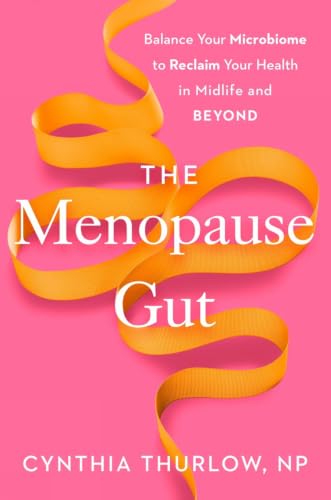
Come on, man. We got to just have something. It can't always be that hard. All right. Well, you know, we have you here because you wrote an incredible book, and you and I spoke together on a panel around my documentary, and I was so impressed with you, and then I went on to be further impressed with the book once I read it.
And so, I want to dive into it. You know, the menopause gut There are hundreds of symptoms of menopause, and that's unbelievable to say because I think when I first started this conversation, I thought there was about 30 or so. So, what made you want to do a book about the gut? I really think it had a lot to do with the fact that there's a whole other conversation beyond brain, bone, and heart effects from hormone replacement therapy and the changes that are happening with women. And quite transparently, over the past 10 years I've exclusively worked with women in perimenopause and menopause, and it's become very clear to me that there's a whole missing conversation around the gut microbiome and how it interfaces with every organ system, every cell, and how it plays an enormous role in whether or not we breeze through perimenopause into menopause or we struggle.
And so, I really felt like this would be the opportunity to explain the science and do it in a way that's really actionable and not scary. Yeah, I always think about that. I think about, "Oh my gosh, what am I going to have to take on now?" You know, what's my next to-do list? What do you think we're getting wrong about our gut in menopause? Because I might for one thought, "Okay, if I get all these other things worked out, my gut will fix itself." And I've realized that's not the case.
I really think it's the opposite. We need to be thinking about the gut in our peak fertile years and then in perimenopause to ensure that we're going to have a smoother transition. So, what are we getting wrong? I think that we forget that the gut microbiome is 40 trillion bacteria, viruses, and protozoa. That there's more of them in terms of cells than there are our entire body.
And so, when I think about the fact that so many of us are really not taking the opportunity to understand the interrelationship between the quality of our sleep, how we manage our stress, what types of foods we're eating, what types of exercise, you know, the experiences that we have as younger women largely impact even the type of oral contraceptives that we're using interface with this microbiome at a pretty deep level. So, the point of what I'm making is that all of these lifestyle related things that I just mentioned can improve the quality of the microbiome or they can take away from it. And so, the more that we can do proactively, obviously, the science has only been out there for 5 or 10 years, but the more that we can do proactively, the less symptoms we're going to have, we're going to age much more gracefully, and probably have a higher quality of life. I get the question a lot, like, what can I do to get ready for menopause, which I wish I had known, but I really do think the gut is really the place to start, would you say? I absolutely think so.
And this is where quality of the food that we're eating is important. It doesn't mean that you have to eat organic 24/7. It just means less processed foods, your meal frequency. You don't have to intermittent fast, but 12 to 13 hours of digestive rest is important for all of us. Thinking about the intensity of our lifestyle.
So, are you exercising intensely all the time and not giving yourself recovery? Are you not managing your stress because we know what stress does to the gut. And it's beyond just impacting susceptibility to disease and leading to leaky gut, you know, stress is catabolizing our muscle. And so, for so many of us that worked in fields where we had so much stress and so much on our shoulders and we're like, "Oh, I'll sleep when I'll sleep when I'm 50." Or I'll sleep when I'm 55. Or I'll sleep when I'm retired.
It's understanding the cumulative net effect of all these lifestyle choices on the gut itself. And so, the 30-year-olds, I would say, think about what types of contraception you're using. Think about your nutrient density of your food. Think about, you know, are you giving yourself proper recovery? Are you managing your stress?
Cuz I used to believe that I could do 5 minutes of meditation on a Thursday and then I was covered the other 6 days. And so I think for so many of us age kind of sneaks up on us and then all of a sudden we're like, "Oh, maybe I shouldn't have, you know, drink that much alcohol consistently over time. Maybe, you know, that the choices of relationships I had have had a detrimental effect on our microbiome." Or even thinking about adverse childhood events, which is a whole other kind of topic. But those are the things I think about to my 30-year-old self. Mhm.
Did I need to be on oral contraceptives for 16 years? And what would have been the better option? Well, I mean, it's not to suggest, first and foremost, women need good access to to contraception. Number two, I probably would not have thought that I needed to be on it for 16 years. There's so many other options, even copper IUDs.
I mean, there's non-hormonal options, but we do know that the microbiome interfaces with those synthetic hormones. And so cumulatively over time that can impact the health of the microbiome. So women listening now are like, "Okay, I did all that. Now what do I Now I've got to Do I have to fix it all?" So in simplest terms, why are we bloated all the time in perimenopause and menopause? Because I think I have gone through this time where I could look pregnant when I'm not after I have a meal or I drink something or it's just it it could happen randomly at any [clears throat] time and it's I can't predict it.
Yeah, I would say number one, I think there's underlying food sensitivities. We just become sensitive to things like gluten or dairy. And this is very individual. So I want to be clear, not everyone has to be gluten or dairy-free. I think there's also alterations.
So progesterone is a smooth muscle relaxant. So the way things move through the digestive system will change as progesterone's declining. Same thing with estrogen. As estrogen is changing, we have less nitric oxide production. So the contractility of the digestive system is changing.
And so the first things I think about is underlying food sensitivities. Number two is thinking about these changes related to hormonal fluctuations, chronic stress, eating on the go, eating standing up, eating while you're yelling at your spouse or your kids. I mean, a lot of these things are impacting the quality of our digestion, and what most people don't realize is digestion starts in our brains. So, if you are stressed, guess what's not going to happen? You're not going to be able to break down, absorb, assimilate, or even effectively eliminate food from your digestive system.
So, I think for a lot of people they they they think that stress management doesn't doesn't interface with digestion, but it actually does. What would your ideal be of how you should have your meal, who you should have it with, how long it should last? I mean, I'm sure you have the the I'm sure you know exactly what that should look like. What I would say is at least one or two of your meals every day, cuz I would acknowledge we're all busy women. We have a lot of responsibilities.
And I would say number one, try to at least one or two meals out of the day, be seated, take four to five deep breaths before you start eating. That's going to help get your brain into the parasympathetic nervous system. That doesn't require anything that's any extras, nothing that you have to pay for. The other thing to really be thinking about is that we're not meant to rush through our meals. Mhm.
We are not meant to be distracted while we're eating, and I think for so many of us we're looking at our phones, we're looking at a device, we're standing and eating up. I used to dictate charts and eat at the same time. I understand. Or you know, you're sitting you're standing at an island. And so, I think for a lot of individuals it's something as simple as take the time to sit and take those four to five deep breaths, and eat a meal over 20 to 30 minutes.
Now, I know that seems like a luxury, especially for people depending on what life stage they're in, but it can make an enormous difference in the quality of how your body is assimilating and breaking down that food. I spent a long time in TV news and so I ate dinner at my desk in between news shows. There weren't a lot of options. I couldn't always like get up and go to a restaurant or go, you know. So no matter what I did, I felt like I was constantly on the go and I have now that I'm not doing that anymore, I have to consciously think about how to slow down.
And every once in a while I'm like, okay, I'm going to chew a thousand times or whatever it is and you know, I do that for a minute and then it doesn't work anymore. You mentioned food sensitivities. Are there certain tests that you think are important to get at this age? So maybe I've eaten dairy my whole life and now all of a sudden I have a problem with it. Or I've I didn't even know gluten I didn't even know the word gluten when I was 25 years old.
Yeah, I would say number one before we even get to testing, you can keep a diary or a list of, you know, when I eat X food, these are the symptoms I receive. So that would be a first step because I think for a lot of patients, they're like, I don't want to have to buy a test that's going to be paid out of pocket. So that's first. Next you could do something like Whole 30, which is designed to be for 30 days where you remove the most inflammatory foods. So gluten, grains, dairy, sugar, alcohol, etc.
And sometimes that alone for a lot of my patients, they're like, wow, I didn't eat gluten for a week and I didn't realize that was precipitating a lot of my bloating. Now you can [clears throat] then try to reintroduce foods to see what happens, but I usually will do those two things first before we even look at food sensitivity testing. And to be transparent, when I was writing the book and looking at the research, I know anecdotally working with patients, food sensitivity testing is very helpful. On the research side, there's not a lot of solid research and this is where I will often times say, this is not to suggest that food sensitivity food sensitivity doesn't have value. It's the, you know, if you're someone that has to have evidence-based, research-based interventions, I would say try my first two suggestions first and then if you're really keep persistent symptoms, that could be helpful.
I'll give you an example. Sometimes patients will have sensitivities to nightshades, so things like tomatoes, peppers, potatoes, and it's not until they pull them out that all of a sudden they're like, "Oh, that really made a big difference." Yes. Does that change over time in someone's life? I mean, I I don't know. I'm a big eggplant, so that's nightshades, right?
Yes. Eggplant. Love eggplant. I would eat it all the time. Go to Italian restaurant, eggplant, eggplant.
And I noticed last two or three years, I feel like crap when I eat eggplant. I'm so upset and I think, and maybe this wasn't cooked the right way. And I keep trying it over and over, but I get a big bloated stomach after I do that. Do you notice that that changes depending on age or where you are in your your cycle or your hormones? Yeah, I I do think so.
Stress plays a huge role. So, I think in 2018, I always use myself as the example, I went dairy-free and got rid of the last pounds of last few pounds of perimenopause fluff that I could not get rid of. And in the past year, I've been able to have a little bit of dairy, like a piece of cheese or maybe some whey protein. So, I do think that we can have these cyclical observations around certain types of foods, and it might not even be the eggplant for you. Maybe it's the way it's prepared.
Maybe it's the oil it's prepared in or the breading or the sauce. Them all out. I'm traveling across the country and testing them, I guess. Can we talk about socks for a second? Code Tamsen at checkout.
So, how does our gut affect the rest of our body? It's not just that we don't want to have belly fat, but it really does do something to your body. Yeah, I mean, I I think when we're talking about belly fat, we're really speaking to inflammation. So, we know with the aging process, there's immuno-senescence. So, we get aging of the immune system.
And for a lot of people, it is not just the food, it's the stress, it's the lack of sleep, it's the cumulative not a fact, it's the OrangeTheory Fitness six days a week with no recovery that can really impact body composition. So, when I'm talking to patients about the gut and how it interfaces, it's really helping them understand. If you think about it, it is really like the epicenter. There's a gut-brain axis, a gut-ovarian axis, a gut-bone axis. So, is it any surprise that metabolism in general, it can impact how much calories we extract from our food.
It can make a difference between, you know, how much anti-inflammatory substances like short-chain fatty acids our body produces. So, in a lot of different levels, I like women to understand that the health of the microbiome will drive in many instances, will drive whether or not we're dealing with more or less body composition shifts. You see a lot of women in perimenopause and menopause, and you have for years. What is the average weight gain that you see of women in this stage in life? No less than 10 to 20 lb.
And for a lot of women, I think that they're told they are gaslit by their providers. They're told you're 42, you're 47, you're 55. This is just the way things are. You're meant to have an underactive thyroid. You're meant to gain weight.
You're meant not to have good sleep. And you know, you're going to expect to see some shifts in body composition. You're going to have more belly fat. You're going to notice that you know, you're going to struggle to to shift body composition. And so I think for a lot of women it is incredibly frustrating.
Mhm. So what is the truth? Yeah. You're told you're told by your doctor this is just the way it is. What's the truth?
Well, and I think it's it's really speaking to the fact all these lifestyle measures that I keep talking about, the quality of your sleep impacts whether or not you are developing more or less visceral fat, your stress management. I mean, I have seen women just go through a divorce, have a death in the family, lose a job that will suddenly their body composition will shift significantly. So the role of cortisol, it's one of the few hormones that goes up in menopause as opposed to everything else declining. We lose. Yeah, and it's like you just start to understand [clears throat] like what is cortisol?
When cortisol goes up, glucose goes up and insulin goes up. So you're not able to effectively use stored fat as a fuel source. The types of foods we eat have to change. Our relationship with alcohol needs to change. It's the you know, indiscretionary I'm standing in my pantry at 8:00 at night.
Why am I craving food? So it's all about you know, this protein leverage hypothesis, helping women understand that if you're getting enough protein, you're probably not going to have as many [clears throat] cravings. And I know that protein's having a moment, but I'd also make the argument that fiber is equally important. And then our whole kind of you know, relationship with exercise. You and I both grew up in a time we were told thin is in and skinny is the thing that we're supposed to focus in on.
And now we understand it's so much more important to make sure we're maintaining muscle. So muscle loss, hormonal changes, stress management, you know, toxic thoughts and toxic relationships, all these things can contribute to body composition changes and weight gain. And I think for many people it's helping them understand it's less about weight gain and more about shifts in body composition. So, how much muscle mass do you have to fat-free mass? I think that is more valuable information and that usually requires a special type of I don't want to use the word scale, but it's a special type of device that generally you find in a in a provider's office.
Is that a body scan? Yeah. Is that the body scan or something? Like a body scan? Yeah.
Okay. So, what do you suggest? You suggest people go and get their body scanned or get on get on one of those scales cuz I think they have some home devices, too, you know. They do. And so, those bioimpedance readings I think are much more accurate.
Because think about it, if you or I stand on a scale and we're like, oh, I I was traveling yesterday, I I ate in a restaurant, I might just from inflammation have gained a couple pounds, but it's not really significant. Sure. But then you get your bioimpedance readings, it's actually giving you data like, have I maintained my muscle mass or am I losing muscle mass? Now, that's a concern. [clears throat] Or has my fat-free mass gone up or down? It allows you to determine are the interventions I'm doing working or not working?
Yeah, I'll tell you I spent a long time not on the scale because I struggled a lot with the the eating, you know, really disordered eating for a very long time in my 20s. And so, when I finally got back on the scale, I did go to one where I could say, this is how much fat I have, this is how much protein, you know, this is how much muscle I have, this is how much and it feels a lot better to know that those are the numbers I'm shifting between versus, you know, 100 and something versus 100 and something. So, okay, I want to go to listener questions because we put a call out to questions and we got a lot of them actually, Cynthia. Okay, this is Sarah from Rhode Island. We're not using last names for obvious reasons.
She says, I've been on hormone therapy, estrogen, progesterone, testosterone for 6 months now. I thought my belly fat would just come off once I started because it did for my best friend, but nothing has budged. What gives? Well, we would go back to how's your sleep? How's your stress management?
And I really think stress is the missing link I for a lot of women especially high functioning high achieving smart you know people that are out there that have a lot of responsibilities. How frequently are you eating? How much are you eating? How how often should somebody be eating in a given day? I think two to three times is reasonable and that's what I'm saying.
What do you think most people do? I think people are eating they're snacking throughout the day or they're eating one massive meal. Mhm. And then they don't understand that there's probably not enough protein in that one meal to kind of starve off this muscle loss with aging. So for the friend who says my best friend lost the weight effortlessly and easily there's something else it's probably it could be your gut health.
It could be that you've lost muscle mass along with you know not getting enough sleep. So really digging into these things and when I talk about gut health I'm really speaking to gut microbiome stool testing which I think can be very very valuable. But six months may not be enough time to say it's not working. And so I would say you know when all else fails if everything else is dialed in then we start thinking about peptide therapies like GLP-1s. So a lot of women have reached out about GLP-1s.
Let me ask you this question. What do we need to know about them because you are a fan of them. Obviously some people feel very hesitant about them and now there are so many different GLP-1s including a pill. I think that if you are considering a GLP-1 you have to commit to two other things. Number one you have to eat enough protein.
Mhm. And number two you've got to strength train. If you're willing to commit to those two things then I have I think having a GLP-1 whether it is a kind of a standardized dose or it's a personalized dose like this term microdosing is triggering to some people but I but I've seen some pretty incredible things happen clinically with these smaller smaller dosed tirzepatide is an example. So microdosing would be something that's what is a microdose? Explain that.
Less than a standard dose. So, if you're looking at these pens, you know, where they give you a a metered amount of medication, this is going to be maybe 1/10 or or or 25% of a normal dose, a normal starting dose. And in some patients, that can be effective for reversing autoimmune issues, dealing with chronic inflammation, shifting body composition. Now, I have to be very very clear, this is in the context of working with someone who knows exactly how to do this. It is not, you know, with the, you know, online pill mill kind of stuff.
But, what I have seen has been so profound clinically that I really think, you know, over the next couple years, we're going to see more applicability to using these drugs, you know, whether it's for lipid therapy. I mean, I think there's going to be a lot of novel uses beyond the conventional you have to be obese or overweight to get the clinical indication to use the drugs. Yeah, I like you, I'd be really interested to see where we are in 3 years, 2 years, and look at cholesterol levels and thyroid levels and and what what really changes. Food noise. Food noise is a big one.
I mean, I grew up with food noise and I'm sure you know what that sounds like, where it's good, bad, everything is good or bad, and there's not really an in between. I didn't grow up with is this protein, fiber, or is this a good omega-3? I didn't I didn't talk about that or even think about it until recently. Okay, Maryann from Long Island asks, "I've always loved broccoli and cauliflower, but suddenly every time I eat them, my stomach physically hurts. What is happening?
Can I never eat them again?" Well, my question is always how What's the quantity? Like, I have some patients that are like, "I need five cups of broccoli." I'm like, [clears throat] "Maybe we need to back off on the fiber." So, is it is it too much of a fiber load? Is it that right now you are sensitive to cruciferous vegetables? That could be the case. And so, this would be a great indication of write down what your symptoms are.
I want to know exactly how much you're eating. Is it a cup? Is it half a cup? Is it five cups? Please tell me it's cooked and not, you know, raw, cuz there are a lot of people that are eating raw cruciferous veggies.
And then we kind of dial back to see like what exactly is going on. Is it also that you're dealing through with a lot of stress? Maybe your kids are going off to college. Maybe you're going through a divorce. Like really looking granularly at what else is going on in your personal life that might be contributing to those symptoms.
I feel like when you say stress, I I feel like I don't know what to do first with it, right? Do I need to focus on my sleep? Do I need to make sure I'm eating slowly? What would you suggest as a first place to start so that doesn't feel overwhelming? Yeah, I would say focus on sleep cuz I think that's absolutely foundational.
So if you're not getting 7 to 8 hours a night of sleep, you know, there's a lot of things that can contribute, you know, sleep hygiene, legs up a wall, cool room, making sure, you know, you don't have a lot of ambient noise. You know, are you on HRT? Like when I'm doing an intake on a patient, I know who's on HRT because their sleep generally tends to be better, more restful. And then layering in like I and I say to everyone more often than not when someone isn't sleeping, it's cuz they're not managing their stress. Okay.
But I would say when it comes to stress and sleep overlap, find something that you like doing. I don't care if you like going to the park and staring at a tree. Great. Do something consistently and that you like doing that can help bring down your stress levels. I got to find a tree in Central Park somewhere, I I think.
Okay, this one came into our DMs anonymously. For and you're going to understand why shortly. How many times a day are we supposed to poop? My husband is going two or three times a day and I'm lucky if I go once every two days. This is very bio-individual.
So the the husband that's pooping two to three times a day, yes, that's normal for him. Maybe you go every day or every two days. It's really does it bother you? Like when we try to compare ourselves to others and we're like, oh well, my best friend goes three times a day, my husband goes twice, I must be weird or I must there must be something off. It's always in the context do you feel like when you go to the bathroom that you feel like you, you know, you you sit down, you go to the bathroom, you get up and you go about your day.
You're not sitting there for hours scrolling your phone or sitting with the newspaper. Probably no one does that anymore, but I'm dating myself. But the point is really dependent on is it a change? Like if she were to say I've been going to the bathroom every day for years and now it's a change. The change has to be evaluated.
But the honest answer is everyone's a little different and it's really does the frequency bother you? And if it does, then I would I would discuss that with your licensed medical provider. Poor husband's coming out of the bathroom like, "Did you go again? I haven't gone at all." I totally I totally get that by the way. This is kind of my household.
So if a woman is sitting there saying, "Okay, what do tell me what to eat in a given day so I start doing it right?" Can you give us just kind of what that looks like? I think the way to to to thoughtfully reflect on what your meals should be is I want you to understand what 30 g of protein looks like on a plate. Mhm. That's number one and build your meals around that. So thinking thoughtfully about brightly pigmented fruits and vegetables.
So it isn't salad. Like all the women think if I need fiber I have to eat salad. It could be some broccoli. It could be maybe it's a day you worked in the gym and you have a little bit of sweet potato. So it's thinking thoughtfully about protein and adding in some fiber.
You know, if you have a salmon steak, you don't need to add more fat. If you're having a piece of cod or a chicken breast or a fillet, you can probably add some fat to your meal. So maybe it's some salted nuts on top of something or you're adding extra virgin olive oil to a salad. But it's just thinking throughout the day, how can I get two to three boluses of protein in that are at least 30 to 50 g? And I'm not as concerned about the quantity of fiber in a meal.
It's more let's track to have a sense of where you are because we know the standard American diet right now is about 10 five to 10 g a day. And if you look at what's recommended, it's 25 to 30. Yeah. I have a lot of patients that will never get there. I I mean I I a hard time getting there, I'll be honest.
And I talk about it fiber all day long. And so this is where I say track to see where you are. Like if you go over a week, not to be obsessive, just say I'm building awareness and if my average is 20 a day, well, the next week try an additional 2 g. Because if you try to increase your fiber too quickly, those microbes in your gut, they have to kind of acclimate. It's almost like they're training for a marathon and you're trying to work your way up to the 26 miles.
If you try to go from 10 miles to 26 overnight, those microbes are going to be pretty upset. You may get a lot of gas and bloating. Yeah, I think I tried to go to 26 overnight. I ate that coconut cults yogurt. And then I read the like what it does and I went, "Oh my god, this is going to be awful." But it was okay.
I just want everyone to know it was okay. But I I didn't know you're supposed to only have a scoop of this yogurt. It's supposed to help your microbiome. I ate the half the container. I was like, "This is so good." Okay, Michelle from Boca wants to know about tests.
Are there any tests that we should be asking our doctors for? Are we talking about blood tests or just testing. Like when we talk about I think you said that What did What were you talking about earlier where you said there are certain kinds of tests? Yeah, let's do What kind of test would be good for people to Yeah, so for a long time I was using stool testing and there are some great companies that are out there. And then I got interested in microbiome testing.
And so that to me has opened up a whole other world cuz it allows for a degree of personalization. Like if we did your microbiome testing, it might show that you need more soluble fiber and someone else might need more resistant starch. So it allows us to personalize recommendations. I think gut microbiome testing is the direction things are really moving in. You know, the question is always, you know, is it a fly-by-night company?
Does it actually have solid science? And this is where I would say go to the company's website, look for published research that's been done, look to see who's kind of recommending or suggesting the test. But I think microbiome testing is the direction things are moving in and that's now what I'm recommending to my patients. We'll put a link down there to your website and then if there's anything you suggest so people can have some specifics. I feel like I feel like my job recently is I want to simplify everything for myself and for everybody else out there so it doesn't have this huge list of things to do.
All right, Danny's asking, we're going to go back to GLP-1s. I don't want to do a GLP-1 and I don't take hormone therapy for various reasons. Are there supplements that can actually help with belly fat? You get this a lot, I know you do. Yeah, you know, I don't think it's that supplements per se are going to be helpful.
What I think is going to be very helpful for shifting body composition in lieu of HRT and GLP-1s. What's your sleep like? Because that is going to be very helpful. Number two, you know, what are you eating during the day? Because I find that most of my patients under eat protein and over eat processed carbs.
And they drink too much alcohol, I'll be transparent. Still, I feel like a lot of people are not drinking as much alcohol anymore. Well, I think people are more aware, but there are some people that are like, I like my alcohol and don't talk to me about it. I'm like, okay. I can just give you the information.
You know, the other thing that I think about is the more muscle mass you have the better your body composition is likely going to be. So when someone says, "These are the things I'm not willing to do, but I'm willing to make sure I'm strength training consistently, I'm going to make sure I'm well hydrated, I'm going to make sure I'm sleeping properly, I'm managing my stress more than the 5 minutes of meditation once a week." It's also thinking thoughtfully about, you know, what's your appetite like? Because we know with estrogen declining that protein leverage hypothesis, if we don't get enough protein, we will be looking for fats and carbs to fill in the gaps. So for a lot of these patients, they will share very transparently, "I still have food cravings. What can I do about the food cravings?" I'm like, "Well, first of all, let's make sure you're you're actually you're providing the right nutrition for your body." But there are products like there's a company and it's based on solid research.
I interviewed one of the founders. It's Calocurb. It can help with satiety. You know, we used to really a lot of berberine as a supplement. I I don't know I don't think of berberine as being as efficacious as some of these other options, but belly fat can be a little sticky because for some people it might be that they truly have visceral fat and then we have to get very aggressive about managing insulin resistance, insulin sensitivity.
That's where the body composition allows us to see like is this just pesky subcutaneous fat or are we dealing with deep visceral fat which we know is incredibly inflammatory and tends to come with it. We also tend to see fatty liver and a lot of other metabolic health issues. Figure out which type of fat that you're dealing with? Subcutaneous fat is the stuff we can pinch generally. Oh, gosh.
I mean, we all have it. We all have it. And then visceral visceral fat is when you like I I always I'm such a people observer. I was on an airplane and this man stood up and he had skinny legs and he had this big belly. That's the visceral fat.
Those apple shapes where you have a lot of visceral fat. That is the pathologic fat because it is around your visceral organs. It's the one It's fat that actually sends off inflammatory signals in the body and so they're kind of pathogenic. That's the bad stuff. Pesky fat we don't like, but that's kind of benign.
It's the visceral fat that we get concerned about. So when she talks about belly fat, I'm like what type of fat are we really dealing with? Would GLP-1s help with the visceral fat? Yes. Interesting.
Okay. Well, that so that's that's something I want to see in a year or two years and see where where everyone's at. I get this question a lot. Will hormone therapy help me lose my belly fat? I believe that it will because a lot of what we suspect is related to decline in estrogen is a change in testosterone levels and we know that testosterone has a large amount to do with body composition shifts.
I would also say if you're going to take HRT, make sure you're managing your stress because unrelenting stress seems to be kind of the perfect storm for belly fat. Alcohol is having a moment. So are mocktails. Yes. Especially in my house.
How much does alcohol affect our body fat? It's huge. I I think maybe not so much in our teens, 20s, and 30s, but certainly as we are getting older as our hormones are declining, it has plays a huge role in not just poor sleep, poor blood sugar regulation, but the body composition shifts that women really don't like to see if they're not managing their stress and they're using alcohol as a crutch, that's where it can show up. So, for me, alcohol is a no personally, but I like women to just understand the relationship between how alcohol drives inflammation, changes the way we detoxify, disregulates our blood sugar, impacts our sleep, and leads to weight gain. I got to tell you, I can't drink like I used to.
And not that I was a crazy drinker, but I do feel like I don't have as much of a taste for it right now. But also, I just feel like crap. Yep. Like one glass of wine and feel like crap. And every once in a while I'll look back and I go, "Oh my gosh, I I mean, that would that would have been very I wouldn't have even have felt the effects of it 5 years ago, 10 years ago." I mean, in so much of it, you know, our body body composition is changing.
Women tend to have more body fat than men, so we'll feel the effects faster. But we start understanding it also will like raise our estrogen levels. So, if we're on HRT, it raises your estrogen levels for hours afterwards. And so, I used to love a dirty martini, an extra dirty martini. It was like my conduit to salt.
And I said, when I realized I could not drink alcohol anymore, I was like, "Dang, I have to find something else that's salty because I love salt so much." This is funny. There is a Oh gosh, I don't even know what it is. It's like a mix, and it's called dirty. That's what it's called, and it's just like olive oil. I swear it's just like olive oil.
You can pour it into a glass. And so, I tried it, you know, to make a dirty martini, and of course the alcohol part was like made me feel like crap. So, then I just did it in soda water. I was like, "It was good." It was basically salt water, but I I felt kind of cool. I put it in a martini glass and put some olives in it.
So, I don't know. I don't recommend that for anybody out there, but Well, and I I you know, it's it's finding ways to enjoy celebrations in different ways than we did before. And those mocktails I think now are pretty are pretty good. Yeah, my husband's trying to learn new recipes all the time. I love that.
We know we need protein. It's hard for me to get enough of it from whole foods. I know we talk about different types of powder and collagen and creatine all these kind of things. What do you recommend for that? So we make sure that we're looking for the right things and getting the right things into our body if we're deciding to go with protein powders.
Yeah, I mean I think it's simple ingredients. You know, if you tolerate whey, that's probably going to be a better choice. Simple ingredients, not a long list of ingredients. You know, I'm also sensitive to people that are like, I don't tolerate whey. It's it doesn't make me feel good.
If you're going to use a plant-based fiber or bone broth protein, understand you can round things out with essential aminos. This is something that I've gotten really thoughtful about, especially in the with the book launch. I was like, how many days was I not getting enough protein intake? Essential amino acids can fill in the gap. I also think about products like Fortatrope, which has good science around it.
It can be helpful. That's And if you have an egg sensitivity, you can't have it, but it's a fermented egg product. And then creatine. So I think for a lot of my patients that say, I get two really good meals in a day and then that last 30 to 40 grams of protein, I'm really struggling. I'm like, then let's fill in the gaps.
There's no shame in that. And I hate when I hear people say things like, shame on you for having the protein powder. I'm like, I'm sorry. From food. Right, it's like we're trying our best here.
So this is where I think protein powder or some essential aminos, those types of products I think can help fill in the gaps and in a way that there's solid science behind it and generally really well tolerated. Do you have some non-negotiables that you think people should keep in their house at all times for when you have a 3:00 a.m. Craving or you're stressed out on the phone and you go into your pantry or you open the refrigerator and there's nothing in there but something that you probably going to feel like crap eating later. Are you talking about like Just non-negotiables to have in there. Yeah, like should you always have almond butter?
Should you always have eggs? Should you always have What are some that you're not I think Now obviously not cottage cheese, but God, no. Although my husband loves that. I would say like hard-boiled eggs or eggs in general, you know, grilled chicken breast, steak, thinking thoughtfully about like beans and lentils that you can throw on top of a salad. Like we always have stuff for salads.
We always have protein that's prepped. If you're feeling like you're craving something sweet, have good quality dark chocolate. Like for me, if it's 70 to 80% dark chocolate, it's not sweet. Like you can have it and it's enjoyable and you're like, you know, that square did it for me. Yeah.
But I also think we have to give ourselves permission, whether it's, you know, your raspberries or blueberries. Like some of my patients will say, "I just wanted to have a piece of dark chocolate and some fruit." I'm like, "Great." But the other side of that is, we also need to forgive ourselves if, you know, in my house ice cream is a big deal cuz I teenage boys and a husband who loves ice cream. There's always ice cream in my house. And I'm like, you know, they all work hard. They're all healthy.
Yeah. Enjoy the sweet treat or enjoy the indulgence, but just acknowledge for what it is and let it go because half of this battle is just forgiving ourselves because when I hear women say things like, "I was bad." It's the pejorative language with which we view ourselves. I think that is so detrimental. Me too. That it always say we plan to succeed.
So if when you go to the grocery store, it's okay to buy the rotisserie chicken that's already cooked. It's okay to buy the cut up vegetables. It's okay to buy the soup if you don't want to make soup. Like I think we've gotten to a point where we have conditioned women to believe that we have to do it all. And sometimes we don't have to do it all.
We just have to have things there for us so that we make good choices. Thank you for that. My my little treat is our Tate's cookies. Just I love it. Just to throw it out there.
I saw them in the in the green room. So while you're eating ice cream, I have my Tate's. Okay, I want to read one more. Jodie wrote in saying, "I'm 63 and I've had this belly fat now for almost 20 years. I've tried it all.
It feels like this is just the cards I was dealt with. Is it even possible for me to lose it? Of course. The question is, you know, what are we dealing with in terms of body composition? So, I would want body composition evaluation first, then kind of fine-tuning, going through all the lifestyle, probably some gut testing, looking thoughtfully as, you know, are you a candidate for HRT?
And, you know, we both know that you can start, you know, vaginal hormones at any time. Mhm. And then, you know, thinking thoughtfully, are you a candidate for a GLP-1? I I think it really goes to like everything is on the table. It's just really determined like let's get a good baseline assessment and then decide which direction we need to go in.
What do you think it's going to take for women to stop feeling like they've they have not done enough and then they had to go on hormone therapy or they had to go on a GLP-1? Because I think that that's part of the battle that's going on. I hear women say like, "Oh, I don't want to have to do that because I'm going to just try it this other way." And I think that, you know, that's something that's ingrained for years and years. Yeah, I mean, I think it's finding a reframe. It's it's viewing ourselves with compassion and having the understanding that there's absolutely nothing wrong with saying, "I want to do 15 things first and then think about HRT." But, by the same token, I'm hoping younger generations are hearing our conversations and we're normalizing HRT.
I have an 18-year-old and a 20-year-old. They know what HRT is and they know what menopause is. That's great. And so, I'm hoping that we are normalizing the conversation so that women that are 35 that are listening are like, "Of course I'm going to do HRT when I'm XYZ age." Or, "It's not a big deal to take HRT cuz my sister, my grandmother, my aunt, whoever is taking it." So, my hope is that we no longer view ourselves pejoratively like, "Oh, you know, the last ditch effort is to take HRT and GLP-1s." The way I look at it is like let's utilize lifestyle plus hormone replacement therapy plus supplements plus a peptide if that's appropriate for you so so you feel good in your skin at any stage of life. Well, I think what you've also done with the menopause gut is that you've given women a road map going forward.
I hear a lot of women say like, I'm I'm done with menopause right now. So, what do what do I do? This happens way before perimenopause all the way through post post post menopause. Would you say that this is the one thing that you can do for all those years? Absolutely.
This is on the hormone continuum. Yeah, absolutely. And and to be honest with you, there's stuff in this book that is applicable to younger women. Like even though the title says the menopause gut, it's really helping women understand their physiology because I was shocked when I started looking at the research. Like as I was writing it, I was like, oh my god, I didn't know this.
Like I trained at a big research institution. I never learned any of this. What shocked you most when you're writing this? Two things. Number one, that there's a gut bone axis.
So, if you have unhealthy bones, you're osteoporitic, it's largely because well, one of the contribute contributions is not just low estrogen. It's the health of your gut microbiome. The other thing was I was shocked at the research on the influence of adverse childhood events and how that ages the ovaries. I was shocked. Like when I was reading it, I was like, this is another thing I've never learned about until I'm doing the research for the book.
And then I'm sitting back saying, how many people have we lost opportunities with because we didn't have this information sooner? I know. I I know. So, I do get excited about the younger generation. But I feel like I want women to know at this age there's still a lot that they can do.
And it doesn't have to be so damn hard all the time, you know? We we complicate things. And I feel like we get these big lists and then we just kind of give up. If you give me too many lists, I'm not doing it. Well, and I love that you really emphasize like what are the easy things we can be doing right now?
And that's one thing as I was doing you know, press and podcast for the book, I kept emphasizing like, yes, there's gadgets. Yes, there are things we can do. But it's really the bare bone basic stuff that moves the needle so much farther and is so much more important. So, this woman listening that's walking her dog right now, in the car, listening while getting dinner ready, what's the one thing you'd like to have everyone try to do starting tomorrow that could be an easy lift. I would literally like you to have one meal a day where you are looking at something in nature and I don't care if it's a bird, a tree, something green and taking four to five deep breaths before you begin a meal because getting your your brain into the parasympathetic is going to have such a large impact on your digestion.
Cynthia, thank you so much. Thanks for having me. You're wonderful. Thank you. Thank you all so much for listening.
I