After you purchase, they'll ask where you heard about them. Please support The Tamsen Show and tell them we sent you. Wait, so your gut really changes when you hit pmenopause and menopause. So the microbiome is the trillions of organisms that live inside of our gut. So when our estrogen levels are like all over the place in pmenopause, so starting in your late 30s, definitely 40s and 50s, you're going to see a shift in the gut bacteria.And what happens is things you could eat before, you can't eat anymore. Things that used to not bloat you bloat you now. Things that you could digest before, you can't. When you fix your microbiome, you actually send signals to your hormones and to your brain to be happier, healthier, more vibrant. People say it changes your personality.At least the studies show that your motivation, your mood, the number one way to fix your microbiome is Dr. Amy Shaw is the physician and nutrition expert behind the viral mind gut hormone framework, empowering women to reclaim their energy and balance through evidence-based real life tools. The protein, we've heard all about it. We're working on that. The fiber, we're hearing more about that.There's a third thing that is still just emerging in the US. It's very popular in Asia. People eat them regularly. Well, Dr. Amy Shaw, good to see you.Thank you for having me. I am so glad you're here. I know we've been talking about getting together. So, I think the book brought us together now, right? I feel like this is an excuse for us to have a conversation.
Yes. But and everyone can listen. You provide, which is what I love, nuggets that are informative and then I can take away and put them into action right away, like pull something out of my supplement cabinet that's been sitting there for three years I've not used or add something to my, you know, routine. Dr. Amy Shaw, what do you see most women complain about when they start hitting pmenopause and menopause?
H so many things. I think most women just feel like they've never been told that there's this thing called pmenopause. And you know more than anyone that doctors don't get trained in it. No specialty even OBGYn and so everybody doesn't really address it and a lot of times they're dismissed. So I think the biggest question is what is it?
And the second biggest question is what do I do? What do I eat? How do I live to kind of be my best self in this state? I think a lot of you know society tells us that we're kind of going downhill. I mean that's all the jokes, right?
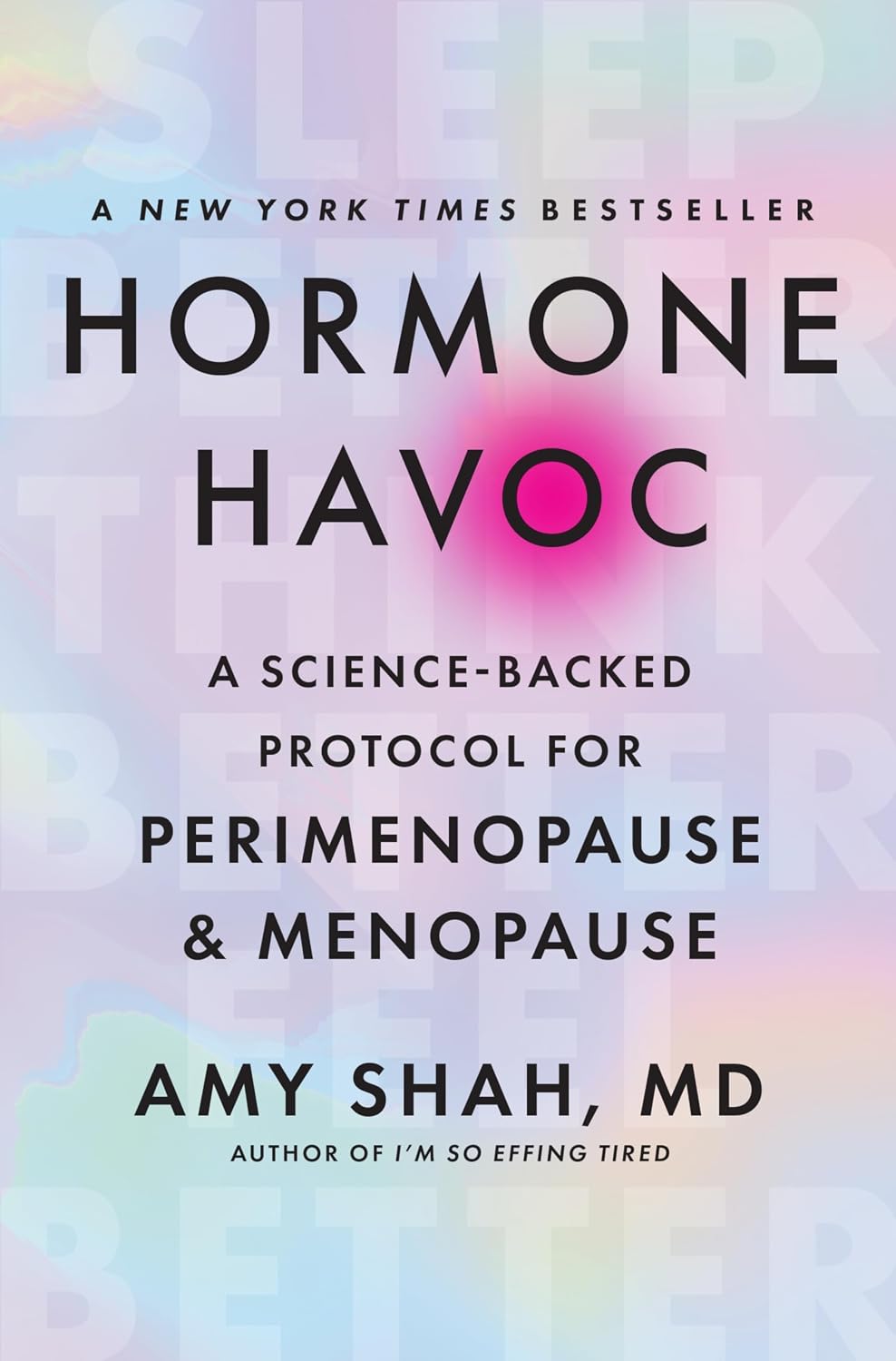
Like you're over the hill and but you're the perfect example and so am I of like you can pivot late in your life. You can have you can find gifts that you never knew you had. So my whole point with the book was to provide you with the medical side of how you can go ahead and find your gifts. So your book Hormone Havoc, can you tell us what it's about and why you decided to write it? I did a nutrition undergrad degree before I went to med school.
And so when I started to get into pmenopause, I started to think like, okay, what is a nutrition? What because I never really learned about what you're supposed to do during pmenopause about nutrition. So I started to look into it and found that there is no information. In fact, even the menopause society, we there's a whole section on supplements and there's a whole section on medications, but there's really no diet section. And so I thought to myself, okay, well, if I was going to do this for my patients, myself, and my readers, what is it that would be the fundamental truths during this time?
And that's how I really came up with the concept of 3033 and all of the things that I talk about in the book. And once I started to do it, share it, and people started to give me feedback, I knew that I had to get it out to the world. I can't wait. I want to go over 3033, too, because I think that's a tool a lot of women are going to listen to and implement as soon as we're done talking. Is there one big mistake you see women make when it comes to eating in pmenopause?
Undereating. I think we all are noticing like 80 plus percentage of women notice that there's a weight change or a redistribution of fat. And I think it's very tempting to go back to our old 20s ways and go into this major diet phase where you're just not eating enough nutrients. You're starving yourself and your cortisol is through the roof. And so I think when you eat the right foods and you're actually can eat more and feel satisfied, not feel like you're deprived all the time.
I think that was like the biggest change. What scientifically happens to your body when you undereat? When you say, "Okay, I'm just going to have, you know, thousand calories today because I'm feeling so bloated." What actually happens to your body? When you undereat, you have a rise in cortisol. A lot of people's.
Now, everybody's different. For example, for the first few days when you undereat, you'll probably lose a few pounds, right? But if you try to do that chronically, that's when you see your body trying to adapt cuz your body is not going to let you starve yourself to death. Otherwise, you could just diet yourself to like death, right? So, your body has all these counter mechanisms to try to get you to eat.
So any woman who's dieted in her life knows that that will be increased cravings. That will be fatigue. That will be like you won't expend as much energy because your body's just like, "Okay, we got to save what we have, right?" And then you might like wake up in the middle of the night because your blood sugar is low or you want to eat. You're dreaming. I don't know if you've ever had this, but you could dream about food.
I dream about pizza sometimes, but I do it even if I've eaten it, so I don't know. But you know, you know that if you haven't and especially if you've gone a long time, I went on this like bodybuilding thing where a lot of people are doing this now, like protein heavy and then you cut cut is like where you really cut your calories to kind of show the muscle. And I remember waking up in the morning and I'm like, I dreamt about food all night. It was so weird. Your body knows that if it doesn't send you these huge red flags, it's like when you're in the wrong relationship and you get these huge red flags and you're like, why?
What's the universe trying to tell me? The body is trying to tell you to get the proper nutrients. And when you're not doing that, it's going to send you more signals. I think when I hit pmenopause and menopause, my stomach changed quite a bit. Things that I would eat easily all the time, I got bloated, my stomach hurt, I did.
And then food sensitivities. What is that about? I'm so glad you asked that because this is a big thing that I found that nobody talks about is that your gut changes and that affects your hormones. So our wait, so your gut really changes when you hit per menopause and menopause. Okay.
So estrogen just like it affects so many organs in our body, it actually has an effect on the microbiome. So the microbiome is the trillions of organisms that live inside of our gut. So when our estrogen levels are like all over the place in parmenopause, so starting in your late 30s, definitely 40s and 50s, you're going to see a shift in the gut bacteria. And what happens is things you could eat before, you can't eat anymore. Things that used to not bloat you bloat you now.
Things that you could digest before, you can't. So all of these things start to happen because it's in response to what's happening in our overall body state with the hormones. So estrogen has a huge effect on the microbiome. How do you fix your microbiome in pmenopause and menopause? When you start to feel that shift, that's actually the crux of the book.
So what my theory is when you fix your microbiome, and we'll talk about how you actually send signals to your hormones and to your brain to be happier, healthier, more vibrant. People say changes your personality. At least the studies show that your motivation, your mood. So, I'm like, this is how you find your gifts is like you fix that microbiome. And how you do that, the number one way to fix your microbiome is through nutrition.
It's through the three to five times a day plus, you know, that we're eating. And every single meal, every single snack that we're putting into our bodies has the ability to shift that microbiome. I think we just have to be creative about it because if you look at some of the snacks that they recommend, they're like, you know, three almonds and I go, three almonds. I want like the little snack thing of cookies and like some cra, you know, you want you want three almonds is like what I eat when I'm like opening another bag or something, you know, like three almonds and that comes from that comes from Dr. Amy Shaw.
So that's amazing. I'm so happy. Autoimmune diseases. I have heard more about that recently than I have ever heard about it. Can you explain what it is?
And I do want to say this. I went to my doctor and I have marker for Hashimoto's and so they put me on this Hashimoto friendly diet which is different like I'm supposed to do different things which is not necessarily easy but can you explain what those things are and why they start to show up at this time in life. So autoimmune disease much more women dominant. Okay. We're not even sure exactly why this is happening.
Autoimmune literally means that a there's something attacking your own body. Autoimmune means there are thyroid antibodies that are attacking your thyroid. There are, you know, people have gluten antibodies, people have all kinds of antibodies and those are attacking ourselves. So, it's basically a misfiring of our immune system. So, as I told you that the gut talks to the brain and talks to our hormones, it also talks to our immune system.
And so our trillions of gut bacteria, they're actually the ones that are helping our immune system figure out what is friend and what is foe. And when there's misfiring, miscommunication is when we get autoimmune disease. Can you fix your microbiome with simply nutrition or you do have to use supplementation? You can do it through nutrition. I mean that is like I would say it's like running a marathon.
The nutrition is like training for the race and supplements is like buying new shoes for the race. Like it could help you a bit, you know, looks cute. Like maybe put some pep in your step, but that's not the major movers. Okay, that's good to know because I have one of those cabinets. I don't know if you have this at home, but you open it up and you get this waft of smell of all the vitamins and I'm like, I there's so many I can't overwhelming.
It's overwhelming. Women spend a lot of money and I think there are some great things out there, but we want to let them know exactly exactly what they they need to know. Yeah. And targeted supplementation. I think you know a lot of times you think that this supplement is going to fix all your problems and it's really not.
So how do you feel about fermented foods? I love fermented foods. In fact, when we talk about the 3033, the three part of it is three probiotic foods every single day. And so what I think that's the hardest one, the protein, we've heard all about it. We're working on that.
The fiber, we're hearing more about that. There's a third thing that is still just emerging in the US. It's very popular in Asia, super getting much more popular in Europe and just emerging in the US. What I mean is in Asia, people know about probiotic foods, people know about fermented foods, people eat them regularly. In Europe, it's becoming very popular as well.
But when you look at US, the US like you go to the grocery store and it's like, wait, how do I even find something that's probiotic? It's a little bitty area. It's a little shelf and and sometimes Yeah. It's a little tiny area that you're like, I think this is it. But Exactly.
And you don't even know if they're live or so probiotic foods for people who don't know, it's like fermented foods are foods that have probiotic bacteria. So live bacteria in it. And in the US, you have to label a fermented food if it actually has live bacteria. And if it does, that's then it's interchangeable with probiotic food. Best fermented foods for you to have would be what?
Probiotic cottage cheese, yogurt, easiest thing to find in the US, kefir, which is another type of, you know, fermented yogurt, sauerkraut, kimchi, raw apple cider vinegar. Those are all really great. If you go to a health food store, they often have a refrigerated area with a few different types of vegetables that are fermented and probiotic. But remember, pickled does not always mean that it's fermented or probiotic. So when we buy pickles like on the shelf, Yeah.
That unfortunately is not a fermented food. Back in the day all of our pickled food had to be fermented. There was just no way to make pickled foods. So that's why in every culture, any person you ask from Africa to Asia to Europe, every single culture had fermented foods because that's how you preserve foods. And it's so crazy that now we're looking at the science and we're like, "No, we needed those foods.
We don't need to do that because we have freezers and refrigerators and microwaves and other ways to preserve things, but that was the original healthy way to preserve things." Isn't it fascinating? Our bodies knew what we needed and we figured out a way to give them that. Yeah. Like thousands of years ago, they didn't know they were eating fermented foods because that's the only way they knew how to preserve things. But now we know that that actually was so useful like because all those bacteria that you were getting that was seeding your gut and we know that we have like half the amount of bacteria that we need like if you look at ancestors of the past because of our diets.
The 3033 tool is in the book. It's what you've created. Can you break that down for me? You can be on any diet, any restrictions, any can you can be vegan, carnivore, paleo. Doesn't require you to buy any special things or blenders or anything.
So, I wanted to do something that was like agnostic, like I wasn't trying to sell you some kind of, you know, product or tell you that you had to buy something. I wanted to do something that everybody could do and you didn't have to do much to change your lifestyle. So, it's a nutritional tool. It's a nutritional kind of framework that you So, this is a nutritional framework to follow. Yes.
So 30 30 grams of protein in your first meal, 30 grams of fiber throughout the day and three probiotic foods. So let's start with the first one. 30 g of protein in your first meal. That means whenever you have that first meal, you're going to have a egg omelette with veggies or you're going to have a yogurt parfait or you're going to have a protein shake or you're going to have, you know, something that has 30 grams of protein. That is food for your gut. That is signal to your brain to have less cravings.
That's evening out your blood sugar and that's setting up your gut for a great day. Great decisions. That's why I say in the A.M. Should that happen before coffee? You have coffee.
You know, Dr. Dr. Amy Shaw, I need to know where my coffee is around there. You can have your coffee first thing. I I actually don't subscribe to the fact that, you know, you can't do a fasted workout as a as a woman over 40.
I honestly think everyone's different. Every day is different. Like Tamsen, you wake up when you travel and you might be like, I'm not hungry right now. I'm just going to eat when 11. Great.
But the next day you wake up and you're like, I need to eat first thing. Great. Either way, so there's a lot of there's no rules around when you should eat. The rule for me is that there should be a break between your last meal of the evening and your first meal of the morning. So, meaning that eat an early dinner and then you fast for 12, 14, 16 hours and then you can have your first meal.
I'm glad you said that because I agree with you. There's every day is so different and some days I wake up starving and some days I wake up like I don't want to eat until I don't know when until I have to finally get something in my body, right? And sometimes you go for a workout and you do just great with nothing or just coffee. And other times it's like I need something to do my workout. And I don't think there should be a rule to say like women shouldn't eat or should eat or this, you know, like that whole thing.
But when you do eat, you want to get your protein. So if somebody feels like skipping breakfast, you think that's okay. If somebody feels like, I want breakfast, make sure it's at 30 g of protein. The data shows over and over again that breakfast is a good thing. Even if it's delayed.
So say you don't feel like eating at 6:00 or 7 or 8, but if you eat at 10, 11, that's fine. Having your first meal early in the day is preferred like those I I don't think that it's ideal for your blood sugar and your hormones to wait till late in the day to eat your first meal. Are there supplements you actually recommend for during this time in your life? That's a great point. So you don't need supplements at every point in your life, but there are certain points in your life like pregnancy and I would argue menopause that you actually will benefit from certain supplements because our body our gut is changing and our needs are changing at this time.
So you'll will notice that women often benefit from magnesium supplementation or increase in the magnesium in their food. So you don't necessarily have to take a supplement. You can just up the levels in your food. And what is magnesium good for? So, magnesium is good for many, many things.
It's actually part of like 300 different processes in our bodies, but we often think of it for calming the brain, easing muscle tension and helping us relax before bed. So for women, we've found that magnesium glycinate, so it's magnesium bound to the glycine molecule, it helps people relax, lowers anxiety levels, and helps people relax before sleep. And so that is a great one to use if for people who are like, "Hey, that sounds like me." And there was a study that was so shocking. It showed that people, women especially, who had higher levels of magnesium in their diet, so 550 milligrams a day, which is a high level of magnesium, they had younger brains really because they were probably more relaxed. And maybe they were eating, you know, there's lots of arguments.
They said like, "Hey, maybe those people that were eating magnesium rich foods are just people who are super into their nutrition." But I was thinking to get that much magnesium, you really do have to be aware of it or at least aware that you want to eat really healthy foods. So it's like beans and nuts and leafy greens and so magnesium is essential for our brain too. That's fascinating. I always think of it for sleep and that's about where I where I leave off. Yeah.
And great for muscle relaxation. There's a type of magnesium citrate that's actually great for constipation. So there's all different forms that you can use your, you know, there's a magnesium L308, which is good for concentration. So you can find a different form that works for you. Are there other supplements you recommend during this time?
The three that have the most data behind them. And I like to be a data driven only because I don't want anyone to say well that's her opinion you know and I do I actually have seen so many people improve their lives when they started taking magnesium omega-3s and vitamin D. I think those three are like slam dunks when especially at this time of life when your body is changing when your gut bacteria is not able to produce the same types of vitamins that it was before. So those are the three. So if somebody does anything, those would be the three things that you would pick if you could only pick three supplements in the world during this time.
That would be it. Yes. And your protein and your fiber would come from nutrition. Yes. And your fermented foods.
Yes. Okay. And even the D, like if you have fabulous levels of vitamin D and you're like the 10 to 15% who do, you don't need to supplement with it. It's an easy blood test to see if you're you know, low or high. Most women are low.
Same with omega-3 index. If you've ever checked your omega-3, I mean, most women are low. If you're eating an amazing diet full of fish, you know, fatty fish, you may not need that supplement. So it's it is a little variable, but time and time again, 80 plus% of people that I talk to work with or are my patients, those three. So, you don't think that supplements are a waste of money, right?
Because I hear that a lot, but then at the same time, I get them and there are some things that make me feel better, you know? I don't I don't know. I'm telling you. So when I was in medical school, it was like supplements were like snake oil. Like literally they thought of they taught us.
I know. And I don't think that. Yeah. And I was like at I was so fearful of them because it's like oh it's unregulated. It doesn't work.
It's just a money grab and all this stuff. And then over time I realized that there's a a middle there. Yes, there's a lot of snake oil. I mean you go on those sites especially like Amazon a lot of unregulated supplements, right? But then there are ones that have good data behind them.
Yeah, I agree. Are there are there certain supplements women should avoid or approach with caution? I think things with caffeine, weight loss, pills, things that there are a lot of supplements actually that can be very dangerous for people. So common ones in menopause would be like an ashwagandha. So for example, ashwagandha is an amazing adaptogen.
However, it interacts with a ton of other medications and supplements. So you have to be careful when you're taking these. And the same thing with like you know for example hair loss pills. There's a lot of us are taking things for our hair and those are combinations of many many supplements and then you're taking your other supplements and that's a lot of toxic load on the liver and we've seen a lot more liver damage happening from supplements over the last 10 years because people are just overusing supplements without knowing the side effects. Because wasn't there a a s a study that came out just recently talking about that about the about liver damage that people are seeing it's due to increase of supp skyrocketing vitamins A D E and K are fat soluble whereas like B vitamins if you overdose on your B vitamins you'll pee it out so you don't have to worry as much about B12 being high because you will your body knows how to get rid of it's water soluble but the fat soluble ones I mean you can overdose.
Creatine is trending right now. Trending. Should women be taking creatine? It's like anything, right? Like the weighted vest, like the creatine, it it comes, it's like a savior and there's like this whole halo effect around it.
So, what I would say is it's fantastic, but can it do the work for you so that you don't do the work? No. Like, you actually have to work out when you're taking creatine for creatine to help you get stronger. And it's not like a shortcut or a magic pill that I think it's made out to be on social media a lot. What are histamines that may be playing a large role during this time?
Histamine reaction is traditionally if you are allergic to a bee or a peanut. As soon as that bee stings you know they see that venom and they fire. And what they fire is these a bunch of different mediators, but one of them is histamine. And so that's why with anaphilaxis, a lot of people will get itching and then they'll get flushing and they'll get hives and and so people are familiar with that anaphilaxis thing. That is a histamine reaction.
That is a classic histamine reaction. We can have smaller histamine reactions. Women often during pmenopause will get hives and itching for no reason at all. They'll get redness. They'll get flushing and they'll be like, "What is going on?" And that is that histamine release because these immune cells are also sensitive to our hormonal signals.
And so when there's hormone changes and often like even in young women often when they have hives it'll say it gets worse around my period or it gets worse you know right before my period. And so these are the types of reactions that women are not getting any answers because nobody really has studied this but it is a phenomenon that we know exists and gets worse during permenopause. And now we're sharing things with each other so other people are saying oh that's happening to me too. Yeah. Which is is how we finally have something start happening when it comes to research.
Should we be on antihistamines? Yeah. So antihistamines are controversial too because benadryil the classic antihistamine that we used to use when we were kids has been shown in long-term use to be bad for dementia. So for example, elderly people, they've done studies where if they're taking benadryil on a regular basis, it's definitely at least seems to be linked with dementia. And so now we've basically as physicians changed practices and saying even if you need an antihistamine try not to use something like a benadryil or hydroxy the older ones try to use a newer ones like zerek claritin zol yes and so if you have a histamine reaction you can change your diet and you can also use antihistamines to help control it but don't use benadrol.
Is there something natural you can do for that? There are certain foods that seem to trigger the histamine response a little bit more. Classic ones I would say is like aged foods, so like dried fruits or wines often give people a histamine reaction. And so there are certain foods you can kind of avoid to see if that can help your baseline level of histamine. Your book.
When you talk about your book, do you feel like you wrote that so people understand the root of everything first and can can deal from there and then deal with all the other things whether it's supplements or or I feel like hormone therapy is not so much the root but so they can look at all their different options after they've fixed this part. You know when I was in fellowship so after residency you do fellowship we were sitting around in a journal club and we kept talking about the immune gut hormone brain connection and I'm like why don't we ever talk about that in like real life. So it's like basically there's this cross talk between your gut and your brain your immune system and your hormones all day long all the time. And so when you start to fix that cross talk, so through food, through your environment, through supplements, through sleep, through, you know, stress, the right people, you start to improve all of it. So that's what I really wanted to get at.
And nutrition is kind of like the base of that. There's one thing that you want women to do walking away listening to this, what where would they start? The nutritional thing is 3033. Just try it just for a couple days. Test it on your own self and see how you feel.
I've had people come back to me within three days, five days and say they feel better. The exercise strategy is going for a sunny walk. There is something science proves it that being in nature especially moving in nature like that walk that rhythmic movement has such an amazing effect especially in that pmenopausal transition because our cortisol levels are high. We're so sunlight not only helps with our circadian rhythms, it helps us calm down. You'll have the best ideas, feel better about your life, and feel calm at the end of it.
Going for a sunny walk is like literally like medicine. Weighted vests. How do you feel about weighted vests? Weighted vests have had a moment, right? And I think everyone anyone was like wearing them just sitting around or whatever.
So, here's the thing. Don't wear a weighted vest unless you're going to exercise. So, I think there was a lot of like, you know, hoopla about wearing weighted vests all the time, but the studies show that you have to actually be doing something. So, maybe you're doing squats at the gym, maybe you're going for a hike, like a hilly thing. Then yes, they can be so helpful.
I love them. But I think there's a lot of halo effect on that, too. So, just make sure you're using it in the right way. Eat kiwis with a skin on. Pass or keep?
Oh my gosh. Keep. This is a secret. This is a way to get double the fiber with a little hair. Yes.
Eat it like an apple. And you know there's studies on kiwi about mood, improving mood and also constipation and improving sleep. Like the three things that all women need help with with kiwi. So how many? One, two.
Some of the studies are with two, but just have one if you want. Like you'll still get the benefits. I mean I love kiwi. I've never had it with the skin. You eat the hairy stuff.
You can get the Sun Gold kind that doesn't have like the fuzz on it. Freezing bread before toasting. Pass or keep? Oh, that's a keep for sure. Why?
When you freeze bread, there is a process that happens in the starch. So, the starch is the one that really spikes your blood sugar. It's called starch retrogradation. That means that the starch starts change into something called resistant starch. What is resistant starch?
Food for our gut bacteria, acts like fiber, and lowers the glycemic impact. So leave your bread in the freezer essentially and then when you want it toast it like you would usually toast it. You can do that with bagels. You can do that with bread. You can even do the overnight refrigerating thing.
You could do that with pasta with potatoes with rice. Really? So pasta, potatoes, rice, freezer. That goes in the refrigerator. The bread goes in the freezer.
Oh, my husband goes crazy when I put bread in the freezer, but now there's a real reason. I know my kids do, too. They're like, "It takes so long." I'm like, "No, it doesn't take long. You just put it toaster. It's fine." Lemon water in the morning.
Pass or keep? I would pass on that only because I think there's like a lot of videos that say that it's the fountain of youth or it can do this and it can alkalize your body and all this stuff, but it's really just lemon water. Fiber maxing. Do you pass or keep? Keep keep fiber maxing.
Okay. I am so happy fiber is having a moment because fiber needed a good PR moment because everyone used to think of fiber as like, oh my god, it's like Metamucil. I was just going to say that one with the commercial. Yeah. No, fiber is the key.
I mean, this whole 30 33 like the main bulk of it is the 30 grams of fiber. So, it's just maxing out on your fiber. 30 grams is probably max because 95% of people don't get that. McDonald's fries and diet coke for migraines. Pass or keep? I'm passing on that one.
I feel like it would give you a migraine. I Okay, I like that. I think so, too. Electrolytes, pass or keep? I like electrolytes.
I would keep it especially hot days, dehydrate. I think people don't realize that even like a 2% dehydration has effects on the brain. So having something that can help you stay hydrated. So water alone is not going to be enough if you're exercising intensely or in intense heat. I mean I live somewhere intensely hot.
So I'm a fan of electrolytes. Green powders as veggie replacements. Pass or keep? Oh well pass as veggie replacements for sure. I think there's some great you know vitamins out there.
There's great powder. There's so much new stuff that's innovative and cool. But to think that you don't need to eat your salad or greens because you're drinking something from a box or you know pack, it's just a pass. Bone broth. Can I reverse aging?
So that's I would say I'm in between pass and keep. I would say keep if you love it, but it's not like you don't have to have it if you hate it. I think, you know, we have good evidence that eating healthy foods like a soup with made with bone broth or like collagen rich foods, it's great for you. But is it some kind of magic? No.
What about healing the gut? I've heard that bone broth can heal the gut. Is that true? I mean, I think that collagen is really great for the gut. Bone broth is a really good food for the gut.
But to say that one thing alone can heal the gut. I mean, I told you like this trillions of bacteria and they're they're get listening to your hormones. They're listening to your brain and so there's no one thing that can change it. A walking after a meal, pass or keep? Definitely keep.
But on days where you cannot go for a walk until the very end of the day, there's a hack I have. Do 10 body weight squats every 45 minutes. So, every time you know we have a meeting, a Zoom meeting ends, just get up and do 10 body weight squats. And there's studies that show that that actually is better than waiting till the end of the day and doing a 30-minute walk. Oh, that's better for your blood sugar.
Yeah. So, that's all day long. Like eight hours is eight time 80 squats you'd be doing. That's the whole point of this Tamsen is that exercise snacks throughout the day rather than just waiting for a 30 minute or 45 minute 1-hour gym session is the way to go. I had to learn that the hard way.
I before doing all this speaking and social media, I had a regular schedule. I would go to the gym every day. And then when I started to do this and travel so much, I realized that exercise snacks can be your friend. Especially for women who are really busy trying to do everything, do 10 squats, go up the stairs, you know, get up and do some exercise snacks. How do you know if it's a gut issue, a hormone issue, or an autoimmune thing?
I feel like everything just overlaps. Case in point, we just talked about that. So I remember all the research is on the gut endocrine. So gut hormones, brain, immune system, they all talk to each other and that's why there's so much overlap. My stomach is always hurting.
I'm constantly bloated and uncomfortable. No one can really tell me why. Is there a type of doctor I should be seeing for this or specific tests I should ask for to get some answers? If this person say in say 50, let's say 50, colonoscopy, yes, you have to. We're getting, you know, I think that women need to get their colonoscopies to make sure you can't see inside the colon unless you do a colonoscopy.
That's why they're mandated for everyone for screening because it could be just nothing. Could be just bloating, could be just your diet, could be, you know, but you do want to be screened for colon cancer and then change your diet. I keep saying that macaroot is good for hot flashes. Is that true? Macarude is great.
But I don't think it's my first sign therapy for hot flashes. It was forever though, something that that the doctors talked about. No, I know. It was like a big I think it's it's like everything gets hot for a minute. But I would say that there's some better things.
Should we be taking a probiotic pill every day? Are the ones from the fridge better? That's a good question. I always wonder that. It is.
Okay. So, this is where I've changed my stance just a little bit. I used to be like again in medical school and training probiotics we don't know what we're getting. It's you know it could be just nothing it which is true definitely there are ones that don't really have any of the bacteria that they say they are but there's some good ones now out there and so you know combining that with a really high fermented food diet I I think it's a great way to go. And then is it true that going on too many diets actually messes up your stomach?
I've tried everything. Low carb, low FODMAP, keto, and now I feel like my digestion is worse and I can't lose weight no matter what. I do think that diet culture has an impact on our hormones and our eating behaviors. And so I think going to a diet, that's why the 3033 when I thought about what kind of nutrition advice, I really stayed away from doing something that was like a diet per se. I don't experience as an OBGYn working with women at every stage of health and she's here to answer the questions you submitted with real medical expertise and straight answers.
So, let's get to it. Well, Dr. Mindy, thank you for joining us. This is getting to be a nice habit. Oh, thanks for having me again.
So, we we asked people we asked listeners to send in their questions and we got a lot of different things, but I tried to pull together maybe like the top questions that we seem to see over and over again. So, I'm just going to jump in there and get started. So this first question I see a lot. I'm not sure if this is perry menopause yet. What sign should I be looking for?
And I feel like between you and I, we've all asked that question, right? Exactly. And we see so many people coming in asking this. Certainly we don't have an exact test that one can do for pmenopause and that means that people do need to look for signs and symptoms and the signs and symptoms of pmenopause are the same as menopause. So you can get hot flashes, night sweats, sleep difficulties, mood changes, vaginal dryness, sexual difficulties, all the same things that people think about in menopause, but it can happen in pmenopause.
And with that, cycles tend to change. So in the early part of pmenopause, you tend to see a shortening of the cycles. So if someone had the perfect 28, 30-day cycle, it tends to shorten to about 24 26 days. And then in the latter part of pmenopause, people tend to skip menes. And so those cycle changes are happening along with all of these symptoms.
Now there are hormone testing that people can do, but one test doesn't exactly give you the answer of like how quick how soon am I going to hit menopause. But doing multiple tests over time can give some sense along with all of those symptoms and changes in the cycle. So, Dr. Mindy, if somebody said, "Okay, I want to do that hormone test." What what would that look like? How often would you spread those out?
So, there are blood tests that people can do or there are companies that have put out products where you can pee on a stick successive times and they give you different values that are a little bit more accurate in predicting time to menopause. UVA is one. And so I'll tell people if they want to do that, maybe that will give them some useful information. But just knowing the symptoms along with cycle changes is enough to know that you're imp menopause. Now, here's a part that didn't come in as a question, but it's one that I get all the time, which is, "Do I have to wait till I'm in menopause to start hormone therapy?" Can you clarify that?
I'm so glad you asked that. The answer is you do not have to wait till you are in menopause to start hormone therapy. So we know that menopausal hormone therapy will be the most effective treatment for all of those symptoms. But what's different in pmenopause is if abnormal bleeding is a part of the whole symptomatology hormone therapy is not going to fix that. So, if someone needs contraception or they're having heavy periods, if you give them a standard patch and bioididentical progesterone, that will treat all of the hot flashes and night sweats and symptoms, but it's not going to provide contraception and it's not going to control heavy bleeding.
So in that situation we will often do something like a progesterine IUD and then a patch of estradile to control symptoms. So the important thing in pmenopause is you really need to individualize like with any other patient but take into consideration if they need contraception and if they're having irregular bleeding. Okay. This next question is something that you and I have talked about quite often over the years. I have had cancer.
I've been told hormones aren't an option for me. What can I do to actually start feeling better? Well, let's clarify that there are some breast cancer survivors that hormones are an option. So, breast cancer really is a compilation of many different diseases. And for example, if someone had hormone receptor negative breast cancer and they have been free of disease for a period of time, typically 5 years or more, we know that hormones are a safe option.
There is no evidence that the use of hormones in the setting of hormone negative disease increases the risk of recurrence. I would also say that the conversation is changing even for people with hormone positive disease. Certainly the standard of care is to offer non hormonal therapies but we are learning more and it is possible that people who had prior hormone positive disease who have been free of disease for a long period of time can consider hormone therapy. We don't yet have big randomized control trials to say if it's safe but we are learning more and more. So, one thing I try to tell breast cancer survivors is hormones may not always be off the table.
If you're in the middle of treatment now, hormones should not be used, but there are plenty of options. We have both off label use of a number of different medications and we have three FDA approved non hormonal therapies to treat hot flashes, all of the vasom motor symptoms that we see. And we have vaginal estrogen. Vaginal estrogen can safely be used in breast cancer survivors to treat dryness, sexual dysfunction. There is no evidence that it impacts survival from breast cancer.
So one of the things that I try to tell my survivors is there are virtually treatments for every symptom that someone has and absolutely no one should feel that they need to suffer. I'm so glad you said that because I I do think that people feel like they're in a yes or no category and that's just not that's just not the case anymore. And I think that it's real important that we get that message out there. I hear a lot about testosterone online. Can you talk about libido in energy especially since it's not FDA approved for women?
Yeah, it's a we get a lot of questions about should I use testosterone as part of my hormone therapy. So let's talk a little bit about why it's not FDA approved and what the best indications for testosterone are in women. So there actually were trials looking at a testosterone patch in post-menopausal women who are already on hormone therapy and they were looking at it to see whether there improved sexual functioning or low libido and they found it successful. They tried to get it through the FDA, but this was in the early 2000s on the heels of the large women's health initiative, and the FDA said, "We're not approving anything hormonal until you give us more safety data with regards to the breast." To this day, testosterone has never been FDA approved for women. On top of that, because of all of the issues around steroids and doping in athletes, testosterone got put on a controlled substance list.
So, it is a hassle to give to women. That being said, we have a number of studies that show it improves sexual functioning in women and particularly post-menopausal women. That is where the best evidence exists. There is evolving evidence for other things like bone mass, muscle mass, bone health, fatigue, cognition. I would say we have much better data in men than women when it comes to muscles and bones.
And in all of those areas, we are still learning about the benefits of testosterone in women. But we will have women coming in to say, I'm interested in trying it for some of these other reasons. We will say, "Look, this is what we know. We know the best evidence is for improving low libido in post-menopausal women. If you understand that we're still learning about some of these other areas, we will offer it and we do it in a safe way where we keep someone's levels of free and total testosterone in the normal expected values for premenopausal women.
I want to ask you now about post-menopausal women. I get a lot of questions and I'm sure you do too at MIDI about women that say, "Well, I've been told I'm 60 years old. I can't get hormone therapy or it's not for me or I'm within 10 years of being in menopause, so I don't have any options. What do I do? I've kind of been left out of everything because we do know for a long time, you know, hormone therapy was not part of this conversation period." What do you say to those women that are post-menopausal or feel like that's not for them?
Unfortunately, hormones have been left out of that question. And what I want people to hear is hormone therapy doesn't necessarily have to be left out of that question. So when you look at this timing hypothesis window, which generally means starting hormones within 10 years of the last menstrual period or under age 60. The reason behind that is related to cardiovascular disease. So, the theory is that if you start hormones early, hormone therapy can help prevent cardiovascular disease.
But if you wait till someone's been 10 years or more, it does not and could potentially even increase the risk of cardiovascular disease. And estrogen is thought to change coronary vessels in a way that make them less sticky. And platelets and all of the factors that form plaques don't form. So if you start someone early, it can be preventative. But if you wait and start someone later, they probably already have plaques in their coronary vessels and starting someone on hormones could sometimes even destabilize those plaques and increase the risk of a cardiovascular event.But we have many ways of assessing for cardiovascular disease. Blood tests like checking for hemoglobin A1C for diabetes, checking people's blood pressures, their lipids and nowadays we can also do tests like calcium score, a CT calcium score and that can give us a sense whether someone has plaques in their vessels or coronary artery disease. So, if you have someone who is beyond that 10-year window and has no plaques in their vessels, then I think it is a very reasonable thing to have that conversation about hormones. And that's something we do at MIDI and I am so proud of. We will take evolving evidence and use that in shared decision making with our patients.
So, what I'd love for your listeners who are beyond 60 to hear or beyond that timing hypothesis window is come talk to us. Don't let anyone tell you you just need to suffer. Maybe you want to try non hormonal things, but I am not convinced that hormones always need to be off the table. Mindy works really hard to make sure that you're addressing the women who often feel overlooked by the health care system in so many different ways. Dr.
Mindy, thank you so much. Thanks so much for having me here. Always good to see you. Today's podcast Mitti, the care women deserve.