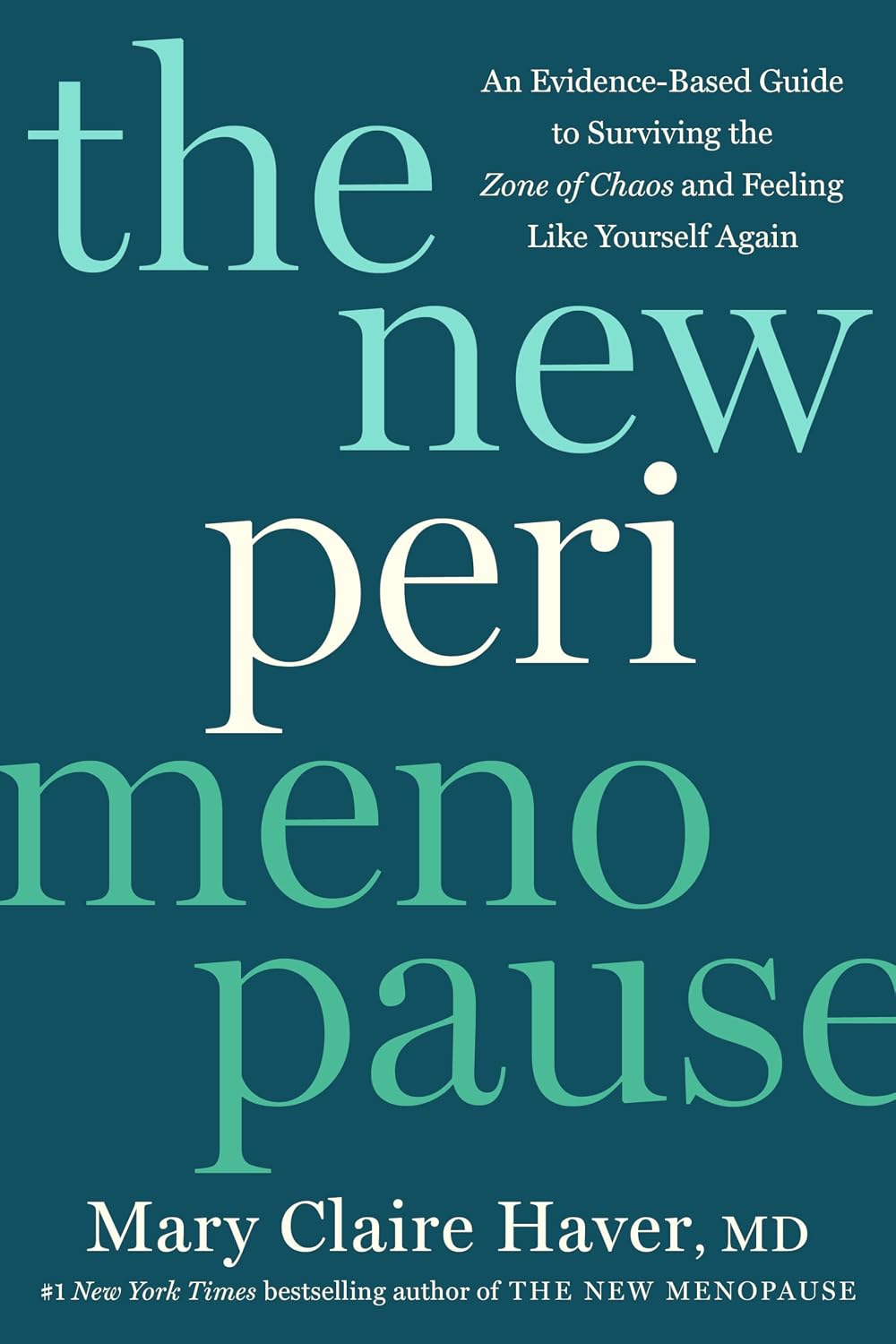
For a woman pmenopause, what is the right time to be thinking about all of this? Immediately, let's explain what vaginal estrogen is and why it's so important. The number one treatment for a woman for recurrent UTI is vaginal estrogen, not recurrent antibiotics. She's back. Dr.
Mary Cla Haver returns to The Tamsen Show that they are on birth control. How do you know when it's okay to switch over to hormone therapy? Those same clinicians who will put any and everyone on birth control pills will absolutely refuse to put someone on menopause hormone therapy. I'm like, you understand it is a micro dose compared to the birth control pill. Every question you've ever had about pmenopause answered by a leading menopause specialist.
What should she go into her doctor and say or ask for to be put in the right path? Immediately I would get a bone density. Can we talk about the role that sleep plays in all this cuz it's really tough during this time. Cognitive behavioral therapy for insomnia is really, really helpful for a lot of my patients. Belly fat is very frustrating.
Can we talk about some of the changes we should be looking at? So, you're getting enough micronutrients in your diet to support good health and that is the thing we really should be focusing on as soon as possible. Give me your top three changes to start protecting your bones. Lift weights. Lift weights.
Jump training. Low libido. It catches a lot of women off guard. Is there anything we can do to get that back? We have two classes of medications that are actually really, really helpful.
Is it in my head that I'm not able to tolerate alcohol anymore, or is that what's really happening right now? Let me clear the air. Perry menopause doesn't come with a rulebook. Just a whole lot of questions and confusion. Why am I not sleeping?
Why don't I feel like myself? And what can I actually do to feel better? In this episode, we are getting into the solutions. Leading menopause expert Dr. Dr.
Mary Cla Haver is back to break down what actually helps. Hormone therapy, non hormonal options, diet, exercise, and the lifestyle shifts that really make a difference. If you're in pmenopause or headed into it, this episode has everything you need to know to take back control of your health, your body, and your life. Let's get into it. Dr.
Mary Cla, thank you for staying. Thank you for this next part because we have a lot to get through, so we're just going to dive right in. So we talked about pmenopause before we understand you know what it is the zone of chaos for women who are not in pmenopause yet what should they be doing right now to prepare I would really focus on educating yourself about the process so you aren't blindsided when this inevitable change happens to you also I would be focusing on lifestyle like setting yourself up for success to have the strongest best healthiest body to help you kind weather these changes. I always look at things and I'm like, what is the most important thing? And you I feel like everything is important all at the same time.
For me, I feel like it goes back to sleep and kind of having that base of sleep so then you can just even remember what you what you need to do to take care of yourself. Can we talk about the role that sleep plays in all this because it's really tough during this time? So, we have different levels of sleep disruption associated with pmenopause and menopause. And so when we look specifically at the hormones when we lose estrogen, a lot of women have disrupted sleep from the hot flashes. The hot flashes, night sweats or palpitations which is a vasa motor symptom will actually wake them up.
And so if we can get that under control, stop the palpitations, stop the hot flashes, usually with hormone therapy, they will have much better sleep without the disruptions. There's a whole subset of women who even on hormone therapy without a single hot flash are now struggling with middle of the night awakenings or struggling with going to sleep or both. Right? And even with, you know, perfect hormone therapy, we still have to guard our sleep with our lives in pmenopause. So, we're seeing a much lower tolerance to alcohol than we ever had before.
I was thinking, is it in my head that I'm not able to tolerate alcohol anymore, or is that what's really happening right now? Well, we're seeing more studies come out on it, and it was usually everything I read about sleep in menopause, you know, they never talked about permenopause, but in menopause, it was hot flashes, waking her up from sleep, we stop the hot flashes, she'll sleep. My patients aren't sleeping. And when I talked to Andrea Matsamura, who's our, you know, she's a sleep medicine specialist just focusing on menopausal women now. She says, you know, hot flashes are definitely a part of it and you want those to go away.
But just like creatine, our melatonin stores are not what they used to be. The way the neurotransmitters, you know, are functioning is, you know, there is an aging process here outside of, you know, menopause, but especially in women, you know, the burdens we take on in our lives. So, so cognitive behavioral therapy is really helpful once we get the hot flashes stopped. You know, CBTI, cognitive behavioral therapy for insomnia is really, really helpful for a lot of my patients in helping with the middle of the night awakenings, being able to calm themselves back to sleep and not allowing that hamster wheel, what we call, to take off. And especially at the beginning of the night when they're struggling to turn off the hamster wheel to fall asleep, progesterone's really helpful for those patients as well, even if they've had a hyerectomy and don't technically need it for indometrial protection.
What we know is progesterone affects GABA in our brain. It converts to alopreninolone and then that binds to GABA in our brain which helps relax things and calm us down and gives us better sleep. So, what would be the your top tools for sleep including supplements? Because I think that's important and there's a lot I know that you have. I know I know you are, but but I do think that it's really important to have these conversations because there are some women that either choose not to do hormone therapy or cannot do hormone therapy.
If my mother were here today with the type of breast cancer she had and how aggressive it was, she might might most likely wouldn't be a candidate. I I don't know. Things are changing every single day, but most likely not. So, I wouldn't want her to be told there's no solutions for you, right? So, if we look at the tools that are there for for sleeping, can we talk a little bit about some of those so we can expand those out?
Magnesium can be really helpful. It seems to help with the duration, the quality now that women are wearing sleep rings from different companies and I'm a, you know, full disclosure, I'm a scientific adviser for Aura, and we're doing a very deep dive into permenopause and menopause and sleep. So, super excited about that. When we look at, you know, progesterone is is one option, but magnesium can be really helpful for a lot of patients. There's different forms of magnesium.
Some are better for gastrointestinal issues. Some cross the bloodb brain barrier. I really like an eleranate or a bis biscinate to help with sleep. Eltheonine is a wonderful anti-anxiety supplement that does not cause sedation, so you can take it in the middle of the day if you're struggling. And then the right amount of melatonin.
It turns out that most patients are using now. Like when I've tried melatonin, I was probably taking 10 to 20 times the dose. I really should be. So what I I was taking 10 10 milligrams, I think. What's the do for women? 3 to.5 maybe.
And so it took me working with a sleep medicine specialist to figure that out. If you've ever caught yourself wondering, am I in pmenopause? What is going on? I've made something for you. It's my free guide called How to Perry Menopause.
It's 18 pages. Inside, you're going to find insights from some of the top experts I've interviewed, the doctors, the specialists who are leading the conversation on women's health. Inside, you'll find the most common early symptoms to watch for, the exact tests you should be asking your doctor about, lifestyle shifts that actually make a difference from nutrition to movement to stress, and clear next steps so you don't get stuck or feel dismissed by your doctor. You can download this for free right now at tamsonfidel.com/howto perry menopause. It's also linked in the description because you don't have to figure this out alone.
You deserve real answers backed by real expertise. Let's talk about women that are struggling with anxiety and or depression. Are there tools that can help break that cycle in pmenopause? The best tool is going to be what you know is the newest data coming out is not going right to an SSRI and she may need that but to really if it's permenopausal starting with stabilizing her hormones and in those studies they used an estradiol patch they really like it because the patch specifically gives you a steady state dose whereas when we ingest something orally depending on the halflife or how long it takes our body to clear it we tend to have a spike and then it drops off and sometimes our brain doesn't like that it likes uniformity and to know what's coming. So, for the mental health challenges, it looks like something like the patch or or ring or something that gives you a steady state dose is going to be better.
If a woman is feeling really mentally burnt out, where does she start? Because, you know, we have we we want to give women all these solutions and it's really important, but it's also important to realize that it's it's hard if you're just feeling so overwhelmed. How much longer can that list be? So, where do you start if you're just sort of feeling burnt out by all of it? I want to be really clear about this because the most common time for a woman to commit suicide and those rates are climbing is between the ages of 45 and 55.
And what is happening to most women in that time span? Sure. You know, why is this the same? Why are we all connected there? Because it's per menopause.
And why haven't we ever put that together? Because it's all in our head. You know, we were just willing to accept that this is the most likely time for a woman to end her own life. And that you know there is help. You are not alone.
And it may take I'm a huge fan of therapy, behavioral therapy, psychotherapy, whatever it takes because there are a lot of demons that drive us that have nothing to do with hormones, you know, trauma. All of that plays in and all of these things get compounded in pmenopause. I know there's a lot to cover with that. I know that it's important to have all these different disciplines also being aware of it. Do you feel like the area of mental health is is understanding and seeing this and becoming a bigger part of this conversation?
I really hope so. I at least in my children's generation, they're in their 20s that it is just something that is so well understood. My daughter, my oldest daughter like got herself into therapy. I'm like, "Do you need therapy?" She said, "Don't we all?" You know, and you know, to help her work through some childhood stuff, you know, things with that she had gone through. And I didn't like force her or push her, you know, and she did it on her own.
And is, you know, and it really was the the impetus for me to get therapy to help me through my brother's death and, you know, coming to terms with my own permenopause and the mental struggles that I was going through. So, let's go and talk about nutrition and diet changes of what women in pmenopause should be focusing on now because I do I know that's a big part of the conversation. I know belly fat is is very frustrating and difficult just in general and in terms of your health. Can we talk about some of the changes we should be looking at rather than changes like are these the best habits for you? I think most women, you know, their intentions are good and they think they're eating healthy.
And it took me going back to school to learn about nutrition. Like no one taught me in medical school other than severe protein calorie malnutrition like that's quore and scurvy and you know ricketett you know severe but like no one taught me what a good basic nutrition plan how how to eat you know to stay healthy. So I think a lot of women, especially our generations, approached nutrition for is is whatever it takes to stay a certain size, therefore we are healthy and whatever caloric restriction that took. Most people know not to eat too much junk food. But it wasn't like, well, how much protein do you need?
Are you getting enough fruits and vegetables? Are you getting enough micronutrients in your diet to support good health? And that is the thing we really should be focusing on as soon as possible so that those habits will carry us through. So, are you getting adequate protein to support your bones and muscles? Not to stay a certain size.
Bones and muscles weigh a lot. We want big heavy ones, big juicy ones. What do we need to do for that? When it when it comes to protein, the FDA recommends per women.8 g per kilogram of lean body mass. So, so divide by 2.2.
So, that's less than half a gram per, you know, about point4ish, you know, per pound. Okay, that is not that is enough to keep you out of severe protein calorie malnutrition. Okay, that is not enough to grow your muscles and therefore your bones. Not even close. So when we look at the women's health initiative data, so it's just a data set that is, you know, interpretation was blown out of proportion.
When we go back and look at the data on women who did not have frailty, okay, with age, they followed these women. They're still following them, okay? They look at the women who had the lowest chance of frailty or who had the lowest frailty indicators, meaning they could take care of themselves. They were climbing mountains, raising grandbabies, you know, doing all their stuff in their 70s and 80s. Okay.
They had the highest levels of protein intake. And now we're talking 1.3 to 1.5, double what the FDA is recommending. Wow. Okay. For protein intake.
So when I'm counseling patients, I have a body scanner. I'm looking at their muscle mass. I can tell them how much visceral fat they have and I'm counseling for protein intake based on that, not the number on the scale. And the type of protein really does matter. I know you did a post recently talking about complete versus incomplete protein.
Can you talk about the difference between those two things so people understand? So complete proteins mean they contain all the amino acids that we can't make ourselves. Okay. So glycine, lucine, valine, you know, there's certain amino acids we can generate, you know, without having to intake them, but we can't synthesize all of them. So complete protein means you have the complete nutritional, you know, all it checks all the boxes.
Incomplete proteins, we can peace meal meaning beans and rice. You'll kind of hit all the boxes if you eat those together, right? If if you go to vegan or vegetarian sources. So in general, the sources from animals because you're eating the actual muscle contains all of the amino acids that we need to be complete versus when we use vegan vegetarian sources, we have to kind of rob Peter to pay Paul and sometimes supplement to make sure that we are getting enough. So when we look at women who do well, you can have about 36% of your protein being from like collagen, which is not a complete protein.
And then as long as you get the remaining 2/3 from something that's complete, you're going to be okay. Low libido, we talked about it in the prior episode. It catches a lot of women offg guard. I think it it causes a lot of issues in relationships. Is there anything we can do to get that back?
We have to look at it carefully. Like why is this happening? Is this a relationship issue? Are you having pain? Are you having dryness?
Are you you know, we have to fix those barriers. Okay, so now everything's we've got your 25-year-old vagina back. We've got, you know, everything's there. But then you you love your partner. I I can't tell you how many patients are like, I love this person.
Like I've always loved this person. We used to have an amazing sex life and now I could care less and I miss it. They have to miss it. That's the other thing. All right.
That's important. We can normalize that a woman has the right to say she never wants to have sex again and that's her decision. But these are the patients who come in and they're like, I really miss this. I miss this intimacy and I want that back. And so we have two classes of medications that are actually really really helpful.
And so one is testosterone. So we have the androgens which building those back up to remember we lose by the time we're 50 we're down to about 50% of our highest testosterone levels when we were younger. So we restore those levels. Now, we don't have to overshoot. We can talk about pellets.
Okay. Yes. I was just going to say we're going to talk about pellets. So, we can stay in female physiologic ranges. We don't have to transition a patient to male levels in order to get her libido back.
And that was studied in physiologic ranges in fully menopausal women and they did amazing. Now, as a bonus, though we don't have FDA approved reasons for this, she women with higher natural testosterone levels have higher bone and muscle mass, you know. So my sarcopenic patients or patients with osteopenia who are lifting the weights and doing the things adding that touch of testosterone may actually be helpful for them and if they have low libido we're going to use it for them anyway. Does it help with strength training? Does it help with building more muscle?
We need more studies. We definitely if we if we can believe the male data would work for women. Yes, we can make that conclusion. But most of the studies done in the post-menopausal women, we're looking at naturally occurring testosterone levels, not in supplementing as far as like bone and muscle strength. So I want to do I want to go solutions.
So strength training, the second class of medication. So let's go back to libido. So we had the testosterone and now we're going to talk about there's two that work in the brain. Okay. Kind of in the mood area cuz libido is a mood.
Yeah, it is. Right. Kelly Caspersonson, I stole that line from her. So when we use something like atti or vio so say you want to go the non hormonal rate or testosterone didn't work for you atti and vilei both work by releasing dopamine and these are pills are prescription pills so addi is a pill that you take every day kind of like building up your stores right it causes dopamine to rise and dopamine makes us want to do things makes us more receptive to good ideas whereas vilei actually causes a dump of melanoortin So it's a very fast I will say fast acting but it's a shorter time period of action and you give it about 45 minutes before the onset of what would be maybe activity and then the melanocorton rises the dopamine levels and they become more now when it works for a patient from what I hear it works really really well. Let's talk about pellets because you brought them up and I think it's really important.
I was on the road and every stop somebody raised their hand and said I'm on pellets butt butt but butt. I have a lot of questions. Why don't you talk about pellets? So, can we explain? We're going to go into I don't want to demonize a delivery system.
A pellet is an implantable device that is packed with hormones that slowly releases, you know, the medication into your system. Estrogen, progesterone, testosterone, all of those. Typically, progesterone is not put in the pellets. It doesn't absorb well through the skin. So, they know better than to put a progesterine in that.
So, they put estrogen. So, they'll do estradiol plus or minus an estriol. And I've even seen estrone. So they'll do like three sometimes and then there's always testosterone. I've never seen a patient given just an estrogen pellet only to, you know, testosterone is the base and they might add estrogen to it.
So it was given to men. Now these are compounded. So they're not going through the same level of rigorous testing. Yes. No testing at all actually from the FDA.
And we knew that testosterone in the medicinal form, meaning it's gone through all the testing, works for men. So they've compounded into this formulation. So what I understand from the lore of of one particular company is they said hey let's try this in women. They are having issues with testosterone too but they never made a women's pellet. They just put the lowd dose men pellet in women.
So these women are coming in minimum two and 300. Now normal female physiologic ranges at their peak testosterone levels were probably no higher than 40 to 70. And these women like in there because I got the paperwork to see like I pretended to sign up for the company because I wanted to see what these patients were being exposed to. They have no clinical testing. There's not a single decay curve that has ever been published.
And these women are desperate. And here they are going to a clinician who offers them nothing else, makes them incredible promises and gives them low-level male doses, sometimes very high, you know. So male doses, the lowest male normal level is in the high 200s. Okay. And it goes up to about a thousand.
And so what are these women getting? I've seen like weeks after insertion, three, four, 500 level ranges of what they're running. So they're basically transitioning to male doses. So they're getting male levels. So with that comes acne and clitorolomegaly and hair, you know, losing hair and the male pattern baldness.
And you are stuck with that. There's no way to get it out. You know, you could surgically go in and remove it, but you're basically stuck with this for months until it until it wears off. And I just think we can do better. And what bothers me is these clinicians by and large are not offering any other form.
They're not offering Androgel or T- stem or any of the FDA approved options which we borrow from men or even a compounded cream. Well, so let's talk about the other options because there are other options to to get testosterone. And by the way, the pellets make you feel like you're up here and you do have your sexual You have a big dose. Yeah. And then you it kind of kind of trails off a little bit and then you need it again, right?
And then that's that's the cycle. That's the cycle. Okay. So, let's talk about the other doses because you and I are are very involved in in testosterone and FDA unlabeling. But talk about testosterone because there is not a a fe testosterone in the US.
We have them in other countries, you know, their version of the FDA, like government approved options for women that are available from their pharmacy. We don't have that in the US. FDA has never, you know, the systems that control the FDA up until now. No administration has done women's health well. So, I don't want to throw anybody under the bus, but you know, no one's bothered to get any form of of testosterone approved for women for the treatment of high despite multiple medical societies saying it's safe, it's effective, and we should have this in our toolbox to help women with desire issues.
So, a patient comes to me and she wants to give testosterone a try. So, I can either compound it at the local pharmacy. I can try a pellet, which I won't do because I haven't found a safe way to give it to her. So, or I can borrow the men's version which is usually in the form of androgel or tim. It's a little gel and then you you distribute just a you put a little bit on every day, right?
So, my tube lasts daily for quite quite a bit. Yeah. So, I use the Androgel pump and that that bottle cost me about $50 and it lasts me several months, five months. And then you know how much is going on. You put it on every day.
Okay. I check levels, you know, on my patients and myself to make sure I'm absorbing well. And that is the one area where we should be testing. Correct. If you're absolutely doing testosterone, you should get a baseline, you know, without medication level.
Know what your baseline testosterone is and then monitor at least once or twice until you hit steady state and know that, okay, I'm a good absorber. This is working for me and I've consistently been able to maintain a healthy level. Okay. I have one small favor to ask you. If The Tamsen Show has ever made you feel seen, stronger, more informed, whatever it is, I'd really love your help.
We have just been nominated for a Signal Listeners Choice Award in the self-improvement and self-help category, and your vote would mean everything. You can just scroll down to the episode description, tap the link, and cast your vote. I promise it takes less than a minute, and it really helps us keep amplifying the voices and the stories that matter. Thank you. Thank you.
Thank you for being a part of this community. I'm so excited to keep doing this together. So for a woman in pmenopause, what is the right time to be thinking about all of this? Whether it's testo, okay, whether it's testosterone, estrogen, progesterone, immediately. It's like pinning the tail on a moving donkey in pmenopause.
And what works in one phase of your pmenopause may not work midway. You may have to change it when it all, you know, ends. And sometimes birth control pills might be an option for you if you need contraception. If you're having heavy crazy irregular periods and we're trying to manage them, I might lean towards the birth control pill option. But say you've you know you've got a marina IUD, your husband had a vasectomy or you know your partner's had a you don't contracept not or you have a female partner, you know that's not an issue for you and your periods are not disrupting your life.
We may lean harder into the menopause hormone therapy option which a lot of clinicians don't understand that we can start using the MHT doses in pmenopause and that's really true and that's that's the confusing part of it and I think it confuses women too because if they are on birth control to manage some symptoms how do you know when it's okay to switch over to hormon there's there's some school of thought people I respect who really feel like keep them on till 55 till birth control on birth control that's you know and that that's their kind of clinical experience. Again, we don't have any large scale studies to like say what's the best treatment for pmenopause. I don't know if we'll ever have them. So, we really have to lean into our clinical expertise for this. For a lot of my patients, that's kind of hitting a nail with a sledgehammer.
And so, because it's a much higher dose and they'll they birth control. Yeah. Much higher dose than menopause hormone therapy. It's also a different formulation. Riddle me this, Tamsen.
In the United States, for birth control, we have 35, 40, 50 options, right? And they're all synthetic. We don't have a birth control dose that contains high enough levels to suppress ovulation for estradile and progesterone together. They do in other countries, but not here. Why?
That's an economic decision. It has nothing to do with science or medicine. That's purely the econ the economics of big pharma. And I love pharmarmacology like very happy to have pharmacologic options but it's like why? Whereas in menopause hormone therapy for $2 I can get the micro dose that is estradiol that is going to stop her hot flashes and protect her bones compared to ethanol estradiol and there's a lot of talk around well an estrogen receptors and estrogen receptors and these thing not true.
Let me clear the air. Ethanol estradiol which is in most birth control pills okay does not act exactly the same once it you know it binds to the same receptors but you cannot expect it is m it's a little more inflammatory than plain estradiol is and we're so scared of estradile 300 times more potent than estradiol I I wish that everyone really understood that the the difference between birth control and estradile and the because the the fears of of estrogen progesterone dating back to 2002 dating back to the women's health initiative And those same clinicians who will put any and everyone on birth control pills will absolutely refuse to put someone on menopause hormone therapy. I'm like, you understand it is a micro dose compared to and that's where the education comes in or the lack of education. Difference between bioididentical hormones and the kind that most doctors prescribe. Again, are we talking about birth control pills or we talking about menopause hormone therapy?
So in menopause hormone therapy, most commercial, you know, available products are all bioididentical, meaning chemically identical to what our body's made except for Prein. Prein is conjugated mar's urine. It comes from horse urine who are pregnant and so they have really high levels of estrogen as we all do as mammals, right? So they were able to extract this and it is actually composed of about 10 different estrogen products. Estradile is one of them, but it has things like estrin the you know and so the studies on the heart health and just taking HRT and early menopause that was all done with primarin.
So, I don't want to demonize permanent. Ethically, it's not my favorite way. Why would I not use regular estradile? Why would I not try to give the patient back exactly what her body made in the amounts that she made it roughly? And so, you know, so I choose not to use permanent.
Also, the vaginal option for perin works great. If it's $400, they don't make a generic. Why would I not use $10 vaginal estradiol for my patients? So, a lot of women have been told that menopausal hormone therapy is dangerous or they're not candidates for it. So, I want to just clear that up.
Who is not a candidate for it for the most part when we talk about most women and why is it safe? For most women, the benefits will far outweigh the risks. It's going to protect her bones. It's probably, if you start early enough, going to protect her endthelium and from cardiovascular disease. It will also probably protect her, especially if she's high risk for dementia, okay?
They have started early with all the lifestyle things, right? And so, but who can't take it? Okay. If you have a tumor that is threatening your life that is actively being fed by these hormones, that is not for you. A cancerous tumor.
Yeah. Okay. Okay. Or sometimes a benign one, you know, like we need to get that taken care of. You know, if and there's this one's a little controversial.
If you have an, you know, recent blood clot and they're still kind of figuring out why that happened and you're on a blood thinner, we probably need to hold off. Okay? You know, even though that's only really oral estrogen, transmal estrogen does not increase our clotting factors. It never happens. Explain the difference between those two things.
Yeah. So, we have when we talk about, you know, we have local therapy for hormone therapy. So, that's like vaginal estrogen, topical estrogen for the face, etc. Okay. Then we have systemic estrogen.
We're going into the bloodstream and we're going to treat your brains, your bones, every organ in your body. Okay? That's your patch. That's your patch, your pill, your gel, your cream, your trophy, your, you know, we have multiple ways to get it through the skin, through the mucosa or swallow it to get it into your body. When we swallow anything, it goes to the gut, the hpatic system, there's a special vein that draws everything into the liver for processing first.
And when that bump of estrogen hits the liver, we have an upregulation in certain proteins. And some of those can lead to increased risk of clots. Got it. Okay. So, for a woman at risk for blood clotting, just avoid oral estrogen.
You can if she needs a birth control pill op pill. If we need a contraceptive option, we can give her the birth control patch. We can do the birth control ring. You know, we have options for all of this. And it's funny because I I just had a friend of mine say like, "No, I'm at risk for blood clots." They said, "There's nothing I can do." That is not true.
And that's, you know, there's a lot of things I think American College of OBG has to work on. They are very clear in their guidelines how safe non-oral estrogen is compared to oral with the risk of clots. Is there a test that you have to do before you take hormone therapy? No. If we just believe women symptoms it's s it's diagnosed by symptoms.
So if you go into your doctor so she's over 45 and she hasn't had a period for a year that is menopause. And if she is 45 but still having periods, she is permenopause more than likely. And she is a candidate. Now, I'll do blood work to rule out. I look at her symptom profile and usually she's got a list.
Not because she's crazy, because she's a woman likely in pmenopause or she has hypothyroidism or and or she has a nutritional deficiency. You know how much iron deficiency is common at this age because of these crazy periods. And the first thing that goes feritin and that's, you know, we're not catching it early enough to intervene. What should a woman, if a woman's listening today and says like, I don't know, I'm 43 and I've got a couple of these things, but I don't know how bad they really are. What should she go into her doctor and say or ask for to be put in the right path?
First of all, she has to find a menopause educated provider. And like we talked about in the last session, those are hard to find. You know, you cannot just walk into any primary care doctor or OBG's office and expect them to have been able to keep up with all of the education on this. We all of us who do this work well, had to step outside of our own training. Yes.
To be able to do this. But say she, you know, she's not super symptomatic. Immediately I would get a bone density. What do your bones do? Before anything else.
That would be the first test because the bones go out quietly and the earlier we catch it and intervene on bone loss, why do we wait until we're osteoporotic? Why would we not start intervening and doing the lifestyle changes and the exercise and the nutrition and the protein and the creatine and all the things we know when you stack them together are going to decrease her risk of an osteoporotic fracture at 80. So, let's look at those bones now and see where you're at because we reach our maximum bone density typically in our late 20s to 30s and aging starts chipping away at it and then menopause really chips away at it. You know, we are on a race against time with our bones and our brains. If you're in pmenopause right now or you know you are or you think you might be, this is the time to be focused on bones.
It's a window of opportunity. I talk about it as a window of vulnerability, especially for bones and mental health, but God, it's such a wonderful, you know, time for you to like make those changes, get these lifestyle things. So, what do you do? Give me your top three changes to start protecting your bones. Lift weights.
Lift weights. Lift weights. Jump training. So, jump rope. Anything that stimulates the muscularkeeletal unit will grow stronger bones.
And we can grow bones at any age. This is not something at 30 that you can't do at 80. It gets harder as we get older, but you can definitely do it. So, prioritizing not just cardio to be thin, but building big juicy bones and muscles. And that's going to usually take consistent resistance training.
And then for about you know if you follow Stacy Sims who I love for her exercise physiology you know and Abby Smith Ryan who's incredible with her work on creatine and women and menopause you know jump training 10 minutes three times a week that just sending that stimulatory process to the muscularkeeletal unit balance so you don't fall you don't fall you t you tend to not break. So you know Vonda Vonda writes you know advice on standing on one foot while you're brushing your teeth. I'm a fan of the weighted vest. So, I don't think you do a weighted vest in place of resistance training, but I'm going to advise my patients to wear a weighted vest while they're doing other daily activities. That's adding that extra level of balance, right, of propriception of because you're you have to work harder to stay afloat when you've got 10 to eight pounds on you.
What's a good size? What's a good weight to me? So, the studies when you looked and again, these are studies done in living facilities. So typically in nursing homes and look at the women in nursing homes, they're very frail, you know. So for those women, they saw improvements in their bone density typically.
Now they were doing resistance training as well and balance starting at about 10% of their body weight. Okay? So I'm advising patients, you may need to start at five because you're not conditioned yet, but make it always the plan that you're going to get up to that 10%, whatever that looks like for you. I want to talk about vaginal estrogen because I think we we got some great news on it recently, but I I think it's actually undertalked about. We we're starting to be in the water.
I mean, I think you should get it at a vending machine. I think it should be in every bathroom. I do, too. So, let's explain what vaginal estrogen is and and why it's so important because it's not even I look at these as like today or tomorrow issue sometimes, you know, and I and I think that like osteoporosis is a today for tomorrow. Vaginal estrogen the same way and women's health especially to do anything with menopause.
So men don't get GSM, general urinary syndrome of menopause, because they don't go through it. Why do we wait till we break to fix something? Why why are we waiting? Why are we waiting until we're you know to to do these interventions and then we panic to try to do something about it and it winds up being a pill and you know instead of being preventative. 100% of women will have GSM. And what is GSM?
Genital urinary syndrome of menopause to different degrees. And that means your tissues that line your urethra your which is the tube that drains our bladder all around our bladder our whole vagina the whole paranneeium the labia there it's the big thing on TikTok as we labia tends to shrink as we go through menopause because we lose estrogen and testosterone. So if we treat with local estrogen therapy this is non-sistic it acts locally in the vagina so there's no systemic absorption. It's not helping your bones. It's not helping your brain.
It's also not feeding a potential tumor that you might have. It's just for your vagina. Just for your vagina. We can cut rates of UTI and therefore eurospepsis by up to 50%. The number one treatment for a woman for recurrent UTI is vaginal estrogen, not recurrent antibiotics.
We're doing a huge disservice. Every time we take that round of antibiotics, we're disrupting our gut microbiome. We're disrupting other parts of our health. I mean, I love having antibiotics. It saves lives.
But when they looked at the cancer data, zero increased risk of recurrence. These women with breast cancer who are on these, you know, for their treatment of their breast cancers, they're on tmoxifen, they're on their AIS, and their whole quality of life is being ignored by the medical system. They could all be on vaginal estrogen. It will zero increased risk of recurrence in these patients even during treatment. We can save their sex life, save their vagina, save their vaginal health, their urethral health, their bladder health.
And people were just so terrified of estrogen for no reason. And you know when they look at those women live longer. So the ones who were given vaginal estrogen have a higher survival. Why is everyone not started on vaginal estrogen then? Good question.
Or we're talking about we have to go in we have to find the right provider who's going to believe our symptoms and not tell us just to use coconut oil and lube and I love lubricants sure I think everyone should be using a lubricant but like that is not treating the root cause and what will vaginal estrogen do for you because you're what happens when you tissue back your vagina what happens though like explain we lose estrogen so what if under a microscope when you biopsy a vagina and god forbid you have to have one of But if I took a premenopausal healthy woman with normal estrogen levels and biopsied her vagina, there would be multiple layers of tissue, beautiful, juicy with these globules of mucus, you know, for lubrication and it just that when you look at it visually, it would be pink and and moist and you know, lots of rugations and like now we're going to go to postmenopause and take estrogen away. It becomes very thin. It looks like a desert under a microscope. There's no more mucus production. We lose the elastin.
We lose the elasticity, things shrink in the area, it becomes very, very painful, very, very easy to injure with just intercourse, right? So, a lubricant may help a little bit, but it's not treating the cause. If we just give her vaginal estrogen, it's a miracle. She will grow the tissue back to its premenopausal state. I do want to talk about advocacy though, research, talking to your doctor, because I think those are all really important things that that we all have to do right now.
The onus is on us to all do it. If your doctor doesn't acknowledge you're imp menopause, how do you talk to them at that point? Hopefully, they are willing to listen. Mhm. Hopefully they have time.
You can direct them to the menopause society. You can print out the menopause society guidelines which don't actually cover pmenopause, but it's a start for them at least get them curious. So I always advise these followers, not my own personal patients, to go in armed with you're giving an opportunity that you may be able to educate your clinician and just handing them these society guidelines, especially the ones for GSM. Your life might not be changed, but you could through that clinician who might take those guidelines home and read them, change the future of those patients that follow you. In those guidelines, explain what it is, explain what the options are, and maybe we'll make the doctor feel like, okay, let me just go and process this and do a little bit of research and just feel better about it overall.
Questions a woman should bring into her appointment. I know we say don't plan on doing this at the end of like your regular exam, right? So, this isn't a well, this, you know, any kind of menopause care, per menopause care should not be considered to be part of the wellwoman exam. That is a very specific set of screening tests, right? That are are covered, you know, under preventative care.
So, if you're going in specifically to discuss your permenopause, make a problem visit. Okay? It's going to give you more time. You know, call ahead. Does this doctor consider themselves educated?
And and you know, are they menopause society certified? Like, do your research before you go. Don't waste your time. You know, ask whoever's answering the phone, do they ever prescribe hormone therapy? You know, and if it's 100% of the time, that's a red flag.
Right. Right. If it's never, that's a red flag. You know, why is a 100% of the time red flag? Because not everybody's a candidate.
Okay. So, you'll see these hormone clinics pop up and every single patient going in there gets hormone therapy when you know they didn't get worked up. So, and then our pendulum swings and we have a bigger problem. So, we have a bigger problem. Like if you have undiagnosed vaginal bleeding, you shouldn't start hormone therapy until that gets worked up.
You know, if you have an allergy to one of the components, you know, the peanut oil for example in progesterone, you shouldn't take that form. There's other progesterines we can give you or a marina IUD or something. What do you want women to track before they come and see you for an appointment? You should track your cycle. Is it beginning?
You know, by the time your cycle becomes disrupted, you are well into the process. So, go in armed with that information to help your clinician along. What has your body composition been doing? So, your waist tip ratio. What is your cholesterol doing?
A beautiful study that came out of Asia looked at a very the small dense LDL particle which most of us don't check for and it is one of the earlier it doesn't go up with aging it only goes up with menopause in women and so you know and in the permenopause transition so they are starting to use it in Asia as a way to to you know help diagnose a woman in pmenopause cholesterol we also see thyroid correct what are some of the other things we see in resistance so besides waiting till her A1C goes you know, you can do the HOMA insulin resistance score, which is a fasting, it's looking at a ratio of your fasting glucose to your fasting insulin level. And so asking for that specifically, you know, 80% of my patients, and this is more of an aging thing than menopause or deficient in vitamin D. So, I'm always checking that level as well. Everybody wants you as a doctor. I'm telling you what, what research is being done right now that you're feeling good about, excited about, and then where do we need to push harder?
I know we, you know, there are there are a group of us, it keeps getting bigger, which is super exciting, but there's a group of us that are really all trying to push for some of the same things, advocating in all different areas. Where do you think political climate is moving away from really depending on like the NIH because that funding is drying up. So, there's a lot of exciting things happening stateto state and you know, happily for us women, it's all the states. It's not just the red states or the blue states. We're seeing legislature in my home state of Texas which you know looking at providing menopause resources like mandated and paid for by the government.
They'll have a website that teaches about menopause. I mean that's something right and so other states are mandating Louisiana that menopause care be covered by Medicaid and Medicare. And so that you know there in Medicare codes there's not even a code for menopause. What is it diagnos? I can't even imagine.
So what's our code? You know, it's it's just we have a very long way to go. We are seeing some exciting things on the research world. There's a couple of companies that are looking at extending the life of the ovary. So like how can we ek out hormones out of the ovary for longer without pregnancy?
You know, most of us who you know don't want to be pregnant at 50 or 60 and so we are still aging humans, but like is there a way to like get our ovaries to squeak out the natural estrogen a little bit longer to help protect us? Mhm. Is there anything you were excited about is watching this and we've watched it happen and change over the past several years. I remember the first time I I mean we talked together on that stage, but even I think before that I interviewed you for the Galveistston Diet Ween seeing the conversation, getting the feedback from my followers. You know, we're in New York here filming and I've been with my daughter and some friends walking around the streets of New York and just being stopped by strangers just that they're saying thank you.
Something I did said or they read or heard me on a podcast or you know picked up the book has changed their life and that wasn't a conversation I was having 5 years ago. It's amazing. Dr. Mary Cla, thank you. I could do 10 episodes with you.
Thank you for sticking around. Okay. What an incredible conversation. What you're going through is real. I hope you know that and you shouldn't have to figure it out alone.
Thank you to Dr. Mary Clare Haver for laying it deserve.