What are the most common symptoms of permenopause? Women should be looking for hot flashes and night sweats, weight gain and redistribution, anxiety, depression and panic attacks, sleep disturbances, fatigue. Gosh, sexual dysfunction, gastrointestinal problems, bloating, digestion issues, brain fog, migraines, dizziness, memory problems, joint pain, muscle aches, osteoporosis, heart palpitation, urinary dysfunction, allergies, body odor changes. This is pmenopause. We're not even through the transition yet.
I hate to break it to you, but if you think you're too young to be thinking about pmenopause, you're wrong. It is completely reasonable for someone in their late 30s, certainly early 40s, almost statistically impossible by their late 40s, that something in their body is changing because of this hormonal chaos. Most women have no idea what pmenopause is, let alone what to do about it. That's why I'm doing this two-part series with Dr. Mary Cla Haver, one of the leading menopause experts.
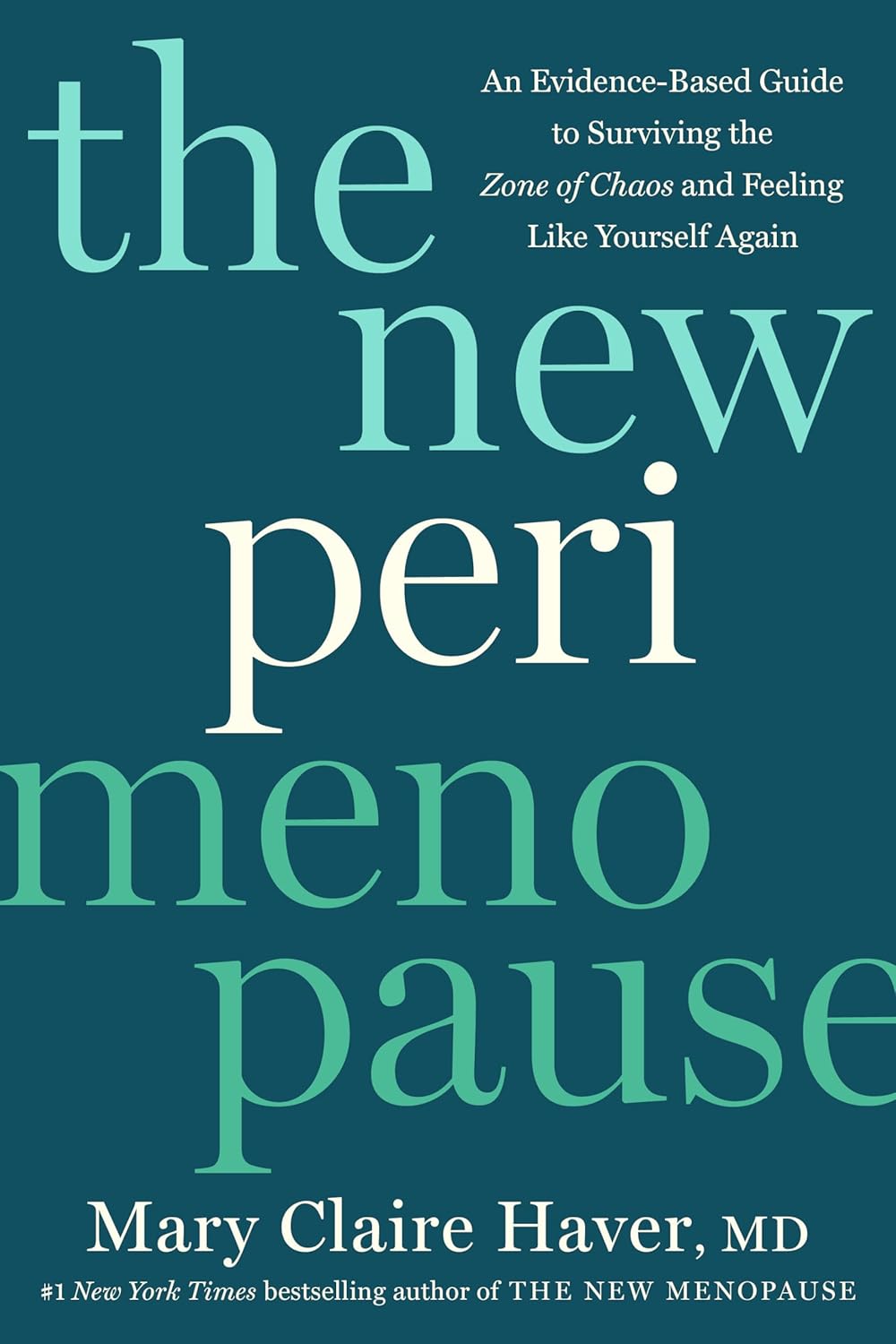
She's a board-certified OB/GYN, the author of The New Menopause and the upcoming book, The New Perry Menopause, and someone I trust deeply. You might recognize her from my documentary, The M Factor. And today, she's on The Tamsen Show to break it all down. Boom. Almost all of the systemic inflammatory markers rise.
Insulin resistance increases. We start driving fat to the intraabdominal cavity with not a single change in diet and exercise. This is the education I wish I had and it's everything you deserve to know well before you're in it. Dr. Mary Claire, it's good to see you.
Same. We have been through a lot of menopause, right? Yeah. Through the years. My very first stage appearance.
You interviewed me and that was the longest 40 minutes. I was so nervous. Ever since then, every time I get on stage, you're there and it's been the best. A thank you. I I remember that.
I remember so well. We were like back and forth on text. We hadn't met. We're just two Texas girls that decided we're going to talk about menopause a bit. Well, it's good to see you.
It really is. I'm I'm so happy for everything you've done. Everything that you share, what you do every day to help millions of women around the world. I am excited about this conversation because I think this is kind of this next tier as we look to the next generation and say like what do they need to make sure they don't go through what we went through. Right.
Exactly. So, let's talk about perry menopause and dive into that because that is a focus I know that you have had forever. First talk a little bit about your background though and how you got here. I'm a traditionally trained MD. I went to medical school in Louisiana for four years and then matched at my top program which was University of Texas in Galveastston and did OBGYn.
Absolutely had some of the greatest four years of my life. Made some of my very best friends. Learned a tremendous amount of information. Went out into private practice for three years. After that, decided to go back into academics because I kind of missed that rigorous academic life, you know, being around professors and studies and students.
So, I went back on as faculty and was really thought I would just do that for the rest of my career and retired my 70s and you know go on with my life. But the big turning point for me was my own menopause where I realized there was a gap in my knowledge and in the CME, you know, the continuing medical education, like we really weren't focusing on health after reproduction ends outside of needing a hyerectomy or some kind of emergent issue. It didn't feel like anyone in medicine really had our backs at this age to help shepherd us into our best health for the last 30 years of our lives. What was your menopause experience? Because I know that you know all of ours is a little bit different all all of it comes at a different time but you had so much knowledge and then you realized you didn't I didn't in that one area so I had been on birth control pills for most of my reproductive life outside of having children to treat a condition called polycystic ovarian syndrome and I had done really well with them it's not the right answer for everyone and in my late 40s my second oldest brother was ill with HIV and hepatitis I'd made a decision about that time, let me get off the pill and kind of see where I'm at.
Am I menopausal? Am I getting close? You know, do I really need to be taking this at this time? And right as I got off, I went home to take care of my brother for his end of life. And lost him after about 2 weeks and you know went through this incredible sadness and grieving and you know probably some depression and was really attributing these symptoms I was having to grief and certainly it was playing a part of it but then once I felt the grief bubble kind of starting to rise I realized I'm still not sleeping I'm having all this joint pain I've gained all this weight in my what is going on with my stomach like oh god this was happening to all my patients I was really strugg struggling with mental health.
And it really took me as a clinician stepping back from my own experience to say, "Wait a minute, when was my last period?" Now, I had never had regular periods. So, I took me about 6 months to realize that I was menopausal and I was the expert and I didn't even recognize it in myself. I think as shocking as that is probably to you to even process that that happened, it gives a lot of other women a lot of relief knowing that it's not just them. And if somebody with an expertise like you have and all that years of training might not know, it makes total sense that a lot of us. So, let's talk about that because that's men that's when you were menopausal.
So, you were you went right you were in menopause. You didn't even realize it. But there is this whole time leading up that all these things were happening to you. All those symptoms you're describing and that is permenopause before menopause. So, can you define what pmenopause is and why it really matters?
So in order to define it, I think we need to define you go back to the basics of what is menopause? Why do we have menopause? So menopause is medically we define it as one year without after the final menstrual period. So you've gone one year without a natural period. Now you are menopausal for the rest of your life.
Okay? So medically menopause is one day. Now we have a transition period to get to that called permenopause. But what does that mean? So if we think back to ovulation from an endocrinological standpoint, the big difference between males and females is that males are able to generate their sex hormones, their genetic material, you know, through the sperm from puberty until death.
Now, it gets harder as they get older, but they're still able to do it. Females are born with our entire what we call germ cell supply, all of our eggs, and they last us from birth until we run out in menopause. And there's only a few species in the world that actually experience menopause where they run out of the ability to ovulate and and mammals and us some killer whales, I think one species of giraffe, you know, it's really that's about it. Yeah, it's really rare. Perry menopause is when the signals that come from the brain that stimulate ovulation, which is what happens to a woman each month.
So remember, we never have a steady state of hormones as females. Our sex hormones. We have an estrogen rise and fall in midcycle and a little bit of a second bump towards the end. And then progesterone doesn't rise until after we ovulate and then goes back down to baseline. Testosterone fluctuates a tiny bit but not nearly as much as what's coming directly from the ovaries.
And those ovulations happen because these chemicals are coming from the brain from the pituitary and hypothalamus that stimulate this. So in a healthy woman who has a regular cycle, so this is not a woman with PCOS or an athlete who supp, you know, is suppressed because of her activity, you can very predictably say on day 14 you're going to expect this. On day 21 she's going to do this. On day 28 her period's going to start. You know, whatever that looks like for her in pmenopause, the signals coming from the brain become resistant.
The ovaries don't have enough eggs to listen to the signal. So the brain is like, "Where's my estrogen?" Right? The ovaries don't act on their own unless they have a tumor. They are literally just following directions. And directions come from the brain.
And so the brain is freaking out at this point. Where's my estrogen? I need estrogen. So it starts pounding the ovaries with higher and higher stimulatory hor hormones. That's FSH and LH in order to force those few eggs remaining one of them to ovulate to get those hormone levels back up.
So what happens in p menopause instead of that very predictable EKG eb and flow rise and fall we end up with someone taking spaghetti and throwing it against the wall and what we call the hormonal zone of chaos. So estrogen ovulations are delayed. We have much higher surges of estradile than we ever did because the stimulating hormones are much higher. And then again the progesterone never kind of gets to where it was. So, we have long courses in per menopause for most women of these unopposed estrogen cycles or, you know, what they call loop ovulations.
So, we'll we'll see if you did a one-time blood test, you would say, oh, she's estrogen dominant or she has high estrogen. This is normal, meaning common in pmenopause. It doesn't mean it doesn't cause her horrible distress, affect multiple organ systems, completely make her periods cattywampus, but it's just learning and what that's what I didn't learn in my training. I thought that the transition through pmenopause was this gentle slow decline of estrogen and progesterone until she just stopped at the end. No, this system goes down fighting and these hormones go cattywampus, you know, rising, falling, dropping, dramatic, not showing up.
Two months later, everything's fine. Then, whoa, you're, you know, having hemorrhagic periods, you're having horrible, disrupted sleep, you're having mental health changes. And and no one of us was taught to recognize this transition. All I learned about pmenopause was how to spell it in in residency. Like we weren't allowed to even think about treating menopause even if you know and that became taboo after the WHI until she was a year without a period.
What do we do in this 7 to 10 year transition? And that's what we're all feeling today. That's what we all feel today. That's why there's that confusion. And it's funny because I think I get that question over and over is why don't we know anything about it?
Why didn't our moms talk to us about it? I think we're just learning so much every single day right now currently. I mean it's so exciting to be a part of this movement right now because when we look at the NIH right and we go to PubMed which is PubMed is where I go to look up medical articles it is peer-reviewed the top articles the you know the best information out there from worldwide it's not just the US it's research yeah so if I type in the word pregnancy right now today I will get about 1.2 2 million articles that mention the word pregnancy. Okay, amazing, right? For those of us who had babies, this is so important.
This represents billions of dollars of investment of brain power of universities focusing for us to have these healthy pregnancies, right? Somebody cares. Somebody cares. I type in the word menopause and right now we are about at 98,000 articles. That is stunning.
So less than 10 to one. Stunning. So I'm like, okay, is my life after I was done having children less like 90% less important than it was when I was able to bear children? And I'm not pointing a finger at one person or one clinician or at one university. This is a systemic problem.
This is bikini medicine where a woman is a small man who happens to have breast and a way to give him children. And this is a huge problem that we have. So now I'm going to type in pmenopause. Does it show up? 6,800. Oh my gosh.
In 1980, I think I I don't want to get the statistics wrong, but in the 80s is when the first articles popped up with even the word medicine did not recognize there's a transition point until the 80s. And at that point, there was only 35 articles. Like it's really in the last five years that we're seeing, okay, this is a thing and this is something we need to study. We don't have a single large-scale study on the treatment of pmenopause and every woman if they're lucky enough will be there at some point. Yeah. 100% of us.
I want to go back to the zone of chaos to to make that clear because I think it's really important. That area is a time where we are it's it lasts a long time. It could be four to 10 years. Four to 7 to 10 years where the body you know the hormonal signals it's taking from the brain to have these ovulations happen we see an upregulation of the LH and FSH so that means chaotic hormones chaotic hormones on the other end can't respond because there's not enough eggs so it's this battle you know each month or each cycle to get this ovulation happening like it used to like it used to. So it's estrogen, it's progesterone, and it's testosterone.
So testosterone is a little different. Testosterone is made in other tissues. So not just in the ovaries. We do get a fair amount produced in the ovaries, but we also have an adrenal pathway. So testosterone in a woman declines slowly over time, just like a man.
And when a woman is 50, she can expect to have about half of the testosterone level she did at her peak, which is about at 25. Okay. All right. So, more of a natural steady state decline, less of the chaotic drama. So, you wrote the new menopause, incredible book.
Now, you're writing the new perry menopause right now. What's the reason for writing the new perry menopause because they asked me to cuz I had this whole generation of moms who read this and said, "This is amazing, but I want to help my daughters. I want to help my nieces. I want the next generation to be prepared in a way. So, can you back it up a little?
Explain the zone of chaos. Explain and like let's get some anticipatory guidance in here for the next generation so they don't get hit like we did in the transition. Okay. So, how young should women start thinking about pmenopause? What what's too young?
Is there a too young? What's a what's a good age? Reasonable age. So, we're going to talk in statistics. Okay.
The average age of menopause in the US. Okay. So for the Caucasian female is roughly about the age of 51. So that's one year without a menstrual period. Okay.
Transition being 7 to 10 years. So now we have a normal curve, right? Not every woman goes through at 51. Thank God because that's where we get all these numbers. So we have 46 to about 55 is considered normal under that 95th percentile curve.
Okay. So 95% of women will go through the final transition between the ages of 46 and 55. Okay. Back that up 7 to 10 years. So it is completely reasonable for someone in their late 30s, certainly early 40s, almost statistically impossible by their late 40s that something in their body is changing because of this hormonal chaos.
So you could be 38 and and pretty pretty much safely say even before your cycles become irregular. So that that's the question because I think that what happens is women say, "I'm still getting my period. So how do I know whether or not I'm in permenopause if I'm still getting my period?" There's the green scale which was actually developed decades ago. Okay. The green scoring system and it's it was I'd never heard of it until I was like doing research for the new book.
So the green scoring system is are the symptoms that I'm having related to pmenopause and it'll give you a statistical you know so you answer like 10 15 questions and it's things like dry skin, genital urinary changes, hair changes, mental health changes. All of those symptoms were recognized, but nobody talked about it. Like I was reading this like, "Wait a minute. The Australasian Menopause Society was using it, you know, as a scoring system, but I'd never heard of it." Like, why is it? And they Why haven't we heard about it?
I can't point the finger at one thing. I think it's systematic dismissal of women. I think and I talked about in the new menopause. I was brought up in the medical world with something that I had to really reflect on and I still have to check myself for my own bias that in medicine when you can't figure it out and it's a female. It's most likely in her head that women tend to sematicize psychological issues.
So we were trained from an early from very early in my training that women it's not biology it's psychology. Why why women in particular? I think because the system was built by men for men. Sure. And there's a lot about us that's very different.
Was never understood, recognized, looked at. So we must be a little bit crazy. Aren't you glad we all found each other to confirm with each other that we're not and then to let the world know? I can't tell you how many meetings I sat in with tears in my eyes listening to menopause researchers who had been doing this work for 20, 30 years, but no one heard them. And I thought, my gosh, God gave me a platform, you know, this voice that people like to listen to on social media.
Like, I can break something down in 30 seconds and share it on social so fast it'll make your head spin. That has been my passion is like these people have been doing this work for a long time, you know, and we need to get this information because we are gaslighting and dismissing these women and I was part of the problem and I'm done. I'm done. I'm never going to do that again. And the minute that I brought that message to social media, my world exploded.
Yeah, of course. I've watched it. I've watched it. But you know, how many audiences did I sit in and like slap someone in the chest like, "Oh my god." Yeah. I know.
I know. But you know what? Better late than ever. One, and two, now we have a way to move that information along that we didn't have 15 years ago or 10 years ago. So, so the world has changed and and luckily we've got some of those platforms, good or bad.
Social media has really allowed democratization of a lot of information. It may be great information, it may not be great information. But I really think this menopause movement is because of social media. Go back to pmenopause. There's no way really to test for pmenopause, right?
That we've said over and over again. And let me back that up. Yeah. We don't have a one time blood, urine, or saliva test. So save your money to your listeners.
So anybody that's saying to you, "Come take this test. Send it here. Go pay $400 out of pocket. Forget that." Okay. Where in the zone of chaos are you checking?
Okay. Now, you might have a couple of clues, right? When a patient comes to me and I'm not sure where she's at in the process, I do a lot of blood work because a lot of these symptoms can also be fibromyalgia, autoimmune disease, nutritional disorders, etc. So, I'm doing blood work to rule out as much as I can or anything that's overlapping, other things that might be that way. And then it is a what we call diagnosis of exclusion.
You rule out everything else and for a woman of a certain age with this set of symptoms, this is what it is. So, we were talking in the car on the way over here about, you know, someone was selling a a saliva test for cortisol. I'm like, I don't need a saliva test for cortisol to understand a woman's stress. Right. I listen to her.
I believe her and not saying it's all in her head. Right. Like I don't need a cortisol level to understand that you're having significant amounts of stress. I just have to talk to her for five minutes. Done.
You know, we've got a lot of voices out there. We've got a platforms. We're talking about it more. Why aren't doctors bringing this up sooner still? They weren't trained.
We're not. We're doing a disservice to women's health in the medical system. And I'll be very clear about this in really stopping female specific medical treatment education after reproduction ends. So once she's done kind of bearing children outside of a diseased uterus or cancer, we are not doing a great job. And I've talked to multiple specialists.
So you know our menoposy which you know we are like founding members has multiple specialists psychiatrists, endocrinologists, cancer specialists etc. And we all sit around and talk about how when we look at data, they're not diagregating female versus male. And one of the most stark examples of this is in cardiovascular disease. I get I upset a lot of cardiologists when I talk about this, but when you diagregate the data on statins, explain that diagregate. So, when you look at a whole population, we're going to take everybody in this room and we're going to check their cholesterol levels and then we're going to put them on a certain medication and see what gets better and measure outcomes of do you have a heart attack or not, right?
Okay. So, we take a big group including men and women and they all have high cholesterol. We're going to put them on statins. Most of their almost all of their cholesterol levels will go down. Okay.
Okay. Yay. All right. We want lower cholesterol levels. Right.
Right. However, when we diagregate, meaning let's look at males versus females and who actually doesn't have a heart attack anymore and who doesn't die from a heart attack, men by far have better results than women. Women don't see a benefit for the prevention of a heart attack. Why? Primary heart attack, secondary, yes, because we have heart attacks differently than men.
So, when we look at our cardiovascular disease and and really there's some amazing cardiologists who have done this work. I'm just reading their research. Women tend to have diffuse microvascular disease in their coronary arteries. So, the arteries actually pop out of the aorta, dive right into the heart muscle, and then spread out and feed the heart muscle tissue. Women's diseases typically start, not all women, lower and more diffuse in the heart muscle where men tend to have those big lads.
So, the widow makers immediate immediately when they escape, they get the plaques. And so that's why you can go and stent those and open them up and whatever. Much more difficult. So here's the woman coming in for her heart attack. She has atypical chest pain.
We are 51% of the population. Why is my heart attack atypical? So we're training the ER docs, the cardiologists, the family medicine that you know everyone knows chest pain, shortness of breath, neck pain radiating down the left arm. That's not how a woman generally has a heart attack. You know, a very good friend of mine, she and I walked to Central Park and she said, "Oh, my chest like I I think it's like cough left over from COVID." And I said, "Are you sure?
I think you should probably go see a doctor." I'm okay. I'm just going to sleep it off today. The next day, she's on the phone with the doctor in the process of having a heart attack. And the doctor luckily realized like, "You need to get to an emergency room right now." This woman walked a park like a mile, you know, went home, slept how she stayed alive, you know, during that time. So it's it's stunning to see and it all goes back to what we were talking about at the very beginning of you know what we have not what the disservice that we have continued to do for women in so many areas.
Yeah. All right. You know we talked about why doctors don't bring this up a little bit sooner because they just aren't trained. But even just recently I talked to somebody and she said to me I brought a I went to the doctor and I said hey I think I'm having symptoms of permenopause. I'm gaining weight.
I'm not sleeping. I feel a lot of anxiety and social anxiety. I don't want to go out and do things anymore. And the doctor said, "It's not about jumping on hormones to lose weight. It's about making the lifestyle changes first." When women hear something like that from their doctor, this woman's in her mid-40s, by the way, just preface that.
What do you want women to do with a doctor like that? Aside from giving them a full education, it's sad that when they did a survey just a couple of years ago looking at graduating residents. So there these are the brightest, the best, the you know fresh freshly minted new clinicians in family medicine, internal medicine and OBGYn and less than 8% felt competent to take care of menopause. This is not the doctor's fault. No, this is the training program's faults.
You know how we approach women's health. So, one is it's incredibly frustrating that this is probably an incredibly well-trained in every other aspect, well-meaning, really bright clinician who just hasn't had the time, the inclination, or the education to be able to help you in this situation. They don't know what they don't know. Do you have to fire your doctor? Do you have to go find another doctor?
So, you can go to menopause.org, which is the website of the menopause society, and look for a certified clinician. Now, not everyone on the list is certified. Certified means they've taken the test and passed it. So, they've they've demonstrated a a level of education above what they got in training. It's not perfect.
On our website, more than what the normal doctor might might go through. It is definitely more because I've done it myself. We have a list of testimonials of in the hundreds on our website. You know, hopefully there's someone you could match up with there. I really love a lot of the tele medicine options that have come out.
You know, these are mostly female founded, season with products that are safe, simple, and actually work. On social media, you've been very raw about the fact saying that you felt like a bad mom in perry menopause. Irritable, shortfused, not yourself. It was really, really vulnerable and I think a lot of women feel that way. What can you say to those women that are going through this right now and they see it in themselves and it's almost it's impossible to stop.
I think I see these women who come to my clinic and they are by the time they get to me, they're at their wits end, you know, cuz I don't accept insurance. So, they are making a a sacrifice to pay out of pocket to come and see me. But that's how how bad it's gotten for them. And these are women who had managed their lives. They had built a family, built a career, built a life that they were sustaining.
They rolled with the punches. They had good days and bad days, but they had it managed. And then all of a sudden, they can't. Mhm. Something happens.
Something changes. Something inside of them. They're, you know, they didn't go through a death. It's not like anything in their environment changed, but their resilience is gone. And that's what was happening to me.
You know, a lot of things were happening at work. Increasing administrative burden, you know, that I had never been used to before. Having to document and, you know, spending hours on charting, you know, having to take away from my face to face patient time. I was losing so much satisfaction at work. Not because of my staff or my patients were lovely, but just the hours.
I was also getting older and OB is hard. Yeah. And so the hours, the 3:00 a.m. Calls to go deliver babies, which I love doing. And I joke if babies only came between 8 and 5 and they all were healthy.
I would still be doing OB on the side, you know, 9 to five baby. 9 to5 baby, but that's not reality. So, you know, hours were getting tougher on me. I had teenagers and so my oldest who's now a medical school was like, "Mom, it was really unfair for me to go be a teenager and you be going through per menopause at the same time." I can remember just screaming Yeah. At the girls, you know, where well they typical teenage stuff and I would just lose it and it's not fair to them. I remember like slamming on the brakes in the car and and my daughter's here watching this us record and she's probably rolling her eyes right now and like remember thinking to myself, I'm crazy.
I'm being crazy. I just slammed on the brakes in the middle of the road with my car cuz my daughter said snapped at me for something and I'm like that was dangerous. Your children are in the car. You know, if your husband had done this, you would have like, you know, lit into him. And I'm like, I'm not okay.
I am not okay. What is wrong with me? I I would ask myself what is wrong with me? Do you tell these women you're normal? Yeah.
And normal remember and there's some solutions. The myth of normal. Normal in medicine means common. Okay. Not not pathologic.
Okay. So you're So it's understandable what you're going through. That's what you say to them. And it's not your fault. And let's get you some help.
Okay. I'm trying to be the doctor I needed. I think you're doing a damn good job. And we survived. My marriage survived.
My kids have turned out okay. But it it got a little sketchy. I well and understandably and you are not alone. Yeah. Brain fog, word loss, forgetfulness, debilitating cognitive symptoms.
Okay. Why does this happen in pmenopause? When we look at neurotransmitters. So why does our brain work? Because we have a bunch of nerves that between each nerve are neurotransmitters.
These little chemicals that like send signals, electrical impulses back and forth and they all communicate. And when our estradile levels go cattywampus and then disappear, when our progesterone disappears, things like GABA, serotonin, norepinephrine, you know, all of the neurotransmitters, we see fluctuations in those levels. And we see shrinkage in the area of the brain where memory is stored. And so we see verbal you know specifically when they looked at different cognitive testing it's the verbal memory that dips in pmenopause with the hormonal chaos and some examples of that are can't remember a name I can't reme like surgical instruments like the thing with the hole in it that has the these are instruments I had used for 25 years not being able to find your keys getting in the car and not you know we all do it from time to time where you are wondering if you have deni Mhm. It's so bad.
Sure. So, yeah. Cog. And then right on the flip side of that, those same neurotransmitters are involved in our mental health. So, new onset mental health disorders, mostly anxiety and depression.
And then, you know what? We're we're looking at the ADHD part of it as well, just that, you know, visual spatial, you know, abilities. Women who were well-managed, well controlled all of a sudden are not managed or they're having new diagnoses in pmenopause. That's what I was going to ask. Is it ADHD or is it something that that simulates it where you it's so close so you don't So the ADHD purists say it's not because this starts in childhood.
It's a wiring problem but the the symptoms are very very similar. So we're treating them you know we start with hormone therapy but some of these patients will need some of the stimulants to get their levels controlled. So I was given anti-depressants when I was in pmenopause. I'd gone through a divorce. I was having like work was very stressful at the time.
I was being moved all over the place. I was early morning. I was late at night. I was working doubles. I was anxious.
I would have these like really dark days that getting out of bed was impossible. I was given anti-depressants. I was given Lexapro. But I was having all those other symptoms. I was having the periods that were erratic.
I was having I wasn't able to sleep. I felt the the weight gain. I was definitely having the the brain fog. Anti-depressants. Is that a solution?
Is that helpful? Or is that a band-aid? Or would you recommend that possibly along with hormone therapy? Specifically for perry menopause, let's start there. In that chaos area, we see about a 40% increase in the mental health disorders, anxiety and/or depression.
Those patients actually, and this is great data coming in the last couple years out of Australia, respond better to stabilizing their hormones usually with a menopause hormone therapy estradiol patch. There's something that happens to the brain. So, we are calming that hypothalammus down and telling it we're not seeing those lows because we've got a low dose of estrogen on board. Now, this is not contraception. This is not the pill, right?
Those patients do better with menopause hormone therapy and permenopause than they do with the increasing their SSRI if they were on one before and well controlled or a new start. So, for you perhaps at that time, but we didn't know, right? The studies hadn't been done and no one people were struggling to recognize menopausal symptoms as anything more than a little vaginal dryness and a few hot flashes. And if you complain of more of that, you were just a complainer. It was in my head.
Yeah. And I I've just heard so many women over and over being prescribed the the anti-depressant not even some of the SSRI categories will actually dampen the hot flashes. So, you know, when we were terrified of hormone therapy, of giving a woman natural estrogen, why are we scared of our own hormones? I have no idea. No man is scared of testosterone.
We see resolution and and we treat the multiple or, you know, we felt that was safer. It was just a safer option. All right. Talk about not feeling like yourself because I think that that's probably the overriding statement that we've heard over and over again. I just don't feel like myself anymore.
I look, don't feel like myself. There's a study that that's actually called that. Is that right? Yeah. Tell me a little bit about that.
Not feeling like myself. And for the rest of the paper, they call it NFL, whatever, whatever the letters are. And but that that article hit me like a lightning bolt because that was the first time I saw data and science backing up what decades of my patients had told me. And there's nothing more nebulous to a clinician than a patient coming in and saying, "I just don't feel like myself." And I'm like, "What? Where do I start from here?" But that is actually the most common symptom.
Is that where we start though? If you if if you if you're saying that to yourself, if there if there's a woman listening and says like, "I don't feel like myself." Is that kind of where you start looking and saying, "Am I in my late 30s, early 40s? Am I not sleeping? Am I having irregular periods?" Is that where the permenopause conversation should be starting? That's where I would start it.
Absolutely. Your environment hasn't changed, right? But you've lost your resilience. You've lost your ability to interact with the world. You've, you know, something's not right.
I mean, I have these patients coming in. Something's not right. I don't feel like myself. And at the time, I didn't know what to tell them. I just thought, "Oh, here she comes.
That whiny woman again. Not going to be able to solve it. Not going to be able to solve it for her. Pat her on the knee, take a vacation, get more sleep, lose weight, drink water, all the platitudes, and come back and let me know." No one had taught me this. This probably is pmenopause.
If you've ever caught yourself wondering, am I in perry menopause? What is going on? I've made something for you. It's my free guide called How to Perry Menopause. It's 18 pages.
Inside, you're going to find insights from some of the top experts I've interviewed, the doctors, the specialists who are leading the conversation on women's health. Inside you'll find the most common early symptoms to watch for, the exact tests you should be asking your doctor about, lifestyle shifts that actually make a difference from nutrition to movement to stress, and clear next steps so you don't get stuck or feel dismissed by your doctor. You can download this for free right now at tamsonfidel.com/howto menopause. It's also linked in the description because you don't have to figure this out alone. You deserve real answers backed by real expertise.
What are the most common symptoms of pmenopause women should be looking for? Interesting you asked because I recently asked my followers to submit testimonials for the new book and we went through a laundry list of symptoms with them. So I compiled everything. The five most common symptoms. Number one, hot flashes and night sweats.
Everybody knows that. Number two, so that's 85.9%. 82.4% weight gain and redistribution. And so new belly fat, 82.3% anxiety, depression, and panic attacks, 81.7% sleep disturbances, and then 80.6% fatigue. Gosh, now we're still in the 70s. Sexual dysfunction, gastrointestinal problems, bloating, digestion issues, brain fog, migraines, dizziness, memory problems, joint pain, muscle aches, osteoporosis, heart palpitations, irregular heartbeat.
That was 51.8% for palpitations in our survey. And you had said 48 before. That's right on. That's right on target, right? Wow.
Skin, hair, and nail changes, 46% dry or itchy eyes, 39% burning mouth sensation, taste changes, urinary dysfunction, allergies, body odor changes. This is perry menopause. We're not even through the transition yet. This is early. And that's four to seven to 10year transition.
What is the cost of a woman being told to tough it out or symptoms being dismissed? Suicide. Osteoporosis, dementia, you know, the when we look at the status quo, let's go with the old menopause where tough it out, you got this girl, it's just a couple years, you can make it or okay, it's severe, fine, we'll give you a few hormones, but only for like a year or two. That starts a woman on a path of medical dismissal. And you know, she's making 80% of the medical decisions for her family, right?
She's buying the prescriptions, making the doctor's appointments, doing all the things. She is learned systemically to secondline her own health care. She's also being taught to stay in a small body. Be small and tiny, be thin, and you'll be healthy forever. And what ends up is she's got a 3 to one chance versus her husband of needing a nursing home admission. 3 to one of having or two to one of having dementia and you know she's losing her independence.
She's losing her ability to take care of herself and she's you know requiring a lot of intervention from her family, from society, from the medical system to keep her alive when she's not really healthy. And that's what my patients want is, you know, when all of that starts, we have this incredible window of vulnerability in pmenopause. It starts well before your period ends. The fastest rate of bone loss in osteoporosis begins in perry menopause. We're not checking you for bone loss until 20 years later.
So when does that bone loss start in pmenopause? So in the last couple of years before the final menstrual period. So like you don't know what's going on. You have no and the bones are quiet. They're not screaming at you and saying I've just lost 20% of my bone density and you're going to have to like live on these stores for the rest of your life and pray to God you don't fracture.
How important is it to teach women that in perry menopause? Because I feel like if I'm in pmenopause and I'm in my late 30s because I don't know if I would have listened. I would I would have been like I don't we've got I've got my whole life left to live. We've got every single orthopedic surgeon who cares about women screaming it from the rooftops who are breaking fixing all these hips and like why is this happening? I mean, Vonda Wright, our friend, yes, talks about going to the O with these women and their bones are like butter and they're also incontinent and they have dementia.
And you know, my own mother, 88 years old, fell on New Year's Day in her nurse in her memory care unit, broke her hip, as expected, for osteoporosis. And I was digging through her chart and looking through and she'd never been screened for osteoporosis in her life. No one had ever, ever, ever talked to my mother about her bones. Ever. Unbelievable.
Always be thin. My mother, I don't remember my mother not on a diet and not trying to make into a smaller body and all she did was cardio. My mom was a runner and stopped, you know, when incontinence got in the way and that wasn't treated properly and so she just stopped exercising at all because she'd pee on herself all the time. At some point, we're going to go back and start doing those bone density tests at an earlier age. Do you I'm encouraging my patients.
I'm like, if you're willing to invest, like if insurance won't cover it, I'm like, we have to stop relying on insurance right now until we fix the insurance issue. But right now, if you are relying on insurance for your preventative care, that's probably a mistake. And if you're going to invest in anything, I'm like, go get a bone density scan at 50, at 45. Yeah. Not not wait till you're 60.
Don't wait till you're 65 when insurance is going to deem you well. And I don't know a single orthopedic surgeon who disagrees with me. No, I don't either. I I completely agree with you. I'm shocked that we haven't had those kind of guidelines.
We have the guidelines for mammograms. We have the guidelines for Yeah. The guidelines for most medical societies as far as osteoporosis prevention Yeah. Is roll up the rugs. Don't let her trip.
Yep. And take some Tums. Yeah. And and hope that we don't see it 50 years old. Take some Tums.
Right. Okay. Can we list some of the big physical changes that you see in these pmenopause years that women are struggling with in particular in pmenopause? Definitely. You know, when we look at the uterus, you have these chaotic hormone signals coming from the brain, talking to the ovaries, which then talk to the uterus, and 90% of us will have dysfunctional uterine bleeding.
So only 10% skate through with like no real changes in their periods, and they just stop. 90% 90% will have abnormal dysfunctional uterine bleeding. Now, to be clear, not all bleeding, abnormal bleeding is permenopausal. Mhm. Of course, it could be polyps, it could be fibroids. And that's one thing gynecologists are really good at.
They can get in there, get the ultrasounds, do the biopsies hopefully with pain control and you know, get you worked up appropriately and then is it permenopause? Now, we're going to talk about how we're going to treat this for you. Okay. So, that that's one of the biggest things. So, heavy periods, one of the big ones, muscularkeeletal pain, it starts early.
Joint pain, secondary one. Is there another big one that we see in pmenopause? It's like these skin changes. So dry skin, dry eyes, dry mouth, anything with a mucous membrane tends or oil production tends to kind of dry out towards the end of permenopause. Heart palpitations.
Is that a pmenopause or a menopause? Perimenopause for sure. Again, chaos. Yep. So there's a node, the sino atrial node on the heart that drives how your heart beats, you know, it kind of gives it that baseline.
And so when it gets sporadicly fed in pmenopause, we see it go crazy. And so the palpitations that are hormonally related, which 43% of women will have significant palpitations in pmenopause. So here's this poor woman, 44 years old, rolling into the ER, scared to death. She's not sleeping. She's gained some weight.
She's having horrible palpitations. She gets a million-doll workup, goes home with a month-long halter monitor, all this stuff. And no one in her clinical care was ever taught to connect the dots. That all of these things are pmenopause. The heart palpitations are so scary.
You I mean, you know, I've told the story a hundred times, but I landed on the floor of the studio bathroom as a result of that. And I I'll never forget I was like, I'm going to have a heart attack down here. I I didn't know what was it is this it is very very scary. And I've heard one woman after another and then exactly what you're saying, go to the ER, go get workups, not know what's going on. Pmenopause, never a mention.
Never mentioned. Belly fat is another one of the big big concerns. I mean, that's what brought me to the menopause table. Belly fat was vanity. Vanity.
I mean, to be honest, body change. I had thin privilege most of my life outside of pregnancy. And I got that weight off pretty fast. And then all of a sudden, like my patients, I'm sitting here walking around with a new belly that I had never had before. And I really hadn't changed diet and exercise, but I'm in my brain saying, "That's impossible." Why does that happen?
So, turns out estrogen is this miraculous hormone in our body and it controls inflammation. It's an anti-inflammatory hormone. And when we take it away or make it go cattywampus, it's a downward decline, but it's a roller coaster. But as those levels decline and then go away, you lose that tampening down effect of the estrogen. So, boom, almost all of the systemic inflammatory markers rise.
Insulin resistance increases. When all that happens, we start driving fat to the intraabdominal cavity with not a single change in diet and exercise and it makes so so many women so upset just and I get it. I I completely get it because you feel like your body's just kind of, you know, giving up on you, betraying you. All the tricks that work before don't work anymore. They're they're struggling.
They're really struggling. And I lived through it myself. And that took me down the rabbit hole of learning the no one ever taught me this. I thought estrogen was a hormone only involved in reproduction, only really affected our ovaries. I knew the bone density would decline, but I really felt like that was more of an aging thing and it was just inevitable, you know, and there was not much, you know, you waited till you got osteoporosis and then we treat with all these very, you know, expensive and and difficult medications.
There has been a link. There was an article that I read recently. There may be a link now between pmenopause and eating disorders. Does that surprise you? I don't I don't No, not at all.
Having seen once your body stops responding to the system you built Yes. To maintain your weight and our whole focus in our generation was that number on the scale. I think the younger like my daughters are less focused on that. They understand muscle and bone and everything hopefully and all of a sudden like all the tricks and things that you did no longer work. It is incredibly frustrating.
So in that article in perry menopause they see more binge eating and in postmenopause we see more restriction. Yeah. So pmenopause, I think because of the mental health changes, we tend to like eat our feelings, right? And the food noise kicks up because all the things that you did to control your weight no longer works. So you are non-stop thinking about where's my next meal?
What am I going to eat? How am I going to cook? Are the kids going to be able to eat what I like? I mean, I used to make a separate meal for myself than my kids because you were trying to restrict or I would not eat the pasta, right? You know, a little bit of almond mom in there.
Or they make fun of me for that, but like you know that's not normal. No, you know, I just accepted it as my my how I had to live in order to stay this weight. So for women with endometriosis or PCOS, how does pmenopause show up differently? Endometriosis, you know, is an inflammatory condition where we have ectopic growth, meaning outside of its usual home. So the endometrium is the tissue that lines the inside of our uterus and it creates our period.
It's also the place for a potential baby to grow each month. We tend to shed that each month with our periods for and we're still debating on why this happens but in endometriosis the tissue grows outside of the uterus. So it could be on the uterus on the ovary somewhere on the bowel anywhere in the abdominal cavity because remember that our abdomen are open and the whole system slides all over each other. So in pmenopause with these massive fluctuations in hormones that tissue is very sensitive to estrogen. So really we can see exacerbation of symptoms.
Symptoms can get better in some patients. Anything is is off the wall and the treatment of pmenopause in patients with endometriosis and postmenopause is really nuanced. It's absolutely treatable. But because we have ectopic tissue, there's there's a few things we have to really discuss with the patient and and have to get really aggressive with certain giving her progesterone. You know, if she hasn't had surgery.
So in PCOS, she's not ovulating regularly. And now we're going to add in hypothalamic dysfunction coming from the brain on top of a system that's already broken. You know, on top of her insulin resistance, we're going to make insulin resistance worse with pmenopause. She's already insulin resistant, which caused her PCOS. So really, it's hard for these patients because they don't see it coming.
So in in PCOS, they already are struggling sometimes with their thyroid. Definitely struggling with their weight, their cholesterol is going out of w, you know, going out of whack earlier. So, it's very very similar when you look at on a molecular basis with PCOS, but a lot of patients don't recognize that their symptoms are worse because they're going through this change because they've already got a lot of those hallmark symptoms that we would be looking at for oh, it's my PCOS. So, what do they do? They just have to work closely with a doctor that really, really have to find a specialist who knows what they're doing.
I think it can be difficult for women that are in their 30s and 40s when it comes to sex in particular because I think that that you know that is part of health that is part of our confidence that is part of what we want and a lot of times women in pmenopause start losing that desire that libido that anything that you know that we wanted maybe in our 20s or early 30s. Can you talk a little bit to that because that's not an uncommon time to feel that. Correct. And then on top of it, your periods are going crazy. When we look at female sexual function for someone who was very happy with their sexual function, I'm not talking about people with lifetime issues, disorders, whatever.
But everything was fine and then it's not fine. Okay, it's complicated. I liken it to a men's a men's libido or sex drive is more like the light switch just off on. And it's usually on, you know, which is probably a gross overgeneralization. Also an area of medicine I don't study, so I can, you know, be glib, but for a female, that light switch becomes the flight deck of a 747.
And so we look at the buckets around her sexual function. We have pain. Does it hurt? 50% of us have pain with intimacy and don't talk about it. So we have to fix the pain. Otherwise, the brain doesn't want to do something typically that hurts.
Is it an orgasmic disorder? Has she ever had an orgasm? Did she used to have orgasms and now she can't? I mean, that sometimes is a nerve conduction, a blood flow issue. We Those are fixable, right?
Is it an arousal disorder? Like the brain is saying, "Yes, let's go." But there's nothing happening. No blood flow to the area, right? That responds typically well to vaginal Viagra for some patients. Or then is it a desire issue?
And that's what most women have or they can have a mix of the buckets. So we screen for all of that. So in the desire issue, I'm like, okay, do you have a partner that you love and respect and that you used to have look forward to this and this was a beautiful part of your life? Yes or no? Right.
No, I hate him. I'm like, okay, well that's Yeah. Not, you know, that's different. That's different. We go through like like really what's going on here?
How much of this did I learn in my training? Zero. Mhm. I did not learn one thing about female sexual function in my residency because it was considered a luxury to even be it's considered medical psychological. There was nothing biological about it.
I go out into private practice and outside of pregnancy. The top two things people are like getting up the courage to talk to me about are their weight and their sex lives. And I have zero education and training on how to help them. I was literally a deer in the headlights. But there's so many different solutions.
So many so many different so many so you know pain orgasmic whatever so so now we're left with desire there are two FDA approved medicines now for the treatment of female sexual desire disorders one is Visi and the other is Attie Add's a pill you take every day our good friend Cindy Akert you know developed it incredible studies took her seven years to get it through the FDA for females it took forever to get these just two baby drugs we also have testosterone which there's an international consensus on how well it works for women's libido. But the FDA still hasn't gotten around to approving a formulation for women. But we're going to talk more about it because I'm going to ask you if you will stay for a second a part two. I would love to. You'll stay for a part two cuz we got to get to solutions.
Okay. If you've been wondering what's Midi, the care women deserve.