Because it's the only part of our bodies that make contact with the ground, that keep us upright and balanced when we walk. So, there's a lot happening there. There is. I guess I don't think about it very often. I'm like, what shoe should I wear today?We're going to talk about that a lot, I think. All right. But I mean, is the reason we should care about our feet is because it really affects our overall wellness, our overall health? When you think of any musculoskeletal diagnosis, whether it's back pain or shoulder pain or knee pain, people who suffer from foot pain, and there's a lot of them out there. In fact, one out of three people over the age of 45 have foot pain.Wow. And that impacts them in a lot of different ways. Yes. And when you look at what happens when your foot hurts, your walking is decreased. Your sleep is affected.Basically, so many parts of your life are affected when your foot hurts, but we don't think about it. I think I'm feeling it now. I just I'm so cognizant of my feet around you. What are some of the most common things that you're seeing with regard to problems, especially in that I guess in any age group, but in particular it seems that age group is prone to foot problems. If you look at the parts of the foot, so you have the forefoot, the midfoot, and the rearfoot.Most foot injuries occur in the forefoot. So, this is the front of the foot. And when you're walking, you put a lot of load through the ball of the foot. So, we'll see things like bunions, neuromas, hammertoes. So, things that really can affect not only how we're walking and moving, but also can bring a significant amount of pain.Okay. I brought shoes with me today because I thought that was going to be a a big part, and I'm like, "Are you okay if I show you some of my shoes?" And you said, "I talk I talk I look at feet all day long. I'm completely fine with your shoes." I was very clear. I brought like the cleanest ones. Perfect.So, if you all are listening to this, you can check it out. We'll we'll talk through it all, obviously. You can also look at take a look at the video, and you can look at my shoe collection over on YouTube as well. So, I want to go through a couple of them just to see because I definitely know my feet have changed. There's no question how and what shoes I will wear change.And it's not I don't know if it's for the better. All right. So, I want to start with this gorgeous pair of shoes. I think my heart just skipped a beat there. So did mine, but probably for different reasons.
So, these are my high heels. This is probably I don't know what it is. 4 in maybe? And my problem was known for 5 in or 6, but but that's probably the average of, you know, of what I wear a lot of the time. So, is that Are you okay? I'm handing If you're listening, I'm handing her the shoe, and she seems nervous.
Tell me about high heels. First, I want to preface this by saying, once I'm done talking about all this, it doesn't mean go home and throw your high heels out. Okay. There's a time and a place, but when you think about the anatomy of the foot, the widest part of your foot should be your toes. The widest part of your foot, like your shoe?
Your foot at Okay. Yes. Should be your toes. Okay. So, when you look at this heel, you can see how tapered the heel is.
And we have grown accustomed in our society to think that pointier the better. Fashion over function. Yes, we have. And so, if you were to imagine what your toes look like when they're shoved into this shoe, Mhm. Over time it can actually change the structure of your foot.
I'm I mean, okay, so everybody out there is going, "Is she serious? Do I have to get rid of my heels?" Or that's my inner voice. What do you say? Is it a certain amount of time you can wear high heels? Is it Think of it as like a We We call it in the book the 24-hour shoe clock.
So, if you were going out to dinner, and you wanted to wear this heel, when you get home from dinner, in the book we also have a section called high heel rehab. Yes. Where you stretch your calves, you splay your toes, you roll the bottom of the foot. All of these things are important to help maintain function of the foot. But, if you were to wear this type of heel all day and all night, then the foot does start to change.
The other thing that happens is because the heel is so much higher than the toe, Mhm. It shortens the calf musculature. So, that's why people women will often say, "Well, I feel better in a heel than I do when my foot's flat." Yeah. And it's not because the heel is better, it's because their ankle mobility is poor. Oh, no.
Yes. Where Where have you been all my life? This I brought Well, I brought two pairs of running sneakers. And here's my reason. One has the tie on it and one doesn't.
One has this like, what I consider the lazy person's way of doing it. We just sort of pull it. I don't What do you call these? Like lacelets? Not lacelets?
I don't know. Whatever. Where you don't tie it, and they're very easy to wear and I love them. But, can we talk about running shoes or workout shoes like this and maybe the difference between these two? Yes.
So, first again, the wide toe box for me with footwear is a non-negotiable. So, most companies will put the width of the shoe at the ball of the foot. But again, the widest part of the foot should be the toes. So, this shoe you would want to see width through where the toe box is. So, that is probably not tapered.
That's still too tapered? Mhm. But this is this would be a better choice than the heel. Not for my outfit tonight. Okay, and what about this one?
I guess that's the same Does it Does it matter with the laces? So, we're we have two pairs of sneakers right now essentially. One that has laces with a tie, one that has the ones you kind of pull and it stretches. That's not so much of a concern of mine, but the one thing that also is is the amount of cushion underneath the sole of the foot. Okay.
So, if you look at a lot of the sneakers out there now, they look very cushioned. It's like maximal cushion. Yeah. And there's always a trade-off with that. So, when you see these shoes, when you put a shoe on that has a lot of cushion, you put it on your foot and you're like, man, this thing feels great.
Yeah. I have a lot of protection, I have a lot of comfort. But the trade-off is that the bottom of your foot has thousands of receptors that are designed to feel things, and it helps us stay upright and balanced, this sensory input. So, when you see a shoe that has all of this material or all of this cushion underneath the sole of the foot, it compromises sensory information. So, it actually makes things like balance more difficult.
So, do you want flatter Flatter? And I always say the least amount of cushion necessary to complete the task. Really? Do you want to feel the ground? You want to feel the ground. [gasps] You have to earn your rights to wear that type of shoe because the foot has to work harder.
You are going to ruin every shopping experience I have from here on out, Courtney. Okay, let's talk about sandals. This will be fun. For you. [gasps] I'm not the only one probably yelling at right now. Okay, how do you feel about sandals?
So, I have a sandal that I personally think is wide across the toe and it goes a little more tapered. It's a block heel. It's maybe about an inch, I don't know. I can't an inch. The only thing I will say about this is that I really have to hold on tight to make sure it doesn't fall off my foot.
But anyway, I will give you that now. That's what I was going to mention with these types of sandals that don't have a back strap on them. So, think of a flip-flop. Yes. I tell my daughter that flip-flop is worse than the F-word in our house because I have a real flip-flop.
Yes. Because when you're walking, as you're bringing your foot through the swing phase of gait, which is stance phase is when your foot's on the ground, swing phase is when it comes through. In order to keep a sandal on, a flip-flop on for example, you have to grip the toes. Mhm. So, the toes grip the the ground, the the flip-flop.
That's not what should happen in the gait cycle. So, the toes should be flat, the foot should be strong. And when we start clawing all the time, you change the function and strength of the foot. Okay, so I'm not going to even show you my flip-flop. There's lots of sandals that have very similar look that have a back strap on them.
So, no back strap. This one's another failure with no back strap, right? I correct. What about boots? Or how are boots do you in your world?
Like in your world as you've heard me say. How are boots? Well, in my world, there used When I started doing this, In the healthy foot world, there was one shoe companies, this probably gosh, 15 years ago that actually made footwear that respected the anatomy of the foot. Now there's thousands. Mhm.
And they have really nice boots out that have the wide toe box. Okay. The heel and toe sit on the same plane. There's, you know, enough cushion to make you comfortable, but Okay. Not enough to, you know, act like you're walking on a pillow.
But, those things are really important from a strength perspective at the foot. And when we lose strength at our foot, we have a problem. So, can we name that company? What What is that company? Yeah.
So, Groundies is a great company for boots. Groundies. Groundies. Vivo Barefoot is one of the OGs of functional minimal footwear. I feel like I probably haven't shopped very much of those, but we're going to put it in the show notes.
All right, what are great shoes? I'm assuming you knew I was going to look at your feet today. Are these perfect shoes? These are called Feelgrounds. And let's talk about what shoes you have on and why those are preferable.
So, wide toe box. And that's what when people are transitioning from traditional footwear, that's the the easiest transition is to go with wide toe box. Mhm. Heel-to-toe drop. So, the heel-to-toe drop is how high does the heel sit above the toes.
Obviously, when you're standing barefoot, your body's better aligned. That's the way we're supposed to walk, right? With with the foot on the ground. And then, a thin and flexible sole. So, flats?
Flats. Mhm. But, you know, walking around the city, Yeah. Topo Athletic. Notice, these shoe companies have wide toe box, low heel-to-toe drop, but they have cushion underneath the sole of the foot, so they're great for a city walking shoe cuz you can walk for miles with your foot in its functional position, but enough cushion to keep you comfortable.
Okay, I want to get that list from you, and we will definitely add that to the show notes. So, I went to buy shoes probably about a month and a half ago, and I I know my size, and then I had to go up a half a size, and I had to go up another half a size, and I think first, I think my feet have grown one since I've gotten older. I don't know if that's true or not. It is true? Yes.
So, can you tell us what happens as we get older and when that happens? If you look at the literature and the research on how many people are wearing the wrong size shoe, 60%. So, we need to use that little silver thing you stick your feet in? Device, you can measure the length of your foot and also the width of your foot. But, as we age, things happen.
If the foot is or becomes weaker, you can start to see structural change in the foot. Wow. You can start to develop things like bunions, changes in the forefoot. Those all require different types of shoes. Pregnancy, menopause, all of those things change what our foot looks like.
And so, we have to stay on top of that, especially with children. Mhm. Children don't tell you when their shoe gets too tight. I've had so many patients bring their kids in and their little toes are like scrunched in their shoes. So, their feet grow rapidly.
Every 3 months, kids should get their foot shoe size. So, why does menopause change your foot size? Show sent you. Give your hair and your skin the upgrade they deserve so you can feel confident and refreshed. So, what do you want women listening right now who may be in perimenopause and know about their feet?
Take your shoes off. Take a look at your feet. You have to be able to get strong from the ground up. Mhm. It's literally what carries us through our life.
It's so exciting for me to see in my career how this concept of strength training for women is now like [clears throat] everybody's talking about it and I love it and I want people to do the same thing below the knee. Okay. When you lose strength to the right place because this is what we talk about here. When you lose strength and power at your foot and ankle, your walking becomes difficult. Yeah.
It's inefficient. And that affects your gait, which I know we're going to go into and talk about. So, I there's a you know, there's a lot of hacks that I like want to test. I did start with toe separators and I was doing that. Are those good for your feet?
Because I fell off to see mine right now? Do I want to see your toe separators or your feet? Them every day. Wait, they're in your shoe? Yes.
What? I would you want to see them. I do. Yes, I got into all of this because I was a ballet dancer and at a very young age I started having a lot of foot pain. Bunions, neuromas, stress fractures.
And movement had always been my therapy. It brought me back to baseline. And so when I started developing foot pain I'm like, this is not going to work for me. This is my only coping mechanism that I have. And so I started researching it and that's when I went to school and started doing all of this work.
So, I have bunions from poor shoes and that's when I started strengthening my foot and wearing these toe spacers. So, you have them in every day all day long in your shoes? I mean, can I see them? Do you mind showing me? Oh my gosh, you weren't kidding.
I mean, they're a little bit smaller than mine because mine are these big I don't know what mine are. But, do you feel them all day long or you don't even feel them anymore? When I first started wearing these on my weaker foot I would last about 10 minutes. Wow, because my toes wouldn't splay. So, when you lift up your foot and you spread your toes you should be able to see daylight between each toe.
Okay. If you can't do that, this is muscular weakness. Mhm. And that's when the toes start to rub or you can get neuromas. So, these toe spacers splay your foot and allow for better alignment at the foot and ankle.
So, you started 10 minutes a day and you just grow What are you up to now? Like 8 hours a day? Really? Run, the whole bit. Feel different?
Oh, yeah. There's no question about that. So, how can we improve our strength in our ankles and our feet every day? If you were to take your shoes off and balance, for 30 seconds. You should feel what we call the tripod of the foot, which is the ball of the big toe, the ball of the little toe, and the center of the heel.
Just standing there, you should feel the foot engage. You want to be able to strengthen the foot like you do the rest of the body. Things like calf raises, for example. Mhm. In the book, we have the different decades of life.
People should be able to do X amount of single-leg calf raises. This is power. This is power at the foot and ankle. So, there's a lot of things you can do that I don't think people think about. I I agree with you.
So, I've had back pain on and off for a few years recently because of an injury. Does that do feet affect back pain? Is that all connected? 100%. A lot of my patients come in with low back pain. And if you think about it from a gait perspective, when I'm walking and I go into propulsion, which is basically pushing through the ball of my foot, it's the foot and ankle that give us that propulsion.
If I don't have power there, then I have to grab it from somewhere. So, I could hyperextend my low back when I walk. If I have poor ankle mobility, so I'm going to tie this together for you. If I have If I've worn high heels for X amount of years, and I have poor ankle dorsiflexion or poor ankle mobility, one of the compensations when we're walking, if you have poor ankle mobility, is to lean forward, all right? So, you're using gravity to help propel you.
So, that's one of the main causes of some people's low back pain Mhm. Is that [clears throat] they can't move their ankles very well. So, you mentioned gait a few times. Can you explain what your gait is and what you should be looking for when it comes to your gait? So, gait is basically watching someone walk, for example.
It's one foot on the ground, then your left foot, and then your right foot. And I love it. It's a neurological I call it a a window to the soul. You can tell when you're watching someone walk if they got fired from their job, if they got promoted, if they're sad, if they're happy. It's this almost fingerprint.
It's a uniqueness. But, there's ways that we can be efficient with gait. And that's what we want to really try to make happen because as human beings we were designed to be a biped, walk on two feet, and walk for long distances. So, does gait does gait tell us anything about longevity? One of the I think most interesting things that I was researching was gait speed.
Mhm. So, there's a couple of scientists that actually have referred to gait speed as the sixth vital sign. Oh, wow. So, when you go to the doctor, and you take your blood pressure and your temperature, if something is wrong there, Mhm. It's a red flag.
They say, "Hey, we should probably pay attention to this." When you look at someone's gait speed, if it's slow, so they can't keep a certain pace, that can be a predictor of things like dementia up to studies will say 7 years in advance. I mean, that's incredibly important. Are we saying walking slow? Walking slow if someone who is walking slow, they cannot increase the pace of their walking. Right.
You would also think, "Well, why wouldn't someone be able to do that? Is it a weakness? Is it a balance issue? Is it a fear issue because they've been in pain?" But, that lack of speed can also tie in with cognitive decline. Wow.
And so, those are the things I think we can really pay attention to and do something, be proactive with. What are some of the things that we can do proactively to help with this? Take shoes off and put your foot on the ground. Walk around barefoot in your house for 5 minutes. I thought it was really interesting after COVID, you saw a lot of articles come out saying, "Don't walk barefoot at home because everybody's getting heel pain." Yeah.And I was like, "They're blaming the wrong problem. It's not the shoe, it's the fact that most people's feet are weak and they have poor mobility. And now they went from zero to 100. They went from always wearing shoes to never wearing shoes. And the foot, like anywhere else, needs progressive loads.Yeah. We wouldn't squat 100 lbs one week and then 200 lbs the next week. Yeah. So it's this slow progressive loading and it's very impactful and it can when it's done properly. It's funny.I was raised in Texas and Florida. Mhm. And so I was barefoot all summer long, like all the time. We'd wear outside, it's hot all the time. We're running around.And so even to this day, I'm barefoot as the minute I get home. So maybe that makes up for some of my heel issues. That's good. Husband [clears throat] will not take shoes off. Like even in the house, he has inside shoes, he has slippers.His feet are the softest, like like a baby's foot, but they don't touch the ground. And I I was like, "I don't think you need like to be grounded." Yes. Is that true? That's true. I need you to expertly Yes.Have him start small, 5 minutes a day. And why is it so important? Because when you have something constantly underneath your foot, you really change how the foot is supposed to function. Mhm. And many of my patients who have chronic foot pain, when they get out of bed in the morning, their foot goes into Yeah.A slipper. They'll often wear a recovery sandal. Have you seen those? The you know. I don't own any, but yes, I have.There's a reason it's called a recovery sandal. Because when you wear it, it's to recover your body. So after a marathon, for example. But when people wear that type of shoe all the time, Yeah. The intrinsic muscles of the foot get weaker because the shoe is springing them forward.Right. You don't want weak feet. You don't want weak toes. It increases your fall risk. And I know that I know some people walk on their toes, like walk more on their toes versus rounding out.
What is it heel-toe that it's supposed to be? And you should really focus on that? Yeah, walking gait's different than running gait. So, our heel was beautifully designed to absorb shock. So, when we're walking, we graze the heel.
And that's what initiates pronation or an unlocking of the foot. That has to happen. Okay. We've I think we've demonized pronation. It's, you know, if we see a flat foot, it's go get a foot orthosis, go get a foot orthotic.
The foot is supposed to unlock. It is supposed to absorb shock. So, from your point of view, is walking more better? Like, you know, we have the do 7,000 steps, do 8,000 steps, do 10,000, you know, walk walk everywhere. What is What is important to you?
Because I love walking. Is that healthy for us? It's the best. It's the best. From a foot perspective.
It's a physiological necessity. Everyone should should see what their baseline is. So, when you talk about dosage for walking, anything is better than nothing. But depending upon where you are, I have patients that are getting 2,500 steps a day. So, we have the conversation with them, we're going to start with 5 minutes.
It's a micro walk. We're going to grab another 500 steps. It's interesting because those people that get that low of a step count is often associated with poor mental health, depression. Mhm. So, getting them to about 3,800 steps, we're decreasing risks of dementia.
If I can get them to 5,000, you decrease risks of depression. So, at those low numbers, you start to see some really fascinating things with people's health. We do hack girl walks in the city and around the country and I think it's just it's really important. I do weight of vest sometimes. You're okay with the weight of vest or yeah, no problem there?
Problem. Okay, so I can keep my weighted vest and get rid of my my shoe closet. So, I have some questions from listeners, so I wanted to to jump into that. Do we always have to be walking outside? That was my one question.
Like, I know a lot walking pads, people put walking pads under their Jillian has a walking pad under under her desk. She's a member of our team and she's always walking when she's on calls. Are walking pads good? It, yeah. Yeah?
Yeah. Okay. It's there's pros to each, right? So, if someone's inside a lot or they're working at their desk, those walking pads are great. Okay, that's good.
Because I see her she's moving during our Zoom calls. It's great. All right, let's get to some questions, do you mind? From listeners? I'd love to do that.
So, I've been struggling with bunions since I was 40. I'm now at a point at 50. I've tried everything. Is it going to impact me long-term and is there anything I can do? So, yes, there's something you can do.
That's why I got into this was my bunions. Footwear is really important because most of the footwear out there does not respect the anatomy of the foot. So, especially with bunions, you have to have a wide toe box. That's when these toe spacers can be very, very helpful. That's why I still wear mine every day.
The problem with bunions and things like hammer toes or changes to the forefoot is they increase our risks of falls as we age. Mhm. So, it compromises balance. So, that's not what we want. So, that's why if the bunion is flexible and if we can intervene and at 40, the most are.
It's when you get later a little later in life when the foot starts to become more stiff and rigid that that can be a different conversation. Well, so let's talk about that because falling is so frightening and I've never talked about it as much as I've talked about it now because I'm looking ahead and that's the last thing that we want to do is break a hip and then we're we're down a very bad path. Or fracture something or whatever. Is there something that we can start doing today at home or at the gym and I know you have exercises and we're going to show some of those. We'll have those on social.
If you're listening right now, we'll have them on YouTube. But is there something that you can do to start repairing that so as we move forward that's all stronger and you lessen your risk of falling? Yeah, I love this question. If you were to stand up and put your feet on the ground and lean forward, Mhm. What you should feel is your toes pressing into the floor.
It's literally our toe strength that helps decelerate our bodies. So if we when you look at when most falls occur, it is at the initiation of gate. So if I was going to start walking, Mhm. When people lose the strength of their toes, they lose that ability to decelerate. So if you were to take a washcloth, roll it up, put it underneath the tips of your toes so that the bottom of the foot is lengthened, and then simply lean forward.
Press your toes into the washcloth, hold for 5 seconds, and then come back out. And you're starting to strengthen your toes now. To strengthen your toes. And then you can also during the day do the toe spacers. And then start looking in your closet for shoes.
Okay, every time I run I get plantar fasciitis. Is there anything I can do to prevent it? Yes. When you when people Google, "What do I do for my heel pain, my plantar fasciitis?" you will see foot orthotics, highly cushioned shoes, and icing the foot. These things might be beneficial in acute stages, when it first happens.
But heel pain can last for very long periods of time. You don't want to deload tissue forever. So the way I explain this to my patients, if you had low back pain, you wouldn't wear a low back brace forever. It wouldn't make sense. You'd be like, "Well, that doesn't make sense.
My core would get weak." So when we look at people with heel pain, if they're wearing some type of foot orthotic, you also have to strengthen the foot. So there's a muscle that runs parallel to the plantar fascia. You can strengthen it by doing that washcloth drill. You can strengthen it by doing calf raises. So, the function of the foot can improve.
The strength of the foot can improve, and that is what helps patients with heel pain. Well, what's so interesting is you kind of start there at the bottom, and then so many other things that we talk about all the time, the strength training, all those kind balance, all those things are starting to be worked on a simultaneously, correct? Yes, it's When you see a lot of women have bilateral heel pain. So, it'll be on both sides. Yes.
If you have symptoms on both sides, you have to look up the chain. You have to look at the pelvis. You have to look at what the hips are doing. Because there's aberrant loads going through both feet, and a lot of that is being driven from up the chain. So, you know, when I see my Oh, my patients come in, I always say to them, "I wish it was just a foot problem, but it never is.
It's a whole body. You have to look at the whole system." All right, one more question. I can only walk on the treadmill because of my work schedule. Is there anything I can do to make those walks more effective? Speed and intervals.
So, intervals. And what about a incline? Yeah. Okay. So, the intervals you could pump up the incline, go for a couple minutes, and drop it back down.
Speed is also important. If you look at all of the research on when they refer to brisk pace walking. Mhm. On a treadmill, that's 3.5 mph to 4.0. Now, I think people who haven't done that, it's a little harder than you'd think, especially if you throw an incline on there.
So, that's a fast pace, and when you look at the research for reducing cancer risks, they say brisk pace walking for 30 minutes. So, that would be a very good place for people to either start at or work up to is can you walk for 30 minutes at a brisk pace. And that's indoors nice because you have that controlled environment. Yeah. Yeah.
So, you can put it on the speed, and crank it out. And you know what you're doing and then you can go on an incline. So that's a really effective in so many ways. So if there's a woman that says, "Listen, I'm I have back pain, I have foot pain, I have bunions." What type of doctor do they go see? A good one.
So a chiropractor, physical therapist, someone who's going to be able to look at their entire bodies. That's important. I think especially when you talk about bunions, for example. If someone has bunions on both feet, again, is it a footwear issue or is it a pelvis issue? So you have to have someone that's not only going to assess the foot, but also the pelvic mechanics.
What's the pelvic floor doing? That's a very big there's a very big correlation between foot strength and pelvic floor strength. All these things all of a sudden are coming to the surface like pay attention to pelvic floor strength. My feet are growing. But it's good to know that a lot of these things are tied together.
So at least it doesn't feel like, "Oh gosh, another thing to add to my list." Yeah, I mean I think what I find fascinating is women and people who have very stiff arches, so high arches, in the relationship between hypertonicity and their pelvic floor. So what do you mean? Explain that to me. So if I have stiffness or I'm tense or I'm in a state of fight or flight, we know that the things get rigid. We know that the musculature contracts.
So the pelvic floor can get hypertonic. The foot responds. It responds to the nervous system. So the foot will also respond in getting stiff and rigid. So with a lot of my patients, I do a lot of breath work.
Relax the pelvic floor. How do you breathe into the pelvic floor? And what's really cool is you will start to see their foot start to change shape. And that's what we want. We want the foot to change shape.
So, does it go and your feet are going to get bigger as a result of that? Is that right? I mean, I hope so. You want people to have bigger feet? You want people to be able to unlock their foot, which means it lengthens and widens, but they also have to get strong to be able to propel forward.I know everyone's like, "I don't want bigger feet." Everyone's like, "I'm not replacing all my shoes." If we strengthen our feet, do we strengthen our pelvic floor or is that vice versa? Both. Both, okay. You there's really cool research looking at the relationship between strengthening your big toe and strengthening your pelvic floor. Oh, wow.
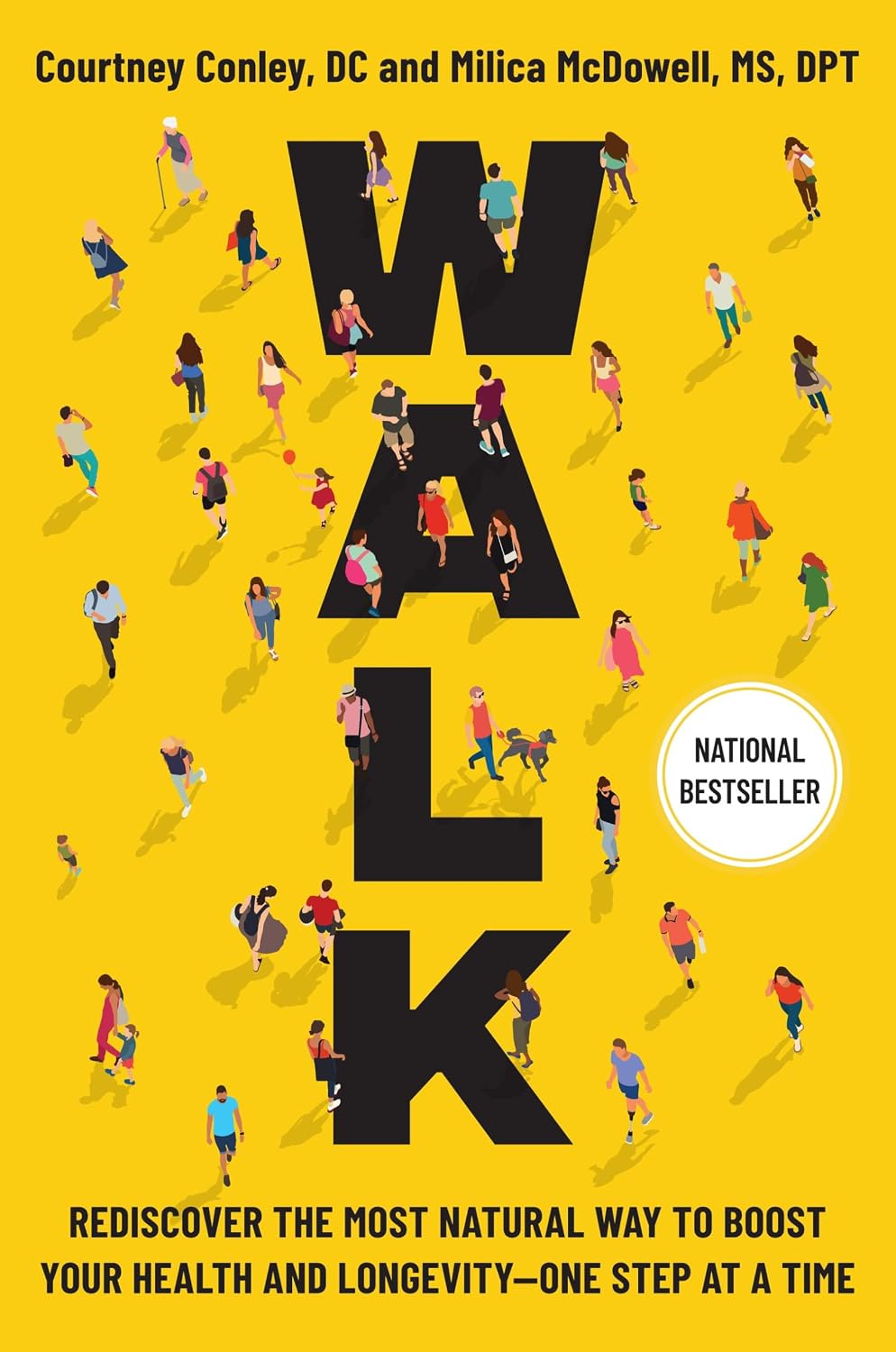
Yes. All right. People have all got to pick up this book. This is a great book. And you can walk and listen to it at the same time, right?
Right. If there are a few bad habits that you want women to stop doing today, what would they be? Change your footwear. I'm not saying you have to wear a bra now. I know.
It's the lowest hanging fruit, though. And it doesn't mean all the time. So, we talk about a shoe spectrum. Mhm. Just wear a functional footwear part of the day.
Okay. Put your foot on the ground. Exercise your foot like you would anywhere else. Especially when you're in the gym, I think that's a great opportunity. One of my biggest pet peeves is when I see people strength training in the gym in highly cushioned footwear.
If you're trying to lift heavy things, which we are supposed to be doing, you can't lift heavy things when you're standing on a pillow. You don't want to compromise that sensory information. You want a strong, stable foot. So, that's a very good opportunity to put your foot on the ground, wear a minimal shoe so that you can be stable from the ground up. Should you socks?
Is that do socks. Really? So, if you're going to lift weights, strength train, socks As low to the ground as you can. Low to the ground. Don't drop a weight on your foot, please.
But, we're going to put some links to all of these different things that you've talked about because I think a lot of them are really new to me. There's no question about that, but wow, I so appreciate it. I was looking forward to this. Yeah, yeah, this is great. Courtney, where can people find you?
Gate happens is my online educational company and we have a lot of information on there. Exercises, YouTube as well is is a really good resource for foot health information. Okay, good. We're going to do some of that. So, if you all are listening, we will have some of the exercises over on YouTube.
Great. Thanks, Courtney. Thank you so much.