People have different types of of childhood trauma. So, how did you distinguish that? And tell tell us all a little bit about your background where it started from. Well, I didn't realize connect, you know, have struggling with connection was a trauma symptom until further into this. It it just sort of showed up as like what everybody was talking about once I was a public person talking about trauma symptoms.So I grew up in a commune in Berkeley in the late 60s and 70s and my mother did a lot of drugs was an addict and alcoholic and the stuff going on in our house was about what you'd expect for something like that. We were very neglected. We didn't always have food. There were weird people walking in and out of the house. Not always safe for us to be around.A lot of neglect. Among my siblings, I had a lucky sort of way of dealing with it. That's it's not easy, but compared to what they went through is, you know, my brother died. Another sibling of mine is still very much struggling with drugs and alcohol. And, my coping mechanism was go out and meet everybody's mom in the neighborhood, find out who has food, see if there's a really like secret way I can let them know like, you know, we don't have anything to eat.Could I stay here tonight? And and a lot of moms and teachers help me. And back in those days, that's what people did. And I don't think that's terrible. I think it's better than calling CPS in a way.How old were you? Oh, it started I mean, my parents were alcoholic from the time I was born. My mother was probably drinking heavily while she was pregnant with me, but they divorced when I was seven. And that's when the house really slid into like chaos with a lot of people. But they had a violent, mutually violent relationship.It was, you know, it's just one of those things that when this thing, the ACE study came out, if you've heard of that, these like they came up with 10 things that are common indicators that you had a traumatic childhood. It's totally not comprehensive, but it's 10 things and I have like eight of them, okay? And I learned when that came out, I was, you know, I used to be a video producer and I was making videos for an organization that was teaching about the effect of trauma. They were teaching doctors to ask about trauma. But what I learned was that the seriousness and quantity of traumatic experiences you had when you were a kid, especially when it was just like chronic ongoing is directly correlated with health outcomes later.And not just health outcomes, but relationship outcomes and cognitive abilities and the likelihood that you're going to get dementia and things like that. There's hardly anything bad that isn't made worse by having lived through trauma as a kid. When did you first realize I mean you you obviously realized how difficult it was growing up. When did you start to say the word trauma or really understand that how it may be impacting you into adulthood? Okay.So I'll tell you what happened. I was doing pretty well because of my coping mechanism of finding people who could help me. I was kind of resourced as they say. I had ways and I had very good grades. I was a good girl.I took care of the younger kids. I did all that stuff. But that personality type, it's not even a personality. It's a trauma symptom, you know, but but that way of coping with things. The upside is, you know, you end up with a job.The downside is you can end up with chronic stress symptoms. So when in my 20s, I had chronic fatigue syndrome back when they were first identifying what that was. I had a fever for a year. They'd say, "Well, you're just too stressed out. You got to be less stressed out." I went to a lot of therapy, like 17 years of therapy, and we would talk about my mom.We'd talk about what she did. We talk about, you know, terrible things that happened that didn't actually help the symptoms that I was having. It was validating, but in a weird way, it made me worse. And so, the more I talked about bad things that had happened, the worse I felt. So, one night in 1994, I was I had just had coffee with a guy.It was maybe a date, I don't know. We had coffee. We were walking back at night. We were on a busy street and these four guys jumped out of a car and just for no reason didn't rob us. They just beat us unconscious.I was taken to the emergency room by the police. They did a brain scan. They said, "Your jaw is broken. We'll deal with that. Your dentist will deal with the teeth." They did a brain scan.They said, "Your brain's not bleeding, so you're fine. Go home." But what was wrong was I was my emotions had suddenly started just going all over the place. And my formerly like overfunctioning self could not function, which is terrifying for an overunctioner. You know, my whole thing was like, I'm just going to do more than everybody else. And so your whole personality kind My whole personality changed.And the I went to the doctor again. He said, "Here, let me give you some Xanax." I went to the therapist. She said, "Let's talk three times a week about what happened to you." I got worse and worse and worse over like three months until I felt suicidally depressed, pretty seriously. I know now that is so normal for somebody who had been through that experience, but they didn't seem to know that then. I had PTSD.And classic PTSD is from an acute trauma such as what happened to me, which was life-threatening. Mh. And they they didn't put that word on it. And so they kept treating it as as though I had a psychological reaction to the fact that this had happened, which I did to some degree. I probably accepted that pretty well.But my brain was not okay. My nervous system was not okay. It was just kind of like just going randomly. Like if you were to put too much electricity in a television or something, you know, and it would just start like flashing and finally it would sputter out and it just wasn't diagnosed or understood. And so now they might have they might have been able to peg that.They would have looked at it differently. Yeah. But what's what's very common for a person who went through so much childhood trauma, there's another kind of PTSD. It's called complex PTSD and it it can develop when a person goes through chronic again and again intense stress. It just goes on and on like an abusive relationship or a war that a person has to live through.
Most often it's from a traumatic childhood like mine. And I didn't learn that word because it didn't exist. I learned about it when a lot of people learned about it when Bessel Vanderolk published the book The Body Keeps the Score. Mhm. And I had been searching Amazon for a book at that time because even though I thought I had a solution to my personality problems, I had really blown it with my then fiance, now husband.
I had had a total meltdown about something and raged at him and I said, "That's it. I don't want to get married." And to my surprise, he didn't he just like wasn't okay with that. And he said, "You know, if you're going to pop off with statements like that, we can't get married right now." And we were 5 weeks from the wedding. We put all the money down, you know, everything. His parents were flying in for Did that change you?
Did that is that what made you say like, I've got to figure this out? I was determined. I'm going to have no debt when I enter into this marriage and he was a software engineer and he is was well he he works with my company now, but he was a software engineer. He had a startup. So, we both like came into the marriage with like basically no money.
I think we had $11,000 or something. So, I was like, I'm going to get out of debt. I'm going to do it before the wedding. And how I did that, I got on Amazon and I bought that book and I read the whole thing like in a day and a half. And then I was I went running around the house.
I was like, "Guess what? There's a name for it. It's this thing." And he was very skeptical. He he was just like, you know, if this is you he moved out actually. He said, "We're going to live separately until we see if this works out." I couldn't wait to tell him about this.
And it took him about two years to trust that I was on to something. Yeah. But what had happened was it informed me what these techniques I learned in 1994. It informed me why they were working for me. And it was because what I learned from that book is I had neurological dysregulation.
And you had to figure out a way to regulate it. I had to figure out well I knew how to regulate it. But the funniest thing was I didn't know that that's what it was. And I hadn't been taking it very seriously. Well, the holidays are here and if you are anything like me, you're doing everything for everybody else and forgetting about yourself.
Do you know what I'm talking about? This year, I'm trying to give my skin a reset with I because great skin never goes out of season. So what did you do from that point on? Well, I'm going to go back I'm going to go back to that night 1994 when I met this woman. And I met this woman and I said, "I think I have to end my life." And I don't know why I told her.
It was somebody I barely knew. It was somebody I gave a ride to. So she was this recovering alcoholic. She was 23 years old. Had she had lived on the streets of the Tanderline in San Francisco.
After four years of being sober, she was like, "I can't stand this. I'm so miserable and stressed out." And this woman who ended up being one of the founders of Narcotics Anonymous, Wow. Showed her, she said, "You want to see this thing? You want to see the can I show you something that helps and showed her how to write her fearful and resentful thoughts on paper which is not that it's not like that strange or alien in aa but it's most people don't do it most people don't do it as much as my friend told me she goes you got to do this twice a day and you got to follow it immediately with meditation so it's a technique I teach it for free I have a free course it's in all my books takes a little longer to teach than I can do right here but in a nutshell you are it's a prayer it's prayer and for people who are, you know, maybe don't they're not higher power oriented, they would maybe want to do it from their higher self. They can adapt it, but it's to ask for your fearful, resentful thoughts and feelings to just be lifted.
They get lifted for a while. And and did you feel that? Oh, I didn't believe it would work, but she was just like, "Do you have anything to lose?" I'm like, "No." She goes, "Well, come on." And so she showed me how to do this. She said, "Just write." I sat in her house in her she had this like warehouse apartment. And I was there all night.
The sun starts coming up. She goes, "Go home. I got to go to bed. Go home. Call me in the morning." But I've been writing for like 3 hours at that point.
I went home. I wrote Samura. I fell asleep. I woke up and I just felt delicious. I felt peaceful for the first time.And my PTSD lifted. And that's what it was. And all the talking about trauma had been upsetting me. Writing about it and releasing it was releasing it. Mhm.It was doing what was meant to happen, I think, from talking about it. So, she said, "Well, do it again. Do it again twice a day. Call me when you want. Go learn meditation." And within two weeks, I wasn't depressed anymore.
I didn't have PTSD symptoms anymore. I had this colossal capacity to pay attention and focus. So, that's I started doing that every day, twice a day, and I kept going. And then she said, "You got to join some kind of 12step fellowship." So I started teaching other people and sponsored about 300 women over the years over maybe 25 years. Women of all ages.
Yeah. The women who would go to Alanon. So I had a lot of experience helping others learn this and learn the techniques. And I had a lot of experience sitting and watching people in meetings like who gets better, who gets stuck, right? And I started learning the patterns of what happens after you start to feel better.
How do you change the problems? I had so many life problems back then. So that's that's how the whole thing started. And it just got so that, you [clears throat] know, 20 years into it, I had I was spending about 20 hours a week sharing this with people who asked and some of them didn't even, you know, I said, "Fine, I'm going to make you guys a video. I'm going to make you a video.
You watch it. If you like it, call me. But I'm not going to show you personally because it takes an hour and I just can't do this all day. I have kids." And that's how Crappy Childhood Fairy started. And Crappy Childhood Fairy is a YouTube channel.
Yeah. Right. How many followers do you have on the YouTube channel now? There's 950,000 right now. And it's growing.
It's growing fast. What do you think made it grow so quickly? Do you think it's because it's a conversation that most people don't have or not aware of? Well, I'm happy to say that the concepts of complex PTSD, which I did end up getting a diagnosis after I self diagnosed with it. I talked to a therapist who was like, "Yeah, that's exactly what you have." I think when people talk about trauma, it's often the experts are talking about what you see from the outside, and I was somebody talking about what it's like from the inside.
What happens on the inside? Are there are there triggers that just happen throughout the course of the day throughout the course of your life? Can you can you talk about that? I think it plays out in three major areas of our lives. And one is our nervous systems get disregulated.
Everybody gets disregulated. And now that's a term people are familiar with. You know, it wasn't eight years ago. Very happy everybody knows what it Well, not everybody, but it's it's widely understood right now. What does it mean?
So your whole nervous system can just sort of get jittery sometimes. Everybody has it sometimes. Most of us, virtually everyone comes back out of it naturally. But people who had a lot of trauma as kids have some kind of injury that's operating there. And not everybody who's traumatized will develop this, but many will.
We certainly have more dysregulation than your average person. [gasps] We get we get dregulated more easily. We stay that way longer. It's it's more extensive. And there's parts Midi, the care women deserve. Going back to because those are those are some of these extreme areas that we're talking about.
If we're talking about something setting us off or tools to help us when we're triggered, do you have some tools that help you in the moment or can help your our audience in the moment or help your audience on YouTube? Well, yes. The writing and meditation technique that I call the daily practice is both good for the moment once you've learned how to do it and good for the long term. A lot of stuff changes in the very short term if you need to reeregulate your nervous system. Anything that helps you kind of get back in your body like dysregulation is it's happening on many levels that your body is a little bit like out of sync right so you can if you could do one thing I would say move your body move your body in any way that you're able.
If you can move your body outside, that's twice as good. Being outside and sort of just seeing the weather and what time of day it is, it helps your nervous system, you know, kind of, oh, okay, I'm here on the planet Earth. It's this time of day. It's this season. Like, we are created to sense all these things.
Our bodies are supposed to know that, but we get very disjointed. So when we can't sleep on the right cycle, when we can't eat in a proper rhythm, you know, when we're not hitting puberty at the normal time or menopause at the normal time, all of these things are aspects of a disregulated nervous system. You know, we're talking about isolating. So you're talking about reeregulating and the book you have reeregulated. Yeah.
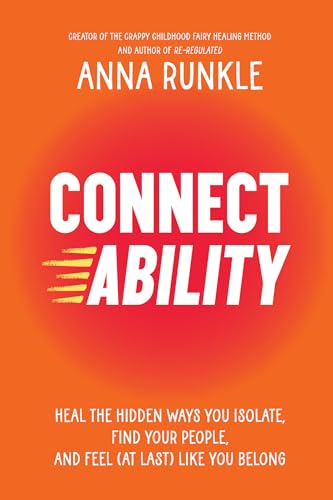
Caused you to write this book. Yes. Connectability. Talk about the relationship between these two. The experience of growing up with this childhood trauma is there's a there's dysregulation.
That's kind of the core symptom that's sort of driving most of the other symptoms. If you're more likely to be addicted, if you're having difficult relationships, if you're having health problems, you can trace it back to dysregulation. There are then the second one is a dissense of disconnection. And I've learned especially from my audience, this is where YouTube really informed me, the feeling of being separate from other people seems to be almost universal for people who had a traumatic childhood. And it's it's noted sometimes as a bullet point on the symptom, but the way that we experience it is almost identical, which was really illuminating for me.
And then when I talk about it to my audience, they will often say, "This is the first time anybody's really talked about it." But this feeling like there's a wall between me and other people that they're kind of all in a world where they got the memo on how you're supposed to get along with people and connect and we just somehow didn't get the memo. Now, sometimes that could be it could be that we had parents who really didn't give a memo. Sure. But the only other type of person who feels that no memo thing I would say that I've been aware of is people on the autism spectrum where there's some kind of non-verbal communication that they don't have the Wi-Fi for. And that's what it feels like.
It's like, could I please have the Wi-Fi password? How am I supposed to talk to the other moms at school? Like they seem to have such an easy time with each other and I always have my foot in my mouth. Well, let's talk about that because I I agree with you and I I guess I always have referred to it as being on the outside looking in. And I don't know if that's the that's the right way to look at it or that that's what it's like.
Well, yeah, it is like that. Or on the inside looking out, but looking out, but there's a wall somewhere. Yeah, there's a wall. Do you think that that's why I mean people everybody's different, right, in social situations. So, let's let's break some of those things down because some people feel like they're isolated because they they don't connect in social situations.
They don't know what to do. Other people feel like they just don't know who their people are, right? And then there's other people who feel like they've got relationships but they don't know how to actually keep them. So it's very tempting [snorts] to hide and not deal with any of that. What is your first suggestion for that connectability to get that started again?
A person needs to know how to reeregulate. I think I think the root issue for many people is that it's stressful to be around people and stressful to walk into a room. It's stressful to walk into a room to meet a new person. It's stressful to go on a date or a job interview. But I think especially since the pandemic, we got rusty in a way that's been hard to come back from where just doing anything with people is a little more stressful than it used to be.
So, how do you jump back into that? Because I I would agree with you. I I mean, I I do things, but sometimes I'm like, "Oh, I'm okay if somebody canceled that plan and I'm not going to I'm not going to run back out and try to make another one." There's something, you know, healthy solitude is a beautiful thing. And when you're feeling overwhelmed by people, what could be nicer than just like, I'm going to stay home. I'm going to just do some me time and take care of myself.
But the trouble is, if that's always the method you're using to be able to regulate your nervous system and release stress is to isolate from people, you're going to have the same problems in life as somebody who lives in a cave. That you're not connected. That when it's time for you to ask for help, there's nobody who can really give you that help that you need. You may have shallow relationships. And I've zeroed in on something that a lot of us do, even if we're high functioning.
We do this thing I call covert avoidance. How do you identify if you're somebody that is dealing with that? You know, there's nothing like a crisis. Like when I I had when I had a I had to be in the hospital for a month with a surgery when I was a single mom and I was putting out the call, can people help? I need some help getting my kids picked up.
They had he my their dad works that somebody I need help and people just didn't volunteer. I needed people to pick me up from the hospital between surgeries. I didn't have people who would do that much for me and I felt like I had been there for all these people and I felt like I knew a lot of people but when it came down to it a lot of the people I knew were not the kind of people who were generous in that way or connected in that way and maybe I hadn't contributed to our relationship in a you know a similar way and that's what I had no idea I had worked so much on myself but I didn't have deep relationships. Do you think that we're suffering from that right now? I know we even in New York City sadly before she passed Dr.
Ruth was our loneliness ambassador that was the first in the nation first city in the nation to ever have one. I mean that that says a lot that we are living in a very lonely time. We're online all the time. We're living in a culture of convenience you know not not walking some places New York's a little bit different but you know not walking places working from home seeing few people people every single day. Do you think all of that's contributing?
It is. We're we're definitely more more disconnected from each other than before in many ways. Now, personally being disconnected in the Bay Area of California, I come to New York and because everybody's out on the street, this feels like Disneyland. What do we do to start coming back to being connected instead of cutting ourselves off even further, which I I agree with you happens. Yeah.
Well, step one is to start to learn how to release the stress you feel around people so you don't have to resort to these avoidant behaviors. You know, whether you're doing it obviously and saying, "I will only see dogs, not humans, or you're doing it covertly and just sort of holding people at arms length, not committing to things, looking at your phone when you get together with people, not not cap, you know, I don't know about you, but I do find it harder to give people my full attention than it used to be before I had, you know, a mobile phone." I I agree. They're captivating. So So let's talk about some of the things because you really did break this down into different ways. There's obstacles to connection, right?
So we've got the avoidant behaviors that we went over some of those. [clears throat] Are there additional ones to Yeah. I'll tell you something about avoidance is we're all very fond of pointing fingers at how other people are avoidant or narcissistic or anything like that. But the thing that's going to change your life is when you start looking at am I avoidant? Do I have narcissistic behaviors? You know, am I doing things where I, you know, hold myself apart from people and look down on them?
And one example is, there's a a lot of people talk online about like, I'm dating an avoidant. Oh, it's so terrible. And an avoidant. Yeah. An avoidant person, you know, an avoidant or a narcissist or all the people in my life are narcissists.
And not to knock that, like this could happen, but if you're doing that all the time and the people you choose to populate your life, guess who's avoidant? So, what do you do? So when you're ready to make the change, it's a big change. This is not an overnight fix, but you have to learn to release the people who are holding you back in that way, who are keeping you constantly in pain, constantly triggered. And I I use the word trigger, but I use it specifically to mean it throws you into dysregulation.
Now you can't cope. You have you get discombobulated, can't do your job, can't focus. So stay keeping your nervous system regulated allows you to then make some more conscious decisions in the moment. And globally in your life like why this is very common for traumatized people to have your life populated by a bunch of schmucks you know mean people troubled people who bring a lot of drama into your life and sometimes it would be a legitimate choice to keep them anyway they're a relative you love or something but if are there so many that they're taking up all the oxygen in your social life so there needs to be space and that means you're going to have a period of loneliness and you're going to have to be okay with that yeah and that's very hard to do it's it's you Nobody wants to be lonely. Yeah.
Do you cut those people off? Do you make sure that they're Do you How do you do it? You can cut them off. I think if they're abusive, cutting off is the right thing. Sometimes if you just stop calling them, it fades away because you've been doing a lot of the work.
Yeah. I think a lot of us are afraid of being alone and we think we can't do better. So, we're just sort of like trying to keep people in our lives. I'll speak for myself. I know I'm not the only one.
So, I started releasing those relationships. And then sometimes you can learn to become neutral to people. And when you can, that's ideal. If you can not get triggered, you will have no trauma symptoms. It's crazy like that.
But nobody can really have no triggers. Sure. Mean people, toxic people, how do you avoid them all together? I mean, are there red flags to look for? Yes.
You know, the red flags are have been in your face all along, but especially if you grew up in a rough family, you've been very conditioned to overlook them. I call it crap fit. You fit yourself to crap to what? Crap. Crap.
You fit yourself to crappy people. Yeah. Well, I mean, it's very fear and situations. And so, you become adept at like, it's okay. This person's awful to me.
They always put me down and I get overlooked at work. But it's okay. I'm such a good girl. I can, you know, I can just kind of deal with it. I'm thick skinned.
That's crapfitting. And you can crap fit about the person who does your hair. You can crap fit about How do we stop crap fitting? So, you have to start having higher standards. And so this loneliness, the the spell of loneliness when you've released relationships and they're gradually slipping away and you're scared is this beautiful opportunity to start looking at where where have I been crackfitting?
And when you can regulate your nervous system, your emotions come back online, the real ones, not the like reactive nervous system jumpy ones. Your real emotions start to come back. Your perception starts to come back. Like a lot of us have very damaged perception. We don't know how to interpret reality.
We always are qualifying. What we notice is like, is it just me or is this person always putting me down? Is it just me? And and so it's really important to have good people in your life who can be your reality check on that. And they can go, it's not just you.
I saw it, too. What are some of the red flags of somebody like that? If somebody's listening and going, I I don't know. I don't know if I'm crapfitting or not, but I do know a lot of people come in and out of my life, and I'd sure like to know what those flags are so I can avoid adding any other ones. As you heal, you begin to be able to do gut checks on things.
And the trouble is when you're still in a pretty traumatized state, you're advice like always listen to your gut or always feel your feelings like that. That's not always reliable when you have traumatized gut feelings. And so, first comes the reeregulation and the period of calm. I really encourage people be around people like other people who are also healing, who get it, who aren't going to undermine your efforts. Any of us.
I'm sure this is true in your life too. When you rise in your life and you move up a level or two or three, some people are going to abandon you. They're going to criticize you. You know, they're going to put pressure on you to not do that. Where does that come from?
What is wrong with those people? On the one hand, they're jealous, but there's this other thing that I think is almost spiritual that that I I really think that let's call it light. You know, when you start to have a lot of light and I'm somebody I came from a very rough background and as I started to heal I started to be a more radiant person and especially in on good days I feel radiant and so sometimes even when I'm sitting there happily talking to people if someone's in a bad place they look at me they're like she's kind of radiant they start to think I don't feel that way she must be making me feel that way and now I'm mad at her and I want to make her stop making me feel bad and so there's like we've all done this we project that the way we feel bad about ourselves is being done to us by whoever's standing in front of us. Conflicts come whether you're in a great relationship, a good relationship, you know, whatever it is. And sometimes those require a way to to heal from those.
Is there something in particular you offer to people to to talk them through that? Because I think sometimes we're waiting for an apology from a person. We're waiting for them to change their behavior. What What do you think? I know you talk a lot about that.
Yes. This is one of the best things I ever learned is how to calm a conversation that's getting heated and how to make up for it when it's blown up in your face when you when you hurt people. So, when you want to calm a situation, usually things are getting heated because both people are triggered and you have to be the bigger one though. You have to be the one who starts and you just recognize if I continue to trigger this person, things are going to heat up no matter how nice I am or anything. And usually the thing that you're triggering people with is something that insults their dignity or something that makes them feel threatened with abandonment.
I'm going to leave. I'm not going to be here anymore. Yeah. And so let's say it's with a partner and a conversation is getting heated. Usually, especially if if you can feel like your heart's racing, your hands are shaking, you're starting to feel, you know, confused in space, you might be getting disregulated.
You can say, you know what, I need a minute to just kind of compose myself. I don't want to fight with you. I don't want this to turn into a bad feeling thing. I want to hear what you're saying. Could I have 15 minutes to just kind of go reeregulate and then come back and talk about this?
That's how you can say it without threatening somebody. See how I used to get that space is I would just like storm out of the house. But but you said something but you said something really important. It's either they're you're humiliating them their dignity. You're dealing with you're hurting their dignity or threatening them.
Yeah. Yeah. I never I never broke it down into those two categories. That really is what an argument is. Yeah, it's really simple.
And you know there's there's there's a deeper thing going on. And it's it's it's not always simple to serve solve arguments. You might have real differences as a couple or as a set of friends or as rel relatives. But first, if you can just release that harm to them and even though you're furious, even though you're hurt and humiliated yourself, if you can just decide I don't want to fight, I'm not going to fight anymore. So you take care of their dignity, you take care of their safety, you get what you need to reeregulate it.
You might need 15 minutes, you might need an hour, maybe you need a day. It's usually not urgent. If you're not in danger, it can wait. But asking for space from somebody will make them feel, you know, like you've dismissed like I you don't care or you you're abandoning them. So you reassure them, I actually want I want to hear you.
What you're saying is important to me and come back. And by the time you've come back, your perspective is often shifted quite a lot. Sure. You've talked about apologies and how direct apologies are very important. What's a direct apology?
I learned this from the AA people. I I I'm not an alcoholic and but I've been to about a thousand AA meetings because I love what they're doing in AA. It's so helpful to me and I relate to the life and death nature of their problem. And what I learned there is how they think of being resentful at somebody and having u an unresolved, you know, resentment at people as something that's going to make them very vulnerable to drinking again and it just has to be cleared up. They say resentment is the dubious luxury of normal men.
So I think a lot of things are dubious luxuries in that way. And so what I learned there is the template of a clean apology where even though usually both parties have done something to bring the conflict about, you just focus on your own part. An apology is for your part. It's not a qualified apology where you go, "Well, I'm sorry I yelled, but you were saying all these things, right?" Like that may be true, right? But if you really want to do the proper apology, you focus entirely on your part.
And I recommend that people, you know, sit down and list how would you feel if this was done to you. It's critical that you develop an understanding of what really are they hurting about because we all know what it's like when somebody has hurt you and they come back and they go, "Well, I'm sorry you feel that way." Or they minimize what the thing was. I'm sorry, you know, I offended you, but they didn't just offend you. They took all your money or Yeah. Yeah.
I'm sorry you're so sensitive. [snorts] That does more harm than good. So you focus on your part and you think about how would I feel and and you say if you had done if anybody had done that to me I would feel this and I imagine it felt like this and I'm really sorry and here's what I'm going to do so that so that I don't do that anymore. Certainly going to try and I hope you can forgive me without qualifiers. No qualifiers, no conditions. Anna, you've done so much incredible healing of yourself, of people.
Your book is coming out. Connectability. I want to ask you one question. People listening that might say, "Look, at the end of the day, I'm still struggling." Yeah. You know, I'm struggling with feeling rejected.
I'm struggling feeling stressed in a in a social situation. What What do you say to them? Where can you just start? What simple step could you take today? I like to think of it as a game.
Okay, we need to go slowly sometimes, especially if you've been isolating a lot and you feel pretty stressed about people. Go slow. Don't go and sign up for every club there is and call everybody you know and see if you can repair everything all at once. Even though that's a very good intention, it will probably tip you over very quickly. And you think of it like going to the gym.
Don't go work out for six hours the first time. It it is it is very much like a muscle connectability. And that's the word that I've always used like that magic thing that some people have that it's easy for them to connect with other people. They know the thing to say. They're regarded by other people as a good friend to have, nice to have around, trusted.
And I used to see that and I'd be like, how do you get that? How do I become how do I get connectability? So that's it. One of the things is you must practice. You cannot learn it in isolation.
There's there's not a lot of things we can do in isolation. So you have to go out little by little. We're born into community. So we start going out. And the game is I I assign points.
Like some things are easy. For me, I had to give myself a point to walk out to my car in front of my house without checking out the window first to see if people were out there, you know, because I just didn't want to run into people and have to have small talk with them. Didn't want it. So, I would go I'll I'm just going to go to the car come what may. If somebody's out there, I'll say hi.
I'll deal with it. One point. If you if you end up like calling somebody and say, "Hi, my friend who I haven't talked to in two years. I know things got weird. I was never sure why, and I wondered.
Do you think we could talk about it? Maybe could we have a cup of tea? Three points. You That's like 10 points. I feel like depending on the friend, you know, a really difficult relative, go home for Thanksgiving even though it's feels really scary.
But they're, you know, the book is all about having boundaries that you can use so that you can have loving interactions with people, friendly interactions with people when you choose without losing yourself, without losing your time or your mind while you go. You can you can have finite amounts of time. You can share your loving comments. You can just make your getaway. You you know and you're good.
Where can people find you, Anna? Midi, the care women deserve.