Hi friends, I'm so glad you're here. Well, we're talking about feet again. And I have to tell you, when we did our first show about foot health, I had absolutely no idea how much you all were going to care about this. It ended up becoming one of our most listened to episodes ever. And the questions just kept coming in. Bunion, toe spacers, barefoot walking, what shoes we should actually be wearing, what happens to our feet as we get older, and whether or not there's anything we can do about it. So I've read your, comments, I saw your questions, and there were so many, I finally thought, okay, I finally thought, okay, we got to do this again. We- we're going to get Dr. Conley back to answer these questions.
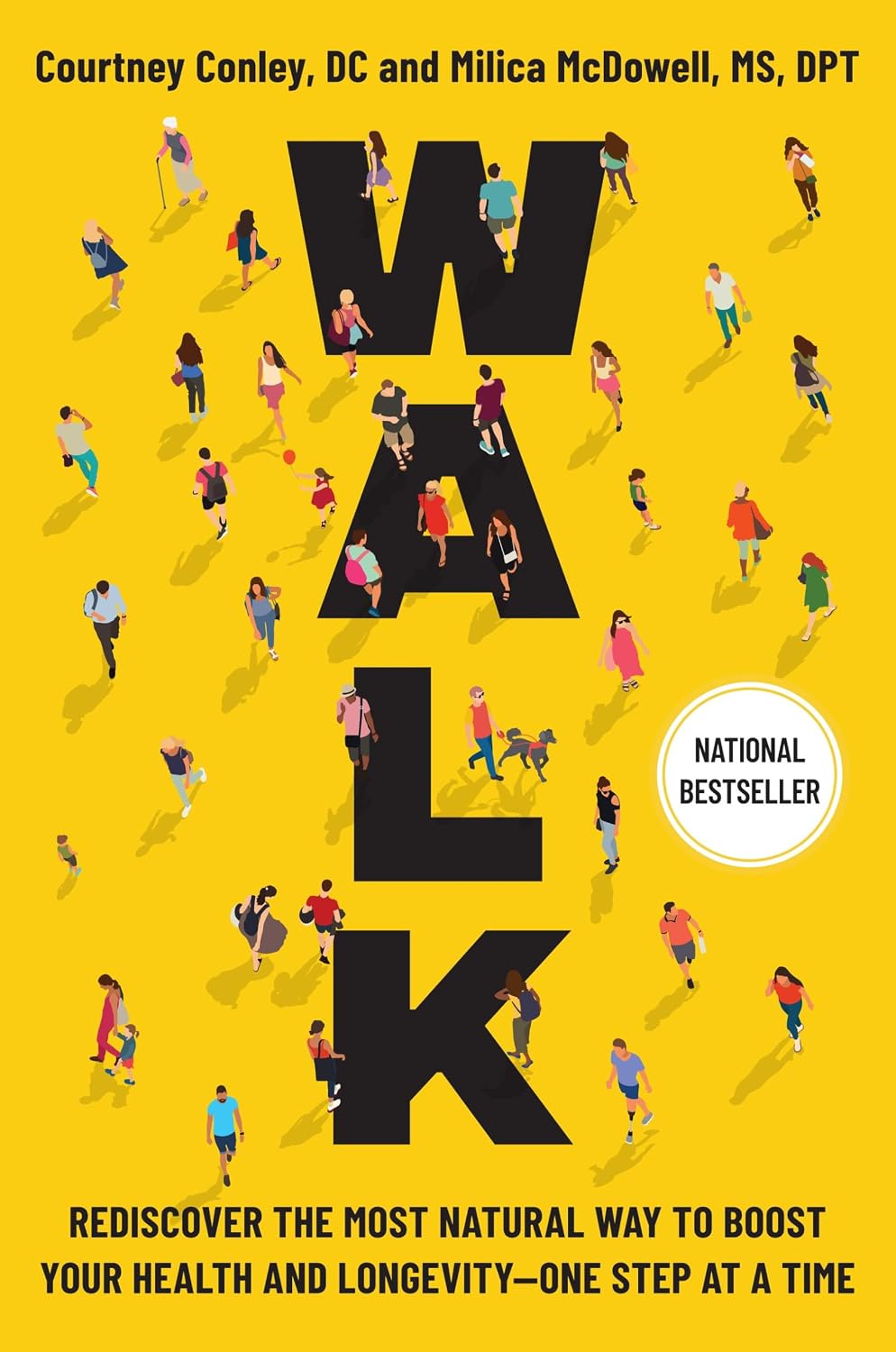
So I have a whole list sitting in front of me. And today we're going to get those questions answered. Dr. Conley Conley is the author of Walk and one of the leading experts in foot and gait health. And I will tell you, she hasban already changed a way I think about my own feet. The last time Courtney was here, she basically I ripped apart my entire shoe collection. Don't worry, I've not stopped wearing heels. And I'm not going to sit here and pretend I'm somebody who suddenly wears sensible shoes all the time. But I am thinking differently about what I do the rest of the time. Because the older I get, the more I think about what I want my life to actually look like in 10, 20, or 30 years. I want to travel.
I want to be like my dad and walk everywhere. I want to work out. And I want to be able to get up and go whenever I want to without having to think twice twice about what my body can do. Dr. Conley came on the show, I didn't think about my feet at all. They were not on my list of things I have to take care of and now they are. I've been walking barefoot more. I've actually been thinking about strengthening my feet. I'm Before we get into it, I need
When travel, expense and AP are connected with a single AI supported solution, Dr. Conley, nice to have you back. It's so nice to be here. Well, I'm excited we're talking feet again for anyone who didn't catch us the first time. You know, I was thinking about this. So you came on the show. We had so many people ask so many questions. I was blown away because I did not know what to expect the first time you came on. I'm like, how long can we talk about feet? What's happening here? But we have so many things that we're told every day to do to take care of ourselves and make sure our bodies are better and they should do lists. Feet has to be on that list now right? Why do our feet have to be on that list?
I think that people just don't pay attention to them so when they hear this for the first time they.
is painful. So it's kind of my mission is we want to avoid those things. And we'd like to keep our feet around for a while because they're supporting everything. Okay so one of the biggest things I heard from people in our last conversation was a lot about like what do we pay attention to what are we getting wrong with our feet and what's really do about it. So if you were to look at your feet, when you look down at your foot, the widest part of. Your foot should be your toes. OK. So your big toes should sit straight and there should be space in between your toes and there's a reason for that. We want the forefoot or the front of
the majority of the patients that I see when I take their shoes off, their feet look like shoes. So their toes look like they're literally It's really tapered like you would see in a tapered shoe. And so for many years when you're wearing that type of footwear it actually changes the structure of the foot and it certainly weakens the foot. So when you have kind of your squished toes at the top and then your middle part whatever you call that where the bone is and where the you know that bone sticking out that it looks like the widest part of most feet. Yes. Right and that's wrong. Yes. So the ball of the foot is where people will think that the width should come from And that's interesting because shoe companies, when they say that a shoe is wide, they'll put the width there.
Right. At the ball of the foot. But then you'll see that shoe is still tapered. And if you take the big toe, if I grab this foot model here, if you take the big toe and you were to bring push it into the second toe, you would see how that's going to change what's happening and also what that's going to do to the rest of the foot. the rest of the foot. So when you talk about bunions because I didn't even pay attention to that before. I didn't know I had them. I thought I just had a particularly big bone on the side of my foot. I was a dancer for a long time. I was a cheerleader for a long time. I didn't really do any other sports but Yes, that's a bone. It's not an people see
type of intervention and you have that happen sooner than later something you can do. So there's so many conservative things that we can do to slow down the prevention of these bunions, to decrease the symptoms that they're causing and I really think that's so important because not only are you improving the strength of your foot but that is also going to affect what's happening at your knee and your hip and your back so there's a bigger conversation here. Instead of just rushing into a surgery. Correct a. We're running, these numbers dramatically increase. People tell me that foot needs arch-support. I'm just like, well, no it doesn't. What does that mean? because I They'll have often my patients will tell me you know I just feel like I can't push off. You start to lose power and we lose power faster than we lose strength as we age and that's a problem. You know when you need to be able to walk fast or recover from tripping or have good reactive speed, I have to, to cross the street very quickly, a lot of that power comes comes from strength at your foot and ankle. Your whole foot. Your whole foot.
The push off. So what are people feeling if they come to you and say I need arch support? Because you're right I've heard that before. They'll say that their arches have fallen and they notice that their foot is . that I used to wear don't fit anymore? What is happening? Most people when you look at the research it's it's like 60 to 70% of people are wearing the wrong size shoe. So we were wearing it all along. If you look at what of the anatomy of the foot if you were to have a shoe that respects the anatomy of the foot the majority of the shoes on the market do not do that. Because they're in the wrong shape. They're in the wrong shape. And we're talking about it just we're not just crucifying my shoe collection are we? No. We're talking about everything.
We're talking about sneakers, we're talking about everything. Yes. Yes. So you would like to see sneakers, right? Or the most comfortable shoes you have wider. I just want a shoe to respect the anatomy of the foot. And that doesn't mean that you can't wear your high heels or you can't go out to dinner and you know, get dressed up. That's not what that means. That's not the conversation. I'm not going to win that conversation. But what I am hoping is that when you're not in that type of footwear, that you just wear different types of shoes. Ones that have a wide toe box. There's one where you can actually strengthen your foot. I mean the science will tell you that if you were to just wear minimal footwear, which is wide toe box where the heel and the toe sit on the same plane so there's no high heel to it.
a soul that can can actually flex and bend, your foot will get stronger. There will be hypertrophy of the muscles in your foot. It takes time to get there, though. So let me ask you this. Minimal footwear versus bare feet. What is the difference there? Is barefoot the best? When you have your foot on the ground, there's thousands of sensory receptors that are gaining information. It goes to your brain and it tells your body how to respond and how to react. Most of us are not used to walking around barefoot. And so when we take our shoes off, it can give us information. So I'll tell my patients, if you are one of those people that when you get out of bed and you put your foot around, or sometimes they'll wear their crocs in the shower, take your shoe off and just walk around for five minutes.
That's it. And some people will say, well, man, that hurts. Certain parts of my foot are painful. Use. Why? Why does your heel hurt? Why? Why does the ball of your foot hurt? That doesn't mean continue to walk barefoot. It just should give you information of what should I be doing? Should I be strengthening my foot? Should I be increasing my ankle mobility? Those pains should be an indicator for us. Hey, do something about this. I walk around barefoot all the time. Like I was barefoot before you came into the studio. My husband, his feet never touched the ground. Now I will say I basically have the the roughest feet there could be in terms of my heels and his are like these delicate sweet sweet never been touched baby feet but it's important to try to be barefoot as much as possible. Yeah take your shoes off and just let your foot feel the ground. That's an interesting conversation with the calluses on our feet though. Yes okay. Because people want to like shave the calluses off and I'm like don't do that. Really? It's protection for your foot. Are you talking about your heels or everywhere? Heels if you have calluses like on the inside of the big toe that's called a pinch callus because typically when people are walking if they don't mobility or strength their foot will twist and then
What can you tell about somebody by just watching them walk? I'm curious. I got to this a great question. I got Oh yes, the Ingeniero Festival. And I was watching everyone walk and I'm obsessed with it, especially when you see the interference with footwear. When you see people that have, you know, I saw a lot of boots yesterday with very thick soles, very rigid like the shoe looked like a brick. The foot was designed so when you're walking we graze the heel, the foot and we push off the big toe. So it. Think about like rolling the earth away and this is shock absorption for our bodies right. So when our foot unlocks that's the first opportunity for shock absorption at the knee and at the hip.
Which is different than a running gate. What's a running gate? So running gate, you'll hear runners say, well, you want to strike at the midfoot or the forefoot, right? But walking gate, there's a reason we hit the heel because it initiates pronation or it initiates an unlocking of the foot.
land heavily in front of you which actually puts more loads through your knee and hip. So it's very counterintuitive when we think of people that have knee pain for example and they're like I need really cushioned shoes. I would I would argue. So a bad walk would be shuffling. What is a bad walk look like? Shuffling gait someone that looks I mean we should be able to walk for long distances very easily. And when you see someone potentially lifting up their leg or they have a little looks
They're not swinging their arms. Those are all little indicators that something is inefficient. As you get older how important is it that you start walking well now? I mean we're talking about in our 40s and our 50s. Is it important and critical for being healthy in your 70s and 80s and 90s? I mean I'm biased but gait speed has been touted as the sixth vital sign. So what is gait speed? So when you go to the doctor and they take your temperature and your blood pressure there's vital signs because if something is wrong there, it's a red flag to the physician. Hey, we should do something about this. And they're taught there is science that is putting gait speed in in those categories. Which means we need to pay attention to this.
So gait speed is how fast you're walking. And when you start to see people have a slower cadence. So what we're looking for is about 130, 135 steps per minute. That's normal. That's average. That's that brisk pace. So if you look at the science for walking on decreasing cancer risks and dementias, it always talks about a, brisk-paced walk. So yeah, 130 to 135 steps per minute. If you were on a treadmill, it'd be about 3.5 miles per hour. And you want to be able to maintain that speed. When we see patients that cannot do that. We stop and say, why? Because it could be an indicator of things like cognitive decline, dementias, seven to dementia is seven to nine years in advance. So it's one of those like hey why is this person walking slowly?
Are they afraid of falling? Is it a balance issue? Can they not feel their foot? Has their foot their foot strength decreased? And these are all things we can be so proactive about. If they get out of breath, if they get tired, all of those are indications. All of those things. What are some of the different indicators? So it could be dementia? balance, so an increase in fall risk. So if someone, when you see someone that doesn't feel confident in their gait they're going to be looking down when they're walking, it's almost like I'm afraid to put my foot on the floor. So it slows them down. So they're not taking advantage of speed, of momentum. So their physical capacity is decreased. How long should they be able to walk at that speed?
30 minutes. 30 minutes? I don't even know if I can do that. I mean I 3.5 is like that's real. It's I walk out. Can I? You think I can? I was like what. What are you talking about? But I guess I think 3.5 on a treadmill it's like it keeps going. You have to have a shorter stride. OK. So when you increase that speed your foot is coming closer to you and you should you know depending upon your level of fitness you know I live at eight thousand feet in Colorado. So when I try to maintain that walking speed up and down a mountain like I'm getting a good good workout. So it just depends on where you are, location, environment, but we should be able to have a fast clip when we're walking. better than me in Central Park but I try.
Okay we had this argument in our comments section last time you were on talking about bunions. Whether or not you should have surgery when it comes to bun I know we mentioned them earlier and what they're caused by. Can you clear this up up? Do you need surgery to get rid of a bunion? When you look at the severity of a bunion so what they can take an x-ray of your foot and they'll measure the angle between the first and second bones. So when you look at the bunions, they'll rate them as mild, moderate to severe. So someone that has a severe bunion, when the big toe is crossing underneath the second toe. Can that be fixed? That is typically when they, you see that and it's rigid. So you can't take the big toe, you can't move it.
It
balance, they increase fall risk. So you have a big toe sitting under another one, you're gonna be wobbly. That's gonna be a problem. That can also rupture, there's a plate that sits underneath that second toe and when that bunion comes underneath that second toe it can rupture that plate.- okay- so that is one conversation. But the mild to moderate ones where that big toe is flexible so you can move move it, you can straighten it, you can strengthen the muscle along the inside of the arch that straightens the big toe you do everything you can to prevent that surgery. So that's when you get into conversations of the right footwear. We can strengthen the foot just like we can everywhere else in the body. I wish people would understand that. That there's four layers of intrinsic muscles in this structure that have been you know they're designed to handle loads strengthen the foot wear a toe spacer wear a wide toe box shoe and this is a very different conversation.
But it's one we're gonna have. That's right. So I had so many questions from our last episode of the right things and wrong things and what we need so can we do a quick rapid fire? Yes please. Now one to ten all right ten being the best obviously. Custom orthotics. Three. I think they're overutilized but there is a time and a place. or over-the-counter insoles? Two. Why? You need to think about why you need it in the first place and do something about it. Barefoot or minimalist shoes? Eight. Eight? Yeah. I mean, you want to be able to. That's the environment where we get stronger. We just have to have the conversation of transitioning. How do we get the foot ready for it? Max cushion sneakers?
Zero. Not a fan. It completely changes how your foot is feeling the ground. We want the least amount of cushion necessary complete the task and most of us do not need max cushion. We get sold that though all the time. I think the higher the sneaker, I mean I like it for my height too, but I always think the higher the sneaker the better the safer my feet are. It's too much. Compression socks. Socks? Four. They have compression sleeves that start at the ball of the foot because I don't like them when they squeeze together. But if you're flying anywhere over four hours I always wear them. You do? Why do you wear them? Just to make sure I have good blood flow in my legs. Bunion correctors or splints? Four. They can be something that you utilize at night to keep the big toe straight. But keep in mind that's passive. We want to have an environment where the foot can actually get stronger. Massage balls for your feet? Eight. Why
the wooden things you can go back and forth. You can use a massage ball and you can work through that tissue and it feels good. Is it helpful to you? Yeah it can Slant boards or calf stretching stretching boards. Ten, you want to be you want to be able to have good ankle mobility and you can also strengthen the foot in different positions on this. Textured or acupuncture mats that you stand on? Seven. The thing with the texture is that eventually the brain gets used to it. So the brain wants novel stimulus so you'd have to either change, the type of texture or just use it as training tool. Toe spacers. 12. Why I've been wearing those every day for six years. It's one of the reasons that I have been able to not have bunion surgery.
And so it's something I utilize with them so much so we have an announcement today that we are officially teaming up with Gate Happens with pink toe spacers because because we thought that would be a pretty fun way to wear them but also really important because I started wearing them ever since you and I connected and they have been a game changer for me and now I'm trying to shove them on everyone's feet because I really do see the difference. It's is such an easy intervention- that really can make a difference from a strength perspective from a mobility perspective and most importantly balance. So this is your first product right? Yes. Gate Happens first product. Why was it so important? Why.
Anything we've ever brought into my clinic I've always been the guinea pig. I'm not going to talk to my patients about it unless I've tried it myself. I had foot pain for many years. I was a dancer, athlete and bunion showed up at a very young age for me and that That proceeded to things like neuromas and fractures in my feet and I just could not get a hold of it.
You know, any type of extrinsic device, like a toe spacer, for example, being able to have that and conversation this is going to be a tool that's going to help you. You still have to put the work in. You have to walk with them on. You have to do some foot exercises. You have to wear the right
grateful because it's an option and it's education behind it. And I'm not saying that surgery is you know we never want to have surgery. There is a time and a place but if we have these conversations before and we can prevent some of these surgeries from happening and even the bigger picture of not only can we prevent a surgery but you are creating a more resilient body. You are creating strength from the ground up up that is a a much bigger conversation. No question at all because we talk about it in all different forms but not starting on the base and that's the biggest problem. When you get the toe spacers you also get information about them how to wear them what to do what they're used for.
Yeah and these can be customized too. So for example someone who has hammertoes or toes
Now available in Canada and the UK too. And when Quint asked where you heard about them, let them know it was a T So for for people that are listening, these are pink toe spacers that I think are very, very pretty. But this is what they look like. It's Gate Happens and Tamsen’s a collaboration that we did together. I feel like they're very soft, easy to put on. They feel, they just feel great. And I was wearing them. I've worn them for the last two hours today while we were sitting here. And I'm super excited. Can you show how they go on the foot though so people understand exactly how to do it because I had to have you show me how to really put them on the first time around. So when I from started wearing these which was years years ago,
gosh this is so painful and I feel the same way too and I'm like am I doing something bad for my foot by putting these on but people are going to experience if your feet are shoved together like that might experience pain. I mean if you've had your foot in a shoe then you haven't worked on splaying your toes or strengthening your feet and you go and do that for the first time it's going to be uncomfortable because your foot is not used to that. I mean the connective tissue needs time to change. When I first started wearing these on my weaker foot, I think about 10 minutes and I was ripping this thing off. My left foot was fine. My right foot where I had the bigger bunion, I was ripping it off.
And I was getting almost like tenderness between the fourth and fifth toes because if you look at most people's feet the fourth and fifth toes actually curl under. And so they rub and we really need that splay out of four and five. So it is a conversation of you wear them for 10 minutes when they start bothering you take them off and the next day you just keep adding a little bit of time and eventually the toes start to splay and they're very easy to put on. So if you were to look at this foot when you have a toe that's diving in or the feet look like they squished together it's very simple it's splaying the toes so most importantly it's taking your big toe and it's keeping it in the alignment that it is supposed to be in which is straight.
There's a reason we want a straight big toe because when we're walking, we need to be able to roll through the big toe. That helps align what's happening at
And my question to to that is why are we waiting till we have the diagnosis? Why not just say do this for your feet now so that you don't get these things? Now you can wear these inside of shoes but not all shoes. So I wear mine around the house mostly you know what I've never let's be honest I'm not throwing my heels. I'm just not. But I do wear them all the time. When I get get home and I take off my heels I put on my toe space. That's a great place to start. So you're at home take your shoes off put the toe spacer on for people who have a difficult time walking bare foot at home when you have these on you'll notice that the foot feels better. So start with small doses and then yes once you get comfortable with them you can wear them in the appropriate footwear.
I'm so excited about these because they were such a game changer for me and it and I've been able to increase how long I'm doing it and now moving Ira into it that's been a struggle but we're getting there. And he's gonna wear the pink ones. So if somebody's listening right now and goes out and is like okay I'm gonna get barefoot
It's deconditioned. You would never tell someone to squat 100 pounds week one and 200 pounds week two. So if someone listens to this and says, this conversation makes sense, I'm going to throw it on my shoes and just go minimal footwear, please don't do that. Because you're putting on too much load, the capacity of your tissues will not match the demand. So it is a conversation of small doses. Start with 10 to 15 minutes. See how your foot feels that night and the next morning. If your calves are sore, it's not the shoe's fault, we have a deconditioned foot and ankle. So now we're training the feet. Yes. Listen to your body. You got it. What's the goal? I want people to pay attention to this so much.
I see it in my practice so much that if we can get stronger from the ground up it will change so much for our bodies. The goal would be to be in functional footwear or minimal footwear. If you think of a 24 hour shoe clock for the majority of the time, you're on your feet. So that excludes if you want to go out to dinner, if you play football and you're in clet's, if you have dance shoes. You don't have to be all the time. when you're not in shoes that are functional. Be aware of that and then just do what's necessary when you're out of them. You know we've had so much conversation and so many scares about falling as you get older and just how tragic that can be to the rest of your life. You fracture a hip, you fall.
I mean that's that's very very difficult to bounce back from or come back from. How important is it to make sure that your gait is sturdy? Is that the way to say it and to make sure that your feet are the the base of all that. We started this conversation with looking at your feet. When you see things like bunions or hammertoes, hammertoes are when you have the clawing, those things increase our risk of falls because it compromises balance. If you were to stand up and face a wall and keep your body very straight and try to to lean towards the wall, what would be stopping you is your toes pressing into the ground. As we age, we lose toe strength and we lose sensation at. At our feet. That is not a good combination for being stable from the ground up.
Being able to strengthen the foot and strengthen our toes is mandatory. I think that's why we see a weakness in toe strength is being a predictor of hey this is a pretty talk about for five minutes. So are there tests that listeners can do right now to see how strong they are? So if you were to, you know in my office we have devices where you can see how many pounds of pressure you're producing out of your toes. It's always always very interesting to me because when we look, we'll test the strength of the big toe and the strength of the four toes. When we test the strength of the four toes, if you were at home and you you were sitting in a chair chair with your knee and hip at 90 degrees and you were to put like a credit card or something underneath two through five.
Okay. out from under. Yes. You should be able to resist them. So don't let them take the card out obviously depending upon how far how much they're pooling, but you should feel the arch of your foot engage. That muscle, two through five, is the plantar fascia's best friend. They share loads. So when you have someone who cannot engage their toes, we shouldn't be saying, wow, that's weird that their heel hurts, because the plantar fascia is now taking on more loads. So it's these little things that we know are so important.
What do you mean 30% can be produced? So if in my office when I have someone press down I'm looking for 30% of their body weight. Oh wow. Okay.
I think I should.
Single leg, double leg, seated calf raise, I'll have people do them against the wall. Any type of variation is key. Other exercises for the foot, like if we were to start in the very beginning, because lifting and
Maybe you have, for example, you have two kettlebells and you're carrying them next to you. If you do that with your foot on the ground, so, so in a minimal shoe, it can be, you'll feel it in your foot. Your foot has to be able to carry now increased loads. Things like sled pushes because you're pushing forward, your heels off the .-s you're engaging the muscles of the foot. we can really get creative with what we're doing from the foot and ankle, jumping. Let's talk about that. It's just jumping up and down. I know that a lot of people, I did a video about jumping and people were like, you're gonna hurt yourself. But everybody's told me that jumping is really important. Yeah.
It's that kind of reverb, like a bounce. And we have to understand that the tendons in our feet, so your Achilles tendon for example, we lose stiffness as we age. And that might sound like a propel forward. So you start with just a little. Then you can shift over to one leg and do a bounce. You can get away from the wall and just do like a little pogo. But that's good for our bone density. It's good for our tissues. It's good for our tendons. I don't think the conversation should be don't do that. It's find something that someone can do and there are plenty of. of things across the board. What have you noticed about your mom since you started that? She just got back from Europe. She was in Germany for two weeks.
And she wore minimal shoes over there. She, were a pair of Vivo barefoots. She said to me, she's so funny. She goes, she. Courtney, she goes, you know, I think my balance is better. Could that happen? And I was like, mom, I've been telling you this for 15 years. You know, I went to school for this. You. But Rach you know, but she was I was so excited for her. You
doesn't happen overnight. Well, I mean, we see it, so we get so worked up about our to-do list, like, take off your makeup, make sure you put your skin cream on, make sure you get into your phones off, but we don't talk about our feet very much. And this can be something easily implemented. Like I said, five minutes, shoes off at home, wear toe spacers around the house, pay a little bit of attention to the one part of your body that literally is going to keep you upright and balanced and walking as we age. Dr. Conley, thank you so much. Thank you so much.