So, it really showed me that it was it was okay to do that. It gave me permission somehow. And you need to do it. And I needed to do it, too. So, for those listeners who might not be familiar with the book from strength to strength and maybe some of the work that you've done, you haven't always talked about happiness, right?No, no, on the contrary. I've done a lot of different things in my in my work. I'm a behavioral scientist by background, but I dedicated myself to the study of happiness when I needed to make a transition myself. I've written books about happiness in the past, but I really dedicated myself to bringing it to bigger audiences only about seven years ago. And that was when I was stepping down from a big CEO job and I was lost.I didn't I didn't know what to do. I mean, I didn't I mean, I I needed to step away. It was time to step away, but I I didn't know if there was another act. And so, I started thinking and doing a lot of research on on how people who got happier as they got older, they moved into something that was better for them, what they all had in common. There's lots of case studies out there of people who do it poorly.There are a lot of people who are hanging on to the past and you're like, "Oh, man, he's really missing a step." And And, you know, I didn't want to be that guy and I thought I had something else to give. The research on how our brains change, how our lives change, how our our personalities change and how we can actually as super strivers move on to the the next curve of our lives and be successful and actually get happier as well. I I think I cracked the code and anyway did, too. I got to tell you. I wrote it for you, Tamsen.You cracked it for me. I It was It came at such I mean, you know, we say things come when they need to come, but it came at such a time and I don't know that I really knew what to expect from it. Yeah. It gave me the permission I needed to feel okay and feel like I wasn't giving up by walking away from the only career I had known Right. Aside from waiting tables.I went from waiting tables to being a news anchor and those that's what I did my whole life for 30 years. I mean it really gave me permission to understanding why I needed to do it and how it was going to be so much more beneficial to me. For sure. And without feeling like I was giving up. Well, no, exactly right.And the truth of the matter is that as we get older, particularly as we move through our 40s and 50s, there's lots and lots of changes. There's neurobiological changes, but there's also psychology that goes into this and one of the things that you find is people move from one kind of general intelligence to another. When you're younger, when you're in your 20s and 30s, you're good at cracking the case. You're you're good kind of kind of cowboy in the way that you do your work and on your own and that's what made you really good at what you were doing as a journalist for sure. But as you get into your 40s and 50s, you find that you're a much better teacher than you've been in the past.
That's called crystallized intelligence. That's pattern recognition, the ability to explain intricate topics, even science, to people. And as you found that you had a real interest in in taking a scientific topic, I don't know, just hypothetically, I don't know, menopause. Something Yeah, we'll use that one. That's a technical topic.
I mean that's a really that's a very very intricate area of science and and you wanted to explain it to a lot of people and you found that you could with empathy and connecting with people in ways you couldn't in the past and you couldn't understand why why am I so interested in this and why am I so much better than this? It's because your crystallized intelligence was higher than it had ever been before and it was calling to you. It was. This was time for you to actually become the the you know, the the professor that's inside you to become a teacher and that's what you are. You're a teacher now.
Thank you for that because it was it really was a and when people say like how did you reinvent? And I was like, oh, I read this book from strength to strength. If you haven't read it and I really do I have said that to a lot of people because it always is a question and I think I think you said it right. There are a lot of people that can't you know, can't can't walk away and don't feel like it's okay for them to do that cuz they feel like, oh gosh, my best years are behind me. But wow, when you can let go, no matter what age you're in, but especially in mid-life, if you can let go and say it's okay, I'm going forward and I'm going to be even stronger, there's something pretty incredible and attractive about that, I think.
There is. You know, of course it's scary because you're leaving when you're when you're doing something new, you're leaving things behind. And there's a period that we call liminality or liminal space in your life. And that's just a fancy way of saying the time between the things. Yep.
The now what The now what time, [clears throat] right? Yeah, no, exactly what and and and that's when you feel most insecure. That's when you feel like you're sort of a lobster that's molting and you know, it's kind of soft and and and it's precarious and vulnerable. Yeah. And and that's a hard time, but that's when you actually have your most growth.
This is something I'm really interested in my research is the time between the tides Mhm. Of your life and that's I mean you you you study hormonal changes, for example, when people are experiencing intense hormonal change, it feels really vulnerable, it feels really scary, it's really really uncomfortable, but that's when people lean into it, they get their most personal growth for a particular reason. And so when you start to feel yourself going into a period of tremendous change, biological change, psychological change, that's when you say, "Aha, I'm getting a signal from the heavens that it's time to learn something new to grow as a person." I think it's important for people to hear that so they don't feel like they're supposed to have it figured out during that time and as uncomfortable as that time can be and painful, really, that it's okay because you get you get to the other side if you what you said, lean into it. Totally, totally. And there's a lot of different kinds of transitions like that.
Transitions between careers, transitions between marriages, transitions in in in your biology, just like you talk about an awful lot in your work. These are the magic times in life. They're the most uncomfortable for a reason. Can't be the most. Yeah.
And every one of those I I see so many similarities and then so many ways it can go if you're fighting it. Yeah, for sure. I help people get through that. I help people retire. I help people in their thinking about how how is it possible to love again?
And I'm so interested in that because that's when you find that people become a new sort of person and a better sort of person as well. But not if they fight it. Not if you fight it. Yeah. It's really fascinating how to do that.
I want to ask you though, talk about the path that got you here. Well, it's I've done a lot of different things in my own career as a matter of fact. I started off as a classical musician as a matter of fact. All the way through my 20s, I was a professional French horn player. It's a great country, isn't it?
Do you still do it at all? No, I don't. And but I did from the time I was 9 years old and I did it until I was 31. So for 22 years it was my it was kind of my whole thing as a matter of fact. As a matter of fact, I didn't go to college until I was in my late 20s.
And and I played in the Barcelona orchestra and had a kind of a nice classical music life, but I knew that there was something beyond that. So the first big turning that I had in my own life is in my late 20s when I realized I needed to do something else to support my family. And I went to college by correspondence. And I became this I got really interested in behavioral science. And and science, I had no idea.
But I became I became a behavioral scientist. I did that as an academic for 10 years and then I left to run a company for 10 years. So I kind of go in these 10-year increments professionally. The hardest one of all, however, came in my mid-50s when it was time for me to step back from this CEO job that I had. And [sighs and gasps] it that was a I was I was really lost.
I was really lost. I was really worried about that. That's what I was talking about at the very beginning of our conversation. And it's interesting because I didn't know if I could be happy because I was giving up something that was so prestigious. I was the CEO of this pretty famous organization.
I wasn't as visible and famous as if I were, you know, doing the news every night on television like you, but I mean it was a big deal. It's who you're known as, right? How I saw myself. Here's the real problem was I know you look in the mirror and say, "Hey, that's the news anchor, right?" And I would look at myself and say, "That's the boss." And but I knew it had to actually change. So I started once again studying these people that had made these incredible transitions later in life and and actually gotten happier and what they all had in common and that's what I started to write about.
Now, I didn't really intend for this to become a career in itself. I mean it didn't I but you know, I was working on this so I could find the answer and my wife kind of found my notes and she has always given me the courage to make transitions in my life because I know that you know, hard landing is still her. Yeah. We're going to land hard together, you know, which is yeah, that's right. I would say if you leave me, that's okay, but you got to take me with you.
And so, the result of it was that when I wrote it up and actually into a book, a lot of people read it and it turns out a lot of people were interested in this. So, your interest in in in menopause for example, it was your particular interest that it turns out that everybody shared and you didn't know it and that took a leap of faith. For me, it was like what happens in your life when you know you're done with one thing, but you're not done with your life and there's something else to give. How do you find that new thing and it turns out lots and lots of people were asking that question. There was nothing else written about it.
And so, that's how From Strength to Strength came about and and at the same time I was moving on to, you know, teaching taking a teaching position at Harvard where I've been teaching the science of happiness for the past 7 years. I write, you know, columns and and books and I do a lot of media and for The Atlantic. It's been thank you. And it's been this unbelievable opportunity to do public education to actually move out into the world and talk about how science can be in the in in the interest of everybody watching us and it's been an incredible opportunity. My second curve has actually become to be a professor in the public sphere to bring these scientific ideas to life.
Could you have ever seen that? No. When I was playing the French horn, I didn't see anything beyond playing the French horn. When I was a college professor, there was nothing beyond that. Now at this point, oh yeah, maybe I'm 61.
Maybe at 65 I'll go be a circus juggler or a firefighter. I don't know. No, probably not. Nothing's off the table, really. I sort of feel like nothing's off the table.
There's certain things that are probably physically off the table, but Okay, me too. But I feel like I mean, at some point I'm going to probably slow down, but at at this point it's just so exciting. And I get excited for younger people to see that because I think I never saw anything. My mom died when she was 51. So, I never saw a road map beyond that, right?
So, 51 was kind of like, I don't know what happens next. Know. That's the middle of the cliff, right? Stopped. And it was just kind of nothing there.
Right. And so, it's been I'm 55 now. I was like, wait, how old? 55 now and I really just I'm more excited than I've ever been. Kind of. Exactly.
And that's that's a big that's a big point in there, you know? And then the question about you know, the meaning of life and and how we how we ask those questions. So, when people ask you something, what are they what are they really asking when they ask you, "What is the meaning of life?" Yeah. Well, that's a big question, but you know, that's a that's sort of the new project. So, you know, that that From Strength to Strength was a book that I wrote cuz I I really needed it. [clears throat] And it's largely for people who are trying to design the second half of their own lives.
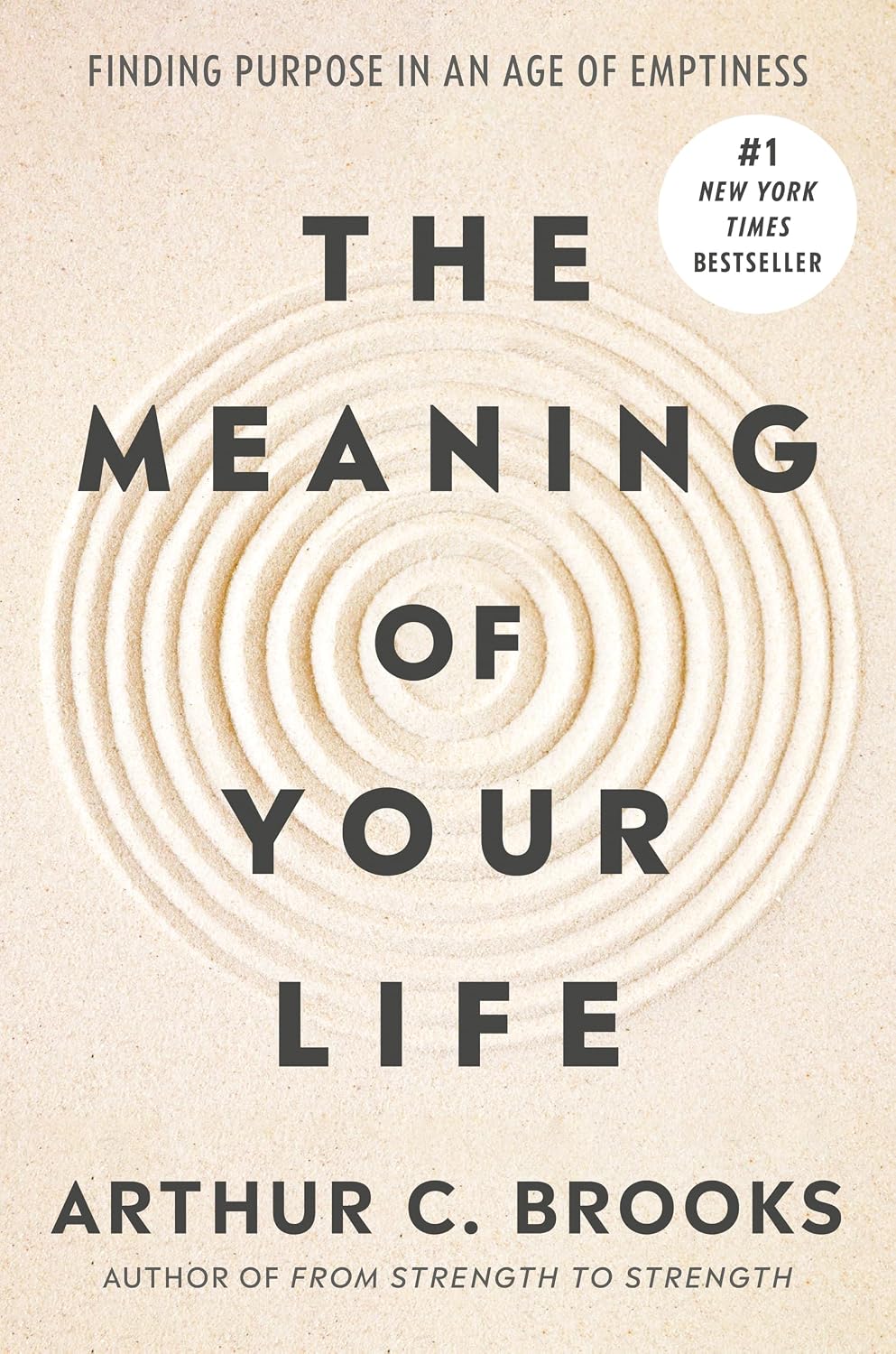
This new book, The Meaning of Your Life, I'm writing it for my 28-year-old students, which is also kind of for all of us. And the reason is because what I've I found in my research is the number one predictor of depression and anxiety is the inability to be able to articulate the meaning of your own life. And this is a new problem. This is not a problem that people were were even thinking about in the 1960s, 1970s, and 1980s. There's something going on where people have a hard time understanding, feeling, articulating, sharing the meaning of their life, and it's making them horribly anxious and depressed, especially young adults, but not exclusively young adults.
So, this is a book that looks at the science of how you find the meaning of your life and how to live differently in a way that's really helping me a lot and my adult kids, too. I'm sure. Were we able to articulate it better before? We were better able to understand it before. So, probably your grandparents, if you'd said, "Grandma, what's the meaning of life?" And she'd be like, "What are you talking about?" Yeah.
But, she had a really, really good understanding of what the meaning of her life was. Okay. And so, the result of it was that a lot of maladies that we have today of of really rampant, what we call a psychogenic epidemic, which is just a fancy way of saying that people are suffering a lot with not a biological origin. We use fancy words in academia to get tenure. I was asking you like three times how to say it, what it means, how to spell it.
I'm going to do that quite often. But, there's an epidemic of of loneliness and depression and anxiety from from young people that that just absolutely didn't exist and is most correlated with my life feels meaningless. Yeah. And so, it's really if your life feels meaningful, not whether or not you're able to put all the words around it. And your your grandparents, they lived in a particular way that was incredibly meaningful.
And so, this new new book talks about how we've changed our brains by accident and then how to heal our brains in the next 6 months. And so, anybody has a real plan. Kind of a six-part plan as a matter of fact on how we can actually find the meaning of our lives. That's kind of being fully alive in an old-fashioned way is what it comes down to. You obviously have feel like this, but I went away over the summer and I read a book, like a hard book, not on my iPad, not on my Kindle, not on my way.
And I And that's what I did for my vacation. I read a book and I felt so whole after that. Yeah. Seemed crazy to me. I know.
And you And you were. That's old-fashioned and your brain was actually changing. It I felt I felt it. Like, I came back from vacation and they were like, "What did you do?" I was like, "I I read a book." I know. That's so crazy.
Okay, you're wild. I know. What a party. But, what's happening fundamentally is that our brains are what neuroscientists call hemispherically lateralized. All that means is that the two halves of the brain do different things.
And left. The right side of your brain is more dedicated to mystery and meaning, love, happiness. The left side of your brain is technical tasks. It's the It's the what and how to. The right side of your brain is the why questions, the big why.
The left side of your brain is what and how to. And you need both. I mean, you need to go out and get food and figure out how to get to work. And the right side of your brain tells you why you'd want to do that. Like, because I have people that I love that I want to support.
The problem is modern life is shoving us into the left side of the brain and making the why questions harder and harder and harder to answer. And the more time you're spending online, the more time you're spending with your devices and with your your screens, the less likely you are to be even considering questions of love, happiness, mystery, and meaning in your life. And you went away on vacation and put down your devices and picked up a book and you were talking to actual humans and having eye contact like we're having right now. And it's like, I Why do you feel whole? Because your whole brain was working, actually.
It's so crazy when I I understand that it really does go back to as much as we say we've advanced in so many ways. Our grandparents, they had a lot of the answers that they didn't that they weren't aware that they had. No. Our brains are still we're we're really in their current state about 250,000 years ago, the beginning of the Pleistocene. And and they haven't changed very much.
And we're made to live in small bands of 30 to 50 individuals. We are. Yeah, we are. I mean, our brains are kind of evolved for us to work properly when we're in small groups where we know each other, we talk, we look at each other in the eyes, we eat together. Yeah.
You're non on a piece of yak meat while you're talking about your day. We're not made to eat, you know, DoorDash. DoorDash in front of the in front of while you're watching Netflix. We're not made to do that. And we're especially not made to live alone, Yeah.
Which is really hard. So, people who do live alone, they need more and more in-person contact. One of the the the big predictors of depression, loneliness, and anxiety is people who they work alone, they live alone, their friends are on screens, and and they're mediating everything just using this left hemisphere of the brain. It's a real problem. Is it all the digital that's done this?
Is it Do you Do you Where do you take it back to? It's not just 20 Didn't start in 2020, but when you went back to school and you were seeing these university students all feeling the same way and realizing that, you know, you had to talk about it. Yeah, for sure. And so what it is is that the the technology is has a huge role to play in this. But there's also kind of the hustle culture, the culture of of work work work work, of achievement as opposed to a culture of relationship.
That's been going on and that's that's exacerbates the problem that we've got of having the screen-based culture. And so in in the people who are really people in their mid-20s today, that they have a particular problem. They don't remember the before times like we do. I know. And the before times are like, you know, we get stuck behind screens, too.
And that's how you knew you needed to go away and get take out your book and just be with your husband and and have these relationships in person. A lot of people don't know, and so they think if I find the right hack, if I find the right protocol, if I find the right routine, if I find the right app, the right technology, then I'm going to be able to solve that. But they're going deeper and deeper and deeper into the left hemisphere of their brain, and you can't get to the right by going further and further left. So how do you get to the right? The way that you get to your right is by living in a way that that your grandmother would have taken for granted.
And that means doing about six things that that are indicative of this life of meaning. The first is that is to think more seriously about the big mysterious questions of life, the why questions of life. And every religion does this. It has these deep questions. Most religions are actually based on questions, not on answers.
And this is a funny thing, Tamsen. Do you remember when we were kids? I'm a little older than you, but when we were kids, do you remember Koko the gorilla? Of course. Yeah, yeah.
Of course. I remember Koko with the little kitten. Yeah. There was a video [clears throat] with the kitten, right? Right.
So Francine Patterson, Penny Patterson, was her handler. Koko the gorilla, for those of those who are watching us who are yeah, not not 61 like me. Of you who haven't heard of Coco, kids these days, they Coco the gorilla was a a lowland Ugandan gorilla, female gorilla born in captivity, lived to a ripe old age of 46. But did this incredible thing from her handler Penny Patterson taught her a thousand words in sign language and everybody thought well this blurs the line between Homo sapiens and non-human primates but it didn't at all because there's one thing that Coco the gorilla never did. She never asked a single question.
The essence of true humanity is not answering questions. That's why AI is not human. That's why Google's not human. It's asking questions. The asking the asking that's what makes us who we are.
So you if you want to actually start to get get in into the meaning of your life to open up the right hemisphere of your brain into the dark consciousness the mystery start asking deep questions that don't have answers. What are they? What are some of the questions? Why are you alive? Like who created you and for what reason?
Yeah. For what would you give your life right now? Right now happily give your life right now. These are hard to articulate. You know what is to hear.
Yeah, what Why do you love your husband? Yeah. And almost anything you say it's like it it trivializes it. It does. It doesn't feel big enough.
Cuz he's good to me. No, I mean like yeah yeah yeah so was your third grade teacher. You know, I mean it's not But those are questions that you go ooh. I know. I don't have a good an- but I have an answer but I don't but I do but I don't.
Exactly right. And so one of the things that's really really useful is that people you know when you have people over to your house and and it's just not that fun. Yeah. It's just like that and the reason is because you never go deep. Right?
And the times when people do come over and you didn't even know them very well and you're like that was so satisfying. The reason is because you went deep into the right hemispheres of your brain. So here's the way to do it when you're having a dinner party with somebody. It's like tonight we're going to go deep or we're going to go home. Okay.
And then by about 15 minutes in, here's the topic of conversation. What are you most afraid of? [panting] No, I mean, bring it on. Bring it on. I mean, this this is life. Otherwise, you're talking about the weather and yeah, where you're going tomorrow and And junior had sailing lessons.
It's like, I don't care. I don't care. I don't care about your vacation unless something big happened to your soul on vacation. Then I want to know all about it, you know? Right though and those are the those are the moments you remember.
Otherwise, I heard I found myself saying this recently like, I feel like I've had this conversation 50 times. You know, I if I'm cuz I have. Because I have and so then you know, when you say why don't you like small talk, I'm like, cuz I cuz I have it all memorized already. So the big questions. And you in particular, I mean, you were in in the public eye.
I mean, you're the you were the you were the you know, the great you know, the queen of small talk. The queen of small talk. How many how many cocktail parties did you suffer through? A lot. For sure.
So that's number one is asking big questions. This will really open it up. Then there's a series of experiences that people took for granted, that people are really not doing as much anymore. Number one's falling in love. Falling in love.
Romantic love. Love anymore? Well, part of the reason is because we're turning off the right hemisphere of our brains. We're trying to solve love. You know, the there's the the left side of the brain does all the complicated stuff.
Okay. The complicated problems and Like what? Like fix something. To work, solving a task, turning on the computer, figuring out an algorithm, inventing an app. Right?
The right side of your brain is the complex stuff and that's different. Complex means easy to un to understand conceptually and impossible to solve. You just have to live complex problems. Okay. Your your toaster's complicated.
Yeah. Your cat is complex. That's why you love your cat cuz it's alive. Okay, yep. The most complex thing in my life is my marriage.
It's very complex. I mean, I'm married to a Spaniard so that man, that's complex. Is she listening? Probably. She's We've been married 34 years.
And And it's complex, which means that I understand love. I understand she loves me. I understand I understand But I can't solve my marriage. It's unsolvable. It's only livable.
These are the things. And the thing about romantic love is that it's the most unsolvable thing that you have to live. And the more you try to solve it with, you know, technology, you're trying to solve it, the further away you're going to get from it. And that's why you got to give your heart away. That's why you need to have your heart broken.
It's so hard to like to tell somebody young that, but that's that is the way it is, right? Way it is. And, you know, that's one of the things that we find because suffering is one of the great secrets to Yes. To meaning is wall is that actually we find. And so the more that you actually allow yourself to actually go into the deep space of un- answerable questions of cosmic love.
I'm an old romantic. But the only reason is cuz It's great. Oh, yeah. I mean, it's the life in life. And that's there's less and less and less of that.
Not allowing yourself to fall in love? Is a huge problem. Problem. Or trying to solve love with technology, for example. Like one of the things that I find really encouraging is that the dating apps which have been really a problem because more and more people I mean, you have to be on dating apps to meet people.
Yeah. 62% of long-term relationships start on dating apps today. But more and more people say they don't like the outcomes on the apps. So they're getting more lonely and they're less likely to find a real attraction on the apps. The dating apps are more and more trying to not optimize time in app, but time in person. And that's a really good thing cuz that's really where it comes from.
Mhm. Is time in person where we're neurobiologically linked. Remember that we're supposed to, you know, eye contact. It's everything. Touch and eye contact are everything.
It's a really interesting thing that I talk about with with young couples. And I work with young couples a lot. My wife and I actually work with young couples together. And there's a there's a neuropeptide in the brain called oxytocin. You probably heard of it.
Oxytocin is also known as the love molecule, the the molecule of bonding. Women have three times as much oxytocin as men. One of the best ways that you can get oxytocin is direct eye contact with the person you're in love with. It's like an oxytocin pump. For the woman or for both?
For both, but but so the woman gets three times [clears throat] as much oxytocin, but she also starves more cuz she needs more. One of the things that drives couples apart is that they don't look at each other in the eyes when they talk. Guys don't know this. She needs direct eye contact whenever you're talking. You can almost save a marriage by making eye contact when you talk.
Your wife will stray from you emotionally because you're not looking at her in the eyes and she's not getting oxytocin and she doesn't know what's wrong. And that's an example of the complexity that's hard to explain that you actually have to experience. Men need touch more. So one of the things that men need because they have more of this vasopressin, which is another neuropeptide. That's a defense and loyalty and the warrior spirit and I would fight a tiger for you.
That's when when you're walking down the street with your husband and you hook your arm into his. Oh man, he's like [clears throat] he's the king. He's the king. He's the king. So men need touch, no matter what kind of touch.
Back scratch, touch your hair, whatever it is. Mostly it's mostly that it's like yeah, it's it's cuddling but it's mostly just it's the hand holding really really important to men. Okay. It's like having his arm around you. Really important in sort of a the masculine sort of touch.
My husband's going to be so happy tonight. I'm going to like link arms and let him for sure walk away like the king. These are two things that are recommended to every couple because it actually gets us toward more toward the experience of the complexity that comes from romantic love. More eye contact and more touch. ABT, always be touching.
Always be touching. But always when you're talking, always be making eye contact. It's funny. Eye contact I feel like every once in a while I look up and I realize I haven't even looked at my husband to have a conversation cuz my head's been in the phone or It really I mean it really is habit. I'm like, "Oh, I haven't seen you in a while." I know.
So, at night before you go to sleep, go to bed about 10 minutes earlier. Read to each other. Reading to each other has an almost narcotic effect. I I recommend love poetry. Really?
What do you read? My wife will read me a Pablo Neruda. I mean, it's like the great Chilean love poet. But, the Psalms. Okay.
The Song of Songs. You know, any just something something lovely. I'm going to try this for like a week and I'm going to tell you what happens. Yeah, for sure. And then for the last 5 minutes, look at each other in the eyes while you're holding hands.
That makes all the difference. Oh, you'll sleep so much better. Oh, yeah, for sure. For sure. You're holding his hand, he's looking you in the eye.
You we need this. We need this. We need this. And and these are the kinds of deep, complex links that lead us to a sense, even if you can't articulate it, of life's meaning. Do we need to have love to have a meaningful life?
And does it always have to be romantic love? No. It but it's it's easiest with a romantic love. And for most people, that is the case. There are many people who don't find their soulmates or they have a failed first big relationship or whatever it happens to be.
And and and they can actually you can get a lot of this through friendship, particularly women. Yeah. Women through deep deep deep friendship can get most of the benefits that we get from this. The ideal combination is a great marriage and great friendship. Great friend.
But, the truth is that you if you can't have both, you need at least one. You need at least one. I guess I think a lot of women feel like they have to follow these timelines and feel like they're behind when it comes to these romantic relationships. So, then they get in something that's maybe not not the right relationship, but they're just hoping to find something that has meaning. That's a problem because that's a fear of future regret.
That's actually a psychological problem and it's a fallacy because if you're trying to rule out future regret by doing something that isn't right, you will get real regret. Yeah, I I know. I've had that one, too. Yeah, yeah, for sure. It's like, "I'm running out of time, so I'm going to make this the best that it can actually be.
I don't recommend marrying somebody you're not in love with. Yeah. I don't recommend it. Unless you're in an arranged marriage in a traditional culture and your parents are completely sure that once you know each other you're going to be in love. Those actually work pretty well, weirdly.
Do they really? Yeah, because your parents they have very low divorce and dissolution rates. And your parents really know. They're like, "Yeah, they're going to really love each other." Cuz it's based on values. What they do.
This is interesting. We, when we choose our mates, we choose too much compatibility. We choose people who are too much like us. We do? Yeah, yeah.
Okay. It's like on dating apps, for example, you want somebody who, you know, likes the same kind of music and votes for the same politicians and, you know, thinks that Austin is cool and they like to eat sriracha or whatever, right? And what you're getting is your sibling, which is not that's awful. It's not hot. What you need is enough compatibility with values and then a lot of complementarity.
And if your parents How do you look for that? How do you look for That's the problem. If somebody chooses for you, they find complementarity cuz they know. I get you. That's why matchmakers are so effective.
Really? Matchmakers get enough compatibility and a lot of complementarity where you complete each other. That's an old-school That's an old-school matchmaker thing. But we're horrible matchmakers for ourselves cuz we're very narcissistic. Oh, that's really we look in the mirror and say, "That's what I want." But that's not what you want.
That's not what you want. So what do you tell somebody who's listening now that's like, "Okay, I'm 20-something. I'm still look You know, I'm looking for the person I want to be with. I've tried the dating apps. They're awful.
I don't want to swipe any which way anymore and I don't have anyone to stare out every night when I'm in bed." So ask That That means that that's when you put out, you know, an all-points bulletin to your friends, your family, to everybody else to say, "I want you to find the best person you can possibly find for me. I'm willing to take a chance on people that you think are really great for me." And again, you're going to You're going to kiss a lot of frogs. Yeah, I know. But that's part of the deal. You kiss a lot of frogs.
What they're What your What your friends and family are not going to find for you is what we call the dark triad. Which is somebody who's very high in narcissism, Machiavellianism, and traits of psychopathy. Or who has psychopathic traits. That's 10% that's 7% of the population. It is?
Yeah. Let's just call that for everybody watching, that's your first husband. So Well, you're actually right. Yeah. I mean there's a lot of that.
And and women find this unbelievably seductive because guys who are very narcissistic, Machiavellian mean they're willing to hurt you. Yep. And they're psychopathic. Not like axe murderers, but they're they're pretty remorseless and unempathetic. They prey on women who really really really want to fall in love.
And when people are setting you up, they're not going to do that. They know when somebody's a weirdo. Yeah, they do. You don't cuz you're blind to it. So what do you do to avoid that?
Well, to begin with you have a some bad experiences and you get some battle scars is what it comes down to. And then you make you you start thinking. You you think retrospectively about what went wrong in your relationships. That's a very important thing to keep in mind is that is that do a little bit of a the to look back on it forensically and say you What what am I not looking for this time? And and there are there's a there's a actually a syndrome called emophilia, not with an H.
Hemophilia is a blood disorder. Oh I was going to say I think it's blood. Is is a small minority of women but considerable enough who fall in love super easily. Okay. They fall in love too fast and that's going through a neurochemical process in their brains of the sex hormones followed by the dopamine and norepinephrine followed by serotonin drops and then just all these chemical changes in their brain that go too quickly.
And they actually have to self-manage and wait cuz they know their particular tendencies. These are just walking targets for dark triad men. Yep. And you know I always say like there's a fourth season in my mind. Like you better go through a year.
I want to see somebody during their holiday break. I want to see somebody in the summertime. I really feel like you need that. To their mom. Want see all of it.
I want to see everything because if not, you you miss you blips on the radar and I guess being having gone through a divorce myself, I Bad divorce? A bad divorce. I see those blips, yeah. I had one of the hemophilias. Yeah, I know that's the key thing.
And so all of this is knowledge. All of this is experience. Now here's the interesting thing to keep in mind, those terrible experiences are not something to bury or to be avoided because that suffering itself and all suffering is the next source of meaning. And this is a big problem that young people have today is they're trying to avoid suffering. They're being told that sadness, that to be anxious is evidence that something's wrong with you.
And that's actually not correct. I mean, it can be exaggerated. It can be a psychiatric problem that actually needs to be treated for sure. But if you're not sad and anxious, you need therapy. I know.
Especially now, it's right. Yeah. So what do you what do you recommend? Is it Is it going through that pain or uncomfortableness? I mean, is that the third area of it?
Is to actually understand it and be thinking about what it is. What actually is that I'm experiencing as as opposed to trying to avoid that. And so my students, I make them say, "My suffering is sacred." "My suffering is my teacher." "Today is going to be a day that has some very beautiful and fun things. I'm grateful for that. It's also going to have some difficult things, maybe some really hard things.
And I'm grateful for that, too. Cuz through that I'm going to learn and grow. So all I can say is bring it on." What do you do? Do you have Do you actually sit in it? Do you actually have people sit in it?
Yeah. Yeah. So an example of suffering. An example of suffering is almost there's little suffering and there's big suffering. And and and this is inevitable, by the way.
So my students will ask, "So Professor, do I need to go looking for suffering?" I say, "Don't worry, it'll find you." It'll find you. I mean, every 18 months on average you have a big transition in your life. Ordinarily it's not something that you initiated, so therefore it's unwelcome. And every 5 years or so, this is from the work of Bruce Feiler, Life is in the Transitions. You probably know Bruce, right?
He's fantastic. That you have something that feels pretty catastrophic, as a matter of fact. So, these things are going to happen with relative regularity. And to say, I am ready for this. I am courageous about this.
You know, this is something that's going to be really hard for me, but I know that in 90% of the cases or more, I'm going to come out of it stronger than I was going in. So, let me get a head start on being okay with this. You get a head start? By actually deciding to have a head start as opposed to listening to the propaganda and the sort of the therapy industrial complex that out there out there that says that that you're pathological if you're suffering. That you've got something broken if you're suffering.
I mean, it's funny because, you know, people my age often think something's wrong with me. My back hurts. I was like, you're 61. Of course your back hurts. It's the most normal thing.
You know what would be really weird is if your back didn't hurt. We think that nowadays? Why do we try to avoid suffering so much? We try to avoid suffering because we have a culture that tells us that all suffering can be avoided. Yeah. [clears throat] Yes.
And, you know, and grandma, you know, grandma knew that suffering couldn't be avoided and so she lived with suffering and that suffering, ironically, itself became a source of meaning in her life as she went through growth and change. That's what And understood what part of life she was in versus trying to go back to the 20s and Yeah, yeah, totally. And and so, not to mention the fact that we have a youth obsessed culture when it comes to physical suffering that says, well, there's got to be a way I can turn back the clock, you know, with this alteration, that alteration, you know, this exercise program, that this filter on my Instagram. You know, at least people can think that I'm a lot younger than I am. And that all that does is it it makes it impossible for you to grow and change at an appropriate rate and understand the nature that the suffering that you're experiencing, whether it's horrible suffering or just normal suffering.
That's your teacher and it's a source of meaning. Do you think we're starting to remove the narrative of best years are behind us, youth youth obsessed culture? Are we are we are we making a at all in that? I I sort of think so, although part of that is probably in your community and mine more than in the overall culture. Look, there's a reason that people are are watching your show.
There's a reason that hundreds of thousands, millions of people are watching your show. These are people who are like, "Look, I I've had enough." Yeah. Like, "I'm going to be me." Yep. And I want to be part of a community that accepts me for who I am. No, no, no.
I want to accept me for who I am. And I wrote a book called From Strength to Strength. Finding purpose in the second half of life. I mean, and so so I I've got a second half of lifers who are like, "Yeah, bring it on, man. Bring it on.
Bring on the suffering." Yeah, for sure. Bring all of it on because that's actually part of the adventure. I think in the culture in general we still have a lot more work to do. I think you and I need to expand our communities a lot more and to reach down much more into into women and men in their 20s and 30s to help them understand that that what they're going to experience is something you need to prepare themselves for and to celebrate it in advance. The your new book is getting you ready to have from strength to strength, but it but until you do the first part.
Okay, so it's a six-step It's a six pillars? Would you call it for finding purpose and meaning in suffering? Yes. We've got some more to go. Okay, what's our next one?
The next one is what I call transcendence. And it you might think of it as like spirituality or religion, but it's actually something more than that. It's standing in awe of something bigger than you to transcend yourself. All transcendent experiences, whether spiritual religious experiences, or even serving other people, these really excite the right hemisphere of the brain because you're getting away from yourself. This intense focus on me, me, me, me.
It tends to be so boring. Life is so boring when you're with yourself all day long. It's like me. My roommate is me. I mean, it's just like it's just we have this psychodrama.
Mother nature puts us into the psychodrama of the, you know, the intense scrutiny of ourselves. And I understand why Mother Nature does that but she doesn't care if we're happy at all. She just wants us to survive and pass down our genes. You if you want to be happy that's your business and one of the the two best ways of doing that are looking upward in awe or looking outward to serve other people and that's the sense of transcendence is is the I self looking out as opposed to the me self looking in. I mean in a day and age where everything is about you, your brand, your name, your social, your It's all mirrors.
All mirrors. So how do you look out and up? So the way that you do that is I recommend that everybody start getting serious about a spiritual or at least or at least philosophical practice. Okay. Do you feel like that happens?
I I notice that as people get older they might go back to maybe what they were brought up with or find something else. Yeah, they find something else but they get a lot more interested in spirituality and religion and part of that is when you're in your 20s and you're like, "Ah, I don't know. I mean you you taught me in Sunday school that there was a good God and merciful God but I'm looking around all these starving children so it's not consistent. I don't quite buy it." By the By the time you're in your 40s you're like, "Yeah, there's a lot of stuff that doesn't make sense out there. So I I think I'm going to I'm going to be okay with things not quite making sense cuz maybe I'm not the smartest person in the world.
Maybe not everything has to make sense for me." There's a wonderful passage in the Hebrew Bible in the book of Job which we all know, you know, Job had a tough life. I mean he was a good man and then you know, God took everything away from him and [clears throat] you know, he's tormented by Satan and all this whole whole his kids all got killed etc. At the end of the book of Job in the Bible he kind of he interrogates God. This is wonderful thing in the 30th chapter of Job and he says like, you know, "How was your boy, you know? I did everything right." And and then you're like, "You tormented me." It's like, "Explain yourself." And God And God gets all sarcastic.
It's actually hilarious if you read this. God says, "Oh, oh yeah, I guess you do it deserve an explanation. Obviously you're so smart that you know why I made the heavens and the earth, right? So So answer me that. Why did I make the heavens and the earth?
You don't know? Oh, well maybe you don't understand suffering either." Right? And the truth of the matter is that there's lots of stuff that we can't understand and that's okay. There are things that we can't see and that's okay. The truth is there's a lot going on in the metaphysics [clears throat] of life and we need to be in touch with that to get away from ourselves to experience the divine love that is around us.
That's why I recommend that it we need a we need a spiritual practice. We actually do. Where do you send people to start with that? Because if you got somebody that goes, "I don't know where I don't know if I I don't know where to even begin with that." I know. So, it really starts with a lot of reading.
Now, my students, many of them were raised in a religious tradition. I I recommend that they go back to that like an adult for the first time. Yeah. Okay. Because they actually have some wiring in that.
And so, you know, they were they were raised Catholic, but I haven't been a long time cuz I didn't like it and I say, "Well, just, you know, go back. I don't you don't need to go back and sit in the front row and, you know, the go to the back and sit in the back and read a couple of things and and and and and and look at it non-judgmentally. Cuz I bet you can't actually do it without judgment. Don't try to have all the answers to it. Yeah.
Yep. And if people are Jewish, it's the same thing. People who are, you know, raised in a particular faith. If not, then there's a whole actually on my on my website, I have a whole reading list that people can actually look at. Yeah.
Link to that then cuz I I think that's really important so that you have some direction versus like go find that. It's like good luck to you. It's like go He said to do that. Go find a guru, you know. It's like go to go to the Himalayas and go from cave to cave.
Get them we'll get them a list in the show notes. That's okay. Of really, really good stuff and reading is a great way to do it. But then cuz what that will lead you to is asking questions etc. Etc.
But transcendence is critically important. That's a very right hemispheric activity and one of the most interesting adventures you can actually have. What's our fifth? That's finding your calling. That's finding your calling.
And your calling isn't necessarily your job. Okay. But there is a calling in life. It's what you feel like you're meant to do. And people feel are often today forced into things that aren't their calling because they seem like the right thing to do.
Cuz they're good at it. I see this a lot. Yeah, I see this a lot with with women for example. And you know what they you know the they come into office hours and they kind of close the door and they're like, "Yeah, you know, these are MBA students at the Harvard Business School." Yeah. And they're like, "I I've got like nine job offers and it's really really great." and I say, "But I I don't know.
I'm not feeling it." And I'll say, "Okay, imagine yourself in 5 years. You're happier than you are now, 25% happier or something like that." There are three reasons in order. Tell me what they are. And they're like, "How do I know?" I was like, "No, no, you know. Tell me what the differences from now to then are.
Number one and two are about love and relationships." Really? Always. While they're talking about a job. Always. Because the business school doesn't say like, "Here's here's how to have a fulfilling family life." And so I say, "Okay, what are you spending all your time on?" They're like, "Number three." I'm like, "Yeah." And what's number three?
One and two Number three, number three will like be career. Your money or your whatever it is. Number one will be having a great marriage. Number two is having children for example. Your your love relationships are very important part of your calling.
Wow. There's a lot that we can do what we're actually called to do. And so what I recommend to people have an open mind and not be propagandized by the world. What does that mean? That that means that you're being forced into career tracks that they might not like, that they're being called very special work machines, that they're going to fancy schools.
There's so many more things in life that you and to take a lot of these opportunities, to try different things, to do different jobs, to consider you know, if you're if you want to have children that you might want to take a few years off. All this is so good. And it's okay. It's not just okay, it's obligatory. We need these permission slips though.
It feels like we do in this day and age or we'll choose wrong or choose Dr. Brooks writes the prescription right now for everybody watching that you need to do a lot of different things and not have the world tell you what your calling is. You need to find your own calling. Gosh, I I would I would love to hear I wish I heard it 30 years ago, but I feel like it's not too late. But you had a great career.
I did. Really really enjoyed it. It. But it wasn't your calling later, which is why it was so important. But I thought I had to choose.
Yeah, I know. I thought I had to choose between getting married earlier like family and career because I was that generation that they said you're going to take how many years off and then there's another girl right behind you that's ready to take that job. So I did feel like I had to really choose. A panic, a little bit of fear. Oh, sure.
And that's how my first marriage happened because I got married I was 34 or 33 and I'm like, oh my god, you know, at that age. Tick tock. And so that's what happened. I went, where's the first? All right, you'll do.
And and that's really if I go back and look at it now, it's not what I thought was happening at the time. Yeah, I I your calling was a little bit different than what the world was telling you it was. And there was you weren't being true No. People generally aren't. People listen to what the world tells them.
And maybe by the way, parents give bad information to their kids, too, a lot [clears throat] of the time. So if you have somebody that is saying like, okay, I'm trying to figure out my calling, do you look at your relationships first? Will relationships be the place that you're going to find that meaning? They generally will be. And you know, if there somebody who's going to support you in a particular career, somebody's going to make it possible for you to for a while not have a career, whatever it happens to be.
You know, and for women it's actually a more difficult conversation it is for men. And men suffer in a different way and usually a little bit later. Men have a hard time stopping doing what they were doing to support their families admirably. Mhm. Women have a harder time earlier on because they have to make these life decisions that are in no small part biological nature.
And these days kind of no matter what you do is wrong. Mhm. You know, so when my wife and I are talking to a groups of young couples that are engaged to get married and it's like, how you going to make these decisions? I go sit down. What are the questions that you ask these young couples?
You know, Esther will talk to them about she says, listen up ladies, No matter what you do, you're going to feel like a loser." Huh. Yeah. To feel like a loser because if you know, if you if you stop if you get like this big fancy education, you stop and you say, "I'm no, I'm going to for a while I'm going to raise my children." People are like, "You're wasting your education. What's wrong with you? What are you, a trad wife from 1955?" And if you keep working, they're going to say, "What's wrong with you?
You're a terrible mother." No matter what. So, you got to figure it out for yourself and figure out what you're actually called to do and make your own decision. [clears throat] with that decision. Yeah. And and make sure that you're with somebody who supports you and who loves you whatever you decide. So, you wrote a recent article in the Atlantic about the three rules to a happy marriage.
Yeah. Can we go into those? Sure. I can let me I have to remember exactly what they are. I don't have to call them every week.
To find them? Would you? Yeah, let me find them. Okay, I've got your three the three rules to a happy marriage. I'll just say them.
So, here's the three. Yeah, yeah. Got it? Yeah, yeah, yeah. To go through those or not?
Yeah, yeah, yeah. So. Okay. So, what are the you wrote a article recently in the in the Atlantic about the three rules to a happy marriage. What are those?
One is is ruling out the alternatives of to the to couplehood. Okay. This is it. What does that mean? That means slap on the handcuffs, man.
That means it's like, it's us. It's it's it's us forever. It's us forever. I don't care what kind of crisis we go through. I don't care.
I don't care. I don't care. This is us forever. This is one of the great rules. And again, a lot of couples go into it saying, "Hope it works out." We'll see.
That's the pre-nup mentality, right? That's one of the great things about being Catholic is that you can't get a pre-nup. You can't get married in the Catholic church with a pre-nup. It's not allowed. But, that's really important because say, "This is it.
This is it. This is it." And I know you had a really, really bad first marriage. My guess is that you slapped on the cuffs on the second marriage like, "We're not getting divorced." Yeah, yeah. Well, I mean, I I yeah. Yeah, it's like that.
This is like, "If I'm getting married again, this is it." Cuz I did not want to get married again. I was not like was not Well, I didn't think I wanted to get married again. I'll phrase that correctly. I thought like, "Oh, there is no way I'm going through that again. But then I met somebody that was comple- Completely different.
And so patient and so couldn't even been and I I say this often. I'm like, I wouldn't have picked him 5 years ago, 10 years ago. It was just not That was not what I was looking for. It's the total commitment. It's the total commitment.
That's that's what And again, you don't know. No, you don't know. Know because the truth is one of you is going to die first. One of you is going to be left alone. And it's a horrible thought, but it's actually But you know it's true.
But what you want is to say, "I will be looking at you as I take my dying breath." Oh my god, you brought that up and I thinking about it in the back of my head recently. Like I just had my 55th birthday and I'm like, somebody's going to die first and I hate those words coming out of my mouth, but that is reality. Love that one of you looks at the other as he or she takes his or her dying breath. Yeah. Because that's treasure.
That's pure treasure. All right. Number two, stay positive. Yeah. And And this is I know.
I know. No, no, because this is positive. See See the thing is it's funny. When I used to go occasionally and pick up my I have three kids. My middle son's name Carlos.
And Carlos is a character. You know, Carlos, you know, he was a sniper in the Marine Corps. But when he was a little kid, he was like junior version of the sniper in the Marine Corps. He was tremendous. Like And [clears throat] I used to pick him up from from a nursery school.
And he'd be having a great time. You'd see him just like goofing off and all. I would watch You know you how you watch your kids you know from far. And as soon as he would see me, he would burst into tears and come running over me and tell me all the horrors that had happened to him that day. And I'd be like, "What gives?" Yeah.
You know, what gives? Why is it that you know all the everybody else gets all the nice times and I get all the crummy times? The reason is because he trusts me. They trust me. He trusts me.
Couples trust each other and so they only bring home their garbage. They don't have the garbage all They have it kind of accumulating, but they don't show it to anybody. So they get home and they're like, "Here." Is that okay to do? And the problem is it's not okay. I mean, it's it's it's you need to share to be sure, but you also have to bring home the positive.
Oof. You have to bring home the positive. And so there are a couple ways to do that. Number one is you need to reserve beautiful things and you have to lead with beautiful things before you actually say, "And here's my garbage, sweetheart." My husband is going to be so happy you said that cuz I do a Of course you trust he's the only one you trust. He's like a big garbage disposal for me.
Yeah, yeah, yeah, totally. He's the trash compactor. Totally is. He totally is. The second I mean there's there's a a bunch of different ways to be thinking about that that that are that are really really really positive.
But this is really the most one of the most important things that we can remember is that you will you will tire out your partner. Another thing, a second way to think about this is that of course you're going to be hearing this from your partner. You're going to be hearing this from your spouse. Disregard negative feelings more in your spouse. Think more and this is really important because a lot of couples that are really close, they're thinking about each other's feelings too much and they're a little bit too influenced.
And one of the characteristics that really happy couples that get happier as they go along have in common is they don't really How do I put this? They don't care that much if their partner's bummed out. Okay, well that works. She'll be all right. She's She's talking.
She'll be all right. It's okay. It's completely It's actually important. Okay. Because if if when you're bummed out, she's bummed out and when she's bummed out, you're bummed out.
You're going to be in a negative cycle a lot. You're going to bring each other down a little bit too much. And so that's an important thing for actually staying positive. All right, and the third one is grow in spirit together. Yeah, this is what I was talking about a minute ago.
This is actually the idea that it's [clears throat] really successful couples, they tend to get more spiritual or religious together over time. And they they really grow in parallel. They lead each other as spiritual teachers. And this has been super important. You know, I my wife wasn't religious at all and I was a lot more religious than she was when we first got married and I was kind of pulling pulling and dragging and dragging and dragging.
Now she she's the one who leads me. Oh, interesting. And and and we pray together a lot and we really we we, you know, we read scripture together and it's been a really really important part of our lives and it's bonded us together in ways that we never actually knew was possible. We still have problems, right? I mean, we'll be having this big fight, but it's like, "Okay, let's go go to start time to pray." But it's not night What you just celebrated an anniversary, too, right?
Yeah, my 34th. Oh, wow. Congratulations. 30 What is that? It's like the like the I don't know. What what like that there's some gift that must go with that.
Get there, Arthur. I don't know. I'll have to research it for you. Marriage? 4 years for this one. Yeah, so far.
One? 4 years. Oh, 4 and 4? That was 4, yeah. We're together 8, yeah. 4 for this one and so So, you got 30 to go and then you say to go and I'll let you know what the gifts are, so. I bet I bet you will.
Let me ask you this. How do you know when a relationship is actually done? And I know that that's not what you're talking about when you're talking about these three rules to happy marriage, but sometimes there is an ending to a relationship. How do you know that as one party or the other? So, generally you know because one person leaves the other.
Yeah. Generally speaking, one person says adios. On that and and that's, you know, the the ending that actually people come to. Now, you might say we the marriage effectively ended years and years and years earlier and you can kind of predate it, but it's the schism Yeah. Is usually how it works out.
And that's the sad thing. That's a really really sad thing. And here's the thing to keep in mind, that's usually what's going to happen before you get married. What? You're going to break up.
Oh, yeah. Breakups happen all the time. And so, it's really really sad before you're married, too, but that's the normal course of events. You [clears throat] you fall in love, you have to let yourself fall in love. Yeah.
It doesn't work out, your heart is broken, you learn, you try again. Mhm. And that's one of the reasons that that happy marriages the happiest marriages they generally start between the age of the 28 and 32. Yeah. That's kind of the magic zone because you're it's a startup, it's not it's not a it's not a merger.
Mhm. First marriages that are they're really they're not a merger. Well, I mean, you're but you but you had you you were both married before. Second one. Yeah, yeah, you were both married before.
But the first one generally they work the best if they're a startup and not a merger. Yeah. And it's really not a hostile takeover or an acquisition. You know what I mean? You know, you get my drift.
I do. I do get your drift. But it's still kind of a mature startup, you know, in your 20s, early 30s, and that's a really, really good thing. And so that's why it's like that because it's lots of There's been a lot of heartbreak. There's been a lot of reps.
There's been some experience that actually go into that. Scars. Yeah, totally. And that's okay. That's okay.
Let's talk about women that feel because I do I do think that it's important to distinguish, but women that feel lonely in relationships. And I do feel like I'm seeing that more and more often. Women being able to articulate it and talk about it and just feeling a little bit lonely in a relationships. Why does that happen? That happens because the the the deep, deep human connection between husband and wife has been attenuated.
And by the way, it's normal. It's normal for periods in even good relationships. There have been times when my wife, Esther, has felt lonely in our marriage. Did you know? I did. [clears throat] I was working on my PhD for example, or you know, I'm really building my business.
And I didn't like it. I didn't want my wife to feel lonely. Or there have been times when I've felt lonely. You know, when my when my kids were first born. And you know, she's all about the kids.
And I'm like I'm like the fourth child. Mhm. And the unloved fourth child. You're like one of the kids and you're the last one. Yeah.
And those are normal periods of loneliness. And those are normal dynamics in a relationship. The problem is when it's there's no specific reason for it and it goes on and on and on. And this has to do with when women feel like there there's not a there's not a deep human connection with their with the one person with whom they're supposed to be fused. So they talk about one flesh.
Mhm. And it's often like that that's taken as as some some sexual connotations. It's actually not. That's the fusion of the two right hemispheres of the brain together. That's the cosmic connection.
Remember, there's the right hemisphere of the brain is the meaning part of the brain. Yeah. And when your right hemispheres are communicating, that's one flesh. That's like That's this like antenna to the divine. Okay.
And so one of the things that I recommend when when couples there is loneliness in a couple. Sometimes it you can't fix it because you know, one partner's like yeah, cuz I'm kind of out of here. Yeah. And that's a big problem. And especially if they're really really out of here like completely emotionally detached or God forbid being disloyal.
But if if neither one of them wants that then there's all kinds of protocols to feeling less lonely that have a lot to do by the way with touch and eye contact. There's so there has the neurobiology that's behind that. Yeah. But actually doing things that are the most intimate things that you can do to fuse your right hemispheres together. So for example, for couples that are religious, one of the things they probably never do is pray together.
Mhm. Cuz that's like That's really intimate. Uncomfortable. That's really I know couples that are like super Catholic. Mhm.
Astronauts are Catholic. We know couples that have been together for, you know, 60 years and they've never prayed together. Really? Because it feels too it feels kind of weird. I'm I was raised Catholic and that's not anything we did.
No. Because it you go by, you know, parents didn't pray together. No. Mhm. And and so that's the most intimate thing that you can do.
And if you don't and if you don't you're not religious, meditate together. Meditate together. Yeah, yeah, for sure. That's just really really intimate thing because you're having a a right brain experience simultaneously. That's why couples that are very religious that actually engage in religious activity together actually grow in religiosity together because what they're doing is they're fusing their brains and and and and that's the right well really specifically the right hemisphere.And that's like, you know, those old nuclear subs when to launch a missile you got to have two keys. Yeah. You got to have two keys. His key and her key. You turn it on and it's like it's almost a divine experience that you're having.
This transcendent experience that you're actually having. That is the cure for loneliness. Is that when you make yourself a little bit smaller than the rest of the world? It's it's an experience of the world where it's us not me. It's us not me.
It's we. It's us. It's like the tiny team. Which is what we're we're missing. Yeah, totally.
Now there's a one other time of loneliness that it's a that's it's it's hard to cure, but there is a cure for it. And that's with kids. This is when couples really kind of start to fall apart is when with kids kids get between the couple. No matter what age or when they're Kind of any age, but especially when they're little or we have when you have teenagers. And one of the things I recommend to couples is remember it's you against them.
Mhm. It's like it's like mama and dad against the little ones. It's team parents and team kids. Yeah, it's hard to remember that sometimes. That's hard to remember that sometimes.
And once it's the two of you together, you'll be like, "Yeah, baby, it's you and me. It's us against them. I don't think they're going to win today. I think we're going to win today." All right, so we have two Do we have two more to go? [snorts] Yeah, well, I guess I guess we really have one because we're at we did five. Five.
Okay, one more. One is is experiencing more beauty in life. Life today isn't very beautiful. Why is that? And the part of the reason is because well, part of it technology.
Technology mostly isn't beautiful. I mean, if you're looking if you if the the sum total of your experience of nature is seen through your computer screen, that's sad. You know, the average child today spends between 4 and 7 minutes a day in nature and between 4 and 7 hours a day behind a screen. That's exactly backwards. And the result That's one of the reasons that there's so little sense of meaning because you're forcing into the less hemisphere of your brain where you get a you're getting a simulation Yeah.
Of the beauty in life and the beauty in nature. Meaning can't be simulated. Beauty really can't be simulated either. And you can say, "Yeah, that Wow, what's a beautiful sunset that I took a picture of that I'm looking at on my phone." It's not the sunset. It's not the same experience.
It open and closing it. This is one of the reasons by the way that you'll lower your the the meaning that you feel on your vacation by 16% by taking pictures. Really? Totally. So, do you not Do you take Well, you don't think you should take pictures on vacation or Yeah, I recommend that one person be assigned to take pictures on your vacation each day.
One person to do it. One person per day. And then else gets to take any pictures the whole day. And is [clears throat] is it makes a big difference? Yeah, because you're looking through the screen to take a picture of the thing that's right in front of you so that somebody else can enjoy it, maybe you in 2 years.
Guess what you've done? You've turned your experience into a simulation of the experience. Oh my god. You've turned a right brain experience of beauty into a left brain simulation of the beauty that you thought you once were experiencing but not. Oh, it's so true.
I know when I go to like a live concert or something and everyone has their phone up but no one's actually watching what's going on or It's so dumb. It's so I mean it's like kind of hilarious to look at but it's sad. It's really sad. Alive right now. What they are is thinking about the future when they will be looking back and this will be in the past.
Or never look at it by the way. I know. But we're funny about time travel. So this the executive center of our brain, the prefrontal cortex, which is like the supercomputer of our brain, it allows time travel, which is why Homo sapiens are so successful as a species. You can think about the past and you can go back and redo the past and think of a better future so you don't make the same mistakes that you made before.
You can go into the future and imagine something that hasn't happened and say well that wouldn't be good and not do that. Yes. Yes. Or you can be here now, which is what we're most not. Well, 100% we're not.
And we're not alive. You know, there's a the the famous Buddhist monk Thich Nhat Hanh, the Vietnamese Buddhist monk, he wrote a this great book called The Miracle of Mindfulness. It starts with this scenario of washing the dishes. He says when you're washing the dishes, you should be thinking about washing the dishes because if you're not thinking about washing the dishes, you're not fully alive while washing the dishes and you're not really alive right now, are you? Care of the soul.
True. And so if you're taking pictures for social media Yeah. Or for yourself to enjoy your vacation 2 years from now and you're missing it now, Yeah. How ironic. It's unbelievable.
A problem and that's a meaning problem. And so beauty is something you need to experience right now in real life. And there's three kinds. There's artistic beauty, there's natural beauty, and there's moral beauty. That means seeing people doing beautiful things for others.
Like? Like reading the biography of Mother Teresa. Okay. For example. [clears throat] Or seeing somebody who truly is helping other people. To see acts of heroism.
To experience something that people give of themselves. To see people who have given their life in battle. So that you can live the life that you actually live. It's a beautiful thing. And those acts of moral beauty, natural beauty, artistic beauty, that will give you a true sense of the meaning of your life.
When you look at your students who come in and then have gone through this and really understand all of these pillars, do you see something really different in them when they come back and really get it? It's a miracle. It's like watching a miracle unfold. And it's funny because they're living now in an extraordinary way that was utterly ordinary 100 years ago. I know.
Utterly ordinary. You know, it's funny. Our grandparents, their lives were difficult and boring and all that, but they never looked back on it and say, "My life was so meaningless." Did it shock you to hear that? That people have no meaning or feel no meaning? Did because, you know, when I was looking at it, you know, when I do research on this, you know, I'll see the I see the the the the epidemic of of loneliness, of depression, of of anxiety.
And I start interviewing when I see all these data. Just to kind of get, you know how you do it as a journal. You journalists are the best at this because you start doing these interviews and you start seeing a a word drop and you go, Patterns. And the pattern. It's like it's your the journalists are the best at pattern recognition, right?
And and they started saying, "I don't know what I'm meant to do or my life feels empty and meaningless." Or, you know, "I don't know the meaning of my life." Again and again and again and again. Or they'd say, "My life feels like a simulation Mhm. Of real life. I mean, I go to work on Zoom and I date on the apps and I'm, you know, I have my friends are on social media and I get my sense of accomplishment from what I'm doing, you know, playing video games and it's not real. I feel like I'm in the matrix." You're on the outside looking in. -huh.
And and so these are the things that I'm actually looking for. And it surprises me, but it kind of doesn't because in the moments in my life when I've really needed help, it's because I was doing all these six things wrong. And I was losing the the the sense of meaning in my own life. When I left my my CEO job, that led to from strength to strength, I had this really interesting experience. I like, I don't know what I'm meant to do, which is a meaning problem.
And [snorts] so, I walked You asking that question, I can feel it cuz I know I I know Cuz you felt it, too. I felt What am I meant to do? So, I did you know what people have done for thousands of years. I went for a long walk. Mhm.
You know, it was like you with your book. I walked the Camino de Santiago, which is this long walk across northern Spain. Wow. After I I I like a day after I retired at 55, Yeah. Yeah.
I went to Spain with my wife and we started walking. And I wanted to do the whole 800 K walk. And she's like, "No." So, we did you know, we did the last 160 K. But that was enough because you're tired and you're in pain and you've got blisters and you're basically you're you beat yourself into submission Yeah. And and you're not looking at your devices and you're with your beloved and you're praying every day.
You're doing all the six things and you're seeing unbelievable beauty. You're outside in northern Spain. All this like 1 2 3 4 5 6. You're asking these deep questions. You're having these deep conversations.
You're doing all these six things. I didn't know it. I didn't know it. And on the last day, my meaning found me. It found me because I was open to it.
I'd been in this this the aperture had been open because in in in the last week and a half, I'd been living like my great-grandparents. And the meaning that found me was that I was going to spend the rest of my life lifting people up and bringing them together in bonds of happiness and love using science and ideas. I'm here talking to you right now because I was actually able to turn the key in the lock, open the right side of my brain. And that's what I hope I can bring to others as well. You did it.
You You opened mine and I didn't even know I didn't even know it was closed. Really, I didn't. Why do you think that friendships matter so much to meaning? Because I I do think that that's a big part of this, too, that we we miss. Yeah, so real friendships.
This is different than virtual friendships. And and real friendships are not the same thing as deal friendships, as you know. When you were, you know, big shot in the news, it was a lot of deal, a lot of deal, a lot of deal. These are relationships that you have with people for whatever useful. And again, I have nothing against that.
I have work colleagues, and it's very important, and I deal with people who are, you know, in investors and the projects that I'm have going on. And deal is is great, but you also need the real real. And those are the useless people. Yeah. Those are people who they don't need you, they just love you.
And and so, when I talk to people who feel really lonely, even though they're around people all day long, I say, "Okay, let's take a list. Let's take out a piece of paper, and let's write down the 10 people that you spend the most time with on any given day. Write them down. Now, I want R's and D's. That doesn't mean Republican and Democrat.
That means real and deal. Which are real friends and which are deal friends? And for lonely people who are around people all day long, it's all D's. I believe it. Or, it might just be all V's, which is virtual.
And and which is even worse. Much worse. How do you find the reals? The real you got to work. And busy, successful people, strivers, they don't do the work.
So, I'll find really lonely moms who they don't have time to connect with their friends. They don't. I mean, it's like, especially if they're working full-time and they have little kids, I mean, you're done. You're cooked. But you have to find the time, you have to do the work.
You have to connect with the people in your life. And and this was a really big thing for me, because when I was a CEO, I mean, it was all deal. Deals. A lot of D D D D in there. And so, when I left, I I actually reestablished relationships that I really cared about an awful lot.
Spending, you know, making new I made a bunch of new friends I didn't have before, and old friends I really deepened. People who know me extremely well. For men, this is super important, too, because men like 60% of men my age, their best friend is their wife. Really? Yeah.
And only 30% of their wives say their best friend is their husband. Those numbers don't add up very well. I told my wife, she's like, "Huh." That's weird. You don't say. So, yeah, you know.
And that's sometimes, you know, this is one of the reasons that men tend to die so quickly after their wives die because they've lost their only friend. That's their best friend. They're alone. They're profoundly alone in the universe and there's no more reason to live if you're truly alone. You're not supposed to be alone.
People aren't supposed to be alone. When people are alone, what is the what is the thing that they should be doing cuz I you know my dad lost two wives, but he seems the happiest he's ever been. Right? No, not but he seems the happiest he's ever been right now. He's 85 years old, but he goes to pottery class.
He has a men's group. He sees my nephew. He's He's He's built his relationships. Actually did the work. He actually And many guys don't know that, especially real strong hard hard-charging strivers, you know, the lawyer guys who they [snorts] they they're forced to retire, for example, and they don't even know, I mean, why do I go to a pottery class?
That's for losers. Any loser can do a bad piece of pottery. You can't win a case in front of a jury. With his plate. I know.
Their whole sense of self is not in terms of relationships and so they're not human beings, they're human doings. Yeah. And human doings can't have they don't have enough love. They don't have enough room for love in their hearts. And so I have to do like basic work on guys like this.
Hard work. Oh, yeah. I mean, you got to you got to take him apart piece by piece and put him back together again, quite frankly. If there's one thing you want people to take from where you are talking about the meaning of life to get to from strength to strength, what would that be? Yeah, that would be the thing that that that through line that's really been the through line of our whole conversation here is that happiness really is love.
Now, what is love? Love isn't a feeling, it's to will the good of someone else as that person. It's to will somebody else's good. That is the most profound experience of life itself that you can have by by by truly willing somebody else's good. This is why marriage and kids are so good for for most people.
That's why profound friendship is so important. That's why serving other people. That's why a relationship with your creator is so is so critically important. But that's the one thing to keep in mind. You if you truly love, you will find meaning.
If you truly love, you can go from any any part of your life to any other part of your life. And if that's the part of your life that you actually need to repair, then that's that's the thing to get after right now is your relationships. It's It's true love. Arthur, thank you. I could sit here with you for hours.
Thank you, Tamsen. I really appreciate it. I think everything you're talking about is beyond necessary and so much of it I've lived now. So I I felt it and I appreciate you for it. Well, thank you.
You're bringing a lot of good to all of us through what you've experienced and what you're bringing and I I can't wait to hear all the other things that you'll be doing over the next Thank you. Midi, the care women deserve.