Relationships end at a dramatically higher rate during midlife, and a lot of women initiate the ending of those relationships. I have no doubt that a lot of it has to do with what women are going through and nobody is talking about. So, first let's talk about desire real fast, because there's something I want to explain to you, which I didn't understand at first, but I think it'll really change the way you see all of this. I grew up with one idea of desire, right? You just want it, like out of nowhere.You're in the mood, it's spontaneous desire. It's what's in every movie, every Hollywood film, it's what's in every rom-com. It's what most of us experienced when we were younger. But there is a different kind. It's called responsive desire.And the simplest way that I can explain it to you is this, and this is how it was explained to me. You're not really feeling it going in, but once things actually start get going, once there's closeness and connection, your body starts responding, and then you're glad you're there. The desire shows up after, not before. So, think of it like going to the gym. You don't always want to go, but then once you're there, you're actually really happy you went.The research shows that a large number of women, especially after menopause, primarily experience responsive desire. It's not a sign that you've stopped loving your partner, or something's wrong or broken. It's just how your desire works now. And once you explain that to a partner, that you're still responding to them, even if you're not initiating it and being all wild like you were when you were 20, now maybe it changes everything, cuz they're not taking that silence so personally, and they understand what's going on. While I was researching this book, I explained this to Ira.
I swear it was really a turning point. We stopped waiting for me to spontaneously want something, and then started creating, you know, a space for it, conditions for it. And it just really started with a conversation. And so, it wasn't a conversation about what was wrong, it was a conversation about what was actually happening. This next part is something we hear a lot, right?
Take care of yourself first, fill your own cup first. And it really, really applies. And I'm going to be real with you here, cuz I need you to hear this in a way a best friend would say it, with love and not judgment. It is really easy right now to be so frustrated and annoyed with your partner, or anyone around you. And some of that may be totally fair.
They may be getting things wrong, but the only person you can actually control is you. And if you're not taking care of yourself, no one else is going to do it for you. That is a truth. You deserve to be taken care of, and the person most capable of doing that is you, and that is a really important part of having successful relationships. I see so many women in this season of life running on fumes, carrying everything for everyone, managing the house, the kids, the jobs, putting themselves last, like hoping they can squeeze in a workout or a walk with a friend, and then they can't figure out why they feel like crap.
And I was totally one of them. You can't show up for anybody else, your relationship, your work, your kids, what you want to do next, if you are depleted. The purpose of these sessions is to not overwhelm you, but it's to help you get real with what's going to work, with a little list, not a big list. So, I want to stop here for a second, before anything else. I want to make sure you are getting the medical help that you need.
Finding a doctor that listens to you, finding a doctor you trust. Get on hormones if you decide that's right for you. We've covered that a lot in this podcast. Protect your sleep like it's your job, because basically it is. Lean on your community, your friends, people that are around you, the women who get it.
And again, those are foundations. Get those in place, and I promise you this, everything else is going to be so much more manageable. So, if you're out walking right now listening to this podcast, if you're, you know, in the kitchen, I don't know, getting getting lunch ready or dinner ready, I want you to think about what you can do today to help you in this process. Okay, let's go ahead and get back to the relationship itself. I already said the most important thing that you can do is take care of yourself.
The next is to talk to your partner. And I know it's easier said than done. It doesn't have to be this huge like, "Can we talk?" conversation, because everybody hates those. And you don't have to have everything all figured out. You can just say, "Something is going on with my body.
I'm still figuring it out, but I just want you to know this is not about you, and I'm we're going to get through this together." That literally is enough to at least get started with the conversation. So, a lot of women I've spoken to have said like, "I don't even know where to begin this." And I get it, it's like it's weird, right? We've never had to have this conversation before. But I actually wrote in the book a love letter, the kind you might send to a partner when you can't find the words in person. So, I'm going to read part of it to you, cuz I think that's going to be helpful, and it says some of the things that are genuinely hard to say out loud.
It took me a while to actually write this, because I didn't want it to sound like goofy, or make it sound too rehearsed, but here is the love letter that I wrote in the book. This is on page 167, if you're following along, by the way. Love letter to my partner. I want you to know it's still me. I'm here.
I'm just feeling a little different some days, because I didn't know what to expect during menopause. Truth is, I knew it would happen one day, but somehow the symptoms still took me by surprise. Some days I've got this. I feel on top of the world. I get a great night's sleep, finally, or hit the gym and feel like my old self.
But then there are those days that I know you notice, when I am not sure what I'm feeling. One minute I want to cry, the next minute I feel rage inside that I've never felt before. And then I'm myself again, my old self. I get frustrated when I go to the closet and find that same top or pants that fit not long ago are now too tight or won't button. My weight has shifted.
I don't feel sexy or like that girl who used to parade around scantily clad. My arms are not my own. I don't even recognize them. I feel bloated no matter what I've had to eat. Alcohol makes me feel awful the next day.
And the sex, well, you know. It's not that I don't want to have sex with you. It's just not always comfortable. Sometimes it's even painful. I hate to say that to you, so I just make up an excuse because it's embarrassing.
I know this is a transition that I will get through, but I haven't had a lot of people to talk to about it. Even finding a doctor has been its own grueling process. Add to that the nights that you are sleeping so peacefully next to me, and I'm tossing and turning and sweating out the night, and then there is how society views a menopausal woman, like she is invisible. But I want you to know I'm working to change this for myself, for you, for us, and for all women who should never have to feel shame in this transition. I love you like I always have, even more, because you are willing to listen.
Thank you for letting me know that we've got this together. XOXO, me. P.S. Even though I said it wasn't me, I did turn the thermostat down to 65 all those times. So, if you hear any of that, or feel any of that or understand any of that, here's what I want you to do.
Steal the letter if you want, write your own version. The point is to let them in and give them something to hold on to. And actually think about what happens outside the bedroom, too, because intimacy is built on all of that, not just in the moments in bed or before sex or when you're laying there cuddling. Esther Perel is a therapist and an author who has spent her career studying long-term desire. She talks about seeing your partner as someone you're still curious about, not someone entirely figured out.
Like a new restaurant, a question you have never asked, something that breaks the routine of just being two people who share a calendar. It sounds small, but it really does add up. So, here's something else I want to talk about, divorce. I know it's on a lot of minds these days. There's a lot of headlines about it, there's a lot of talk about it.
Divorce during midlife, gray divorce, a term, you know, I I hate. But divorce is incredibly common, and a lot of it can be connected to this transition. I really believe that. Not because the love is gone, because things become very clear. The noise gets quiet, the things that used to slide you can't slide anymore.
And those little things that used to not bother you start to drive you absolutely crazy. Some women look at the relationship in that clarity and realize it's not the one they want to be in. That clarity is real and it matters. And the women or the men who leave during this transition are not being dramatic. They're often seeing their situation more clearly than they have in years.
But here's the part that's really important. Every relationship that feels impossible right now, not every one of those is broken. Some of what you're feeling is this transition. Some of it says unaddressed physical symptoms that are making everything feel harder. And some of it is a partner who genuinely doesn't know what the hell's going on and has been taking it personally for months.
So, you owe it to yourself to know which one you are dealing with before you make a decision that cannot be undone. That is all I'm saying. And let me tell you something, I've been through my share, I've been through a divorce, so I know that those are real moments, too. But I just want you to consider that in all this. I put this episode together based on, you know, who I hear from a lot, and it's been interesting.
As this conversation about perimenopause and menopause has hit mainstream a bit, I'm hearing from a lot of men these days who are blaming themselves right now because they don't know what's going on. And honestly, it's not their fault because we don't always know what's going on, like I said earlier. They're watching the person that they love change, and they can't figure out what they did or how to fix it. And it's really a painful place to be sitting in. I meet women in real life, and then I meet their husbands and their partners, too, and they're always pulling me aside asking for advice, like, "How do I help?" Which I love that question.
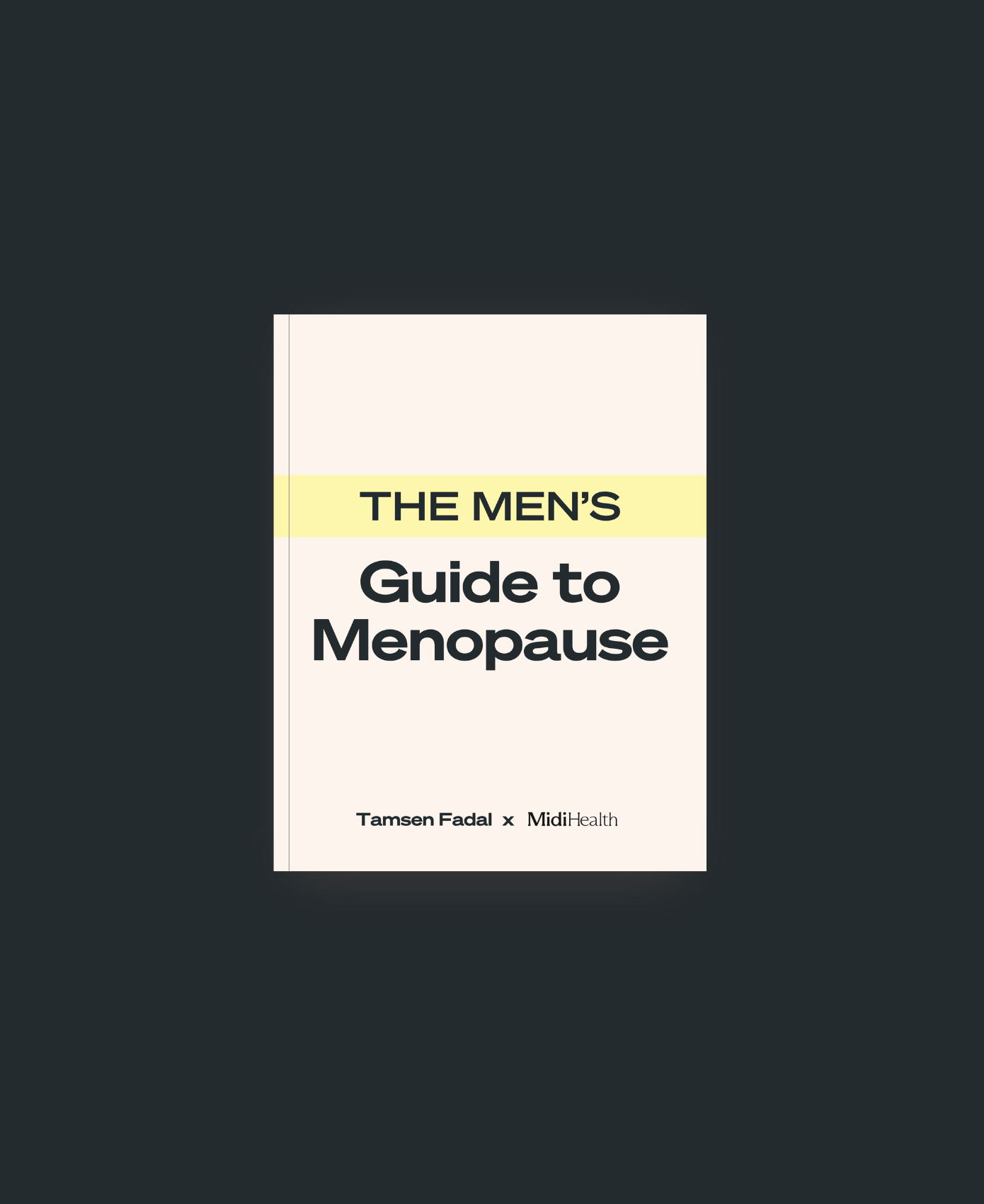
"What do I do? And what does she need from me?" And so, I wanted to make something for them because this book, How to Menopause, is all for women, even though men can read it. But I created a men's guide for menopause just to make it a little bit easier. It's something you can hand to your partner and say, "This is a simplified It's not very many pages. Read this." But it breaks down what's actually happening and what it means for your relationship.
And And hopefully, it'll help out a little bit because it's much more simplified, and I feel like that way your partner can digest it a bit. It's free. You can download it from the link in the show notes, print it out, hand it over, send the PDF, whatever you want to do. And by the way, if they're more of a podcast person, there is a full episode on this show made specifically for your partner. I'll link that in the show notes, too.
Send it to them, no excuses, it's literally a car ride long. Being a real partner through this is non-negotiable. Not somebody who dismisses it, not somebody who makes you feel like you've got to solve everything and you're the pain in the ass. A partner who's willing to learn what you're going through and show up differently because of it, that is what is required from them. When we first launched The Tamsen Show, it was really important that I had Dr.
Romani on. I've been a huge fan of hers for a long time. She's a clinical psychologist who specializes in relationships, and she was on the show talking about narcissism. She pointed out to me, though, that something that really stuck. Women are just better at building support systems in their lives.
Friends, community, people who actually show up. And because of that, the emotional weight of a relationship, it really tends to fall more on women. So, menopause is often the moment when women finally stop carrying things that were never theirs to carry alone. And she described this as a reckoning. The women who come out of this transition with stronger relationships are the one who used it as an opportunity to say that, "Here's what I need, here's what I can't do, and here is how we need to show up for each other differently." That's not a crisis, that is how relationships actually grow.
She also said, "If you're going through this and your partner is meeting you with criticism or making you feel like a burden, you got to pay attention to that because you deserve somebody who can hold your hand through this, not somebody who is making it harder and telling you like, 'Go figure it out and then come back to me when you're normal again.'" If there are only two things you take away from today, it's one, I'm really hoping you can take care of your sleep. Focus on it, prioritize it, do whatever you need to do. Take care of yourself first. The second one, I want you to lean on your community. I want you to find a doctor who will actually listen.
I want you to get that foundation solid, and then I promise you this, everything else will start to at least feel more clear. The relationship, the communication, the intimacy, all that has a real shot. But you have got to put you first. I'm going to keep breaking all this down for you right here on The Tamsen Show, every chapter, every topic, going deeper. If the book's helped you or the series has helped you, I would love to hear about it.
Ask any questions you want, we try to answer as many as we can on the show. Come find me, tell me your story. That is why I do this. You are why I do this. I so appreciate you being here, and I will see you in the next episode.
Okay, before you go, I made something for the man in your life, and I need you to send it to him right now. It's called the men's guide to menopause. It is absolutely free. It covers everything he needs to understand about why you're not sleeping, why your mood has shifted, why sex feels different, why you might be pulling away, and it has nothing to do with him. I'm covering what to say, what not to say, how to actually show up for you.
Because understanding what you're going through is not about going above and beyond. It's the bare minimum. I'll leave the link in the show notes for you.