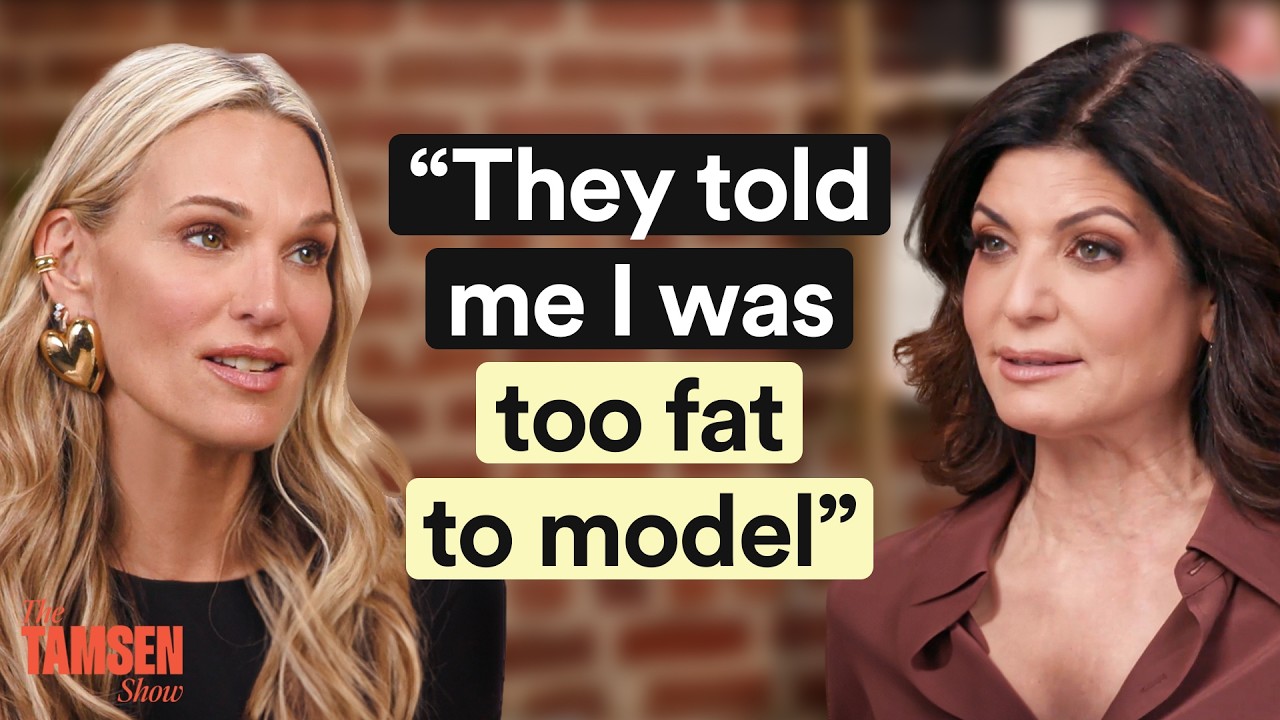
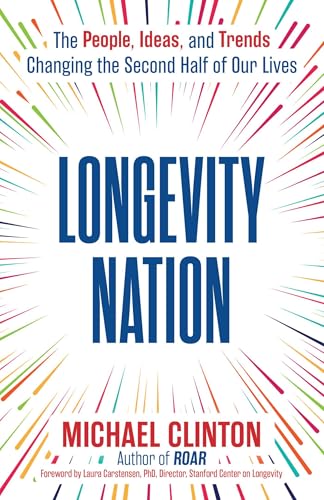
We have a lot of self-imposed ageism that we put on ourselves when we're 50, 60, 70, 80. I can't learn the piano, BS. I can't run a marathon, BS. I can't launch a new hobby. I can't start a new career.The 100-year life is already here. Now at 55, I'm like, "Oh my gosh, what am I going to do the next 40 years?" Michael Clinton ran one of the biggest media empires in the world and walked away to build something even bigger. He's the author of Longevity Nation and the man changing the way we think about life after 50. I'm not going to retire from the world. I'm just not doing this job anymore.
Well, if you're listening to this and quietly wondering, "What does my next chapter actually look like?" You're not alone. Here's the reality. For the first time in history, many of us will live decades longer than our parents did. And many more of us will spend 30 years or more in the second half of our lives. That's an entire lifetime.
Yet, most of us were never taught how to design those years to be truly meaningful. So, whether you're thinking about retiring, reinventing, or you're simply sensing something needs to change, the real question isn't when do I slow down? It's how do I build a life that still feels alive for the long run? Today's conversation is about exactly that. We're talking about longevity, but not just living longer, living better.
My guest has spent years studying how people actually thrive in the second half of life and living it himself, taking on new challenges and even climbing mountains well into his next chapter. He is proof of what is possible. Michael Clinton is a former president of Hearst Magazines, founder of Roar Forward, a platform focused on helping people thrive in the second half of life. He's the author of Roar and his new book, Longevity Nation, is a practical, science-backed look at how we can live longer and better in the second half of life. Today, we're going to learn how to design your next chapter on purpose.
Michael Clinton, welcome to the show, my friend. Well, it's great to see you and always a pleasure to be with you, Tess. And so, thank you for that lovely introduction. That was great. That was wonderful.
Yeah. Deserve every bit of it. Every bit of it. Every bit of it. You know, when we first met, and I go back to several years ago, I think we were both like, we're in our now what or what's next phase of our lives.
And when I look at what we're talking about today, it's it's really exciting. But, for people who are meeting you for the first time, I want to think about some of the things you've done. You run marathons, like a lot of them, climb mountains. Every time I talk to you, you're traveling some place different. You're always like curious, you're speaking, you're building community, you're teaching people all the time.
Do you sleep? And if you I was I'm sure you do, because you talk about longevity, but what keeps you going like that all the time? Well, so first of all, I sleep really well, cuz my Aura ring gives me all my metrics, right? So, I'm really good at sleep. And, you know, people always say to me, is it nature or nurture?
Like, were you always this way? I I kind of always was this way. Even as a kid, I was a I was a multitasker. But, I believe in this concept called life layering, which you and I've talked about, that, you know, you have to build all these various layers for your life identity, because the first three in the first half of your life, which tend to be profession, partner, maybe parenting, if you had a kid or or more. That sucks up a lot of time in the first half of your life.
And then what happens is you get to 50-something, the kids are gone, jobs get repurposed, reorganizations, you get you get burned out, you get tired of what you're doing, you question, is that the right career path for me? Hopefully, the partner sticks around, but sometimes, you know, they don't. And so, all of a sudden, you're like faced with, well, who am I? Mhm. So, we talk about how do you build new personas in the second half of your life to build these life layers of identifications.
And as you said in the opener, if you're 50 and healthy, there's a pretty good chance you're going to live to be 90 or older. And the 100-year life is already here. We can talk about that. I'm on the Stanford Center on Longevity board, as you know. You know, the next generation's living to 100 is going to be like living to 80 today because of all the medical advancements and technology.
So, who are you going to be in those next 30, 40, 50 years? That that's the big question. I mean, it's really a phenomenal thing to look at if you step back for a minute. Like we talk about it a lot, but if you step back and really think about, I don't know, when I was 25, I thought 50 was old. Now at 55, I'm like, "Oh my gosh, what am I going to do the next 40 years?" I mean, that is really what I think about.
And I was home over the holidays and you know, my dad, I talk about him a lot, and he just turned 86. It was his 86th birthday, and he is taking pottery classes. He has like a whole bunch of like girls that he talks to, just friends, but girl like these women in his life. He like is studying birds now outside of his window. He has bonsai trees.
I mean, the gym. And it's really phenomenal. I said, "Dad, you know, you're going to probably live another 20 plus years. Like, do you have a plan?" And he's like, "Oh, you're crazy." But I think he knows I'm not. And I think he is planning for that, and I think he's thinking about it.
So, what do you think people today are getting wrong about the word reinvention? Because I think that that word is I think it causes people to feel a little angst every once in a while when you hear it. That's that's a great question. I think ultimately, you know, life is constant reinvention. You know, we're reinventing from the day we're 5 years old.
You know, we're reinventing it to grammar school, we're reinventing it to high school. So, it's part of the reimagination process. We call it at Roar cuz the first R is how do you reimagine your life, and how do you make that a lifetime practice? So, the world is always going to be changing, and you don't have to get hung up and what do I have to necessarily do next, but you have to be thinking about, "Gee, if I'm going to have a 100-year life or a 90-year life, what what's my life going to look like and what what's it going to mean? So, we have this group that we've been following as you know called the Reimagineers.
Yes. And you know, we call them the age innovators. These are the people who are 50 plus who are doing remarkable things. And by the way, sometimes it's as basic as taking on a taking on a fitness habit. When I ran the Toronto Marathon, I witnessed the first 100-year-old man cross the finish line.
It's amazing. Start running till he was 82. Really? Yeah. So, you know, we we have a lot of self-imposed ageism that we put on ourselves when we're 50, 60, 70, 80.
I can't do this cuz of my age. I can't do that. You know, the world's passed me by. I can't learn the piano, BS. I can't run a marathon, BS.
I can't launch a new hobby. You know, I can't start a new career. I think you met my friend Jean who at 56 went back to veterinary school and became a vet at 60 and said, "I'll be a veterinarian for 20 years." And and that's okay. So, you don't have to go back to vet school. Mhm.
But what you have to do is step back and say, "I've been given a gift that previous generations never had." You know, 100 years ago, the average life expectancy was 62. Today it's 80 in the US and growing and in other parts of the world. Here's another amazing stat which you know, 100 years ago, there were 7 million people who were 65 or older. In this country, there are now 60 million growing to 80 million by 2040. So, you're going to have a lot of cranky 65 plus year olds if they don't find purpose and meaning and new things, whether whatever it is.
The whole world is is getting grayer and but what's different about this generation is they tend to be more health conscious, more fit, watch what they eat, you know, etc. So, you're going to have a much healthier, you know, older group. And so, back to your question about reinvention, you know, it's it's just a constant process. Yeah, I think it is, too. And I And what you were saying about the world being set up and all these older people, you know, I don't know if the world's ready, you know, for that.
So, we we have to move even faster to to help that conversation, that narrative, and and normalizing all of it. So, you spent a long time as president of Hearst magazine. Right. And then moved into, you know, and pivoted into this next chapter of your life. And I think you and I both talked about stepping away from, you know, the chair, right?
And I stepped away from the anchor desk after a 15-year career in New York, 30-year overall. There's nothing but I Yeah, I remember, but oh my god, am I doing the right thing? Is this okay? And what am I doing, you know, what am I doing next? Yeah.
What did you learn from that chapter that you've brought into this one? Because I never think that we end a chapter and close the door. Right. So, I had a I was fortunate when I was 39 years old, I was the publisher of GQ. Mhm.
Great great job. And I was feeling very full of myself cuz I was the one of the youngest publishers. Well, [clears throat] by the way, you know, I had dinner with Cary Grant, I met Michael Jordan, you know, blah blah blah blah. It was really, you know, quite a heady place. I I'd become publisher when I was 34, so I was a young publisher and got exposed to a lot of amazing things.
And I was full of myself one day talking to my then boss, who said to me, "Just remember something, young man. It is the seat you sit in, it is not the person who you are." And Tamsen, it was like a lightning bolt hit me between the eyes and went, "Oh my god, that seat is going to go away, and then who am I?" Who am I? So, I kept that wisdom with me my entire career as I climbed the ranks in publishing and became, you know, ultimately the president and publishing director of Hearst. And never forgot that even when the seat changed. Never forgot that.
And so, I I was always mentally thinking about separating what I did versus who I was. But what happened when I was ready to step out of the chair, and that was a decision I had made a year prior to actually doing it, I had already had a list of things that that I wanted to do. I was already sort of formulating my next set of identities. And I got really agitated when people kept saying, "Oh, you're going to retire." Mhm. And I said, "Well, I'm going to retire from this job." But I'm not going to retire from the world.
That would make me really mad, too. Yeah. I was like It made me mad, too. Of pissed, right? And I said, "No, no, I'm not going to retire from the world.
I'm just not doing this job anymore." And that would [clears throat] that was the beginning of Roar and conceptualizing the book. Roar Into the Second Half of Your Life. I interviewed a lot of people cuz I knew there were people like me Mhm. Who in their 60s were ready for next new things. Mhm.
So, I wrote the book. I went back to school. I went back to Columbia and got a graduate degree in philanthropy cuz I was always interested in that, which was a whole other A whole other area. And then, you know, the book just took off cuz I so many people said, "I can relate to what you're saying." Yep. And that led to the business.
I feel that feeling because the word retirement did piss me off, too. I You know, when I walked away from the anchor desk, and I think we have a very similar story like that. I I was in my early 30s, and I was in Philadelphia, and my co-anchor who was maybe 10 years older than me, said to me, "Listen, I just want you to know, one day they're not going to want you anymore. And there is going to be a older man sitting next to a younger woman." -huh. And that younger woman's not going to be you.
And it wasn't a mean thing. It was a very matter-of-fact in television news that this is what's going to happen. You're going to age out, and that's just the way it's going to be. So, I was always thinking like, "Damn, I hope my key card works when I walk into this building today." And I really, Michael, I kept that with me really until I walked out of the building. Same thing.
Of course, now the good news is all that's changing because, you know, our mutual friend Gayle King is a great example. You know, Gayle's, you know, 71 years old and proud, and she talks about it all the time. You know, sitting in that great chair. So it it is changing which is good and also it's changing across the the country in media and magazines and entertainment. Look at Jane Smart winning another Golden Globe.
You know, look at you know, the Sports Illustrated covers, you know, Martha Stewart, you know, we could Matlock, we could go on and on. The role models of what it means to be dynamic at 60, 70, 80. They're all in real time happening. Which is exciting. And another example, Paulina at Estee Lauder was just brought back at 60 as their brand ambassador.
So it's really it's happening in real time and I think that it gives people inspiration that gee, you know, I'm I'm 60 or I'm 70 or I'm 80 and there's a lot more I can do. What do you say to those people that are listening right now and going, "Okay, Michael Tamsen, I get I get what you you know, I get that, but where do I even start because that transition, there's a lot that you and I haven't talked about publicly probably in that transition and a lot that goes through people's heads. It's not it's not all easy. It does take planning and but I do think you have to have your mind in the right place first of really believing that there's there's more out there and there's that next chapter. So I learned a few things in doing all these interviews and collecting these stories and ultimately the next book which is about to come out.
The first is that the people who are the role models on this, they spent a good year to two thinking about what do they want to do next. So this was not decided on a weekend. You know, they really put in the work. They put in the work which being introspective, talking to their partners, talking to their the people in their lives and they had an inherent sense of possibility, an inherent sense of curiosity that there was more and there could be more and they didn't you know 50% of it is in the head. Mhm.
And then the other 50% is creating the plan and the rest of it is executing. And you know, to your point some people say, well, I don't know what I want to do. Well, you got to take the time A and we have a toolkit that we write about in Roar and one of my favorite things in the toolkit is to go back to your younger self. Mhm. You know, what did you want to do when you were 20 that you know, you wanted to be an anthropologist but your parents were like, well, you're not going to get a job being an anthropologist.
Our parents had a lot to us. You go be a get a practical degree. And we have lots of examples of people who finally stepped into their younger self and started a great story of my friend McGarvey Black who was 58 and started writing mystery novels. Yeah. Did a Dan Brown class, you know, all that kind of stuff.
And at 67 today she's written 12 mystery novels and published. So, you know, you've got to mine your own being. What makes you What excited you when you were younger? I think that those stories excite me every time I read one. Every time I get one of your newsletters.
Roar Forward when we first started talking was just was just getting underway and just starting. You had just written the book and that was the first time I think we met as I interviewed you for Roar. I didn't even know we didn't even know each other. We didn't know each other. Now we can't stop talking.
But Roar Forward the platform and the community has been created. Have you seen a lot come from community because I do really I know we use the word a lot but I also know that it has a a whole different meaning for me right now than it did before. You know, what one of the thing In the past it was very isolated. It was about medicine or it was about the technologists or the tech bros who were spending a lot of money to live forever, you know, all that kind of stuff. Exactly right and it was not democratized and there wasn't a community around it.
What's happened in the last couple of years is the word longevity has entered the zeitgeist globally. Mhm. And I just heard a stat recently on a media heat map that a 1,000% increase in the word longevity in the popular media. Wow. And you just saw in the last month or two that Time magazine had their first longevity issue and you know, you're beginning to see it being covered by by the mass media in lots lots of ways.
So, there is a community that is being built around the longevity phenomena that includes what we call the longevity innovators and we can talk about that, but also includes the people. Because the people who are over 50 and I like to remind everyone that the first millennials turn 50 in 4 years. Oh my gosh, can you say that again? Those sweet millennials turn 50 in 4 years. That is mind-boggling.
Of 70 plus million people as big if not bigger than the boomers. The boomers, the Xers and now the new wave of millennials are all going to be in the second half of their lives. And right now 35% of the US population is 50 plus, 117 million-ish. It's going to be 130 plus million in, you know, in 6-7 years. So, you've got this huge wave and this community of people who are over 50 who are all going to be going through the same kind of existential questioning.
Am I doing what I want to do? Am I happy with who I'm with? Am I blah blah blah blah blah. You're the sheer number of those people are creating community and looking for solved solutions, ideas. I don't know about you, but I get really caught up sometimes in busy and I didn't know how much I'd stop noticing my skin until I started paying attention to it again.
That's what OneSkin did. A few weeks ago, I caught my reflection and I you. So, when you use the word or say the word longevity in your book, Yeah. It's coming out is Longevity Nation, in pre-order now. What does the word longevity mean to you?
If I step back and I look at how the longevity, you touched on in the the beginning of the program, longer, healthier, better life. And you know, we always say the 100-year life is here, but it doesn't really matter ultimately how many years. You want to maximize and optimize the best years that you have, and you want to you want to, you know, collapse your morbidity period, right? So, the best thing is the is your quality of life. What does that mean?
Number one, it means health, obviously, that you're healthy. And now, there are so many diagnostics and tests and preventative measures to enhance better health, not to mention lifestyle. You know, genetics are only 20% of your of your lifespan and your longevity. So, it's in your hands, right? So, I wish I hope more people hear what you just said.
Yeah. It's in your hands. In your hands. You have You can affect your health through very fundamental things like exercise and eating right and sleeping right and having purpose and having community. [snorts] A little GLP-1 doesn't hurt if you know. We We've We've done quite a few interviews about that.
Well, you know, it's it's it's it's a it's a big conversation. It's a big revolutionary drug that's going to impact, you know, many many people once it's affordable and it can be democratized and everyone can have access to it. But having health span, the word we you and I know, I call it wealth span, you have to be able to fund a 90-year life. So, where are you going to get your income from? And we live in a world of have and have nots and I'm always more concerned about the have nots because if they don't have a pension of a 401K if they work and social security, who knows what the future is, you know, you're going to have an older cohort that's going to really be struggling to make basic living expenses.
So, That's a lot of years that we didn't think of. It's It could be an extra 20 years that we weren't thinking about 20 years ago. No, exactly. And so, I call it health span plus wealth span equals a great lifespan. So, longevity are those components.
So, you didn't just write this book from opinion. You did a lot of research. I put my Tam on. I had I interviewed 70 people. Did you really?
I didn't realize it was 70 people. But you really went deep into the research which I think is always an exciting place to be. What did you What did you find from the research that I mean you you know a lot, but what did you find from the research that really surprised you and I'm assuming it's a lot of those innovators you're talking about? Yeah, I wanted to find the people in in medicine, in technology, in skin, skin longevity, in higher education, in travel, in in urban development, community development who were really thinking not just thinking about this issue, about the world getting older and all that, but actually doing things. And I also wanted to bring a lot more female voices into the discussion because most of the the voices are male that are out there.
So, I wanted to have more female voices globally. So, I went to places like Singapore and spent a week, which is a remarkable I would say to people, if you want to see the future, go to Singapore. Really? What is So, what did you government has addressed this in the way they've developed their healthcare systems, urban development, the interaction between older and younger people, which is important as opposed to being ghettoized. Every buildings are built with the idea that a green space is within 10-minute walk.
There is one of the first public hospitals that bring in longevity diagnostics into the hospital has for access to everyone. So, you know, they're one of in Asia, Japan, Korea, Singapore, China even, have the oldest living populations. Japan being one of the oldest. And so, those cultures, governments, societies are way ahead of us in terms of addressing this. We have a lot of catch-up in the US that we have to do.
Yeah, what is the US getting wrong right now that Well, first of all, it's not even on anybody's radar, really. I mean, the the the the government's radar, you know, it's it is somewhat locally and and statewide, but federal government needs to really focus on this because I talk about Social Security as just one example. I write about this in the book. I interviewed the former Deputy Commissioner of Social Security. What's the you know, what is the what's the future look like?
Is the trust going to go bust? Is do we have to raise the retirement age again and again in order to do it? Will have we have to reduce the amount of money we give future generations? We need reform and no one wants to touch it on either side of the aisle. And when you look at it, it's almost 50% of our federal budget.
When you look at Social Security, Medicare, Medicaid, you know, this is a big part and and with this this growing population and age, so I wanted to I talked to financial people and people on that like what are we doing as a you know as a country. So I what I learned in this book Longevity Nation which is I was excited to write is that you have all of these worlds kind of coming together. Right. And they're all beginning to create, metaphorically speaking, a nation Mhm. Of longevity innovators who are writing the script for what the future of culture, society, countries can look like and should look like.
If you are 30 or 40 or 50 and you're listening to this right now, what can you do to start getting ready for for this next stage? Because I think that's an exciting time, you know. I you know, when we talk about longevity and we even talk about second half, most people are like, "Oh, I'm not there yet." But I think a lot of 30- and 40-year-olds and maybe 50-year-olds are unprepared for a second half. I certainly was. I hear this all the time when I do speeches and talks and I'm out on the circuit.
I have 35-year-olds come up to me. First of all, I would say the 30- and 40-somethings are very tuned into the longevity conversation. Okay, well that's good news. Really are much more health conscious. They you've probably heard of the longevity clinics that are popping up.
That's the that's the people who are going to those clinics. They basically always say to me, "You know, what's interesting, I if if I have a 90-year life, I don't have to boil the ocean right now. You know, I have a runway. Mhm. I might have a second career or third career.
I may, you know, have a decide to have children later or partner later. I may have, you know, we were wired, you know, that we had to go to school, meet a partner, get married, have a child, buy a mortgage, have a kid, bum bum bum. I'm speaking I'm speaking obviously in in broad strokes. And then all of a sudden you're you're on your you're on that path, right? You're on that path at 35, call it, and you're commuting into your work and so forth.
What this is doing is blowing that all up. Mhm. And at Stanford, we have a great piece of work which people can access called the New Map of Life. Yeah, and tell me what you do at Stanford. So, Stanford, Laura Carstensen, who is the founder of the Stanford Center on Longevity, wrote the forward to my new book, Longevity Nation.
I'm on her advisory council. They do a lot of research, and a lot of, great research on this topic. And one of the big pieces of research was something they put together called the New Map of Life. If we're going to live to be 100, so to speak, what's the new second half of life cycle construct look like? So, for instance, today's 30-year-old, if they are going to live to be 90, they may have a 60-year working life.
Now, we were always told, you know, work 40 years, retire, Now, you have to work 60 years because you have to fund a 90-year life. But by the way, you and I or I was certainly raised that you go into an industry, you climb the ranks, you're in that career for 40 years, and you get your My father still asks me what I'm doing right now for money. Like my father's still confused how I how I'm not working anymore, what I'm doing. Like He's like, "I like your book, but what are you doing?" Exactly. Like you're not working right When I come home, he's like, Yeah, you're here for a company, Yeah, he's like, "You doing okay?
Are you making money?" Right. He asks me that all the time. I'm like, I think he's scared I'm going to come home and stay there and not leave again at 55. They Some some of them want you to come home. Some of the parents.
But you know, the thing is is so a 30-year-old goes, "Oh, you know, I might do this career for 25 years, and then I can have a whole other career for 20 years." This is all, you know, the two to three-year two to three career life, is something that is is what the future will bring because of the longevity factor. And it's really interesting. And the other piece of that, of course, is this is part of your reinvention question. You have to constantly be a lifelong learner. You know, if I think about my own career, I was in the print business and then something called digital came and disrupted everything.
And I was probably 50 at the time ish, you know, when it we had really had meaning and you know, you lived it in media. And I had to I had to learn. I had be a student to learn and today's student is AI. Yep. There are no AI fluent people.
No, and that's always learn. Well, that's what I want to say. I I want to I want to give people hope that are listening to this because because everything you say is is done in such a positive light, which is exciting to me. But there are people that are going to say like I Yeah. What do I have to do about AI?
That is it going to be around forever? What's it going to be? We're all in the same place right now figuring it out, right? Like we're all in the same place figuring out what prompt means and figuring out what, you know, what it what it looks like and how to input and how to have it speak like you. What advice do you give to people that are like, I know I have to learn.
I don't even know where to begin to do it. What do I have to do next? Where do you start that process and what [clears throat] So, forget forget work. You're going to be left behind in life. So, I'll give you a good example.
When the digital world happened, same questions were asked. I had people [clears throat] on my team, I shall not name them, who said, "I don't need to learn this digital thing. I don't need to learn this digital thing." Well, guess what? The whole world turned upside down and all the revenue went from print to digital. Yep.
We still have a great print business, but the majority of it, you know, a large part of it goes to digital. The people who said, "I don't need to learn digital or I don't need to become expert in that." They ultimately lost their jobs. They were pushed out because they had to That was a skill set that they had to learn. And, you know, ironically in our personal lives, we all became digitized. I always say to people, "Oh, when was the When's the time you went to a bank teller?" When's the last time you went without your phone?
When was the last time you printed a ticket to get on an airplane? Well, my husband does that every day. Okay. Well, he has the boarding pass. But, he has the boarding pass.
He doesn't have the physical ticket, right? But, if you if you didn't become a digital native learning digital, you were left behind. It's the same thing with AI in its form. So, I always say to people, play with ChatGPT. Just start playing with it.
Just play. See what it is. So, you got to you got to move forward. Well, I I think it's a more More forward. More forward.
Correction. What's funny, I don't know how many years ago now it was, but I was, you know, doing the news and I was I pulled out my computer and I had it on the desk and I was on Facebook and I was talking to Facebook, but talking to them through the TV and I got in trouble and they said like put your put Facebook away. Stop playing on social. And I said, I think this is the way people are watching now and it's just been very interesting to watch, you know, how just how we've moved through life from when I moved to New York, I had a flip phone, you know what I mean? When I everything has changed and I think about it, it just seems like yesterday.
So, let's go into the the health part of it and the habits because longevity is also about that and we know that it's a conversation that has been primarily the, you know, the bro conversation or it's been about hacks or trying to live longer, but really that's not what we're talking about anymore. Right now, we're talking about pretty clear and mindful things that we should be doing to be moving and balanced and feel better in our brain and and the research that's coming out every single day sometimes can seem overwhelming, but is really important to keep track of. No, I think what gets the airtime is all that, you know, all the bro, you know, stuff. Yeah. But, the reality is an individual gets back to taking control of your own longevity and your own healthy long life.
And no matter and you know this because we've talked about this, no matter where you go, who you talk to in science and medicine and all the studies that have been done, number one, number one, number one, movement until the day you die. Movement and I I always like to say pick your pick your approach. It could be yoga, it could be walking, it could be running, it could be cycling, it could be You got to move. And the other piece of that is I always like to talk about exercise snacks. Mhm.
You know, and what's great is you're talking on the phone, you say I don't have time because of a busy day, you can do squats. Yep. You can go up and down the stairs. You can do all kinds of snacks to keep yourself you know, keep yourself moving. And I'll talk about my my wonderful dad who is was my great mentor who lived to be 92 and a half and passed away last summer.
But in his last year, Dad became very sedentary. Mhm. And that was the beginning of the spiral down. And he brain was amazing. He had no disease, he had no illness, but his frailty, he fell, and the frailty and all of that, and he could have lived, you know, I think a number many more more years, for sure.
Yeah. But that movement piece is so important. And and that's simple. I mean, we can all do that just in our everyday life, right? Being aware of it, and I think talking about it more, and us getting out there and talking about it more.
And I'm sorry to hear about your dad. And I know that I know that that's so hard, especially when your brain is still all there, you know what I mean, and you're and you're very aware. But you're right, we because we aren't we're taught about frailty or what happens when you fall or break a hip or your bones are so, you know, fragile. I guess I always, you know, I think I grew up thinking like, oh, if I'm you know, if I'm still thinking about it all, it'll I'll make sure it all works. But I think I'm learning more and more there's very there's various aspects to it that you have to pay attention to.
Yeah, I think you bring up, you know, balance and flexibility are so important, and you know, something as simple as standing on one leg for a minute or two, you know, you What's good about it is you're seeing now in the popular press, you're seeing a lot of these little tidbits of things you can do. You don't have to go run a marathon. You can do things at home that are simple that anyone can do. And I think that's really positive. And we do a lot of that now with our magazines.
You know, we publish Men's Health and Women's Health and obviously more health-centric people read them. I write for Men's Health on longevity topics. But we do it with prevention and important Good Housekeeping and Oprah Daily. I mean, all of these all these vehicles are important to get the message out. That's what I was going to say.
That's how it gets out. And that is that is how it goes to the to mainstream. So it really starts making a difference. What are you most excited for with people learning with Longevity Nation because I've been excited about this book for a while. I had to keep the book quiet, too.
But I'm I'm really excited about it because I think that it's going to give people a different vocabulary or feel comfortable with the vocabulary of what it means and that it's for everyone, not just for them or for somebody who's in the gym all the time or for somebody that's studying brains or trying to hack their bodies. I think it raises the awareness for people about all the excitement that's happening around the space. And you know, all the people who are engaged. I you know, I'll pick on, you know, we'll stay in the medicine piece of it. You know, certainly the GLP-1 is one big dimension, but so are things like metformin, which are very very affordable that anyone can take.
It's a diabetic. You have to get your doctor to sign up for it. I happen to take it. And it's some of the early clinical trials are showing that it's slowing down the cellular the aging process of your cells. You know, I think we all have to acknowledge and recognize that we are going to die someday.
You know, hopefully it's going to be a long way off there in the future, but how do you build your best your best ramp way? Everything you do is compounding to the last decade of your life. So it's a really it's it's a easy slide down. It's not a off the cliff slide. And I subscribe to that and that means, you know, movement and eating right and sleeping right and all the core things that that we talked about.
You know, a lot of people feel irrelevant as they age. And I know that we hit on it a little bit at the beginning, but that purpose and contribution, how important have you seen that in your travels across the world and in speaking in front of different audiences? Yeah. Yeah. In the In the US, we tend to live in what I call an amplified ageist society.
Mhm. It's changing. Asia's very different. Mhm. They have a very different view of older people.
The EU is changing. The US of older people? They They honor them. They incorporate them. They bring them more into the workplace.
There's not this, you know, okay, you're 60, time to push you out mentality, which is an American often times American business. It's a structural issue. Let's get the older people out, you know, so cuz they're more expensive and as opposed to retaining the talent and the knowledge and the experience, right? So, Asia's much better at the Asian cultures are much better at that. Many of the European cultures, you know, in France, there's a group called the Charter. 25 companies have signed it to hire, promote, retrain people over 50.
Keep them in the workplace. I love that. Yeah. Big anything like that here? We don't.
I mean, Air France has signed it. AXA, L'Oréal. L'Oréal for all generations is one of the big global initiatives they have, very committed to that 50-plus person. And so, we take on self-imposed ageism when we get signals from a lot of different places that we are irrelevant at work, in life, in in in beauty, in fashion. What I loved this year in the Milan Fashion Runway shows, as you know, is the most It was the most age diverse Yes.
Of of any runway show ever. It was fantastic. People from 25 to 80. You got to see it to be it. Mhm.
So, when you start seeing different different things, you start to say, "I'm, you know, not so irrelevant. You know, I can still be sexy at 70, you know, kind of thing." Yes. And you know, Helen Mirren's the poster child on that, I guess, right? She's great. But but I think that, you know, and it's always been more of a female overhang than a male cuz the males as they got older were like the rugged old guys.
Distinguished. But now you've got Jane Fonda and Helen Mirren and Oprah Winfrey and all these women who are badass, you know, amazing, you know, accomplished, successful women who are just rewriting the script. And touching the younger generations, too, which I and I think the intergenerational is very interesting to me cuz I was thinking a given day you you fly through social media and you're like you're seeing a 20-year-old, a 30-year-old, a 70-year-old, but you know, and so we're constantly seeing that all day long. How important do you think it is for intergenerational relationships with older people being around younger people and younger people the wisdom of older people. We love to ghettoize our older people.
We love to put them in retirement communities. We love to put them in nursing homes. We love to put them and that's also a model that is being broken down because I always talk about once again, in different parts of the world, there's a Singapore, concerted effort to have multi-generational housing, multi-generational engagement. The the 55-plus community great for some people, but you're then in a very homogeneous group. You don't get a lot of interaction.
Some people are like, "Woohoo, I love that." But is it is it good? And you know, I think the thing that there's a lot of one of the companies I I write about that I interviewed is a group called CoGenerate. This is their whole mission. And the importance of having friendships in who are in their 30s, 40s, 50s, 60s, and beyond because we all know the story that when someone's 80 and they say, "All my friends are dying and and have no friends" because they didn't cultivate younger younger friends. So, multi-generational friends, it's important for lots of reasons including our mental well-being.
So, I think that some of the communities, Arizona State University has a a building called the Mirabella. The people who live in it are in their 60s plus, but they get a student ID. They get to go to all of the classes, to the concerts, to the Probably don't want to show up at the frat parties, but anyway Well, who knows? Why not? They get the run They get the run of the campus.And that's great, right? Is that Arizona? Arizona State University. Yeah, it's called Mirabella. You can check it out.
So many nuggets? All of this is in the book. All of this. It was When I kept peeling back and learn and meeting people and seeing what they were doing age-friendly cities, age-friendly communities, new kinds of living, new kinds of programs that you can go It was like a blossoming of wow, this is happening. And happening.
Seeing those examples give somebody else an example to model or follow or another university or another business. So, let me ask you one final question. What makes you the most optimistic right now looking forward into the future of longevity? I think what's happening in the health space. I I was at earlier this year I was at CES and I moderated a panel on longevity tech.
And as you know, our one of our partners is Wake Forest School of Medicine. And when I really have begun to see what is happening in the medical space, a lot of it being driven by AI. Okay. You know, because you know about precision medicine. You know, you and I may have the same illness, but through the data, through AI, we're going to learn that we're going to treat you one way and treat me a different way.
That's phenomenal when you think about that, when you think about the the tests that are available now for us, you know, Galleri is one. You can have a blood test 40 different types of cancer to if you choose to know that information. I think the testing, the diagnostics, we we're as we shift into more of a preventative mode versus a responsive mode to a a risk factor. And then you look at the new medicines that are in the pipeline. It's pretty phenomenal.
I mean, some people say we're at the cusp of a major health renaissance, if you want to call it, with all of these things working together. At Stanford, when I was interviewing someone on the Stanford campus, I was very intimidated because he has an amazing set of degrees and credentials. His name's Dr. Ranjan Nag. I was like, "Okay, this guy is going to I'm really intimidated." Couldn't have been nicer.
Down-to-earth marathon runner. Of course, we started talking. He's working on a moonshot project at Stanford and a company that he has to create a pill that will slow down the aging process. Is that Is that like Limitless or no? That wasn't That wasn't the pill.
Of probably like that. No, it's not that you'll live forever. It's not that you'll live forever. It's that it would slow it down. You know, the thing that I debate in the book or pose in that discussion is today we say "Okay, living to 100, that's really Do I want to live to 100?
Do I really want to be 100?" And I go back 100 years and say, "Did those people who are 60 say, 'Do I really want to live to be 80? Do I really want to be living to be 80, right?'" Exactly. And I think, you know, I think 50 years from now who knows how old Yeah. The human being can be. The longest-living person was 122.
I think you know that, the French woman who lived to 122. One of the questions I pose in the book is 50 years or 100 years from now are people going to be saying, "Well, how quaint of those people to discuss the 100-year life? We're at 150." Well, you said you remember the answer to that, it's sure is exciting to think about it. Right. And then what?
Wasn't there always like the Smuckers person that they did on TV? Like the person that lives to be 100 or 90 or something? That number keeps going up now. Well, here's But here's a stat that will put it in context. In the world today, there are give or take 770,000 centenarians. 700,000, almost a million.
Are people that are 100 or older. Okay. The UN projects that by 2100, there'll be over 20 million. Oh my gosh. World.
Now, think about that just in the context. What's going to drive that? It's going to be health. It's going to be technology. It's going to be AI.
It's going to be all the things. Let's forget about the AI chips in the brain. That's a whole other discussion. But if you think about 20 million people over a 100 or over, who knows what the where that where it stops, right? And I don't think we're going to know that answer until we know that answer.
What is your mission at in all the conversations that you're having right now? When you walk into a business, what is the mission at the end of the day for people to understand this where we're going? Is that Do they feel like they're going to now? Roarforward.com, you can sign up for our consumer newsletter. It's a freebie, but our business is really informing, educating C-suite leadership in business, but also academia, government.
We want to be able to show them this phenomena has huge impact for their business, their future, their products, their services, their customers, their employees. And so the companies that we work with really are within that framework. And the progressive companies who are seeing this, it comes from the top and they're seeing it and they're like, "Wait a minute. We've been Our whole I'm going to stick to marketing for a minute. We're marketing to 18 to 34-year-olds, and meanwhile you've got this huge 50-plus consumer base that has a lot of money.
Yep. They've earned a lot of money, they saved a lot of money, they're spending a lot of money. Maybe that's a growth market for us. Mhm. Because here's another stat.
If you look at today's 50 plus consumer in this country in terms of their spending, Yeah. They would be the third largest country in the world in GDP spending. The third largest country in the world. Just the 50 plus year old in this country and growing. So, marketers beware.
Yeah. Brands beware, companies beware, but you better speak to them in contemporary modern ways as both from product standpoint and a marketing advertising standpoint cuz they are a huge force and they're going to be really pissed off if you show them tropes and old-fashioned cliches that don't fit. A bench heading into the sun. Into the sunset. Thank you.
Yeah. Thank you very much. So, Michael Clinton is coming for you. Michael, thank you. Tamsen, it's great.
You know, you're like my sister from another mister. I swear to God, we could go on and on. Yeah. Could. I was like, oh, you know, I'm getting a warning.
Exactly. Let's turn it into 3 hours. You're back. Trust me, I would do it. I would do it.
It's great to see you. Thank you. It's always great to see you. Midi, the care women deserve.