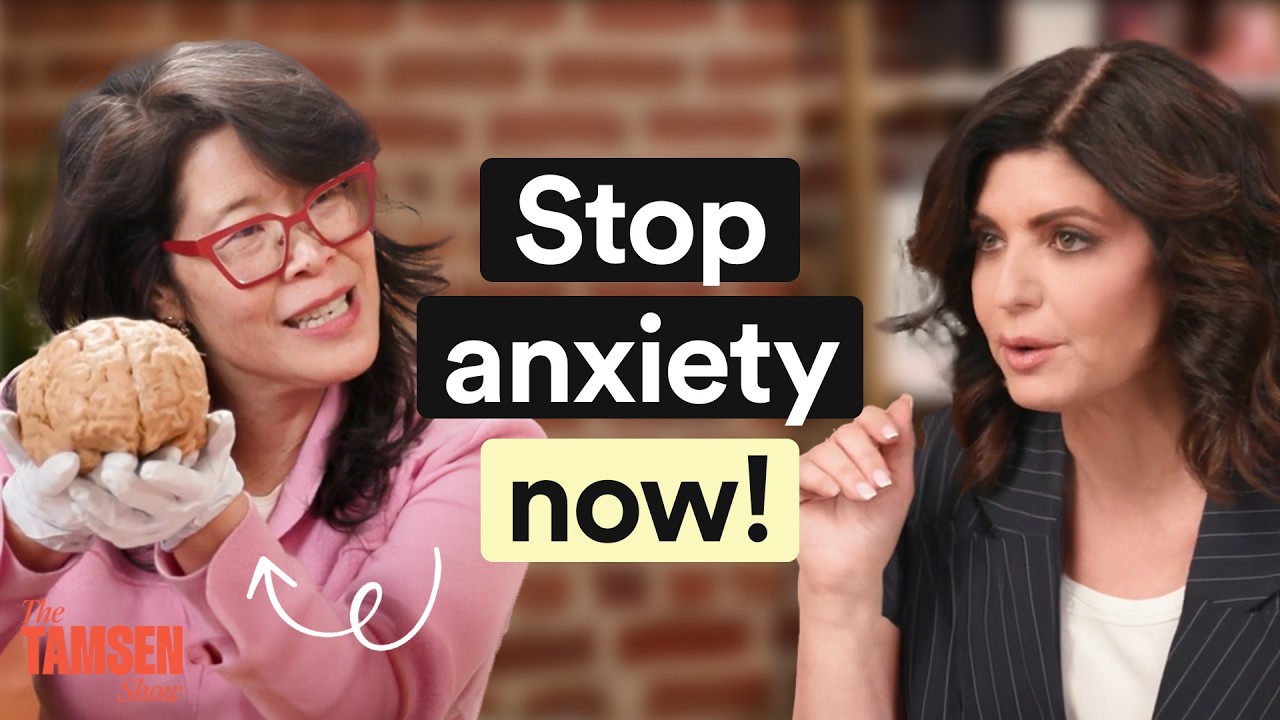
How do we navigate the complex emotions of midlife where dating, friendships, and our mental health all collide? If you're going to pick somebody to spend time with, make sure that person is adding to your life. I was single for nearly 10 years after my divorce, and ended up meeting the love of my life, Ira. For many of us though, breakups and then re-entering the dating pool can really feel terrifying. It was the routine that was killing me.
Our guest is Dr. Safai. She is a renowned psychiatrist based right here in New York City, specializing in high functioning depression, anxiety, and navigating relationships in midlife. You do not have the luxury. You do not have the time to waste it on subpar relationships, shallow relationships, men who take away from you.
You do not need that. We are living in a loneliness epidemic. And for so many of us, finding a new relationship or building meaningful friendships can feel daunting. You have to work on yourself and it takes time. From cultivating new friendships to divorce and then to dating.
Being a little bit scared is a good thing. You're going to look back and say, "I'm so glad I did that." Now, let's welcome Dr. Sophie to The Tamsen Show. Well, first of all, I had all these ideas of what I wanted to talk to you about, but as we're sitting here hearing your story, I want you to tell us a little bit about that because that is a cool story. You just kind of pieced out for a little while and did your own thing.
Sure. Yes. I was telling you that, you know, I I was from New York. I did my med school and residency in New York and I was living here for seven eight years and you know life started to get very mundane and routine and dull for me and I was going in and out of feeling I don't want to say depressed cuz depression is a clinical diagnosis that's not what I was felt like I was in a rut for a long time and I just couldn't pinpoint what the problem was. I honestly at the time I didn't know.
So when I finished my residency I decided I should just make one let me just do something differently. And at the time I was single you know I don't have any kids. So I was like let me use this opportunity to sell all my stuff including half my wardrobe because I decided to just pack one suitcase one carry-on that's it and hit the road. So I did just that. The first place I moved to was Colombia Medigin Colombia.
And from there I went to 70 different countries over 3 years just traveling trying to see the world, find myself so to speak. I don't want to say that because I wasn't lost. I was just trying to see the world and see what else is out there. And first of all, a I learned you don't need material stuff to be happy. I had one suitcase and I couldn't accumulate anything.
I couldn't buy anything because I didn't have room. I was on the road. And that's the first thing I learned. Then the second thing I learned was, you know, it was the routine in New York that was really bringing me down. You know, as soon as I would move to a new place.
And you know, most of us love traveling, right? As soon as we travel, like for a week, we go somewhere, we feel, we come back a new person. So, it it wasn't traveling that really lifted up my spirit. I noticed as soon as I get to a new place, I do all the touristy stuff for a week. I like find my favorite coffee shop, my favorite restaurant.
All of that. The first week is exciting. But as soon as I settled in and life developed a routine again, I would notice my mental health kind of going down. So I re quickly realized it wasn't the traveling, it wasn't, you know, it was the routine that was killing me. And so I, you know, after 3 years of doing this, I kind of slowed down now.
I realized how important it is to expose myself to novel stimuli. And you know, it is not practical for people to just travel forever like that. You know, every time you get tired of that's the extreme, right? You have to keep going. Exactly.
You can't do that forever. It's not for everybody. It's not practical. And like, you know, the world's a big place, but at one point you become tired, right? So, I really made it a point to prioritize exposing myself to novel stimuli in my day-to-day routine to get myself stimulated.
And I did a lot of research on this. There's science to back this. Once you're exposed to something novel, something different, a substance in your brain called dopamine, which is like the feelgood guard hormone, spikes. So, if you want to get, you know, that natural spike going on, just incorporate novel experiences in me a novel experience. So, let me say something very simple and basic.
You have your favorite food, right? You go to a restaurant, you usually order like I love fish, so I order whatever white fish is on the menu. Order the lamb. Something as simple as that simp like start there. As simple as doing something new or we were talking about this right now in New York.
Most of us like to wear dark colors, but something as simple as swapping out that dark color for a week for something bright like something your brain is not used to seeing is enough to get that dopamine spike. Okay. So, I have to ask you this question because this is the first thing I thought about because I've gone to countries by myself before and that first night's like a little you get a little nervous. Did you feel lonely at all doing that or did you always go to a place where you knew somebody? You know, being a little bit scared is a good thing.
It's it's exciting scared. You got to keep that in mind. Nobody's forcing you to do this, right? You know, ultimately at the end you're going to be happy with getting out of your bubble and exposing yourself to new scary stimuli. So, yes, those first few days might be intimidating.
You might feel a little bit lonely. You might even think, "God, what did I do?" But I promise you at the at the end, you're going to look back and say, "I'm so glad I did that. I'm so glad I came out of my bubble." All right, I've got so many questions for you, but I have to ask this one. What was in your suitcase? Oh my gosh, the most basic like basic things like, you know, I had like underwear like 10 of the same color or like you know, simplicity.
Simple as the simple life. That was probably great though, right? It's great. The simple life is beautiful, guys. I promise you, the simple life is beautiful.
How many pairs of pants, shoes? I had like one dark jean, one light jean, I had one sneakers, and like two flats. Not a lot. That feels really good. But that's all you need.
That feels really good. Well, I see that right now in midlife. I feel like I am shedding a lot of things. Like I notice that I think, you know, we have this one part of our life is about accumulation and now we're moving. A friend of mine says this, one part of our life is about accumulation and the next is about all this you know, curiosity and inspiration for this next second half of life.
I love it. Yeah, I love it. That's kind of cool. All right. I want to go into this.
What brought you into healthcare and and navigating mental health for women, especially in midlife? The need. When I was in medical school, I started to very much be in tune with the fact that the world is headed in I don't want to say dark, but it's headed in a way that mental health is becoming an issue for a lot of people. And thanks to that stigma being broken down, people are not afraid to talk about it anymore. People are not afraid to get treatment anymore.
So I thought it was a very critical time in our history and our culture that people are now finally able to say stop and say I need help and I'm going to get help. So I wanted to be you know be there to make it happen. It's not shameful. It's not you know there still is a little bit of a stigma. I used to work in a rehab facility and I noticed that and rehab is a broad term.
This doesn't mean just drugs. It means people who are going through you know life events you know grief, breakups, things like that. I noticed a lot of people who would come in would come in with this like it's like they're carrying a ton of bricks on their shoulder, like a shame that they need help, that they're coming here. But at the end, you would see them stand up a little bit taller. You I had this one actress who told me, "Why was I so ashamed of telling my friends and family that I'm getting help?" She was going, you know, she was going through life changes and she was just so ashamed that she needed help.
And at the end she she it cleared up for her. She said why was I like this? I need to be an advocate. I need to cuz she's you know a famous person. She was like I need to be vocal like why did I feel that way?
So I feel like still some people are ashamed because that's you know when I was growing up there was the stigma like if you were going through depression you didn't talk about it. If you were anxious, you just, you know. But now it's like people are starting to feel, especially the new generation, the younger generation is very in tune with their emotions and they're able to stop and say, I'm not feeling well. I need a break. I need help.
So, my generation didn't do that. Like, we we would be like, I'm okay. Everything it was this, it was this putting this mask on of everything's going to be okay because you were ashamed to admit. Now, I think the younger generation has taught me that it's okay to talk about these things. It's why it's why I talk about so much that I probably wouldn't have talked about 10 years ago.
I wouldn't have even imagined it. When you look at women, especially as we're seeing more and more women speak out about things that are a little a little more taboo, midlife, age, career changes, divorce, breakups, relationships. What do you think has given us that permission to speak out about things we wouldn't usually speak out about? I think it takes one person with a voice to speak out and then for other people to follow suit. That's why I'm always saying to people who have a big social media following or who are famous or you know a position of influence to use that I think they have a responsibility to use that voice because when you see someone you have idealized that you put up in a pedestal that you think is very successful telling you they struggled too it makes it legitimate for everybody else to say no me too.
So I I really you know people who are in a position to use their voice really should use their voice. Yeah, I agree with that completely. We talked a little bit earlier about relationships and dating and how difficult that can be for any age. I see it quite a bit in midlife, especially with divorce being on the rise. At the end of your travels, though, you you had some big changes.
I did. I met my partner as I was traveling through France. I was traveling through this tiny village in France called Aldoz and I met him there completely by chance. I was not looking. I think I'm ashamed to say this, but I was that at that point that I was like, I give up.
Like, I'm good. I'm a strong independent woman. I don't need anybody. I'm perfectly fine on my own. We're done with this.
And that's after years of struggling to date and, you know, disappointments and heartbreaks and the things we all go through. At that point, I was like, I'm done with this. So, I'm going to be on my own and it's okay. I'm It doesn't mean I'm lonely. It just means that, you know, I'm I'm just more comfortable being by myself.
And it was it was then that I met him and he changed my life and you know we're together now. And you know it it's funny. I was thinking about this today. I always had this idea like this checklist of what my partner was supposed to be like. And I've had this checklist since I was a child.
And he has to be like this. He has to do this. He has to come from that background. And my partner is none of those things. That checklist.
I could have burned it because what I ended up with is nothing like I the man you think or the partner you think you want is not the one you necessarily need. Yeah. Does that make sense? Yeah. Of course.
I mean I was divorced my 40s and then I got remarried at 50 years old and my husband Ira don't know that I would have picked him 10 years ago. It wouldn't he wouldn't have been I mean I I was looking for this you know I don't know this rough guy. I don't know what I was looking for, but it he wasn't on my list. And now I realize like, oh wow, that's what I should have been looking for all along. You know, I hear from a lot of women that are struggling, whether it's they're looking, you know, they they didn't find somebody and now they're hitting their 40s and they're feeling this pressure, right, that is so unfair in my opinion.
Or yeah, it's an awful it's an awful feeling to feel pressure that you've got to find somebody and I think that makes it very difficult. Or they've gone through a divorce now and they're they're single again and having a hard time kind of getting back into that dating scene. What do you recommend for people that might have been like you that said like I I give up. I'm done. I'm not going to, you know, I might not be able to travel the world for three years, but I'm not going to find anybody.
I'm just going to have some close friends and pay attention to my kids or concentrate on my job. I think it's first of all really important to take a hard look at yourself and see why you want to be in a relationship. It's different for everybody. Some people generally do not do well on their own. They feel very lonely.
They need the comp companionship. Others have pressure from their family. There's others who really want to have kids by a certain age. So, I think and it's different for everybody. You have to really sit down and be honest with yourself and see why you feel this pressure to be in a relationship.
Is it something you think you're supposed to do? If it's something you think you're supposed to do and your family and friends and society and the culture we live in is pressuring you, that's a red that's a recipe for disaster cuz you know you make mistakes when you rush it that way. If you genuinely feel like you do better if you're in a couple, you you do better when there's companionship. Those people, in my experience, are more patient. They wait till the right moment.
They don't settle. They know their worth. They know what they need in life. And they're in just a much confident, more confident place in life because I think they're in it for the real reasons, not these other reasons that a lot of us unfortunately. And that's where you make mistakes.
When you're under pressure, you make mistakes. You don't see red flags or you see them and you ignore them. And you might end up with somebody who's not good for you, which guys, being in a bad relationship is the worst thing in the world. Like my dad used to say, it's better to be alone than lonely with someone. Exactly.
I totally I never understood that until I was until I was sitting with somebody and felt very very l lonely myself and I went this is what my father was talking about all along. He he really had it right. Exactly. But I agree with you. There's a lot of pressure to be in a relationship not not just by parents or family but I just think you see people coupled off and you're the you feel like the odd man out and I went through that for 10 years.
I felt that way. I felt like I had to oh gosh I'm like the extra person. I think that's changed a little bit now. I I don't know that single, you know, is looked at like that, but I know a lot of people are very sensitive to it and they feel awful going home for the holidays or getting questioned by their family about when they're going to meet somebody. It's the worst.
It's just the worst. I know. It's It's like triggering. And I'm Middle Eastern, so I I get it. Like there's still like culturally that pressure.
I am too. I'm Lebanese, so I get I'm Persian. There's that, you know, pressure to get married and have kids and your relatives are always asking you about it. So I get it. It's it feels terrible and you get genuinely upset when somebody asks you why are you still single?
I mean, what kind of question is that? Horrible question. What should the response be if somebody asks why are you still single? I've thought about this a lot and I always say cuz I've been asked this a lot. I'm like, I haven't met the right person.
I'm taking my time. I'm getting to know myself. I'm working on myself. And when the time is right, he will come. I think you just don't even have to answer it.
I I'm trying to tell people, don't you don't have you don't have to answer it. You don't have to answer questions. Let's talk about women in midlife. They've been married for a long time perhaps. Kids are growing up.
Relationship looks a little bit different than it did when they were earlier in life. You go through a divorce and now you're back there out there on the dating scene. Do you see a lot of women that are are dealing with that or struggling with that right now? Yes. And I'm unfortunately seeing a trend.
A lot of these women rush into finding another relationship because they feel like they have to fill this void. They might have been in a relationship for 10 years. Now they're single. It feels a little bit uncomfortable, right? So they rush to fill that void with the next person that comes along.
That is the most concerning thing to me. You make mistakes when you do that. So I'm seeing this a lot unfortunately. So you know my advice always to people who just came out of a relationship is to you have to work on yourself and it takes time and that timeline is different for everybody else. So, make sure you're not bringing the scars, the baggage of a former relationship to your current relationship.
I mean, that it's not going to work out. Make sure you leave the time and when you're ready, you'll know. Work on yourself basically and figure out what you want. Yeah. Exactly.
And you change as a person. If you've been in a marriage for 10 years, 20 years, the person coming out of that relationship of that marriage is not the same person who went into it. So, you have to figure out who you are at this stage in your life, what your priorities are. You might have kids. They might be your priority.
You might be still building up a career. You don't have time anymore to prioritize subpar relationships. You have these other priorities. I mean, say someone at the age of 50 is divorced after 20 years. At age 50, you likely have kids.
You likely have a career, a thriving career that take up majority of your time. If you're going to pick somebody to spend time with, make sure that person is adding to your life. You do not have the luxury. You do not have the time to waste it on subpar relationships, shallow relationships. You know, men who take away from you emotionally, take away your time, drain your energy.
You do not need that. Men who need a mom. Men who need a mom. I like subpar though. I like subpar relationship.
I'm being nice. I know when we talk about that and we say like work on yourself. It's not always easy. It's just it's just not always easy. Like I don't I I always had a hard time.
I was I was when I was single, I was like, "Oh gosh, I was, you know, sitting there with my Chihuahua eating pizza on a Friday night and I thought it kind of sucked." So, how do you teach women how to work on themselves and feel good about it? So, working on yourself has different meanings for people. If someone came out of abusive relationship, I mean, that's a different type of working on yourself versus someone who, you know, their relationship after 20 years fell apart and they no longer had, you know, anything in common and that's why they got a divorce. So, it's very different for each person what that look working on yourself means. But I always say at least the things you can control are your health.
You can exercise, get healthy. Make sure you're in a good mental mindset and that comes with good relationships, friendships. It doesn't have to be partnership. Good health, exercise, good mental health. When you're in a good state mentally and you know, if you do whenever in life, if you struggle with confidence issues, that's something you need to work on cuz when you go into a relationship with confidence issues, we all know what could happen.
So this is how you work on yourself. These are things you can control. What you can't control is we talked about it like dating is not like work. With work you you are hustling. You get somewhere.
You become successful. With dating you can't work harder at it. It it doesn't work that way. The only thing you can control is yourself. Your mental and physical health.
Do you think more women are staying single longer? Yes. Why? Well, when my mom my mom's generation was growing up, oftentimes the women would not work. They were inside the home.
They had certain responsibilities. The man was outside the house. There was a dependency on each other. The woman financially was dependent on the man. The man was dependent on the woman for meals to care take care of the kids.
That dependency is gone. We don't need a partnership to survive anymore. Women are independent. They have their own money. They can order Uber Eats every day.
Even men can, right? You don't need companionship. And with the internet, it is so easy to be able to go out on dates whenever you want, meet up with friends whenever you want. So I think at a certain point in time where there was no internet and people were dependent on each other, you needed it. The need is gone.
So women, and this is a good thing, they don't settle anymore. They don't get married at 19 anymore. They focus on their careers. I mean, so that I just feel like that need gone. And that's the way the world has turned.
And you know, with it comes an adjustment period. It sucks to be my generation because you're stuck between the old way of doing things. You're supposed to get married, you're supposed to have kids, blah blah blah, versus the new where, you know, you focus on yourself and your work. And you know, I see this newer generation, they're not even thinking about marriage and like that is not even in their vocabulary. Like they So my generation is really stuck between the old and the new, which is a very confusing place to be.
It can be really confusing. I know if there's a woman listening to this right now and she's in her 30s and she's like, "But I do want to meet somebody and I don't know how to do it. I'm sick of swiping. That's not It's not interesting to me." Do you think good oldfashioned meeting somebody you know out there because your friends recommend it or you I guess traveling. Do you think that that exists for them?
How do you how do you tell somebody have some faith that you're going to meet somebody? Go about your life and have some faith that that's going to happen one day. If that's really what you want, it will happen. And I know that my mom used to tell me that my entire life. She's like, "Don't worry, he will come.
He will come." And I'm like, "How are you saying this to me?" Like, how are you just saying he'll come? I'm 37 years old. He's not going to come. My mom kept saying, "Have faith." And she was right. If this is truly what you want with what you do, with the way you carry yourself, with the choices you make in life, you attract that mate in the right time.
Timing. I don't know if you believe in God, but God's timing is perfect. You might feel like you need to be in a relationship at a certain point in life. It probably isn't the right time for you. You probably have more work to do.
I think about this. If I had met somebody when I was 34 before I hit the road, I would not have gone to 70 countries. I would not have seen the world. I would have not met the people I did, the food I ate around the world. I would not have not expanded my horizon the way I did.
And I was only able to do that because I was single. I had no responsibilities, no obligations, nobody to answer to. But I am so grateful for that experience I had for those three three four years because I came out a more confident person, a more knowledgeable person. My needs and wants changed in life and you know I attracted the mate that I was supposed to at that time in life. So now looking back I realize you know girl 3 four years ago it was not the right time for you but now I understand.
So one day you will understand why it didn't work out with all those other people. You will understand why you had to go through the heartbreaks that you did because once you are in a good relationship, you appreciate it 10 times more. Every day I'm so thankful for my partner cuz now I understand like all those other flawed relationships I had. I understand why they didn't have to work. I understand why they were toxic but at the time it didn't.
So have faith he will come or she or whoever you know. Well, I want to talk about that. A lot of women do remain stuck in toxic relationships. That can that can do a a lot to our body. The stress, the anxiety, the hormones on top of that.
Suggestions for women that may feel like they're in a toxic relationship right now. So, what I've noticed of why people stay in relationships that are not good for him is fear. And this fear is, what do I do without him? What do I do? If I leave, I might not ever find anybody else again.
It's all based on fear. Because who wants to stay in a relationship where they're stressed every day? Who wants How do you get rid of that fear? You're you're you're in a relationship like that. It's it's like you're just hearing your own voice over and over again.
But you have to understand what it is you're fearing though. It's different for a lot of people. Oh, I remember at one point in time, I was like 27 years old. I had a terrible boyfriend and my fear of breaking up with him was like, "Oh, people are going to I mean, this is childish, but what people are going to ask me what happened to my guy that I was engaged to and you you know, what am I going to tell them?" Like this this is the dumbest fear in the world. What am I going to tell my friends?
But like I'm saying like everybody's fears are a little bit different. So you got to figure out what your fear is, why you're stuck in this relationship, and take it and run with it. If you need professional help, get it. Sometimes, you know, when we're in this bubble or we're when we're in this toxic relationship, we don't have clarity. We get tunnel vision.
We don't understand. And no matter how many times our friends or family tell us that, you know, something's not right. We just don't get it. So, so I tell those people like, you need professional help sometimes. And it's okay.
If you're stuck in a relationship that's not serving you, talking to their therapist is not the worst thing in the world. If women do not want to go on dating apps as a psychiatrist, what do you recommend? Find what you love doing and do it and you will attract the person who's like-minded. So, for example, I love skiing. I was in the French Alps skiing.
I found him while I was skiing on the French Alps. I was doing what I romantic, you know, I did what I love to do. You know, I wasn't going out of my way thinking how am I going to meet men. That's, you know, that's no way to live your life. Do you do what gives you pleasure?
The right man will be attracted to the things you like as well, and you'll meet that way. What advice do you give for women who are struggling with ghosting? I got to tell you, someone who ghosts to see you is probably not worth it to begin with. Why? Because people are choosing to not be confrontational, not verbalize why they don't want to see you again because it's uncomfortable for them.
A person who can't explain, verbalize why they don't want to see you again. They rather avoid than confront you. How is that person going to do in a relationship? Relationships are full of little things, little you might fight with your spouse. You have to be able to properly deal with confrontation and express what you're feeling, your likes and dicks, whatever it is.
So, someone who can't do that, who rather avoid is a big red flag to me. So, you lucked out. I agree with you. I think you lucked out on that. But, I think it's hard because you're you're pl you're replaying that, you know, you're replaying that narrative.
What did I do wrong? What was the last conversation? How did I mess up? I I think it's hard to stop replaying that. It's really is.
But remember, this is not about you. You don't know what's going on in that person's life, what they what stage of life they are and what what they need right now. And the timing might have just not been right. Just just remember it's not about you. It's about them and where they are.
If they didn't like you to begin with, they wouldn't have come out with you. They they wouldn't have gone on a date with you or dated you to begin with. So just remember this is not about you. You know, we talk a lot about on this show about women in pmenopause and menopause and women in their, you know, late 30s, early 40s are looking at pmenopause now and realizing, hey, this is something I have to pay attention to. Mood changes come during this time.
It's a big deal with hormone fluctuations. How do you determine what is a mood change due to pmenopause or menopause or something more serious? You know, I'm really glad you mentioned this because I'm I'm a physician, but we we didn't learn much about menopause in medical school. We just didn't we it's I look back on it now, I'm like, how was this even possible? We we learned your body.
What did you How much did you learn? Very little. Like half a lecture. Half a lecture about menopause. Yeah.
Did you hear the word permenopause in medical school? Not too much. No. So, did you have to learn it on your own? Yeah.
And it's for people like you who are vocal about it that there's so much spotlight shed on it now. So I want to thank you for that. It's thanks to you and people in the media who have a voice that shed light on it that the rest of us are now more aware. So I'm pretty 100% sure the medical curriculum is going to be changing. People are going to be talking about it.
So thank you. So what do you think the difference between those mood changes that we talk about in par menopause and if it's something more serious? How would how would somebody decide that? Because I I mean just from somebody that went through it, I went through these mood changes where I'd wake up and I was like I had rage or anxiety or fear or lack of confidence at work, you know, I' I'd get nervous doing the news when I had done that job for 30 years and I didn't know how to handle it. So when someone comes to me with a mood problem, our in psychiatry or in mental illness, we always say something is a disorder once it disrupts every aspect of your life.
So something is not categorized as major depressive disorder unless it's affecting your social life, your occupational life, your if you're in school, your school. So once it disrupts every aspect of your life, we say, "Okay, you have a serious mood condition. You probably need medications. You probably need therapy." The thing I've noticed with people who are in pmenopause or menopause, it's not severe enough for them to be crawled up on the floor or hospitalized or like dysfunctional, but it is they're struggling. They're suffering.
They're not the same. They're wondering what's going on in their body. So, it's not as severe as that. So, it doesn't get the attention that something like major depressive disorder does. Unfortunately, maybe if the symptoms were I don't want to say I want them to be more severe, but if they were more severe, maybe people would have paid more attention to it.
But, and speak from your own experience. You you're still doing life, but it was harder to do life. Whereas with a a major mood disorder, you can't do life. Does that make sense? Yeah.
You specialize in high functioning depression and anxiety. Talk to me a little bit about high functioning depression, what it is, and then how to start tackling it. Highly successful people who are you you from the outside they look like they're on top of the world. They're very functional, but they're struggling on the inside silently. So when I again I say like sometimes it's good for a mood disorder to be severe because you realize you need help and others around you realize you need help and you're struggling and you get into treatment.
Sometimes you're hospitalized that's okay. You go on medication that's okay. But something with high functioning depression you're functional but you're severely struggling on the inside for years. And from our mind you high functioning depression is still not a DSM diagnosis. It's still not recognized as what is it?
Tell me what that means. DSM is like the bible of mental illness basically. It's the book we refer to. It's called the diagnostic and stat statistical manual of mental disorders. It's like you all the disorders are in that book.
High functioning depression is still not on that book and it's recently been getting more attention. We just call it something called dysia which means a chronic unhappiness which is very hard to treat and it's more dangerous if you ask me than something like major depressive disorder that has a treatment. People who struggle with chron with dyomia or high functioning depression are at a constant low. They're at a constant low no matter what they seem like on the outside. So on the outside they seem like exactly very successful, very productive, very like all these celebrities even I think Avichi was also one of them.
But then they suffer in silence and one day the ultimate tragedy happens suicide. So unfortunately I think nowadays we're getting more awareness about this about high functioning depression how you could be functional you could be successful but struggling at the same time. What should people look for in that or in somebody a loved one so they're aware of that. So what I think is a major red flag whether you're you know just a normal person going to the dayto-day there's a condition called anhidonia which means the absence of pleasure. When you're very depressed or when you're even sometimes the stomach, you go through these severe episodes.
When you feel like nothing in life gives you pleasure, and I'm talking like when you have a nice meal, it feels good. It gives you pleasure. When you see a nice movie, it gives you pleasure. When you cannot feel pleasure at all, that is the most dangerous sign to me. And I a lot of my patients who have committed suicide, who have died by suicide, have said that they have reached that stage where there is nothing in the world to deprive the least bit pleasure from.
Do you understand how how dangerous and how just is that chemical concerning chemical? Is that medicate? One of the one of the symptoms of the severe depression and people who are chronically low do go through these episodes where they become severely depressed and then they get better. So that anhidonia that complete absis and pleasure to me it's the most dangerous because you have absolutely nothing to live for. Nothing in this world is giving you any sort of happiness.
So that's I think if you've reached that point and there's a lot of steps that happen before you reach that point. Please know that you need help immediately at that point. So important because we throw those words around. We talk about depression. We talk and we don't really I we don't all I don't know the definition between a lot of those.
But you're right that that is a point and those are examples, absolute examples. And thank you for saying throwing those terms around because people do throw these terms around. Oh, I'm depressed. Oh, I'm OCD. Oh, I have PTSD.
These are real debilitating illnesses. We should not be tossing them around. You're not depressed. You're having a bad day. You're sad.
You know, you don't have PTSD, which, you know, a lot of people struggle with real PTSD, flashbacks, nightmares, hypervigilance, paranoia, depression. Like, these are symptoms of PTSD. You are, you know, traumatized, having a bad day, you're traumatized because your boss yelled at you. That's not PTSD. Please don't, let's not minimize the struggling of people with these real disorders by, you know, just tossing these terms around.
Can you explain the connection between thyroid hormonal imbalances and mood disorders? Yes, and I'm so glad you asked. One of the first things we do when someone comes in with a mood disorder is do a complete blood work because a lot of times medical stuff masks themsel in psycho in psychological symptoms. So if your thyroid is hypo as in it's not working the way it's supposed to, one of the first signs is depression. You feel lethargic, you start gaining weight, you start feeling cold, you start your mood, you you feel just lethargic and unhappy all the time.
So there is a direct connection between the different organs in your body and especially your thyroid and how your brain is functioning. So I think if you are struggling with a mood disorder, it might be a good idea to do a complete blood workout, a blood workup. We see a lot of women though start to see thyroid disorders in midlife around the time of menopause. It could happen. You know, I've seen it too.
I've seen hypothyroidism. A lot of times it starts younger in life because it is an autoimmune condition, but it can happen any happen at any point in life. That's why if you go to a psychiatrist, it you know, if they don't do a complete workup, it's I to me it's not a good idea to start a medication for psychiatric reasons without trying to rule out any sort of medical underlying condition. We see that a lot though in menopause because women or permenopause because women come in with, you know, with mood changes, with anxiety, feeling rage, and they're handed anti-depressants and in reality, possibly what would have helped with some of the symptoms of menopause would be hormone therapy, you know. Yes.
But to your point, pmenopause sometimes takes years. So, you're kind of in this limbo stage before you reach full menopause. Once you do reach full menopause, hormone replacement therapy will help you 100%. But I think a lot of women get stuck for years in this funk so to speak of pmenopause where you're like what's wrong with me? Like everything's functioning like your blood work comes back all normal.
Everything's functioning normal. So doctors go to the next best thing that they have and you know anti-depressants can help. They do lift your mood. They help with your anxiety a little bit. But I think sometimes it takes years before you can get the diagnosis of menopause or parmenopause.
Unfortunately, I wish we had better tools at our disposal to be able to detect this faster. I really wish that, but science just has not advanced that much. And I think things that are related to women, even people who I've heard from younger folks with endometriosis, it sometimes takes them years before they get a diagnosis. Women in medicine, you know, the the field, most of the experiments back in the day, most of the studies were done on men. So women are still lagging behind and you know I'm glad we're we have awareness about this now and more and more research is being done on women but we're still just behind in medicine.
Okay. I want to go back to what you said at the very beginning is that having those little novel pieces of happiness. So if someone's listening to this right now and they're like gh I'm feeling that exact rut that she was talking about. What can they do? Give me one or two things that they can do.
We know food ordering something different off the menu maybe changing the color of of what you're wearing. So, I do this thing with my workout routine. Like, I like waiting lift. I hate cardio. I hate aerobics.
Oh my gosh. I mean, it is pure, but I do it I torture myself every once in a while with different types of exercises because I know it's something novel. I know my body's going to hit it. My brain dopamine spike because it's new. So, simple things, things that you don't even think could be good for your mental health, could give you that dopamine spike can as long as it's difference from your regular routine.
So, you know, I'm this weekend I'm doing this like painting thing. Like it's a class where you like sip on a little bit of wine and paint. Like I've never done anything like that before. And you know, it might not seem like grand. It's not a trip to, you know, a coast, but it's something different that I've never done before and I'm going to do it this week cuz it's cold outside and I have nothing else to do.
So, just lit anything you can think of that gets you out of your bubble even though it might feel uncomfortable. And remember, the more uncomfortable it feels, the better it is for you ultimately. You you grow, you learn, you get out of your funk. So do anything that you haven't done before. You're wonderful.
Thank you. Thank you. Dr. Safai has been an absolute gift. I feel like every time she speaks, she's unraveling layers that I didn't even think about.
Her insights on navigating midlife and protecting your mental health are invaluable. Definitely walking away from this one with a lot to think about. How the quality and quantity of our relationships impact our overall well-being. If this conversation resonated with you, I would really love to hear your thoughts. If you're enjoying these discussions, don't forget to leave a fivestar review wherever you're listening.
Thank you, and I'll see you next time on The Tamsen Show. The Tamsen Show is an original production by Authentic Wave. Executive producers Scott Weinberger, Kevin Bennett, and Rebecca Greersonen. Brand director Johanna Offnik. Our line producer is Sabrina Surere.
Editing by Zach Smith and Marquee Harris.