The thing that I think is really interesting is that I am having more and more people in my practice who are in their 20s, very late 20s, early 30s, who are coming for sleep treatment, which I never really saw before. But don't fall asleep on the couch. You're going to start Yeah. What? Why not?
Cuz you're going to train yourself to start sleeping on the couch. I'm sitting down with Dr. Shelby Harris, one of the country's leading sleep experts. We're talking about what actually works to fall asleep and also to stay asleep. More than 60% of women report sleep problems during pmenopause and menopause.
But it's not just about being tired. When you don't sleep, it's nearly impossible to think clearly, to manage emotions, to make good decisions, or to even show up as yourself during the day. I always say that sleep is like the bedrock. It's not one of the pillars. It's the stuff that everything else builds on top of sleep.
So, if you're getting good sleep, you have a good foundation for all the other good things that are going to happen with you. If you're in pmenopause or menopause and you're just tired of being tired, this episode is going to give you the clarity and the answers you have been looking for. There are people who really thought that there was nothing that they could do for so long and they've tried all the sleep hygiene and then they come and we do some CBT for insomnia, maybe some other work, but now she's not on any medication. She's sleeping so much better. And this patient and you can just see how happy she is like now that she doesn't have to rely on meds.
Let's do the myth bus. Yeah. Women need less sleep after 40. If you see a doctor who tells you that it's normal to sleep less as you get older, find a new doctor. Let's go ahead and get into it.
Dr. Shelby, it's great to see you and have you here in the studio. It's so good to see you. So, you know, we're going to talk about sleep, which I has become one of my favorite subjects. Good.
I know because I always want to improve. It changes a lot. I want to ask you this, and I don't know if I've ever asked you this before. What made you focus on wanting to help women in midlife with sleep? You know, it was it was something that I just started noticing happening more and more with my patient population over the years that I had more women who were just in midlife.
So, that's where I really started to focus my practice on mostly in midlife and then having a problem sleeping I guess. Exactly. So I was seeing more and more patients with insomnia and then I was like well they're really in midlife and these women were going through pmenopause menopause and people weren't talking about that area and that time of life as being a very distinct challenge for sleep. So that's why I started to focus on it and it really is. So is it true that we sleep worse after the age of 40 or do we just sleep differently at that point?
Both I would say. So some some people have always had trouble with sleep and they might develop new sleep problems. So they might develop, let's say, sleep apnea or their insomnia might change. Other people never had sleep problems and they just start to develop insomnia when pmenopause starts to hit. So they might notice their brain's more active than it had been.
They're having hot flashes, night sweats, all of that. So let's talk about that shift that happens because I feel like there's so many things that that happen during it and we blame a lot of things, right? So we blame, maybe it was too much stress, maybe I went to bed too late, maybe it was caffeine, it could be everything, it could be none of those. You could be absolutely quote perfect. So what is a shift that happens during perry menopause when it comes to sleep?
So there are three different areas that I always think about when it comes to that stage of life. The first one is the biologic changes that happen. So these biological changes are those hormonal changes, right? So the drops in estrogen, the drops in progesterone and they happen at varying times. So you don't know it's going to happen like in two weeks from now.
So they start to have trouble with their sleep through that. Then there's also these psychological changes that happen. So we know that women tend to have more anxiety and depression and we see that happen in that stage. And then finally there's social stressors that happen. So we are a a lot of women are having children later in life.
They're working. They're a sandwich generation. So they're never really able to turn off the brain. So it's like this perfect storm of these three different areas. And that's why we start to have it at that time of life.
Yeah. What do we need to do in order to go to sleep? Whether it how does that work? Because I guess that's that's kind of the question like you've got the hormonal issues that are going on, you've got the stressors that are going on, you've just, you know, everything is kind of changing biologically at the same time. But what needs to happen when you get into bed?
Because I I think you said it to me like we do a whole bunch of other things and we we plan and prepare and then we sleep, we're like, I'm just going to jump into bed and fall asleep. We don't really always prepare for that. Yeah. I think a lot of people think of sleep as this onoff switch. And if you're someone who gets in bed and you just pass right out, it's very possible you're either sleepd deprived or you have something else that's going on that's making you fall asleep.
You shouldn't fall asleep immediately. Should take about 5 minutes at least. So the goal is to really wind down a bit. So what does wind down mean? It could be 10 minutes.
It could be a half hour. It could be an hour for some people before you get into bed. Exactly. So there's not one like people are very interested in what I do to get to bed at night. It's not that interesting.
Like I read I read Tell me about your boring routine. I literally when the pandemic started, I said to myself, I'm going to finally start stretching. So before bed. Yeah, before bed. So I did an app.
I would look at it at first and then I got used to it. So now I know what to do. And then I get in bed. I read a magazine, read a book or something and I go to bed. It's not that interesting.
And you fall asleep. I fall asleep within 5 to 15 minutes. But there's the occasional night where it does take me longer. I'm a I'm a human being. But but that's the part that's interesting is that you do fall asleep because I have to tell you like I could lay there sometimes 30 minutes, an hour, turn over, put my phone on for a minute.
I know not one of Dr. Shelby rules. Okay, so let's talk about when you should consider that you have sleep issues going on, whether or not it's a normal sleep issue or whether or not it's something that you should be treating. Yeah, I think the thing that people should do is first and foremost always think about the sleep hygiene stuff, right? So, like we were just talking about, the screens are not always horrible, but it's it's like what are you looking at on it?
So, are you then scrolling? Are you doing scrolling? You're getting suck sucked into all this other stuff that is activating. So, screens, alcohol, caffeine, all that stuff that we always talk about. If you're doing that and you're still having trouble with your sleep at least three nights a week routinely or even if you sleep okay but you feel horrible when you get up then you want to see someone.
So I usually say like do sleep hygiene for about two weeks and if you're consistent with the same bedtime, wake time, all that stuff, you're getting enough sleep and it just or you're not getting enough sleep, it's not working, then see a definitely see a specialist in sleep medicine because there could be something else going on. Exactly. That's beyond your control. Exactly. Let's talk about temperature in the bedroom because I know that part of sleep hygiene is to kind of keep your bedroom cool, make sure it's dark.
Can you go over what sleep hygiene is? So, sleep hygiene, we often talk about it. My colleague Rachel Mamber said it was like dental hygiene. So, it's brush floss every single day and that helps to prevent a cavity. Same thing for sleep hygiene.
So, we think about it as like the room temperature, right? So, you want cool, quiet, dark, comfortable. Cool is usually in the 60s Fahrenheit. I know. I know.
I love Is it really? Is it like 68? People will often say 67, but it really is not that's not a one-sizefits-all because in different parts of the country with the humidity levels, it feels very different. So, somewhere in the 60s. Some people like it in like I couldn't do this low to mid60s.
We keep my house at about 68. My mom, I love her dearly, but she wants to have the house at like 78 every night. And I will not stay at their house if it's that warm. Yeah. But you want it somewhere in there.
Okay. So, that's your temperature. You want to make sure it's dark. Try to cover up lights. Anything else?
So, something I think about a lot with my patients right now because it's summertime, the sun's coming out here in New York at like 5 in the morning. So, when I see someone's sleep diary and they're having a lot of these 5 a.m. Awakenings, that's the first thing I often think about this dark comfortable. What's comfortable mean? Comfortable.
It's it's so like personal. But people are sleeping on a mattress often that's 20 years old. So if your mattress, if you have the pillow, the same pillow you've had for years, it's like so flat. If there's a dent in your mattress, get something new. Dr.
Shelby, can you explain what is your circadian rhythm? So circa means about dion a day. So it's your body's rhythm that's about a day long. So when you go to bed at night, your body starts to have melatonin about two hours before you go to bed that starts to get released and you start to get sleepy. And then throughout the night, you stay asleep and then you wake up in the morning.
That's that temperature, body temperature. We were talking about your body temperature drops right before bed and then starts warming up in the early morning hours and it's just night and day. So that's what we have to keep consistent. You might have little dips here and there during the afternoon like after lunch but that's that's why we talk about keeping a consistent sleepwake schedule because it keeps your body's clock in check. Does that shift with everybody or is it shift in particular for women that are in permenopause menopause?
Yeah, it shifts for everyone actually. So when you're young, when you're a young kid, you go to bed early, you wake up early. Then you become a teenager, you go to bed later, you sleep in. And then when you become an adult, it kind of goes a little earlier. And then sometimes we see as we get older, you start going to bed early and wake up earlier again.
Let's talk about some of the reasons that you would be treated for sleep or some of the different things just so we can define what each what each thing is. So I want to talk about the difference between insomnia and sleep apnea. Yeah. So to two totally different things but you can have both which is very common. So insomnia when we have many people have just an episode of insomnia where they have a night of just poor sleep here and there but real chronic insomnia or actually diagnosible insomnia is trouble falling asleep staying asleep or andor awakening earlier than you would like to and it has to create some problem for you.
So it's not just being a short sleeper. It's like I'm annoyed by it. I feel like I'm not focused. That and if it's happening for at least a month, that's short term. And if it's happening at least 3 months, for at least three nights a week, that's long term.
So that is considered insomnia, right? So a lot of people have insomnia and they don't even realize it because they just think it's like, oh, I just have trouble sleeping, but it's only three nights a week. Well, three nights a week is the criteria. And insomnia is how many hours that you would or wouldn't sleep. And that's a great question that I get all the time.
It's really not about the number of hours or number of minutes awake. Some criteria will say 30 minutes, but really it's more about perception. So if you're bothered by it, you're probably at least a half hour that it's taking to fall asleep or wake up. So that's insomnia. Now, sleep apnea is a totally different thing.
So sleep apnnea is when you fall asleep at night, you have an your airway has muscles in it, right? And when you're falling asleep, you relax the airway. So there's different types of sleep apnnea, but the most common one is obstructive sleep apnnea. So once you fall asleep the airway loosens so much that you hear you have this kind of like flapping and then then what happens is then it closes completely or partially and that's an apnea or a hypopnia. So not getting oxygen throughout the night.
So that's what happens multiple times and then when you have not enough oxygen your brain says your brain says protectively wake up. So you go and you wake up and you everything tightens and then you fall right back asleep. Most people have no idea it's happening. Mhm. No idea at all.
And in women, it's often misdiagnosed because the typical the typical screener that we have for it is called the stop bang questionnaire. And that actually is not really great for women. For women, they'll often report that they feel tired, not sleepy the next day, maybe some more depression. They might not snore overtly. They might just have pauses in their breathing.
So, and also it just people don't report it because they don't feel like it's sexy. They don't want to like it's not very womanlike. They might say things like that. So it's really gets misdiagnosed all the time in women and or missed I should say. So if you you can have sleep apnnea but you can also have insomnia on top of it.
So some people will wake up from an apnea but then they have their insomnia kicks in and they can't fall back asleep. They can't go back to sleep. Is is that prevalent? Is that more more do you see it more in women that are in pmenopause and menopause or could that be at any time during your life? We see apnea happen more in women once they hit pmenopause.
So the rates are more in men when they're younger, but they actually start to even out more when women hit per menopause because of the loosening of the airway. The muscles just aren't as rigid and tight. So that's what tends to happen. So is it like a lack of estrogen or lack of hormon There are some people that are suggesting that that it's the hormonal changes that are causing causing the loosening of the airway. And there are some people, this is nothing that is at all a standard, but there are some people that are suggesting like maybe there's a role for MHT in the future because it might help to actually tighten the airway a little bit.
Menopausal hormone therapy. Exactly. As part of what? As part of a a solution for sleep, a possible solution. Wow.
Potential. No data behind it yet, but it's definitely something people are starting to think about, which is kind of on the show. We're always screaming more data. So I I hear you. That we'll just add that to the list.
If you're listening to these symptoms of permenopause and thinking, "Oh my gosh, I think that's me." It's time to start tracking what you may be experiencing, I created a free symptom tracker to help you do just that so you can get clear on what's happening and advocate for yourself and walk into that next doctor's appointment with confidence. Take a look in the description of this episode. The link is right there in the show notes. Let's get back to the conversation. Let's talk about a couple other things because I want to get these names then we can kind of go into solutions.
What is hyperomnia? Because I had not heard about it. And then how can it be treated? So insomnia, not getting enough sleep. Hyperomnia is the exact opposite.
So you're sleeping too much. So there can be a bunch of different types of excessive sleepiness disorders from narcolepsy to even sleep apnnea causes hyperomnia. So you might sleep more because the quality of your sleep isn't that great. So there's a lot of things that can cause hyperomnia. Grinding teeth at night.
There's so many things. I feel like some people would welcome you know, sleeping too much at this point, right? But it's really not healthy for you. It's not healthy. It's like people would say, "Oh, I'd love to get 10 hours of sleep at night." But for some people, they are naturally long sleepers.
But if it's getting in the way of you living your life and especially if it doesn't feel restorative, that's a big problem. So, you sleep a lot and then you're still exhausted. Exactly. And any of these are a reason to see a sleep. 100%. 100%. Yep.
All right. Let's talk about chronic sleep deprivation and how that changes. So chronic sleep sleep deprivation there can be different types throughout like there's it's not a diagnostic category necessarily but people often will not get enough sleep when they're younger because they're working so much or they're out late at night and then as they start to get older it can now start to look more like insomnia and all these other issues that might start to take hold. So, we might see some people with insufficient sleep syndrome, then it might become like insomnia or something like that as they're getting older. So, let's talk about the consequences of poor sleep because I feel like it's one thing to be annoyed by it.
It's another thing for it to really impact your metabolism, your weight, your mood, your long-term health. Can you talk about some of those long-term consequences that you can have if you really are getting poor sleep night after night? Yeah. So sleep quantity and sleep quality are both important. So if you're not having either of those things together, then what we see is it's affects so many parts of your body.
So from your mood to your thought process, cognitive function, cardiovascular system, you were talking about weight, you might have issues if you're not getting enough sleep, then you're going to actually start to eat more because your brain is not getting the full signal. And it just really balance absenteeism at work, quality of life. I always say that sleep is like the bedrock. It's not one of the pillars. It's the stuff that everything else builds on top of sleep.
So if you're getting good sleep, you have a good foundation for all the other good things that are going to happen with you. I got to say when I I didn't know I was in pmenopause when I was in it, but my sleep completely changed. I was the person that would hit the bed, be in a car, be on the subway, I could fall asleep like that. And then this time period hit and there was nothing I could do. It just didn't matter.
When we talk about some of the different options out there, I want to I want to talk first, I guess, about the number of hours we should be sleeping and then go into some of the solutions. So, how long should we be sleeping every night? So, it's generally for much of the population between 7 to nine hours. That's where they get the eight from. It's just in the middle.
That's it. Okay. So, seven to nine hours. There are people though who do better with about six and some people who do better with nine. So there are outliers, but it's really about quality as well.
So I would rather someone have a little less but better quality than 9 hours of broken throughout the night. And what does quality defined us? That's an excellent question. It's hard. It's like how do you feel during the day?
Okay. So if you feel like it's restorative sleep, then that's a good start. Is that the where we go into REM and all that? Because you I've got the tracker now and I don't even know half those things on the tracker. Like I want to know all of it, but I feel like as long as I get, you know, a good score or I'm in the green, I'm I'm doing well.
Yeah. It's really about how you feel. So, you don't even need the tracker. Honestly, it's really it's about how you're feeling during the day. And if you find that you're waking up a lot at night, even if it's quick, but you're having very broken sleep, that's probably not great quality.
So, you want to get that evaluated. So, you want to stay asleep. Yep. Or you might have awakenings, one or two awakenings at night to use the bathroom, that's totally normal. But if you feel like it's like a lot of awakenings, that's not good.
Okay. So you talk about CBT eye therapy. Can you explain that? That's a specialty and something that you focus on with with people that come to you. Yeah.
So CBTI, cognitive behavior therapy for insomnia is really it's the gold standard treatment. It's the first line treatment for insomnia ahead of medication, believe it or not. And that even is important for women in pmenopause and menopause. So we might sometimes use hormonal replacement. We might also use CBTI.
It really does work really well even for women who are having hot flashes. We don't fully know why it works, but it does help with hot flashes in in a number of women. So, what it is is it's people often think it's sleep hygiene. It's not. Sleep hygiene is just a tiny piece.
So, you start with the sleep hygiene, but then we limit the time in bed. So, a lot of times people are in bed 8 n hours a night, but they're only sleeping six hours. So, I might actually limit that at first. It goes against common sense to help really make them sleepier and increase their sleep drive so that they sleep throughout the night. They might have a quick awakening and go back to sleep.
I might have them go to bed later because that might actually help them fall asleep faster. And then we move it earlier once they're falling asleep faster so that they can get more sleep. We also work on what people are doing in the middle of the night. So are you getting up? Are you laying in bed trying to force sleep to happen?
All those sorts of things. Then we work on like the thoughts about sleep like if I don't sleep I can't function tomorrow and we'll challenge some of that stuff. Yeah, let's talk about I'd like to go into it. So somebody comes and says like listen I need CBTI and I want I have insomnia or I'm just not able to sleep. Is it you can do it for a number of different things.
Would you recommend that if you're a woman in pmenopause and just can't sleep. You've tried everything. Nothing else is working. It's very effective for people who have insomnia. Yeah.
So you come in and you adj you adjust sleep schedule. That's the first thing. Yep. Then I will also talk about what they're doing in bed. So, a lot of times people never thought about sleep before and now it's preoccupied.
Like they're preoccupied with it. So, when the night comes, I often hear people say, "I dread the night as it gets closer." Yeah. It's so true. I understand that, right? It's so true.
So, they might be tired but wired at night. So, they were like, "I'm so exhausted. I just want to get in bed." But they're not sleepy because they're not falling asleep. So, I might adjust what they're doing before bed and have them go to bed later. So, they're not putting as much effort into it.
So, what would they do instead of panic? I don't care. It really doesn't matter. There's no magic thing. It's they can they can watch TV even.
Believe it or not, they can do I have an People will say like I'll have them go to bed a few hours later and they were like, "I don't know what to do. I'm so bored." Is there a drawer you can clean out? Wow. Right. It doesn't matter.
Just stay up later and maybe unwind a little bit before, but not hours before. And so, I'll have them change that. Getting up at the same time every single morning and not compensating for a bad night of sleep is super important. So, we're going to pick awake time. We're going to pick a way that they can use an alarm clock, not their phone, because a lot of people just if use their phone as the alarm clock, so they're looking at that in the middle of the night.
No. So, we're going to use an alarm clock maybe. And then we'll also talk about maybe if they're up in the middle of the night, what are they doing? So, getting out of bed, it really there's no magic answer. It's some people read.
I honestly if I have a rough night I get out of bed if it's really bad and I go through I collect cookbooks. I go through my cookbook collection. You do. What do you do with them? I literally just look through them and I earmark things that pretty pictures and things that I want to make in the coming few weeks, months, whatever.
It's that's your Yeah. People laugh at me, but it works for me. And then you go back to bed and then I go back to bed. Right. I think I feel like I could have had my whole house decluttered by now with the amount of sleep that I don't get, but I just lay I lay there and panic.
Right. But what happens is the less time that you spend in bed and if you restrict that time a little bit with the guidance of someone who or an app or someone who can help you, you fall asleep faster and you stay asleep more in the middle of the night. So you don't have to get out of bed as much in the middle of night. Your brain is just not as active because you're spending less time in bed. So the therapy is one way to do it.
Yeah. Is that work better than different sleep medications or other kinds of treatments? So it's we consider it better in the long run because once someone starts on sleep meds, yes, there are some people who just need it for a short time, but it's pretty unusual that someone comes through through my door who's like, "Oh, I stopped the sleep meds and I was fine." Usually they once you start them, it's hard to stop them long term. And as when we're talking about people in pmenopause and menopause, right, we're talking about people in their 40s, 50s who are now on sleep aids. Then it becomes a real concern of ours for falls, accidents, memory problems.
We don't want people to now get into later years having a sleep medication. So it's really not our preferred first line of treatment. So the therapy, CBTI, is a first line of of treatment if nothing else has been working. Exactly. Where do you find the courses or a coach?
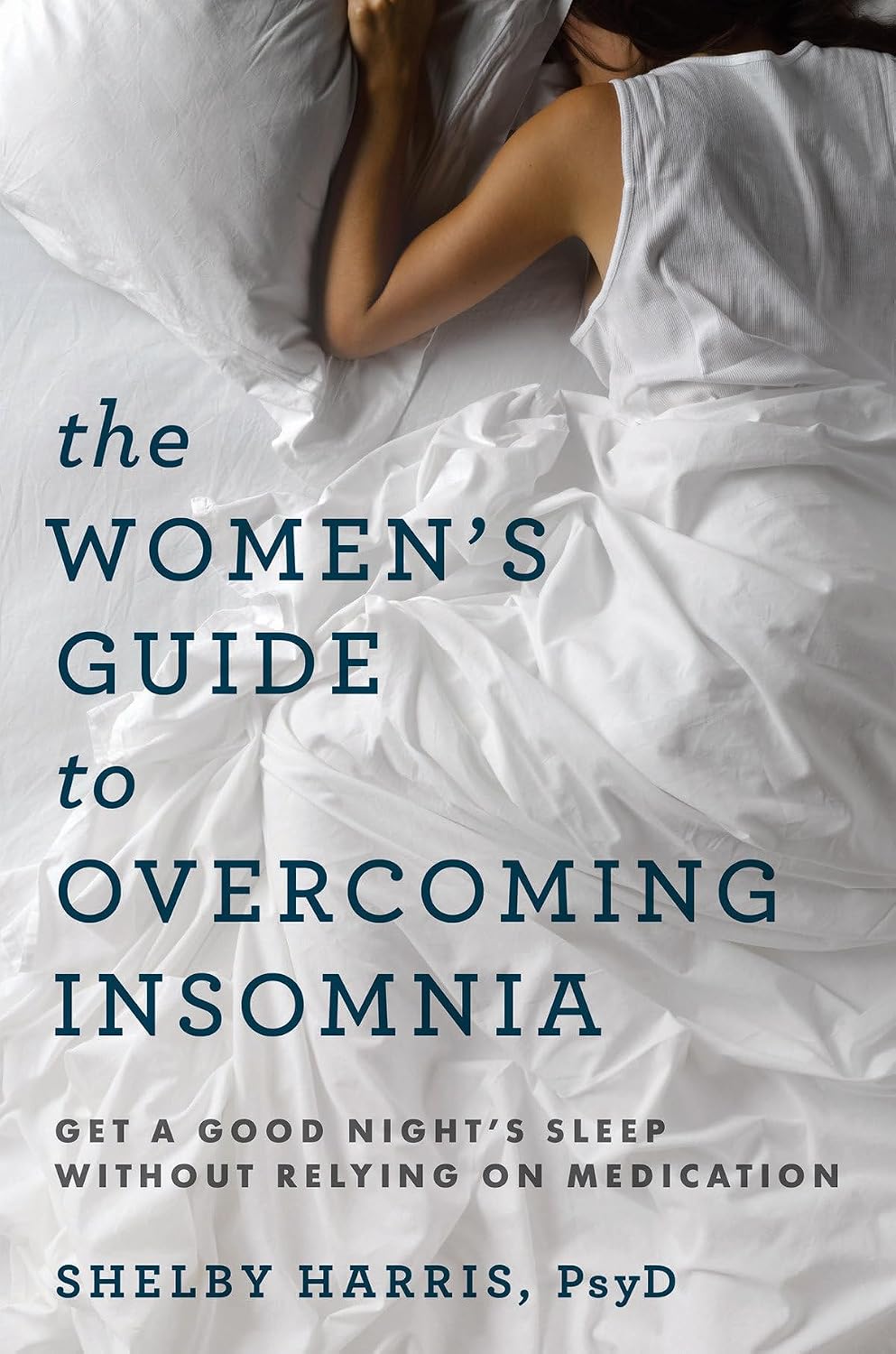
Is that what you need? Do you need a therapist? How do you how do you go about finding if someone's listening now and they're like I I want to try that tonight? Right? So my book is one great place, right?
So the women's guide to overcoming anxiety, that's CBTI. And then also we might think about apps out there. So if you're if you're really just struggling, you want to try something, there's like CBTI coach is a great one by the VA. And then finding people. So there are a lot of people who say they do it, but I really encourage if you really want someone who knows what they're doing, go to the Society of Behavioral Sleep Medicine website and you'll find people who are actually really well trained in it that you can actually coach you either online or Exactly.
What do you recommend to somebody that cannot fall asleep even if they're absolutely exhausted? Like I my husband said to me two nights ago, I think I'm overly tired, which I I completely understand what that means. What do you recommend for somebody like that? Stop trying. So that's when I would say take the effort is like the effort is the thing that is the enemy for sleeping.
It's the killer, right? It's the killer. So just get outside, do something to pass the time. Read a cookbook. I don't care.
And then there's like there's all these like techniques like cognitive shuffling where you go through the alphabet and you say A for apple, B for banana. I mean they they help but they're just like Wait, I want to hear some of those. So, so, so cognitive shuffling is something we've been talking about in psychology for years, but it had a resurgence on like TikTok or something and now everyone's talking about it. It's literally just an exercise of going to bed in it can be in bed for a little bit or you get out and you just want but it's ideally in bed for like five minutes. You go through the alphabet and you pick a category.
So, it could be a for apple. Yeah, it could be fruit. That would drive me mad because I would have letters where I couldn't think of something. But some people like that. I just think of any word that goes with that letter of the alphabet.
And what it is is it's just it's busy enough that it occupies you from all the worries, but it's not busy enough that it keeps you awake, right? So, if you're but if you're doing it for like 10 minutes and it's not working, that's when I would say get out of bed and then later on when you're actually sleepy, go to bed, but don't fall asleep on the couch. You're going to start Yeah. What? Why not?
Because you're going to train yourself to start sleeping on the couch. I did that for a long time. What? What is that? I feel better.
I sleep better out there. Or I have no worries. It's conditioning. So, so let's go into that a little. Yeah.
So, that's the common thing, right? Why do I sleep better on the couch, not in the in than in the bed? Because you've associated the bed with so much frustration and dread. And then when you're not sleeping and you go out to the couch and you allow yourself to sleep, you say, "See, it's so much better here." And then you continue to fall asleep on the couch. So, you have to just pick one place in your house to allow yourself to sleep.
Even if it's a struggle, but just really just try to keep in the sleep in that one other place. That's it. I should have met you three, four years ago. I was I have a dent in the couch from where I've slept on that thing so much. Let's talk about scrolling and phones and television.
And I know that you you know, we know good and bad about doing those at night, I guess, a little bit, but I'd like to go into them like what your thoughts are about scrolling at night, the effects that it has on our ability to rest or fall asleep, and then and the reason why. So, the phones are an interesting one. So, the screens there are a lot of people who still will say that the screens are not good for you before bed. There's some researchers out there that are really debating how bad the blue light is for you. It's like it might not be so bad.
Yeah. I mean, I I don't want to make like a blanket statement one way or the other, but it's interesting. It's actually there are some researchers who are debating it because the research is not as strong. The original study that was that said like blue light is not good. Guess how many minutes it actually delayed sleep by? 11 minutes.
Oh, and there are studies that come out now that show it can delay sleep. So, it really does vary, but there are some that don't show it does it delays it as much. So, I I'm one of those people like stay away from the screens mostly because we get sucked into watching stuff. We get sucked into a text and email just I mean all these social media apps are meant to be addictive. So, it's like it's not even that it's just Yeah.
It's not even that it's the blue light. It's really like what are you looking at? All this stuff is just sucking you in that you can't go to sleep and put it down. You think it's more the content than the actual blue line? At least in my work with people, I think the content is the bigger issue.
So if if somebody does that though and that is their habit over and over. What do you recommend in replace of that? I know there are different kind of apps out there. Are you do you feel okay about audiobooks or would you rather somebody read? All right.
So give me some solutions. Audio book reading. You can listen to a podcast. Some people will do meditation. I I caution against getting too stuck on that to fall asleep, too.
Like, I want people to meditate during the day because meditation is so good for teaching your brain to just quiet itself, especially if you're that person who wakes up at 3:00 in the morning and you can't turn your brain off. So, practice meditation during the day because you're stronger from the daily meditation practice that you can use it more at night. You can just say, "Let go. Let it go." If you're falling asleep while meditating, you're actually not getting the practice of meditating. All right.
So, what are the calming rituals that you recommend for a good night's sleep? Like I said, there's no one-sizefits-all. So, for me, it's reading and stretching. And also, before that, I actually wash my face. I am really into like a good skin care regimen because it just for me, it signals nighttime's coming.
Other people love to read a book. Other people love to listen to a podcast. It's just find something for you that's quiet, calm, and relaxing that moves towards the bed. All right. You get into bed.
Yep. This night in particular, you've fallen asleep and you're feeling great about yourself. Then you have to pee. Y So you get up, go back to bed, and now you cannot fall asleep. Y what do you do?
And is that common? Super common. So if it happens routinely, I would start saying, okay, are there things that you're doing that are making you have to pee, right? Are you drinking a lot of liquids before bed? Sometimes even things like sleep apnnea can cause women to have to pee a lot at night.
But if you just can't fall back asleep, then I would suggest like you could try a little of that cognitive shuffling. And if nothing is working, then just get out and take the effort out of it. Pass the time and when you get sleepy again, then go back to bed and just say the next night will be better. And don't sleep in the next morning. That's the thing that will make it harder the following night.
So get up at that same time, even if you're get up at the same time. Exactly. And then the next night, go to bed at your usual time. Don't go to bed too much earlier because you're going to make the problem continue to happen. So if you're going to do 11 o'clock to 7 o'clock in the morning, 11 o'clock at night, 7 o'clock in the morning, if you can stay in a schedule like that.
Exactly. Exactly. It's the compensating for sleep that actually throws people off. Some things happen in bed too, I think. You know, restless leg syndrome.
There's a couple of other things like when you're in bed that really can can stop you from sleeping. Can you go over a couple of those that are like that? So restless leg is the biggest one. So when we think about pmenopause and menopause, there's sleep apnea, insomnia, and then the other big thing is restless leg. So restless leg, it happens more in women than men.
I have it myself. It's horrible. Horrible. It's just it's uncomfortable. So what it is is as the night gets closer, you tend to have this feeling where you have to just everyone describes it different, but it's like you have to stretch.
You got to move. Patients will sometimes say they feel like they have soda in their veins. And the name is a misnomer because it's not just your legs. That's the most common, but you can have it in your arms or your trunk, too. Oh, I didn't know that.
Yeah, it's kind of weird. So, some people will have to just constantly move. The only way you can find relief is by getting up and moving around. So, it gets misdiagnosed as insomnia all the time because they're not reporting the sensation that's causing them to not be able to fall asleep or they or they get misdiagnosed as having anxiety because your whole body feels on high alert, right? Your body feels on high alert.
What can somebody do if they have that? Get I mean is there is there actual treatment aside get so what is that treatment? Yeah. So, we always start with just checking your iron levels. So, you get a feradin panel and you'll look at that first.
And you want to see someone who knows what they're talking about when it comes to restless leg because it can still be low but within normal limits. But sometimes just iron supplementation can help for some people. If that's enough, if that's not enough, then we might start to think about medications. We do have really good medications out there. And then also we always think about like certain sleep hygiene things.
So, alcohol, caffeine, those are things. Too much caffeine can really cause restless leg to be pretty out of control. Oh wow. Yeah. Well, I want to talk to you about that because I think, you know, we talk about foods, we talk about caffeine, we talk about alcohol now playing a a big role.
I never noticed alcohol playing a big role. I thought that wine made you fall asleep. You have a little less wine and that's just not the case anymore. Can we can we talk about that and if that's is that changed because of our age? Is it just changed because we're more aware of it?
As you get older, it does take longer and it gets harder to metabolize alcohol. For sure. So, it can impact us more. Like, I used to be able to have a glass of wine and have no issues. And now, like that one glass of wine, I'm like, why?
Why? Why do that? But yeah, it's very dehydrating, but also what alcohol does is even though it might make you fall asleep, it causes broken sleep at night. So, the sleep is not as restorative. So, it actually can really disrupt your REM that you might get at night.
And also you might have more awakenings or just more shallow unresorative sleep or non-restorative sleep because of the alcohol. And essentially what happens is after a few hours you wake up because your body is in withdrawal from the alcohol and it says to you, okay, you need to have more and no, you know, you're not going to be drinking in the middle of night ideally. So that's it's really not an ideal thing to be doing. So you want to limit it within three hours of bed. Of course, I'm also a fan of people living life and and enjoying.
Once in a while you go out, you have a glass of wine, you just know that night might not be as good and that's it. So 3 hours before you're going to go to go to sleep. Is that the same with meals? What when should your last Yeah. So heavy meals like your big meal, you want to limit that within 3 hours of going to bed.
But some people a light snack about an hour before is actually helpful. So for like someone like myself, I the intermittent fasting thing doesn't work for me. I get migraines. So, we actually recommend to some people to have a light snack about an hour before bed that's a mix of like a whole grain carb and some sort of protein. So, that kind of mix can be really helpful for some people to help settle them so they don't wake up with headaches or low blood sugar in the middle of the night.
What would that snack be? What What's your My go My go-to is typically I like Greek yogurt. So, I'll have Greek yogurt with a little bit of granola and some raspberries in it. Oh, that's like a nice dessert though, right? It's like lovely.
A little cup. So, you look forward to that every night. I do. I really do. Yeah.
Okay. I like that. Like I I always thought that you shouldn't have anything because you're trying now trying to empty out your It really It does vary upon the person, but some people they need to have a little bit of something and that mix can actually be pretty sleep. No, I wouldn't say it makes someone really sleepy, but if you haven't eaten and you're just hungry, like it can be harder to fall asleep for some people. Menstrual cycles.
I know we're talking about parmenopause. So most of the time you're, you know, you're still going to have, you could have a heavy cycle, you're going to have a cycle. It's kind of all over the place. How does your menstrual cycle impact your sleep? How does your menstrual cycle impact your sleep cycle?
Yeah. So, when you're when you're about to get your period, so about 3 4 days before, that's when some people can notice that they have disrupted sleep. So, that's actually really it's interesting in in boys and girls, the rates of insomnia and any sort of sleep problem are pretty much equal. And then when girls start to actually menstruate, that's when insomnia starts to go up in women. So yeah, because of that we don't get a break no matter what age.
A break, right? So about three to five days before you might start to see some disruption. So we talk about insomnia typically happen because of the drops in the estrogen especially. You know some women actually will start to have hyperomnia which is the that excessive sleepiness. So we sometimes see that as well.
So there it can be one or the other or you might just be someone that's not really bothered by it at all and then once you menstruate few days into that your sleep tends to normalize itself again. There's a lot to keep track of. I know, right? Throughout our lives, if you're sleeping with a partner, yeah, you know, that can be difficult, especially if the partner is sleeping soundly, snoring, sleeping, you know, peaceful and you're not. I've heard of sleep divorces now where, you know, can you explain what a sleep divorce is and is it really necessary?
In some cases, it can be really marriage and relationship saving because people just try to force themselves to sleep together. And it doesn't have to be just because if someone's snoring loud enough or they're having enough snoring that it's causing the other person to stay awake, I would encourage that person to get evaluated for sleep apnea. But sometimes even when they're evaluated, like you just might have different sleep time schedules that you might need or you just might one person might move more than the other. And so sleeping apart, but right before you go to bed, spend time together, cuddle, have sex, whatever you want. Then go to sleep in your separate environments.
And that can actually be very freeing because it gets rid of the resentment that a lot of people have. So this term sleep divorce, I always can't stand it because it has such a negative connotation for some people. One of my colleagues, Wendy Troxel, talks about as a sleep alliance. So you together come up with a plan and it doesn't have to be every day or every night. It can be three nights a week you sleep apart.
You just come up with what works for you and your partner and it can be really freeing for relationships. All right. A sleep alliance. Sleep alliance. So in a sleep alliance, you do what?
Whatever you want. So you sleep apart. You sleep apart a few days a week, every night. And but the key is, in my opinion, you both have to be on the same page. So you have to both agree.
And the environment where you sleep has to be equal. So it's not like one person's like get to like the couch, the uncomfortable futon or something. That's not fair. You're on the floor. I'm on that.
That's not fair. So naps, you know, when you are constantly tired all the time or you're not able to sleep, are naps helpful and something you recommend or and if you do recommend them, how long should you take them? So naps there they can be good and then they can be bad. So it really does vary. If you're someone who tends to be an okay sleeper and maybe you're just not getting enough sleep because you've been working or the kids or whatever it is that's going on, then a nap can be really beneficial.
So 20 minutes, that's what we recommend. So I usually say get in, if you can do it in your bed, it's even better. Set a timer for 30 minutes so you take some time to fall asleep. So 30 minutes, 20 minutes, that's it. And try to do it before, we usually say 2 p.m., but that's assuming you go to bed about 10.
So try to do it about 8 hours before you're going to go to bed at night. And then just experiment with it. If it tends to help you and you feel good and it doesn't impact your nighttime sleep, then you're fine. If you find that the 20 minutes is not refreshing and you just it's like no matter what you do, you're still sleepy, then you want to see someone and get evaluated. Or if you're having trouble sleeping at night with the nap, get rid of the nap.
Why only 20 minutes? Because if you take a longer nap, what tends to happen is you go into a deeper stage of sleep. So what a lot of people do is they take an hour and then you're waking up at a deep sleep and you're actually more groggy. So it's either 20 minutes or about 90. So you go through a whole full sleep cycle and you finish the deep sleep and then you can wake up.
But most people aren't taking 90-minute naps. That's a little bit tough. I don't even know what time you do that in a day. Exactly. And can you catch up on your sleep?
I know I used to I used to work a morning shift, so I was like, I'm just going to catch up on Saturday and Sunday, and I'll be fine by Monday. Is there such a thing as catching up, or is that just a misnomer and you shouldn't even go there? To some extent, you can, but the reality is most people are missing out on so much more during the week that they're never able to fully catch up. You're just continuing to have sleep debt. But if you miss an hour or two throughout the week, maybe three hours, you can usually make that up on a weekend, but most people are losing way more than that.
All right. I know there's a lot of tools, trackers, products, data, recommendations, but I want to get some from you because I know people ask I know everybody wants to ask you these questions and many people do. So, we know you like to go to your cookbooks. If you cannot sleep, you thumb through cookbooks and earmark them. You can send me a picture any night that you're doing that.
I'm just curious. Are there specific books, apps, or sleep products that you recommend to clients that you think are really essential? Yeah, it's interesting. I don't really think that there's any one thing that's a one-sizefits-all in all honesty. So, if you're someone who is trying out, let's say, a tracker or the ring or a watch or something like that, typically with people who have real entrenched sleep problems, they tend to make people more obsessed about their sleep and then it can backfire.
So, if it's helping you, I'm all for it. If it's bringing to light like, okay, my sleep my sleep schedule is so inconsistent. I'm all over the place with when I go to bed or alcohol use, caffeine, do it. When it comes to products though, I'm really like there's not one product, but I'm a big fan of cooling products for the bed. So, cooling sheets, cooling comforter, pillow, you can get even there's like you go up on the like cost ladder to like even the real beds that have the jets in them, all these things.
And then like really comfortable bedding, right? I'm a really big fan of that. And making sure your room is quiet. So a white noise machine, I think, can be helpful if you have noise going on. There's earplugs that you can get that are really wonderful.
And then blocking the light. So whether it's with really like spending the money on great shades and curtains that will block the light, an eye mask. There are really great products out there. Like I said though, there's not one sizefits-all. Melatonin and magnesium are two things that you know I know the supplementation is a very big conversation these days.
I'm curious what your your take is on those and if you decide you're well if you are on hormone therapy menopausal hormone therapy that might solve a lot right for some progesterone can be very very helpful during that time if you decide that's not what I want to do but magnesium or melatonin can you go down the list on both of those and tell us the pros and cons. Yeah. So like mel first of all menopausal hormone therapy can help some people but in all the women that I see not all but many it's not always the thing that solves everything. So I want people to know there's a lot of options out there right CBTI there we have options now melatonin and magnesium often get op like talked about as an option. There's not that much research in in like supporting on either one.
Either the magnesium is really good as a relaxer. Which type of magnesium? Because there's different types of magnesium. Magnesium 3 and8. There's like all different types.
But in all honesty, all it really does is calm the body and calm the brain. So, it's not really a sleep medication. It just helps to set the stage for sleep. So, if you tend to feel like it can relax you, but it's not necessarily going to make you sleep. Now, magnesium is or sorry, melatonin is something our brains naturally make.
So, mag melatonin often gets touted as like this insomnia cure. It really isn't. So, some people swear by it. Great. But a lot of times people are using way too much.
So we actually talk about using small amounts. So like 1 to 3 milligrams. And where we use it all the time in sleep medicine is more for jet lag. For people who can sleep a full night but need to change the timing of their sleep. So they need to not be a night owl anymore to become an earlier time then we will use it but very different than how most people are using it.
So for insomnia it's not always the like thing that most people hope it's going to be. Other thing other things should take the place beforehand. But if you decide you want to do that and we're going to do we're going to do some myth busting in a in a in a second. So we'll see which which things are out there on TikTok. And to add to it, melatonin has side effect.
I mean nothing is without side effects effects. The most common things I see are with women. I'll they'll say I have very vivid dreams or nightmares. And they'll say melatonin. Oh yeah.
I'll say what are you taking? And they'll find out it's melatonin. Like stop the melatonin. Very common side effect that no one talks about. And then it could also cause daytime sedation.
So you might take a small amount but be really sleepy the next day. So even though you sleep at night, what what good is that doing if it doesn't inform your daytime and help you feel better? What's the point of it? Do we have any idea why it causes dreams? Weird dreams.
It it kind of plays around with the REM sleep that's happening at night. Yeah, sure. I know it's kind of crazy. I wish somebody had said the word perry menopause to me earlier because I spent years thinking I was just stressed out. Mood swings, anxiety, weight gain I couldn't explain.
And sleep. I was wide awake at 3:00 am night after night and not one doctor brought it up. If that's where you are right now, if you're in your late 30s or 40s and you're thinking, "Is something off?" You're not imagining it. That's why I wrote How to Menopause. I interviewed 42 doctors to put everything you need to know about pmenopause, including the parts nobody talks about.
It's straightforward. It's not overwhelming. And you can get your copy right now at how to menopause.com. I want to always give people a takeaway of some kind of change. So, if there's a woman listening out there that's like, "What?
Just give me something now because I'm having just awful sleep or if there's something we can do." So, what are three small changes people can make today to start improving their sleep? So, the first thing I always say is to really consider consistency with your sleepwake timing. So, same bedtime, same wake time. So, really trying to stay there will be helpful for a lot of people. The second I would say is really thinking about the compensating during the daytime.
So are you someone that's trying to either exercise a lot, do a lot of things to put a lot of effort into trying to force sleep to happen at night. So maybe do a little bit of an audit of like how much are you really trying to think about sleep because it's that effort that's part of the problem. Should you be thinking about it? I mean, you're going to think about it a little bit but not too much. Like if you become really rigid with your like sleep routine at night, that's probably a problem.
Okay. Yeah. And then the third thing I would say is if you're because a lot of people are doing all the sleep hygiene things right. They're limiting the alcohol, the caffeine, they've heard about it. If that's not working after two weeks, then I would say 100% go get an evaluation for sleep apnnea or insomnia or something and there's better treatments out there.
All right. So I want to go over social media. You know, it has a lot of sleep suggestions. A lot of the interviews I do for big newspapers are like commenting on Tik Tok and Instagram trends. Okay, we're going to comment on some crazy and if there's any other ones I I want to hear, you know, that you might you might have, but we'll see about these.
Let's do the myth bust. Yeah. Women need less sleep after 40. No. No.
Like a lot of if if you see a doctor who tells you that it's normal to sleep less as you get older, find a new doctor. Really? I I've heard that tons of time. Oh my gosh, it's so wrong. So yeah, we typically get a little less sleep.
We're talking like time like a half hour maybe if that. Sometimes as we get even older, we might nap during the day. Older adults might nap. So that might be a little less, but it's within 24 hours it's the same. You should not be getting drastically less than you ever got before.
It should be the same. And if you're noticing a problem and you're really having trouble during the day, definitely get evaluated. Isn't it crazy? Sometimes these are just sentences that are out there and statements that are out there with no backing whatsoever that we've just repeated forever. It and it's such a shame.
It does such a disservice to so many people. Well, we're going to we're going to make sure we do a service that Dr. Shelby. All right. Too much cardio can keep you awake.
If it's close to bed, it can. So, within three hours of bed, you want to try and limit really intense cardio, but in general, it's not a bad thing during the day. And you do stretching, right? I do stretching, right? 20 minutes of sunlight on your eyelids during the day helps you sleep. I would argue more than 20 minutes.
So, you should try to have some light during the day and then you want to keep it dark at night. Just kind of like I always think like how did we live when we were in a cave. I know. That's how I always think about it. I It always does go back to basics in so many different ways, doesn't it?
We all need blue light glasses for our screens at night. Debatable. So, I I would say just stay away from the screens because we're getting sucked in and but I don't know that you necessarily always need them. I think we are too. Do you I have a question.
Do you have any success story that has kind of stuck with you of somebody that's turned their sleep around in a really great way? Yeah. I mean, I've had I so many I mean, it's that's what I that's why I absolutely love doing what I do is because there are people who really thought that there was nothing that they could do for so long. They've tried all the sleep hygiene and then they come and we do some CBT for insomnia, maybe some other work and they're sleeping so much better. But I mean, I can think of someone that I saw I just finished with maybe a month or two ago who was on a lot of sleep medications, a lot of medications over the years, and was just on Xanax and just a combination of things.
And over time, it wasn't a simple a super simple treatment because we had to do it with the prescriber and slowly kind of taper off. But now she's not on any medication. She's sleeping so much better. And it was just by making behavioral changes and changes to tolerating a bad night, which I know sounds terrible, but we fear that bad night so much that then you just keep taking medication. So getting helping women really sleep better without necessarily having to rely on medication.
And this patient, I mean, she's doing so much better. And you can just see how happy she is like now that she doesn't have to rely on meds or or just is sleeping just so much better on her own. I I wonder do you feel encouraged by the amount of conversation that sleep is getting? I have to imagine when you started with this practice years ago and even you know over time people were like h I'll come to you if I have a problem. Yeah.
But really has be taken on a life of its own in terms of people understanding the importance of sleep would you say? Yeah 100%. And but I think it almost has swung sometimes a little too much in the opposite direction where people are so obsessed with it that it's like they don't think that they can ever have a bad night. And that's why I'm always like once in a while I don't sleep well and that's completely normal. It's how often are you having those bad nights, right?
And I do. But the thing that I think is really interesting is that I'm having more and more people in my practice who are in their 20s, very late 20s, early 30s, who are coming for sleep treatment, which I never really saw before because people are starting to really recognize the importance of sleep and good sleep and how it can really build over time to help just with health in general. So that's that I think is really important. I think it's great. I'm seeing younger people all the time that want to have these conversations in a bigger and a better way.
What is it that they what is it that they take away mo most of all from everything is usually being able to do the CBTI therapy that helps them. Yeah. A lot of them don't want to go even start to go down the medication route. There's just a different I don't know there's a different flavor to some of these patients and the younger population too. A lot of the people I'm seeing are like, I want to start having a maybe getting pregnant or and we know that sometimes insomnia and sleep deprivation can actually change or actually make it harder to conceive and make pregnancy harder.
So these people, a lot of these patients are thinking more proactively. I don't want to have to rely on medication when I'm pregnant or when I have a baby and all that sort of stuff, which I think is really interesting. Parting words for people that say, "Okay, I want to sleep. I want to get a good night's sleep. I don't want to rely on meds, but you know, it's been hard for me." Yeah.
What do you say to them? Talk to people who know what they're talking about and don't just get brushed off. So really try the sleep hygiene stuff, but if it's not enough, we have there are really amazing providers out there and there is a lot of help and a lot of treatments that we have available for different sleep disorders. So definitely get evaluated because it's not worth going through life just like not sleeping well when we can actually help you. Dr.
Shelby, thank you. I was so looking forward to this conversation. I'm sad it's over. I always love talking sleep with you. Thank you.
I feel the same way. Thank you. I really hope Dr. Shelby advice helps you walk away with a little more clarity and a lot less guilt about what it really takes to get better sleep. Trust me, it's going to take some time.
At least though, these are some of the tools that you can get started using tonight. And please give yourself permission to put yourself first. You can find all of our resources in the show notes. If you love this episode and got anything from it, please do me a quick favor and leave a review or share it with somebody who's up at 3:00 a.m. Thinking she's the only one.
I'm Tamsen Fadal and I'll see you next Wednesday. The Tamsen Show is an original production by Authentic Wave. Executive producers Scott Weinberger, Kevin Bennett, and Rebecca Greersonen. Brand director Johanna Offnik. Our line producer is Sabrina Surere.
The views and opinions and information shared by guests on The Tamsen Show are their own and do not necessarily reflect the views of Tamsen Fadal or the production team. This podcast is forformational purposes only and is not a substitute for professional, medical, legal, or financial advice.