When we look at risk factors for Alzheimer's, there are things that increase your risk of dementia that have been formalized. High blood pressure, high cholesterol levels, diabetes, obesity. There isn't a single female specific factor being considered in those models. You want to know if it's menopause or permenopause? I want them in there.
Dr. Lisa Mosconi is a leading neuroscientist, a New York Times best-selling author, and she ranks in the top 1% of scientist in the world. She's a director of the women's brain initiative and the Alzheimer's prevention program at Wild Cornell Medicine. She was a first to prove what women have been saying all along. Menopause isn't just a hormonal shift.
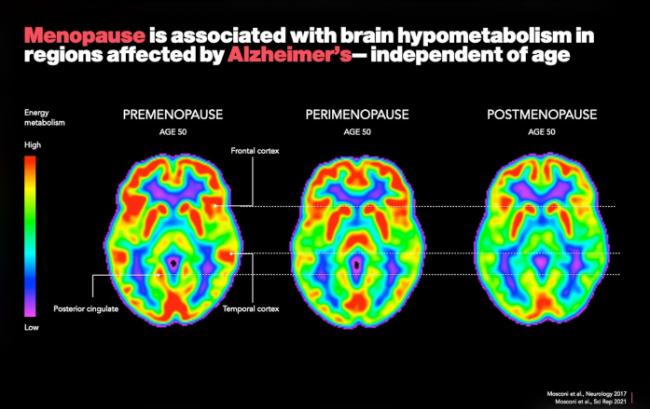
It's a neurological event. Do you see this big red blob? This is the temporal cortex which is very close to the memory centers of the brain. And you see how it's yellow here and it's completely green over there. That's a 30% drop in brain energy levels in that part of the brain.
She's giving us an exclusive first look at brand new data from her latest research studies that could change the future of menopause treatment and brain health forever. This is effectively the largest ever global examination of women's risk of Alzheimer's ever attempted. If everything goes according to plan, we're going to have clinical data from over 20 million women. Plus, she's sharing the sciencebacked tools you need to protect your brain starting now. So, what should women eat?
So, the research shows Before we start though, I want to ask for a quick favor. Reviews for this podcast mean everything. The more reviews, more conversations we can bring you and the more we're helping women take control of their lives. So, wherever you're listening, please take a second to leave a review. I would appreciate it so much.
I read all of them. I hope you love this conversation with Dr. Lisa Mosconi. Make sure you stay to the end because she's giving us an inside look at her most recent brain study. It's going on right now and how you can be a part of it.
All right, let's get into it. Dr. Lisa Mossone, it is always so good to see you. Thank you for having me. Thanks for having to be here and congratulations.
This is amazing. Well, I mean, congratulations to you and everything that you are doing day in and day out, the days we don't see you most of the time, right, for women and women's health and brains and so many things to cover today. I've always loved your origin story and I think it's really important because it shows us, you know, where you are today. Can you talk a little bit before we get into the science why you dedicated your life to Alzheimer's research and now in particular women's brain health? I was born and raised in Florence in Italy and both my parents are nuclear physicists, both of them, which is interesting.
So I grew up around equation modeling kind of. I remember what is equation modeling? It's a lot of mathematics. It's a lot of physics. It's a lot of chemistry in many ways.
I remember when I was little, my parents put up a gigantic whiteboard in my bedroom. It was like the whole wall was a white Yeah. Was a white board and we had the markers and they would just write and write and write and they would do my math. And then my parents would teach nuclear physics to PhD students who then transition to nuclear medicine which is a branch of radiology. They use these principles in nuclear physics applied to machines like scanners, okay, to look at whatever happens inside the body.
And those students will come over sometimes for some additional support because it's it's difficult. And they would take turns talking to my parents, working with my dad, and babysitting me. So you were being babysat by students that were studying nuclear physics to apply to nuclear medicine. Hence the whiteboard in my room. So no Barbies, needless to say, no Barbie dolls, but a lot of machines, lots of scanners, lots of talking about the brain, brain health, how to measure things that happen inside the brain.
I always thought it was super fascinating. So I would go to great school talking about relativity and I had no clue who Cinderella was you know that kind of a way a little bit strange but very rewarding. So then fast forward to my PhD studies I have a PhD in neuroscience and nuclear medicine you know the apple doesn't fall too far. Yes. But at that point in time, my grandmother, who effectively was like a second mom to me, started showing signs of cognitive decline, which then turned into a diagnosis of Alzheimer disease, dementia, and just a few years after that, her two younger sisters also developed Alzheimer disease and passed away from it, whereas their brother did not.
So that was shocking and heartbreaking in so many different ways, but it was also really frightening. So my mother was really worried about her own brain health and her own risk of Alzheimer's and so was I honestly because we do rely heavily on our brains and that is genetic. So Alzheimer's disease has a genetic component. There are two main forms of Alzheimer's. There's an early onset familial form which is genetically driven.
So there are very specific genetic mutations. They're called autotosomal dominant genetic mutations that cause Alzheimer disease. And when that happens, it does run in families. And there's almost 100% penetrance, which means that if you do inherit the mutation, then it's very rare to not develop Alzheimer's. And when you do develop Alzheimer's, it usually happens in your 30s, 40s, and 50s.
So a very, very young ages. That's about no more than 2% of the total Alzheimer's population. So it's very very rare. For all the other cases of Alzheimer's, they are referred to as late onset Alzheimer's disease. Usually the onset is after age 60 65.
There is no genetic mutation that causes the disease. However, there can be a familiarity. Okay? So it may run in the family, but not in a way that is deterministic, but rather in a way that puts the offspring of a patient with Alzheimer's at higher risk relative to somebody who does not have a family history of Alzheimer disease, but it does not cause the disease. Okay.
I learned that later, right? Back then I was really worried. Sure. That had to be about my own risk and my mother's risk. And so I started my PhD and I really focused on Alzheimer disease.
And I would ask my PhD supervisor who's a very good friend of mine at this point in time. I would say does it matter if you're a woman or a man? Is it just my family or is there a bigger lesson to be learned? Why did you ask that? Because they were all women in my family.
So my my grandmother was one of four siblings, three sisters and one brother. All three sisters developed Alzheimer's and really passed away because of it, whereas the brother did not. And they all lived to the same age. Being a woman put you at higher risk for Alzheimer's. So, we're known since the 1990s that after getting older, after advanced age itself, just being a woman is the second strongest risk factor for Alzheimer disease.
And now we're starting to understand better what's happening. But back then the idea was that Alzheimer's was a disease of old age and women live longer than men. So at the end of the day they would say to me, well unfortunately more women than men develop Alzheimer disease. And that never made a lot of sense to me and to many others in part because women don't live that much longer than men. Right.
Here in the United States, the gap is 4 and a half years. It's called the longevity gap. But in England, for another example, the gap is 2.3 years. And Alzheimer disease and dementia are the number one cause of death for women and not for men. This happens in Australia as well, I believe.
So, and also if it was just aging, then women would have a higher risk of other diseases of old age that impact the brain like Parkinson's disease or vascular dementia, but they do not. It's it's Alzheimer's that we're talking about. It's Alzheimer's disease that seems to be specifically more specifically an issue for women than for men, which is not to say that it doesn't impact men. Right? So, the prevalence the ratio is 2 to1.
So for every man suffering from Alzheimer disease there are two women and with other disorders like depression with the ratio kind of similar we do have a lot of research on that and we have medications that have been tested specifically on women and we do understand the nuances of what depression means for women at different stages of life for instance with Alzheimer's the research on sex specific differences is really really just starting just starting I would say and there's so much that needs to happen. So that's what I've been doing ever since ever since my PhD days and really leading this conversation and this research when it comes to women's brains and in particular pmenopause menopause brain scans. I mean you really are at the forefront of this and and right in the middle of some very major research right now. The research that we've been doing it's been over 20 years for me. I started as soon as I could really fairly young.
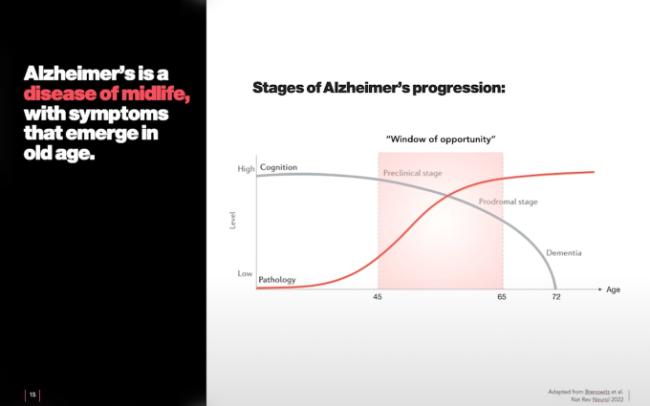
But what my research has shown and other people's research has shown is that our assumptions were actually incorrect. That Alzheimer disease is not a disease of old age, but rather it is a disease of midlife with symptoms that start in old age. What does that mean? There's a pathology. The disease has a very specific molecular composition which we refer to as Alzheimer's plaques or amo beta plaques and tangles where the plaques basically form between neurons and impair communication between different neurons and then these neuropibrillary tangles develop inside the neurons and disrupt the neurons from the inside and all of these lead to neuronal loss.
And degeneration. Now, that happens progressively over time and you don't necessarily feel the effect until the pathology reaches a certain threshold and the brain can no longer compensate. This could be happening very young. What what are the ages? So, what what ages could that happen?
Alzheimer's pathology has been noted in some people's brains as early as in their 20s and 30s. This is rare. Do you see anything if you were doing scans? Would you would you see? Yes.
Yes, of course. No. So, the symptoms actually become evident on clinical examination when people are usually in their late 60s, 70s, 80s and 90s. So there's there's a gap between the pathology accumulating in the brain between these negative changes that occur inside the brain and then it will take decades before the symptoms are clearcut enough for a patient to be diagnosed as Alzheimer disease. Do you want to see it?
I have to see it. You can see here that we have different stages. There's a normal stage, there's a there's a preclinical stage, a prodramala stage, and the dementia stage. And we have two different lines. There's the the green the gray line is for cognition and the red line is for pathology, the biology of Alzheimer's disease.
So what happens is that at the normal stage, co cognition is perfectly intact and there is no pathology, right? There's no disease inside the person's brain. But then Alzheimer's plaques and tang tangles start accumulating in the brain and cognition starts slowly declining. It doesn't just drop suddenly, right? And then at this point in the preclinical stage, there are individuals who do have these red flags for Alzheimer's in their brains, but they're still performing quite normally for their age and education.
And so they do not receive a diagnosis of Alzheimer disease because they the symptoms are just not there. But then we reach this kind of turning point where the lines cross and the pathology is increasing and then cognition starts decreasing to a measurable level and then that's when you know then we have a stage called my cognitive impairment which is not quite dementia but is getting there. Okay. And then as the pathology worsens cognition also takes a dip. You say Alzheimer Alzheimer's is a disease of midlife with symptoms that emerge in old age.
That's that's different than what you were taught or what you were told that Alzheimer's is a disease of old age. Completely different. Alzheimer's is a disease that starts very often in midlife can can start in midlife as early as a person's 40s and then progressively accumulates in the brain disrupting the brain's functionality which later on leads to memory loss and issues with attention and issues with language. But see, the brain is such a beautiful organ. It's such a powerful organ that it can really hold it off for a really long time.
So it can it can fight it for years and years for years and years. You may feel different. You may feel like your performance is not as good as it used to be, but your brain is still fighting these these lesions that are accumulating and it's only after a certain time that it's like, you know, it's just too much. Can you talk about how you went from while you were in the middle of research and studies and started looking at menopause and where that where that happened? This is what we were doing.
We were looking at sex differences in Alzheimer's. We were looking at at individuals who were in their 40s and 50s and early 60s which was very very unusual in the field. In my field everyone and this is again like 15 years ago when I moved to New York and I started working at NYU. I was doing my PhD at NYU. The vast majority of research was conducted on individuals in their 70s and 80s who did not have Alzheimer's, which is very interesting, but like what keeps you healthy as you age?
But we were asking a very different question. We were asking, well, how far back can I actually go and realistically identify individuals who are cognitively intact? Right? Their memory is fine, their attention is fine, but but they do have these lesions, the Alzheimer lesions in their brains and we need a technology to be able to do that. Okay.
Unfortunately for me and for many others, the technology became available in 2007. And that was the first time ever that we were able maybe 2006, but for me it was 2007 here at Wildet Medicine where we brought the very first patient to get this positron emission tomography scan, a PET scan, which is what I do. Mhm. For a living back from kindergarten on, right? From your from your bedroom at 6 years old.
Bedroom. Yes. And that was the first time that we were able to see in a living human brain what people had only been able to see a postmortem until then. Wow. Yes.
There was no way to get a visual on Alzheimer's pathology until 2007, which if you think about it, that's unbelievable. I don't think I ever I didn't ever know that that year. I didn't know that. I didn't know that it was for me 2007. I think for for those who developed the technology may have been 2005 but still but whatever it's it's not even you know it's not even 30 years it's barely 20 years.
It's barely 20 years. Yes. You were the first to look at women's brains for the before and the after of menopause. Menopause. So the way that we got there is that we were we were using this technology this positron emission tomography or PET imagery to look at the brains of men and women in midlife.
And what we were finding is that women tended to show more red flags for Alzheimer disease in their brains than men of the same age. Okay. So then the question is why? Is it just that we're women? Or could this be in part because of things like sleep deprivation, right?
Or genetics or high cholesterol levels or high blood pressure or all the things that we think of as being risk factors for Alzheimer's. Nothing would really explain this difference statistically. And then one day, my students were doing cognitive testing on a midlife woman like maybe 48, 49. Mhm. And she was having a really hard time with the memory with the memory testing and at some point she had to stop and she was like, I just can you open the window and they were like, this is new, right?
So we're in this hospitals in New York City. You can't open windows, right? And so they're like, "Sorry, I really I can't. Would you like some water? Would you like to take a break?" She's like, "I just going to I'm just going to need to reschedule." And they were like, "What's happening?
Are you okay? Do you know any food? Are you going to faint?" She's like, "No, no, no, no. I'm just having hot flashes. I can't think straight." And they was But they was like, "You're having what?" You know, no one these are these are students who are in their in their 20s.
They had never heard of hot flashes, right? And so she left and they were like, "We'll reschedule. Everything is fine. Don't worry." And then they came to me in a panic like, "I'm so sorry." She left. She was she was hot was sent.
She was having hot flashes. They're like, "Oh, yeah." And so I explained what menopause is. And women who are going through the menopause transition, which is often before age 50, to everybody's amazement somehow, right? That can lead to hot flashes, nice sweats, insomnia, anxiety, brain fog. And then I thought, huh, brain fog.
And so we went back and we asked all the women in the study to work with our obigine department, okay? And we collected their menopause status information, right? We had women who were premenopausal, they had a regular menstrual cycle. Mhm. We had women who were permenopausal, irregular menstrual cycles, hot flashes, brain fog and whatnot.
Not all of them obviously and women who were postmenopausal more than 12 months after the final menstrual period. And then we compared the brain scans again. And what we saw was premenopausal women and men of the same age, no differences. Women who were permenopausal in men, red flags for Alzheimer's come right up. Women who are postmenopausal and men of the same age. 30% difference.
You have those scans. Can we look at those for the listeners? We're looking at premenopause, pmenopause, and postmenopause brain scans that you've done, right? Yes. So, this is a type of brain scan called 18F.
So florine 18 fluorio glucose which is a marker of brain energy levels how active your neurons are how fast they're burning sugar to make energy and the reason they were doing these brain scans is that Alzheimer's patients show a very typical pattern of reduced brain energy levels that is quite specific to Alzheimer disease. So the question was, can I detect the same pattern in women who have risk factors for Alzheimer disease, either a family history or some genetic markers, but do not have a diagnosis of Alzheimer's disease? Their cognition is totally fine. And how early on can I detect this pattern in a woman's brain? So remember the push back that everybody was like, it's just that women are getting older.
The same push back I've been getting, everybody's been getting about menopause because premenopausal women are younger on average than post-menopausal women. How old are premenopausal women? Can we go through those stages real fast? Yeah. Yes.
Yes. Yes. So, just a quick refresher. Once you have a menstrual cycle, you're premenopausal pretty much, right? So, that starts when you get your period.
I would say that is the reproductive stage. But then once you enter your 30s, 35 perhaps once you're past 35, we can start talking about the premenopausal stage and then the permenopause. Also, you know what's really interesting? I think it's interesting for women to to hear this that the premenopausal stage is actually broken down into separate phases. There's a premenopausal stage where when your menstrual cycle is totally fine, but then as you're past 40 or maybe approaching 40, you may start noticing some changes.
You know, your period may get shorter, it may get longer, it may get heavier, it can get lighter. It's a little bit more unpredictable, but it's still about once a month. That is the late premenopausal stage. And many women at that stage may start feeling changes in their mood and in their sleep and also in their mental acuity. So those are the first three can be could be first three symptoms of it has been reported.
Okay. Even though you may not have any hot flashes at that stage but you may feel especially sleep disruption is very commonly reported. Now, can we completely blame our hormones for that? No. But it is something that is worth considering because it's a little bit of your clue that your physiology is changing.
And that's your premenopause. This is premenopause. That's not even permenopause. Not even per sometimes for some women is still at the premenopausal stage when your cycle is still regular. Mhm.
Then you may most women go through the permenopausal stage which is also broken down into subphases. So there's an early permenopausal stage where your cycle you may skip your cycle by one or two months but no more than three. And then there's the late peri stage which is potentially the worst. That's when you you skip your cycle more than 3 months at a time, but you still have once every year, one a year. You're still kind of getting your period.
You think it's gone away, but it's still there. Yeah. Yes. It's kind of still there, but you're hoping it might go away. Hoping it's going to be 12 months and that's when the hot flashes tend to be most prominent and the sleep disturbances and the mood disturbances and the brain fog and the attentional issues and the low libido that's usually the late permenopausal stage.
So when we're talking about all these symptoms we always talk about it really is the late permenopausal stage. Yes, prevalently. Most prevalently and that is the stage that can last up to seven years. You know, it could be as quick as one or two years, okay? But it can last sever several years for some women.
Wow. And it's usually the most challenging from a neurological perspective, right? These are brain symptoms. It's not just that your cycle is wonky, but the symptoms that come from your brain, not from the ovaries, are disruptive, can be disruptive at that stage. Is that what we call brain fog?
Clinically we refer to brain fog as mental fatigue or cognitive fatigue and more technically for us in the memory space is referred to as subjective cognitive decline because you experience a decline but if you come to me for testing you're still scoring within normal limits by age and education which means more or less for many women who are going through menopause there is a little bit of a dip in cognitive performance and mental acuity, but is still within normal limits. So, it is not a deficit. And I think that's a really important distinction to make because so many women really worry that they may be losing their memory or that they may be at the early onset stage of Alzheimer's or they're really worried about not functioning. So I think it's important to say there's a difference between something that is really impactful and demanding for you cognitively but there's a huge difference with the dementia diagnosis. So this is not a deficit.
It's not impairment. It's a subjectively reported decline, but it's scary. And so if you don't absolutely So how do you know as you're going through the course of your life whether or not hey this might be something normal that happens or it is there something more serious going on? How can you put your mind at rest? We started the Alzheimer's prevention program at Wild Cornell Medicine because we were specializing in Alzheimer's prevention from every different angle.
So the research, the clinical practice and the clinical trials unit. And more recently, we started reframing some of our workup, our diagnostic and clinical workup at the clinic to really address this question because we realized that a lot of the people who come to us are actually midlife women who are going through menopause and may have a family history of Alzheimer's or some ties to Alzheimer's disease and they are legitimately panicking because they don't know. They just don't know. Is it like is this something just temporary? Does it go away or am I on the road to work?
So, it's really important to do a good differential diagnosis right away and to look at all possible confounding factors like do you have thyroid disease that can give you brain fog? Do you have an infection that can give you brain fog? We had a patient who was working with us for many many years and then one year she comes in with a diagnosis of mild cognitive impairment and we're like what just happened? She was totally fine a year ago. It's it's unusual.
And so they sent her to us for more thorough evaluations. And then our study physician realized, I don't know how she did it, but she had this patient take a urine test, which is something you don't do as a neurologist. I mean, she was like, "Let me just check." And she realized that the patient had a massive silent UTI, urinary tract infection. She had no symptoms. She didn't know she had it.
This is very common. It's very common in menopause, right? She had just turned 52 and she got on an antibiotic course. Everything resolved. We got her tested again.
Her cognition was right back to normal. That is so scary. Yes, it's exceptionally scary. But thank goodness that's good what it was. That's something you just treat.
So there are many different reasons that the person may have this feeling of brain fog. One of those being menopause. Mhm. Now, we know that up to 62% of midlife period and post-menopausal women report a decline in memory, attention, and language performance, which can be exceptionally scary. Yes.
And can range from very mild to, you know, something that you do notice in conversations, right? So, for those women, it's really important to realize it could be just menopause, if you will. Otherwise, let's do other testing. And we always recommend getting a good baseline because then if things improve, great. But if things do not improve or get worse, then you have your own brain and your own body to refer to in terms of we don't want to compare you to other people your age necessarily.
We want to compare you to you a couple of years ago so that we can get a better sense of what's happening and why. Do you recommend if a woman is dealing with pretty debilitating brain fog to come and get a a brain scan? That's what I would do. I don't I can't necessarily recommend it because it's been done for research. Okay.
But there are also specialized Alzheimer's prevention clinics and memory clinics that people do have access to. Okay. So if if your concerns are serious and if the brain fog is negatively impacting your quality of life and just your dayto-day then for me I would I would I would want to be tested. I would want to know is this something that will just go away in a couple of years. Is there something I can take that makes me feel better?
Right? Is there should I start thinking about long-term planning? I'm I'm a very practical person. So, I think it depends. I know you're a scientist.
It depends. Yes. Okay. So, let's see. What are we What are we looking at here?
Because these are the scans that you did. Here's the thing that people would say to me, "Well, whatever you see in women who are after menopause, it's just age because they're older than women who are premenopausal." And they're like, "Yes, but I'm matching them to men of the same age. If it was just age, then the men would show the same things." They're like, "No, because they're men." I was like, "Okay, you know what? We now have women who are exactly the same age. These women are all 50 years old.
This woman has a regular menstrual cycle. This woman is permenopausa, skipping periods. And this woman is postmenop early postmenopausala just a few years after the final menstrual period. And can you describe what we're seeing in each one? Yes.
So these are brain scans done with FDG PET, which is fluoridoxy glucose positron emission tomography. And we're looking at brain energy levels. We're going to look at the premenopausal woman first where you can see a lot of red. There's red at the top of the brain to the side of the brain and here in the middle at the bottom. This is exactly what a healthy brain looks like from a metabolic perspective.
You want to have a lot of red, some yellow, and just a little bit of green in the middle of the brain, which is perfectly normal. And then we have these areas in blue, which is fluid. There is fluid inside the brain. It has to be, right? Is a cushioning support mechanism.
Now what happens at the permenopausal stage? If you look at these lines that connect the three different brains, you can see I think how the red especially here is turning yellow everything is a little bit yellowower than here. And then at the postmenopausal stage there's the big drop where the yellow where the red turns yellow and the yellow turns green and everything is much darker in some ways. Can you see it? So there's less energy.
Do you see this big red blob? Yes. This is the temporal cortex which is very close to the memory centers of the brain. And do you see how it's yellow here and it's completely green over there? That's a 30% drop in brain energy levels in that part of the brain.
And what does a drop in? And by the way, as we're looking at these, we're going to put a link to Dr. Mosconi scans in the show notes so you can take a look at her scans as well. So just be aware of that if you're listening to this. Does that ever recover?
What does the lack of brain energy mean? Is that where the brain fog comes? Is that where the We're trying to understand what this means behaviorally. And I, you know, this is something that always comes up when we talk about brain scans that people just assume that because something is happening in the brain that would immediately translate into something that you can see in a person's behavior or that's not always the case. This is something that happens at the tissue level, but it does correlate with memory function.
Mhm. So the lower your energy levels in the brain, the lower your memory, attention and language capabilities within normal limits. So these changes are not in any way, shape or form the sign of a deficiency. It's just something that happens in the brain as part of the transition to menopause. For some women, at least for some women, it could be something more serious.
But we do believe that this is a sign that the brain is kind of switching gears because estrogen, especially estradiol, is a neuroprotective hormone that also energizes the brain. And if you will, it kind of pushes neurons to burn sugar faster. It's like estrogen is almost to the brain what fuel is to a car, what gasoline is to a car. It gives you that extra you know speed in a way and after menopause estrogen production estradiol production remains minimal. It doesn't completely stop from the ovaries but levels are very very low.
And another form of estrogen is being produced a little bit more than before. It's called estrone which is a backup estrogen but is not nearly as impactful in the brain as estradiio used to be. And so there's a there's a there's an overall change. And so we really see, you know, for people who are listening, we see the premenopause scan with a lot of red, a lot of brain energy. Perry menopause and in between in between post-menopause, we see a lot more green and blue, but not as much red, which is a brain energy.
Now, does that come back after we are in postmenopause, after we've hit menopause and postmenopause? Because I have to say when you and I first met, which is a few years ago now, I had really debilitating brain fog to a point that I'd be very nervous. I didn't feel my confidence like it used to be because I didn't have the memorization skills that I used to have over the course of the past maybe 6 to 8 months. I felt those coming back. And I and I have really felt them.
And I I was like, am I imagining it? Am I just wanting to feel them? But I definitely feel them. I definitely feel that I don't hesitate, right? I don't hesitate when I'm speaking.
I don't feel like I need cards. I mean, I I was to a point where I would put notes on the top of my computer because I would be nervous that I would forget something. And so, that's very nice. But, is that what happens? Is there a a bounce back after you've been in menopause for a little while?
You may not be surprised to hear that there isn't a lot of research done on Dr. Lisa Money. I'm shocked by this breaking news. Yes. So we are now following our patients over time and the results are not published yet but what we do find and this is until peer review allows publication we do find at least descriptively that it depends.
So after menopause there can be different outcomes for some women cognition rebounds and other studies clinical studies have shown that that after the final menstrual period there's still the early postmenopausal phase where the brain is kind of settling down is trying to adjust and then for quite a few women actually cognition bounces back. That's usually between two and four, maybe 6 years after the final menstrual period, it starts to bounce back to where you were before you went into menopause. Sometimes you don't have your 26y old brain again. Most likely you have to work on it. You're also older, right?
So, it would be a lot to ask, I think, of an organ. But I think just getting to where you were before you start and having the brain fog more or less. I think it's a good it's a good thing for many women. It just stabilizes. Doesn't get any worse, but it kind of remains a little bit lower than it used to be.
Does every woman go through these changes? No. No, not necessarily. So about 62% between 34 and 62% of women that we have surveyed not me personally but the field report cognitive changes which other scientists have shown and we have shown to that they are actually measurable that you can see that if we have we have this test it's called the mocha like coffee mocha I remember that yeah with the ca is the Montreal cognitive assessment where the or the mini mental state examination where the scores brain from 0 to 30. Most women around age 40 are between 28 and 40 and 30, but also women in their 50s, more or less between 27 and 30.
So if you're a 30 when you're going through menopause, you may end up being a 29 but a 28 and you may then bounce back up to 29, okay? Not, you know, but the variability is small. However, the twopoint drop is the difference between needing notes and not needing them. For most women, cognition may either bounce back or stabilize, but for some women, it does not. And that's when we start really talking about Alzheimer's prevention and what we should do to try and either really reduce the risk of Alzheimer's or try to prevent or delay onset and progression.
So, there are different strategies depending on each woman. So, there is no specific answer, okay, after menopause. There's a lot of different factors that come into play and they do need to be assessed thoroughly and then an individualized plan can be made for all women but on average on average things do tend to get better. A majority of women they attend to get better or we don't we don't know exactly I mean if you look at at the female population women are perfectly functional and actually one thing I would like to add you know we were talking about the 0 to 30 that a woman starts out as a 30 may end up being a 28 even at the 28 level most women still on average outperform men of the same age really yes so that's I think this is very important because I'm always worried that people may not use but like take our work to imply that midlife women are underperformers. So, I would love to point out that there's many studies using cognitive testing showing that even though your cognition may be a little bit less effective than it used to be, you're still pretty much the same as a man of your same age who's not going through menopause.
Why is the information not widely known that menopause affects the brain? I think in part historical reasons where what we call sex hormones are actually mislabeled as such because hormones like estrogen, progesterone, testosterone, those were discovered in the 1930s by scientists who were studying reproductive function. Okay? And so when they discovered them in the reproductive organs, they understandably labeled them as sex hormones. And we've been stuck with that definition ever since.
It was only in the 1990s, 1996, the scientists at Rockefeller University discovered that the same hormones that are important for reproduction are also really crucial for the functioning of our minds. And so now we don't say necessarily sex hormones. They are neuroendocrine hormones. Okay? Which means neurobrain and endocrine hormonal reproduction system.
So estrogen, progesterone, testosterone, those are brain hormones too. We just don't talk about them that way. And then what happens again because of historical reasons is that whatever is reproductive is somehow managed by a reproductive health specialist, right? An OBGYn. An OBGYn.
So if you go through menopause, if you're pregnant, if you have any issues around puberty, you go to a specialist who will look at your reproductive function, but not necessarily your brain function. So there's this distinction in a way where there's this disconnect between what transition states are, the three Ps, puberty, pregnancy, pmenopause, and how we manage them clinically. Because so the the best definition I've ever come across for menopause, you know how people try to make sense of menopause and some will say menopause is a pathological state. Some people even say it's a disease. Textbooks will say is a state of estrogen deficiency caused by ovarian insufficiency or failure and it's very negative.
Very very negative. And then there are so many scientists who like wait a minute wait a minute this is a normal which I think is not the best word necessarily but it's a it's a physiological a natural physiological state there's no need to medicalize it pathizes and I think meaning menopause is not a disease that what they're saying it's not a disease it's perfectly natural but there's the downside there's a downside to both interpretations because one is in my opinion off the mark. The other one is kind of downplaying dismissing it. Dismissing for women the way that they experience menopause. So I think the best definition, the most comprehensive or accurate definition is that menopause is a neuroendocrine transition state where your body and your brain are transitioning from your reproductive life to your non-reproductive life.
Your body and brain are transitioning from your reproductive life to your non-reroductive life. Yes. So ED, that's such a nice definition because it's clear on all accounts. It takes everything into play. So you don't think it's just no periods, right?
Or hot flashes. You understand brain is a part of that. And you're also implying that if something that is genetically programmed to happen happens, then it's not a disease. It's life. Yes.
However, it does change your body and your brain. And while that transition is somehow needed and it or perhaps let's just say it's just part of you being a woman or being born with ovaries, it does have glitches. You know, it's not a smooth process most of the time. And the idea that this is a neuroendocrine transition state which can impact your brain and endocrine system, your brain and hormone system at the same time leading to half flashes, leading to disrupt sleep, leading to low mood, leading to brain fog. That validates women's experience and also validates the need for medical care because we can't just keep suffering for something just because it's not a pathology.
Yes, it doesn't mean that is easy. It doesn't mean that is inconsequential. It doesn't mean that there are no long-term consequences for some women. Right. Right.
So, we really need I think to to do a little bit of a better job here. I do too. And I because I think it it gets very confusing and it gets scary and and I think the last thing we want to do is have young women feel scared about this transition. I think we want them to understand what what's happening and so it's it's more predictable too and I think that even even though we all go by menopause differently that they understand what the options might be what they are and then the solutions right and then what of of what we know right now what's really important to understand is number one there's no reason to be scared right right and number two there are solutions and there's there's absolutely no reason to not ask and it should be a bit of a celebration too. You're the first person that told me that.
And I I think that we miss the mark here culturally when we make it seem so terrible part of life because there there are some real gifts of menopause. I think I think so too. I I find it quite unilateral and quite cultural to think that menopause may be putting women at a disadvantage. I think what what really shocked me most when I started working with women who were permenopausal, postmenopausal was that there was absolutely no sense of accomplishment there. They would just talk about their menopause as something they had to endure, something they had to survive, something they had to fight and they would say, "That's your body." They were talking about how about giving your body some love and appreciating everything.
And I'm not I'm do not mean this in a judgmental way. Absolutely the opposite very compassionately. It's you, you know, let's just let's just take care of you. Let's make sure that you can navigate this transition with with ease if possible, but in a minimum with some self-love and self-care and just compassion and appreciation, I think also for what their bodies are constantly doing for us. And I I think the way that I explain it to my daughter at least when she's having any she's 10.
It's incredible. Whenever she's having a rough day, I always say, you know, sweetheart, your body loves you. You know, your body's your every cell in your body is working tirelessly to make sure that you're okay and thriving. If your body is going through a hard time for whatever reason, there's any problem, let's help out, right? What can we do to help?
And the thing that's a healthier approach than resenting potentially a decade of your life when it comes to menopause, right? So, you and I were talking about it. I was maybe because I'm a scientist and I studied menopause. I understand how pregnancy can change a woman's body and brain. There was never scared of being pregnant.
And I'm not scared at all going through menopause. And I was joking with Kevin with my husband. There was like, you know, when I'm in menopause, I want a party. I want to celebration when I was pregnant. I had balloons.
Yeah. Baby showers. I'm going to give you a party. Three of I'm going to give you a party. You just need to tell me when.
Yes. But we did have the world's hottest menopause party. It really I I really think that that must have stuck in my brain when you said that. You said when you're pregnant, there's a party. When you're period, you know, you're celebrating puberty.
My parents got me a gift. I was like, "For what?" As if it's a bit day. You're a woman. I was like, "Sure, I'll take it." But but then women go through menopause and this just maybe let's just not even talk about it. You're almost ashamed.
Mhm. You know, and that is not is not right. Is not right. I think women really can endure so much, right? I think if if women were not part of society, society will fall apart.
We carry so much water at every stage of our lives and if we do have a bit of an issue, the least the society can do is help out and give back. I Yes. Yes. And yes. And that's that's why I always want to make sure it's never used against us at this age and never.
And so the understanding is understanding that it's a time in your life and that that women come out. I just really think wiser and stronger on the other side of that. And I and I think if they know what they're going through, it's an easier transition no matter how debilitating these symptoms can be. And I never want to underplay that. And I never want I mean hot flashes can be debilitating.
Just they're not a funny thing, you know, for someone they're depression, insomnia, not sleeping, wake, all of those things. Hair loss, they're real. They're really real. And your self-confidence can also be negatively impacted by that. It's not just the actual symptoms, but it's just how you feel.
Like you said before, I don't feel like myself. That's horrible. It is horrible. It is horrible to not feel in touch with yourself and not happy about yourself and your life. So, I think it's important, you know, just knowledge is obviously power, but then action is really what tips the scale is what makes a difference.
If there's a woman listening to this right now that feels like she is losing herself, Yeah. Or losing her mind, that's what I wanted to tell you. So many women come to us because they're terrified that they're losing their mind. So if nothing else, the brain scans and the research that we've been doing, I would say they really validate what women have been saying for centuries that something is changing that menopause change can change your brain in ways that some women actually notice. And if if I may, there's one concept that I would love every woman to be aware of that we don't talk about enough, which is the concept of hormonal sensitivities.
Okay, explain that. Hormones alone don't matter that much to be honest. Hormones are like information carriers. They're like messengers. They're chemical messengers.
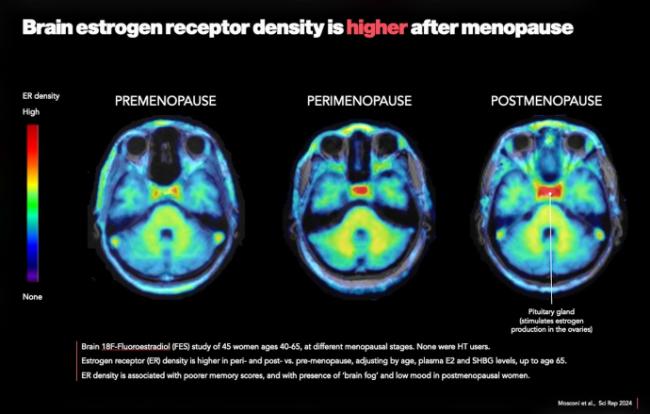
They need to convey the information to someone else. The someone else being a receptor. So receptors are these little structures that are pretty much in every organ system in a woman's body for estrogen in this case that bind to the hormone, read the information from the hormone and then use the information to talk to your DNA, okay? And tell your DNA, we need more energy, we need more protein, we need more anti-inflammatory markers, we need more antioxidants, we need more blood flow to your brain, we need more synaptic plasticity. So women's brains and bodies are born with a lot of estrogen receptors.
Our brains in particular are wired to respond to estrogen because of all these receptors that are really calling for estrogen. Can't wait to grab some estrogen. Right? So the density and functionality of our receptors is also a little bit different. What does that mean?
That maybe I have premenstrual anxiety before my menstrual cycle and you don't. Not saying that I do, I don't. But just for an example, different women react to hormone levels and changes in hormonal concentration. Differently depending on a number of factors, but every woman is different. So there's a range of response to hormonal changes.
And that means for instance that women who are pregnant actually the postpartum stage for some women is is wonderful. There are no mood changes. For some women there's a little bit of baby blues. Some women have the postpartum depression which can be very debilitating and rarely a few women can experience something very extreme like postpartum psychosis. Right?
This is because of hormonal sensitivities. Every woman reacts differently to the same type of hormonal change in your brain or all over all over. Okay. But it's more evident, I think, in your brain. Like there's a whole range of depressive symptoms.
There's women who do have brain fog, women who don't have brain fog, women who have a little bit of forgetfulness and women who may develop Alzheimer's at the end of the line, right? And the same with hot flashes, right? 30% of pregnant women have hot flashes, right? And there's a high chance that if you have a hot flash during pregnancy, you might have more as you go through menopause. There's so many things that like we're still understanding. It's fascinating to me.
It really is. All these Ps, the three P, puberty, pregnancy, and permenopause, they're basically a stress test on your brain and body. Okay? It's it pushes your brain and the rest of your body to function under stress. And that's when you can get a sense of your future risks.
What are the future risks? You can get a sense of like for instance, if you have postpartum depression, you may experience depression again as you go through menopause. Okay? If you have hot flashes during pregnancy, you may have hot flashes again during menopause. If you have anxiety when you're pregnant or after pregnancy, you may get more anxiety or anxiety again as you go through menopause.
It's a continuum because it's the same because your body is re it's the same body is reacting to the same loss or gain or gain of hormones. Can you talk about menopausal hormone therapy and possible Alzheimer's prevention or menopausal hormone therapy and how it's helpful to your brain? Hormone therapy, as as we all know by now, has a very tortured history where at first it was kind of seen as this magic bullet that every woman should take for life in order to be healthy and beautiful and feminine and live forever almost, right? And then the NIH stepped in and said, well, we need to test whether hormone therapy can do all the things that it's been prescribed for, which is not just relief of hot flashes, but also prevention of cardiovascular disease and dementia. This was back in the 1990s when the NIH launched the Women's Health Initiative.
Now, as I mentioned before, the fact that estrogen and progesterone are also brain hormones was discovered in 1996. But the Women's Health Initiative launched in 1998. So, scientists back then barely had any information on the mechanisms of action of these hormones in any organ but the ovaries and other reproductive organs. So, that's important to note. So, it's hard to say that the Women's Health Initiative was a disaster.
I would say that it was extremely futuristic in what they were trying to do because they really talked about prevention when no one in my field would do it. They were trying to figure out whether or not hormone therapy could prevent Alzheimer disease or could prevent cardiovascular disease. That's what they were looking at in that study. And that is the 2002 study that by the way we've talked about quite often on this show. Which was called the women's health initiative and the study was was started in the '9s late '9s.
Late 90s and then that released in 2002 or actually halted in 2002. So the women's health initiative had two arms because something that's important to know is that you can take different types of hormones depending on whether or not you have a uterus. So women who undergo a hysterctomy, they have the uterus removed surgically, they can take estrogen alone. They don't necessarily need to take a progesterrogen with the estrogen. Why not?
Because estrogen alone stimulates cellular proliferation in reproductive organs including the uterus which has been linked with an increased risk of endometrial cancer. Okay. So then you take a progesterrogen which could be progesterone which is the same type of hormone that the ovaries make or you can take a progesterine which is a synthetic molecule that looks like progesterone but not quite. Okay. And that brings down the cellular proliferation effectively minimizing the risk of indometrial cancer.
So if you don't have a uterus, you can just safely take estrogen alone in that sense. If you do have a uterus, you want to take a progesterrogen together with it. Now back then all the women in the women's health initiative were taking a very specific kind of estrogen which is is called a conjugated ecoin estrogen. CE E C E is not so much estradi but is mo which is the the boss in the brain is more like estrone which is the backup plan in some ways the backup one. Okay.
And it was taken orally as a peel at relatively high doses. Then there was another arm in the study where women with a uterus were taking the conjugated ecoin estrogens but also a progesterine a synthetic type of molecule that looks like progesterone is was called MPA. Okay, those are the only types of hormone therapy ever tested in a clinical trial of Alzheimer's prevention. That is not what we get today. That's not what we get today.
So that's the CES are still in use. Okay. The estrogen the MPA has been mostly discontinued because it's been shown to increase the risk of vascular damage. Got it. Among also because we have better options right now.
Again this was like the late '9s. Yes. Right. Yes. Okay.
So then what happens is that in 2002 2003 the women's health initiative was stopped because the trials showed a higher risk of cardiovascular disease and dementia in the group of women who were taking estrogen with the MPA. Okay. Right. Not in the other trial. So when it comes to Alzheimer's disease for women who were taking estrogen only there was no protective effect but there was no harmful effect statistically.
So it didn't do any it didn't pretty much it didn't do anything for the women in the it's called the combined therapy there was an increased risk of dementia. Something that is really really important to say is that these women besides taking formulations that we no longer routinely use were also at least 20 years postmenopausal. Right? So they were mostly in their 70s and 80s. That is too late because if you remember the hormone alone doesn't mean anything unless there's a receptor that's ready to use it and to connect to.
So, what happens in the brain after menopause is that because the hormones are just not there anymore. And I'll show you the brain scans, but the brain kind of stops making these estrogen receptors. They're not just a permanent feature in your body. They're an active mechanism. And your body only makes them if there's a reason to make them, right?
There's estrogen. I need the receptors. If estrogen is gone, the receptors may be gone. So, the age was wrong. The age was wrong.
Now, the catch 22 when it comes to Alzheimer's is that it's impractical to start a clinical trial that looks at using hormone therapy now for menopause and then wait 20 years for some women to develop Alzheimer's dementia to have a diagnosis of dementia. So, that's never going to happen. It's just not possible. So, we don't have any. So, we don't have that research.
We don't have any. What we do have is observational evidence, including really well done studies, very large scale. And what you need to do with observational evidence is called a meta analysis. It's a statistical integration of all available data with any data you want to do, but especially with observational evidence. And this is our meta analysis includes more than 6 million women.
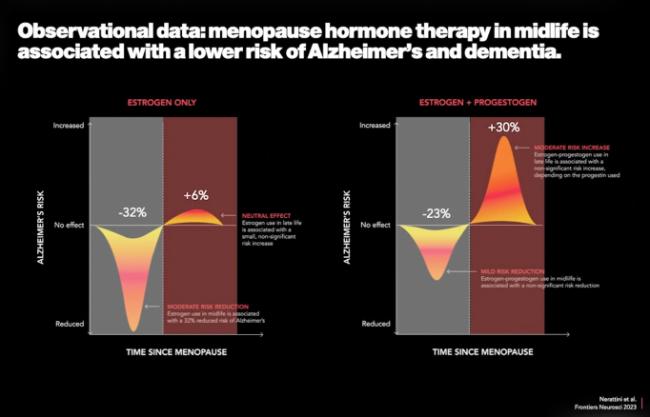
And it shows something that I think is quite clear. So this is women without a uterus who are taking only estrogen. These these are the women who have a uterus and take estrogen with any type of progesterone progesterine. Now for women who are using only estrogens and they take it at the right time within 10 years of the final menstrual period there is a significant risk reduction for Alzheimer disease. So these women have on average a 32% reduced risk of Alzheimer disease and dementia in old age.
Wow. Relative to those who don't take hormones. If you start taking hormones in those studies at least more than 10 years after menopause, then there is no protective effect. It's neutral. So that's where that 10-year window after you've hit menopause comes into play.
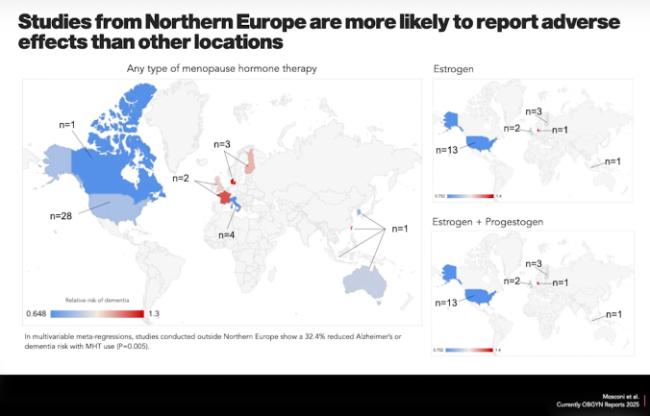
And for the other type of formulation estrogen for women with the uterus if started in midlife or le within 10 years of the final menstrual period there's still a 23% reduction in Alzheimer's risk which is however a trend level which which means that some studies show a protective effect but other studies do not. They may even show a harmful effect. And what we have found just recently it is published so I can talk about it is that all the studies reporting a negative effect are from Northern Europe which is very interesting not the US not the US. So I wonder what was happening in Northern Europe in you know a long time ago when these women were on hormones. So these are the studies in blue show a protective effect those in red show an increased risk of dementia.
So the whole North America is blue protective protective effect. What year is this from? Now. Oh, this is now. Okay.
Okay. Well, so when so when somebody says hormone therapy is is very confusing to me. Should I consider it to protect my brain in menopause if I'm within 10 years or if I'm in permenopause? Yeah. So this is research and I think it's really really important to clarify what has been done for research and how much research we actually need for any finding to become something clinically useful.
There is obviously a disconnect. So we do now we published this in 2025. Okay. For context. Yes.
This is new. So we do now have some coherent evidence that there may be situations where starting hormone therapy, especially estrogen only for women who go through surgical menopause in midlife may be protective against Alzheimer's. Is that enough to make it into clinical guidelines? No. Because this is observational evidence.
We need stronger evidence for a protective effect to say 100%. Yes. Clinical trial evidence would be amazing. We can't do clinical trials of hormone therapy started in midlife and then wait 20 30 years for someone to get Alzheimer's. What we can do is use a modern approach to this question where we look at menopause hormone therapy now and then we use brain imaging and other biomarkers to see if women develop the red flags for Alzheimer's relative to those who are not on hormone therapies.
And if this treatment can slow progression or prevent onset of disease. It is now in clinical guidelines that for women who go through menopause early or prematurely which is before age 45 and for surgical indications such as anerectomy with or without a hyctomy then hormone therapy is actually recommended for a number of things including support of cognitive function which is not the same as Alzheimer's prevention however is really in the right direction. Yes. Is this the first time I've seen this study? This one here?
Yes. When was this? Two months ago, 3 months ago. This was just released. So, this is the first time.
Yes. This is really exciting. Mhm. And we also found an effect of APOE genotype. What is that?
ApoE4 alil or genotype is considered a risk factor for Alzheimer's. Okay. And we do now have some evidence that hormone therapy may work better for women who do not have that specific gene. However, that is from the observational data. So there are studies using biomarkers that show a protective effect also for APOE for carriers.
So I think this is important to know because some women have been discouraged from trying menopause hormone therapy for cognitive support because of this APOE form. I mean I think this is such encouraging news and starts to move us into a direction where we want to ask more questions about it and I know you're doing more research on it. Yeah. What does science say about food and brain health? For decades science was saying that food had no impact on brain health.
But then science also said that exercise had no impact on brain health, that air pollutants had no impact on brain health, right? And now they're all part of guidelines for Alzheimer's prevention. So we do know that food is not just food. Food is information. So the nutrients that are present in the foods that we eat are actually chemical molecules that have a direct impact on your body.
Sometimes even at the cellular and DNA level. So for instance, we all talk about omega-3 fatty acids, right? It's something that's good for your heart, it's good for your brain. But the reason being is that these fat, this kind of fats have both nutrienomics and neutrogenetic effects, which means that they enter your circulation. They go inside your your cells everywhere in your body, and they speak directly to your DNA, saying, "I'm here.
I'm an anti-inflammatory. Things are going to be great and then your body adjusts accordingly. So what should women eat? What should women eat? So the research shows that for women especially mid life and also older age a predominantly whole foods based diet with reasonably abundant amounts of vegetables and fruits and plant-based foods.
That's really been linked to better health and better outcomes overall especially in pmenopause menopause postmenopause. Yes. So there's one study in particular that I thought was really well done out of England where they looked at really large data sets and showed that women who consumed healthier overall diets with minimally processed foods and good amount of fruits and veggies but also fish and legumes tended to experience a later onset of menopause and milder symptoms as compared to women whose diet with richer in processed foods and refined sugars. So is there a food that can delay menopause? That's an association.
But many many studies have shown that there is protection. So the more foods you consume that are high in antioxidant nutrients, in anti-inflammatory nutrients, in brain supporting nutrients, in heart supporting nutrients, and the overall healthier you're going to be, right? In part because we tend to eat about three times a day, every single day, right? So, we have multiple chances every day to make a smart choice and really nourish our bodies and their brains or the opposite and that over time really builds up. What is an ideal diet for women in midlife?
I'm not a dietician, but the research, the science shows that a Mediterranean style diet has been associated time and time again with better women's health overall. And a Mediterranean diet is actually not that hard to follow. It's pretty good. It's good. There's some good There's some good delicious.
It's delicious. And these are diets that really favor fresh produce that is not processed or fresh food that is not processed at all where fruits and vegetables and place plant-based foods are really are the star of the show. And then you have smaller amounts of other foods, especially animal derived foods. So it's a very inclusive diet. It's not like a deprivation diet.
There's always ice cream, you know, once in a while. It's always like a nice treat, but then the treat is homemade. You know, your mom just baked it or your grandma just made you a pie or something. So, you don't eat the whole pie. You eat a little bit.
So, there's an eye on portion control. There's an eye on making sensible choices and nourishing your body from the inside out. How do you feel about alcohol with the brain? Is there a correlation there or is it something we should be aware of? Alcohol is by definition the chemical functionality of alcohol is to be dehydrating.
Okay. So, which is not good for the brain. No, it's not good for the brain. So, that's actually the last thing that any brain wants is to be dehydrated because the brain is actually the one organ that includes the most water and fluids and that is more easily disrupted by changes in hydration levels. So when we talk about drinking water, that's what we're talking about is really nourishing our brain with water.
Is that right? Water is actually food. I would consider water as food for the brain. And I I will say there is a difference between actual water and filtered water or distilled water or soda. Okay?
Water is fluids with nutrients, right? And your brain doesn't just want something wet. It wants fluids that include nutrients like electrolytes and salts and minerals. They're really important for brain function. Water is essential for every brain functionality, every reaction in the brain to occur.
And you don't want to be dehydrated for a number of reasons including that the brain is sensitive to a very mild dehydration where two to 4% water loss which is just sweating may for some women who are sensitive may lead to symptoms like dizziness or headaches or fatigue or even some kind of brain fog that is very easily reversed by just drinking some water throughout the day. Okay. So we say soda is not water. Filtered water is not water. Purified water is like oh coffee.
Coffee is caffeine with water. No. It's not really water now. So you have not shown this study anywhere. Is that right?
This is a new study. I have not seen you have not shown it to anyone. So it's it's got to be new. Okay. All right.
So we did a meta analysis that we talked about. This was 2024 I think and we had a lot of questions and people reached out with a lot of questions about specifically this variability that we see and also after we published this meta analysis. There was another study that came out from Denmark showing that hormone therapy use in midlife, the estrogen only therapy was actually associated with a higher risk of Alzheimer's and dementia. That of course was like all over the news. I remember that.
Number one, let's do an update of the meta analysis, including this new study that's scaring every woman off taking hormone therapy. But also I was telling my students I was like this is another study from Northern Europe. I am seeing a pattern here. Can you test if that is correct statistically? Is it just me because I'm a little bit irritated right now.
Or is is there actually an effect of where the hormones are being taken? And so we did a follow-up analysis that includes all the available data up to now. And we still find a protective effect of hormone therapy taken in midlife within 10 years of the final master period against Alzheimer's disease risk. But then my statistician called me back and said you are right there is an effect of location because there's a lot of variability in the data and you always try to explain what is driving the variability. Why is it that that some studies are showing this and these three studies are showing that and this?
What what what do these studies have in common that could give us a little bit more of information and there is an effect or geographic location. So this is any form of hormone therapy, okay, and risk of Alzheimer's disease. The countries in blue are all the countries that ever published data looking at associations of hormone therapy and Alzheimer's incidents in late life. Showing a protective effect. So that's all of North America plus some parts of southern Europe, that's Italy, the little the one over there.
The countries in red, which as you will notice is they're all in Northern Europe, yes, show a negative effect. So studies from Northern Europe more likely to report adverse effects in other locations. Yes. And when you do something, is it a different type of hormone therapy? Is it a So in some ways, yes.
They would use is not the estrogen so much as the progesterines that are being used that tend to be more the kind of progesterines which is a synthetic molecule that looks like progesterone but it's not quite that we use for birth control I don't want to scare anyone no out of birth control it just it's used differently in this case and somehow that kind of combination has been linked with a with a higher risk of Alzheimer's. However, I'll point out I I just want to point out again that these studies are looking retrospectively a women who did start taking hormone therapies in midlife by 20 years ago, 30 years ago, and are now old enough that some of them have dementia, some do not. Okay. Okay. So it's not the same as a clinical trial where everybody starts at the same time and we know exactly what they're doing because some some problem I have with this kind of studies is that you know there's 20 years in between.
Are we accounting for everything that's happening in those 20 years? Do we have data for those 20 30 years? Everything is changing over the course of 20 years environmentally everything. There's so many things that may have gone wrong that are not accounted for in those studies. But we need to do research differently.
We need to do research in a way that is proactive. We need to do research on menopause hormone therapy in a way that is fresh and modern. We can't rely on data when women were taking the hormones before the women's health initiative even stopped. I think it would be safe to say you don't want women to feel afraid of hormone therapy because there are some very protective things about it. I think the guidelines are quite clear that most women are scared of breast cancer and now clinical guidelines are really really clear stating that for women who are younger than age 60 which is arbitrary it's more like an indication but let's say within 10 years of the final menstrual period then for women who are eligible right there are contraindications but most women are eligible for those women hormone therapy is safe and the benefits typically tend to outweigh the risks which is not to say the risks are zero right these are medications right so I think it's really important to put the risks in contents that you have done that with karine Dr.
Man when she was here which I thought was brilliant. So it's important to really understand the balance of risk and benefits but for most women hormone therapy is safe relative to breast cancer risk. However, mamograms are really important. Screening is really important. Your family history is really important.
Your oncology family tree is really important if you do have a right. So you want to talk to a specialist who is informed. Once you're done, I would love all women to know that hormone therapy is on the table. That we can't keep listening to something that happened 20 years ago, over 20 years ago, as the only source of truth. That is not correct.
We have done so much research since showing that hormone therapy can have positive effects. Some are now included in FDA regulations. Sometimes hormone therapy may be prescribed off label for some other indications and there's a lot of research that needs to happen on whether we can also use it for Alzheimer's prevention and brain fog. And I'm really happy to say that the research is now happening and it's happening fast. So we should have more information to discuss really soon.
And you are heading that up. I am. Can we talk about your new initiative because you and I spoke about it when you first made the announcement and I was thrilled to do that but I did not have this podcast or this this platform to talk to you. So that's why I'm so thrilled that we're able to do this in-depth look at everything you've done Dr. Mosconi because it's been incredible.
It really has and I can't wait to see what's next. So you're a part of of care you're leading that. Can you explain your position, what it is and it is going to be pretty fast really. We're moving so fast and I was just telling you just coming from a very busy couple of months. So almost a year ago actually Dr.
Regina Dugan reached out to me now. Regina is like a legend. She is the former director of DARPA. DARPA is the advanced research program agency for defense. I know people are not many people are not familiar with Arba but most people are familiar with the movie Oenheimer.
Oh yes. Okay. We know. Okay. So ladies, if you know Oppenheimer then we understand what you're see if you simplify it for me and for us then it's good.
So Dr. Oppenheimer was the scientist who was entrusted by the government to the United States to put together a team of scientists from all different parts of the world to work on a very very high-risk highreward project which ended up with the development of the A bomb right the atomic bomb and which effectively led to the end of World War II for the United States that model regardless of outcome. But that model was so effective that the government of the United States said that's the way the scientist should work. It shouldn't be each scientist protecting their own lead territory. They should work together.
They should be given the funding to work together and move faster than any single scientist can ever hope to move alone. Right? So that is how DARPA was born back in the 1960s. DARPA is again is the advanced research program agency for defense and Regina Dr. Dugan ran DARPA for quite a long time and the the first woman ever to run DARPA and she's amazing.
She's absolutely she's brilliant. She's a powerhouse. She's like one of the most intelligent people you ever meet. So, Regina started Welcome Leap, which is an independent subsidiary of the Welcome Trust where the Welcome Trust is one of the world's largest philanthropic organizations. So, welcome LIAP is basically to health what DARPA is to defense.
Wow. But instead of being national, DARPA is within the United States. Welcome Leap is global. Mhm. So it's an agency that sponsors high risk, highreward research, but you got to move fast.
So is designed like DARPA. So every research program is a three-year sprint. Why is why do you have to move fast? You got to move fast. You need to you need to find out fast.
They give you a ton of money. They give you autonomy. They work with you. They help you remove all sort of blockers that we have in academia, that you have in the industry. They just really help you move fast because we have a problem that we can't spend another 20 years just finding out if hormone therapy is important or helpful for Alzheimer's prevention.
I need to know soon, right, before I go through menopause. All of us, we need to know. I get it though. So, what are what are you tasked with finding out right now? Regin thought she wanted to give me money.
I thought she wanted to give me a grant, right? And instead she asked me to join welcome leap as a program director which is like Oenheimer was the program director for that specific project and that's how we ended up with the first ever global research program looking at menopause and neuroendocrine aging as a risk factor for Alzheimer's disease and whether or not hormone therapy can effectively reduce the risk of Alzheimer's disease for women. So, Welcome Leap devoted $50 million to my program which is care. I also love the word care. It's very me.
Did you name it? Yes. Yes. You did? Oh, I didn't know that.
Yes. Yes. Regina, we tried a lot of different words and then I was like, how about care? So, care stands for cutting Alzheimer's risk through endocrinology. Yeah.
Yeah. And also speaks to the fact that we should really start caring about women. Yeah. And for women, right? So it's a 50 million program of research.
We launched in February and we put out a call to other scientists all over the world to come work with us. And we got hundreds and hundreds of applications, so many more than I expected. And LEAP moves really fast. So we had I think just two weeks to go through all the applications and and select some to move forward to the next stage and then there was a full proposal stage and we just launched we have 16 sites including 64 leading scientists from all over the world. Actually I'm going to show you.
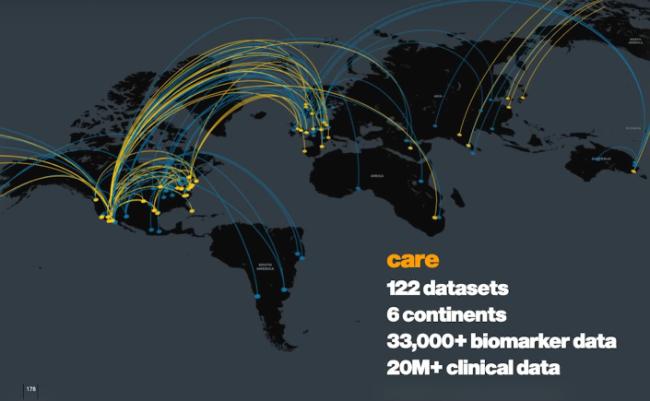
So this is our logo. This is for the key cause at risk through endocrinology. That is amazing. So care brings together 16 principal investigators which is one person per site and 48 multip and co-PIs plus all their teams. So effectively these hundreds of individuals involved and we have three different components to care.
Mhm. This is trust one where we are developing biological neuroendocrine indicators of Alzheimer's risk for women. So care is 100% women. Actually the vast majority of PIs are also women which is really exciting. That's exciting.
Yeah. And you can see here where they are in the world. These Yeah. We we'll put a link to this if we're allowed to do that. Yeah.
I think so. But the most stunning data set is this. That all together we're going to look at data. We're going to pull data from 122 international data sets from six continents. Every continent except Antarctica, which I think has a reason to be.
And we're going to look at biological data from over 30,000 women imaginable time points for a total of over 100,000 data points. For context, the largest ever longitudinal study of menopause is mine and we had like 40 women. We're going to have 100,000 data points. Oh my gosh. And also we're going if everything goes according to plan, we're going to have all sorts of clinical data from over 20 million women.
Can women get involved with this? Can any of us get involved with this? Yes. Yes. Yes.
Yes. So, you're going to tell us how we can do that? Yes. I'm going to tell you how to do that. We have sites who are actively recruiting participants to become part of research.
Myself included a wild connectet medicine. My team is a site of care and yes yes Dr. Dr. Mossone, this is I mean it's groundbreaking. This is a you did a groundbreaking so many groundbreaking studies already but this is a groundbreaking study looking at something that we've never looked at especi never looked at period but on this level with this magnitude I'm so happy to be working with other scientists instead of being in in some ways in financial competition with other scientists you know because you're always trying to to get money to do your own little research and instead said this is this is an initi this is a collaboration it starts out as a collaboration and we all have proposals we're all going to do the research I'm going to be on top of the entire research I direct this is effectively the largest ever global examination of women's risk of Alzheimer's ever attempted what's really super interesting to me is that we are also going to address hormone therapy the ways we were just talking about it so in a way that is statistically sound, statistically powered, that is welld designed, and we're coming at it from all different angles.
We have clinical trials of hormone therapy that looks not at Alzheimer's incidents 30 years from now, but the looks and markers of Alzheimer's in the brain. So, we are going to measure directly the immediate impact of hormone therapy on biomarkers of Alzheimer's. We're going to do something called targeted trial emulation studies of hormone therapy using millions and millions of women. We're going to do like a precision medicine biioinformatic approach this question. We're going to use biological markers to look at risk of Alzheimer's in midlife women using the hormonal formulations that are prescribed today in clinical practices.
Do you think in three years? Yes, I do actually. That we're going to be changing the way we treat menopause. Yes. Hopefully.
Hopefully. Well, I think we're going to have answers. I think what's happened is that we're we're looking at the same data over and over and over again. What do you expect at the end of the three years to be able to to do? I mean, I know you don't know that.
I can tell you what I want. Tell me what you want. I want four things to happen. So the first things that I I want to know if hormone therapy can reduce the risk of Alzheimer's disease and I'm quite confident we'll have really solid data. Then I want to be able to measure estrogen in the brain because I think that we're not giving hormone therapy a fair chance, right?
Because the way that the studies are done are indirect. We're using hormone therapy today and the way that we're assessing whether it works or not is I either ask you if you're feeling better which is statistically not awesome or I measure your cognitive performance where your cognitive performance if it has changed is changed by one point I can't run statistics on that right right or I wait 30 years right to know if you're getting dementia which is not obviously helpful to anyone or I can even measure biomarkers of Alzheimer's. But if I find a change, I don't know what's driving the change in the brain. So what we need is a tool that allow us to measure estrogen activity in the brain. And it's absolutely ridiculous that those tools have not been used.
What are the other two things? So the other two things that I want is that we do know what kind of well I want estrogen imaging. I want brain estrogen imaging. I want a technique that is very accurate and that we can use in clinical practice and that will be used to measure whether hormone therapy does or doesn't do certain things in the brain. So I need a new technology that we're going to develop.
And then number three, when we look at risk factors for Alzheimer's, I'm sure you've heard that there are things that increase your risk of dementia. And there are 14 that have been formalized. So things like high blood pressure, high cholesterol levels, air pollution now or diabetes, obesity, cardiovascular disease, some genetic factors. Those are recognized risk factors for Alzheimer's for men and women. There isn't a single female specific factor being considered in those models.
So we were Yes. You want to know if it's menopause or permenopause? I want them in there. Yes, they have to be in there. And when the Lancet Commission published their last guidelines about Alzheimer's prevention, they did have a subsection about menopause as a possible risk factor saying that more research is needed.
But then they talked about hormone therapy and they said that increases the risk of dementia especially for women who are going through surgical menopause. Whereas the research is showing the opposite and clinical guidelines even are saying that hormone therapy can be protective for cognition for women who take it very close to surgery or in response to surgery. So that was we need to we need to get that answer. We need something called a population attributable risk a part for Alzheimer disease that is specific to women because there are risk factors that may impact women more or less than men. Right?
There are plenty of things that happen to women that don't happen to men that have never been looked at. So we need to have a comprehensive risk assessment for women that we can then translate into predictive model. What I want is a risk calculator. I want every which is part for Alzheimer's. When you go to your doctor, you know, the same way they were like, "Okay, let me check your cholesterol levels.
Let me check your blood pressure. Let me also check your risk of Alzheimer's and what factors may increase or diminish, which is important, your Alzheimer's risk." It could be as simple as an online calculator. We have it for cardiovascular disease. We have it for breast cancer. I want it for Alzheimer's.
So for instance in 2024 we published the first large sort of large scale study using a positron emission tomography technique again a PET technique with a lian that binds to estrogen receptors in the brain. This was the first time ever that anyone used this technology successfully and applied it to women's brains as far as I know at least where we were able to get a strong signal with a difference according to menopausal status. So what we're looking at here is the way the estrogen binds to estrogen receptors in the brain which is then what leads to energy levels and amaloid plex reductions and neuroplasticity and whatnot. Do you see that red blob in the middle? That's the pituitary gland.
Yeah. We're looking at a an image with a red big mark in the middle of the pituitary gland, which is that part of the brain that tells the ovaries to make estrogen and progesterone. And what all different models of menopause used to say until now was that the estrogen receptors would shut down. Yes. After menopause and they they would only be active for a couple of years.
Whereas we did this in women because those studies are in in rats. Right. Right. Women are not rats. Our brains are much more complicated and we outlive menopause whereas rodents die soon after the end of the reproductive span.
So what we have shown is that it's the opposite that there are more estrogen receptors in women's brains as women's brains go through the menopause transition. So the permenopausala and early postmenopausal stages which means probably that either the brain is happy and is just compensating right there's less estrogen so I need more receptors or that the brain is not that happy and is putting out receptors in a sort of starvation response looking for more estrogen looking for more estrogen activating the pituitary to tell the ovaries hello we need we need estrogen here we're leaning towards the second interpretation because Women who had more estrogen receptors were also more likely to have memory issues and low mood, but we're looking into that. Now, this tracer is very specific for the pituitary gland is not as sensitive for the rest of the brain. So, what we're trying to do with care which is necessary for clinical application. So, this is good for research.
It would not be for clinical practice. So, so it needs kinetic modeling. It's all sort of stuff to get the signal out. But for care, we're going to hopefully develop different tracers that are specific to brain estrogen and they can give us all the information that we've been needing for for hundreds of years. So, I'm not waiting for three years for you to come back on this podcast, but promise me that we as soon as I have data, as soon as you have data, we can have you back on here with your brilliance.
And as soon as you get a break from the research, Dr. Lisa M. Thank you so much. Thank you for having me. Thank you for what you're doing for the world.
Oh, thank you. Thank you all so much. I don't know if I'm the only one who is so excited that the future of women's health is in the hands of scientists like Dr. Lisa Mosconi. What she's doing isn't just science.
It's hope. It's proof that we're finally getting the answers we deserve and the tools to take care of our brains starting right now. If this conversation helped you, share it with a friend who needs to hear it. Hit subscribe, leave a review. I read all of them.
Thank you so much for MIDI, the care that women deserve.