If there's a woman out there that says, "Look, I've tried everything. What do I do first?" The research shows when folks go from that baseline of 10 to 15% of total calories from protein to 20 to 30%, they naturally and effortlessly, intuitively just slash 400 calories without even thinking about it. When you look at all those diets out there that make the rounds, it really doesn't matter which one. They all are based on restriction. They're all telling you to cut out something that you love, whether that's sugar, carbs, fat, pleasure.What this does is it puts us in a state of scarcity mentality that always triggers hyper-fixation, obsession, binging, and then eventually we just like throw in the towel and say, "I quit. Diet starts again tomorrow." So, the hunger crushing combo method flips this script because it's working with our biology and our psychology to think about adding, not taking away. Abby Sharp is a registered dietitian and author of the hunger crushing combo. Today on The Tamsen Show, she is sharing her viral science-backed framework for eating in a way that actually keeps you full, satisfied, and in control so you can stop dieting for good. Welcome back to The Tamsen Show.I want to start today by saying this really clearly. If you feel confused about food, it is not your fault. I don't know about you, but I grew up in a world where food was something you had to earn. Skinny was the goal and every calorie counted. Up until the last few years, movement for me was about burning off what I ate.And even when you start to know better as an adult, it's really hard for that wiring to disappear. And then we're suddenly expected to just know how to feel our bodies, even though everything that we were taught was about control, not getting nourished. My guest today is Abby Sharp. She is a registered dietitian, a leading voice pushing back against the diet culture. Isn't that nice?
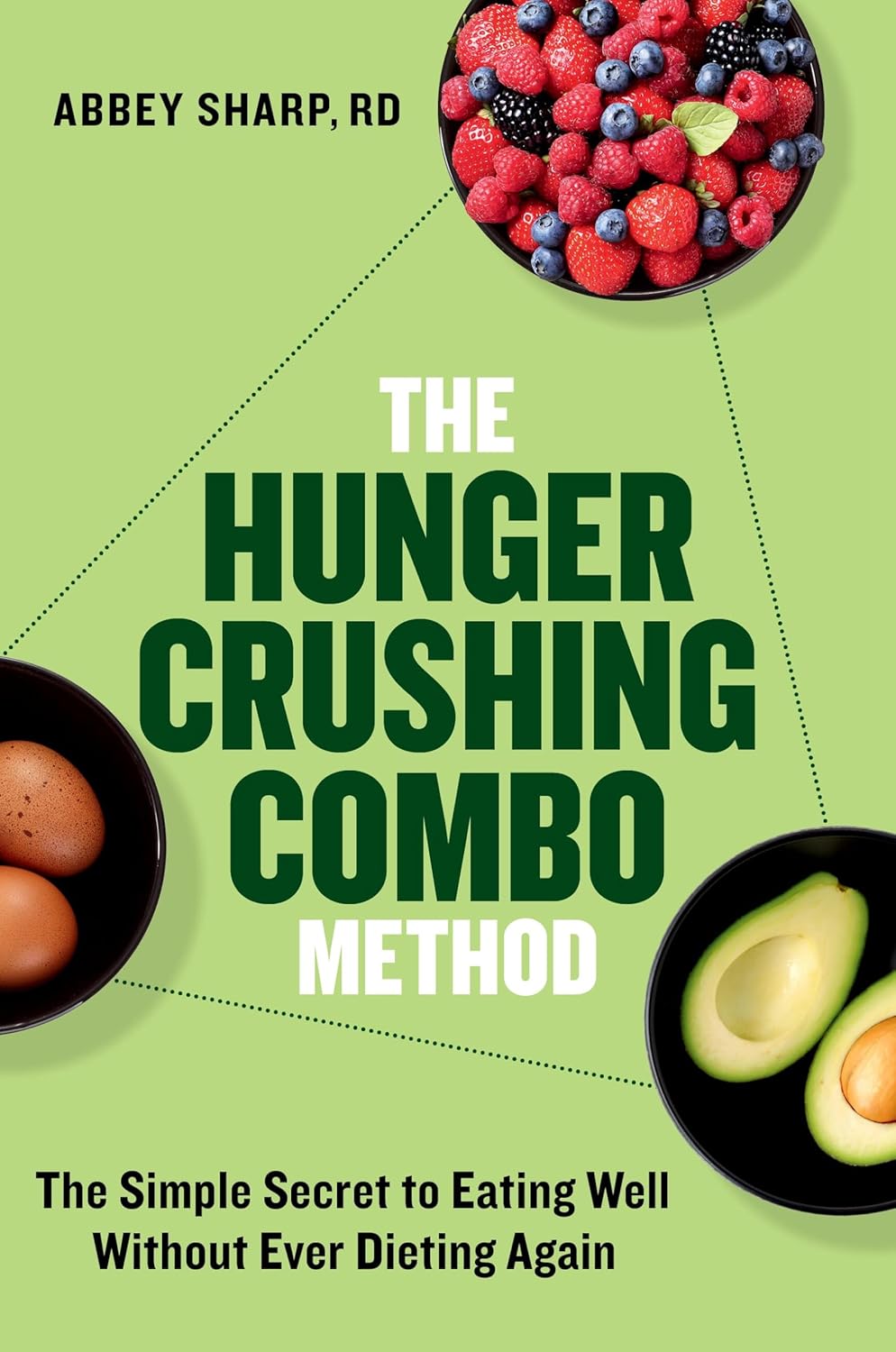
An author of the hunger crushing combo method, the simple secret to eating well without ever dieting again. Her work is grounded in real science. But what I love most is it's built for real life, and that's what makes it so different. She is going to break down a simple science-backed way to build meals that support blood sugar, energy, and our long-term health without cutting foods out or tracking every single bite. We're getting a plan that actually works in real life.
Abby, I am so glad you're here. Thank you so much for having me. I feel like we've needed this for a really long time. We have and more now than ever before, especially in this kind of Ozempic skinny talk era that we are currently living in. It's an interesting time right now because we're back talking about a lot of these things and I think there's so much confusion.
There's noise about good, bad, again. There's noise about all these other things we're adding on, inflammatory foods, elimination, fasting. So, I want to get down to kind of what we need to do, what we need to know, and what we can what we can actually eliminate in in terms of the noise. Right. So, I discovered you years ago from a video and it was it was watching influencers eat and what they eat in a day.
And I would be scared if you saw my videos I feel like right now. But what made you dive in and do that? Do you think that wrong messages were being taught? Exactly. I mean, the reason I got kind of I got kind of went viral in that space and that became my niche was I saw a very popular influencer who was who who labeled herself as a frugivore, meaning she only ate fruit, raw fruit.
And she had a massive following of so many young girls who were messaging me being like, "This woman is telling me to eat a case of bananas for breakfast. I, you know, she looks so thin, she looks so fit, and my blood sugar's now through the roof. I'm only, you know, I'm having to restrict to 800 calories, all of these things." And I thought to myself, "This cannot be going mainstream." And so, I stepped in and I tried to break down the science why this was not a good plan for you know, vast majority of people, if not everybody. And that really took off and I think with the what I eat in a day movement, what bothers me the most about these videos is that they always step start off with basically a body check, which essentially communicates that, you know, if you if you want to look like this, you can you just have to eat like this. And we know that human bodies don't work that way.
Not to mention, we have no idea what's actually going on behind the curtain. And as you and I both know, social media is, you know, heavily curated. So, the layperson doesn't understand that. Well, and also, not just that. I think it's also it's just so you want the right the fast answer, right?
You want like a quick cure. So, just tell me what to do and I'll do that and so it all makes it okay. And we want it to be easy, too, right? And sometimes it's not always easy. Were there red flags that you were seeing in those perfect day of eating videos?
Cuz I got to tell you, sometimes I look at them and I'm like, "I don't have time to make that. Do this, make my shake, have the perfect the perfect little salmon salad." And I find myself, you know, falling into it going like, [gasps] "I suck. Like, how come I can't do it right all the time?" Exactly. And and I hear that from from women all the time when they're watching these videos over and over again, they are feeling less than, not only because they can't spend the time or the money to create these bountiful like three-course meals in the middle of the day. Like, who I don't have time to even cook a chicken breast in the middle of the day.
But also that they they they don't they can't achieve the body that these women are are promoting. And I think it's it's left a lot of women feeling kind of gaslit by by this kind of content. Yeah, I could I couldn't agree with you more. Do you ever get nervous when you do you want to do those reaction videos to see what the what the backlash is going to be or if you've gotten so used to it you don't even care? I've gotten used to it.
And and there is backlash and I just accept it and I don't read comments and, you know, I stand by what I say and I feel strongly that, you know, while I may offend some people because ultimately diet is almost become like a religion to a lot of people. So, if you kind of tell someone that their way of eating is potentially dangerous based on what they're promoting, they're going to dig their heels in and they're going to feel, you know, they're going to get angry. And their people are going to get angry at me, but I know that in the end I'm helping the masses with these messages. I don't think there's any question, you know, I I've talked about it a little bit but not too much, I think, on the show, but I was on a a drill team, like a dance team, when I was in high school and in college and we had a weigh-in. So, you had a weigh-in and if you weighed the right amount, then you could perform that weekend.
And, you know, so obviously it caused much eating-disordered thoughts that that still exist today. I mean, there's no question about that. Like, they they sit there in the back. Luckily, I went through a lot of therapy and and dealt with that and worked hard on it. But when I see some of those things, I think about, "Oh my gosh, I didn't have access to videos like that hitting me every day." So, I can only imagine what parents are dealing with trying to help you know, helping kids or what they're dealing with on their own trying to maintain this perfect body. 100%.
I mean, the reason I came into this work was based on my own experience with an eating disorder as well. I mean, this it seems the story is so universal. Hear it from so many women I talked to. I suffered from an eating disorder in my late teens, early 20s. It started as orthorexia, which is essentially like clean eating taken to an extreme.
Then it kind of got bundled into some binge eating, some anorexic tendencies. And so, I I know firsthand the damage that these messages do. And the same the same as you, I did not have social media when this took hold of me. So, I can just imagine how difficult it is seeing being bombarded with these messages every single day. And now, watching your idols shrink so rapidly before your eyes in this kind of Ozempic era that we're living in, I think it's it's a really dangerous time for young people.
What do we do about that? Because there are so many benefits to GLP-1s and there are so many other things that it tackles aside from weight loss for people that really need it. How do we balance Do you think we're going to come to a place where that's balanced? I have to have hope that we will, but based on what I'm seeing right now, I I am worried because like you said, there's no question that these medications are life-changing for so many people, especially folks who have been dealing with persistent food noise all their lives. This is a relief valve that opens them up to other acts of self-care, other health-promoting behaviors that they can now integrate cuz they're not constantly thinking about food.
But at the same time, there are a lot of people who will be harmed by the pressure to use these medications unnecessarily where the risks outweigh the benefits. And so, you know, I do think about young people when when bodies are changing so rapidly in in their everyday life, the people that they know, the influencers they follow, the celebrities that they see on TV, that what the idea of what a normal healthy body looks like is going to change drastically. And I worry this is going to like essentially snuff out body diversity in some ways. And I also worry that what we're doing is pathologizing hunger. When, you know, hunger is one of the most, if not the most important primal biological signals we we have, right?
If we didn't feel hunger in caveman days, we would just sit around in our cave all day and somebody would eat us if we didn't feel hunger. So, it feels almost a little dystopian to get to a point where the goal for so many people is to never feel hunger again. It's almost like it's taking something taking away something that makes humans human. Cuz I think if I asked you this question a year ago, it would probably been a different answer from where we are today. The the change of diet culture that you've seen over the years has shifted from 12 months ago you know, to where we are right now.
So, what is the big shift that you're seeing? A a lack of hunger, I guess, or people not worrying about calories anymore? What are the what is what are you saying? You're absolutely right. I think what we're seeing is this, you know, I I can kind of I can kind of box it into what I can call like skinny talk content, which is this like subculture on social media that glorifies thinness at any or all costs.
You know, puts that thinness piece ahead of health, ahead of relationships, ahead of everything else with this no pain, no gain kind of approach to behavior change, which we know does not work. And so, I worry that we're in an era right now where that is the mentality. Mhm. We kind of came from this like wellness culture space where we were we weren't talking about getting skinny. It's like you know, right?
It was healthy. Yeah, you couldn't say you were skinny. You didn't want to be skinny. You just wanted to be healthy or you just wanted to, you know, reduce bloating for your gut health. You didn't want to be on a diet.
You wanted to eat clean or, We just interchange the words. 100%. These But diet culture and wellness culture are both rooted in seeing food through a moral lens and and control of the body and ultimately assigning our worth based on the food choices that we make and the body that we live in. And I think that that we're now seeing that pendulum swing right back to that strong diet culture, that classic 2000s unapologetically, I want to be skinny and I'm going to tell you how to do it and I don't care about anything else. It's interesting. I think you're right about that.
I and I think that we're seeing it through that moral lens. I I could not agree more. I think it's happened pretty quickly, too. It has happened so quickly. You know, the first when I first saw the first kind of skinny talk video online, this would have been probably 9 months ago.
I kind of did a little rebuttal as I do to it pointing out this is so problematic and my comment section was all like, I can't believe this is happening. You know, people were really rallying against me being like this needs to be, you know, blocked. We need to report this. No joke, 3 months later, same kind of content I put out. The the tune was 100% 180.
Everyone was saying, Why shouldn't we Why don't Why shouldn't we want to to be thinner? Why are you ganging up on this girl who just wants to, you know, have a healthier body? It was so fast. So, what are some of those words to look for now? Because we're not going to see the word diet, right?
So, what are the words that we look for instead that could still denote that? Detox, cleanse, like, you know, elimination. Inflammation. Inflammation. Oh my gosh.
I'm so here sick of hearing the word inflammation because influencers love to use this word, but they don't know what it means because they'll just say, I'm inflamed. You mean like, I'm puffy or I'm bloated or I'm fat. But it's like a it's a sanitized word for I'm fat, right? The word What does in inflammation mean? Yeah, I mean, inflammation is a normal bodily process.
Acute inflammation is is incredibly important for stimulating our immune system. Now, obviously when we're getting into chronic inflammation, that's when we're going to see an increased risk of chronic disease like, you know, heart disease or type 2 diabetes. But most influencers when they use that term, they're not talking about disease. They're just talking about looking a little bit puffy. Yeah, or bloated.
Because I use those words too myself. I'm like, oh, I'm so bloated. What I really mean is like, I feel like crap and I can't get in my pants and I feel awful about myself and I've gained whatever. Exactly. It is.
I know. I know. What were some of the beliefs that you had to unlearn personally? That fat is bad and also that sugar is bad and carbs are bad. You know, my orthorexia started with an elimination of all sugars.
I had IBS. I was, you know, very young at the time. I went to see homeopathic naturopath. This was years before I was a dietitian, obviously. And she told me to cut out all sugar.
And then, you know, I'm a perfectionist. I'm very type A. I was like, I'm going to do this perfectly. Cut out all the sugar and then that was not enough for me. And then I was like, okay, if I can cut out sugar, then I can cut out fat.
That's control, though. Right. That is control and that is those perfectionistic tendencies. And so, I think unlearning that carbs are not the devil and fat also very important. Like I I eat a half of an avocado every single day now.
And I love those healthy fats. They're so important for the body. It's funny going back to when I when I started, there was a book called Fit for Life. Do you remember that book? So, you eat fruit until noon and then you eat your food and then you I don't remember what happens the rest of the day.
Oh, you don't food combine. That's what it was. Yes. And and I started losing weight and I lost my first 10 lbs and my next 10. And so, I got to a place where I was bulimic is what happened.
And so, I was I would write down every single piece of food and then I'd work it off or eliminate it. And and that's how I, you know, I went for years with that because it was control of some sort. So, I really I hope that we find a way to not go back to to those kind of conversations. I'm always worried about the young girls, too cuz I know how hard that was to reverse. 100% and and I know we always think about disordered eating and eating disorders as being like a teen like teen girl, white girl problem. But nobody is immune.
And now we're seeing this kind of second vulnerability window for women as we enter perimenopause and menopause. Mhm. And there's lots of reasons for this. I mean, ultimately, yes, our bodies are going through changes, hormonal changes, increased anxiety, depression, mood disturbances, sleep disturbances. All of that can increase the risk of eating disorders.
Plus, we are seeing shifts in, for example, like where we're where we're carrying our weight. Subcutaneous. Section. And it's disorienting for a lot of women who can't now fit into their clothes and and plus there's these identity shifts. And and as you just said with the control, like when the world feels uncertain, the body becomes the project and food is the easiest thing for us to control.
It's easy. It's several times a day. You're the person that has control over it. So, let's go into perimenopause and menopause because that that's really where I came back around full circle and went, oh, no, now what's happening? Jeans fit differently even when if there wasn't a a big shift in the weight, my boobs felt different, the back fat felt different, belly fat that I never had, you know, I used to be able to like put my hand on my waist and I now I can't.
Where do you start helping women like that understand what's going on? And I know we're going to talk about your book, Hunger Crushing Combo method and I think that this is going to be a game changer for a lot of women in terms of understanding what to do and not having to play a guessing game, which is nice and not having to eliminate things where you're saying all or none. But perimenopause and menopause is a very interesting time because we are seeing our body shift. Mhm. What do you think is the most important in those times food-wise?
Well, the big one is to not overly restrict and I know that is so tempting because again, you see something change and you're automatically like, I'm going to put I'm going to put a stop on eating all the carbs and I'm going to heavily restrict calories and I'm going to exercise every single day. The most important thing is we need to protect our metabolic muscle, right? Like muscle burns three times as many calories at rest compared to fat. Well, say that again because I think that's so important to know. Yes.
So, muscle burns three times as many calories at rest compared to fat. Doing nothing but you have more muscle than you have fat, you're burning more calories. Absolutely. So, it's you're you're you're helping your metabolism long-term. And yes, we do see metabolic declines once we get over 50, 60 of about 1% per year.
And so, this is largely due to this muscle loss. And typically when we cut calories too low, what happens? We dig into that metabolic muscle. And so, I want women to know, you know, even if you are on a weight loss journey, to be very cognizant of where you're digging and to make sure you are getting enough protein. I generally recommend about 20 to 30% of your total calories coming from protein.
Okay. And Is that different from what it was before? Has it always been 20 to 30% or have we moved that number up a little bit? Well, it the average North American is consuming between 10 to 15. 15 is usually where people sit. But again, like when body composition when you body composition goals, when you're trying to combat some of that excess fat while maintaining muscle mass, we want to edge up that protein intakes to spare the protein basically in that calorie [clears throat] deficit.
And it's really interesting and this is part of the reason why the Hunger Crushing Combo method works and we can talk more about this. But the research shows when folks go from that baseline of 10 to 15% of total calories from protein to 20 to 30%, they naturally and effortlessly, intuitively just slash 400 calories without even thinking about it. Wow. And that is because it is so satiating, right? You know, protein is what I call king of the satiety hierarchy, right?
It helps to increase our satiety hormones like GLP-1, which we're always talking about with this Ozempic boom. It helps to slow down digestion. It feeds those metabolic muscle that muscle mass. Helps to improve our blood sugars. It is really important.
And also in the perimenopause age as well for bone as well. Well, I know it's so important and I have to be honest, it is really hard for me. I don't eat meat. So, take that part off the menu, but I still have, you know, all the other things. So, I'm going to go over some of the things that I eat and let you Yes.
Let you dissect me. What problem were you working to solve with the Hunger Crushing method? Yeah. Well, I mean, Hunger Crushing Combo method. Correct.
So, essentially when you look at all those diets out there that make the rounds, it really doesn't matter what which one. They all are based on restriction. They're all telling you to cut out something that you love, whether that's sugar, carbs, fat, pleasure. What this does is it puts us in a state of scarcity mentality that always triggers hyperfixation, obsession, binging and then eventually we just like throw in the towel and say I quit. Diet starts again tomorrow.
So, the Hunger Crushing Combo method flips this script because it's working with our biology and our psychology to think about adding not taking away. And so we're adding the hunger crushing compounds, fiber, protein, and healthy fat. So these hunger crushing compounds are going to keep us fuller longer. They're going to help stabilize our blood sugars. They're going to quiet that food noise and all of those incessant cravings.
And they help us reach our healthiest, happiest weight without going into that restrictive mode. Is it calories in, calories out? I mean, are you do you look at it like that? Are we not even playing around with calories? I'm not as I don't suggest people need to count calories.
The really cool thing, as I mentioned with the hunger crushing combo method, especially when it comes to weight management, is that because these components are so satiating. They naturally edge out some of the less satiating, higher calorie foods and just create this kind of sneaky calorie deficit without you getting in your head that I'm in a calorie deficit and I'm on a diet. [clears throat] And again, once we're in that mindset, that scarcity mindset, that is typically when we start to see the temptation to binge or cheat or whatever it might be start to take hold. So let's talk about protein because that is the big conversation right now and I think that I have had a tough time getting enough of it. So here's what I did. I was like, I'm going to do protein.
So here's what I'm going to do. I'm going to have lentils and I'm going to have quinoa and I'm going to have sweet potatoes and I'm going to have avocado. And I did all that and then my blood sugar totally changed and I don't know why. It went from like, I don't know, maybe it was a year time period, but I was eating so many of these things that I guess were turning into sugar in my diet and that's what I was eating. That's what my protein source was.
So there wasn't any other protein source. A little bit of fish, but that's about it. So can you help women figure out what some of those combos are? First, I guess let's start if they don't eat meat. Sure.
Do you eat fish? Or I eat fish. Okay. So, you know, when I'm thinking about you know, the best, most efficient sources of protein, I'm looking for sources that have, you know, approximately like 1 g of protein for five to seven or eight calories. Okay.
So that's just in my head. I don't expect anyone else to have to ever do those nice but Read the book and you can feel better about yourself. And you'll just understand. But those are things like fish, chicken if you eat chicken, egg whites, protein powder, tofu, Greek yogurt, cottage cheese. These are really rich sources of of great protein.
I love the lentils. The thing I love about lentils is they're what I call a dual citizen. Meaning they have fiber and they have protein. So you're knocking those things off and 95% of North Americans are not getting enough fiber. So we really need to be focusing more on fiber, just heart stop.
So I love that for you. Now, I love quinoa as well. But you know, everyone has to kind of experiment just based on their own insulin sensitivity. And as we get older, especially as we hit menopause, our insulin sensitivity does seem to decline and so we do see an increased risk of insulin resistance, type 2 diabetes, and and blood sugar mismanagement in general. So it's very possible that it wasn't necessarily that combo that's just like throwing everything, you know, at the wall, but just the combination of that insulin sensitivity piece.
And I think just, yeah, focusing on having a good source of fiber, which you have basically many sources of fiber there, right? With those healthy fats cuz that's also going to slow down the blood sugar response and really upping the ante on the protein. So probably I aim for 20 to 35 g. Of per meal. Correct.
What is insulin sensitivity? Can you explain that in an easy way? When we think about insulin, insulin is a hormone that is is released by the pancreas in response to our blood sugars going up. We eat something, our insulin comes to the rescue. It tries to usher that sugar into our cells so that we can move and do work and, you know, lift weights or run or whatever it might be.
So insulin sensitivity is basically how easily that sugar in the blood is able to make it into your muscle cells and other cells to actually get the blood sugars down. When we have something like insulin resistance, it's almost like, if you can imagine, there is a lock on the cells and insulin is the key that opens that lock to usher the blood sugar in. It's like gummed up. It's like you can't quite get it in. So for that reason, sugar stays in the blood longer and you stay having that kind of blood sugar high for much longer than somebody that has a healthy working pancreas and has good insulin sensitivity.
All right. So let's go into how people feel so stressed thinking about food cuz I think that that's a big thing. People feel very stressed thinking about food and then they feel very hungry and then they don't know what to do and then they're, you know, eating anything that's in sight. So a lot of people get stressed thinking about food and meals and what to do and now we're learning more about protein and fats and fiber and all that kind of stuff. What do you recommend for somebody that says, "Listen, I'm 20 lb from where I was a year and a half ago.
I hit perimenopause. I hit menopause. I'm just not feeling like myself." What do you suggest and where they start eliminating that stress? Keep it simple. And I think I mean, I can't blame people because we're constantly bombarded with all these like tiny little hacks that we're supposed to do all the time.
Okay. Oh, it's the food dyes. Oh, it's the seed oils. Oh, it's the glyphosate. Oh, it's the, you know, what all of these little things that apparently, if we just do this or just eliminate this, it's going to change everything.
Bring it back to basics because all those things are are they're really a distraction from what actually matters and it's kind of like missing the forest for the trees. And so that's really one of the reasons I created the hunger crushing combo method was because you only actually have to think about three things. Fiber, protein, healthy fats. You don't have to stress over the minutia of like, "Okay, did I get enough iron? Did I get the vitamin C?" Because when you're eating these foods, you are naturally getting this like whole food matrix, this like package deal with all of these other really important nutrients that work synergistically together.
So breakfast in the morning, if you want a breakfast that is going to crush hunger and you're not going to come into the studio like somebody I know did today and got I'm like, "God, I'm starving. I feel like my stomach's growling. I don't know what to do." What would you have for breakfast? What would your breakfast look like? What kind of combo?
Well, I'll tell you what I had for breakfast. Like this is one of my I have ADHD's like one of my hyperfixation like breakfast that is just easy for me to think about. Like breakfast has to be simple, okay? Like you don't No one has time to be like coming up with a new breakfast recipe every single morning as they're rushing out the door. So it's good to have like a couple on hand that you're like, "Okay, this works for me." What works for me is a big bowl of Greek yogurt.
I put tons of berries on top. So we got our protein there. We got our fiber in our berries. I do hemp hearts or some like pistachios or almonds on top for healthy fats. And then I love sugary cereal.
But I learned very early on as I was basically as I was This was part of my recovery journey was like I learned that I if I ate sugary cereal every single day, as I tried to do when I was like basically trying to train myself to not be fearful of it, I just didn't feel good. But if I pair it with these hunger crushing compounds and anchor it, I call those kinds of sugary foods naked carbs. So if we anchor the naked carbs and dress them up, then I have better energy levels. My digestion is better. I'm not feeling like I need to have like a 10:00 a.m.
Donut basically because I'm back in that ravenous blood sugar high to low status. So you just sprinkle it on there a little bit? Yeah, just kind of a handful for crunch. I love that. You sound like my husband.
That's what he loves. He's like, "I need something crunchy." And I'm like, "What are you What are you going to have?" And so he, yeah, that's good. Granola you can do, I guess. Do granola. I switch it up.I sometimes do like a high fiber cereal, but I also sometimes do something like a little more fun, little little bit of both. I like that. I like that I like that you have no no's. You talked about hyper fixating on food. Does that Was that mean like you have the same thing all the time?Well, I don't necessarily have the same thing all the time, but it's, you know, it's very common for folks who neurodivergent folks to, you know, be really into like one particular food and just want to eat it over and over and over again until Yeah, until you kind of like get tired of it, you get the ick, and then you got to come up with like a new hyperfixation stack or meal. So Mine is tacos right now. I love tacos. Like taco fish tacos, fish tacos, fish tacos. And then I finally ordered them today for lunch because we were running around and I'm like, "I can't do this another day.It's been literally 3 months." Right. But I get that. I get that. All right. What do you have to say for the person who always feels hungry?Mhm. What is going on there? Are they missing all of those things or are they at least missing one of those things in the combo? It could be a variety of reasons why you're always hungry. There could be an actual medical reason, which was something you'd want to kind of rule out with your doctor.But aside from that, if we're just talking kind of base nutrition, usually it's a lack of protein I find. So making sure that we're amplifying that protein. Also, the interesting thing about fiber is fiber has the lowest calorie density out of any other food. Basically meaning that we get big volume for fewer calories. And there's really interesting research to show that the volume of food we consume every day is typically pretty stable.Meaning that if you're always eating dinner off a big dinner plate, you're going to have a hard time duping yourself into feeling full on like a salad plate. Is it mental? Is it mental thing. It's it's really a mental thing. And so often people who are kind of feeling hungry perhaps are choosing the wrong foods because those foods are more calorie dense and are in smaller packages.So, you know, just psychologically, you might feel less full eating a tablespoon of olive oil versus, you know, a plate of actual olives, so to speak, right? So that's why under my under the Hunger Crushing Combo method, we do recommend choosing more whole food fats as often as possible because you're getting that volume and you're typically also getting either fiber or protein with it. And then the other reason often people are hungry is cuz they're actually just not eating enough because we've been socialized to think we need to eat 1,200 calories when that's what a toddler needs more than that. Even look at the calories and you're looking Do you do three meals a day? Is that what you're suggesting?
And I do a snack before bed for me. Okay. Honestly, everyone's going to be different. There's no rules here and that's really what the Hunger Crushing Combo method is about. That is what works for me based on, you know, how I feel my energy is best, but some people will do best with six meals, you know, like mini meals, more snacks.
Don't feel bad about having snacks. Really, a snacks are just mini meals because I think we've always just thought of snacks as being like treats. I eliminate all snacks, right? Come on. Snacks are just mini meals and so just think of them as another opportunity to get in that protein that you're trying to hit, right?
Snacks that you think are are good. Well, I love like if we're talking Hunger Crushing Combos, I love like a little cheese string with some sliced pear or like a piece of fruit. I'm obsessed right now with those roasted edamame, you know, those are so good. Again, fiber and protein in that. I love cottage cheese, we just talked about that with some berries or, you know, fruit, Greek yogurt with some berries, protein shake.
You know, I I love a good protein shake with some fruit in there as well. So, you got some protein. By now, right? New new theories. So, that's that those are some big ones, but just keep it simple.
I mean, it has to be something that you can easily grab because otherwise, what's going to be alternative? It's going to be the chips. Are these also things you can do if you are on a GLP-1 and you do you you know, cuz I think sometimes you're not hungry, right? On GLP-1 [clears throat] and then now you need to figure out exactly what you should be eating. Is it even more important?
Yes, it is even more important and that is one of the big misconceptions I find with the GLP-1s. There's I've got a whole chapter in the book about this because [gasps] I think people think that it's just a quick fix and hey, I can just eat chips for dinner because, you know, I don't have a big appetite so that I can just eat whatever I want. But in fact, every bite needs to be more intentional because now every bite's a little bit more of a struggle. You have fewer opportunities to get the actual nutrition and nourishment that your body needs. And this is particularly important when it comes to protein because we look at the data and it says up to 40% of the weight lost on a GLP-1 can be from metabolic muscle and and lean mass like that.
So, if we want to protect that lean mass, to protect our metabolism long-term, we need to be very intentional about getting in those protein and also getting in those higher fiber sources that perhaps also have some healthy fats, also have some protein. This is why when it comes to GLP-1s, I recommend these kind of dual citizens as often as possible cuz you need everything to do do double duty. Oh, I I like that though. I think it's great because I I actually think it's an opportunity for a lot of people to to look at food differently and to figure out what those dual things are versus trying to to cram a bunch of things in. We've talked about hormone balancing meals.
We hear that word a lot. You know, I've heard a lot of people say like there's no such thing as balancing your hormones. Like it's not going to it's not going to ever be perfect. Can you explain why hormone balancing meals are not a thing to you? I mean, ultimately, you have to kind of ask yourself that I mean, there's just not one food that you can eliminate or add into your meal that is going to be able to magically put all of like the our whole endocrine system and all the hundreds of of hormones into perfect play.
Obviously, like some hormones are impacted by our diet. Just think about insulin, for example, and glucagon. Like that is obviously impacted by carbohydrate intake. But, you know, our endocrine system doesn't just like shut down because you ate like a piece of bread that has gluten in it. You know, when when when your when your hormone balancing diet said no gluten or no dairy, it's like My whole body must be shut down then.
Okay, not making any more estrogen today. So, yes, I think ultimately, I love that we're focusing more on women's health. I love that we're focusing more on on perimenopause and menopause, fertility, pregnancy, all these important stages in the life cycle for women, but it does come with a heavy side of snake oil grifters who are pedaling a lot of these, you know, bogus diets, the cleanses, the detoxes, the hormone balancing diets. And, you know, ultimately, there's no evidence to support any of them. If you have one piece of advice for women who are listening right now who do feel that I got to do something cuz I just don't feel like myself anymore, what do you recommend?
Because I think that your method really does give them the real food, right? Which we've always said is the most important thing, but it's is it the understanding of the food it's or it's the combining of the food that you think is the most important thing to understand? The most important thing is the mindset to add, not restrict. Okay. When we add these foods, we naturally edge out some of the less satiating, less nutritious foods, higher calorie foods that are not actually serving our body.
We learn finally to listen to and honor our hunger and fullness cues non-judgmentally and take the morality out of it. Because, for example, we just talked about my cereal thing. You can do that with any of your fear foods. A cookie, I always say like foods will never be nutritionally equal, but we can make them morally equal by literally putting them on the same plate as nutritious foods and that's what we do with the Hunger Crushing Combo. So, a cookie can coexist on a plate with some berries and some nuts and some cheese and it's just another food.
It's not something to obsess over, it's not something to binge on, to think I was so bad, I might as well just polish off all the ice cream and the chips and start again tomorrow. It's just part of a balanced meal or snack and it doesn't define you. Those fear foods are a big deal and anybody that has dealt with any of those kind of thoughts, the good or the bad, the yes or the no, the I've I've ruined it all now from this, it's it's refreshing to hear that because, you know, everyone's always trying to change cookies and change cakes and change all that kind of stuff and if you live in the real world and somebody brings cupcakes into work, like it's really hard to be the one that goes, "No, I'm just going to have my, you know, whatever, my banana or whatever it is." It's really, really difficult. It's really difficult. A woman out there that says, "Look, I've tried everything, what do I do first?" The first as I said is really the mindset.
We need to essentially put the restrictive mentality on the back burner. We need to stop thinking about foods in these dichotomous terms, which is what ultimately what diet culture and wellness culture has always taught us. We need to see foods stripped of their morality in order to kind of move forward so we can actually honor and hear our hunger and fullness cues. So, I think that's always a really good place to start. And especially for women, I would say focus on tweaking that protein and that fiber just a bit.
That's that's really important especially for women as we enter perimenopause and menopause. That's going to make a really big difference from a nutritional perspective. You have a lot of health and wellness podcasts that are coming online right now. So, you have a lot of work to do with Bite Back. I do.
Explain what you do? Yes, so Bite Back is my podcast and I am constantly having to kind of dismantle, debunk all the most popular nutrition myths and misinformation out there. I really just have trying to help people make sense of this very complicated world of nutrition, which ultimately is is creating more stress and and more stress means less healthy people because, you know, nutrition is just one tiny piece of the health puzzle. And and and I think just simplifying it for everybody is going to make a really big difference. And I hear from everybody that it's just refreshing to to be told by a professional, "I don't need to worry about these minute little tiny things that I'm seeing in my social media feed when the bigger picture, which is move your body, eat a balanced diet, manage stress, you know, get good sleep, that that's kind of that's actually what matters." Back to the basics.
Yep. Abby Sharp, thank you so much. So good to see you. What a pleasure. So, Abbey book, The Hunger Crushing Combo, Midi, the care women deserve.