Oh, I'm so happy to be here Tamsen. I really, I love what you're doing for women, with women and having this conversation. Again, I I think maybe 25 years ago I'd be like, "Oh, whatever." And now honey, I'm I'm I'm on the perimenopause like down slope here. So yeah. Well, we've got you so not to worry.We're going to make it an up slope though. It'll be It'll be good. It'll be good. Your book has has just been game changing and fascinating and I know so many women have brought it up to me and I so I knew I had to have you on this podcast. You.For this reason though, is because a lot of women in midlife are are looking around and saying like, "What is going on when it comes to my relationships, when it comes to my health, when it comes to my career?" And you know, we we talked about it a little bit but I want to I want to dive in because you discuss narcissism in such a way that I don't realize that it goes into so many different areas of our life. Like I had no I just had no idea. So, can you define first what is a narcissist just to get down to basics of what is that? So, a narcissistic person is a person with a narcissistic personality. Just like a stubborn person is a person with a stubborn personality, an agreeable person is someone with an agreeable personality.So, and a narcissistic personality is a personality that's characterized by low empathy. I don't say no empathy, but low empathy. They know how to turn it on when they need to, right? They can be charming. They can be they can be, right?
So, it's low empathy that sort of is there and sometimes it's not. Entitlement, arrogance, pathological selfishness, an excessive need for admiration. And I say excessive, we all want to be admired, but this is an excessive need for admiration. And if they don't get it, they get really angry. There is they don't manage strong emotions well.
There's no frustration tolerance. So, people who are narcissistic are either raging at you if you don't do or say exactly what they want, or [clears throat] there's a passive-aggressive withholding, withdrawing, sort of silent treatment. So, these are personalities where relationships are really about control and dominance. But what I always say is that all that stuff, the entitlement, the arrogance, the grandiosity, I'm so great, look at me, I'm charming, [snorts] it's all covering this deeper insecurity and shame. And that anytime that insecurity or shame threatens to percolate up in the narcissistic person, that's when you see the attack.
Now, it could be that your so-called attack is as simple as saying, "Hey, could you pick up the kids today?" "You want me to pick up the kids? I Do you have Do you not think my time is valuable? I run a damn company." So, it's like, that's not an insult. That's like, "Could you pick up the kids?" So, you never you could never know where it's coming from. You When you talk about tiptoe, it's another level, but you could never know.
You know, as you were saying all those things, I was like, because I you know, I told you I was in a relationship, a long relationship with a with a narcissistic person that I didn't realize at the time. I just didn't have the word I didn't have the vocabulary for it. But I but I think about those and those things are percolating. I was like, I said the same thing yesterday and today it was received differently. And and that's and that's what it is.
So the the same exact thing one day to the next day but it leaves you struggling to hold on, right? And please please be okay today. And that's that's the fight. And so what people do in these relationships is they become smaller and smaller and smaller and smaller. And basically live their lives in service to appeasing, pleasing, walking on eggshells, and being hyper vigilant around the narcissistic person so they don't set them off because these relationships aren't bad every day.
And that's the challenge of narcissism, right? In the sense that these are people who at times can be charming, charismatic, the sex can be good, they may be really smart, you may enjoy your conversations, you might have similar hobbies, they might be great with the kids, you you have a dog you love. Like there are these moments and those bright moments will then you'll just be like, oh my gosh, this relationship is so toxic. And then boom, one of those moments will come. And that backing and forthing creates a unique dynamic we often see in these relationships called a trauma bond.
And that that backing and forthing gets people stuck and over time they blame themselves. Maybe if I just said that different. Maybe if I'd left the house a little cleaner. Maybe I shouldn't have criticized them for coming home late. And so you start criticizing yourself for very very basic needs, questions you're asking.
That's what I'm saying, people shrink to stay in these relationships. And in the long term can take a tremendous toll on people and even more so if a person might have grown up with a narcissistic parent. And so they've already grown up learning to make themselves small. And now they're in a relationship and it's sort of like part two of this. And so, it continues for a lifetime.
Do people with narcissistic parents seek this kind of relationship? Seek it. And that's one No. That's one thing I That's like one myth I'd love to bust is that I think this whole sense of, "Well, of course I found this person. They're just like my mother." I said, "No, you didn't go out looking for this." I don't buy the masochist theory.
What I buy is that the narcissistic people are often super smart, confident, charming, charismatic, attractive, well put together. They're the They're often time the archetype of what look goods looks good on paper. Or or, they just manage to mesh with some sort of core wound you have. They pick out that thing, and they know to just compliment you on it or say, "You gosh, your family told you you're not that smart. I think you're so smart." So, it doesn't have to be a dozen roses.
It can just be that healing or temporary healing it feels like of a core wound. Because of that in the in I think everyone's attracted to a narcissistic person. What I always say to folks is, "If you came from a narcissistic family of origin or had a narcissistic parent, it's not that you're more likely to draw a narcissistic person or be attracted to them. It's that you're more likely to get stuck in the relationship because it's normalized. You like you're like, 'Oh, yeah, you have to chase love, and no one's ever going to love me unconditionally.' So, there's that feel." But, we do make the mistake, Tamzin, of I think one of the big mistakes I see out there on social media is that we only talk about the grandiose form of narcissism, the charming, charismatic, arrogant, you know, high-sizzled, the obvious.
But, there's different subtypes of narcissism, and that's why some people, like you said, "I don't even know the word or I didn't think this applied." There are because of there these different kinds of narcissism, there are people out there in very toxic narcissistic relationships, but because it doesn't sort of conform to this charming, charismatic kind of narcissism, we miss it. So, I think that this isn't as simple as somebody walking around bragging about themselves, arrogant. It can be, but it's not always. So, Dr. Ramani, can we go through what are some of those other kind of stereotypes so we know what to look for?
Because I want people at the end of this to, you know, know how to define it, know what to look for, and if they do spot that they're in that type of relationship, to at least be able to acknowledge it, find that vocabulary that Mhm. Not all of us have had, and you know, and figure out a way to to get out or get help. One thing I want to make clear is number one, it's not an either/or. A person It's not that a person's narcissistic or not. Yeah.
It's not black or white. Oh, we don't all have a We don't all have a Break that myth, too. We got to have a lot of myths We'll buy the the whole healthy narcissism thing. So, first of all, narcissism's on a continuum. Okay.
And frankly, at the mild end, it feels more like an emotionally stunted, emotionally immature, superficial, almost ridiculous person, right? It's the 50-year-old person who still wants to play their video games and throw a tantrum when you ask them to empty the dishwasher, right? That is a milder narcissism. And some people say, "I would have loved you better, but I don't feel like I'm psychologically unsafe. I'm annoyed." Right.
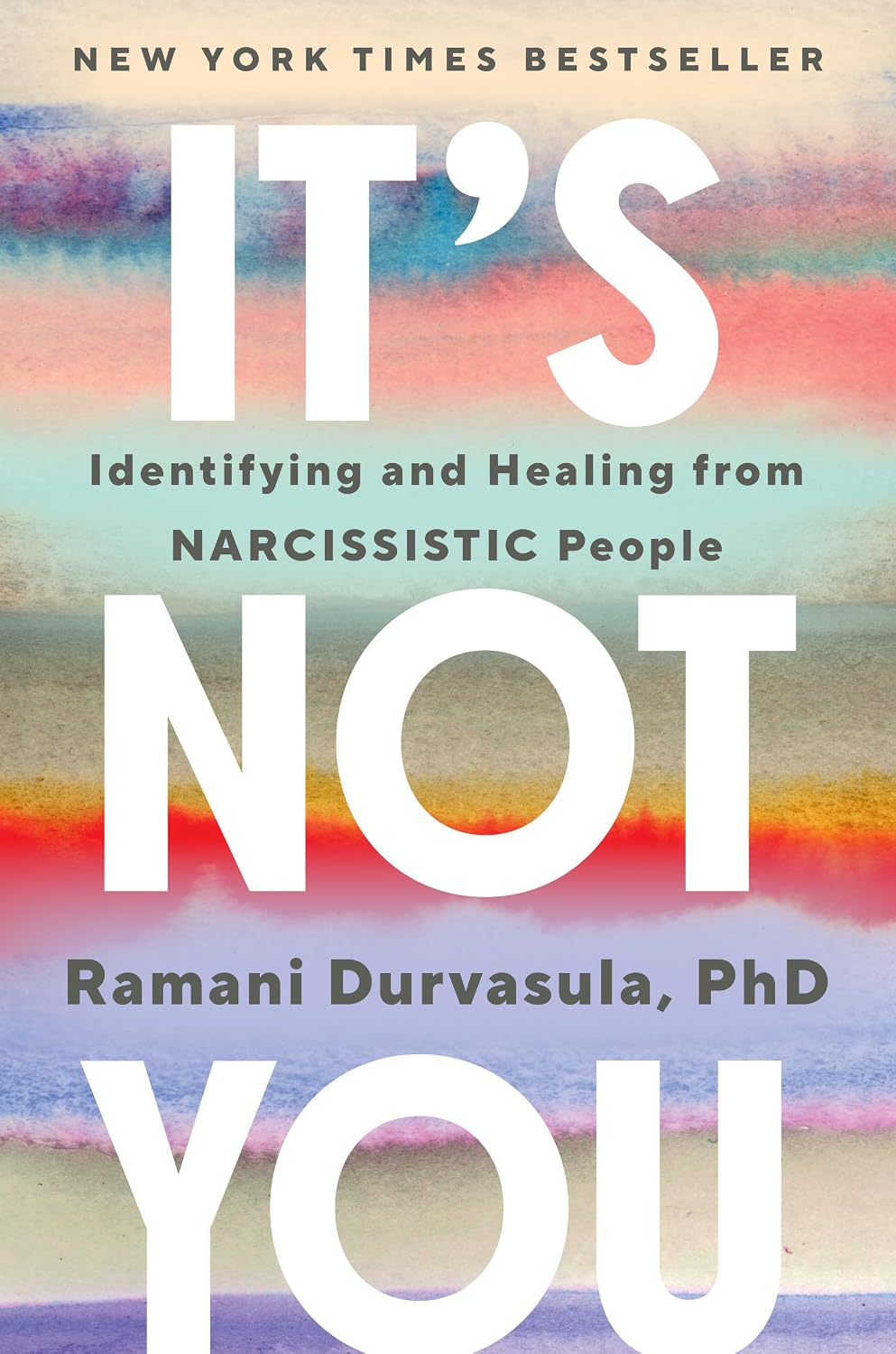
When we get to the severe end of narcissism, though, Tamsen, it can be downright dangerous. These are people who might isolate a partner, take tremendous advantage of them, financially abuse them. There might even be physical abuse. The manipulation is at a very high level, and it can feel very hard to escape. Most people, and in fact, my book, It's Not You, is really written about that moderate part.
It doesn't look like, you know, a sort of a a terrifying story, nor is it just somebody who won't [clears throat] empty the dishwasher. It's It's definitely taking a psychological toll on people. So, that's the whole spectrum of it. But, within that spectrum, there are also subtypes. Our kind of dictionary definition of narcissism is that grandiose sort of swagger narcissist.
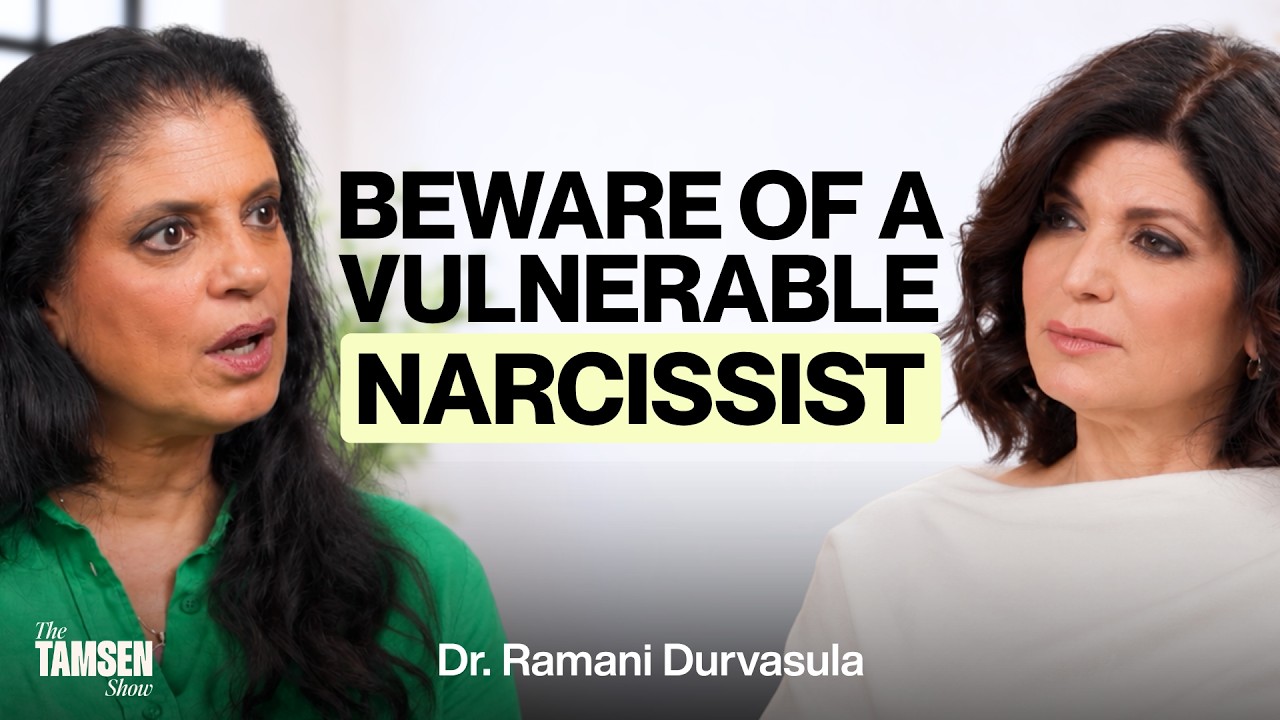
But, there's also a form of narcissism, it's called vulnerable narcissism. Some people call it covert narcissism. It doesn't show up as narcissism. It shows up as sort of an angry, aggrieved, sullen, passive-aggressive, why don't I get my chance, I feel like everyone's taking advantage of me, nothing is fair to me. Mhm.
That it doesn't show up as narcissism and their partners are always like they kind of feel bad for them. Like nothing is going their way. Sometimes it's pity. Pity's harder to leave in a way because you're like, gosh, this relationship is so exhausting and they blame me for everything cuz that's a key dynamic in narcissism is they blame the other person. Nothing's ever their responsibility.
There's no accountability. And then when we use this term covert narcissism, I would argue that all narcissism is covert and by what I mean by that is it doesn't show up when other people are around. You're at the dinner party and a lot of people think you're either with this really smart person or interesting person or well-put-together person or just clever person. But as soon as you get out of that circumstance, they're really cruel to you, but then there's no one witnessing this. But the vulnerable narcissism has more of a socially anxious, hostile, angry, thin-skinned kind of a feel.
Then there's malignant narcissism, which is that more severe narcissism, which is coercive and manipulative and exploitative and scary. That's the dangerous one. One. That's all the way at the end. Okay.
And then there's forms of narcissism that I don't think we talk about enough that come up a lot and one of them is what we call communal narcissism. And communal narcissism are narcissistic folks who get their narcissistic supply, their sort of their narcissistic juice by being perceived as do-gooders and rescuers. She always remembers the thank you notes. Like he always picks up the check. He's a pillar of our community, coaches a little league, but is really unkind to the people they're close to.
But the picture of them is as this sort of savior, great person. Threw the best Christmas car party and they donate all this money to the community, but they're actually really unkind to the people maybe who work for them or who are close to them. That's kind of the it up. That's beautiful picture from 30,000 ft and then not so nice if you're close. But the people in the relationship are confused cuz everyone's saying, "Oh my gosh, you're so lucky to be in a relationship with him.
He is a pillar of our community." And the person's thinking, "This has got to be me because I don't understand." So it's So I call the book It's Not You. And that's the hardest thing to overcome though is to think that it that it's not you. That that is the difficult part. When somebody comes in and talks to you or you or you hear a story, do you know immediately that someone's dealing with a narcissist or I mean is there You know, I don't know immediately and I I would never be so confident in myself that I would think that. But as the stories start coming out, you know, here's I always say there's a therapist hack and I teach therapists like trained therapists all over the world on how to work with people who are in these relationships.
Here's the therapist hack that I'm going to share here with everyone. Is it when a person is going through a narcissistic relationship, they don't come into therapy with me and say, "He's a jerk and he's a liar and he's a betrayer." You know what they come into therapy and say to me usually in those first few sessions? "I'm so confused. I don't know what I'm doing wrong. What is wrong with me?" It's all what's wrong with me and that's when my ears perk up.
I'm like, "I think we got I think we've got someone who's going through this." Because if somebody comes in and says, "My partner this, my partner that, my partner the other." I actually am even starting to entertain the hypothesis of and why is there no accountability here because what I tend to see is the people come in and say, "What am I doing wrong?" What's and that's what brought them into therapy. And so that's something that I definitely see as a big difference. But no, even if somebody came in and said, "Listen, my my Let's say tens and someone came into my office and said, "My partner's cheating on me and this is the third affair they've had." Still my go-to is not going to be that they're narcissistic. I'm going to say, "Tell me a little bit about what Tell me Tell me the story of this." Now, is it top up there in the hypothesis? Sure, but I'm not going to say, "Ding, we got a live one." I'm going to be thinking like, "Tell me more about what is happening here." And so, as I I do the assessment, it'll become more clear to me.
Like again, we'll be seeing some of these again, these the the not taking responsibility, the the attacks when they feel insecure, the making the partner smaller and smaller, the the really variable empathy, that looking one way to the world and another way behind closed doors, etc., etc. So, I it's never a slim dunk. You you have to ask the question. It's fascinating though that that's what you look for versus hearing that somebody has an you know, an affair or is a grandiose, so because that does totally make sense because that person wouldn't be wouldn't be putting that out there first. They would be saying, "What it What's wrong with me?
Is it me?" "Is it me? What am I doing wrong? I'm so confused." And there's often a sense of "I'm afraid to leave this relationship cuz what if I'm wrong?" Well, I I think the other threat that always sits there when you're just talking about relationship is like, "What if somebody else gets them and they change for them? What if they're different for them and it's me that's caused this person?" Or or the next person is going to have this better version that I went through all this nightmare and therapy and all this stuff. No, it's just going to be they're going to have your relationship and you pretty much I'm like, "Get the popcorn and watch it unfold." But it I said, "But that could take 10 years." Like you were in this relationship for 30 years, it could take them 30 years.
Is it hard to show somebody that they're with a narcissist or do people have are people more attuned to that? Social media has you know, we've talked about the fact that social media has helped in a lot of ways with a lot of different things. So, we do know this term now. It's it's out there. Has it Does it help a little bit?
Do people identify that they're in a relationship with a narcissist narcissist better? Mixed. It's mixed. I think there's The good thing is is that people are open to this. And I have to say again, from a therapist chair, I'm not telling anyone to say "Roll in the room and say, well, I'm telling you now you're with a narcissistic person." The key becomes a lot of times people don't even know what makes a relationship unhealthy.
And so when we can put the lens and say, "That whole cycle, it's interesting you're blaming yourself for that because da da da da da." So we're almost helping the client become their own detective instead of just plopping that in the middle of the room because Tamsen, to be frank with you, if I just walked up to someone and say, "Yo, your boyfriend or your husband's narcissistic," they would shut down and they would close me out because they've they've been in an unhealthy relationship for a long time and they're really used to rationalizing it. So I got to find the back door and [snorts] really say, "Mhm, are you okay?" That that seems hurtful. And it might be the first time anyone's even pointed out to them and they do feel a little hurt and they're like, "It was." I'm like, "It sounds hurtful to me. Are you okay?" So you're you're you're using your coming in with empathy, but also awareness like that was not cool. Right.
And then that helps them sort of create a more elaborate picture. Tamsen, if someone's in one of these relationships long enough, they think what's happening in this relationship is normal. So people will say, "That's not normal? Like that that's not what other people are going through?" And you're like, "No, no, no, this is not in the realm of healthy." Wow. And I know there's so many relationships like that out there and we've had so many emails with with people asking about this this topic.
How to spot it, how to deal with it, how how to determine if that's really what's going on or it's you know one of these different layers which I think it's interesting that it's not just the grandioso part. Let's talk about cities for a minute. Do are there more narcissists in cities versus elsewhere and are we seeing more narcissists in general nowadays? I don't think we're seeing more narcissists in general. I think they've always been there's been always been narcissistic people out there.
I just don't think we had the name. But listen, enough people out there have narcissistic parents and can even look back in their family tree and say, "Yo, my grandparent was narcissistic." This has always been there. In fact, a colleague of mine, Dr. Keith Campbell, him and I had a conversation about this and it really stayed with me because I think he's a tremendous expert in the field of understanding narcissism, and he's in him and I agreed, this grandiose narcissism, the anger the arrogant posturing, you know, swaggering narcissistic person, that's staying steady. I think the reason we think there's more of it is social media.
Like I don't I don't know what these people did before social media. I guess they sort of stayed narcissistic in their small little swimming pools, but we when social media came along, we gave them the megaphone. Right? So, that's what they were the ones who grabbed it and said, "Look at me, and I'm just going to sort of shamelessly put myself out in the world." That kind of thing. It was the vulnerable narcissism that I think has really gotten that I think that form of narcissism, that more angry, aggrieved, hostile, mad at the world kind of narcissism.
I think that has probably, and Dr. Campbell agrees, that has expanded. And I think the reason for that is that vulnerable narcissism, these are people who when they sense that other people have it better than them or getting away with things, they get really mad. They feel like they're being taken advantage of and that they're a victim. Vulnerable narcissists are forever the victim.
And with social media, you're actually able to see who's got the better car, who's got the better job, who's got the better stuff, and I think that that's creating a frothing up of people who may not have always expressed that, and I think that's coming out much more than it once did. But with any personality style, you need it it gets shaped in childhood, right? So, you're nobody nobody's born narcissistic. By that argument, every baby is narcissistic cuz they're pretty selfish, right? And so, it it gets shaped, and I think that those childhood conditions, I mean they they narcissistic people become narcissistic because of things that aren't great in childhood, frankly, or they're very spoiled, but I think spoiling a child is also not great.
So, it is not great conditions in childhood. Those have been kind of a universal. And so, I don't know that there's more. I think we have a name for it. So, now we notice it.
When you have a name for something, you notice it. I think social media has made them very loud in society. I think the way we consume entertainment has really given them a massive platform. And I think as a result now, everywhere we're seeing it everywhere in society because we've we've elevated this. We're no longer like, that's not so great.
But they've always been there. So, I think we're just noticing it a lot more. Noticing it and being able to put words with with what it is is huge. I want to talk about women in midlife because we talk about that a lot. You know, I went through my divorce at at 41 years old.
I was with I was in a relationship with somebody that had all of those type of tendencies. I had no idea. I was focused on work. That's That's what I did. I got into a relationship.
I hit the timeline thing. I'm 35. Oh my gosh, [snorts] what do what do I need to do next? And I didn't understand any of that. I just understood that like sometimes the person was amazing and charming and everybody loved them.
But to me that's I saw somebody very very different and was in a very dark place for a long time. And I saw, you know, I I saw another person. Midlife is a time that we go through a lot of change. We go through the perimenopause. We go through the you know, the menopause.
We go through the trying to figure out who we are. We go through the what's next in my life career-wise. Are women in midlife more prone to being in narcissistic relationships or staying in them? I think there's some unique things that happen in midlife. And there's two sort of two ways that we could talk about this.
One is a person in midlife who may be dating again. Sure. Okay. So, maybe they've gotten out of a a long-term marriage. Maybe they were single for a very long time and at a time of their life they they're very career focused and say, you know what?
I I I to share my life with a partner. I my business went exactly the way I wanted. I'm going to enjoy, I'm going to reap the rewards of that. I want a companion. Okay, so there's that's one path.
We are an ageist society. So, not only are we a menopausist society, we are an ageist society. Those things Yeah, right. And those things tend to go together. And so, we talk about this idea of the pressure a woman at 35 might have felt, right?
I want to have children. I want to get married. I want whatever that it All my friends are married. I think there's a very similar pressure that shows up somewhere between 50 and 65, which is I want to go into this these these last third of my life, if you will, or these years of my life with a companion. I've got more time.
You know, we we know that actually aging with someone actually can often be a healthier thing, even if it's just someone keeping his eyes on you, right? But Right, not a narcissist. And so, but there's this pressure. And then again, we have the ageism of many women. And again, I'm saying this from a clinical perch.
I'm saying, "I'm 60. No 60-year-old man's going to want to date me. He's going to want to date someone significantly younger than me. And I don't know that I want to date someone who's 75." And so, there is this sense of while I still feel like I look good, I got to I got to lock this down. And if there's one thing that makes people vulnerable to entering a narcissistic relationship, is feeling a sense of time pressure.
But if a person's been out of the dating world for a while, 30 years, maybe they they got married, they raised kids. And in fact, some people will stay even in an unhealthy marriage until all their minor children turn 18, so they don't have to deal with the nightmare of family court. And so then, 18 happens. They're like, "Okay, I can get out of this without having to have a custody battle or have a new kind of battle." Right, right. And then they're thinking, "Okay, I want to date again." Well, there's a combination of if you do not do the healing from the narcissistic relationship, you may very well walk into a different form of narcissistic relationship.
A lot of dating has now moved into online platforms, which if you're not accustomed to that space, let me tell you narcissistic people can really rule the roost when it comes to dating platforms. They're great at creating the grid and like, "Look at me, puppies, abs, you know, my tourist pictures. I'm so fit. I'm so this." You know, they say the right things because it's such a curated space. And so, that I've seen put people at risk for making for meeting a narcissistic partner in midlife.
And so, that can also be a risk, too. So, I think that we don't have healthy conversations about women in midlife, perimenopause, menopause, starting new relationships. I think we we we put all of us out on an ice flow and this desexualized ice flow, by the way, that you're not going to want to meet someone. And why would we even want to talk about this? Or I don't know.
I mean, I I would love to hear your thoughts about this. I don't know. We have a cultural moment. I don't know. Like the Golden Bachelor, but it still felt tongue-in-cheek.
It was It was haha. It was It was haha. Very haha. I agree with that. I know we said it was about time.
I know we were happy to see. Look, I I think we wanted people to be represented in media, but not that way. Not that way. So, it became almost like it was a it was a sideshow act, right? And it felt disrespectful.
And so, because of all that, anytime people might feel like they're dating or meeting partners in a more, I don't know, they're ashamed to talk about it, that can happen in midlife, too. So, that's one setup for people getting into narcissistic relationships. On the flip side, are people who have been in long-term narcissistic relationships, marriages, most likely, and are in are in midlife. They They are don't want to get out or they don't quite understand what's happening. But as men perimenopause and menopause set in, very real changes are happening to us, you know, and they're different for every woman and they're similar for every woman.
But more than anything, a lot of them don't feel good. And instead of having a partner who's validating and loving and meets a partner where, you know, where you where they could in terms of sex, in terms of intimacy, in terms of closeness, in terms of conversation, in terms of just getting it that you're going through something. Mhm. What women who are in narcissistic relationships in midlife will experience is criticism, maybe even discussed. A sense that it's almost like a the partner may slip away.
Like then now they're really going to want to trade me in for a younger person because that's always a that's always something that's dangled in the relationship even before all of this began. And to me, the greatest tragedy, Tamsen, [snorts] is that people think that I got to stick this out because who's going to take care of me when I'm older? And I said, "Sweetie, let me tell you who ain't going to take care of you when you're older is him." Yep. So, there was this sense of well, if I leave this and I could be alone. And and I said, "I am That's a different conversation.
But if you're thinking that you've put some form of psychological money in the bank, Some coin Yeah, you deposited coins that are going to come back to you. And they're going to be there for you if your aging process ends up resulting in more health problems earlier, oh heck no. You would be better off cultivating your friendships and other supports than you would on relying on this person to be any form of caregiver. And Tamsen, that's real. That is very real because a person could get painted into a corner, but that belief when a person is in their 60s and their health is still good, yeah, sure the bumps in the road from pause, but your health is still good.
You can't envision what that's going to look like. And when it does happen, and I have worked with a lot of people who got to 75, 80, 85, and their health did you really take a a downturn, and that narcissistic partner was nowhere to be seen, and if anything expressed all kinds of inconvenience about having to deal with this. Dealing with your health issues, and you're dealing with trying to to prove to somebody you're still good enough, please stay with me, and grief. And to stay in grief. Put up with this for 55 years.
I put up with a marginal relationship thinking like, okay, we're going to grow old together, at least there's that, and there's not that. When we go back to dating, I want to talk about the dangers of women in midlife on those dating apps, because I think if you said that that is a a breeding ground often times for for a narcissist, and also, you know, you went on a dating app and you haven't been on a dating app for 30 Well, you've never been on a dating app. Yeah. And you don't even know where to begin with something like that, right? And and I have a friend of mine that you know, we go back and forth, and I she's been looking for someone on dating apps for 10 years, 20 10 years.
And every time she's like, this is the one, this is and then she gets into the thing and it's not the one, and and so and I I notice that it does feel like it can be a an area that is really concerning, whether it's financial concerns that somebody could go after, physical concerns, or or you know, a mental, emotional, psychological. All of the above, and and I think Listen, I am not my message to the world is not to breed of cynicism, but an awareness, sure, right? That it is and and I'd say people say like if you were to say one thing that could hedge against getting into or getting too deep into a narcissistic relationship, I always tell people take it really slow. Take [clears throat] it really slow. Don't move in in anyone into your place.
I don't care if their lease came up, and wouldn't it be convenient? No, fool, it would be convenient. I don't care if they're upping your rent. Like going with that, or any of the things that people say, I feel bad. Slow down, and if that partner says, well, you're not moving, you're moving so slow, maybe you're not interested in a commitment.
Oh, I'm very interested in a commitment, but I'm going to do it at my pace, cuz somebody who questions that, that feels gaslighty, and that's a real sign for you that someone's trying to pull you onto their schedule saying, I am taking this nice and slow. I love the time I spend with you, but I also think for women in midlife, it's also to say what works for you. I can't tell you how many women I've worked with, especially people who were in long-term narcissistic relationships, who went through the nightmare of those divorces, and then finally set up their own residence and all of that, and they feel such a sense of calm. Mhm. Being in a home where they don't have to wait for when when my partner comes home, right?
And they'll say, I don't know that I ever want someone in my space again. And I said, then that's fine. And they'll say, well, someone Why would anyone want to be in a relationship like that? I said, someone will. And girl, I have met people who said, I married someone and we have separate houses.
They're saying like, I just needed my own spot. And I was really like, that's a really cool idea. They actually happen to live on the same subway line. So, it's like not that hard. It's like four stops away kind of thing.
And she said, we're together three nights of the week and we're separate four. And those three nights are connection and snuggles and we go out and all that, but those other nights we both work. We love our careers. It gives me a separate spot. It gives me a spot where She has adult children now, but they they know it's like their spot with her.
And then they I think they come together in you know, in in particular in this particular case I'm thinking of in his home, but sometimes hers. But she said, it's just given me a place that I needed after all those years to regulate. My point being, by midlife, you have enough data to know what works for you. Yeah. Trust that.
How do we give women permission to do that and get off the timeline train? Because we're talking we're basically going back to the timeline again. So, now we're in midlife on the timeline. It's not the timeline of getting married, having babies, exceed excelling at the career. Now the timeline is I got to find somebody again if they're not in a you know, if they're not in a relationship and make sure it's somebody that's going to be with me for the long term.
How do we get women off that timeline? The timeline I hear for later life is companionship, travel, and maybe someone who sort of is going to have eyes on me. Like we're going to care for each other. Like that's the new timeline, right? That people have, you know, in fact I don't I wish I could remember who argued that there are we have three relationships in our life, right?
And you know, like one is sort of the youthful, exuberant, maybe even the marriage and child-rearing relationship, and then there's one we might come into our own, and then there's third that's companionate and caregiving, and those might be with the same person, I guess if you're really fortunate. [sighs] What I feel like a lot of human beings don't do, I'm just this has nothing to do with gender, is what I and for might be a technical term, Tamsen, is what I call a self-study, right? Companies do them all the time, businesses do them all the time, but to really dig into yourself and say, "How do you like to live? Do you want to wake up next to someone, or do you really like having your own place to live?" I say this as a perimenopausal woman who needs to sleep in a 60° room. And it could be it could be 55, air conditioners don't go that low, right? It's madness the way I need to sleep, right?
And so, I'm thinking I just want to be in my freezing cold room, but how how do you like to live and really say, and not because the world says you need to have this, if all those things were taken away, and I often will turn it into a thought experiment with someone, [clears throat] what would you like your life to look like after all these years you've accumulated life experience? It's harder to answer that question when you're 25. It should be a lot more straightforward when you're 60. To say, "Hmm, these are the things These are the rhythms I like, these are the things I like, this is how I like to spend a Saturday night. This is how I want this is I want these things." So, if a person says, "You know, I like traveling with someone, I like looking at the tourist site and saying, 'Isn't that beautiful?'" and someone else saying, "You know, I actually like traveling alone." Like have that ask ask yourself those questions, because I think the problem is is that when we seek out relationships from an unexamined space, we often find partners that play on our core wounds rather than who we really are.
And that's how we are in a narcissistic relationship. That's how I think we can push back on the timelines, which is what do you really want? And where is this pressure coming from, too? Sometimes it's coming from friends who are saying, "Get out there now. You got to date or you're going to be alone forever." in some cases, it could be watching how it played out in a family of origin.
They'll say, "Oh, my mom died alone someplace, and I don't want that to be my story." Right? So, it's paying attention to just because your mom died alone in a on her own in her home, that doesn't necessarily mean you rushing into a relationship is going to be the answer to that. To have the grief over that, but that's not the reason to get into a relationship. It's to look to where are these Where are these narratives coming at? Cuz there's narratives there and we've had them our whole lives.
I want to go back to menopause because I think when we talk about menopause and perimenopause, a narcissist can use that in so many different ways. You're moody, you're hormonal, your hormones are talking, you don't want to have sex with me anymore, you might not find me attractive. Am I saying all those too fast? Oh, you got I got them all. I I've I've heard every single one of them, yeah.
How do women first I I guess identify this because they're already feeling that way? So, that it's a very easy ramp up for for a narcissist. A a menopausal woman can be very easy for a narcissist. What do you tell women that come in there with that? Because they're already feeling that way.
They're feeling feeling hormonal, they're feeling moody, they might not want to have sex. There's a lot that happens during this time. Where do you start that conversation with a woman and feeling invisible on top of all that? Right. So, the most dangerous place to be in a narcissistic relationship or enter a narcissistic relationship from is to feel is to devalue yourself, is to feel devalued, right?
And because of the way the world is, women going through menopause already might be coming in on their back foot, right? There's a sort of a devaluation. And it's almost as though in a narcissistic relationship, if you play the devaluation game, I think that there is often this hope of "Well, maybe they'll come in and say, 'No, you're not those things.'" But what you're instead doing is you're giving them ammunition, quite sadly. So, it it's the I think sadly there's nothing you can do in the relationship. And the things you're doing, Tamsen, this this podcast and all of that is for us to have healthier conversations because you've been asking about timelines, for example.
Little young young women grow up with Disney nonsense and fairy tales and and I'm going to find the guy and he's going to fall head over heels. And now it's Instagram, the romance that the nonsense people see on Instagram about relationships and all that stuff. We don't even have fairy tales for older people. They I guess they're the witch. That's what happens.
Right. It's always implied. Like Maleficent was really old, right? Or that lady with the the tentacles. Ursula.
Like these are we think they're old people. I'm imagining they're the equivalent of menopause in a fairy tale. Are. I'm sure I'm sure somebody had a haha about that. And I've had my Ursula moments with this.
So, I think that the issue then becomes exactly what you're talking about, which is how do you feel about your menopausal body? How do you feel about yourself? Because this is going to get weaponized. Cuz listen, when a person is in a narcissistic relationship and they're younger, a classic gaslight is "Ugh, you always get like this around your period." So, it's that's that's that version. So, it's just a it's just now it's getting turned into "Oh, here we go.
It's all your brain fog and all this other stuff. Now we got it and of course you don't understand what I'm saying." So, once again, you're being feel that. Yeah, of course. You're being you're being treated in a diseased, pathologized manner. And so, it's you're the one with the problem because of your hormones, because of your body changes.
And then and then it feels plausible. I think the challenge is is it feels plausible cuz yes, these things are happening to my body. And then you think, well, maybe that is changing how I'm being in the relationship. And you're already confused in the relationship. Of course, you are.
How do you protect yourself or how do you put some boundaries around that if you're in that type of relationship and going through menopause? I mean, I I you know, I look at I've talked to thousands of of women and when you're going into this and trying to figure out the symptoms there's only so many things you can tackle at the same time, you know? You're tackling symptoms, you're tackling not feel not feeling right, not sleeping, maybe weight gain, and then you've got this type of relationship going on here. So, they've got to handle one thing at a time. So, how can you create some type of boundaries around that?
Is there a way? I don't even know if I'd use the word boundaries. I think the key is to understand the narcissistic person's ground game. Okay. Right?You and they are not having the same relationship. The relationship for a narcissistic person is supply, it's convenience, it's what works for them. They expect you to read their minds, they expect you to be what they want when they want, right? You're like a little AI creature that they want to sort of modify with them. You are in a relationship with someone you hope would be a partner that you want respect and connection and warmth and empathy and all that.
So, you're not having the same relationship. I would say the most important thing that people have to remember at any phase of life, absolutely, but I think especially people who are in these relationships in midlife or starting or new in these relationships in midlife, do not isolate. The power of the narcissistic relationship happens when they're not when the person in the relationship is not hearing other voices. And by other voices, I mean people who are like, "You're great. You look wonderful.
Talk to me about what's going on. Oh, all this menopausal stuff, I'm going through it, too." Because the more validation we have that the stuff like the stuff we're going through, our thoughts, our experiences matter, then we don't feel crazy. But if there are no dissenting voice, all you hear is the narcissistic person's version of reality, it's like having only one polarizing new show on all the time. You really are going to think like that's the only reality there is, right? But that's and that's what it is.
I always say like being in a narcissistic relationship is having a crazy podcast played on repeat all the time in your house and it never turns off. So, having those other voices and we know there's great research that shows that the reason there's a lot of reasons women live longer. Hormonal reasons, all this other stuff, cardiovascular reasons. Sure. But from a psychological perspective, something that really benefits women's lives in the long term is they're really good at making relationships and friendships and socialization allow women to live longer.
If nothing else, it gives them skin in the game. There are people you look forward to seeing like it's funny the things that make us kind of keep going longer, right? Yeah. Men are not as good at that. Men are terrible at making friendships relative to women.
In fact, there was one The New York Times had an article years ago. They had called it the colonoscopy test. And they asked men, how many if you didn't have if you don't have a partner, how many people you have that would come pick you up for a colonoscopy? And the men were like scratching the barrel on one or two. And the women were all like, "Oh, I got nine people I could call to bring me home for my colonoscopy." Right?
That's one thing that everyone's got to do in their 50, right? Men are not good at this and in fact, all the research shows marriage is better for men's health than women's health. Because they've got somebody there. They got someone there and the men sort of poach off of the social network that the women have created. The friends, the couples, the the whole the social all of it.
That's usually the woman's work in the relationship and I'm using a I'm using a heterogendered perspective here, but that is something that it's almost like a the well runs over and the men are benefiting. If the relationship ends, Yeah. Men are not good at creating that for themselves. Women actually continue to maintain that. But, if a woman, mid-life, any part of life, enters a narcissistic relationship, the risk of isolation goes way up.
So, you no longer get those health benefits. So, so I say to everyone, please try not to isolate. But, people feel shame Yeah. Around being in a like this person treats me terrible. Of course.
I don't want to talk badly about my partner with all these people. What if I stay in it? Now, I'm the one who looks foolish. That's the conversation people are having in their head. How hard is it to help somebody get out of a If somebody is saying, "Okay, I'm I'm in a narcissist I'm listening to this.
I hear it. I know it. How difficult Where do you Where do you start that process of getting out of it? I actually tell people getting out's not the only path forward because I think if we treat that as the only path forward, people who don't see a path out won't seek help. Okay.
So, I tell folks, unless there's physical violence and that's a different conversation, let's lift that Of course. Out. Just I hate to say just. If there's psychological violence, that's standard in these relationships. But, I say to folks, there's no agenda here.
Whether you're staying in it, not staying in it, I want to allow you to not get lost in it anymore. That this relationship does not define you. This false, twisted, distorted narrative they've created about you, you being crazy, you being demanding, you being needy, you being extra, it's not true. It's how it allows them to retain dominance in the relationship. You know it's not true.
And you live your life trying to prove it's not true. And the way you do that is you give up on yourself. I don't need anything. I don't need it I I can do this all my own. I It's okay.
And that that that's that kind of that's what happens to people in these relationships. So, it's helping people find themselves. Now, frankly, Tamsen, many times, what ends up happening is as people do that, they may end up finding their way out, but maybe not for another 10 years. But there's a lot of reasons people stay in these relationships and coming back to your all the points we've been talking about in midlife, one of them's money. If [snorts] somebody has left the workplace for a long time, they did not accumulate like this is one thing that I classically see in these relationships is somebody said, "Okay, I actually left a career.
I focused on our kids. I focused on our family and our household and I and his career soared as a result." I mean listen, honey, if I had someone making my beds, cooking my meals, and raising my kids, I would be the president of something. I could take over right now. Okay. So, I'm again, I'm using a very traditional gender you know, format here but that that partner's career will have soared.
At least narcissistic, I can promise you this too, he was shady with the money. Of course. I was just going to say, "Where's the Where's the money?" Right? And the number of women who said, "You know, it's not like I was dumb about money. I was even working in the business sector but I stepped out of it for a while doing work that was extraordinarily important, by the way, raising a family, running a household.
That is a beyond full-time job and then they said, I and they said, I I know everything about money. I'm going to make this money grow." And they wouldn't make the money grow, right? And so this belief that I don't know about money, he knows about money. And then when it comes to showtime, all of a sudden it's a forensic accounting nightmare. And so you and that's in people who actually have resources.
Some people get to midlife and there isn't a lot of money. We're in current financially trying times. And so some people will say, this kind of happens in LA all the time. I'm sure it happens in New York. The LA real estate market went way up.
So even if that asset primary asset people have is a house and that house was sold, what those two people are going to get out of it ain't going to buy a new one. It's nothing. Yep. And no one could buy the other one out. So they're often looking into a future of I'm going to have to move out of an area I've lived in for a really long time or maybe where my adult kids are, my doctors, my community, things that are familiar to me, even a job that's familiar, and the quality of life could really plummet.
Social Security benefits weren't accumulated at the same rate, so they may be looking into a life of real financial peril. In fact, we know that women in midlife who have left long relationships or are single are often those in the most, sometimes financially precarious, positions. And so, you have these other kinds of issues operating in terms of I can't afford to leave this. I can't tell you how many people have said to me, "We are living in this house. Each one is waiting for the other to die, so the other one can have the house." And I don't And I'm not That's not a joke.
Like, it's not that it either People aren't murderous, but they're saying this They're just They're just toughing it out. We're toughing it out. So, you try to You try to teach people to bloom out of the relationship. So, they've played small, you're trying to make them get bigger. That's the best thing that you can do inside of one of those.
Flowers can grow out of pavement, you know. And then, who knows? A narcissist might not stay around if they if they see somebody like that, because Well, if you disengage, that And so, you're asking, "What are the things people can do? What are the boundaries you can draw around it?" Radical acceptance. Narcissistic people don't really change, and they sure as hell don't change when they're in their 50s, and 60s, and 70s.
Ever change? Listen, are there unicorns? Sure, there are unicorns, right? This is not the unicorn show. This is the what happens to most people show, right?
And so, what happens to most people is it doesn't change, and it actually gets sometimes a little bit When I say worse with age, I think some of the stubbornness, especially as a narcissistic person is losing some of their power in the world, they're getting older, and all the things, right? So, it's not going to change. Stop engaging with it like it will. Like, people are like, "I want them to know." I'm like, "They're not listening to you. They haven't listened to you in 30 years.
I don't know why you [clears throat] think they're going to start listening to you now. They're not going to listen to you. Write it down, tell me, talk to your friends, but they're not listening." And so, disengaging from the relationship, and sometimes when people can I always say once you clear the junk drawer out you can really see it clearly. So clear it out and what you're going to start to see is like there is no emotional there there. However, whether it's money, whether it's we can't afford this now, whether it's culture.
Some people say in my culture we don't get divorced. I don't want to be the first member of my family to get a divorce. That's okay. But don't I always say to folks don't go to an empty well and think you're going to pull up water and this relationship's an empty well. Let's talk about the damage of a replacement partner.
When a narcissist replace and this often happens in midlife a younger partner for the current or older one. What does that do to somebody? So a lot of things. Actually I've talked about this on YouTube. I have actually a video called the replacement neurosis.
The couple of things happens. Some people have a core wound around this, right? Around feeling replaced. It might have even happened in their family of origin, right? When you no longer did what the narcissistic parent wants that all of a sudden they're like we have no use for you but we're going to focus on your other sibling.
The idea of being replaced by another human being, I don't care who you are, it's a devastating feeling. No one's replaceable but there's nothing like a narcissistic relationship to feel like you are. Grandiose narcissistic partners will very often already have their new person queued up. There's always that that tiny bit like they're they're they are not jumping into the great unknown. They're going to make sure that they're hovered and that they've kind of taken a test drive.
And then and only then will they take you down and trade you in, right? And so there's often already that sense of betrayal that that was there. So that that's pretty common. And even if that's not the case that there is a actually a discernible break and then a new person comes in. Narcissistic people will do this in a boundaryless, cruel, unempathetic way.
They will try to create the new family right away. They'll try to pull the children you had with them immediately into this new like sort of family, you know, version two kind of thing. They will They'll have it all over social media way too quickly. It'll be uncomfortable. Now, is it always a younger partner?
It's not always a younger partner. It can be. But what the new partner will have, it'll often feel like they're bringing something new to the table. It could be youth. It is often youth.
Sometimes it's money. There's a real griftery feel to narcissistic people who date, especially men later on. They'll find someone who's got money, who's got stuff, who's got status, who's got whatever. So, it could be those things. So, may not necessarily be that this person is younger, but they're maybe they made They got a lot of money from a former divorce or a career or something or So, you know, we're talking about a better than thing, whatever that is.
A home, whatever the status thing is. So, for the person who has been either left for or they've gotten a divorce and then it's down the road that this happens, it can very much feel like a whole new life has come out of this. And many people will report not only the sense of betrayal if it was in fact an overlap, but also watching friends kind of divide their loyalties. And people will say, "Am I being irrational that I am mad that my friend went to their new house for dinner after that my friend knows that my partner has was psychologically cruel?" I said, "No, it's not irrational." And I think everybody feels like they have to be I always say it's the cool girl phenomenon. I just have to be cool.
No, you don't. Be mad. This is why we have dartboards that you could put people's faces on, you know? And so, it's a Be mad. That That's It's human human emotion.
And lean into the anger because like all emotions are like clouds going by in the sky, a new one will come along, and sometimes that anger turns into laughter. Whatever that is. My favorite is somebody once made a cake with a photo of the ex-partner. But you know what you have to do with You have to cut into the cake. Then you get to eat it.
Like there's all these metaphors there, right? So find whatever Be angry first cuz it's it's the anger of grief. Yeah. And that sense of being replaced, which is such a Oh. Cultural trope.
Sure enough. Right? That now this young person has come along and da da da da da or whatever this person is. Every movie's made of it, so it's Every because it just speaks how universal a fear it is. This new person is having the same relationship as you, but they may be consuming it differently.
It could very well be that your ex-partner has money, and that's very interesting to this new person, and that is that you know what the psychology of this person is. That's still going to show up there. That transaction works for the new person. It didn't work for you. It's always so hard to see and to convince somebody that you love that the same thing's going on.
You have You have to grieve it. Couples therapy. Does couple I don't even need to finish the question. If you have a narcissistic partner, is couples therapy a waste of time? I'm not going to Again, I have to be a therapist and say wise things.
You know, I wouldn't quite say it's a it's always a bad thing. You better better better do research into this couples therapist. Because there are far too many couples therapists or people using models of couples therapy that simply do not work when there's a narcissistic partner in the room. And Tamsen, the reason I think this gets me so angry is in the last 20 years the number of clients, who I will say frankly were almost traumatized by having to sit through months, even years of couples therapy where they were being told nonsense like "Show gratitude, have date nights, communicate, let's see what your role is in this." I felt like I was deprogramming them from a cult. Mhm.
Because that may apply when you have two not narcissistic people in a relationship. Listen, relationships need tune-ups. I agree with that. But the vast majority of couples therapy is not what I call and it's a model I've developed called antagonism informed, meaning it's not informed by the messed up stuff that happens when you have a narcissistic partner. And it's a whole different set of rules and this idea of 50/50 and you know, everyone needs to be accountable.
How are you supposed to be accountable for someone else gaslighting you and stealing your reality? And so what I've seen people do is if anything, they already were feeling so responsible for what was happening in the relationship and when they go through this and they'll sometimes see the narcissistic partner who is so charming and so charismatic winning over the therapist who now is looking at the other person in the room who often looks broken. The other person looks devastated. They look wrung out. They look hypervigilant.
They're on the edge of their seat. They kind of look a little worked up. So that couples therapist will often say, "I can I I get it. Look at her. She's kind of okay.
She's she's so anxious." session. You know, and yet Listen, this is exactly what happened. I would sit there and [clears throat] I remember I was I had boots on and I was swinging my boots and the he was so charming to the therapist and the therapist was like, "Tamsen, do you not see what's happening?" And I'm like, "Are you not seeing what's happening?" And it and it's really it's only now, 10 years later, that I can look back and go "Wow, like that that actually happened." Because you think, you know, when you're sitting there in an office that everyone's going to see everything that's going on behind the scenes, but a narcissist is Well, you would hope, but No, it doesn't because it's And again, I in many ways this is a fault of how people who do couples therapy are trained. They're not trained to It's all like we don't talk about narcissism in couples therapy. That's the That's the new term in vogue.
That's a fad. The hell it's a fad. It's not a fad. It's very real. And you know, to I I've had I've had people say cuz the common fallout for a person who goes through a long-term narcissistic marriage is they get anxious.
They're often anxious. Am I saying the wrong thing So, there's a edginess, right? And so I've had couples therapists say to the anxious partner because they're in this relationship saying Well, have you ever wondered is cuz you're always anxious and you're always on edge that that's what's really creating these angry reactions? And I I I'll tell the client you were in a cult. We're just We're decultifying you.
You were anxious. Good when they come and hear that and feel The couples therapists don't like me. I feel good being deprogrammed after 10 years. All right, I want to do something with you if we can. Do you mind?
Not at all. Do it. This is going to be a little bit different cuz usually we're doing like viewers questions and stuff, but we're going to call this is he a narcissist or just a jerk? Okay. Do you already know the answer?
I don't know. We'll see. Okay. Okay, cuz it is it can be hard to tell maybe, right? Especially I don't know dating dating in the city is hard.
Oh yeah. Okay, first scenario. Is he a narcissist or just a jerk? A few months ago into dating he completely forgot my birthday, didn't call or text. When I brought it up, he said, "I'm just not good with dates, you know that." Narcissist or just a jerk?
Might just be a jerk. I'd need more information. Okay, what do they say about it? I would say it Did he say, "I'm not good at dates and I am so sorry that I missed this. I really can I want to make this up to you.
Can we do something special?" But takes accountability that this was hurtful to her, I'm still going to give him a jerk. If he says, "What are you six and your birthday matters to you?" Narcissist. Okay. Oh, good. Okay.
I got that. I like the I see the difference between those two. All right. Every time I tried to talk about how I felt, he'd say I was overreacting or being too emotional. Once he even said to me, "This is why no one can talk to you." Narcissist or just a jerk?
In the narcissistic neighborhood there cuz that's very gaslighty. Now, again, one incident does not a narcissist make. If that's all the other times this person was a sweetie pie and came out with this once like the day he got fired, maybe not. Maybe still just a jerk. But, if this is something that's happening repeatedly, I'm saying we're definitely on the narcissism highway.
I told him I got a promotion at work and he barely said anything. Lat- Later that night he made some comment like, "Well, don't get too full of yourself." Narcissist or just a jerk? I'm going to say jerk because I would want again, you're seeing where I'm going with this is like how repeated this is. But, if this has been a lot of ikkiness and then the the a promotion thing happens and then it's that's not a big deal, it's definitely, if this is consistent with other patterns, that could be in the narcissism realm. Remember, narcissistic people are super competitive in relationships and they're very insecure.
So, if you're coming up and something's happening for your promotion, more money, a title, different kinds of people you're going to be interacting with, believe it or not, for all of their bluff and bravado, narcissistic people are not only really insecure, they're really afraid of abandonment. So, they're scared to death of you. Exactly. Right? Your success They're scared to death of scares them.
You of you, of other viewpoints, of community. That's why I think community is so important during this time in midlife. I didn't understand what it was until I I got into this phase of life actually. I understood it, but not really and I didn't feel it. Anytime I brought up something that upset me, he'd say, "Is it menopause again?" and then laugh it off like it was a joke.
Again, it's it's definitely veering into narcissism territory if it happens repeatedly. If it's everything else in the relationship is warm and then this is sort of like a kind of an edgy ribbing, I think it's it's still jerk, but it really comes down to what the other stuff happening in the relationship is. But if these kinds of digs around it could be anything. It could be weight gain, it could be menopause, it could be any of those things and that's consistently used and I like I said, I I'd lean more into the narcissism thing. I got to have you back here.
We we're going to we're going to put this out and then we've and then we're going to we can just do this all the time. But I really think that people are going to have so many questions about this something. So I hope that I can grab you back here sometime. Oh, absolutely. Okay, that would be great.
Let me give you one more. I just asked for a little space, just a night to myself and he said, "Wow, I guess I don't matter to you at all." and then gave me the silent treatment for a few days. Narcissist or jerk? All of these people are jerks, by the way. Let's just take a universal jerk statement.
The thing So that's that's definitely a that's actually something a vulnerable narcissist would say. Again, that's that little bit of rejection. I just need some time to myself. That little bit of abandonment kind of thing. And instead of saying, "this is hard for me.
I love you. I I it's just I'm so into you that sometimes it's just harder I have my own wounds around you know, abandonment, but I understand you need time to yourself." That's what a healthy person says, right? Even if they have abandonment issues, you can be healthy and have abandonment issues. But in this case, making it into a weapon, right? You're a bad person because of your need, that's very much a narcissistic thing.
One statement does not a narcissistic person make. If this is the only time somebody said something like this, I'm not going to say they're narcissistic. But if this is sort of part of a pattern, yeah, very likely. If there's one thing that everyone listening should take away from this to set themselves up for success in relationships in midlife, is there one core piece of advice you could give them? Build up your support network.
I you know, I I I call them anti-gaslighting spaces because when people know you and and you feel psychologically safe with them cuz that's what this is. Narcissistic relationships are psychologically unsafe. You're not protected in them, right? I think in midlife your body is changing. Our bodies are also kind of deteriorating.
I was telling you, I got to have cataract surgery. I got to have hip replacement surgery. I mean, I'm like a old house that's being remodeled at this point, right? But at those times to be beautiful. It's going to be It's going to It's going to be beautiful.
It's going to feel good. I hope the remodel works, darling. We'll see what happens. But we want to be protected at those times and don't want to feel that someone is going to use us against us. Of course.
Of course. Okay, where can people find your work? You can find me all kinds of places. You can go to my website, drramani.com. And there you can you can find out more about our YouTube channel.
We post new videos every day. You can find me at the Dr. Ramani Network, which every week we have a new interactive show, which is great to get questions answered. We also have a wonderful healing program for people who are healing from narcissistic relationships. Every month, a new topic.
You can check out all my books, including my most recent one. Yes. Yes, we're going to talk about Not you. And so go to my website, it's all there. Follow us on all our socials.
Join our communities. There's so many places to get information and help. Dr. Ramani, thank you so much. This is great.