Biggest parenting challenges you're seeing nowadays I think not being able to handle their discomfort and it's a huge challenge because if you can't handle the discomfort of your young person and they are going through a normal challenge and you swoop in and fix it the message for them is I can't handle this. Oh wow. Yeah. You're not only taking away responsibility from them but you're also making them feel like they're not enough to do it. Dr.
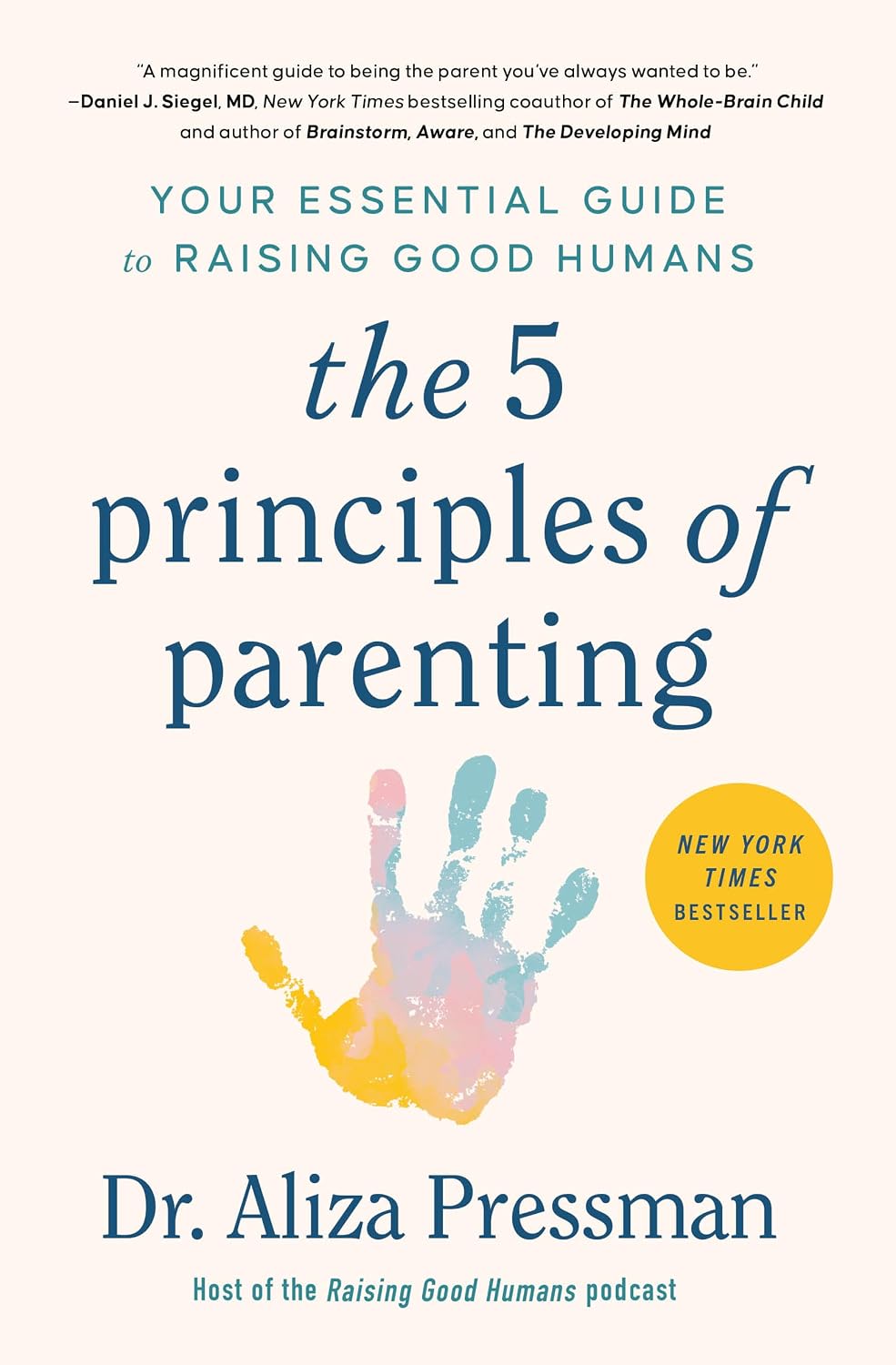
Aliza Pressman has spent two decades helping parents raise good humans. She's a leading developmental psychologist, co-founder of the Mount Sinai Parenting Center, and author of the New York Times bestseller, The Five Principles of Parenting. If you want a relationship to be strong, you have to have tiny little ruptures and discord to come back together for repair so that there's this strong foundation. If you had an adult in your life, a mother that you looked up to or a caregiver who was perfect to you, then you're burdened by the idea that you're supposed to be perfect. I think it's an unbburdening for all of us to find out that actually repair and missteps are really really important to good healthy thriving.
Feels so good for people to be able to take a breath and be like I don't have to be that perfect person. Is there a good time to introduce a new partner to kids? If you're in a divorce, typically you should wait. You know, I'm always honest with you. I was hesitant to do a parenting episode because I'm not a mom.
Here's the thing, though. This conversation, turns out, is not just about parenting. It's about relationships. And that matters to all of us. I'm an aunt and I can tell you I am taking notes from this episode.
Whether you're a dad, a stepparent, your kids are grown, or you're just starting out. I think you're going to love this conversation. You guys also sent in some incredible questions for Dr. Pressman, and we're going to get to those at the end. So, be sure and stick around because you're going to want to hear every single tool she shares.
Before we start though, if you could do me a little favor, subscribe and leave a review. You'll never miss an episode, and your review helps push the podcast up the charts so more people can find it and share it and we can keep having conversations like this one. So, let's get into it. Dr. Aliza Pressman, it's so good to see you.
Thank you for having me. So, how did you get involved in this work? So, well, I think they say research is research and so I was I never heard of that. Yeah, I think it might be an inside the the inside baseball thing, but basically anybody that you talk to that studies parenting or child development, if you dig further, there was something interesting or curious or wonky about their upbringing or their their history. And I would say for me there were two things that made me just so fascinated.
One was that my grandparents are Holocaust survivors and I was so fascinated by how they existed as functioning individuals. I mean with obviously some difficulty but how they raised kids and what happened to those kids and their kids, me and my generation. Because it had such a huge impact and so resilience was always on my mind just like how what what makes some people keep going. And then the other thing that was interesting to me was just I was a child of divorce. I had a very different temperament from my sister.
My parents were so different in their style of raising me. And I just kind of was like, how do people like how much of us are the way we are because of temperament and genetics and how much is the environment? Wow. Resistance in how people keep going has always been so fascinating to me because I look at somebody, I'm like, I wish there was just this one answer and there's not. I mean, there just isn't.
It is so complex and so so multi-layered. I know. In fact, when people say like, you're so resilient to someone, I'm always like, look under the hood. There were so many other factors that went into how that person rose up from whatever you know hardship or difficulty or setbacks they had. It's never just like you alone.
Do you think we all have some level of resilience? I do think people are humans are wired for resilience which is it doesn't mean that it's going to happen for everyone but we are meant to be pretty resilient and that's why just like when we're surprised or mesmerized by being able to continue it is actually the norm like that is what's supposed to be and then some people are more vulnerable than others which means that their temperament just like their biology and how they respond to the environment might be that they're more sensitive. And I think the cool science there is that those orchid people are a little bit more sensitive, but they're also more attuned. And so if they're in the right environment, they actually really do bounce back and thrive. Okay?
They just kind of wither like an orchid would if you didn't get right kind of the right sunlight, water, and soil. So, what I love about the book is it's broken down into something that's relatable for everybody, right? You've got five principles. They're easy principles in terms of their titles, but they're very complex as you go into them, but they apply to everybody. And that's what I think is really important.
I wanted to make sure that, you know, these principles are they're not just for new parents. No way, right? They're for kids of divorce. They're for caregivers. They're for parents of older children, stepparents.
I myself I classifi you I'm a steparent. So can you break down what those? Yes. And I think they're really five principles of being in human relationships. It's relationship, reflection, regulation, rules, and repair.
Okay. So relationship is sort of the foundation of everything. And we know having close connected relationships is so highly linked with resilience. It's the biggest protective factor our kids can have. And even for adults, like the longest running study on happiness, of course, in no great shock, the finding is the most important thing when you look back on your life is having a couple of close connected relationships.
And so what that does is it protects you from the toxic stressors that can be really harmful, especially for developing brains, but this is true for everyone. Focusing on a close-connected relationship and then reflection. And reflection again for everybody that you want to be around. They've taken time to consider who they are, how they got to be here, who they want to be. And so as a parent, you think, how did I experience being loved and what does that mean for me?
And is that what I want for my child? And when you think about it that way, you can then pause and reflect on what your child needs or what this other person in a relationship with you needs so that you don't just react, right? And that's incredibly protective. And that's what regulation is. And so that's the third principle is regulation.
And it's like when you've been able to pause and not just act, you are regulated. You're coming from a place that is thought out. It's intentional. And so you don't make the kinds of mistakes that are just, you know, sometimes harmful. Sometimes they're just like, I wish I hadn't done that.
But anytime you pause and breathe and then are able to tell your nervous system there's no emergency, you you make better choices. You just do. Is that the hardest one for parents is regulating? I have to imagine that's the hardest one for everyone. Okay.
But I think when you've reflected on like what are the things that keep setting me off so that I can't come at things from a regulated place, you realize we all have things that set us off and tell us there's an emergency, tell us we're under attack. Cuz that's basically what being disregulated is. It's that you think you're being chased and so you have to go into fight, flight, or freeze. And it's very primitive and it it can often be protective. Like if you're actually in danger, we need to have that sense of, okay, I need to gear up and I can't stop and think.
If somebody's running across the street, you're not going to be like, let me take a breath and think about what this means for me. Like it doesn't But if there isn't an actual emergency, having the capacity to distinguish between real and imagined threat is regulation. Okay? And then we have rules. Rules, every relationship needs rules or it's not safe.
Rules are boundaries and limits. And essentially rules are if you think about like what keeps me physically and emotionally safe and what keeps my child or this other person I love physically or emotionally safe. Those are rules. You don't have rules just because you are like rigid and you want things to be a certain way. They really are meant to be thought out and for the purpose of safety.
I've never thought of putting the word rules with safety. I mean, I understand it, but I I love the I love that because it flips it on its head a little bit. So, you're not thinking of rules of control and something negative. Exactly. And in fact, that's the downside.
Like, if you in all of the parenting research, there's there's sort of three kinds of parenting styles and one of them is authoritative, one's authoritarian, and one is permissive. Mhm. And they sort of are measured on control on the one hand which would be the rules and sensitivity, connection, whatever you want to call it. And so the the sort of gold standard of healthy parenting is authoritative where you have rules that are there for not control in a bad way, but for safety and sensitivity. So you you wouldn't have appropriate rules if you weren't sensitive to like what does this other person need?
What do I need? And then it really is about safety, not control. That makes total sense. When you screw up, which we all do in every relationship, that's what repair is. And there's decades of research on how beautiful repair is, which means that when you didn't regulate, when you made a mistake, when things got messy or there was just disconnection, then you come back together.
And I think what's really interesting about it is that research happened between mothers and babies and then all the way to couples. And what the researchers found is that when there isn't discord and repair, the relationships aren't as strong. So you need just like with muscle building, when we work out, you you lift weights to have tiny little tears in your muscles so that the muscles grow. And it's the same thing with relationships. If you want a relationship to be strong, you have to have tiny little ruptures and discord to come back together for repair to keep growing the muscle so that there's this strong foundation.
Do you feel like most parents think that it has to be perfect and we should have we should not have to have repair? Yeah. I think a lot of parents are inundated with pressure that your child's not supposed to experience a hard feeling and that we're supposed to be perfect all the time and it's it's so especially for women, it's just such a heavy weight. So that's why I really want to talk about repair because it's permission to mess up. And the only downside to messing up would be if you didn't repair.
If you don't come back together, if you can't figure out how to even again think about adult relationships, like sometimes you have an argument or just like a snippy moment and you don't need to have like a sit down conversation or anything, but you might turn the TV on together, you start sitting a little further away from each other on the sofa, and then you're sharing a laugh and you're like, you're back and you kind of come back together. That's also repair. So, it's it's tiny little things. Sometimes it's really big things, but sometimes it's small things. And you couldn't be that perfect parent or or person in any relationship if you didn't make the mistakes in order to come back together.
I I think that feels so good for people to be able to take a breath and be like, "Okay, I don't I don't have to be that perfect person." Because I don't know about you, but I I think I spent a I'm 54. I spent a lot of my life just not parenting but trying to be perfect. Yeah. I mean it is a huge burden. It is.
I don't know. I I wouldn't want this to make anybody feel worse. But I will say if you had an adult in your life, a a mother that you looked up to or a caregiver, usually again a woman who was perfect to you, then you're burdened by the idea that you're supposed to be perfect. Yeah. And so I think it's an unbburdening for all of us to find out that actually repair and missteps are really really important to good healthy thriving.
I I feel like a lot of listeners right now are going okay so I I do too because I think that that's what we want. What what is the one thing if you are talking to to some of the listeners out there that you want them to walk away with feeling by the end of this? I mean I I think that we have a lot of burden on all of us right now. I think all women are trying to have pressure to do it all, whether they're parents or stepparents or caregivers at this age. Is there something you'd like them to walk away from seeing this from so many different sides that you see it from?
If there was more self-compassion and grace if we bought into that as not just like an Instagram idea, but a real idea, I think we would be in such a different place. So that I would want people to walk away from this feeling unbburdened by the idea that any of this needs to be more than good enough. And good enough isn't like meh. It's not. It's that in human relationships, not in surgery, you want your surgeon to be a plus.
Yes. But in relationships, you actually have better, stronger, more longlasting relationships when you think about good enough. And good enough is actually from the research. It came from many, many decades ago from a doctor who talked about and researched good enough mothering. And it was not mediocre mothering like you would like it sounds like.
It's it's kind of a lame title, but it was the idea that when you do these five things, he didn't frame them this way, but Winnott was saying like what do we actually need for kids to experience to thrive, to be resilient, and it was good enough mothering. And I think the rest of it is actually burdensome because again if people could take away you are actually not only having this heavy weight for yourself when you're trying to be perfect. It's burdensome for your kids to think I don't know any more than this adult in my life that I looked up to never struggled like this. You don't want to get you don't want a kid to get to adulthood and think why is this harder for me? Right?
How come I'm not always happy? You want to know like, oh, there there is a range of emotions that people experience every single day and it's not weird that today in this moment you're not happy. You're actually taking the pressure off of them for the future, present and future. You're taking the pressure off for the future. You're taking the pressure off for yourself today.
And I think it's easier to get to women who are mothers or stepmothers or caregiving at all if you say it's better for the developing human because you're doing it for them, not doing it for them. Because we, God forbid, we just do it for us. You said give yourself grace. I was like, what is the definition of grace? Cuz I think that that's a hard one, too.
How how do you give yourself grace in in these situations? Because I, you know, I I think you've used the word superwoman syndrome. Women feel this pressure to do it all, be it all, feel it all, take it all on. For me, grace means that you let go and just say, I I'm not saying that, you know, you're giving yourself grace or someone else grace because we also do not give other people grace. We're so like people cannot make mistakes anymore or we just rip them apart.
And our kids are watching that too that we So if you're ripping someone apart because of one mistake, that means your kids are seeing that that's how you respond to mistakes. So even if you don't do that to them, it's it's getting baked into their system. They're like, I'm not supposed to make any mistakes or do anything wrong. I think grace to me is I have hopes and dreams for how I'll respond next time. I'm not gonna give up, but I'm a work in progress.
Yeah. So, I'm gonna let go of like this particular moment that didn't go my way. Yeah. That's It's so nice. It feels good.
And I feel like it I don't know. I think I think it makes people have a breath and we need that right now because we are on such a you know, as the world continues to speed up every single day and we're we're inundated with information and to-do lists and wellness tips and all these kind of things, it's nice to get back to those basics and those real basic principles. When you said breathe and take a breath, I think that would be my an even easier takeaway is that we really don't value what a powerful thing just taking a breath is because it's a message to your nervous system that things are okay. Why do we have such a hard time doing that? I mean, even just now when you said to take a breath, I was like, I my shoulders are tight.
I'm sort of up here. I forgot to breathe. We can do that together. So, it just feels so much better. Hand on heart, taking a breath before you walk into a room that feels a little bit nerve-wracking.
Before you walk in the door after a long day, you you sort of set the tone of the room in a way that's safe and it feels like, okay, I'm not under attack. Everything's going to be okay because you're not humans are not wired to feel safe if they're not breathing. That's our that state is I have to be ready to pounce because there's like a tiger that's going to jump out of the jungle. But when you breathe, you don't act on that emergency feeling. And you might not be saying I'm sorry so many different times, right?
We both have something in common. We got married pretty recently, both of us. And you've been really open about your family dynamic, and I'm I'm real interested in it. We both have talked about you know, by coastal relationships. Can you share a little bit about your family dynamic because I I really found it interesting and I wanted to go into it just a little bit.
I got so I got married in January. I'm 51. It's my second marriage. My husband is a widowerower, so he has two kids and he's raising them on his own. And, so we, he lived in New York and I live in LA.
And so, we fell in love, but we I have, you know, I also have kids. We just felt like it wasn't the right time for them to destabilize everybody and move. And we're like, this actually is totally fine for right now. We know it's temporary and it's kind of fun, dare I say. I too got remarried at the age of 50 and so it was my second marriage.
He has children, I don't and we're opposite, you know, I'm I'm New York and he is LA based and you know, we we go back and forth now. But it's it's interesting that relationships change as you get older and expectation of what you're supposed to do in a relationship where I'm sure somebody says to you, "How how are you doing it?" Not living, right? What do they ask you? How how are you that exact how are you doing that? It's what are you guys doing?
H how hard is that? And it's funny cuz don't you remember growing up like if you were dating somebody and the summer came it was like you broke up for summer cuz it was like such a long time not to be together. And I think even when you're younger, it's so hard to imagine that your life could be so full that the days wouldn't be so hard without your love. But actually, as your life is fuller and richer and you you have more going on, it's not as hard. I mean, I I hate saying that cuz it sounds like I get it.
I get But I get certain things done when he's not around. And then when he's around, I have a little more focus and my head's not down on my phone all the time. Do you feel like that? Totally. I feel like I'm so grateful.
Like I'm so excited to be with him. I'm so grateful. I'm so much more tender cuz I'm not like dealing with work and kids and relationship and just the world. It's more like I have such a limited time with him. So when we're together, we just have a better time.
Now, obviously that will change when we're together and we don't have our kids with us and we'll probably do more of what you're doing and going back and forth together, but I'll still probably appreciate some moments. I promise. I see a lot of these hormonal households I think coming into existence recently. Maybe it has to do with the fact that you know some women had children a little bit later in life, but you've got a woman in pmenopause or menopause who who are parents and then you've got a a child who's 13, 14, 15, 16. And in fact, my sister-in-law is going through it right now.
She's in menopause. My little nephew is 14. They've got a hormonal household for sure. I get there and it's just quadruple, you know, it's like so much going on. But can we talk about that because I I think there we're seeing it more and in and balancing it and dealing with it and understanding it is I think something all new we're learning in real time.
I mean I certainly learned it in real time because I think about children and teenagers and I don't really think about middleage and pmenopause and menopause wasn't even on my radar. But what I think is so fascinating is what's going on in an adolescent brain is if you think about it's renovating. It's going through a renovation and there's so many hormones involved and it's not just about getting your period but that is a huge part of it for girls who are going through that period and they have a developing brain. So their frontal lobe is not fully developed. It doesn't fully develop until you're like somewhere between 18 and 28 years old.
Before that. It's a little bit more all gas, no breaks, and it's brilliant and amazing, but it's got and and also you are taking in so much information and you're learning so quickly as a teenager, as an adolescent, but you don't have as much access to self-regulation because you're not that part of the brain that is best at self-regulation is housed in the frontal lobe. So, if your prefrontal cortex isn't fully developed, you're not going to be able to self-regulate so beautifully. Now, when you hit pmenopause, all of a sudden, the light around the frontal lobe is a little dimmer. So, if my frontal lobe doesn't isn't as easily lit up, let's say, energy, and that's where self-regulation is housed, and I'm raising an adolescent who's also struggling to regulate, that's going to be a very tense household if we're not really aware of this.
And so, of course, it makes sense that if you're going through all of these things as a woman and you've got an adolescent who's pushing you away, because that's also part of the deal, like it's healthy. They're supposed to kind of get ready to leave the nest. I have a daughter who's going off to college in a month. So they say, I know, but it's extra hard when you're also reckoning with the changes that you're going through. Yes.
And and I think there's been this incredible I feel so lucky to have been going through this at a time when it's so out in the open and we're really talking about it. If this had happened even 5 years ago, 10 years ago, I would have been like, "What is going on?" And nobody would have told me. Nobody ever talked about it. And now it's, you know, thanks to you and others, it's been a real conversation out there. And if you're in a hormonal household now, you can say like, "Okay, I have to have more grace.
I have to be more self-compassionate." And what do I think about teenagers? Well, teenagers need to have we need to have more grace with them because they are going through a lot of renovations. I like renovation. I think that's a good word. It's just kind of like we're not we're fixing up something beautiful, but it just needs like a little bit more growth.
We need some tweaking. A little tweaking. And in that period, there's such beautiful stuff happening in that relationship, but you have to know that there's going to be tension and fighting and in intensity because we're we're all struggling at the same time. If you're listening right now and you're in a hormonal household, you're not alone obviously. But what are the which one of those five principles do you think is most important during this time?
Would it be regulation or would it be probably regulation or repair? Because going to say they all kind of are working. I don't know if I can pick one. Yeah. I think they kind of work in concert.
Yeah. But you can think about I I think for me it's like when you don't know what to do or you feel like things are out of control, you can at least lean into relationship. Okay, how do I build back that connection? I've gotten we've we've had this really messy moment like a brawl of some kind. Yeah.
So I think that would be you know coming back to connection which is repair and relationship and regulating because if you can stop and take a breath through all of this and even just have a little mantra like you know I'm not I'm not going through this alone or I you know this is not an emergency it just feels bad or really that you know I'm not being chased by a bear. Anything that you can say to yourself when you take a breath I think will help. So I guess that would be regulation. Okay. Yeah.
I I think that and that because I'm always thinking of women that are not sleeping and and and even men are in these households, too. Like my my brother's sitting in the middle of it. When I come to town, I'm not sure if he's, you know, thrilled or not. I don't know that I take any of the pressure off. Advice to men out there that might be in the middle of a hormonal household, too.
I would say, I mean, I definitely don't recommend mentioning that as like don't start don't lead with that. Don't lead with that, but consider that. And then recognize that everybody there needs a little bit more tenderness and understanding because we could accidentally just be like everybody here is crazy and I got to get out of here. And I think that's not the answer. All right.
Yeah, that's not the rule to leave to leave the house. Biggest parenting challenges you're seeing nowadays. I think there's so much that is being added to parenting, added to our lives. We're in the, you know, a lot of people are dealing with the the sandwich generation too at the at the same time as their parenting. Are you seeing some particular challenges?
There's so many different sort of modern uncertainty challenges and then there's sandwich challenges which I think happens time and again, but it's just more extreme right now because of our longevity and all of that. So on the one hand, I think in parenting, social media is really challenging for people and and AI and just like really trying to get a grasp of it as the parents and not have so much tension with young people where we're just like this is the devil's work and everything that you experience is terrible. When I was a kid, it was so much better. I think that is a real narrative that is problematic. And why is that problematic?
Because it pushes away the relationship instead of connection. And I think we have to be a little bit more curious. We have to set rules. Like I think the five principles come into play here because if you don't like what social media is doing for your kids. If you're like, "This is terrible for them." Set rules, but be curious and close enough in the relationship that you say, "Here's why I'm doing this.
I care about you. I think we need to regulate around this a little bit more. So, here are the rules that I'm going to put in place, but I'm curious, what would you think would be appropriate? Tell me what you like about this. Show me what's going well for you.
I think we forget to have that dialogue because we're just like, when I was a kid, I just ran outside and had freedom and we are so much better off. Put your put your devices down. Yeah. And then I think that's also to your point in the beginning like trying to be get it perfect. I think we're trying to fix everything, every experience for our kids.
And when I say kids, I just mean anybody you're in charge of and any age. So they could be 45, but they're your kids. I think not being able to handle their discomfort is our problem. And it's a huge challenge because if if you can't handle the discomfort of your young person and they are going through a a normal challenge and you swoop in and fix it, the message for them is I can't handle this. Oh wow.
Yeah. You're not you're not only taking away responsibility from them, but you're also making them feel like they're not enough to do it. Yeah. What do you do in place of that? Because I I think that it's I guess it's second nature maybe especially for women, maybe maybe men too at a certain age to say like I I got this.
I I know exactly what you do. I can fix this for you and and make it so much easier. It's so hard because of course you can make it so much easier and you are wiser and you've had more experience and you could just be like here's how it needs to go or you can fix the thing that broke or you can bring them the whatever you know something they forgot or you could pick up the phone and call the headmaster. I mean there's so many things that we can do to fix the challenges. But we have to ask ourselves if this is something that will bend and stretch our kids not break them.
Can we just sit in our own discomfort and practice being okay with that stretching so that they can grow? Then you have yourself some great opportunities. If it's going to break them, if it's going to be like they will not recover from this, of course you're going to step in. Sure. But you want to ask yourself, is this stretching or breaking?
Oh, you use such great words because I can visualize those in so many ways because there is such a huge difference between stretching and breaking. When you were talking, I was thinking about this because we we're talking about the sandwich generation where women are at the stage finding themselves taking care of family, taking care of elderly parents who might be sick or just have some issues or need some extra attention. What are some of those common emotional patterns you're seeing women and men deal with at this stage? Because this sandwich generation is real and we're seeing it last longer I think too because of longevity in the context of our own era of going through all these changes. So, it's kind of like we are in a little bit more of a vulnerable place emotionally and then we have this parents who need us in a way that they didn't before and the guilt that we're experiencing if we're not able to be as available because we're at this time in life and we also are raising our kids.
I think those that sandwich is really really hard. I would say setting boundaries, the rules that I talked about about emotional and physical safety for everyone is really important, including yourself. Okay? Like what do I need to have some sense that I've I haven't lost myself in this process. I'm not a martyr.
I don't want anyone to be a martyr. It's not a favor to anyone. No kid, no parent wants to see this person in their life. Maybe some people do. I was actually joking around with my dad because he was like, "I do.
I want you to because I was like, "Dad, do you want me to be miserable? Like, do you want how how much do you want me to give here?" He was actually talking about the future. Like, if this happens to me, this is what I want you to do. And he was like, "I want you to be miserable cuz you're showing me your love." And I was just like, "That is just ridiculous." And I think he was joking, but like maybe not. We would check in at another time, right?
But I think we just need to say what do I have like strategically how how can I sustain this? What really works? And you need to figure out like what is sustainable because you cannot go at 100% for each person in your life and yourself and have it not bite you in the butt. Well, and also it goes back to your rules for safety. I think that's the first thing that came to play.
Like you might not be able to give that care that would be necessary and that might be that might come into a safety issue. You might not be able to help them in the way they need to be able. I I do think there's a lot of guilt involved with it, right? My dad's 85. I lost my mother when I was 20 20 years old.
And so Oh, thank you. But that was that so that raised a different kind of family dynamic, right? My brother and I are very close to my father. I think that as as our parents age, we want to spend this, you know, special time with them. And at the same time, there's guilt that comes with whether or not you're ever doing enough, right?
Because I love my dad so much and he's the parent that's left. Yeah. What do you say to people that that feel like that? Because I I I guess I feel very fortunate because I, you know, I've got my my nephew, my brother, my you know, these three generations. It's really neat to see, but not everybody has that.
And I think that as as parents get older, that that gets a little scarier. I have my 100year-old soon to be 101y old grandfather. So it's oh my goshcible and I feel so blessed but there you know and I and I am watching my family take care of him and I think it's so we've got children are in their 70s my father is in his 70s. I do think we need to include our kids in this so that it doesn't it's not like okay I'll take care of you then I'll take care of my parents and I'll find time for myself in 10 years. I think it really needs to be we separate generations so much.
We need to kind of bring them together. It's very healthy for older people and younger people to be around each other. M so instead of trying to fit separate things in I think enlist everybody because everyone benefits your kids are also seeing you take care of people who need you and people who have loved you and people you love and there's something so beautiful about that I and respect them it's so respect them yes and and I also like it's okay to say listen Sunday nights this is what we do or this is this is part of the gig I I think that's we're so afraid right now that our for example adolescence won't because I think it's easier with younger kids but our adolescence will reject you know well I don't want to do that I've got all these b I'm busy. Yeah. I think it's okay to say this is a priority.
This is what we're doing. This is what we're doing and then then you're all together. So you don't have to feel like you're choosing who to take care of. I I like that and I think it puts ease on the the person that's often in the middle. I see my nephew wanting to go play golf and go have sushi with my dad.
So, my nephew is 14 and my dad's 85 and it's so cool and he kind of skips all of us in the middle, you know, he really enjoys that time. Why is that time so healthy between young people and older people and having that intergenerational relationship? It's it's one of those things where there's research that shows this, but we don't know why. Okay. I think if I had to guess, it's really incredible to get different perspectives from different generations.
And you've taken out the tension of the parent child relationship and grandparents, for example, they don't have to follow all the rules. No, they don't follow any of the rules. They're kind of naughty. And I mean sometimes I'm like with my parents and my kids I'm just like God you guys are just doing everything to drive me crazy when I like but then I see how happy they are together and I'm just like fine whatever you know. So, I think part of it's that part of it is when when someone is a grandparent, they they finally have the time and space to just love.
Mhm. And there's a grandchild there that's going to play golf and having sushi. Come on. And the wisdom that they can offer and if you're, you know, like we can't offer wisdom to kids because they're like, "No, I'm smarter than you. Yeah, you're an idiot." But a grandparent can.
Yeah. Blended families, stepparents. That's something that, you know, obviously we see more and more of, divorced families, co-parenting. Are there certain patterns that you see and, and issues that people have more often than not? I think sometimes it's it's difficult with divorce of knowing, you know, you're coming into a into a situation that's already established and wondering where you fit in with that.
How was your experience? Well, the kids were old. I had two experiences actually. I my stepmother came in, but I was already an adult, so it wasn't a, you know, she wasn't trying to be a mother or a stepmother. And then I came into an experience where the kids were already adults, so I was I didn't have like a 14-year-old that I was looking to to parent.
So, they were actually good experiences. I don't know whether now in this situation where the kids are older, they're adults, but they still need something, right? Like, do I insert myself? Do I not insert myself? Is it too much or not enough?
And so I'm kind of like I think of myself as the cool aunt because that's the role I know how to play, but I don't know if I should try to be like the cool stepmom too a little bit more. I never know where to, you know, I don't know where that line is. I think you kind of described it exactly as it should be. First of all, what you're comfortable with. If you're comfortable being the cool aunt, that is sort of you're not going to discipline stepids.
Even my stepchildren are in high school and I love them. I cherish them. I'm not going to be the person who disciplines them. Okay? I mean, unless they're in danger, like if they were in danger, I would discipline them.
But otherwise, their dad disciplines them and I'm there as someone who I hope can develop a close enough relationship with them over the years that they feel safe coming to me with anything and that they know that I delight in them like I delight in my kids. I think that that is much more important than, you know, being someone who sets up rules because that's never going to work. It's not going to work and it causes tension and it's unnecessary except for boundaries that protect you emotionally. Like you might say there are some things that feel like it's interfering with your relationship with your husband and you need to say, "Okay, here's what I need, but I also am going to respect that this relationship that you have with your kids is sacred. And how can I be both of service but also not resentful, right?
It can be it could be very complex. It is so complex. What do you do if there's a a child, you know, and I didn't have this situation because the kids were older, but you know, oftent times kids do not like to see somebody new coming into the picture no matter what, whether whether they're a little bit older, whether they understand whether one partner has, you know, has already met somebody. What do you do when a stepchild does not accept you in that relationship as that partner? You take a breath.
And I think the first thing to lean into is compassion because it's so hard for kids to especially kids who maybe still hoped that their parents might get back together or they just already are experiencing tough times like they're just having a hard time and this feels like it's taking att the attention from your parent is such a precious resource. Yes, it is. So anybody a even if it's a sibling like anybody taking away that attention is a threat. And so I would say you want to kind of just observe where does it seem like you're a threat and try to alleviate some of that sense of I'm a threat to the attention of this parent in their life. And if you're thinking of it from that vantage point, it's different than like I hope you like me.
I hope you like me. Please like that. Okay. A lot of people who listen are dating and are in new relationships or dating people that already have children. Any advice for dating somebody that has children?
I I love kids. So like I think if you are blessed with getting more kids in your life, even if they're having a hard time accepting you, if you could try to look at it as like this is an opportunity to have an impact on a developing human being, like what does what do I want my legacy with them to be? It feels really good to just think like how can I be of service in raising this other human being, right? If they're really young, you could be like a dog. Like wag your tail when they're around, be into what they're into.
And you know, it's so much easier to connect with younger kids as they get older. And I think this is true even with biological kids, but in general, you want to be more like a cat. You know, like you're available, you're there, but you're not like so needy, right? You're not p You're not pouncing. You're not pouncing everywhere.
I like those analogies that But that makes sense. It visually makes sense. You're there, but you're not smothering them. You're not trying to get approval. Exactly.
And but if they come to you, great. Then you're like, you're there. What you know, do your tail like whatever it is. Is there a good time to introduce a new partner to kids? If you're in a divorce situation, typically you should wait, especially if it's newer, should wait a year from the divorce.
A year from the divorce. Yeah. So, it doesn't matter how long you've been dating, but a year from the divorce. Make sure that there's been enough distance that the kids have processed that this divorce happened. And then I think you have to decide like I never introduced anybody to my kids until I was dating Colin who's now my husband because I didn't feel like they were going to be around for long enough that it was necessary.
I get it. I get it from a different saying that. No, I get it. My dad said to me, "Please stop bringing home men that are not going to be in the family picture in 2 years." And I went, "What? They could be." And he goes, "We know they're not going to be.
Don't bring them home anymore." So I I get it from a different standpoint. I think that's a great way of putting it as well. It's just sort of like you, you know, who do you want your kids to attach to? You don't want them to attach to someone that you're you're enjoying like good luck, have fun, but they don't need to become part of your whole family. Okay.
I think it it's hard as the partner. How can you really know someone if they have a whole life without you with their kids? Yeah. But I think if it gets to that point where you want to know more, then you talk about it and you ask like, "Do you think this would be a good time to start getting to know your kids?" Okay. I'm going to do some Q&A with you if that's okay.
All right. So, we have some people that we have asked, we've asked questions out there. So, we've had people call or email in, but I'm going to ask some of these scenarios cuz these are the ones I pulled that I thought were the most interesting to apply to a lot of people. My 17-year-old just told me she hates school and doesn't see the point of college. I'm panicking inside.
How do I respond without turning this one into a fight? That is a good one. Yeah, I would get curious. Well, let's say this. Take a breath because that is particularly if college really matters to you.
Like I know for me, college is very important to me that my kids go to college. Not where they go to college, but just that they have that experience. I could unpack why that is and think about it. I think that's really important to recognize like, oh, that's really important to me. So, what do I do about this?
So, take a breath and then ask yourself, why do I want this child to go to a college? Like, what's important about that? And if you land on it just is part of our values in this household. Then when you reach out back out to your 17-year-old come in with sort of a calm nervous system that's curious and you can say something along the lines of like, I hear you. I've been thinking a lot about it and I I want to understand a little bit more about your hopes and dreams.
And if they can really explain to you what they're going through, you might be able to help them figure out if this is a temporary kind of extreme or exaggerated reaction to a moment that's not going to mean something in a few years or if they're really on to something like maybe they actually are really good at something that has nothing to do with college and doesn't need college. So, you'll be able to get that information if you come in kind of regulated and curious. Yeah. And and 17-year-olds know when you have an agenda. They smell it.
So, if you come in like, I'm going to convince you that college is really important by the end of this conversation, it's probably going to backfire. But if you come in open, curious, aware of your hopes and dreams yourself, but open and curious, you probably get to that place of now I've heard you. I'm thinking about it. You can still at the end of it say, I'm, you know, for now I need you to apply. You don't need, you know, you when you turn 18 technically you could do whatever you want.
You can go off and make money and do your thing, but for now, let's apply and then we can have a different conversation later. I like that. I like you said 17-year-olds can smell it if you have an agenda. They're really smart. They are very smart.
Smarter than I was at 17. I didn't I didn't know what was going on. All right. My daughter's 15 and we used to be close, but now she barely looks up from her phone. I feel like I'm disappearing from her life.
How do I stay involved without being that annoying dad? I want people to not be worried about being annoying. Oh, I like that. We worry about being uncool. We are uncool and we are annoying.
Like that is just part of our journey. Like we're supposed to be. You don't want to be cool mom anyway cuz that's like what is cool mom? Well, think about Amy Polar and Mean Girls. She was like bringing the martinis to the girls or the cosmos.
I can't remember. You don't want to be cool mom. You don't want to be cool mom. You're supposed to be the person that they can look at and say like you're not cool but you love me and you're not going anywhere. Okay.
I think looking at the phone, if the the source of disconnection is the phone, there are three places a phone should never be. The dinner table, the bedroom, certainly after a certain hour, like let's say 1000 p.m. And any place where you connect. Like for me, it's the car cuz we, you know, driving to and from school, I'm like, that's not when we're on our phones cuz this is our time to chat. And and those are the rules.
Those are our rules. And so that's a rule and it is in the context of relationship because I'm like these are our moments of connection and how you sleep. So if it's going to interrupt sleep or connection, it's not an option and that's so if if then you can find something that they think is fun like let's say they like video games instead of saying like don't play video games say show me what's fun about this I'll play with you. So I think we just have to find something that they are into to get back in with them. Okay.
What are some of the other rules you have? The phone one's a good one. That phone thing is I'm I'm very serious about taking away electronics at night and I really care about sleep. My kids think I'm a little nutty about that. But no, I think it's important.
And you've understood the importance of it in in this stage of our lives, too, I think. Right. Yes. Oh my god. Yes. 3 a.m.
I went through when I first started waking up at 3:00 a.m. Which I think is like a required part of pmenopause. I was grabbing my phone and then I was like it's now 5:00 a.m. And I am up for the day and I just have been up for the last two hours and it was so bad for me. So I wasn't taking my own advice.
But that's a very important rule to me. I expect like certain chores to be done that I just don't bend on that are like might seem silly, but I just want my kids to have some sense of like communal responsibility. And how they treat others that matters to me. And then after that, I'm not really I'm pretty mellow. I I don't I I don't want them drinking and doing drugs.
Yeah. Well, I think So, I have rules around that. I think that's an important rule. So, like if it's if it's related to their safety, it's important to me. Basically, all of these things are safety related and you know, sitting down together at dinner.
I really hope people take that away, the safety part of rules, cuz I think that is a that's a that's a word that I didn't ever put with rules. Don't you feel safer when somebody's like, "Here are the things I need you to do to keep safe." Totally. Totally. Cuz I feel they automatically love me, not that they're trying to control me. Okay.
My husband's ex hates me and the kids nine and 11. I started attitude. No, I I get it. They roll their eyes, refuse to follow house rules, and say things like, "You're not my mom." I get it. I'm not.
But I'm also the one making meals, getting them to school. How do you handle it when the other parent is poisoning them against you? That makes me sad because I know that that's a real It happens a lot. It does happen a lot. So I think untangle yourself from being between their other parent and yourself.
Like don't expect appreciation for cooking the meals or taking them places. I think that that comes with many years of reflection later in life. They'll be like that was so I felt so loved but not now. It's not happening now. Yeah.
So, you kind of have to let go of just like a biological parent. Right. Nobody's getting a thank you. So, you're not you're not on your own. Yeah.
And I think depersonalizing it, if you can really recognize this is coming from the ex, then you can think this must be really hard for them. Again, being curious and compassionate cuz it's really hard for them. The person that they love the most in the world sees me as a threat. So now they have to come live in my house every day or however often that must be really hard. And I would depending on their age, I might even say to them, I can imagine this is really hard for you.
How can we make this a better experience versus you're in my house, this is what I'm doing. You either sign up for it or you know or what like they're coming. So I imagine there's a lot of guilt there too with the kids feeling guilty if they like the the other parent. Right. Yeah.
Of course. And I think that giving them the freedom to say you don't need to like me. I understand this is complicated. But how can we make it a little bit more pleasant for all of us? It's all about just, you know, being honest really at the at the end of the day, which is sometimes hard.
Yeah. My mom just moved in with us after surgery. I'm raising two teens. I feel like I'm a nurse and mom 24/7 and there's nothing left for me. I'm exhausted and starting to feel a bit resentful, which makes me feel even worse.
Is there a way to manage this without completely losing it? I at the risk of sounding like a broken record, this one requires a lot of self-compassion. You're doing so much. It's near impossible to do that without breaking. So just tell yourself, how can I do this at like a B minus level?
Like good enough for each person. Good enough. But that gives you wiggle room to have time for yourself and not to resent everybody to the point where you're going to snap and then you're going to have like more tension. So good enough. A good C plus B minus is very underrated.
I'm with you on that. I feel much more relaxed after this conversation because I feel like we don't we don't think of good enough. We think of perfect. That's the only word that that comes into most of our heads for a very long time until we realize that's not achievable. I think we have to think of it as more often than not, I'm being the person I want to be.
I'm being the parent I want to be. More often than not is enough to bake into the world all of the good stuff that you want without depleting you so much that it has a shelf life. H I could talk to you for a very long time. I feel like there's so many scenarios. Dr.
Aliza, where can people find you? Midi, the care women deserve.