Relationships





Share with a Friend
My mother got sick when I was 14 years old and I lost her at 20. I went straight back to work and told myself I had handled it.
What I did not know is that those years had quietly shaped every relationship I would ever have.
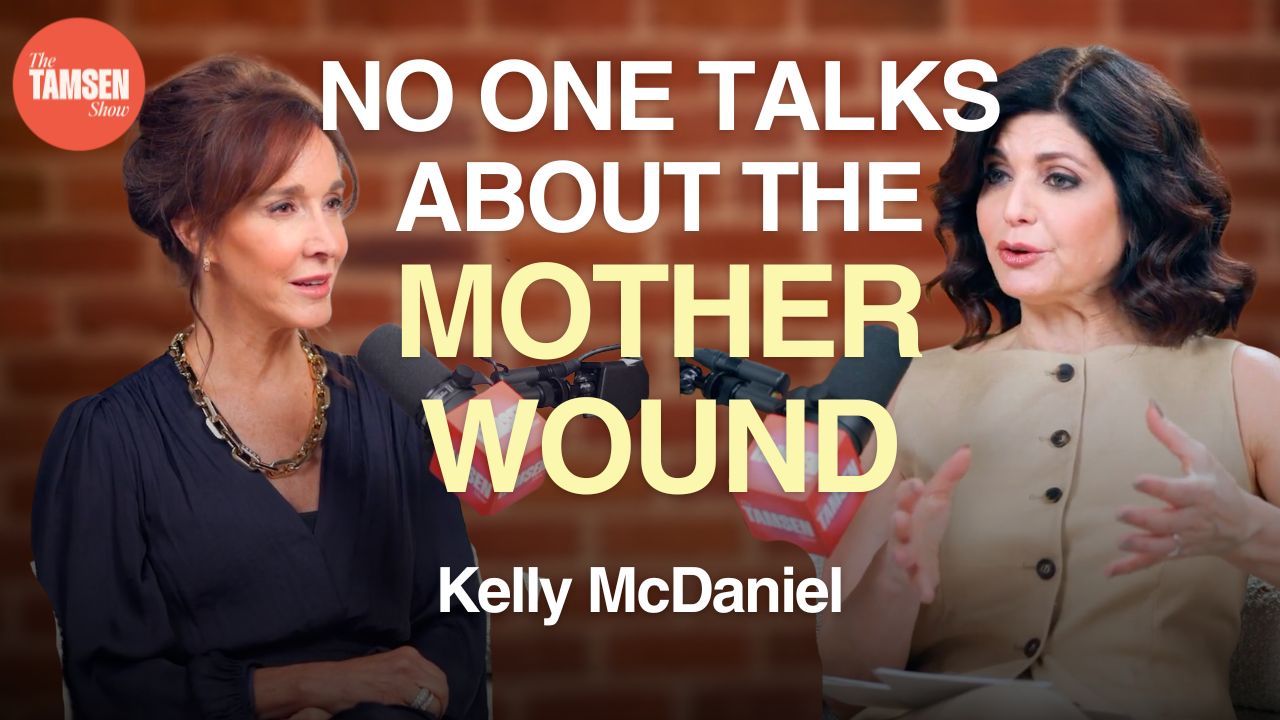
I sat down with Kelly McDaniel, therapist and author of Mother Hunger, and what she told me is something I think every woman needs to hear regardless of whether her mother is alive or gone.
What it is.
Mother hunger is a distinct craving for the quality of love we assign to mothers. Kelly breaks that love into three things: nurturing, protection, and guidance. When any of those three was missing or inconsistent in childhood it leaves a hunger. A biological drive running in the background of your life that keeps pointing you toward people and patterns that feel familiar even when they are hurting you.
She chose the word hunger deliberately because hunger is biological. We have to eat. The need to attach is equally biological. When that attachment does not happen fully the hunger does not go away, it just goes looking.
You do not have to have lost your mother for this to apply.
This is the part I want to be clear about because I think a lot of women will assume this conversation is not about them.
If your mother was there but emotionally unavailable mother hunger can live in you. If she was struggling with her own pain or her own history in ways that left her inconsistent even when she was trying mother hunger can live in you. If you were the one taking care of her instead of her taking care of you mother hunger can live in you.
It shows up as frozen grief. The kind that does not have a name or a support group or a roadmap in our culture. So it does not flow, it sits in the body and over time becomes pattern. The partners you choose, the way food soothes you when nothing else will, or the way you collapse when someone you love pulls away.
How it shows up in relationships.
Your first love is your mother based on science. We know her voice and her heartbeat before we take our first breath. When we come into the world we are designed to stay close to her. How that unfolds sets our attachment style for everything that follows.
Are you anxiously attached, wanting more from relationships than you feel comfortable admitting? Are you avoidantly attached, having shut down the need so early that you genuinely do not feel it consciously anymore? Are you somewhere in between?
About 50% of people are securely attached according to research. Kelly says she finds that generous based on who ends up in her office.
What she also says is that whoever you are with you may find yourself sliding on the spectrum. With an anxious partner you will look avoidant. With an avoidant partner you will suddenly look anxious. This is why it is so hard to see clearly from inside the relationship. You keep thinking the problem is the person you chose when it is actually a much older story being replayed.
How it shows up with food.
When we are infants our first reliable experience of comfort that is entirely within our control is a full belly. If being held by our mother was inconsistent or uncomfortable we learned early that food could do what she could not always do. Over decades that becomes its own pattern. A survival response to an unmet need.
Kelly says that whenever she works with women on their relationship with food the root is always mother hunger.
What you can actually do with this.
Notice your patterns without judgment, not what is wrong with you. What did you learn? Where did you learn to feel safe? What happened when you needed something and it was not there?
Look at your attachment style honestly. Do you reach too hard in relationships? Do you pull back right when things get close? Do you choose partners who are unavailable and then wonder why? These are learned responses to your earliest relationship and they can change.
Consider somatic therapy or attachment-focused therapy if this resonates. The patterns live in the nervous system, not just the mind. Talking about them is one piece and working with the body is another.
Read Mother Hunger to give you a language for something you may have been feeling your entire adult life without knowing what to call it.
If any of this landed you have a name for it now and that is the beginning.
Listen to Why You Keep Apologizing for Things That Aren’t Your Fault here or you can watch it here.
Never Miss a Beat
Related Posts




Relationships