Relationships





Share with a Friend
When something isn't working in my life, I do what I've always done. I dig in. I work harder. I tell myself that if I just push a little more, I'll get there.
I think a lot of us were raised that way. More discipline. More willpower. More effort.
So I was a little stunned when Angela Duckworth, the psychologist who literally wrote the book on grit, told me that sometimes trying harder is exactly what keeps us stuck.
What is grit, and can you learn it?
Angela spent the first half of her career studying grit. She defines it as "the combination of passion and perseverance for really long-term goals." At places like West Point, she found that the cadets who made it through the hardest stretch of training weren't the ones with the highest test scores or physical ability. They were the gritty ones.
I asked her the question I know so many of you are wondering: what if you're just not a gritty person?
Her answer gave me hope. "You can grow your grit," she said. The qualities we want to have aren't fixed. But she also said something that changed how I think about all of it: who you are "really does depend on your situation." Put someone who loves their work into a job they don't care about, and they won't look very gritty to you.
That's why her new book, Situated, looks at everything surrounding our effort.
Why trying harder can keep you stuck
Angela opens Situated with a story I had to read twice. She took her 86-year-old mother snorkeling off the coast of Miami on an incredibly windy day. They were swept behind the boat, and the current was dragging them backward. She tried to swim her mom to safety through sheer strength of will, and she couldn't.
So she stopped thrashing. She treaded water, raised a hand and cried for help. Another snorkeling boat rescued them, and an instructor gave her mom CPR. (Her mom is now 91, and she still makes Angela breakfast.)
For Angela, the ocean is the perfect metaphor for our situation. "We can say that we're gonna, like, try harder and overcome a losing situation, but it is better to change the situation from a losing situation to a winning situation."
And this is the line I haven't been able to shake: "It's so easy to feel like a loser and not to realize that you're in a losing situation."
What is within three feet of you?
Angela started with the most mundane part of our situation, and honestly, it's the one I needed most. Whatever is within three feet of you is what researchers call your personal space. If your phone is near you, you're very likely to pick it up. You often eat because the food is just there.
Then she asked me what was within three feet of me in the studio. My cellphone, my iPad and a Diet Coke. I felt like I'd failed every part of it.
Her rule is simple: we do what is convenient. So make what you want in your life convenient, and make what you don't want inconvenient. She keeps a Nelson Mandela quote, "I never lose. I win or I learn," on a yellow Post-it note at eye level, so it's the first thing she sees when she walks into her office.
She also told me that, according to her research with Gallup, three out of four Americans keep their phones by their bed. Ask yourself whether that's really what you want to see last at night and first in the morning.
The 4 parts of your situation to audit when you feel stuck
So many women I talk to, myself included, have said the words "I feel stuck." The kids have left home, or you're looking at a second or third career and you don't know what's next. I asked Angela where she would start.
"Before you have a prescription, you need a diagnosis," she said. She gave me four questions:
- Is your personal space set up? Look at what's within reach and in view, and change it today.
- Do you have a peer group? If she could retitle that chapter, she'd call it "Find a Tribe." An accountability partner, a running club or a group of other entrepreneurs. Research shows that pursuing a goal with someone else is almost always more effective than doing it alone.
- Do you have mentors? Most people know a mentor can change their life. What they don't know is that you can attract them. She calls it being a "mentor magnet." Start with the smallest ask, even an email asking for one piece of advice.
- Do where you live and where you work fit your goals? People who live in walkable neighborhoods take about 1,000 more steps a day than people who don't. She knows we can't all just move, but she thinks we should at least ask the question.
Why we think the hard way is the better way
One of the most surprising things in her research is how much we resist changing our situation. We give people who do things "the hard way" a sense of moral character, as if changing your situation is somehow cheating.
Angela brought up GLP-1s. She isn't prescribing anything, and she was clear that's a decision to make with your physician. But she doesn't think there's anything shameful about taking medication that helps quiet food noise, especially in an environment like ours. To her, that's "situational agency," and we should "celebrate, not denigrate" when we find a way to make our situation our ally.
Is it me, or is it my situation?
Angela shared a very personal story. During the 2008 financial crisis, her husband, a real estate developer, was under enormous stress, irritable and distracted. She came home and decided he was simply a melancholy person. She couldn't see that he was a young man at the beginning of his career, failing for the first time because of an impossible financial situation.
Psychologists call it the fundamental attribution error: blaming everything on someone's character and ignoring their circumstances. We do it to other people, and we do it to ourselves. If you come home from work every night feeling unmotivated and distracted, it might not be you. It might be the work, or the environment.
She also talked about how different people bring out different versions of us. Around her cousin Jessica, she feels calmer and more centered, so she decided to have dinner with her every week instead of now and then. For some of us, that person is a sister, a childhood best friend or a mentor. The point is to notice who brings out your best, and spend more time there.
What if you can't change your job, your home or your city?
This is where Angela got really practical. Take out a piece of paper and make two lists.
First, write down everything in your situation you cannot change, as long as that list needs to be. Look at it seriously, and stop blaming yourself for what's on it. That's situational awareness.
Then make a second list of what you can change. It will probably be shorter, and the things may be small. A water bottle instead of a soda. Your phone more than three feet away. The book you want to read on your nightstand. Texting the friend who brings out your best to go for a walk. A note to a mentor you've lost touch with.
"If it's not empty, then you have agency," she said. "I would say begin there."
One exercise for your next chapter
When I asked Angela for one piece of advice for women building their next chapter, she said to remember your best days and compare them with your worst days. Notice who was different and what was different about the situation. That can show you how to have more of the best days, and fewer of the bad ones.
I walked away from this conversation looking at my office, my nightstand and my calendar a little differently. Maybe you're not failing. Maybe you're swimming against the current.
What would change if you stopped trying harder and changed your situation instead?
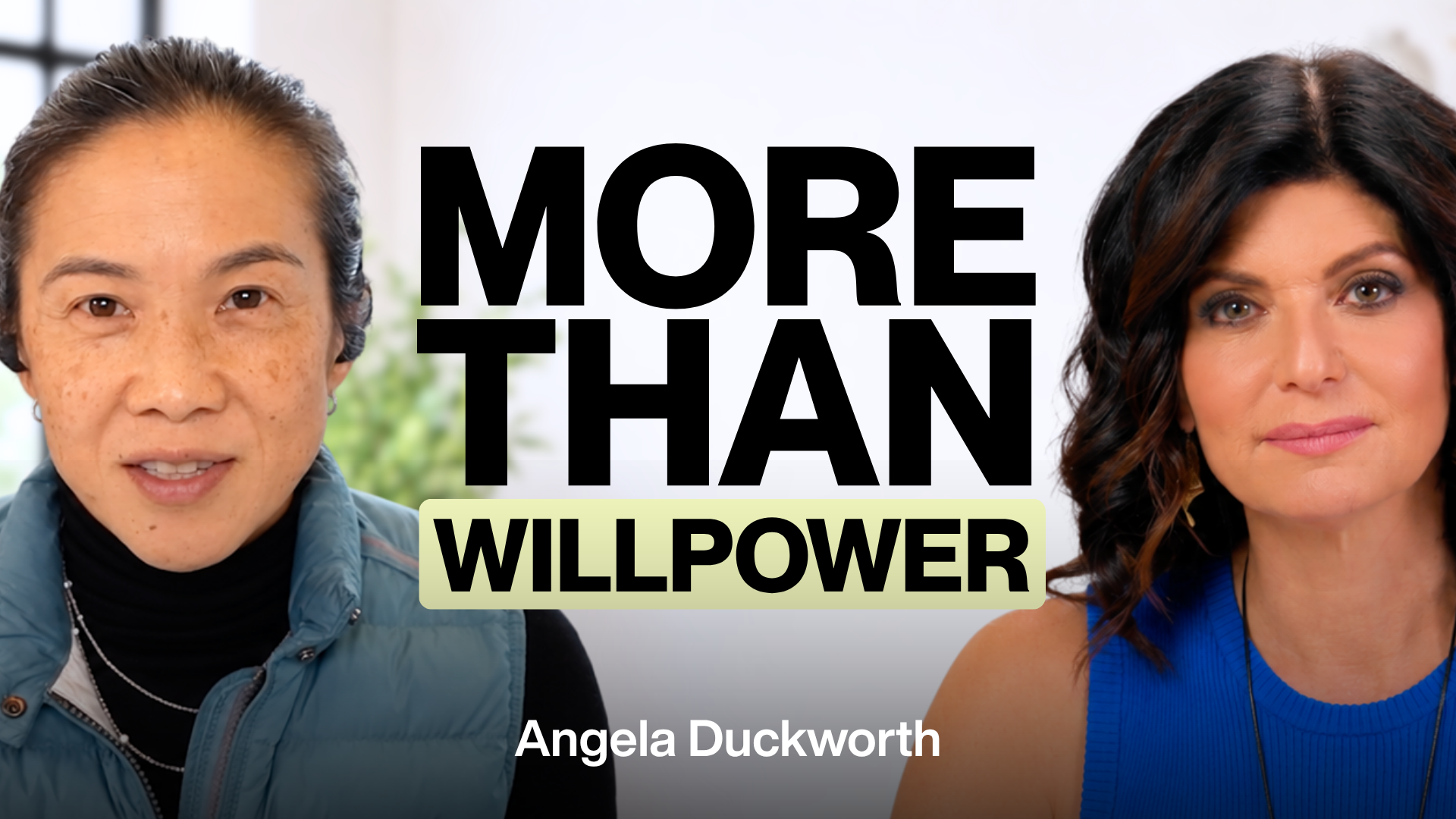
In this episode of The Tamsen Show, Tamsen Fadal and Angela Duckworth talk about grit, why trying harder can keep you in a losing situation, the four parts of your environment to examine when you feel stuck, how to become a mentor magnet, and what to do when your biggest circumstances are outside your control.
Frequently asked questions
What does Angela Duckworth mean by "situated"?
That who we are, and how motivated we are, depends on our situation: the people, places, physical objects and cultures around us, not just our willpower.
Can grit be learned?
Yes. Angela Duckworth says you can grow your grit, and that it grows most in situations where the work matters to you, interests you and comes with support.
What should I change first when I feel stuck?
She suggests auditing four things: your personal space (what's within three feet of you), your peer group, your mentors, and whether where you live and work fits your goals.
How do I find a mentor?
Start small. She suggests becoming a "mentor magnet" by asking for one piece of advice, even in a short email.
What if I can't change my job or where I live?
List what you can't change and stop blaming yourself for it. Then list what you can change, even small things. If that list isn't empty, you have agency.
About the guest
Angela Duckworth is a psychologist at the University of Pennsylvania and the bestselling author of Grit and Situated. Find her at angeladuckworth.com. Listen to the full conversation with Tamsen Fadal on The Tamsen Show.
Related on The Tamsen Show: The Real Reason You Feel Stuck (and How to Fix It) with Anna Runkle; How Friendships Can Change Your Life with Minaa B.; Thinking About a Career Change? Start Here
My full conversation with Angela Duckworth is out now on The Tamsen Show. Listen to it here or watch it here.
Never Miss a Beat
Related Posts






Relationships