Happiness
Chip Conley's 6 Steps to Learning to Love Midlife: Embracing the In-Between, Male Menopause and What Dying Nine Times Taught Him
From The Tamsen Show: Episode
20
with
Chip Conley
Listen to this episode on




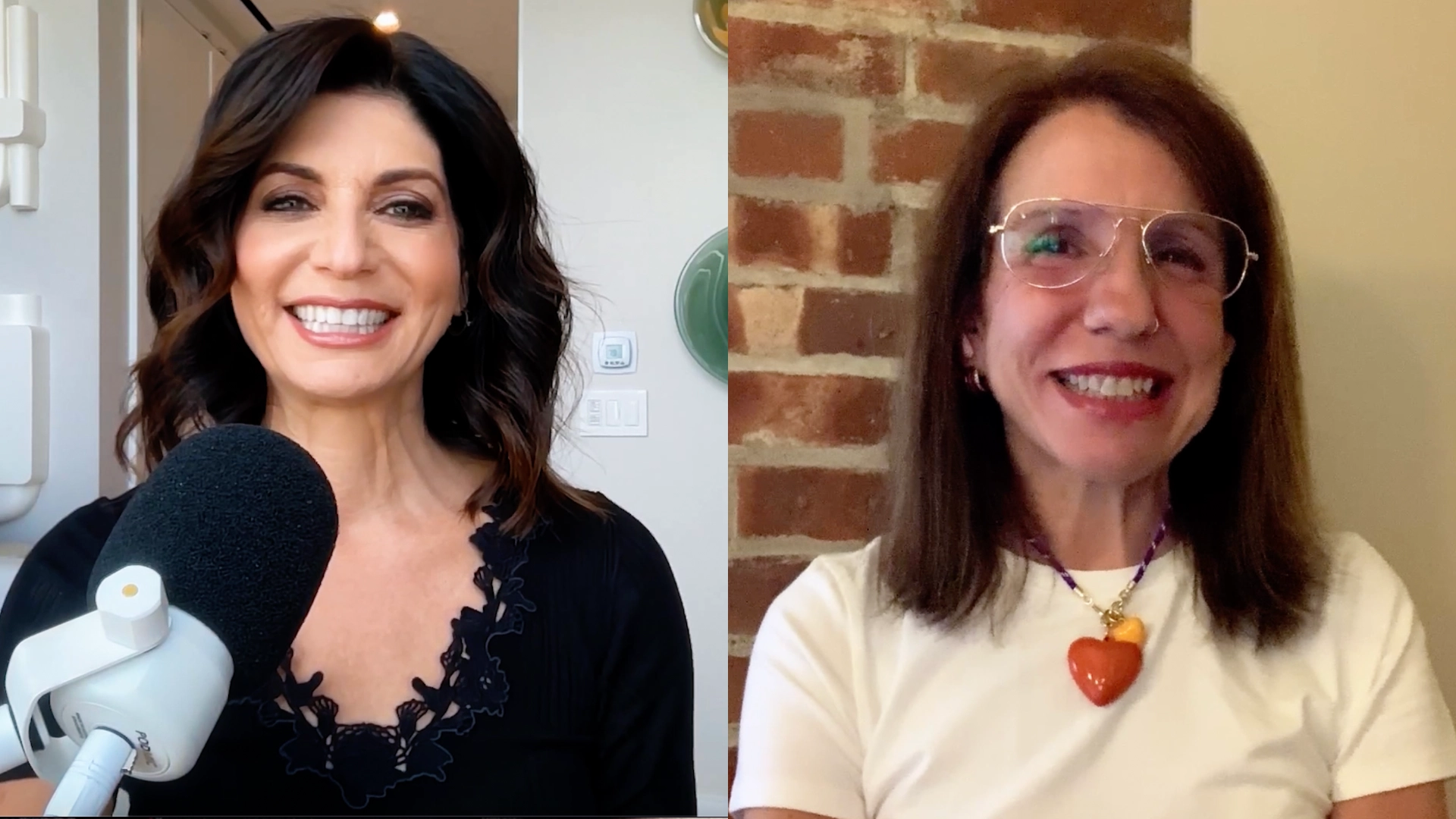
Every once in a while you meet somebody whose story sticks with you. Chip Conley is that person for me. He built one of the first boutique hotel empires, helped scale Airbnb into a global brand and wrote multiple bestselling books. Then he flatlined, with nine near-death experiences in 90 minutes. He survived cancer and came back with a completely different definition of success and a mission to change how we think about midlife.
The question most of us ask in midlife isn't why. It's now what?
What if your midlife crisis isn't a breakdown, but a breakthrough? During one of those near-death experiences, Chip told me, he found himself flying like a bird, surrounded by 30 or 40 birds, and he could understand them. "They literally were saying to me, 'Chip, slow down. Slow down. Beauty and awe can only be seen when you slow down.'"
That moment changed everything. Chip explores what it means to be in "the in-between." He calls it middlescence, a term that mirrors adolescence: a time of transition, uncertainty and opportunity. It's also why he created the Modern Elder Academy, a midlife wisdom school, with a campus on the beach in Baja and a four-square-mile regenerative horse ranch in Santa Fe, New Mexico. He describes a modern elder as someone who isn't just dispensing wisdom but seeking it, "as much an intern learning as a mentor teaching."
Most men don't expect to go through menopause. Chip was diagnosed with prostate cancer seven years ago, and his treatment became aggressive: two surgeries, 36 radiation sessions and 19 months of hormone depletion therapy. "When you do that to a man, you end up having menopause," he said. "I had hot flashes, night sweats, brain fog, emotional roller coaster, bloating. I gained 20 pounds."
He started writing about his "manopause" on his daily blog, and both men and women were fascinated. For Chip, it built real empathy for what so many women go through.
On The Tamsen Show, Chip shared his blueprint for finding clarity and purpose during one of life's most misunderstood stages.
"Aging and growing are the same thing," Chip said. When someone is 15, we say, "Look how much you've grown." We'd never say that to a 55-year-old, but we're growing our whole lives, emotionally, relationally and spiritually. He pointed to research from Becca Levy at Yale showing that shifting your mindset on aging from negative to positive around midlife is associated with about seven and a half more years of longevity. The key, he says, is to be "age fluid." He shared a question from a famous pitcher who never had a birth certificate and didn't know how old he was: "How old would you be if you didn't know how old you were?"
Chip explained that every transition has three stages: an ending, a messy middle and a beginning. Menopause, an empty nest, divorce, a new career: these are normal, but we don't talk about them. Ritualize the ending, whether that's a divorce party, an empty-nest party or a menopause group. In the messy middle, lean on social support and remember that "my painful life lessons have been the raw material for my future wisdom."
I told Chip I've always felt like I have to succeed and cross things off the list. He called that a "success script," which for many of us was written in our teens or early adulthood. Mine has always been very public, with everyone asking, "What are you doing next?" His challenge is to become the screenwriter of your own play and figure out what really matters to you.
Midlife is a great time to look at what you're carrying. Chip talked about friendships that just "hang around" and aren't very nourishing, and asked whether it's time to do a little pruning. He talked about the four-bedroom house when the kids are gone and it's just the two of you. Editing takes some of the pressure off, because when you've accumulated so much, you're carrying a lot. Most importantly, he said, when you start to edit, you create new space.
When you're in grit mode, you don't take inventory of your emotions or your body, until you notice your shoulders are up by your ears. He told me about a litigator who said at 60, "I can't do this anymore," after a career of having to be mentally tough. What she needed was to adapt. Self-awareness tools helped Chip, too. He learned about a personality typing system on a nine-point scale about 40 years ago, and it "totally helped me to see how I fall into traps." He guessed I'm a three like him, a success-motivated performer, and honestly, he wasn't wrong.
This one might be my favorite. Purpose comes from what we give to others, and that becomes essential in midlife.
One question from Chip has stayed with me: "Ten years from now, what will I regret if I don't learn it or do it now?" It's a powerful question. Many of us have decades of life left after 50. Midlife isn't the end of the road. It's just the end of the map we were handed.
Listen to my full conversation with Chip Conley on The Tamsen Show.
Chip Conley is a hospitality entrepreneur, co-founder of the Modern Elder Academy (MEA), and New York Times bestselling author of Learning to Love Midlife and Wisdom at Work.
Featured book: Learning to Love Midlife: 12 Reasons Why Life Gets Better with Age
Also by Chip Conley: Wisdom@Work: The Making of a Modern Elder